 Nothing found for the request

Mexico Online Casino Market Share Leaders 2024-2026
Sologe March 30, 2026
Share:


Market Size and Growth Trajectory
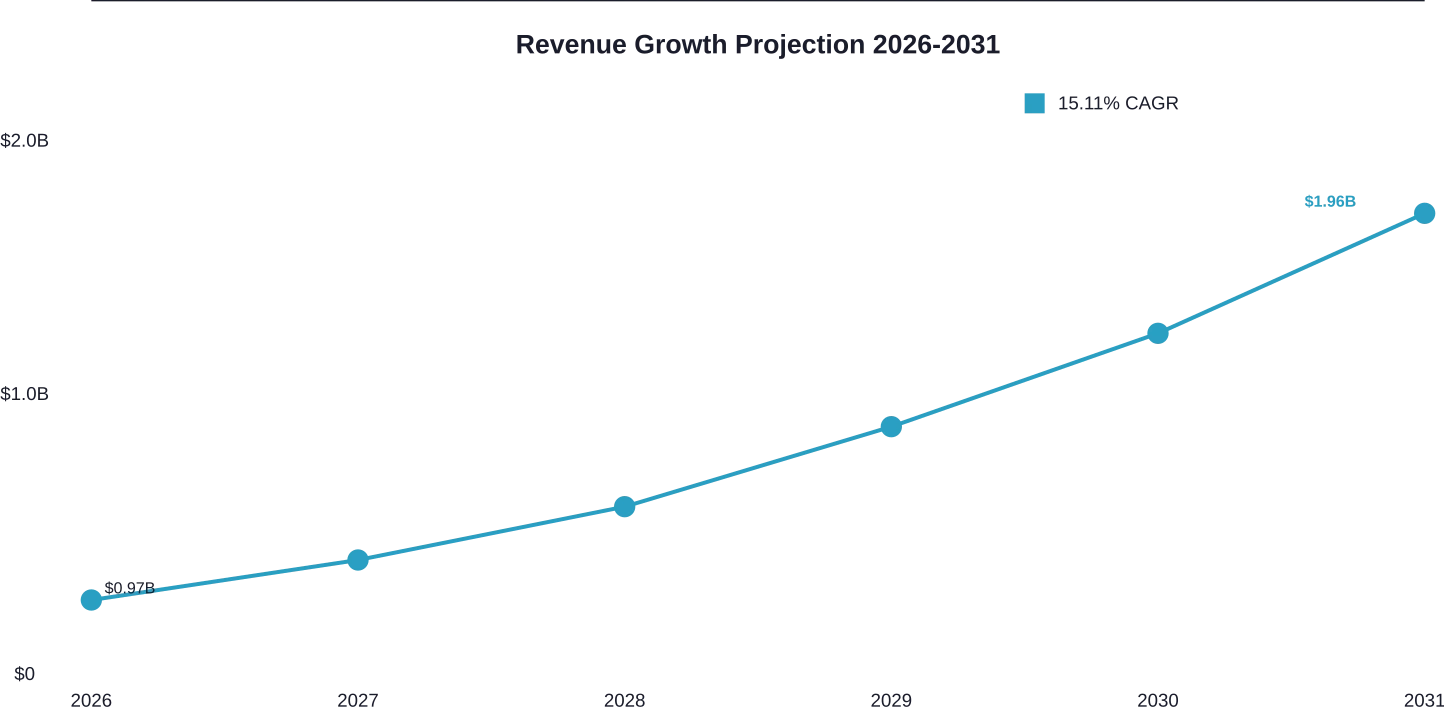
The Mexican online gambling market sits at a pivotal moment. From a base of USD 0.84 billion in 2025, the market jumped to USD 0.97 billion in 2026, according to data from Mordor Intelligence.
Grand View Research projects slightly different figures — estimating the market reached USD 1,616.9 million in 2024 and will hit USD 3,156.5 million by 2030, representing an 11.9% CAGR. The variance in projections stems from different methodologies for counting regulated versus gray-market activity.
Here’s the thing though — these figures only capture part of the picture. A significant portion of Mexico’s online gambling activity happens through unlicensed operators who don’t report revenue to Mexican authorities.
The broader gambling market (including land-based casinos, lotteries, and sports betting shops) tells an even bigger story. Astute Analytica forecasts Mexico’s total gambling market will reach USD 40.64 billion by 2033, growing at a 15.71% CAGR from 2025-2033.
Source | 2026 Market Size | 2030/2031 Projection | CAGR |
|---|---|---|---|
Mordor Intelligence | USD 0.97 billion | USD 1.96 billion (2031) | 15.11% |
Grand View Research | — | USD 3,156.5 million (2030) | 11.9% |
Astute Analytica (total gambling) | — | USD 40.64 billion (2033) | 15.71% |
The growth drivers are straightforward: rising internet penetration, increased smartphone adoption, and a cultural shift toward accepting online gaming as mainstream entertainment.
Leading Online Casino Operators in Mexico
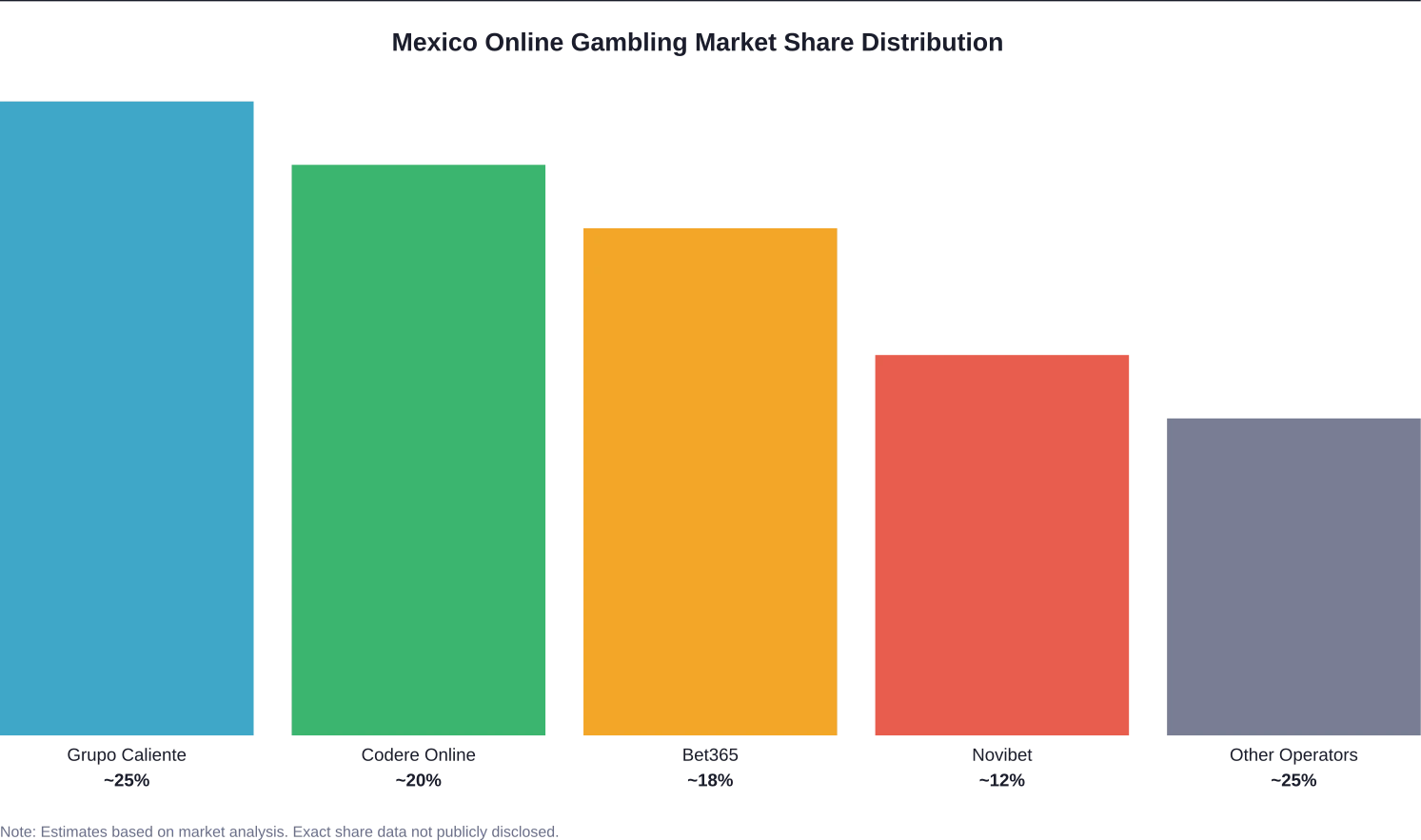
Market concentration in Mexico sits at a medium level, meaning no single operator dominates entirely. Instead, five major players share the bulk of market revenue.
According to Mordor Intelligence’s 2026 analysis, the top operators are:
- Grupo Caliente: The domestic heavyweight with deep roots in physical casinos and sports betting
- Codere Online Luxembourg S.A.: Spanish operator with strong Latin American presence
- Bet365 Group Ltd: Global giant leveraging its massive sportsbook
- Novibet USA Inc.: Growing challenger with aggressive marketing
- Super Group Ltd.: Parent company of Betway, targeting mobile users
InfoPlay’s analysis of licensed operators in Mexico confirms these names while highlighting a critical distinction: many operators visible to Mexican players don’t actually hold SEGOB (Secretaría de Gobernación) licenses.
The publication notes that despite regulations being in place since the early 2010s, numerous operators in 2024 still operate without proper Mexican licensing. This creates a two-tier market where compliant operators face higher tax burdens while unlicensed competitors operate with cost advantages.
Grupo Caliente’s Dominant Position
Grupo Caliente holds the strongest position among domestic operators. The company operates both land-based casinos across Mexico and a robust online platform.
While specific market share percentages aren’t publicly disclosed, Statista’s data on leading gambling companies in Mexico shows Lotería Nacional para la Asistencia Pública generated the highest net revenue among gambling entities in 2024, with steady growth from 2020-2024. Grupo Caliente follows as the leading private operator.
Caliente’s advantage stems from brand recognition built over decades in physical locations, combined with localized marketing that resonates with Mexican cultural preferences.
International Operators Making Moves
Bet365 has captured significant market share through its comprehensive sportsbook and live betting options. The operator’s global technology infrastructure allows it to offer competitive odds and seamless mobile experiences that attract tech-savvy Mexican bettors.
Codere brings experience from regulated markets across Latin America, particularly Colombia and Spain. The company went public through a SPAC merger in 2021, providing capital to expand its Mexican operations.
Novibet and Super Group (Betway) represent the new wave of operators targeting mobile-first users with app-centric experiences and aggressive welcome bonuses.
Segment Analysis: Sports Betting Versus Casino
Not all online gambling revenue is created equal. The distribution between sports betting and casino games reveals critical insights about Mexican player preferences.
Sports betting led the market in 2025 with 56.41% of total revenue, according to Mordor Intelligence. This dominance reflects Mexico’s passionate sports culture — particularly around soccer, boxing, and baseball.
Casino games (slots, table games, live dealer) capture the remaining share but are growing faster in percentage terms as operators invest in live dealer studios and exclusive slot titles.
Grand View Research identifies sports betting as both the largest segment and the fastest-growing through 2030, driven by mobile betting apps and in-play wagering features that let users bet during live matches.
The Live Dealer Revolution
Within casino offerings, live dealer games are changing the competitive landscape. Data from the Capaz-Zihua government site shows that in Texas (a comparable market), the number of live dealer blackjack tables doubled since 2021, with about 65% of online blackjack players preferring the live format over RNG-based games.
Mexican operators are following similar patterns, investing heavily in Spanish-language live dealer studios that create a more engaging experience than automated software games.
Regulatory Landscape and Licensing
Mexico’s regulatory framework creates both opportunities and headaches for operators. The country introduced online gambling regulations over a decade ago — pioneering among Latin American nations — but enforcement remains inconsistent.
The Dirección General de Juegos y Sorteos (SEGOB) oversees licensing, but the process is slow and requirements are strict. Operators need Mexican permits to legally offer services, yet numerous international brands serve Mexican customers without local authorization.
This creates a fragmented market where:
- Compliant operators pay a 50% tax on online gambling (IEPS) plus applicable local taxes
- Unlicensed operators avoid these costs but risk eventual enforcement action
- Players often can’t distinguish between licensed and unlicensed platforms
- Regulatory uncertainty makes long-term planning difficult
InfoPlay’s analysis confirms that in 2024, many visible operators still lack SEGOB licenses despite years of market presence. The publication tracks which operators hold legitimate authorization versus those operating in gray areas.
The government balances competing interests: maximizing tax revenue from a growing industry while protecting consumers from predatory practices. Post-pandemic, authorities increasingly view regulated iGaming as a fiscal tool, according to Mordor Intelligence research.
Competitive Dynamics and Market Entry Barriers
New operators face significant challenges entering Mexico’s online casino market. The barriers include:
- Licensing complexity: Obtaining SEGOB authorization requires navigating bureaucratic processes that can take years. Companies need local partnerships, technical certifications, and substantial capital reserves.
- Payment processing: Mexican banking regulations make it difficult to process gambling transactions. Operators need relationships with local payment providers who understand the regulatory nuances.
- Marketing restrictions: While not as strict as some European markets, Mexico limits gambling advertising during certain hours and on platforms accessible to minors.
- Localization requirements: Successful operators need Spanish-language customer service, Mexican peso accounts, and culturally relevant marketing. Simply translating an existing platform isn’t enough.
These barriers benefit established players like Grupo Caliente and Codere, who’ve already absorbed the setup costs and built local infrastructure.
Technology and Mobile Adoption
Mobile devices drive the majority of online gambling activity in Mexico. Smartphone penetration continues climbing, and younger demographics prefer apps over desktop websites.
Leading operators have invested in native iOS and Android applications with features like:
- One-tap betting on live sporting events
- Biometric login (fingerprint, face recognition)
- Push notifications for promotions and results
- Mobile payment integration (SPEI, OXXO, credit cards)
Bet365 and Betway have developed mobile platforms leveraging their global development resources to create polished apps that rival any consumer tech product.
Grupo Caliente and Codere have also modernized their platforms.
Future Outlook and Consolidation Trends
Several trends will shape Mexico’s online casino market through 2031:
Regulatory clarity: The government faces increasing pressure to update licensing frameworks and enforce compliance more consistently. Clearer rules would benefit legitimate operators while potentially forcing gray-market players out.
Market consolidation: As growth rates normalize, expect mergers and acquisitions. Smaller operators may struggle to compete with the marketing budgets and technology investments of major players.
Cryptocurrency adoption: While not yet mainstream, crypto payments are gaining traction for gambling transactions. Operators may integrate Bitcoin and stablecoins to simplify cross-border payments.
Responsible gambling focus: International pressure and evolving social attitudes will push operators toward stronger player protection measures — deposit limits, self-exclusion tools, and addiction resources.
The North America casino gambling market (which includes Mexico, the US, and Canada) reached USD 103.23 billion in 2026 according to Mordor Intelligence, with a 6.59% CAGR projected through 2031. Mexico represents a small but fast-growing slice of this regional total.
Comparison With Global Markets
How does Mexico stack up against other gambling markets worldwide?
The global online gambling market reached USD 101.45 billion in 2026 and is growing at 10.72% CAGR toward USD 168.71 billion by 2031, per Mordor Intelligence data. Mexico’s 15.11% growth rate significantly outpaces the global average.
Europe remains the largest regional market for online gambling, with the European Gaming & Betting Association reporting EUR 29.3 billion in gross win for 2022. But growth rates in mature European markets have slowed.
Latin America overall shows strong momentum. Statista notes that despite fragmented regulations across the region, gross gaming revenue continues climbing as countries modernize their legal frameworks.
Market | 2026 Size | Growth Rate | Maturity |
|---|---|---|---|
Global Online Gambling | USD 101.45 billion | 10.72% CAGR | Medium |
Mexico Online Gambling | USD 0.97 billion | 15.11% CAGR | Early-Mid |
North America Casino | USD 103.23 billion | 6.59% CAGR | Mature |
Europe Online (2022) | EUR 29.3 billion | Moderate | Mature |
Mexico’s higher growth rate reflects its position as an emerging market with significant headroom for expansion as internet access spreads and regulations stabilize.
Challenges Facing Market Leaders
Even dominant operators face headwinds:
- Tax burden: The 50% gross gaming revenue tax eats into margins, especially when operators also run expensive customer acquisition campaigns.
- Competition from unlicensed sites: Players often don’t check licensing status. If an unlicensed competitor offers better odds or bonuses (subsidized by avoiding taxes), they can pull market share from compliant operators.
- Payment friction: Mexican banks remain cautious about gambling transactions. Deposits and withdrawals can be slower and more expensive than in markets with fully supportive banking infrastructure.
- Perception challenges: Some segments of Mexican society still view gambling negatively. Operators must navigate cultural sensitivities while marketing their products.
Real talk: the operators who’ll win long-term are those who can balance regulatory compliance, technology investment, and culturally relevant marketing — all while maintaining profitability despite high tax rates.
Compete Smarter in Mexico’s Online Casino Market

As market share tightens between operators in Mexico, the real difference often comes down to how well the business side is structured. Not just marketing or acquisition, but how platforms, providers, payments, and partnerships are put together behind the scenes. Sologe operates as a B2B marketplace built specifically for iGaming, giving operators and developers a way to find, compare, and connect with the right vendors across the entire stack in one place.
If you’re entering the market or trying to improve your position, this is where fragmentation usually slows things down. Instead of managing multiple partners separately, it makes sense to centralize the process early. Get in touch, explore your options, and connect directly with Sologe to find the right setup for your casino project.
Frequently Asked Questions
Who is the largest online casino operator in Mexico?
Grupo Caliente leads among private operators, supported by strong brand recognition and local presence.
How big is Mexico’s online gambling market in 2026?
The market is valued at around USD 0.97 billion and growing rapidly.
Is online gambling legal in Mexico?
Yes, under SEGOB licensing, though enforcement remains inconsistent.
What percentage of revenue comes from sports betting?
Sports betting dominates with over 56% of total market revenue.
Which international operators are active in Mexico?
Operators include Bet365, Codere, Novibet, and Betway.
How does Mexico’s growth compare to other markets?
Mexico is growing faster than global and mature gambling markets.
What challenges do operators face in Mexico?
Challenges include regulation, taxation, payment issues, and competition from unlicensed sites.
Final Thoughts
Mexico’s online casino market has reached a tipping point. With nearly USD 1 billion in annual revenue and a growth rate that outpaces most established markets, the opportunity is clear.
Grupo Caliente, Codere, Bet365, Novibet, and Super Group have established themselves as market leaders, but the competitive landscape remains fluid. Regulatory changes, technology improvements, and shifting consumer preferences will determine who captures the next wave of growth.
For operators considering entry or expansion, the message is simple: success requires more than translating an existing platform. Winning in Mexico demands genuine localization, regulatory compliance, mobile-first technology, and patience to navigate a sometimes unpredictable business environment.
The next five years will separate operators who understand Mexico’s unique market dynamics from those who treat it as just another territory on a global expansion map.
Stay informed about this rapidly evolving market — bookmark this analysis and check back as new data emerges through 2026 and beyond.
Related Articles

September 29, 2026Is the Casino Legal in Japan? The Real Answer...

September 29, 2026Is the Casino Legal in Gambia? What the Law...