 Nothing found for the request
Is the Stock Market a Casino? The Truth in 2026
Sologe March 31, 2026
Share:


The House Edge: Casinos vs. Markets
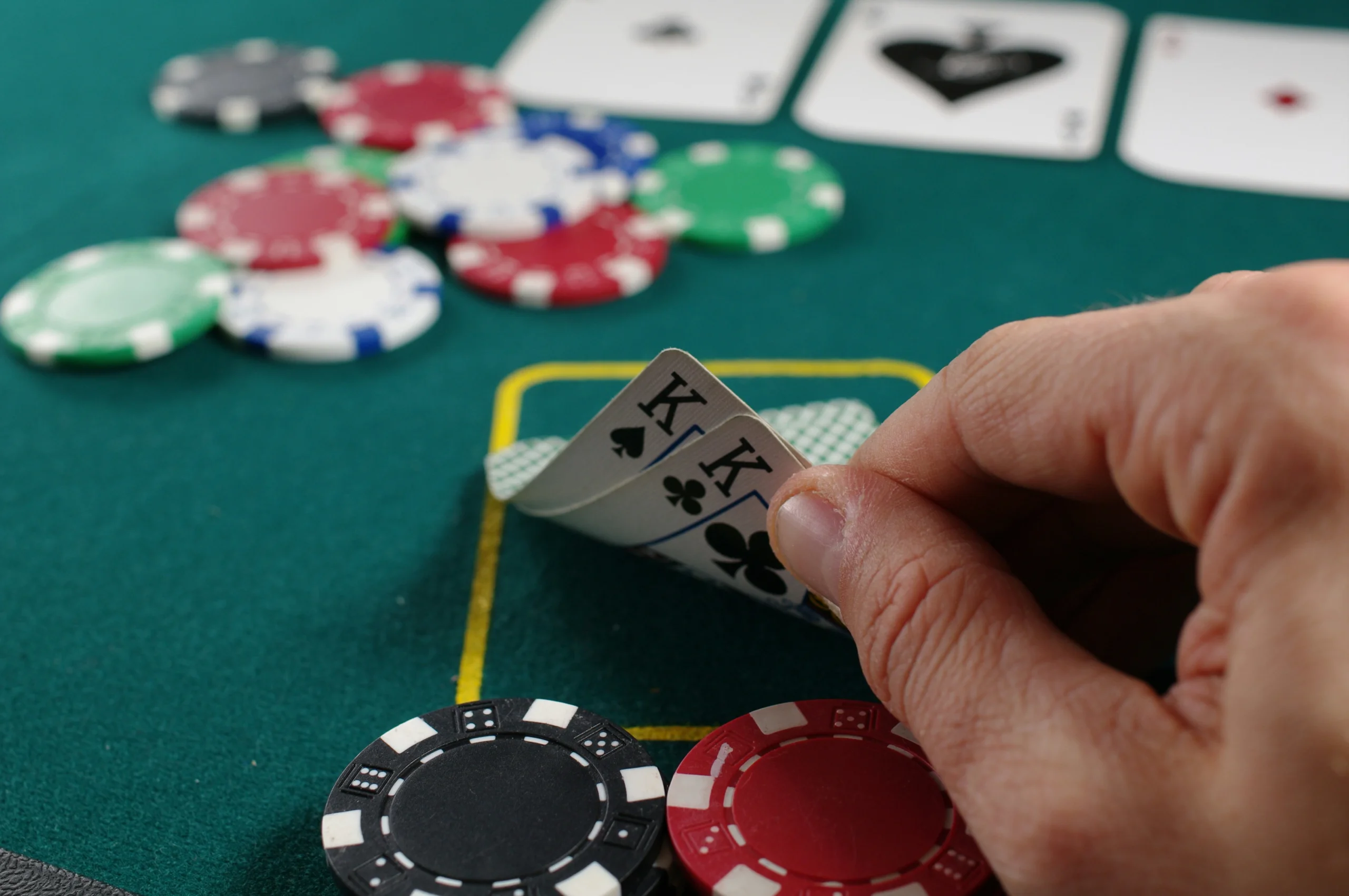
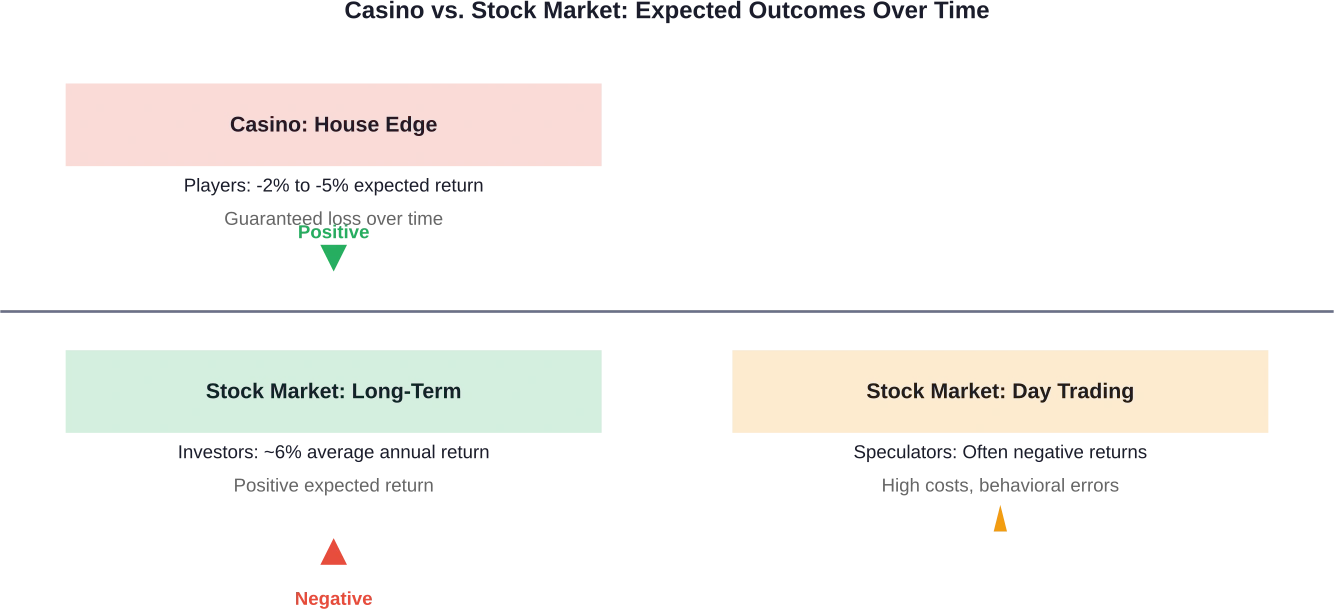
Every casino game has a built-in advantage for the house. In roulette, those 0 and 00 slots tip the odds slightly in the casino’s favor. On a simple red/black bet, you’re not getting true 50/50 odds—the house edge ensures that over thousands of spins, the casino wins.
This edge is small on each individual bet but mathematically guaranteed over time. Players collectively lose, and the casino collectively wins. That’s the business model.
The stock market has no house edge working against investors as a group. According to SEC market structure data, equity markets provide transparency and price discovery mechanisms that casinos don’t offer. When companies grow and generate profits, shareholders benefit. The market cap of U.S. equities has grown substantially over decades because the underlying businesses create value.
Sure, trading fees and bid-ask spreads exist. But these costs don’t create a structural disadvantage that guarantees investor losses. In fact, the historical average excess return on the S&P 500 has been approximately 5.97% annually, according to Federal Reserve research on expected stock returns and variance risk premia.
When Stock Trading Becomes Gambling
Now, this doesn’t mean people can’t gamble in the stock market. They absolutely can—and many do.
Research published in the Journal of Behavioral Addictions examined the relationship between stock market trading frequency and problem gambling. The study found associations between frequent trading and gambling-like behavior patterns. High portfolio turnover ratios were linked to characteristics typically seen in problem gamblers.
According to UCLA Anderson research published in August 2025, financial markets contain three personality types: rational investors, irrational speculators, and what researchers call “gamblers.” The study found that a significant increase in the Catholic-to-Protestant ratio corresponded to about a 4.27% increase in median stock turnover and reduced relative beta by about 3.9%.
The Federal Reserve’s research on bank stock returns shows that approximately 80% of variation in stock returns can be explained by systematic factors like market excess returns, size, value, term premium, and default premium. But short-term trading ignores these fundamentals entirely.
The Warning Signs
Trading becomes gambling when investors:
- Make decisions based on hunches rather than analysis
- Chase short-term price movements without understanding the business
- Use excessive leverage to amplify bets
- Trade compulsively or to experience emotional highs
- Ignore transaction costs and tax implications
Purdue research published July 14, 2025 highlighted how certain trading platforms can encourage gambling-like behavior through gamification features, instant execution, and emphasis on volatility over fundamentals.
What Makes Investing Different
Real investing means buying ownership stakes in productive businesses. When companies earn profits, shareholders benefit through dividends and capital appreciation. This isn’t speculation on random price movements—it’s participation in economic growth.
Speculation and Investment research on sports betting and financial markets found that both markets exhibit similar pricing patterns influenced by human psychology. Momentum and value effects appear in both domains. But there’s a crucial difference: sports games are zero-sum (one team wins, one loses), while businesses can create new value that didn’t exist before.
The SEC provides extensive market structure data showing how equity markets function to allocate capital to productive uses. Companies raise money to expand operations, hire workers, develop products, and serve customers. Investors who provide that capital share in the results.
Characteristic | Casino Gambling | Stock Speculation | Long-Term Investing |
|---|---|---|---|
Time Horizon | Minutes to hours | Days to weeks | Years to decades |
Expected Return | Negative (house edge) | Variable (often negative) | Positive historically |
Basis for Decisions | Luck, hunches | Price patterns, sentiment | Business fundamentals |
Value Creation | None (redistribution) | None (price betting) | Yes (economic growth) |
Risk Management | Minimal control | Some control (stop losses) | Diversification, time |
The Role of Time
Here’s where the casino comparison completely breaks down: time works for investors but against gamblers.
In a casino, the longer gamblers play, the more certain their losses become. The house edge grinds away at bankrolls through repetition. Walk into any casino at 3 AM and you’ll see this mathematical certainty in action.
In the stock market, extended time horizons have historically reduced risk and increased the probability of positive returns. According to Federal Reserve data on asset valuations, despite significant volatility in early 2025 (with equity prices experiencing swings of more than 6%), longer-term trends remain oriented toward growth.
Speculation and Investment research noted that Bridgewater Associates’ All Weather strategy has earned about 10% annually over the past 10 years, demonstrating that disciplined, diversified approaches can generate consistent returns—something impossible in casino gambling.
The Behavioral Trap
So why does the casino comparison persist? Because human psychology makes it easy to turn investing into speculation.
Community discussions on platforms like Reddit reveal that some traders approach markets with a casino-like mentality. The thrill-seeking, the overconfidence, the belief in “systems”—these psychological patterns mirror gambling behavior.
The National Bureau of Economic Research published work on the macroeconomics of financial speculation, examining how belief disagreements drive speculative behavior. When investors have short-selling constraints and disagree about valuations, speculation can generate overvaluation and create bubble dynamics.
But here’s the key: these behavioral errors are bugs, not features. The market doesn’t require speculation to function. It’s entirely possible—and historically successful—to invest without gambling.
Practical Distinctions
Ask these questions to distinguish investing from gambling:
- Can you explain the business? If the only answer is “the stock goes up,” that’s speculation. Investors understand what companies do, how they make money, and what drives their competitive position.
- What’s the time frame? Expecting results in days or weeks leans toward gambling. Building wealth over years or decades is investing.
- What happens if prices drop 20%? Gamblers panic. Investors with conviction see opportunities to buy quality businesses at better prices.
- Are transaction costs material? Frequent trading generates fees and taxes that erode returns. Long-term holders minimize these drags.
Build Real Casino Products, Not Just Comparisons

Discussions around whether the stock market behaves like a casino usually stay theoretical. But in the actual casino industry, the focus is different – how products are built, how systems run, and how everything connects behind the scenes. That includes platforms, game providers, payments, and the overall structure that supports operations. Sologe works in that space as a B2B marketplace, helping operators and developers find and connect with the right partners across the full setup.
If you are moving from theory to building or improving a real casino product, this is where practical decisions start to matter. Instead of piecing everything together separately, take a more direct approach. Get in touch with the Sologe team and connect with the partners you need to move forward.
FAQs
Is day trading the same as gambling?
It shares similarities like short-term decisions and high risk, but financial markets are based on real economic activity.
Do investors see the stock market as a casino?
Professionals separate investing from speculation, though some trading behavior resembles gambling.
Is there a house edge in stock trading?
No built-in edge exists, but costs from frequent trading can reduce profits.
Can you make money trading stocks?
Yes, but consistent success usually comes from long-term investing, not speculation.
How do I avoid gambling behavior in trading?
Focus on fundamentals, diversify, and avoid emotional or impulsive decisions.
Is investing as risky as gambling?
Investing carries risk but can yield positive returns over time, unlike gambling.
What does research say about trading behavior?
Studies link frequent trading to behaviors similar to gambling addiction.
The Bottom Line
The stock market isn’t a casino—unless investors choose to treat it like one.
The structural differences matter. Casinos extract wealth through mathematical edges. Markets allocate capital to productive enterprises that create value. Patient investors who own diversified portfolios of quality businesses have historically built wealth. Gamblers who chase price movements, trade compulsively, and ignore fundamentals often lose money.
The choice between investing and gambling isn’t about which assets to buy. It’s about approach, time horizon, and decision-making process. Same market, completely different outcomes.
Ready to approach markets as an investor rather than a gambler? Start by understanding the businesses behind the ticker symbols, not just the price charts.
Related Articles

September 29, 2026Is the Casino Legal in Japan? The Real Answer...

September 29, 2026Is the Casino Legal in Gambia? What the Law...