 Nothing found for the request
Macau Casino Market Trends 2026: Growth Outlook & Analysis
Sologe April 21, 2026
Share:


Quick Summary
Quick Summary: Macau’s casino market is poised for steady but moderate growth in 2026, with analysts forecasting 5-6% revenue increases driven by mass-market strength while VIP growth slows dramatically to around 2%. The gaming industry shows resilience with 29 approved junket operators and sustained recovery momentum, though operators face mounting cost pressures and regulatory adjustments as the market normalizes post-pandemic.
Macau’s casino industry enters 2026 with cautious optimism after a strong 2025 recovery. The market delivered full-year gross gaming revenue (GGR) of MOP247.4 billion in 2025—nearly double earlier projections—and analysts now forecast continued expansion, though at a more measured pace.
The question isn’t whether Macau will grow. It’s how fast, and which segments will drive that growth.
Revenue Forecasts Point to 5-6% Growth
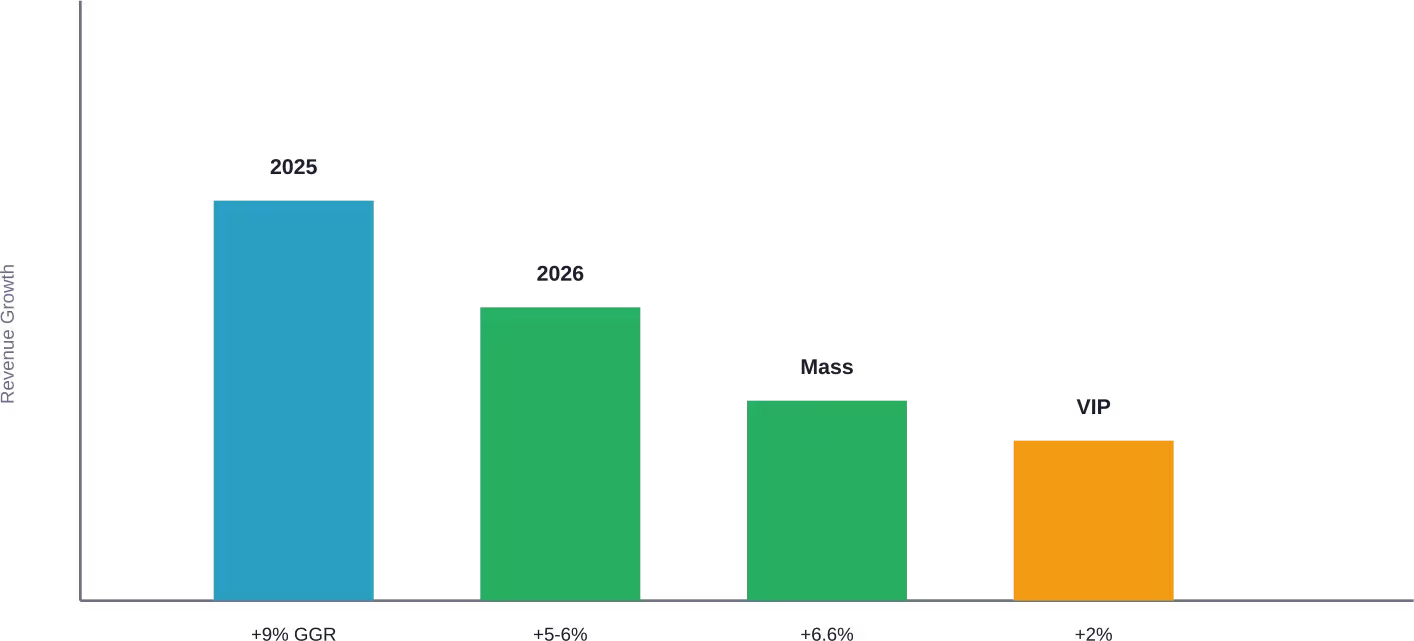
Multiple financial institutions project Macau gaming revenue will rise 5-6% in 2026. JP Morgan forecasts this growth rate based on sustained mass-market performance and gradual normalization of visitor patterns.
December 2025 delivered the strongest quarterly gaming revenue performance in six years, with GGR rising 14.8% year-on-year to MOP20.9 billion ($2.60 billion). That reached 91% of pre-pandemic levels and set an encouraging baseline heading into 2026.
But here’s the thing—that momentum won’t necessarily accelerate. Fourth-quarter results exceeded expectations, yet analysts maintain conservative outlooks as the market transitions from recovery mode to sustainable growth patterns.
Mass-Market Strength Drives Recovery
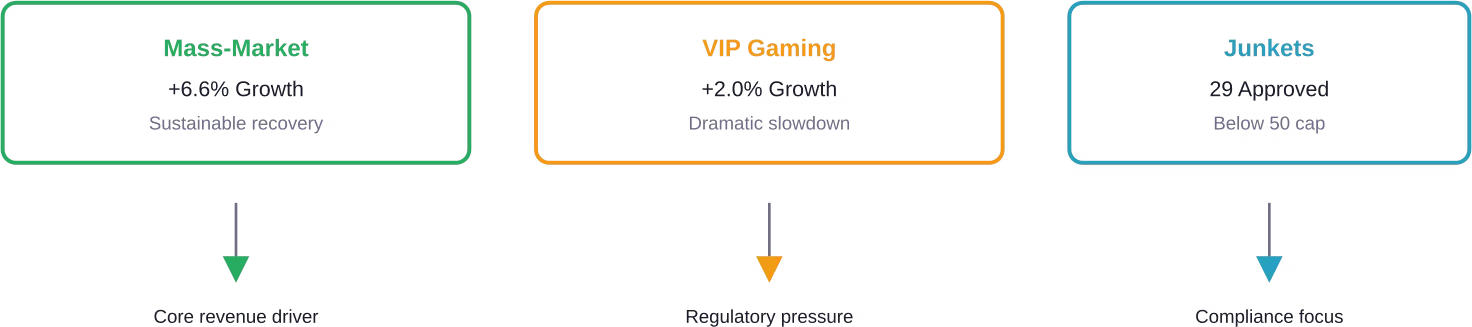
Mass-market gaming continues to anchor Macau’s recovery. Jefferies Hong Kong Ltd projects mass-market GGR will accelerate to 6.6% year-on-year growth in 2026, up from 4.3% in 2025. That would push mass GGR above MOP190 billion.
This segment’s resilience stems from several factors. Mainland Chinese visitors represent the core customer base, and their spending patterns favor table games and electronic gaming machines over high-roller VIP rooms. Casual gaming proves less vulnerable to regulatory pressures and economic uncertainties that impact ultra-wealthy gamblers.
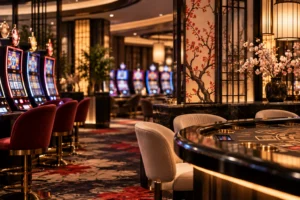
Casino operators have responded by reallocating floor space. More properties now dedicate prime real estate to mass-market tables rather than exclusive VIP salons, reflecting where sustainable revenue actually lives.
VIP Gaming Growth Slows Dramatically
The contrast with VIP gaming couldn’t be sharper. Jefferies forecasts VIP GGR growth will decelerate from 24.1% in 2025 to just 2.0% in 2026.
That slowdown reflects market realities. VIP gaming rebounded strongly in 2025 from depressed pandemic-era levels, but that low baseline made double-digit growth easier. As volumes normalize, the segment faces structural headwinds.
China’s ongoing anti-corruption campaigns and capital flight restrictions continue limiting high-roller activity. The junket operator model—once central to VIP gaming—operates under tight regulatory scrutiny following high-profile prosecutions.
Junket Operators Navigate New Reality
Twenty-nine gaming promoters received approval to operate in Macau’s casino industry in 2026, well below the official cap of 50. Gaming experts once predicted extinction for junkets after China’s corruption crackdown intensified.
Look, that prediction proved premature. The sector survived, but it transformed.
In 2023, Chinese courts convicted Alvin Chau, founder of Suncity (Macau’s largest junket), on over 100 counts of illegal gaming and organized crime. Chau’s operation concealed HK$823.7 billion in undeclared bets, costing the government HK$8.26 billion in tax revenue. He received an 18-year prison sentence.
That case redefined industry boundaries. Junkets now operate under stringent compliance frameworks with enhanced government oversight. The 29 approved operators represent businesses that adapted to regulatory requirements—survivors in a fundamentally altered landscape.
Start Building the Right Casino Partner Network

Macau moves fast, and the way your operations come together will decide how well you can keep up. Instead of piecing things together from different sources, Sologe brings companies into a single structure where you can see how platforms, providers, and services connect in a working environment. That makes it easier to understand what’s missing, what needs replacing, and what actually works in practice.
Shape a Structure That Can Keep Up
What this means in practice:
- See how real casino operations are organized behind the scenes
- Understand which partners fit specific roles in your model
- Fix gaps or weak points before they slow you down
- Move into direct discussions without long sourcing cycles
Contact Sologe to connect with partners that fit your direction and keep things moving.
Cost Pressures Mount for Operators
Multiple brokerages flagged increasing cost pressures facing Macau’s six casino operators during 2025 and into 2026. Labor expenses, regulatory compliance investments, and infrastructure upgrades squeeze margins even as revenue grows.
JP Morgan revised EBITDA forecasts downward for several operators, acknowledging that top-line growth doesn’t automatically translate to proportional profitability gains. Operators balance expansion ambitions against fiscal discipline in an environment where every basis point matters.
Broader Gaming Industry Context
Macau’s trajectory exists within larger regional trends. The Asia Pacific lottery market is projected to reach US$229,838.7 million by 2033 with a 6% compound annual growth rate from 2026 to 2033, according to Grand View Research. The global casino management system market was valued at USD 9,459.8 million in 2024 and is projected to reach USD 21,818.5 million by 2030 at 14.9% CAGR.
Sports betting represents another growth vector. The global sports betting market was estimated at USD 100.9 billion in 2024 and is projected to reach USD 187.39 billion by 2030, growing at 11% CAGR. These parallel developments underscore gaming industry momentum across multiple segments and geographies.
Market Segment | 2026 Outlook | Key Driver |
|---|---|---|
Mass-Market GGR | +6.6% growth | Mainland visitor spending |
VIP GGR | +2.0% growth | Regulatory normalization |
Overall GGR | +5-6% growth | Sustained recovery |
Junket Operators | 29 approved | Compliance requirements |
What This Means for 2026
Macau’s casino market enters 2026 fundamentally healthier than two years ago but facing different challenges. The days of explosive growth belong to history. What emerges instead is a maturing market finding equilibrium between regulatory requirements, operator profitability, and customer demand.
Mass-market gaming anchors growth. VIP gaming contributes but no longer dominates. Junket operators persist in reduced numbers under strict oversight. And operators navigate cost pressures while pursuing modest but sustainable revenue expansion.
That’s not a boom scenario. It’s steady normalization—which might prove more valuable long-term than volatile swings between extremes.
Frequently Asked Questions
What is the Macau gaming revenue forecast for 2026?
Analysts forecast Macau gaming revenue will grow by approximately 5–6% in 2026, building on the MOP 247.4 billion achieved in 2025. This moderate growth is driven by strong mass-market performance, while VIP segment expansion slows.
Why is VIP gaming growth slowing in Macau?
VIP gaming growth is expected to decline significantly, from 24.1% in 2025 to around 2.0% in 2026. This reflects normalization after post-pandemic recovery, along with ongoing regulatory pressure, anti-corruption measures, and capital controls affecting high-roller activity.
How many junket operators are approved in Macau for 2026?
A total of 29 gaming promoters (junket operators) were approved for 2026, well below the official cap of 50. This reduction reflects stricter regulatory oversight and industry restructuring following major enforcement actions.
What segment drives Macau casino growth in 2026?
The mass-market segment is the primary growth driver, with projected year-on-year growth of 6.6% in 2026. Increased visitation from mainland China and higher engagement in table games and electronic gaming support this shift away from VIP-focused revenue models.
What cost pressures face Macau casino operators?
Operators face rising costs from labor, regulatory compliance, and infrastructure upgrades. These pressures are reducing profit margins despite revenue growth, leading analysts to adjust EBITDA forecasts downward.
How does Macau gaming compare to regional markets?
Macau’s projected 5–6% growth aligns with broader Asia-Pacific gaming trends. Other segments, such as lottery markets and casino management systems, are also experiencing steady expansion, indicating strong regional momentum.
Will Macau reach pre-pandemic revenue levels in 2026?
Macau is expected to approach but not fully reach pre-pandemic revenue levels in 2026. By December 2025, revenues had recovered to about 91% of 2019 levels. Continued growth will narrow the gap, but structural changes toward mass-market gaming limit full recovery in the near term.
Related Articles
September 29, 2026Is the Casino Legal in Japan? The Real Answer...

September 29, 2026Is the Casino Legal in Gambia? What the Law...