 Nothing found for the request
Is the Casino Legal in Ukraine? 2026 Complete Guide
Sologe July 10, 2026
Share:


The Historical Context: From Ban to Legalization
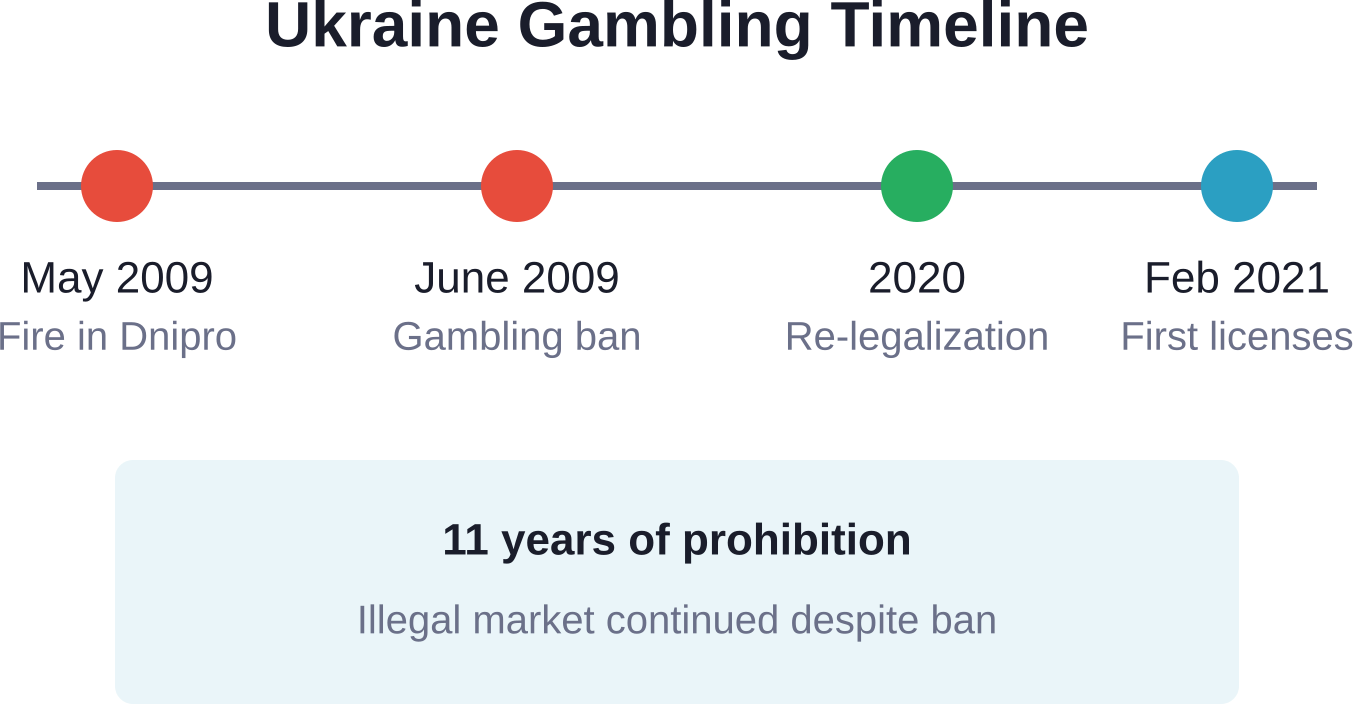
Gambling in Ukraine was completely illegal between 2009 and 2020. The prohibition came swiftly after a tragic fire in a gambling hall in Dnipro in May 2009 that killed nine people.
Parliament passed the law “On Prohibition of Gambling Business in Ukraine” on May 15, 2009. President Viktor Yushchenko signed it on June 23, and the ban took effect on June 25. For eleven years, all forms of gambling business and participation in gambling activities were outlawed across the country.
The ban lasted until 2020, when economic pressures and recognition of a thriving illegal market prompted reconsideration. Parliament passed new legislation legalizing and regulating gambling, marking a complete reversal of the 2009 prohibition.
Why Ukraine Reversed the Ban
Several factors drove the decision to legalize gambling. The illegal market continued operating despite the ban, generating revenue outside government oversight and taxation. State budgets expected significant income from licensing through regulated channels.
But there’s more to it. The gambling industry had become entangled with broader national security concerns. According to research from the Royal United Services Institute, Ukraine’s gambling sector became “an unlikely but important vector of Russian influence.” One key alleged agent, Boris Baum, was expelled from the gambling regulator’s advisory body in July 2022 and fled the country.
Legalization offered a path to regulate, tax, and monitor an industry that existed regardless of prohibition.
Current Legal Status: What Makes Gambling Legal Today
Gambling is fully legal in Ukraine under a comprehensive regulatory framework. The 2020 law established clear rules for licensing, operation, taxation, and enforcement.
The first gambling licenses were issued in February 2021 to Spacex LLC and Parimatch, marking the official return of legal gambling. Since then, over 50 companies have obtained licenses to operate in the country, with the majority registered in Kyiv.
But legality comes with conditions. Operators must navigate substantial financial requirements, regulatory compliance, and ongoing oversight.
Types of Legal Gambling in Ukraine
The current framework permits several forms of gambling. Land-based casinos can operate in hotels with specific requirements. Online casinos and sports betting platforms are licensed and regulated. Poker rooms, slot machine establishments, and lottery operations also fall within the legal framework.
Each category has distinct licensing requirements and operational restrictions. Online gambling, in particular, faces advertising regulations and technical compliance standards.
Licensing Requirements: The High Bar for Entry
Here’s where it gets expensive. Ukraine deliberately set high financial thresholds to ensure only serious, well-capitalized operators enter the market.
The required registered capital for a gambling operator in Ukraine is 30 million UAH. The license fees vary significantly by gambling type (e.g., online casino, land-based casino, sports betting) and are pegged to the national minimum wage.
Licensing requirements include minimum capitalization and financial security provisions. Additional regulatory requirements apply throughout the license period.
Who Can’t Get a License
The law prohibits certain entities from obtaining gambling licenses. Companies with shareholders registered in countries designated as problematic face exclusion. This restriction addresses national security concerns and prevents potential channels for illicit influence.
Applicants must demonstrate clean financial histories, transparent ownership structures, and compliance with anti-money laundering regulations. The Law of Ukraine “On Prevention and Counteraction to Legalisation (Laundering) of Criminal Proceeds, Terrorist Financing and Financing of Proliferation of Weapons of Mass Destruction” (Law № 361-IX, revised as of January 1, 2026) governs financial compliance.
Taxation and Revenue: How the State Benefits
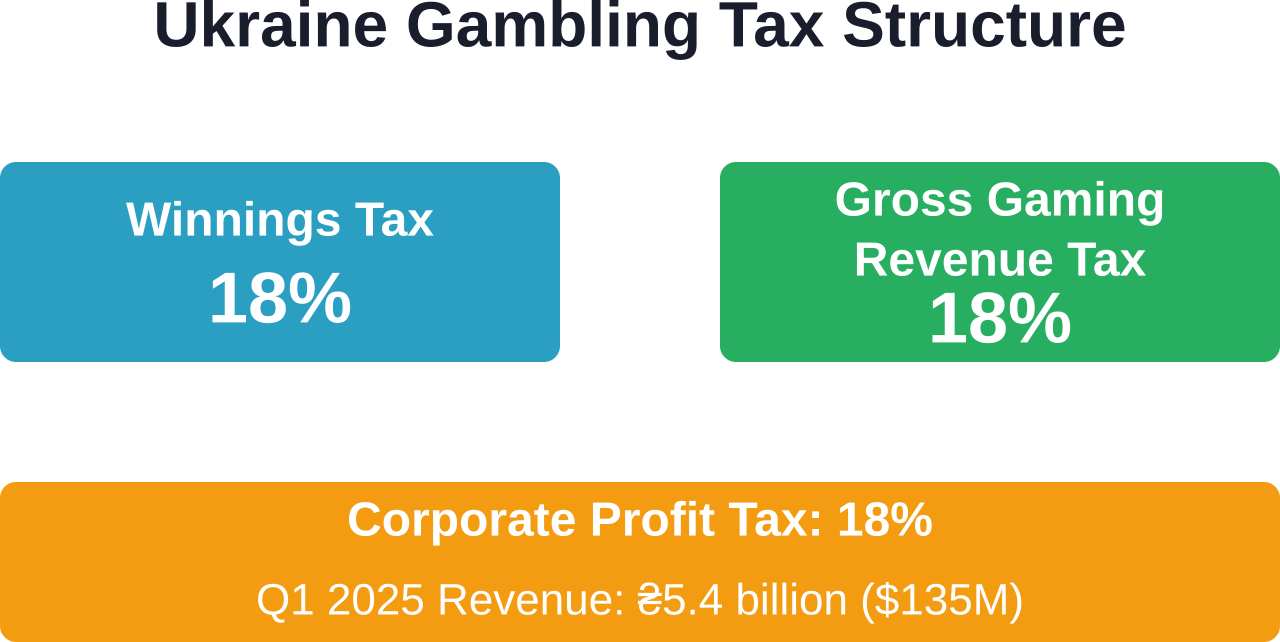
By design, the gambling industry faces heavy taxation. Winnings and gross gaming revenue are subject to an 18% tax rate. Corporate profits from gambling operators also face an 18% tax.
These rates generate substantial government revenue. In the first three months of 2025, Ukraine collected 5.4 billion UAH (approximately $135 million) in gambling taxes—20.4% more than the previous year.
The financial impact extends beyond direct taxation. License fees, regulatory fines, and economic activity generated by gambling establishments contribute to state budgets and local economies.
Regulatory Oversight and Enforcement
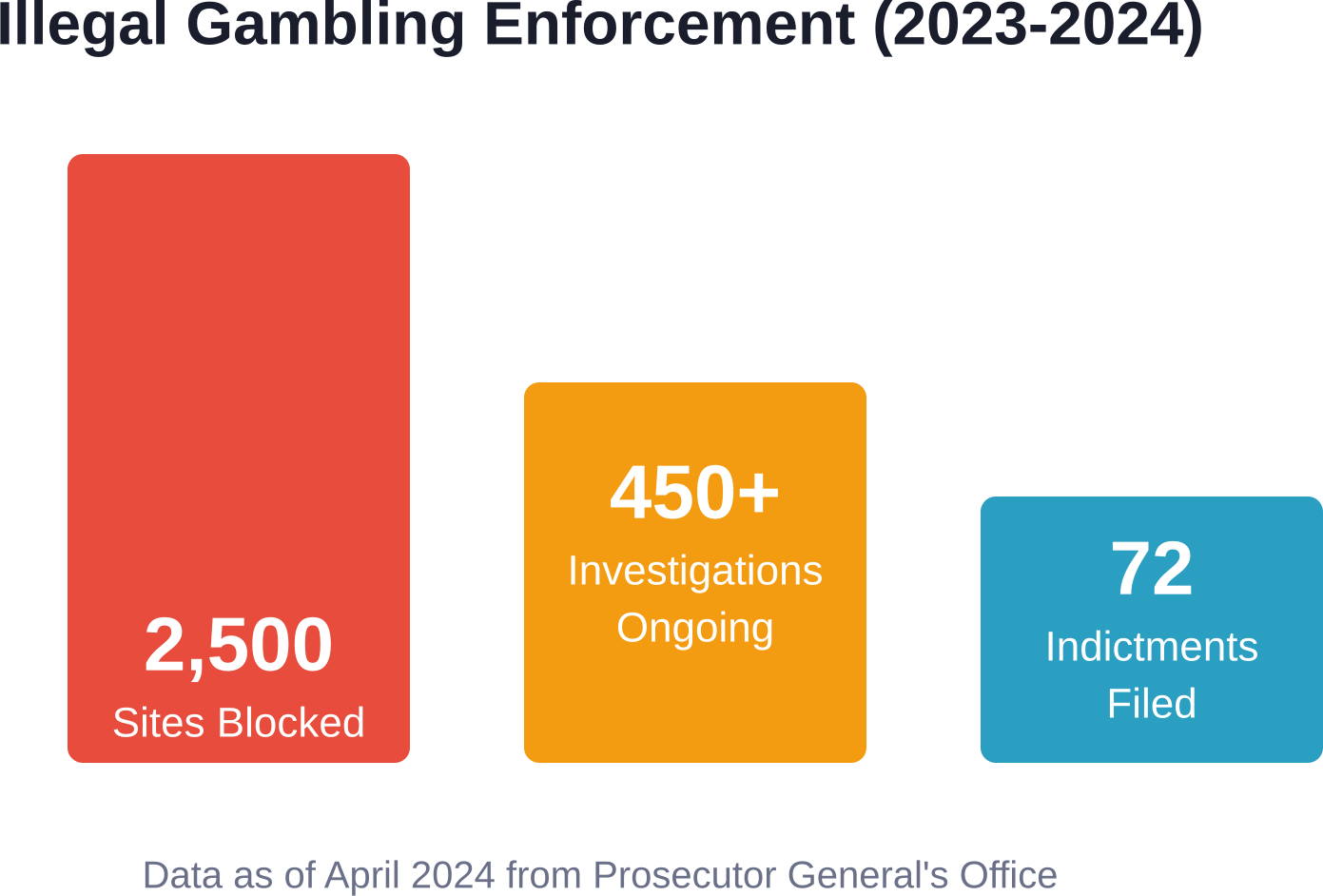
State authorities actively monitor and enforce gambling regulations. Ukraine’s prosecutor general’s office, working with law enforcement, blocked 2,500 websites hosting unlicensed gambling content as of April 2024.
The enforcement figures are striking. Over 450 alleged illegal gambling offenses were under investigation as of April 2024. Indictments against 72 people were sent to court, with seven charges relating to 68 members of criminal gangs.
The regulatory body oversees compliance through multiple mechanisms. It requests information on operator activities, including financial metrics. Regular inspections occur. The commission monitors the gambling sector and issues public reports on its findings.
Recent Regulatory Updates
Parliament adopted Law of Ukraine No. 4116-IX to combat gambling addiction (ludomania) and improve state regulation of gambling-related activities. These updates reflect ongoing refinement of the regulatory framework.
Advertising regulations require visible warnings. Each advertisement must contain a notice—at least 15% of the ad size—that gambling may cause ludomania. These consumer protection measures balance industry operation with public health concerns.
The Online Casino Market in Ukraine
Online gambling represents a significant portion of Ukraine’s legal market. Ukraine’s iGaming market is projected to grow in coming years, with ongoing expansion of online betting platforms and casino services.
The online sector faced disruption following the Russian invasion in 2022. Many businesses suspended operations or relocated. However, the market has shown resilience, with tax revenue continuing to grow year-over-year.
Licensed online operators must comply with technical standards, payment processing regulations, and responsible gambling measures. The regulatory framework treats online gambling as seriously as land-based establishments.
Top Licensed Online Operators
Several major operators hold licenses to provide online gambling services. First.ua offers welcome bonuses up to 250,000 UAH plus 1,300 free spins, with payment options including Visa, Mastercard, Apple Pay, Google Pay, and bank apps. VBet similarly provides bonuses up to 250,000 UAH.
Payout speeds for licensed operators typically range from 1-2 hours for electronic methods, significantly faster than international platforms. This efficiency stems from domestic payment infrastructure and regulatory requirements for prompt withdrawal processing.
Operator | Maximum Bonus | Payout Speed | Sports Betting |
|---|---|---|---|
First.ua | 250,000 UAH + 1,300 FS | 1-2 hours | Yes |
VBet | 250,000 UAH | 1-2 hours | Yes |
Parimatch | Varies | 1-2 hours | Yes |
Navigate the iGaming Supplier Landscape with Sologe
Ukraine has a regulated gaming market, but understanding the legal framework is only part of the research process. Sologe helps companies explore different segments of the iGaming industry through a marketplace that brings together suppliers across multiple business categories.
Sologe helps businesses compare:
- Online casino and gaming platforms
- Gaming software providers
- Payment solution providers
- Analytics software
- Marketing software
- Certification services
- Company registration services
- Operations management services
👉Contact Sologe to review platform providers, software vendors, payment solutions, and other B2B services relevant to the gaming industry.
Land-Based Casinos: Hotel Requirements
Land-based casinos face specific location restrictions. They can only operate within hotels that meet designated standards. This requirement aims to position gambling as part of a broader tourism and hospitality offering rather than standalone establishments in residential areas.
The hotel casino model mirrors approaches in some other jurisdictions, where gambling is integrated with accommodation, dining, and entertainment complexes. This structure influences where casinos can open and what markets they serve.
Reporting Illegal Gambling Operations
Ukrainians can now report illegal online casinos directly to regulators. This reporting mechanism emerged as part of enhanced enforcement efforts against unlicensed operators who continue attempting to serve the Ukrainian market.
The ability for citizens to report violations strengthens the regulatory framework. It creates a channel for identifying illegal operators who advertise online, process payments, or otherwise attempt to operate without licenses.
Enforcement against illegal gambling serves multiple purposes: protecting consumers, ensuring tax compliance, and maintaining the integrity of the licensed market.
The Impact of War on Gambling Operations
The Russian invasion in February 2022 significantly disrupted Ukraine’s gambling market. Many businesses suspended operations. Some relocated staff and infrastructure. The war created uncertainty about economic activity, consumer spending, and regulatory priorities.
Yet the industry showed resilience. Tax revenue grew 20.4% year-over-year in the first quarter of 2025, suggesting recovery and adaptation. Licensed operators continue serving customers, and regulatory oversight remains active despite wartime conditions.
The gambling sector’s connection to national security concerns became more pronounced during wartime. The expulsion of Boris Baum from the regulator’s advisory body in July 2022 highlighted ongoing efforts to remove potentially compromising influences from the industry.
Consumer Protection and Responsible Gambling
The regulatory framework includes consumer protection measures. Advertising must include ludomania warnings. Operators face requirements around customer verification, payment security, and responsible gambling tools.
Recent legislative updates specifically target gambling addiction prevention. These measures acknowledge that legalization must be accompanied by safeguards to minimize social harm.
Licensed operators must provide mechanisms for self-exclusion, deposit limits, and access to support resources for problem gambling. These requirements differentiate the legal market from unregulated alternatives.
Comparing Ukraine to Other European Markets
Ukraine’s approach shares similarities with other jurisdictions that moved from prohibition to regulation. The high licensing fees echo strategies in markets like the UK and Malta, where substantial financial requirements serve as barriers to entry.
The 18% tax rate on gross gaming revenue aligns with European averages, though some jurisdictions impose higher rates while others take lighter approaches. Ukraine’s rate balances revenue generation with industry viability.
The integration of anti-money laundering requirements, ownership transparency, and national security considerations reflects modern regulatory thinking about gambling’s broader implications beyond simple taxation and consumer protection.
Future Outlook for Ukraine’s Gambling Industry
The industry faces both opportunities and challenges. Projected growth in the iGaming sector suggests continued expansion. The adoption of technology across licensed operators indicates maturation and sophistication.
Regulatory refinement continues. Recent legislative updates demonstrate ongoing adjustment of the framework as authorities identify gaps or emerging issues. The enforcement posture against illegal operators appears to be intensifying rather than relaxing.
Economic conditions, including the ongoing war and post-war recovery prospects, will shape the market’s trajectory. The gambling sector’s contribution to state revenue makes it an important economic component, likely ensuring continued government support for the legal framework.
Frequently Asked Questions
Can foreigners gamble in Ukrainian casinos?
Yes. Foreign nationals may legally gamble at licensed casinos in Ukraine. They must complete the operator’s identity verification procedures, and any tax obligations on winnings may depend on both Ukrainian law and the tax rules of their country of residence.
Do I need to pay taxes on gambling winnings in Ukraine?
Yes. Gambling winnings in Ukraine are generally subject to an 18% personal income tax. Licensed operators may withhold taxes where required, and players with significant winnings or cross-border tax obligations should seek professional tax advice.
How can I verify if a casino is legally licensed in Ukraine?
Licensed operators must publish their licensing information and registration details on their websites. Players can also verify a casino’s status through the relevant Ukrainian gambling regulator or report suspected unlicensed operators to the appropriate authorities.
What happens if I gamble on an unlicensed site from Ukraine?
Using an unlicensed gambling site offers no regulatory protection and may expose players to unfair practices, payment issues, or unresolved disputes. Ukrainian authorities actively block unauthorized gambling websites, while licensed operators provide legal safeguards and regulatory oversight.
Are there any geographic restrictions within Ukraine for gambling?
Yes. Land-based casinos may operate only in hotels that meet the legal requirements established by Ukrainian law. Licensed online gambling services are generally available throughout Ukraine, subject to applicable technical and regulatory requirements.
What are the minimum age requirements for gambling in Ukraine?
The minimum legal age for gambling in Ukraine is 21. Licensed operators are required to verify the age and identity of customers before allowing them to participate in gambling activities.
How does Ukraine’s gambling regulation compare to EU standards?
Ukraine’s gambling framework includes many regulatory features commonly found in European jurisdictions, such as licensing requirements, anti-money laundering rules, consumer protection measures, and responsible gambling obligations. Although Ukraine is not part of the EU regulatory system, its framework shares many similar principles.
Conclusion
Gambling is unequivocally legal in Ukraine under a comprehensive regulatory framework established in 2020. The system imposes substantial financial requirements—including a 30 million UAH license fee and significant capitalization thresholds—ensuring only well-funded, serious operators enter the market.
The legal gambling industry generates significant tax revenue, with collections reaching ₴5.4 billion in the first quarter of 2025 alone. Over 50 licensed companies operate across land-based and online channels, subject to active regulatory oversight and enforcement against illegal competition.
But legality comes with complexity. The framework balances revenue generation, consumer protection, national security concerns, and responsible gambling measures. Recent updates continue refining regulations, particularly around advertising and addiction prevention.
For operators, the Ukrainian market offers opportunities within a structured legal environment. For players, licensed operators provide legally protected gambling options with regulatory oversight. The system represents a deliberate choice to regulate rather than prohibit, acknowledging that gambling will occur and creating mechanisms to manage its social and economic impacts. Check official regulatory sources for the most current licensing information and compliance requirements before engaging with the Ukrainian gambling market.
Related Articles

September 3, 2026Is the Casino Legal in Denmark? 2026 Guide

September 3, 2026Is the Casino Legal in Angola? What the 2026...