 Nothing found for the request
Is the Casino Legal in Ethiopia? 2026 Complete Guide
Sologe July 10, 2026
Share:


Understanding Ethiopia's Gambling Legal Framework
Ethiopia’s approach to gambling is rooted in both cultural attitudes and government regulation. The practice of gaming and gambling in most of Ethiopian society is labeled as unlawful, immoral, and unethical. This cultural perspective has significantly shaped the country’s legal framework.
The primary regulatory body overseeing gambling activities is the National Lottery Administration (NLA). The National Lottery Administration was established under the National Lottery Administration Re-establishment Proclamation No.535/2007 to regulate lottery and sports betting activities.
The proclamation aims to properly manage, regulate and control lottery games in Ethiopia in view of developments in their variety and play styles, and to maximize their financial contributions towards economic and social development.
What Forms of Gambling Were Legal Before 2025?
Before the sweeping December 2025 ban, Ethiopia’s regulated gambling sector consisted of two main categories:
- Lottery games: The NLA itself operates 16 different lotteries, of which ten are passive paper lotteries and six are instant scratch lotteries.
- Sports betting: Interactive gambling was authorized as well, however, it was limited to sports betting under proper licensing.
Traditional casino games — table games like blackjack, roulette, poker, and slot machines — were never explicitly legalized under Ethiopian law. No regulatory framework exists for licensing land-based or online casinos offering these games.
Here’s the thing though — despite this cultural and legal resistance, the sports betting business specifically started and developed rapidly in various cities of Ethiopia during the early 2020s.
Taxation on Gambling Activities
Under Proclamation No. 1395/2025, Ethiopia increased the tax on winnings from games of chance, including lotteries, prize draws, and sports betting, to between 20% and 25% of the full prize amount, while licensed operators pay a 15% turnover tax.
The December 2025 Sports Betting Ban: What Happened
On December 15, 2025, Ethiopia enacted a sweeping shutdown of its sports betting sector, revoking all existing operating licenses and ordering an immediate halt to wagering activity across the country.
The decision applies to every licensed betting operator and covers online platforms, retail betting shops, agents, and associated payment services.
The Ethiopian Lottery Service confirmed that the action followed a nationwide investigation into the betting sector. But wait — the specifics of what triggered this investigation haven’t been fully disclosed to the public.
Immediate Consequences of the Ban
The ban had several immediate effects:
- All licensed betting operators ceased operations
- Online betting platforms stopped accepting wagers from Ethiopian players
- Retail betting shops closed their doors
- Payment services associated with betting were halted
For the thousands of Ethiopians who had embraced sports betting as entertainment, this came as a shock. The industry had been growing despite the cultural stigma, particularly among younger, urban populations.
Are Casinos Legal in Ethiopia in 2026?
The short answer? No, traditional casinos are not legal in Ethiopia.
There are no licensed land-based casinos operating in the country. The National Lottery Administration has never issued licenses for casino operations, and no legal framework exists to regulate table games, slot machines, or other traditional casino offerings.
Ethiopia’s gambling laws focus exclusively on lotteries and what was previously sports betting. Casino gambling falls outside this regulated space entirely.
What About Online Casinos?
Online casino gambling occupies an even grayer area. While interactive gambling was authorized for sports betting purposes, this authorization never extended to online casino games.
Now, this is where it gets interesting. Some international online casinos do accept players from Ethiopia, operating from offshore jurisdictions. But these platforms exist in a legal gray zone.
They’re not licensed by Ethiopian authorities. They’re not regulated under Ethiopian law. And with the government’s recent crackdown on sports betting, the risk of further restrictions on online gambling access has increased substantially.
Internet Access and Online Gambling
Ethiopia has an internet penetration rate of 15.4%, and the country is attempting a broad expansion of access. However, this relatively low penetration rate, combined with the lack of regulatory clarity, has limited the development of a robust online gambling market.
Payment processing for online gambling also presents challenges. Traditional banking methods and mobile payment systems used in Ethiopia are not typically integrated with international gambling sites.
Current Legal Gambling Options in Ethiopia
So what’s actually legal right now? Real talk: not much.
National Lottery Games
The only clearly legal gambling activity remaining in Ethiopia is participation in the National Lottery Administration’s lottery games. These include:
- Ten passive paper lotteries
- Six instant scratch lotteries
These lottery games continue to operate under government oversight and remain the sole legal avenue for gambling in the country as of 2026.
Sports Betting Status
As of December 15, 2025, all sports betting is banned in Ethiopia. The government has revoked every license, and no legal sports betting operations exist in the country.
Whether this ban is temporary or permanent remains unclear. The Ethiopian authorities haven’t announced any timeline for potential license reissuance or regulatory reform.
Gambling Type | Legal Status in 2026 | Regulatory Body
|
|---|---|---|
National Lottery (paper) | Legal | National Lottery Administration |
Scratch Lotteries | Legal | National Lottery Administration |
Sports Betting | Banned (as of Dec 2025) | Previously NLA |
Land-Based Casinos | Not Legal | None |
Online Casinos | Not Regulated/Gray Area | None |
Build Smarter Gaming Systems with Sologe
Businesses researching emerging gaming markets often need to understand which technologies, software solutions, and support services are used throughout the industry. Sologe helps companies identify and compare suppliers across multiple iGaming categories, creating a more structured approach to vendor research.
Sologe helps gaming businesses compare:
- Online gaming platforms
- Mobile application solutions
- Payment solution providers
- Marketing software
- Analytics software
- Operations management services
- Company registration services
- Additional gaming software
👉Contact Sologe to explore software vendors, payment providers, mobile application solutions, company registration services, and operational tools for the gaming industry.
Why Ethiopia Banned Sports Betting
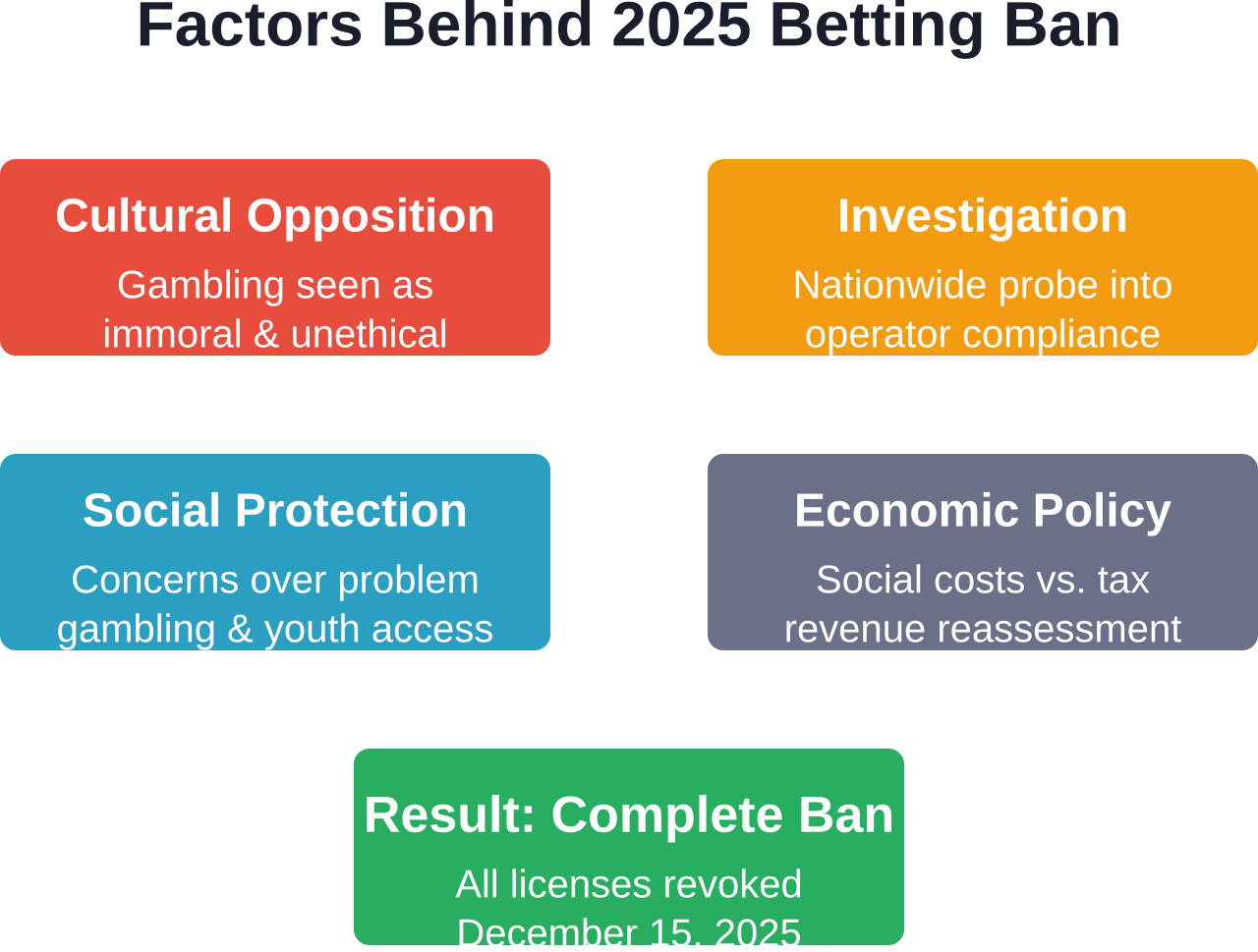
The government hasn’t released comprehensive details about the reasoning behind the December 2025 ban. But we can piece together likely factors based on the announcement and Ethiopia’s gambling history.
Cultural and Social Concerns
Gambling has long been viewed with suspicion in Ethiopian society. The practice is widely considered unlawful, immoral, and unethical by significant portions of the population.
Religious and cultural values emphasize caution regarding gambling activities. As sports betting grew rapidly in urban areas, concerns about its social impact likely intensified.
Regulatory Investigation Findings
The Ethiopian Lottery Service confirmed the ban followed a nationwide investigation. While specific findings haven’t been publicly detailed, such investigations typically examine:
- Compliance with licensing terms
- Player protection measures
- Underage gambling prevention
- Money laundering risks
- Tax compliance
One or more systemic issues discovered during this investigation may have prompted the blanket revocation rather than targeted enforcement.
Economic and Political Factors
Ethiopia faces various economic challenges. The government may have concluded that the social costs of sports betting outweighed the tax revenue benefits.
Political considerations also play a role. Demonstrating strong action against gambling could appeal to conservative constituencies and align with traditional values.
Risks of Offshore and Unlicensed Gambling
Some Ethiopian residents may be tempted to access offshore gambling sites that accept players from the country. But this carries significant risks.
Legal Risks
Participating in unlicensed gambling operations could violate Ethiopian law. While enforcement against individual players has been limited historically, the December 2025 crackdown signals a more aggressive stance toward gambling activities.
The government has the authority to block access to offshore gambling websites. Payment processing for these sites can also be interrupted at any time.
Player Protection Concerns
Offshore casinos operating without Ethiopian licenses lack regulatory oversight. This creates several problems:
- No guarantee of fair gaming or accurate payout percentages
- Limited recourse if disputes arise over winnings
- Weak or nonexistent responsible gambling measures
- Potential data privacy and security vulnerabilities
Players who engage with these platforms essentially gamble without a safety net. Although there’s no way to eliminate the issues completely, regulated gambling markets provide mechanisms for dispute resolution and player protection that offshore operators typically don’t.
Financial Risks
Payment processing for offshore gambling presents challenges. Ethiopian banking systems and mobile payment platforms weren’t designed to integrate with international gambling sites.
Deposits and withdrawals can be delayed, blocked, or lost entirely. Currency conversion fees and unfavorable exchange rates can significantly reduce winnings.
What the Future Might Hold
Will Ethiopia ever legalize casinos or reinstate sports betting licenses? That’s the million-birr question.
Potential for Regulatory Reform
Some countries that have banned gambling activities later reverse course, implementing tighter regulation rather than outright prohibition. This approach can:
- Generate tax revenue for government programs
- Reduce illegal gambling operations
- Provide consumer protections for those who gamble regardless of legal status
- Create legitimate employment opportunities
Whether Ethiopia will follow this path remains uncertain. Cultural attitudes toward gambling would need to shift, or economic pressures would need to become compelling enough to overcome moral objections.
Regional Trends in Africa
Many African countries have developed regulated gambling sectors, including both land-based casinos and online betting platforms. Kenya, South Africa, Nigeria, and Uganda all have established gambling industries.
These regional examples demonstrate that regulated gambling can coexist with traditional values when proper safeguards are implemented. But each country’s cultural and political context differs.
Technology and Enforcement Challenges
As internet access expands in Ethiopia, controlling access to offshore gambling sites becomes more difficult. Total blocking of international gambling platforms requires significant technical resources and ongoing monitoring.
This reality may eventually push policymakers toward regulated domestic options rather than attempting to enforce blanket prohibitions that prove difficult to maintain.
Comparing Ethiopia’s Approach to Neighboring Countries
Looking at how Ethiopia’s neighbors handle gambling provides useful context.
Country | Casinos Legal? | Sports Betting Legal? | Online Gambling Legal?
|
|---|---|---|---|
Ethiopia | No | No (banned Dec 2025) | No |
Kenya | Yes (licensed) | Yes (licensed) | Yes (licensed) |
Sudan | No | No | No |
Somalia | No | No | No |
Uganda | Yes (licensed) | Yes (licensed) | Yes (licensed) |
Kenya and Uganda have embraced regulated gambling sectors with licensing frameworks for casinos, sports betting, and online platforms. These countries generate significant tax revenue from gambling while implementing player protection measures.
Sudan and Somalia, like Ethiopia, prohibit most forms of gambling based largely on religious and cultural grounds.
Ethiopia’s recent move to ban sports betting aligns it more closely with its conservative neighbors than with East African countries that have developed commercial gambling industries.
Player Protection and Responsible Gambling
One positive aspect of Ethiopia’s restrictive approach is the reduced exposure to gambling-related harm. Problem gambling can lead to financial distress, relationship breakdowns, and mental health challenges.
Countries with legal gambling industries struggle to balance commercial interests with public health concerns. Effective player protection requires:
- Age verification to prevent underage gambling
- Self-exclusion programs for problem gamblers
- Deposit and loss limits
- Access to counseling and support services
- Advertising restrictions
- Mandatory responsible gambling messaging
Ethiopia’s decision to ban sports betting rather than attempt to regulate it with these safeguards reflects a judgment that prohibition is more effective than managed legalization.
That said, prohibition doesn’t eliminate gambling — it just pushes it underground or toward unregulated offshore options where no player protections exist at all.
Economic Impact of the Betting Ban
The December 2025 ban had immediate economic consequences beyond just the betting companies themselves.
Lost Tax Revenue
The increased win tax on sports betting generated revenue for the Ethiopian government. With all licensed operators shut down, this revenue stream has disappeared.
Whether the social benefits of the ban outweigh this lost revenue is a policy question without a clear answer.
Employment Effects
Sports betting operations employed Ethiopians in various roles — retail shop staff, customer service, technology positions, and more. The ban resulted in job losses across the sector.
Betting agents and small shop owners who relied on commissions from betting operations also lost income sources.
Investment Climate
The sudden revocation of all licenses, regardless of individual operator compliance, sends a signal to international investors about regulatory risk in Ethiopia.
Companies considering investment in Ethiopia — not just in gambling but in other sectors — may view the blanket ban as evidence of unpredictable regulatory changes.
Frequently Asked Questions
Can I legally gamble at a casino in Ethiopia?
No. Ethiopia does not have any licensed land-based or online casinos. The country has never established a legal casino licensing system. The only officially authorized gambling activity is participation in National Lottery Administration lottery games.
Is sports betting legal in Ethiopia in 2026?
No. Sports betting has been prohibited in Ethiopia since December 15, 2025. Existing licenses were revoked, and all sports betting operations, including online platforms and retail betting shops, were ordered to stop operating.
Why did Ethiopia ban sports betting?
The ban followed a nationwide investigation conducted by the Ethiopian Lottery Service. While the government did not publicly disclose all findings, concerns related to regulation, compliance, and broader social considerations are believed to have contributed to the decision.
Can I access offshore online casinos from Ethiopia?
Some offshore gambling websites may accept Ethiopian players, but they are not licensed or regulated in Ethiopia. Using these platforms carries legal and financial risks, including limited consumer protection and possible payment restrictions.
What forms of gambling are legal in Ethiopia?
As of 2026, only lottery games operated by the National Lottery Administration are legal in Ethiopia. Casino gambling, sports betting, and other commercial gambling activities are either prohibited or not recognized under Ethiopian law.
Will Ethiopia ever legalize casinos or sports betting again?
There are currently no official plans to legalize casinos or restore sports betting in Ethiopia. Any future changes would require new legislation and government approval, and no timeline has been announced.
How does Ethiopia’s gambling policy compare to other African countries?
Ethiopia maintains one of the most restrictive gambling policies in Africa. Unlike countries such as Kenya and Uganda, which regulate licensed casinos and sports betting, Ethiopia allows only state-run lottery games while prohibiting most other forms of gambling.
Conclusion: The Reality of Gambling in Ethiopia
So, is the casino legal in Ethiopia? The definitive answer is no — and the gambling landscape has become even more restricted following the December 2025 sports betting ban.
Ethiopia permits only government-operated lottery games under the National Lottery Administration. Traditional casino gambling has never been legalized, and sports betting — which briefly flourished in urban areas — is now completely banned.
For Ethiopian residents interested in gambling, the legal options are extremely limited. The only legitimate path is purchasing lottery tickets from the National Lottery Administration. Everything else operates outside the law.
Cultural attitudes toward gambling as immoral and unethical, combined with the government’s recent aggressive enforcement action, suggest that liberalization of gambling laws isn’t on the horizon. The 2025 ban represents a move in the opposite direction — toward stricter control rather than expanded access.
For international observers and potential investors, Ethiopia’s gambling market is essentially closed for business. The blanket license revocation demonstrates that the government prioritizes social and cultural values over the economic benefits that regulated gambling might provide.
Whether this approach effectively prevents gambling or simply pushes it toward unregulated channels remains an open question. But the legal framework is clear: casinos are not legal in Ethiopia, and legal gambling options are minimal.
Anyone considering gambling in Ethiopia should stick to the National Lottery Administration’s official lottery games — the only form of gambling that clearly operates within the law as of 2026.
Related Articles

September 3, 2026Is the Casino Legal in Denmark? 2026 Guide

September 3, 2026Is the Casino Legal in Angola? What the 2026...