 Nothing found for the request
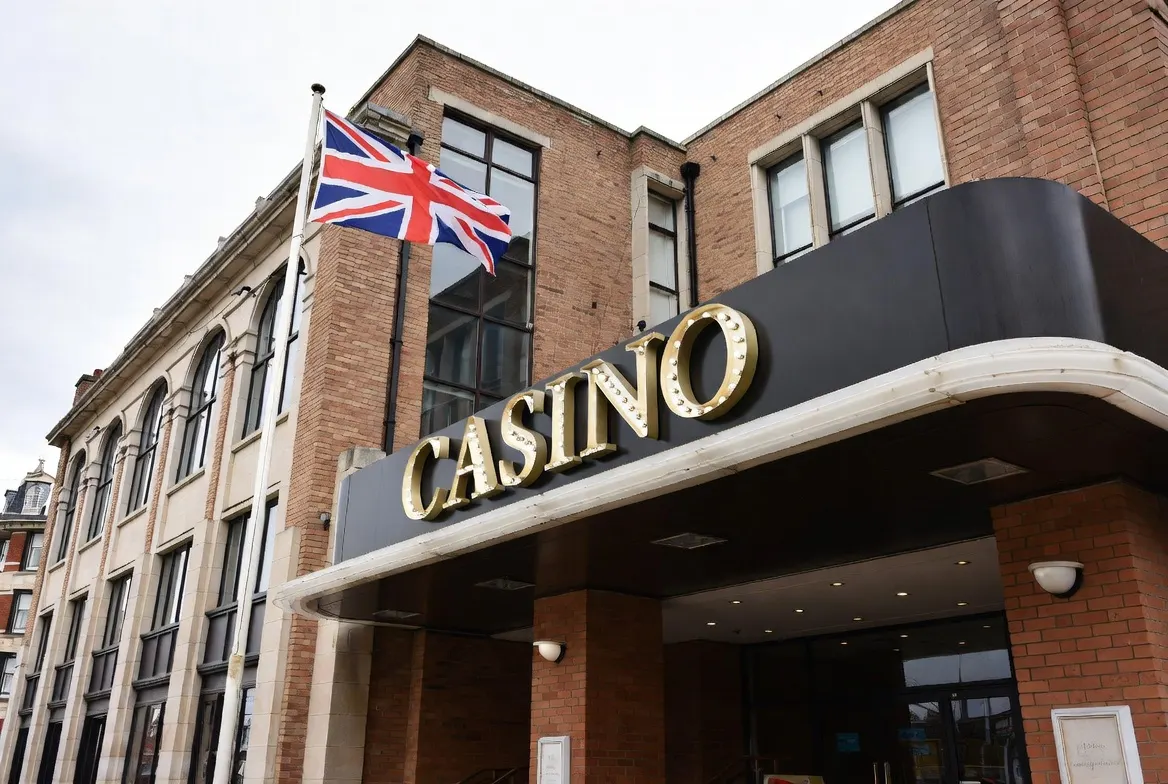
UK Casino Market: Size, Growth & Regulation in 2026
Sologe March 27, 2026
Share:


The Scale of the UK Casino Market
Understanding the UK casino market means looking at two distinct but interconnected sectors: land-based casinos and online gambling operations.
The UK online gambling market generated a revenue of USD 7,371.5 million in 2024 and is expected to reach USD 15,093.8 million by 2030. A compound annual growth rate of 12.8% is expected from 2025 to 2030.
Sports betting dominates as the largest segment, but here’s where it gets interesting. According to research from the National Centre for Social Research in collaboration with the University of Liverpool, slots games accounted for 60.1% of spending on gaming activities when analyzing 140,000 active online gambling accounts. This reflects slots’ dominance across the whole online gambling sector.
Land-Based vs. Online Operations
The Casino Market size is expected to grow by USD 34201.4 million from 2026-2030 expanding at a CAGR of 3.4% during the forecast period. Sound too good to be true? There’s context here.
This massive jump is attributed to the base year being 2020-21, when UK residents spent months locked down during the pandemic. Land-based casinos were essentially closed, making any subsequent growth appear astronomical. The real picture is a recovery story, not a genuine boom.
Online operations, meanwhile, have maintained steady growth throughout the same period. The digital channel proved resilient during lockdowns and has retained much of that audience even as physical venues reopened.
Reach Casino Industry Buyers in One Place

In areas like casino tourism, being easy to find can matter as much as the service itself. Sologe is an iGaming marketplace where gaming businesses look for suppliers, software, platforms, and service partners. Vendors use it to present what they offer in one place and stay visible to industry buyers over time.
Want More Gaming Businesses to Find You?
Use Sologe to:
- show your company to operators and partners in the industry
- present your services and company profile in one place
- stay visible year-round in a dedicated gaming marketplace
👉 Get in touch with Sologe to discuss listing your business as a vendor.
Regulatory Landscape: The Gambling Commission's Role
The Gambling Commission serves as the regulatory backbone of the UK casino market. As an executive non-departmental public body sponsored by the Department for Digital, Culture, Media & Sport, the Commission regulates everything from arcades and betting to bingo, casinos, and remote gambling operations.
What’s unique about the UK approach? The regulatory framework covers gambling products and services offered to consumers in Great Britain regardless of where the key equipment is based in the world. If you’re targeting UK consumers, you’re under UK rules.
Recent Regulatory Changes
The Department for Culture, Media and Sport published its white paper in April 2023, outlining plans for modernising gambling sector regulation. The new government reviewed these proposals and decided to implement changes as outlined in previous consultations.
The Gambling Commission launched a financial checks pilot beginning in August 2024. The risk check trial placed additional checks on bettors hitting a net monthly deposit of £500 while betting with top-tier operators.
The pilot consists of three stages, plus an analysis phase. As of early 2025, Stages 1 and 2 were complete, with findings indicating that 97% of assessments in Stage 2 were “frictionless,” higher than originally estimated.
Licensing Requirements
Operating in the UK casino market requires navigating a multi-tier licensing system. There are three main types of licences businesses may need:
Licence Type | Purpose | Who Needs It |
|---|---|---|
Operating Licence | Required to provide most gambling facilities in Great Britain | All casino operators, online platforms, betting shops |
Personal Management Licence | Required for individuals in key operational roles | Senior management, compliance officers, key personnel |
Premises Licence | Required for physical gambling locations | Land-based casinos, betting shops, bingo halls |
Licensing authorities work in partnership with the Gambling Commission to ensure compliance at local and national levels. The guidance provided to these authorities is regularly updated—most recently in July 2025 for casino premises specifically.
Consumer Behavior and Market Patterns
Understanding who gambles, how they gamble, and what they spend reveals the market’s underlying dynamics.
However, when the British public was polled on participation in different gambling activities in early 2024, National Lottery draws emerged as the form with the highest share of participants. In total, 48% of British adults said they played the National Lottery.
But wait—there’s a crucial distinction here. Participation rates don’t tell the full story. Spending patterns matter more for understanding market size.
The Patterns of Play Research
The National Centre for Social Research published final research findings from the Patterns of Play research project. The main report was published with a publishing date of 9 June 2022. This groundbreaking study analyzed 140,000 active online gambling accounts and revealed several critical insights.
Slots games accounted for 60.1% of spending on gaming activities. This dominance isn’t surprising to industry insiders, but the scale is noteworthy. A significant number of account holders had addresses in deprived areas, raising important questions about gambling harm and socioeconomic factors.
Perhaps most concerning: 1.2% of account holders used for gaming—close to 50,000 individuals—spent the equivalent of eight full days playing over the study year. This pattern of high-intensity gambling among a small subset of users has become a focal point for regulatory intervention.
Growth Drivers and Market Dynamics
Several factors are propelling the UK casino market forward despite regulatory headwinds.
Sports betting continues as the fastest-growing segment. The connection between sports fandom and betting has become increasingly integrated, with in-play betting and mobile platforms making wagering more accessible than ever.
Technology advancement plays a massive role. Mobile optimization isn’t optional anymore—it’s the primary interface for most users. Payment processing has become seamless, and sophisticated algorithms personalize user experiences in ways that weren’t possible five years ago.
Real talk: the pandemic fundamentally changed consumer behavior. Many people who’d never gambled online before tried it during lockdowns. A significant portion stuck around even after land-based venues reopened.
Challenges Facing the Market
Not everything points upward. The market faces genuine headwinds that could constrain growth.
Affordability checks represent the biggest near-term challenge. The £500 monthly deposit threshold pilot has already shown that some operators are considering whether the UK market remains as attractive under stricter controls. Community discussions suggest some platforms are evaluating their UK exposure.
Consumer spending power matters too. The Office for National Statistics tracks consumer card spending patterns, and while gambling isn’t broken out separately, the data shows that face-to-face spending has decreased compared to pre-coronavirus levels in many discretionary categories.
Social responsibility pressures are intensifying. Problem gambling awareness has never been higher, and operators face increasing expectations to identify and intervene with at-risk customers. The 1.2% of high-intensity gamblers identified in the Patterns of Play research represents both a business opportunity and a reputational risk.
Market Structure and Key Players
The UK casino market features a mix of established incumbents and newer digital-first operators.
Land-based casino operations remain concentrated among a few major players. These companies operate under both the Gaming Act 1968 and the Gambling Act 2005, depending on when their licenses were granted. The regulatory modernization process aims to harmonize these different frameworks.
Online, the market is more fragmented but still features clear leaders. Companies holding greater than 5% market share dominate revenue, but the long tail of smaller operators collectively represents significant market presence.
What’s changed recently? Some international operators have reassessed their UK positions. The regulatory environment, combined with taxation and compliance costs, has prompted strategic reviews. Whether this represents a genuine pullback or temporary pause remains debatable.
Market Segment | Characteristics | Growth Outlook |
|---|---|---|
Sports Betting | Largest segment, mobile-first, in-play focus | Strong growth expected |
Online Slots | Highest spending per user, 60% of gaming spend | Steady growth |
Live Casino | Premium experience, higher stakes | Moderate growth |
Land-Based Casinos | Recovery from pandemic, experience-focused | Recovery phase |
Poker | Skill-based, tournament and cash games | Stable/slight decline |
Geographic Distribution and Local Spending
The Office for National Statistics has published analysis on consumer card spending flows across the UK. While this data doesn’t isolate gambling spending, it reveals patterns relevant to understanding the market.
The percentage of spending by residents within their local area has decreased compared with pre-coronavirus levels. This trend holds despite evidence that the number of people working from home doubled between October-December 2019 and January-March 2022.
For the casino market, this suggests online gambling has genuinely replaced some local, face-to-face activity rather than simply adding to it. The convenience of mobile betting from home has fundamentally altered where and how people gamble.
Regional variations exist in both participation and spending. Areas with higher deprivation tend to show different patterns, a finding highlighted in the University of Liverpool research collaboration.
International Context and Comparative Position
The UK holds the second-largest gambling market position globally. Only the United States surpasses it in total market size.
But here’s what makes the UK unique: regulatory maturity. The Gambling Commission’s framework, while increasingly strict, provides legal certainty that many markets lack. This has historically made the UK attractive for international operators seeking a legitimate, regulated environment.
Other European markets are watching UK regulatory developments closely. Changes implemented in Britain often preview what regulators in other jurisdictions will eventually adopt. The affordability checks pilot, in particular, has drawn attention from European gambling authorities.

Future Outlook and Market Projections
So where does the UK casino market go from here?
The online segment will almost certainly continue growing, barring major regulatory disruption. The 12.8% compound annual growth rate projected through 2030 assumes the regulatory environment remains fundamentally supportive even if more restrictive.
Land-based casinos face a more uncertain future. The dramatic recovery numbers reflect pandemic baselines, but the longer-term question is whether physical venues can compete with the convenience of online platforms. Many operators are betting on experience—positioning land-based casinos as entertainment destinations rather than pure gambling venues.
Technology will keep reshaping the market. Artificial intelligence for responsible gambling interventions, blockchain for transparency, and virtual reality for immersive experiences all represent potential disruption vectors.
The regulatory direction matters enormously. If affordability checks become more stringent than current proposals, some operators might genuinely reduce UK exposure. If the framework stabilizes at current levels, the market’s underlying fundamentals remain strong.
Frequently Asked Questions
What is the current size of the UK casino market?
The UK online gambling market reached approximately £7.4 billion in revenue in 2024, with projections indicating growth to £15.1 billion by 2030. The land-based casino sector is recovering from pandemic impacts with significant growth rates, though these reflect catch-up from 2020-21 closures rather than organic expansion.
Who regulates casinos in the UK?
The Gambling Commission regulates all casino operations in Great Britain, whether online or land-based. As an executive non-departmental public body sponsored by the Department for Digital, Culture, Media & Sport, the Commission issues licenses, enforces compliance, and works with local licensing authorities to ensure operators meet regulatory standards.
What are the main segments of the UK casino market?
Sports betting represents the largest segment, while slots games account for 60.1% of spending on gaming activities specifically. Other significant segments include live casino games, poker, and traditional land-based casino operations. Online platforms dominate growth, with mobile access driving much of the expansion.
How do affordability checks affect UK gambling operations?
The Gambling Commission began piloting financial risk checks in August 2024, initially requiring additional verification for customers hitting £500 in net monthly deposits. The first phase completed in early 2026, with an expanded second phase now underway. These checks represent a significant operational change that some operators view as potentially constraining market growth.
What percentage of UK adults participate in casino gambling?
Early 2024 polling showed that while 48% of British adults participate in National Lottery draws, participation rates in casino gambling vary based on the specific activity being measured. However, spending patterns differ significantly from participation rates—casino participants tend to spend substantially more per person than lottery players.
Is the UK casino market still growing?
Yes, particularly the online segment. The market is projected to grow at 12.8% compound annual growth rate through 2030. However, regulatory changes and affordability checks have raised questions about whether the UK remains as attractive to operators as it once was. Community discussions suggest some international platforms are reassessing their UK market strategies.
What role do slots play in the UK casino market?
Slots dominate the online gaming sector, accounting for 60.1% of all spending on gaming activities according to University of Liverpool research analyzing 140,000 accounts. This concentration makes slots economics crucial for understanding operator profitability and market dynamics.
Conclusion
The UK casino market stands at a pivotal moment. With online gambling revenue set to double by 2030 and regulatory frameworks undergoing the most significant modernization in decades, operators face both opportunity and uncertainty.
The fundamentals remain strong. Consumer demand persists, technology continues improving user experiences, and the UK’s regulatory certainty—despite increasing restrictions—still surpasses most markets globally.
But the direction of affordability checks, the implementation timeline for white paper recommendations, and how operators respond to increased compliance costs will determine whether the UK maintains its position as Europe’s premier gambling market or sees gradual operator migration to less regulated jurisdictions.
For investors, operators, and policymakers, understanding these dynamics isn’t optional. The UK casino market’s evolution will shape gambling regulation across Europe and influence how the industry balances growth, innovation, and responsible gambling protections for years to come.
Stay informed about regulatory developments, monitor the second phase of affordability check pilots, and watch how major operators adjust their UK strategies. The decisions made in 2026 will reverberate through the industry well into the next decade.
Related Articles

September 29, 2026Is the Casino Legal in Japan? The Real Answer...

September 29, 2026Is the Casino Legal in Gambia? What the Law...