 Nothing found for the request

Caliente Online Casino Market Share Mexico 2026
Sologe March 30, 2026
Share:


Caliente's Market Dominance: The Numbers Behind the Leader
When it comes to online gambling traffic in Mexico, Grupo Caliente isn’t just winning—it’s dominating by a margin that makes competitors look like footnotes.
Based on Semrush data from early 2026, caliente.mx recorded 45,339,448 monthly visits. That’s nearly nine times the traffic of the second-place platform, playdoit.mx, which captured 5,496,087 visits. Third-place Stake.com brought in 5,236,294 visits.
Real talk: Caliente commands roughly 81% of the top three platforms’ combined traffic. That’s not market leadership—that’s market ownership.
Platform | Monthly Visits (2026) | Pages per Visit | Bounce Rate |
|---|---|---|---|
caliente.mx | 45,339,448 | 2.61 | 68.26% |
playdoit.mx | 5,496,087 | 4.23 | 44.48% |
stake.com | 5,236,294 | 3.53 | 58.02% |
The engagement metrics reveal something interesting, though. Caliente’s 2.61 pages per visit and 68.26% bounce rate suggest users arrive with specific betting intentions—they know what they want, place their bets, and leave. Compare that to playdoit.mx’s 4.23 pages per visit and 44.48% bounce rate (verified), which indicates more browsing behavior.
Different user journeys, but Caliente’s sheer volume compensates for lower per-session engagement.
What Makes Caliente Different
Grupo Caliente built its empire on brick-and-mortar sportsbooks before transitioning online. That legacy matters in Mexico, where brand trust carries enormous weight.
The operator is fully compliant with Mexican regulation and PCI DSS standards, processing millions of transactions daily. According to Nuvei, Caliente faced challenges with transaction acceptance rates in the Mexican market—a common issue where payment infrastructure can be unpredictable.
But here’s where it gets interesting. By partnering with specialized payment processors, Caliente achieved a 10% increase in transaction acceptance rates. When processing millions of daily transactions, that 10% improvement translates to substantial revenue gains and better customer experiences.
Transaction limits now reach up to USD 100,000, accommodating high-rollers while maintaining security standards. That’s not just about technical capability—it’s about understanding the Mexican market’s specific needs.
Mexico's Online Gambling Market: Growth Drivers and Dynamics
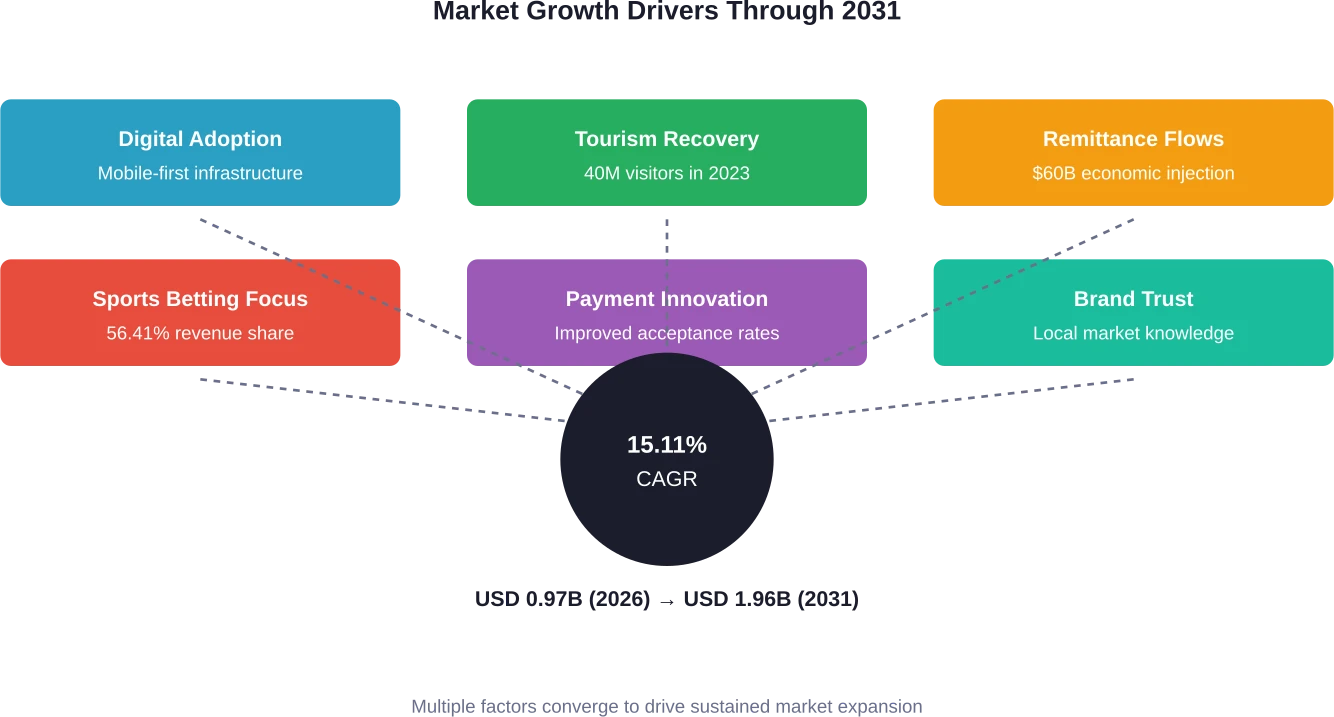
The market isn’t growing in a vacuum. Several converging factors are propelling Mexico’s online gambling sector forward.
Digital adoption accelerated dramatically during and after the pandemic. Remittances reached USD 60 billion in 2023 according to Banxico, injecting liquidity into local economies. Tourism rebounded to 40 million visitors in 2023, many of them American and Canadian tourists familiar with online betting platforms.
These macroeconomic tailwinds indirectly sustain discretionary spending on gambling activities.
Sports Betting Leads Revenue Generation
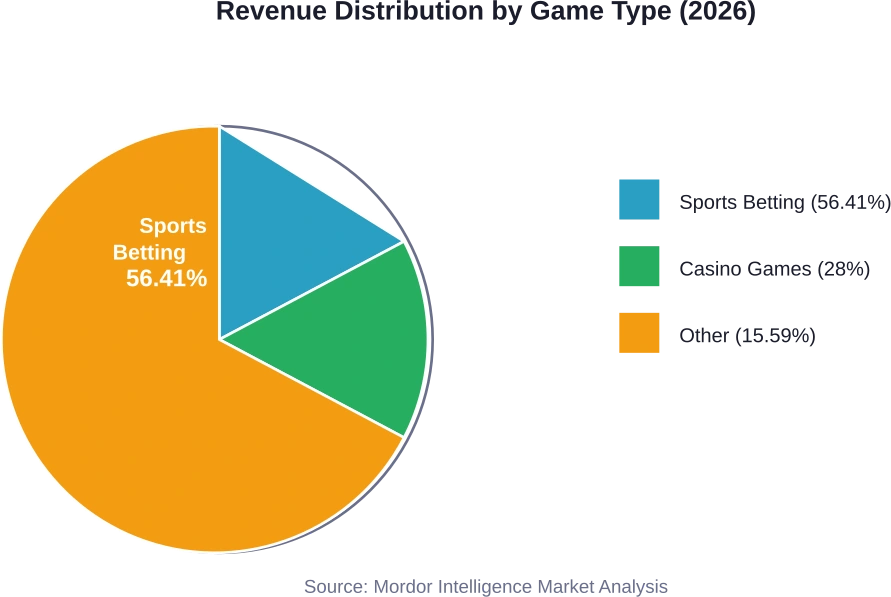
Not all gambling categories perform equally. According to Mordor Intelligence, sports betting led the market with 56.41% of revenue share.
That sports-heavy mix aligns perfectly with Caliente’s DNA as a sportsbook-first operator. The platform offers comprehensive betting markets across football, baseball, basketball, boxing, and other sports popular in Mexico.
Traditional casino games—blackjack, baccarat, roulette, slots—fill out the portfolio, but the betting action drives the business.
Regulatory Fragmentation: Opportunity and Challenge
Here’s the thing though—Mexico’s regulatory environment remains fragmented. Compliant operators like Caliente face higher tax outlays and regulatory compliance costs. Meanwhile, unlicensed sites operate with cost advantages that create competitive tension.
Mexico’s gambling industry association AIEJA has criticized recent tax hikes on the online gambling sector, arguing they disadvantage legitimate operators while doing little to curb unlicensed competition.
This regulatory dynamic shapes market concentration. Mordor Intelligence classifies the Mexico online gambling market as having “medium” concentration—not a pure monopoly, but far from fragmented chaos. A few major players capture most of the value, with Caliente sitting at the top of that pyramid.
Major Players and Competitive Landscape
Caliente doesn’t operate in isolation. The Mexico online gambling market features several significant competitors, each with distinct strategies and market positions.
According to Mordor Intelligence, the major companies operating in this market include:
- Grupo Caliente
- Codere Online Luxembourg S.A.
- Bet365 Group Ltd
- Novibet USA Inc.
- Super Group Ltd.
Codere brings a strong Latin American presence and sports betting heritage. Bet365 leverages its global platform and technology infrastructure. Novibet and Super Group represent newer entrants attempting to gain footholds.
But wait. The traffic numbers tell us something the corporate roster doesn’t fully capture.
Operator | Primary Strength | Market Position |
|---|---|---|
Grupo Caliente | Brand legacy, local trust, retail integration | Clear market leader |
Codere | Latin American expertise, sports focus | Strong challenger |
Bet365 | Global platform, technology, liquidity | International entrant |
Playdoit.mx | High engagement metrics, browsing behavior | Growing presence |
Stake.com | Crypto-friendly, younger demographics | Niche player |
The gap between Caliente and everyone else isn’t closing quickly. Network effects, brand recognition, and payment infrastructure create substantial moats around market leadership.
Market Size Projections: Different Methodologies, Similar Growth Story
Different research firms project slightly different numbers, but the growth trajectory remains consistent across methodologies.
Grand View Research expects the Mexico online gambling market to reach USD 3,156.5 million by 2030, with an 11.9% CAGR from 2025 to 2030. Spherical Insights projects the market will reach USD 3.89 billion by 2033, growing at 15.64% CAGR from a 2023 base of USD 0.91 billion.
Meanwhile, Astute Analytica takes the broadest view, projecting the entire Mexico gambling market (online and offline combined) will reach USD 40.64 billion by 2033, with a 15.71% CAGR from 2025 to 2033. That broader market saw 12% year-over-year revenue growth in 2024.
The variance in projections stems from different base years, methodological approaches, and market definitions (online-only versus total gambling market). But the directional consistency matters more than precise figures—every credible analysis points toward sustained double-digit growth.
Payment Infrastructure and Transaction Dynamics
Payment processing represents one of the most critical—and challenging—aspects of online gambling in Mexico.
Transaction acceptance rates in the Mexican market have historically been lower than in more developed online gambling markets. Banks and payment processors apply varying levels of scrutiny to gambling-related transactions, creating friction in the customer experience.
When Caliente partnered with Nuvei to address these challenges, the results were significant. That 10% increase in transaction acceptance rates didn’t just improve conversion—it reduced customer frustration and support burden.
The technical infrastructure now supports transaction limits up to USD 100,000, with enhanced security protocols meeting PCI DSS compliance standards. For operators processing millions of daily transactions, payment reliability isn’t a feature—it’s the foundation of the entire business model.
Bank transfer options have expanded, with local Mexican banks integrating more smoothly with gambling platforms. The convenience factor matters enormously in a market where cash culture remains strong and credit card penetration varies by demographic.
Tourism, Remittances, and Economic Factors
Mexico’s gambling market doesn’t exist separately from broader economic trends. Tourism and remittance flows create significant downstream effects.
The return of 40 million visitors in 2023 brought Americans and Canadians accustomed to online sports betting in their home markets. Many sought similar experiences while in Mexico, either through VPNs accessing their home accounts or exploring local options like Caliente.
Remittances reaching USD 60 billion create purchasing power that filters through the economy. While only a small fraction flows directly to gambling, the overall liquidity effect supports discretionary spending categories.
The short answer? Macroeconomic conditions are creating tailwinds, not headwinds, for gambling operators.
Digital Adoption and Mobile Penetration
Smartphone penetration in Mexico has crossed critical mass, enabling mobile-first gambling experiences.
Caliente and competitors have invested heavily in mobile-optimized platforms and native apps. The shift from desktop to mobile mirrors global trends but happens faster in markets where mobile represents the primary—sometimes only—internet access point for many users.
Mobile betting enables in-play wagering during live sports events, arguably the highest-engagement form of sports betting. As a soccer match unfolds, bettors place real-time wagers on next goals, cards, corners, and other micro-events.
That engagement model requires robust mobile infrastructure, low-latency connections, and instant payment processing. Operators that nail the mobile experience capture disproportionate value.
Market Concentration and Future Outlook
The “medium” market concentration classification tells us something important about competitive dynamics.
This isn’t a winner-take-all market, but it’s not a fragmented free-for-all either. A few major players—led decisively by Caliente—capture most value, while smaller operators compete for specific niches or demographics.
Look, consolidation pressures will likely intensify. Regulatory compliance costs favor scale. Payment infrastructure requires substantial investment. Customer acquisition costs continue rising as digital advertising becomes more competitive.
Smaller operators face a choice: find a defensible niche, get acquired, or exit. The middle ground keeps shrinking.
Regulatory Evolution Ahead
Mexico’s regulatory framework will evolve. The question isn’t if, but how and when.
Generally speaking, regulatory maturation tends to favor established, compliant operators while raising barriers for new entrants. Tax structures may shift, licensing requirements could tighten, and enforcement against unlicensed operators might intensify.
Caliente’s existing compliance infrastructure positions it well for whatever regulatory changes emerge. Building those systems after regulations tighten costs far more than maintaining them through transitions.
Challenges Facing the Market
Growth projections shouldn’t obscure real challenges operators face.
Payment infrastructure remains inconsistent. Banking relationships require constant management. Customer acquisition costs keep rising as digital advertising platforms become more competitive and expensive.
Unlicensed operators create ongoing competitive pressure. They avoid tax obligations, operate with lower overhead, and sometimes offer better odds or promotions. Legitimate operators must compete while bearing higher costs.
Responsible gambling initiatives require investment and potentially constrain revenue from problem gamblers. Balancing growth objectives with social responsibility creates genuine tension.
And then there’s technology. Maintaining platform reliability, security, and performance while scaling to handle millions of concurrent users during major sporting events demands substantial technical capability.
What Caliente's Dominance Means for the Market
Market leadership brings advantages that compound over time.
Caliente’s 45 million monthly visits create network effects. More users attract more sports betting markets. Better liquidity in betting pools enables larger wagers and tighter spreads. Higher transaction volumes justify investment in payment infrastructure that smaller operators can’t afford.
Brand recognition lowers customer acquisition costs. Users searching for online gambling options in Mexico encounter Caliente everywhere—in digital ads, retail locations, sponsorships, and word-of-mouth recommendations.
That market position also attracts partnership opportunities. Payment processors, software providers, and sports leagues prioritize relationships with market leaders.
Sound familiar? It’s the classic playbook of digital platform economics, applied to gambling.
Industry Developments and Market Evolution
The Mexico online gambling market continues evolving beyond just Caliente’s expansion.
Codere has been expanding its digital presence, attempting to leverage its Latin American expertise against Caliente’s local dominance. Bet365 brings global scale and technology infrastructure, though international operators often struggle with local market nuances.
Crypto-friendly platforms like Stake appeal to specific demographics seeking alternative payment methods and privacy. That niche may grow as cryptocurrency adoption increases in Mexico.
Software providers are developing Mexico-specific features, payment integrations, and localized content. The market has reached sufficient size to justify dedicated development resources rather than generic platform deployments.
Consumer Behavior and Market Dynamics
Mexican gambling consumers exhibit distinct preferences that shape market dynamics.
Sports betting dominates because sports—especially football—occupy central cultural positions. Liga MX matches, international competitions, and major boxing events drive enormous betting volumes.
Casino games serve as secondary entertainment, filling gaps between major sporting events. Slots, blackjack, and roulette attract casual players, but the real action centers on sports.
Mobile-first behavior means platforms must deliver seamless experiences on smartphones with varying connection speeds and device capabilities. Desktop optimization matters far less than perfect mobile execution.
Trust remains paramount. Operators perceived as unreliable, slow to pay, or questionable in legitimacy struggle regardless of promotional offers. Caliente’s long operating history creates trust advantages newcomers can’t easily replicate.
Strengthen the Product Layer Behind Casino Growth

In markets like Mexico, where competition between operators is already tight, product quality becomes the difference over time. Not just what players see, but how the platform is built, how game content is structured, and how everything performs under scale. That’s where Sologe fits in. They work with casino operators and development teams on the core product side – from shaping game portfolios to supporting custom development and building systems that stay stable as traffic grows.
If you’re analyzing platforms like Caliente and planning how to compete or improve your own setup, this is usually the point where backend and product gaps start to show. Instead of patching things later, it makes more sense to address them early. If you’re building or refining a casino product, get in touch and speak directly with the Sologe team to discuss your setup.
Frequently Asked Questions
What is Caliente’s market share in Mexico’s online gambling sector?
Caliente dominates the market with around 81% of traffic among top platforms, indicating strong leadership.
How large is Mexico’s online gambling market in 2026?
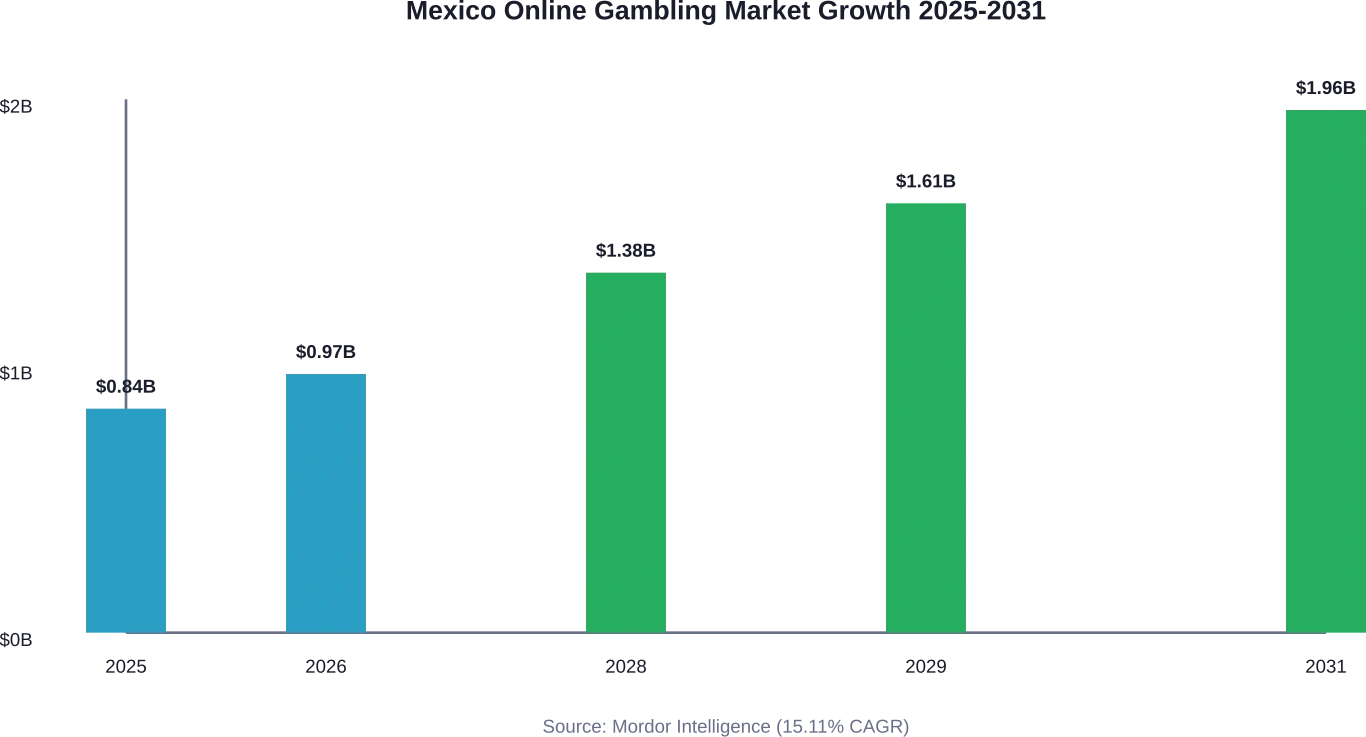
The market is valued at approximately USD 0.97 billion and continues to grow rapidly.
What types of gambling generate the most revenue in Mexico?
Sports betting leads, followed by online casino games and other gaming categories.
Who are Caliente’s main competitors in the Mexican market?
Competitors include Codere, Bet365, Novibet, Super Group, Playdoit, and Stake.
What regulatory challenges affect Mexico’s online gambling market?
The market faces regulatory fragmentation, taxation concerns, and competition from unlicensed operators.
How do payment processing challenges affect Mexican online casinos?
Payment infrastructure improvements have increased transaction success rates and enhanced user experience.
What economic factors drive Mexico’s online gambling growth?
Growth is fueled by remittances, tourism, mobile adoption, and increased digital entertainment spending.
Conclusion: Caliente's Position in a Growing Market
The numbers paint a clear picture. Caliente doesn’t just participate in Mexico’s online gambling market—it dominates with 45.3 million monthly visits, nearly nine times its closest competitor.
The broader market context makes this dominance even more impressive. Mexico’s online gambling sector is growing at 15.11% CAGR, expanding from USD 0.97 billion in 2026 to a projected USD 1.96 billion by 2031. Sports betting drives 56.41% of revenue, playing directly into Caliente’s core strengths.
Regulatory challenges, payment infrastructure complexities, and unlicensed competition create ongoing obstacles. But Caliente’s scale, brand recognition, compliance infrastructure, and payment processing capabilities position it to navigate these challenges better than smaller competitors.
Market concentration remains at medium levels, meaning some competitive dynamics persist. Codere, Bet365, and emerging platforms will continue fighting for share. But the gap between market leader and challengers isn’t narrowing—if anything, network effects and scale advantages compound Caliente’s position over time.
For operators, affiliates, payment providers, and software developers looking to enter or expand in the Mexican market, understanding Caliente’s dominance isn’t optional—it’s foundational. The market has room for growth, but competing directly with an operator commanding 81% of top-platform traffic requires either substantial differentiation or niche focus.
The Mexico online gambling market will reach nearly USD 2 billion by 2031. Caliente is positioned to capture a disproportionate share of that growth. That’s not speculation—it’s what the current data strongly suggests.
Want to understand where Mexico’s online gambling market is headed? Start by understanding where Caliente already is.
Related Articles

September 29, 2026Is the Casino Legal in Japan? The Real Answer...

September 29, 2026Is the Casino Legal in Gambia? What the Law...