 Nothing found for the request

Canada Casino Market 2026: Growth, Data & Trends
Sologe March 27, 2026
Share:


Market Size and Revenue Projections
The Canadian casino market stood at USD 14 billion in 2024, according to market research data. That’s not a small potatoes figure—it represents a mature gambling ecosystem spanning brick-and-mortar casinos, online platforms, and hybrid operations.
Here’s where it gets interesting. The market is expected to hit USD 29 billion by 2035, maintaining a compound annual growth rate of 6.84% through that period.
Year | Market Size (USD Billion) | Growth Driver |
|---|---|---|
2024 | 14.0 | Post-pandemic recovery, online expansion |
2025 | 14.96 | Provincial market openings |
2030 | 20.5 (est.) | Mobile-first platforms, sports betting |
2035 | 29.0 | Market maturation, new provinces |
But wait. The online segment tells a different story—one of explosive acceleration rather than steady growth.
Online Gambling Outpaces Traditional Casinos
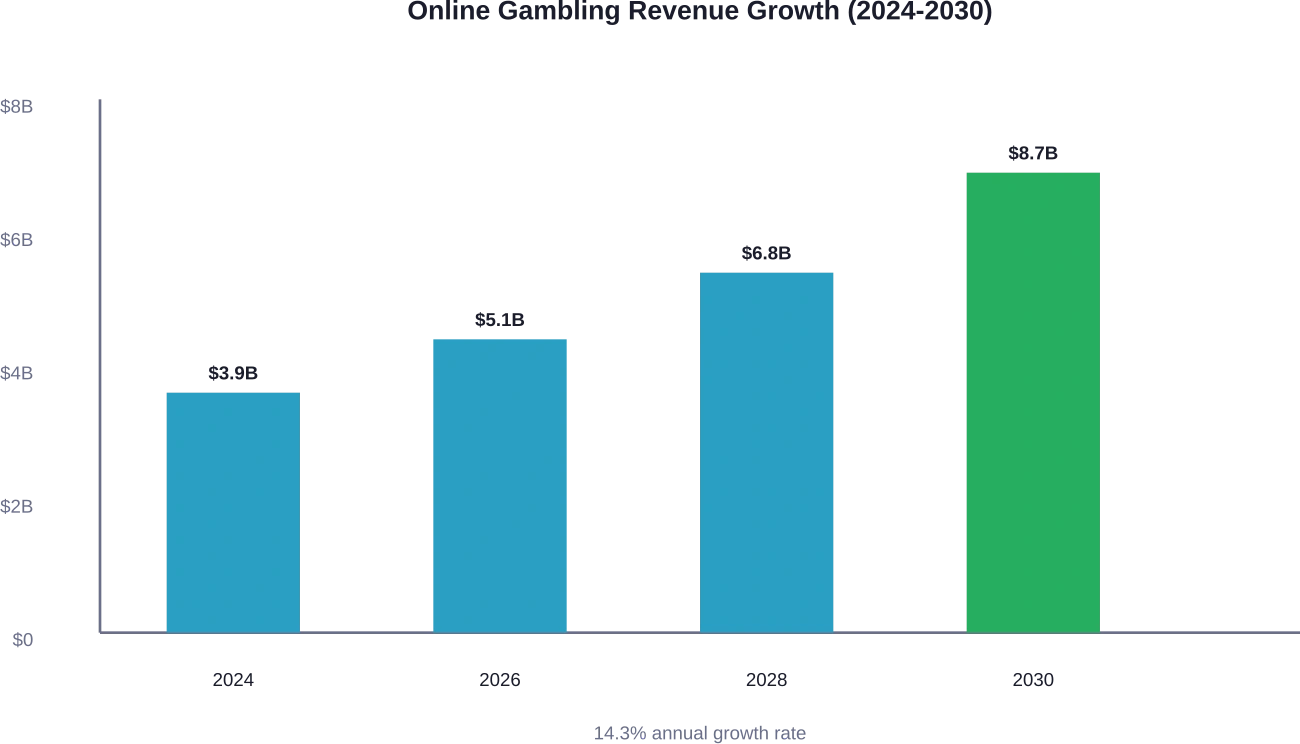
Online gambling revenue reached USD 3,907.9 million in 2024. By 2030, that figure is projected to hit USD 8,722.5 million—a 14.3% annual growth rate that puts traditional casino growth to shame.
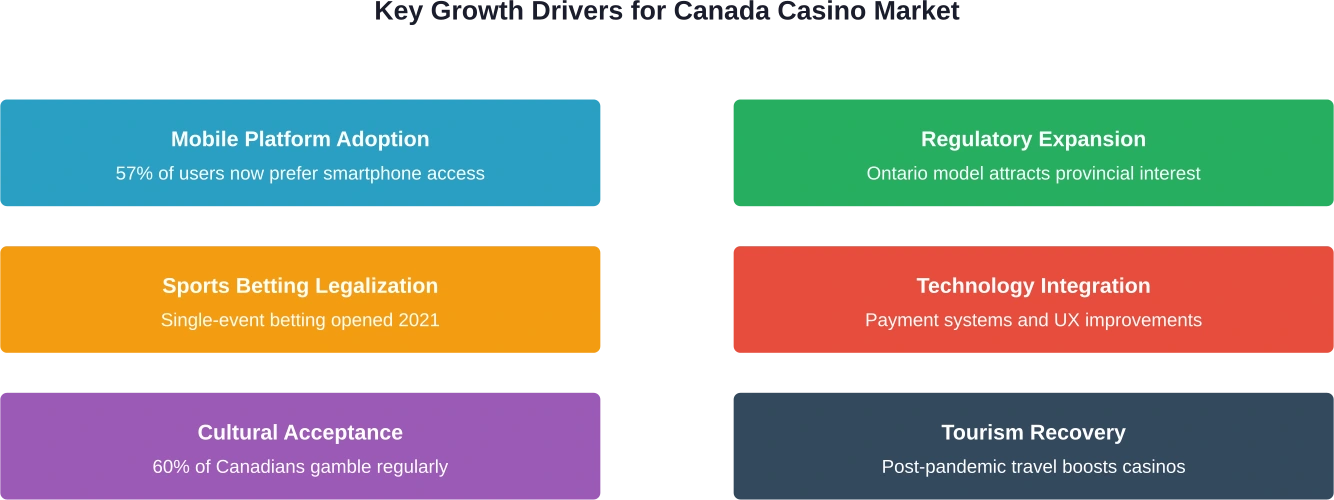
Sports betting dominates as the largest online segment, with casino games close behind. The legalization of single-event sports betting in 2021 fundamentally changed the game, opening doors for operators who previously operated in legal gray zones.
Mobile access drives much of this growth. The statement that roughly 57 percent of Canadians use smartphones to play games reflects the growing importance of mobile platforms. Desktop computers? They’re increasingly relegated to secondary status.
Reach Canadian Gaming Buyers Through a Dedicated Marketplace

In the Canada casino market, visibility often comes down to showing up where operators already search. Sologe is built for that. It is a dedicated iGaming marketplace where gaming businesses look for suppliers, platforms, software, and service providers, while vendors use the platform to present their offering in one place.
Want More Buyers in the Gaming Industry to Find You?
Use Sologe to:
- reach operators and buyers searching for vendors
- present your company profile and offering in one place
- stay visible beyond events and short-term campaigns
👉 Get in touch with Sologe to discuss becoming a vendor on the platform.
Provincial Regulatory Landscape
Canadian gambling regulation operates at the provincial level. No federal framework governs casino operations, which means each province charts its own course.
Ontario made headlines in April 2022 when it opened its iGaming market to private operators. The move ended decades of government monopoly and invited international gambling giants to compete directly.
Ontario’s Market Dominance
Ontario’s regulated iGaming market surpassed $10 billion in revenue. This represents strong annual performance.
The province’s approach differs from predecessors. Rather than maintaining strict government control, Ontario created a competitive licensing framework. Operators pay fees, submit to regulatory oversight, and compete for market share.
Result? Explosive growth. The province now hosts dozens of licensed operators offering sports betting, casino games, poker, and hybrid products.
Other Provinces Lag Behind
British Columbia, Quebec, and Alberta maintain more restrictive frameworks. Government-operated platforms dominate in these markets, with limited private competition.
Saskatchewan, Manitoba, and the Atlantic provinces operate even tighter systems. Crown corporations control most gambling activity, with online options funneled through provincial websites.
This fragmentation creates complications. Operators must navigate multiple regulatory regimes. Players face different game availability depending on their postal code. And provincial governments compete for gambling revenue rather than cooperating on unified standards.
Traditional Casino Operations
Brick-and-mortar casinos haven’t disappeared—they’ve adapted. According to Statistics Canada data from 2008, casinos and slot machines outside casinos (mainly at racetracks) represented 34% and 22% of gambling industry revenue respectively, while lotteries captured 24% and video lottery terminals 20%.
Those numbers have shifted. Online platforms now capture a growing share, but physical casinos maintain relevance through entertainment offerings that screens can’t replicate.
Tourism plays a significant role. Major casino resorts in Niagara Falls, Montreal, and Vancouver attract international visitors. These operations combine gambling with hotels, restaurants, live entertainment, and conference facilities.
Casino Type | Revenue Share (Historical) | Current Trend |
|---|---|---|
Land-based casinos | 34% | Stable, tourism-driven |
Slot machines at racetracks | 22% | Declining |
Lotteries | 24% | Slow decline |
Video lottery terminals | 20% | Declining |
Online platforms | N/A (emerging) | Rapid growth |
The Canadian Pari-Mutuel Agency, funded through a 0.8% levy on horse racing bets, oversees equine gambling operations. But even this traditional sector faces pressure from digital alternatives.
Technology and Mobile Gaming Trends
Mobile gaming didn’t just supplement desktop gambling—it fundamentally restructured how Canadians interact with casino products.
The statement that roughly 57 percent of Canadians use smartphones to play games represents a seismic shift. Apps and mobile browsers now serve as the primary interface for most gamblers. Desktop computers handle maybe 30% of sessions, with the remainder split between tablets and other devices.
Real talk: operators that failed to prioritize mobile-first design lost market share. Fast.
What’s Driving Mobile Adoption?
Convenience tops the list. Placing a sports bet while watching the game, spinning slots during a commute, or playing poker during lunch breaks—mobile access removes friction.
Payment integration matters too. Modern mobile platforms link directly to banking apps, e-wallets, and payment processors. Deposits take seconds. Withdrawals process faster than traditional methods.
Push notifications keep players engaged. Promotional offers, game recommendations, and live betting opportunities arrive in real-time. Operators leveraging these tools report higher lifetime customer values.
Competitive Forces and Market Players
Ontario’s market opening triggered an operator land rush. International gambling companies that had previously targeted Canadians through offshore platforms suddenly gained legal entry.
Major players now include both established brands and digital-native operators. Competition centers on customer acquisition costs, bonus offerings, and platform differentiation.
The industry consolidation that characterizes mature gambling markets hasn’t fully materialized yet. Smaller operators still carve out niches, particularly in sports betting where specialized knowledge creates differentiation opportunities.
Government Operators Face New Pressure
Provincial Crown corporations that previously enjoyed monopolies now compete against well-funded private alternatives. Some adapted quickly, modernizing platforms and matching competitor offerings. Others struggled to compete on user experience and promotional intensity.
Ontario Lottery and Gaming Corporation maintains significant market share, but faces sustained pressure from private operators with deeper pockets and more aggressive marketing strategies.
Economic Impact and Employment
The gambling industry contributes substantially to provincial economies beyond direct tax revenue. Employment spans casino operations, technology development, customer service, compliance, and supporting industries.
Research examining local labor market effects found that casino openings generate measurable employment and earnings growth in surrounding areas. The impact extends beyond casino jobs themselves—hospitality, retail, and service sectors benefit from gambling-driven traffic.
Tourism amplifies these effects. Major casino destinations attract visitors who spend on accommodations, dining, entertainment, and local attractions. The gambling activity itself represents just one component of total economic impact.
Responsible Gambling and Regulatory Oversight
Provincial regulators mandate responsible gambling measures. Self-exclusion programs, deposit limits, reality checks, and mandatory cooling-off periods aim to mitigate problem gambling risks.
The transition to online gambling raised concerns about accessibility and addiction potential. Digital platforms offer 24/7 access without the natural friction points that physical casino visits impose.
Operators must implement verification systems, age checks, and monitoring for problematic behavior patterns. Regulatory frameworks require transparent odds disclosure, fair game certification, and segregated player funds.
How effective are these measures? Community discussions suggest mixed results. Accessibility concerns persist, particularly as mobile gambling removes geographic and temporal barriers.
Future Outlook Through 2035
Market projections through 2035 anticipate continued growth, but at moderating rates as the market matures. That 6.84% compound annual growth rate for the overall market reflects a sector transitioning from rapid expansion to steady-state growth.
Several factors will shape the trajectory:
- Provincial market openings—if Quebec, BC, or Alberta adopt Ontario-style frameworks, expect acceleration
- Technology evolution—virtual reality, blockchain integration, and AI personalization could differentiate platforms
- Sports betting expansion—as the market matures, micro-betting and live wagering will drive engagement
- Regulatory changes—federal intervention or interprovincial coordination could reshape the landscape
- Economic conditions—recessions typically compress discretionary gambling spending
The online segment will continue outpacing traditional casinos. That 14.3% annual growth rate through 2030 reflects structural shifts rather than temporary trends.
Frequently Asked Questions
What is the current size of Canada’s casino market?
The Canadian casino market reached USD 14 billion in 2024. This includes both land-based casino operations and online gambling platforms. The market is projected to grow to USD 29 billion by 2035, representing a compound annual growth rate of 6.84%.
Which provinces allow online gambling in Canada?
All Canadian provinces technically allow some form of online gambling, but regulatory frameworks vary dramatically. Ontario operates the most open market, allowing private operators to compete since April 2022. Other provinces maintain government-operated platforms with varying restrictions on private competition.
How fast is online gambling growing in Canada?
Online gambling in Canada demonstrates explosive growth at 14.3% annually. The segment reached USD 3,907.9 million in revenue during 2024 and is projected to hit USD 8,722.5 million by 2030. This significantly outpaces traditional casino growth rates.
What percentage of Canadians gamble regularly?
Approximately 60% of Canadians report regular gambling participation, according to industry analysis. Of these regular gamblers, 43% spend at relatively modest levels. Sports betting and casino games represent the most popular activities.
Is mobile gambling more popular than desktop in Canada?
Yes, mobile gambling now dominates. Roughly 57% of Canadian gamblers use smartphones to access gambling platforms, either through dedicated apps or mobile browsers. Desktop computers account for approximately 30% of sessions, with tablets and other devices making up the remainder.
How does Ontario’s iGaming market compare to other provinces?
Ontario’s market dwarfs other provinces. The province’s regulated iGaming market surpassed $10 billion in revenue. Other provinces maintain more restrictive frameworks with government-operated platforms capturing the majority of activity.
What are the largest gambling segments in Canada?
Sports betting currently represents the largest online gambling segment, followed closely by casino games. Historically, casinos and slot machines outside casinos represented 34% and 22% of gambling revenue respectively, lotteries captured 24%, and video lottery terminals 20%. These proportions have shifted as online platforms capture increasing market share.
Conclusion: A Market in Transformation
Canada’s casino market stands at an inflection point. The traditional government-controlled model that dominated for decades is giving way to competitive, technology-driven alternatives.
Ontario’s regulatory experiment proved successful beyond expectations. Other provinces now face pressure to follow suit or watch gambling revenue flow across provincial borders—or offshore.
The numbers tell a clear story: $14 billion today, $29 billion by 2035, with online platforms growing twice as fast as the overall market. Mobile access, sports betting legalization, and cultural acceptance combine to fuel sustained expansion.
But questions remain. Will other provinces open their markets? How will federal regulation evolve? Can responsible gambling measures keep pace with 24/7 mobile access?
For operators, technology providers, and investors, the Canadian market offers genuine opportunity. For provincial governments, it represents a delicate balance between revenue generation and social responsibility. And for the 60% of Canadians who gamble regularly, it means more choice, better platforms, and easier access than ever before.
Related Articles

September 29, 2026Is the Casino Legal in Japan? The Real Answer...

September 29, 2026Is the Casino Legal in Gambia? What the Law...