 Nothing found for the request

Casino Gaming Market Competition Analysis 2026
Sologe March 31, 2026
Share:


Market Size and Growth Trajectory
The casino gaming market encompasses both traditional land-based operations and rapidly expanding digital platforms. According to recent industry data, the U.S. online casino market alone was estimated at USD 6.78 billion in 2024 and is projected to grow at a CAGR of 11.7% from 2025 to 2030.
This digital acceleration tells only part of the story. The broader online gambling market reached USD 78.66 billion in 2024 and is projected to hit USD 153.57 billion by 2030, growing at 11.9% CAGR. Sports betting dominates this segment with over 50% revenue share in 2024, creating direct competition for casino operators’ attention and player wallets.
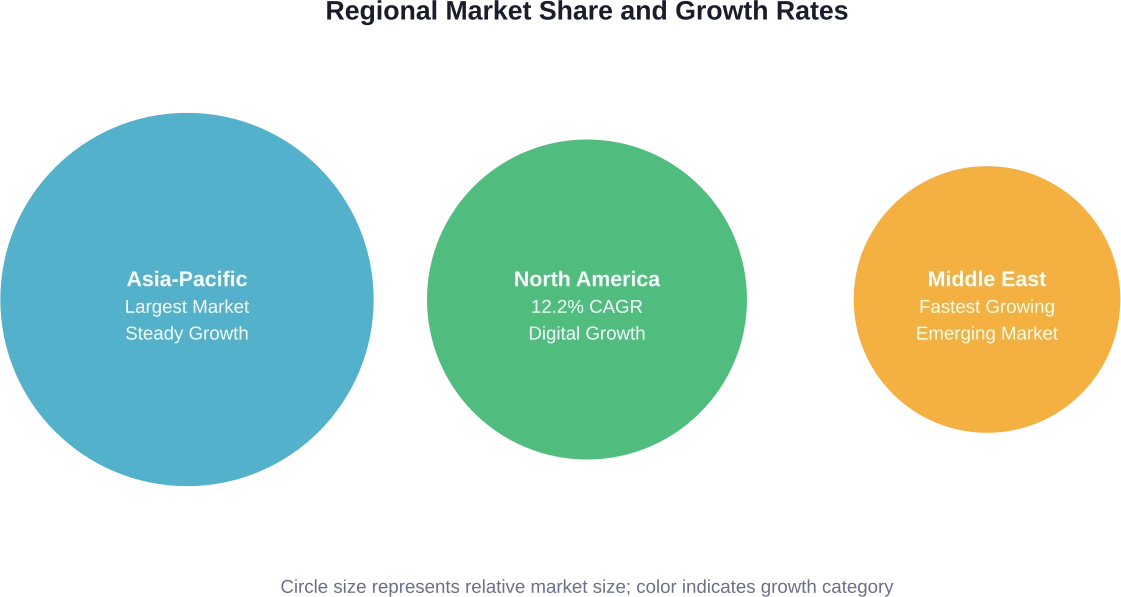
Regional variations matter enormously. The North America online gambling market was estimated at USD 16.56 billion in 2024 and is expected to grow at 12.2% CAGR through 2030. Meanwhile, Asia-Pacific remains the largest regional market overall, anchored by Macau and Singapore’s destination resort complexes.
Competitive Landscape Structure
Market concentration sits at medium levels globally, meaning no single operator dominates but a handful of major players command substantial market share. The competitive landscape fragments across three primary dimensions: land-based operations, online platforms, and hybrid operators pursuing omnichannel strategies.
Major Operators and Market Positioning
The global casino industry features several dominant players, each pursuing distinct competitive strategies. Las Vegas Sands, MGM Resorts International, Caesars Entertainment, Galaxy Entertainment Group, and Genting Group represent the traditional powerhouses in land-based operations.
These operators don’t compete on gaming alone. Brand differentiation extends far beyond the casino floor. Consider the contrasts visible on the Las Vegas Strip: The Venetian sells Italian romance and grandeur, Bellagio offers artistic sophistication with its fountains and gallery, while Caesars Palace trades on ancient Roman empire imagery and power.
This goes beyond logo design—it’s comprehensive thematic positioning that shapes everything from architecture to entertainment programming to food and beverage offerings.
Operator Type | Primary Focus | Key Competitive Advantage | Growth Strategy |
|---|---|---|---|
Land-Based Resorts | Destination gaming complexes | Integrated hospitality experiences | International expansion, amenity enhancement |
Online Platforms | Digital casino and sports betting | Technology, user experience, mobile | State-by-state licensing, product innovation |
Hybrid Operators | Omnichannel gaming | Cross-platform player data, loyalty programs | Digital transformation, market penetration |
Regional Casinos | Local convenience gaming | Geographic proximity, community relationships | Property optimization, adjacent services |
Platform Competition: Desktop vs. Mobile
Desktop platforms accounted for the largest revenue share at over 47% in 2024 in the U.S. online casino market. But that statistic masks rapid mobile growth—mobile platforms now contribute roughly 40% of online engagement globally.
Monthly user sessions on digital platforms average approximately 18 per player according to industry analysis, indicating high engagement levels that traditional casinos struggle to match. The convenience factor proves powerful. Players access mobile casino apps during commutes, lunch breaks, and evening downtime—moments when visiting a physical casino would be impossible.
Operators that excel at mobile compete on interface design, game loading speeds, payment processing efficiency, and seamless cross-device experiences. A player might research games on desktop during the day, then play on mobile during evening hours, expecting perfect session continuity.
Reach Buyers Looking for Gaming Suppliers

In a competitive market, vendors still need a clear way to be discovered by operators and partners. Sologe provides that. It is a dedicated iGaming marketplace where gaming businesses look for suppliers, software, platforms, and service providers, while vendors use the platform to present what they offer and connect with relevant buyers.
Want More Industry Buyers to Find You?
Use Sologe to:
- show your company to businesses searching for vendors
- present your products or services in one place
- stay visible year-round in a dedicated gaming marketplace
👉 Get in touch with Sologe to discuss listing your company as a vendor.
Regional Market Dynamics and Saturation
The competitive landscape varies dramatically by region, defined largely by market saturation levels and regulatory frameworks.
North America: Mature Markets and Digital Expansion
In the United States, competition is intensely localized in mature markets. The proliferation of tribal casinos in certain states, commercial casinos in others, and varying degrees of online gambling legalization creates a patchwork competitive environment.
Las Vegas remains the prototypical saturated market. With dozens of major properties on and near the Strip, operators compete through continuous reinvestment in amenities, entertainment, and property refreshes. Stagnation equals death in this environment.
The digital expansion tells a different story. State-by-state online casino legalization creates waves of first-mover advantages followed by intense competition as additional operators enter newly opened markets. New Jersey, Pennsylvania, Michigan, and West Virginia lead in online casino revenue, with each state demonstrating distinct competitive characteristics.
Asia-Pacific: The Largest Regional Market
Asia-Pacific represents the largest casino gaming market globally, driven predominantly by Macau and Singapore. Macau alone generates gaming revenue that dwarfs Las Vegas, though recent regulatory tightening and pandemic impacts have reshaped competitive dynamics.
Singapore’s integrated resort model—combining casinos with convention facilities, luxury retail, entertainment, and family attractions—demonstrates successful premium positioning. Marina Bay Sands and Resorts World Sentosa compete through comprehensive destination experiences rather than gaming alone.
Emerging markets across Southeast Asia present greenfield opportunities, though regulatory uncertainty and varied legal frameworks complicate market entry strategies.
Middle East and Africa: The Fastest Growing Region
The Middle East and Africa represent the fastest growing regional market according to current projections. Selective greenfield projects linking gaming with high-end hospitality set new frontiers for destination resorts.
These markets face unique challenges. Cultural sensitivities around gambling require operators to position casinos within broader tourism and entertainment complexes. Marketing emphasizes luxury, entertainment, and international appeal while navigating local norms.
Game Type Competition and Player Preferences
Within casino gaming, competition fragments further by game category. Slot machines, table games, and live dealer experiences attract different player demographics and generate varying revenue profiles.
In online casinos, iSlots (digital slot machines) typically generate the highest volume of play. The slots segment captured over 56% market share in the social casino market in 2024, reflecting enduring popularity of visually engaging, easy-to-play content.
Table games require different competitive strategies. Blackjack, roulette, baccarat, and poker appeal to players seeking skill-based gaming and social interaction. Live dealer games—streaming real dealers via video to online players—bridge the gap between digital convenience and authentic casino atmosphere.
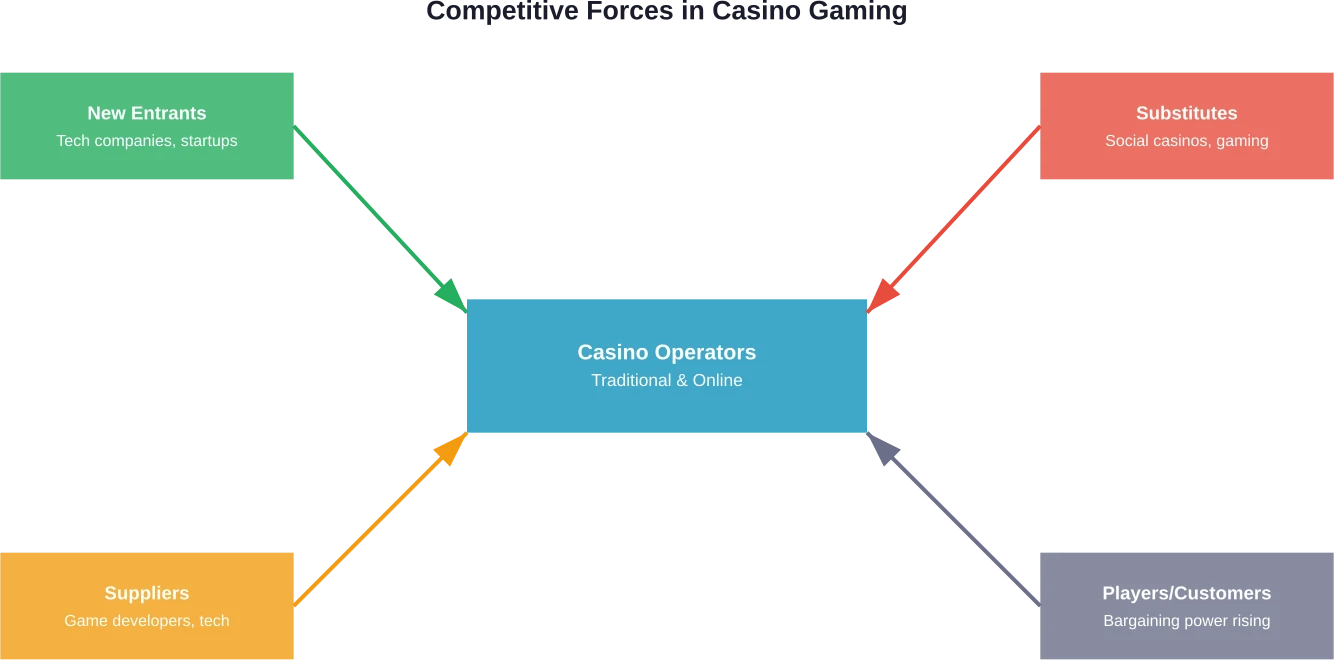
Game developers themselves represent a competitive layer. Providers like Evolution Gaming, Playtech, and NetEnt compete for operator partnerships by offering exclusive game content, superior graphics, innovative mechanics, and proven player retention.
Strategic Competitive Positioning
Successful casino operators employ distinct strategic positioning to differentiate themselves and capture market share. These strategies extend across multiple dimensions.
Brand Differentiation and Thematic Positioning
Thematic positioning creates competitive moats in crowded markets. When multiple casinos operate within close proximity, brand identity influences player choice as much as game selection or odds.
Hard Rock properties emphasize music heritage and rock memorabilia collections. Wynn properties position around luxury and refined aesthetics. Tribal casinos often incorporate cultural elements while balancing broad appeal.
Online operators face similar differentiation challenges. With game libraries often overlapping due to shared content providers, operators compete on user interface design, promotional offers, loyalty program structures, and customer service quality.
Technology and Innovation Investment
Technology investment separates leaders from laggards in modern casino competition. Online casinos heavily invest in innovation to stay competitive, focusing on mobile optimization, payment processing, personalization engines, and fraud prevention.
Artificial intelligence and machine learning enable personalized game recommendations, responsible gambling interventions, and predictive player lifetime value modeling. Operators that excel at data analytics gain significant advantages in player acquisition costs and retention rates.
Cryptocurrency adoption represents another competitive frontier. As digital currencies grow in popularity, their role in online gambling is expected to expand significantly in coming years, offering faster transactions and enhanced privacy.
Regulatory Navigation and Compliance
Regulatory compliance isn’t just a cost center—it’s a competitive differentiator. Operators with strong compliance track records, established regulatory relationships, and efficient licensing processes gain faster market access and reduced operational risk.
The Nevada Gaming Control Board provides detailed statistics and publications tracking gaming revenue, tax collections, and operator performance. Operators that maintain transparent reporting and cooperative relationships with regulators build reputational advantages.
In emerging markets, early regulatory engagement can shape frameworks favorably. Operators participating in regulatory consultations sometimes influence licensing structures, tax rates, and operational requirements.
Competitive Strategy | Implementation Approach | Target Market Segment | Expected Outcome |
|---|---|---|---|
Premium Positioning | Luxury amenities, high-limit gaming, VIP services | High-net-worth individuals | Higher revenue per customer, brand prestige |
Value Leadership | Competitive odds, frequent promotions, accessible minimums | Mass market players | Volume growth, market share gains |
Innovation Focus | New game mechanics, technology adoption, digital features | Younger demographics, tech-savvy players | Differentiation, early-adopter loyalty |
Omnichannel Integration | Seamless online/offline experiences, unified loyalty | Hybrid players using multiple channels | Increased wallet share, data advantages |
Barriers to Entry and Competitive Moats
Understanding competitive dynamics requires examining entry barriers that protect incumbent operators.
Regulatory and Licensing Requirements
Gaming licenses represent the highest entry barrier. Jurisdictions impose strict requirements on operator financial stability, ownership backgrounds, operational capabilities, and compliance infrastructure.
License acquisition timelines stretch months or years. Costs run into millions of dollars before operators accept the first wager. These barriers effectively limit competition in many markets to well-capitalized, experienced operators.
Capital Intensity and Scale Economics
Land-based casino development requires massive upfront capital. Integrated resorts can cost billions to construct. Even regional casinos demand hundreds of millions in land acquisition, construction, gaming equipment, and pre-opening expenses.
Scale economics favor large operators. National or international casino companies negotiate better pricing on gaming equipment, achieve marketing efficiencies across properties, and access capital markets on favorable terms.
Brand Recognition and Customer Loyalty
Established brands enjoy significant advantages. Players gravitate toward recognized names when selecting where to gamble, particularly in competitive markets offering multiple options.
Loyalty programs create switching costs. Players with significant tier status, comp balances, or promotional offers at one operator face real costs to switch to competitors, even if competitor properties might offer better experiences.
Emerging Competitive Threats and Opportunities
The casino gaming competitive landscape continues evolving. Several trends reshape competitive dynamics.
Social Casino Growth
The global social casino market was estimated at USD 8.51 billion in 2024 and is projected to reach USD 14.31 billion by 2030, growing at 8.9% CAGR. Social casinos offer free-to-play gaming with optional purchases, competing indirectly with real-money casinos for player attention and entertainment budgets.
While social casinos don’t directly substitute for gambling revenue, they train new generations on casino game mechanics, potentially serving as acquisition funnels for real-money operators in markets where gambling becomes legal.
Sports Betting Competition
Sports betting legalization creates both opportunities and threats for casino operators. The sports betting segment accounted for the largest market share of over 49% in the North America online gambling market in 2024.
Casino operators that successfully integrate sports betting—either through acquisitions, partnerships, or organic development—capture cross-selling opportunities. But pure-play sports betting operators like DraftKings and FanDuel compete aggressively for the same player wallets.
Skill-Based Gaming and Esports
Younger demographics show less interest in traditional casino games, preferring skill-based experiences and esports. Operators experimenting with skill-based gaming machines, esports betting, and competitive gaming tournaments attempt to attract millennial and Gen Z players.
Success remains mixed. Traditional casino economics assume house edges on games of chance. Skill-based games require different operational models, regulatory approvals, and marketing approaches.
Competitive Intelligence and Market Monitoring
Sophisticated casino operators invest heavily in competitive intelligence. This extends beyond tracking competitor revenue reports to monitoring pricing strategies, promotional campaigns, property developments, regulatory filings, and executive movements.
Public financial disclosures provide valuable intelligence. The Securities and Exchange Commission maintains detailed 10-K annual reports for publicly traded casino operators, revealing financial performance, risk factors, strategic priorities, and competitive assessments.
Market research firms track player preferences, satisfaction scores, and competitive positioning through regular surveys and mystery shopping programs. Understanding how players perceive competitor brands informs marketing positioning and service improvement initiatives.
Geographic information systems map competitive density, demographic trends, and market gaps. Operators planning new properties or expansions analyze drive-time distances, household income distributions, and existing casino supply to identify underserved markets.
Future Competitive Landscape Evolution
Looking ahead, several forces will reshape casino gaming competition.
Consolidation vs. Fragmentation
The industry exhibits contradictory trends. Land-based casino operations show consolidation tendencies as major operators acquire regional properties and expand portfolios. Scale advantages in marketing, technology, and operations drive merger and acquisition activity.
Conversely, online casino markets fragment as new operators enter newly legalized states and niche platforms target specific demographics or game preferences. Barriers to entry remain lower online than for physical casinos, enabling specialized competitors.
Technology Disruption and Adaptation
Virtual reality, augmented reality, and blockchain technologies present both opportunities and uncertainties. VR casinos could deliver immersive experiences combining online convenience with social atmosphere. But adoption rates and consumer preferences remain unclear.
Blockchain-based gambling platforms promise transparency, provable fairness, and decentralized operations. Whether these disrupt established operators or remain niche offerings depends heavily on regulatory treatment and mainstream acceptance.
Regulatory Evolution
Regulatory changes drive competitive realignments. State-by-state online gambling legalization creates recurring market entry opportunities in the United States. International markets show varying trajectories—some liberalizing, others tightening restrictions.
Responsible gambling regulations increasingly influence competitive strategies. Operators with advanced player protection systems, self-exclusion programs, and harm minimization protocols may gain regulatory favorability and social license advantages.
Frequently Asked Questions
What is the current size of the global casino gaming market?
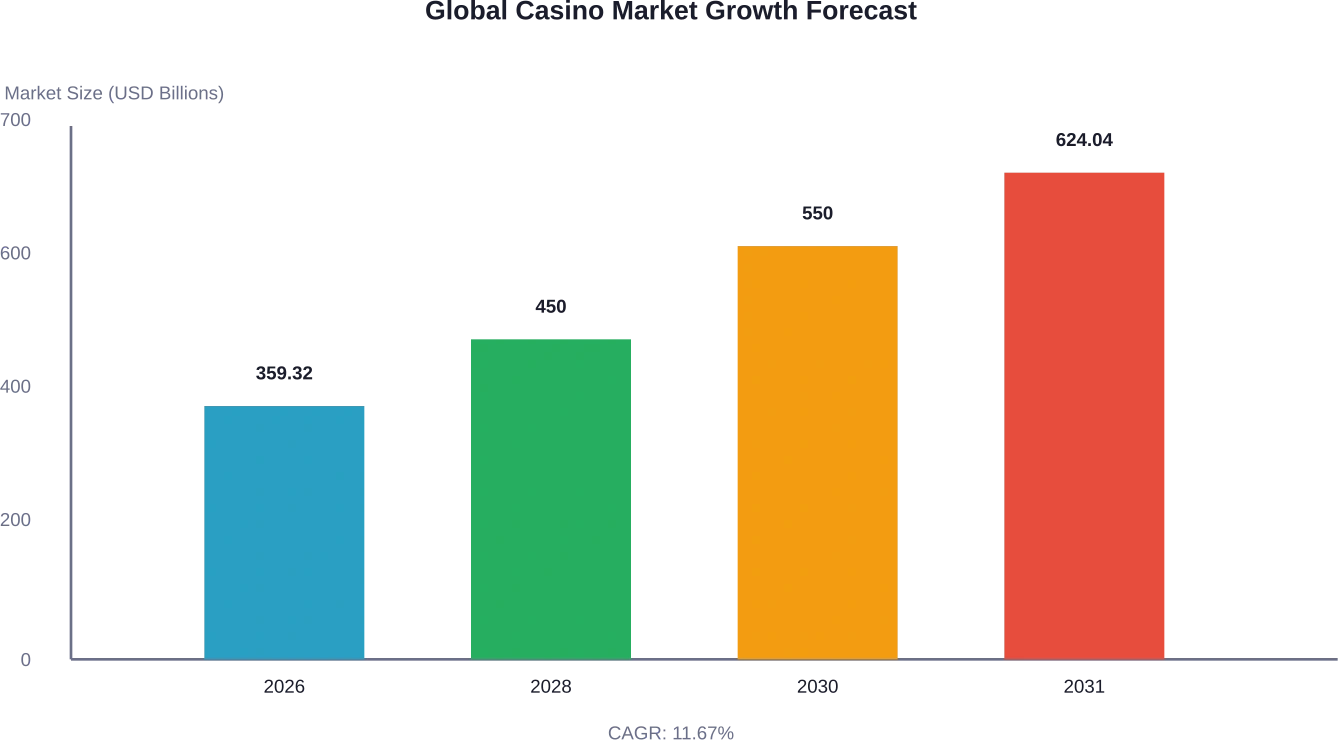
The global casino gambling market is projected to reach USD 359.32 billion in 2026, growing to USD 624.04 billion by 2031 at a compound annual growth rate of 11.67%. This encompasses both land-based casino operations and online gaming platforms worldwide.
Which region represents the largest casino gaming market?
Asia-Pacific represents the largest regional casino gaming market, driven primarily by Macau and Singapore. However, the Middle East and Africa region shows the fastest growth rate as selective new developments open in emerging markets with integrated resort models.
How competitive is the online casino market compared to land-based casinos?
Online casino markets typically show higher competitive intensity due to lower entry barriers, easier price comparison, and rapid player switching capabilities. The U.S. online casino market alone is projected to grow from USD 6.78 billion in 2024 to USD 13.07 billion by 2030, attracting numerous competitors in newly legalized states.
What are the main competitive advantages for casino operators?
Key competitive advantages include brand recognition and loyalty programs, regulatory licenses and compliance track records, technology and mobile platform capabilities, scale economics in marketing and operations, strategic location for land-based properties, and integrated resort amenities that extend beyond gaming.
How do casino operators differentiate themselves in saturated markets?
Operators employ thematic positioning and brand differentiation, premium vs. value market segmentation, entertainment and dining experiences, loyalty program innovations, technology and user experience advantages, and omnichannel strategies linking online and physical properties. In mature markets like Las Vegas, continuous reinvestment in amenities and property refreshes proves essential to maintain competitiveness.
What role does mobile gaming play in casino market competition?
Mobile platforms contribute approximately 40% of online casino engagement globally, with monthly user sessions averaging approximately 18 per player according to industry analysis. Desktop gaming still accounts for over 47% of revenue share as of 2024, but mobile growth accelerates as operators optimize interfaces and younger demographics shift to mobile-first behaviors.
How does sports betting impact casino competition?
Sports betting represents both competition and opportunity for casino operators. The sports betting segment accounted for the largest market share of over 49% in the North America online gambling market in 2024, competing for the same player wallets. Successful casino operators integrate sports betting through acquisitions or partnerships to capture cross-selling opportunities and increase overall customer engagement.
Conclusion
The casino gaming market competition landscape presents a complex, multi-dimensional environment shaped by regional dynamics, platform evolution, regulatory frameworks, and strategic positioning choices.
Growth projections remain robust—11.67% CAGR globally through 2031—but competition intensifies as markets mature and digital platforms lower entry barriers. Successful operators will excel across multiple dimensions: regulatory navigation, technology investment, brand differentiation, data analytics, and omnichannel integration.
Regional variations matter enormously. Asia-Pacific’s established market dominance, North America’s digital transformation, and the Middle East’s emerging opportunities each require distinct competitive strategies. Market saturation levels determine whether operators compete through continuous reinvestment and differentiation or pursue first-mover advantages in new territories.
The competitive landscape will continue evolving as sports betting expands, social casinos grow, younger demographics enter gaming markets, and technology enables new experiences. Operators that combine deep regulatory expertise, technology leadership, customer-centric innovation, and strategic brand positioning will capture disproportionate value in this dynamic, high-stakes industry.
Understanding these competitive dynamics isn’t optional for casino operators, investors, regulators, or suppliers—it’s fundamental to navigating an industry where billions of dollars shift based on strategic positioning, regulatory changes, and evolving player preferences.
Related Articles

September 29, 2026Is the Casino Legal in Japan? The Real Answer...

September 29, 2026Is the Casino Legal in Gambia? What the Law...