 Nothing found for the request
China Casino Tourism Market 2026: Growth & Trends
Sologe March 30, 2026
Share:


Market Size and Growth Trajectory
The casino tourism market in China has experienced significant expansion over the past decade, with Macau serving as the primary hub for mainland Chinese visitors seeking legal gaming experiences.
According to available data, approximately 19.22 million visitors traveled to Macau between January and June 2025, with the overwhelming majority coming from mainland China. That’s a massive influx of tourists concentrated in a territory of just 32 square kilometers.
Revenue projections show consistent upward momentum. The market’s growth isn’t just theoretical—it’s backed by actual visitor data and gaming revenue figures that have consistently outpaced analyst expectations.

Since May of recent years, Macau casino revenue has consistently outpaced analyst projections. That momentum has driven gaming shares up almost 60%, a rally that analysts expect to continue based on current trends.
Seaport Research Partners revised its annual forecast, projecting a 7% boost in gross gaming revenue for the year and as much as 9% for the second half. These aren’t optimistic guesses—they’re adjustments based on actual performance data.
Why Macau Dominates the Casino Tourism Landscape
Macau isn’t just another casino destination. It’s the only place in Chinese territory where gambling is legal, creating a natural monopoly that attracts mainland Chinese tourists by the millions.
The gaming industry has become a pillar of Macau’s economy, creating more than 54,000 job opportunities in the special administrative region according to Statista data. That’s substantial for a territory with a population under 700,000.
Geography plays a crucial role. Macau sits just across the Pearl River Delta from Hong Kong and is easily accessible from major Chinese cities like Guangzhou and Shenzhen. Improved transportation infrastructure has made the journey even more seamless.
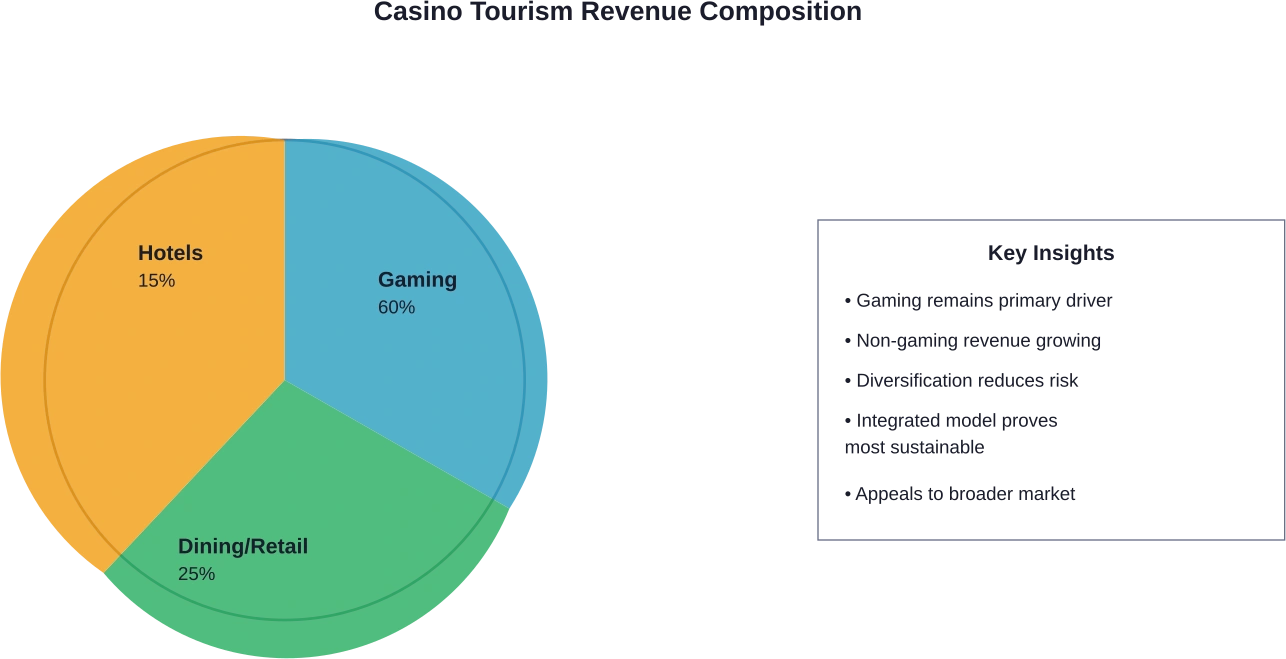
New luxury hotel accommodations continue to attract and retain travelers who want more than just gaming tables. These integrated resorts combine casinos with five-star hotels, high-end retail, world-class dining, and entertainment venues.
The Integrated Resort Model
Integrated resorts have transformed Macau’s tourism appeal. Rather than focusing solely on gambling, these developments offer comprehensive entertainment experiences that appeal to both gamblers and non-gamblers alike.
The model works because it captures different tourist segments simultaneously. High-rolling VIP players might come for the private gaming rooms, while their families enjoy shows, shopping, and spa facilities.
This diversification strategy has proven effective. Community discussions highlight how modern Macau casinos have evolved beyond hardcore gambling behaviors to fulfill broader hospitality service needs.
Transportation and Accessibility
Better transportation connections have fueled tourism growth. The Hong Kong-Zhuhai-Macau Bridge has improved connectivity between Hong Kong and mainland China.
Ferry services, high-speed rail connections, and increased flight routes have made Macau more accessible than ever. When barriers to entry drop, visitor numbers rise—it’s that straightforward.
Game Type Preferences: Baccarat's Unshakable Dominance
Not all casino games are created equal in the Chinese market. Baccarat is the dominant casino game.
According to market analysis, baccarat is projected to capture 52.3% of the market share in 2025. That’s more than half of all casino gaming activity concentrated in a single game type.
Why does baccarat dominate so thoroughly? The game’s simplicity plays a major role—it requires no complex strategy and offers straightforward betting options. Cultural factors matter too, with many Chinese players viewing baccarat as the premier casino game.
Game Type | Market Share | Primary Appeal |
|---|---|---|
Baccarat | 52.3% | Simplicity, tradition, high-stakes potential |
Slot Machines | ~25% | Low barrier to entry, entertainment value |
Poker | ~12% | Skill-based gameplay, tournament appeal |
Other Table Games | ~10% | Variety, niche preferences |
Other games including slots, poker, and table games comprise the remaining market share but remain significantly smaller than baccarat’s dominance.
The VIP Versus Mass Market Dynamic
Casino tourism in China isn’t a monolithic market—it splits into two distinct segments with different behaviors, preferences, and revenue contributions.
VIP players traditionally generated substantial casino revenue. These high-rollers would visit Macau for private gaming rooms, exclusive services, and stakes that could reach hundreds of thousands or millions of dollars per session.
But the landscape has shifted. Available data indicates that VIP gaming revenue rose 11% year-on-year, while mass market gaming grew 2%, with the mass market still generating the majority of overall revenue.
Why Mass Market Matters More Now
Mass market players generate more sustainable, predictable revenue. They’re less vulnerable to economic fluctuations and regulatory changes that can dramatically impact VIP segments.
The mass market also scales better. While there’s a limited pool of ultra-wealthy VIP players, millions of middle-class Chinese tourists can afford modest gaming budgets combined with entertainment and dining expenses.
The industry has adapted its property configurations to accommodate growing mass market segments alongside traditional VIP offerings.
Demographics and Visitor Profiles
Research exploring mainland Chinese casino visitors reveals varying motivations and demographics between different segments. Gambling visitors differ from non-gambling visitors in age, income levels, and travel patterns.
Younger tourists increasingly visit Macau for reasons beyond gambling. Entertainment shows, celebrity chef restaurants, luxury shopping, and Instagram-worthy locations attract millennials and Gen Z visitors who might spend minimal time on gaming floors.
This generational shift influences how casinos market themselves and design their properties. Pure gambling destinations face challenges; integrated entertainment complexes thrive.
Regional Competition: Korea, Singapore, and Beyond
Macau doesn’t operate in a vacuum. Other Asian destinations have developed their own casino tourism industries, competing for Chinese visitors.
Available reports indicate that Chinese tourists have contributed to growth in Korea’s casino market. Surging visitor inflows from China boost Korean casino sales, creating regional competition for Macau’s dominance.
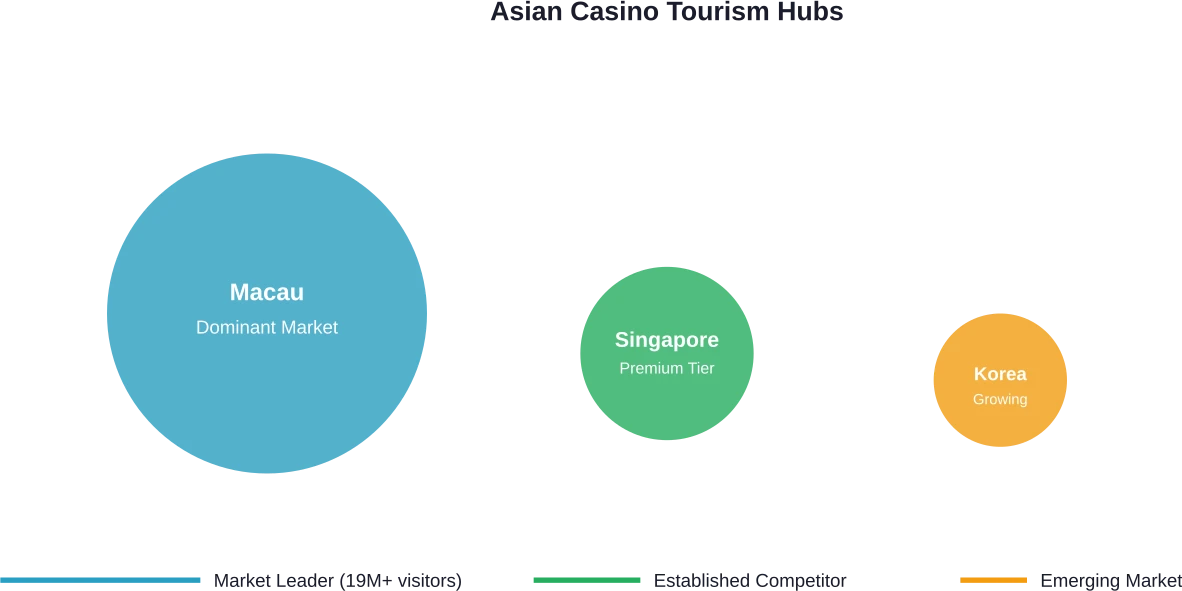
Singapore’s Marina Bay Sands and Resorts World Sentosa represent another competitive threat. These integrated resorts offer luxury experiences targeting affluent Chinese tourists who want premium destinations.
Yet community discussions suggest that Macau’s casinos won’t be significantly affected by other Asian gambling hubs. The combination of proximity, legal framework, and established infrastructure creates advantages that competitors struggle to match.
What Sets Macau Apart
Macau operates under Chinese sovereignty as a Special Administrative Region. This political reality means mainland Chinese visitors don’t face the same visa requirements or currency exchange hassles they encounter when traveling to Singapore, Korea, or other international destinations.
Language and cultural familiarity matter too. Cantonese and Mandarin are widely spoken in Macau, reducing communication barriers that might exist in other casino destinations.
The sheer scale of Macau’s gaming infrastructure dwarfs regional competitors. No other Asian city comes close to matching the concentration of casino resorts, gaming tables, and dedicated hospitality infrastructure.
Revenue Trends and Market Performance
Gross gaming revenue serves as the primary metric for measuring Macau’s casino tourism success. And recent trends have exceeded expectations.
Macau casino stocks have rallied as gaming revenue grows beyond analyst projections. The ongoing positive direction reflects several converging factors: increased tourism, crowd-pleasing entertainment, improved transportation, and a rise in VIP play.
Revenue growth isn’t just happening—it’s accelerating. The momentum that began in May has continued, suggesting sustainable expansion rather than temporary spikes.
What’s Driving Revenue Growth
Tourism volume represents the foundation. More visitors mean more potential customers walking through casino doors. The 19.22 million visitors recorded demonstrate Macau’s appeal as a tourism destination.
Per-visitor spending matters equally. Integrated resorts have successfully increased average spending by offering premium dining, luxury retail, and entertainment options that complement gaming revenue.
Entertainment attractions play a bigger role than many realize. Crowd-pleasing shows and events draw tourists who might not otherwise visit Macau, then convert a percentage into gaming customers once they’re on-site.
Market Segmentation and Consumer Behavior
Understanding who visits casinos and why they gamble reveals important market dynamics that shape the industry’s future.
Research examining mainland Chinese casino visitors based on gaming behavior shows clear distinctions between different tourist types. Some visit purely for gambling, others treat gaming as incidental to broader tourism activities.
Age demographics influence behavior patterns significantly. Older visitors tend toward traditional table games and higher-stakes gambling, while younger tourists prefer entertainment-focused experiences with modest gaming budgets.
The Role of Non-Gambling Attractions
Here’s something that surprises people: a substantial portion of Macau visitors gamble minimally or not at all.
Research exploring why mainland Chinese tourists visit beyond hardcore gambling behaviors reveals that casinos as hospitality service providers fulfill diverse needs. Shopping, dining, shows, and sightseeing motivate many visitors.
This reality has transformed casino design and marketing strategies. Properties now emphasize their broader entertainment value rather than focusing exclusively on gaming amenities.
Regulatory Environment and Policy Impact
Casino tourism in China operates within a unique regulatory framework that shapes market dynamics and growth trajectories.
Mainland China maintains strict prohibitions on gambling, with casinos and most gaming activities illegal throughout the country. This creates the regulatory space that allows Macau’s gaming industry to thrive.
Macau’s status as a Special Administrative Region means it operates under different laws than mainland China, permitting licensed casino operations that would be prohibited elsewhere in Chinese territory.
Recent Regulatory Developments
Gaming concession renewals, licensing requirements, and regulatory oversight continue evolving. These policy changes directly impact casino operators and shape investment decisions.
Capital controls and banking regulations influence how money flows between mainland China and Macau. Restrictions on currency transfers and junket operations have particularly affected VIP segments.
Generally speaking, regulatory uncertainty represents one of the market’s primary risk factors. Policy shifts can rapidly change operating conditions and revenue projections.
Technology and Digital Transformation
The casino management system market provides insight into how technology shapes modern gaming operations. According to Grand View Research, the global casino management system market was estimated at USD 9,459.8 million in 2024 and is projected to reach USD 21,818.5 million by 2030, growing at a CAGR of 14.9%.
Analytics represents the most lucrative application segment, registering the fastest growth during the forecast period. This reflects how data-driven decision-making has become central to casino operations.
Artificial intelligence and machine learning are increasingly integrated into casino management systems, enabling better player tracking, security surveillance, and accounting functions.
Digital Gaming and Mobile Platforms
While physical casino tourism dominates current revenue, digital gaming platforms represent an emerging segment that could reshape market dynamics.
Statista data on casino games in China shows significant activity in mobile and online gaming applications, though these operate in legal gray areas distinct from Macau’s licensed casino operations.
The relationship between digital gaming familiarity and physical casino tourism remains under-researched. Some evidence suggests that mobile casino games might serve as marketing tools that eventually drive physical visits.
Investment and Development Trends
Major casino operators continue investing billions in Macau property development, expansion, and renovation despite market uncertainties.
New luxury hotel accommodations represent a significant investment category. Properties compete not just on gaming floors but on room quality, dining options, and overall guest experience.
Entertainment venue development has accelerated. Purpose-built theaters, concert halls, and event spaces reflect the industry’s recognition that non-gaming attractions drive visitation and revenue.
Which Operators Lead the Market
Major international casino companies maintain substantial Macau operations. These operators compete on property quality, gaming offerings, and brand recognition.
Local operators with deep understanding of Chinese consumer preferences often outperform international competitors who struggle to adapt Western casino models to Asian markets.
Partnerships between international hospitality brands and regional gaming operators have become increasingly common, combining operational expertise with cultural understanding.
Challenges Facing the Market
Growth projections paint an optimistic picture, but significant challenges could impact actual performance.
Economic volatility in mainland China directly affects discretionary spending on tourism and gambling. When economic growth slows, casino revenue typically follows.
Regulatory risk remains ever-present. Policy changes in either mainland China or Macau can rapidly alter market conditions. Capital controls, anti-corruption campaigns, and gaming license requirements all create uncertainty.
Competition and Market Saturation
Macau’s casino supply has expanded dramatically. Some analysts question whether the market can sustain continued property development without cannibalizing existing operations.
Regional competition intensifies as other Asian destinations develop casino tourism infrastructure. While Macau maintains structural advantages, erosion of market share remains possible.
Public Health and External Shocks
Recent years demonstrated how external shocks can devastate tourism-dependent economies. Border closures, travel restrictions, and health concerns can eliminate visitation overnight.
Building resilience against such shocks remains challenging for an industry fundamentally dependent on cross-border travel and large gatherings.
Future Outlook and Growth Opportunities
Despite challenges, the long-term outlook for China’s casino tourism market remains positive based on fundamental drivers.
Rising middle-class wealth in China creates an expanding pool of potential casino tourists. As disposable incomes increase, leisure travel and entertainment spending typically grow proportionally faster.
Infrastructure improvements continue making Macau more accessible. Transportation projects reduce travel friction and expand the practical catchment area for day-trip visitors.
Diversification Beyond Traditional Gaming
The industry’s evolution toward integrated entertainment resorts positions it well for changing consumer preferences. Younger tourists especially value experience diversity over single-activity destinations.
Convention and meeting facilities represent growth opportunities. Business tourism provides revenue streams less dependent on gaming activity while filling midweek capacity.
Cultural and entertainment programming attracts visitors who might never enter a casino, yet still contribute to resort revenue through hotels, dining, and retail spending.
Technology Integration
Enhanced customer analytics enable more personalized marketing and service delivery. Understanding individual preferences allows casinos to optimize offerings and improve customer retention.
Mobile integration and digital payment systems reduce friction in the customer experience. Seamless technology enhances convenience while generating valuable behavioral data.
Strategic Considerations for Industry Players
Casino operators and investors navigating this market face several strategic decisions that will determine competitive positioning.
Balancing VIP and mass market segments requires different operational approaches. Properties must decide whether to specialize or attempt serving both segments simultaneously.
Investment in non-gaming amenities demands upfront capital but potentially generates more stable revenue streams. The right mix varies based on target demographics and competitive positioning.
Strategy Focus | Advantages | Challenges |
|---|---|---|
VIP-Focused | Higher revenue per customer, premium positioning | Regulatory risk, economic sensitivity |
Mass Market | Stable revenue, scalability, less regulatory exposure | Lower margins, requires volume |
Integrated Resort | Revenue diversification, appeals to non-gamblers | High capital requirements, operational complexity |
Gaming-Centric | Operational focus, clear positioning | Vulnerable to gaming-specific regulations |
Market Entry Considerations
For new entrants, Macau’s gaming concession system creates high barriers to entry. Limited licenses mean most market participation happens through partnerships or non-gaming investments.
Alternative markets in Asia offer easier entry but less certain returns. Korea, the Philippines, and emerging Southeast Asian gaming markets present different risk-reward profiles.
Support Casino Growth with the Right Product Setup

As casino tourism expands in markets like China, attention usually goes to locations, partnerships, and visitor numbers. But long-term growth also depends on how the product side is built and managed. From game portfolios to platform structure and operational systems, these decisions shape how well a casino can scale and adapt over time. Sologe works on that layer, helping operators and developers connect with the right providers, structure their setup, and build systems that hold up as demand increases.
If you’re planning around growth in casino tourism or reviewing how your operation is set up, this is where weak points tend to surface. Fixing them early is far easier than dealing with limitations later. If you want a clearer, more stable product foundation, get in touch and speak directly with the Sologe team about your project.
Frequently Asked Questions
How big is the China casino tourism market in 2026?
The China casino tourism market is valued at approximately USD 2.0 billion in 2025, with projections showing growth toward USD 5.8 billion by 2035. This represents a compound annual growth rate of 10.8% over the forecast period. Macau remains the dominant destination within this market, attracting over 19 million visitors annually, primarily from mainland China.
Why is Macau so dominant in Chinese casino tourism?
Macau is the only location within Chinese territory where casino gambling is legal. Operating as a Special Administrative Region, it maintains different laws than mainland China while remaining geographically close and culturally familiar to Chinese tourists. This unique position, combined with world-class integrated resorts, transportation infrastructure, and no visa requirements for mainland visitors, creates advantages that competitors struggle to match.
What percentage of casino revenue comes from baccarat?
Baccarat dominates the Chinese casino market, projected to capture 52.3% of market share in 2025. This overwhelming preference reflects the game’s simplicity, cultural significance among Chinese players, and suitability for both low-stakes and high-roller play. No other casino game comes close to baccarat’s popularity in this market.
Is VIP or mass market gaming more important for Macau casinos?
While VIP players historically generated significant revenue, the market has shifted toward mass market dominance. Mass market gaming now contributes the largest share of overall revenue, offering more sustainable and predictable income streams. VIP play remains significant and is experiencing growth, but the strategic focus has moved toward serving the broader mass market tourist segment.
How does regional competition affect Macau’s casino market?
Regional competitors like Singapore and Korea have developed casino tourism offerings that attract Chinese visitors. However, Macau maintains structural advantages including proximity to mainland China, no visa requirements, cultural familiarity, and unmatched scale of gaming infrastructure. While competition exists, analysis suggests that Macau’s market position remains secure, with regional hubs serving complementary rather than substitute roles.
What are integrated resorts and why do they matter?
Integrated resorts combine casinos with luxury hotels, retail, dining, entertainment venues, and family-friendly attractions. This model matters because it attracts diverse visitor segments beyond hardcore gamblers, generates multiple revenue streams, reduces dependency on gaming-only income, and appeals to younger tourists seeking comprehensive entertainment experiences. The integrated resort model has become the industry standard for new development.
What are the biggest risks to market growth?
Primary risks include regulatory changes in either mainland China or Macau that could restrict gaming operations or capital flows, economic slowdowns in China reducing discretionary spending, external shocks like health crises that limit cross-border travel, and potential market saturation as casino supply expands. Competition from other Asian gaming destinations and generational shifts in entertainment preferences also present challenges to sustained growth.
The Road Ahead for Casino Tourism
China’s casino tourism market stands at an inflection point. The fundamentals supporting growth remain solid—rising wealth, improved infrastructure, proven entertainment models, and sustained demand for legal gaming experiences.
But the path forward isn’t guaranteed.
Success will require navigating regulatory complexities, adapting to changing consumer preferences, and maintaining competitiveness against both regional and digital alternatives.
The operators who thrive will be those who understand that modern casino tourism extends far beyond gaming tables. Entertainment, hospitality, and comprehensive experiences define competitive advantage in today’s market.
Macau’s transformation from colonial backwater to gambling capital demonstrates what’s possible when geography, regulation, and market demand align. The next decade will test whether that model can sustain itself amid evolving challenges.
For investors, operators, and industry stakeholders, the opportunity remains substantial. A market projected to nearly triple in value over ten years deserves attention—and demands careful strategy.
The casinos that built Macau into one of the wealthiest places in the world aren’t going anywhere. They’re evolving, adapting, and positioning for the next phase of growth in China’s casino tourism market.
Related Articles
September 29, 2026Is the Casino Legal in Japan? The Real Answer...

September 29, 2026Is the Casino Legal in Gambia? What the Law...