 Nothing found for the request

Crypto Casino Market Share 2026: $81B Industry Analysis
Sologe April 21, 2026
Share:


Quick Summary
Quick Summary: The crypto casino market generated $81.4 billion in gross gaming revenue in 2024, representing a rapidly growing segment of the $655 billion global gambling industry. Online casino platforms are projected to reach $38 billion by 2030, with cryptocurrency adoption driving player migration from traditional platforms. Market share is concentrated in Asia Pacific and Europe, with regulatory developments and blockchain technology fueling expansion.
The gambling industry is experiencing a massive shift. Traditional casinos are watching billions in revenue flow toward crypto-native platforms, and the numbers tell a story that’s hard to ignore.
Crypto gambling generated $81.4 billion in gross gaming revenue during 2024. That’s not a projection or estimate—that’s what actually happened. And it’s forcing everyone in the industry to pay attention.
But here’s what makes this interesting: the broader online casino market sits at $19.11 billion as of 2024, according to Grand View Research. So where does the crypto segment fit into the larger gambling landscape worth $655.31 billion globally?
The answer reveals how market share is distributed, which regions dominate, and why players aren’t switching back once they’ve experienced blockchain-based gambling.
Understanding the Gambling Market Landscape
Before diving into crypto-specific numbers, the overall gambling industry provides context. Revenue in the global gambling market is projected to reach $655.31 billion in 2026, with an annual growth rate of 2.28% through 2030, reaching $717.06 billion.
The online gambling segment alone was valued at $78.66 billion in 2024 and is projected to reach $153.57 billion by 2030, growing at a CAGR of 11.9%. Sports betting dominated this space with over 50% market share in 2024.
Within online gambling, casino games represent a substantial portion. The online casino market specifically was estimated at $19.11 billion in 2024 and is projected to reach $38.00 billion by 2030, growing at a CAGR of 12.2% from 2025 to 2030.
Desktop devices held the largest revenue share across the online casino industry in 2024, though mobile is growing rapidly.
Regional Market Distribution
Europe dominated the online casino market in 2024, capturing the largest revenue share. This reflects the region’s more established regulatory frameworks and higher gambling adoption rates.
Asia Pacific represented the largest market for cryptocurrency adoption in 2025, which directly impacts crypto casino growth. The region’s tech-savvy population and high mobile penetration create ideal conditions for blockchain gambling platforms.
North America continues expanding as states progressively legalize online gambling. The U.S. alone is projected to generate $216.85 billion in gambling revenue in 2026 across all categories.
Crypto Casino Market Share Breakdown
The $81.4 billion figure from 2024 represents gross gaming revenue specifically from crypto gambling platforms. This includes casino games, sports betting, and other wagering activities conducted using cryptocurrency.
What’s remarkable isn’t just the size—it’s the growth trajectory and user behavior patterns.
Community discussions consistently highlight that players who switch to crypto platforms rarely return to traditional online casinos. The data backs up this behavioral pattern. Once users experience instant withdrawals, provably fair games, and lower house edges enabled by blockchain technology, the conventional casino experience feels restrictive.
How Crypto Casinos Capture Market Share
Several factors drive the migration from traditional platforms:
- Transaction speed: Withdrawals process in minutes rather than days
- Anonymity: Reduced KYC requirements compared to regulated fiat platforms
- Lower fees: Blockchain transactions cost less than traditional payment processing
- Provably fair gaming: Smart contracts allow verification of game fairness
- Bonus structures: Crypto platforms often offer more generous deposit bonuses
The cryptocurrency exchange platform market was valued at $45,896.1 million in 2023 and is projected to reach $264,318.3 million by 2030, growing at a CAGR of 28.4%. This infrastructure growth directly supports crypto casino expansion.
Exchange software accounted for the largest cryptocurrency market revenue share in 2025, facilitating the conversion and movement of funds that power gambling platforms.
Market Size and Growth Projections
The broader cryptocurrency market provides the foundation for gambling applications. The cryptocurrency market is estimated at USD 6.34 billion in 2025 and is projected to reach USD 18.26 billion by 2033, growing at a CAGR of 14.5% from 2026 to 2033.
This growth directly impacts gambling applications as more users hold and transact in cryptocurrency.
Market Segment | 2024 Size | 2030 Projection | CAGR |
|---|---|---|---|
Online Gambling | $78.66B | $153.57B | 11.9% |
Online Casino | $19.11B | $38.00B | 12.2% |
Crypto Gambling | $81.4B | Data unavailable | Est. 15%+ |
Total Gambling | $655.31B (2026) | $717.06B | 2.28% |
The crypto casino tool market was valued at USD 13 billion in 2026 and is projected to reach $114.05 billion by 2035, growing at a CAGR of 27.29%. This represents the infrastructure, software, and platforms that power crypto gambling operations.
Here’s the thing though—crypto gambling’s $81.4 billion already exceeds the entire online casino market projection for 2030. This suggests significant overlap or that crypto gambling captures revenue beyond traditional casino game categories.
What This Means for Market Share
If crypto gambling represents $81.4 billion within a total online gambling market of approximately $153.57 billion projected for 2030, that would indicate crypto captures roughly 50% of the online gambling market.
But these figures require careful interpretation. The crypto gambling number may include peer-to-peer betting, DeFi gambling protocols, and other blockchain-native activities that don’t fit traditional online gambling categories.
Regulatory Impact on Market Share
Regulation shapes how market share distributes across regions and platforms.
The Financial Crimes Enforcement Network (FinCEN) issued guidance in 2013 clarifying that persons administering, exchanging, or transmitting virtual currencies must comply with Bank Secrecy Act requirements as money services businesses. This created compliance obligations for crypto gambling platforms operating in U.S. jurisdiction.
In 2025, FinCEN issued a notice urging financial institutions to monitor suspicious activity involving convertible virtual currency kiosks, highlighting ongoing regulatory scrutiny of crypto transactions.
The Securities and Exchange Commission has taken enforcement actions against gambling-related fraud. In May 2025, the SEC charged Richard T. Kim, founder of Zero Edge Corporation, with misappropriating approximately $3.7 million of investor funds, including diverting more than $700,000 to his personal account on an online gambling platform.
These regulatory actions don’t directly limit legitimate crypto casino operations but establish compliance expectations and fraud enforcement precedents.
Regional Regulatory Environments
Europe maintains relatively clear regulatory frameworks for online gambling, contributing to its market dominance. Individual countries license and regulate operators, creating legal pathways for both traditional and crypto casinos.
Asia Pacific presents a mixed landscape. Some jurisdictions prohibit online gambling entirely, while others permit licensed operations. This regulatory fragmentation creates opportunities for offshore crypto platforms that operate in legal gray areas.
North America is experiencing rapid regulatory evolution. States are independently legalizing online gambling, creating a patchwork of regulations. Crypto casinos face additional complexity navigating both gambling laws and cryptocurrency regulations.
Competitive Landscape and Key Players
The crypto casino market includes both pure-play blockchain gambling platforms and traditional online casinos adding cryptocurrency payment options.
Pure-play crypto casinos built on blockchain technology offer features impossible for traditional platforms:
- Provably fair algorithms verified through smart contracts
- Instant settlements without withdrawal processing delays
- Anonymity-focused user experiences with minimal identity verification
- Native cryptocurrency staking and DeFi integration
- Community governance through token-based voting
Traditional online casinos adding crypto payments capture users wanting cryptocurrency convenience while maintaining regulatory compliance and established game libraries.
The commercial segment dominated the cryptocurrency exchange platform market in 2021, accounting for more than 68.20% of overall revenue. This commercial infrastructure supports both casino operations and player transactions.
Platform Type | Key Advantages | Market Position |
|---|---|---|
Pure-Play Crypto | Speed, anonymity, provable fairness | High growth, younger users |
Hybrid (Crypto + Fiat) | Regulatory compliance, game variety | Established market, broader appeal |
Traditional Adding Crypto | Brand recognition, licenses | Defensive market protection |
DeFi Gambling Protocols | Decentralization, transparency | Emerging, tech-focused niche |
Get the Right Crypto Casino Partners

As crypto casinos grow, the hardest part is lining up partners that actually fit your setup. Sologe gives operators and developers a simpler way to handle that. You don’t have to dig through scattered sources or guess who’s relevant – you can see companies across platforms, payments, and services in one place and focus only on options that match your model.
Pick Partners That Fit Your Setup
Use Sologe to:
- Find iGaming companies already working with crypto-focused projects
- Skip long research cycles and go straight to relevant options
- Build a partner setup that fits your product and region
- Start conversations when you’re ready, not after weeks of sourcing
👉Contact Sologe to connect with the right partners and move your crypto casino project forward with more clarity.
Technology Driving Market Growth
Blockchain technology fundamentally changes gambling economics and user experience.
Smart contracts enable provably fair gaming where players can verify that outcomes weren’t manipulated. Traditional online casinos require players to trust the operator’s random number generator. Blockchain casinos publish algorithms that anyone can audit.
Transaction costs drop significantly. Traditional payment processors charge 2-5% per transaction plus withdrawal fees. Cryptocurrency transactions cost pennies regardless of amount, and many platforms absorb these costs.
Settlement speed increases dramatically. Traditional online casinos process withdrawals over 3-7 days, maintaining float and managing cash flow. Crypto casinos can settle instantly because blockchain transfers don’t require banking intermediaries.
These technological advantages create structural competitive moats. It’s not just about accepting crypto payments—it’s about rebuilding gambling infrastructure on blockchain rails.
Mobile and Accessibility Trends
Desktop devices currently hold the largest revenue share in online casinos, but mobile is growing faster. Crypto wallets integrate seamlessly with mobile devices, reducing friction for mobile gambling.
The average revenue per user (ARPU) in the overall gambling market is projected at US$653.31 in 2026, though specific figures for crypto platforms were not available in source material. Generally speaking, crypto casinos report higher ARPU due to reduced payment friction and bonus structures that encourage larger deposits.
Market Challenges and Restraining Factors
Despite explosive growth, crypto casinos face significant challenges that could impact future market share.
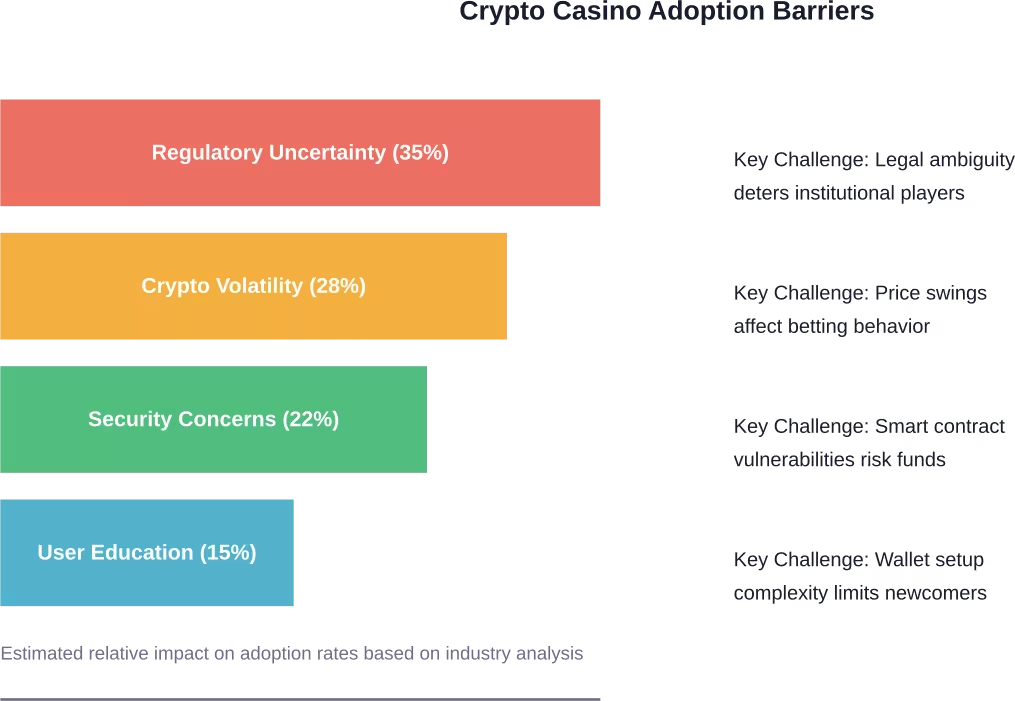
Regulatory uncertainty remains the primary obstacle. Many jurisdictions haven’t clarified whether existing gambling regulations apply to crypto casinos, creating legal ambiguity. Operators risk enforcement actions, and players risk fund seizures.
Cryptocurrency volatility affects player psychology. When Bitcoin drops 20% in a week, players holding crypto might reduce gambling spend, impacting platform revenue.
Security concerns persist. While blockchain provides transparency, smart contract vulnerabilities have led to exploits. Hackers have stolen millions from DeFi gambling protocols, damaging user confidence.
Mainstream adoption barriers slow growth. Many potential users don’t understand cryptocurrency, don’t want to navigate exchanges, or distrust blockchain technology.
Banking restrictions create friction. Many exchanges prohibit gambling-related transactions, forcing users to move funds through multiple wallets, adding complexity and fees.
Future Market Share Projections
Predicting exact market share distribution requires considering multiple converging trends.
If current growth trajectories continue, crypto gambling could represent 60-70% of the online gambling market by 2030. The $81.4 billion from 2024 growing at 15% annually would exceed $184 billion by 2030, while traditional online gambling grows more slowly.
But several factors could accelerate or decelerate this trajectory.
Regulatory clarity would likely accelerate growth. If major jurisdictions establish clear licensing frameworks for crypto casinos, institutional operators would enter the market, bringing capital and sophistication.
Mainstream cryptocurrency adoption directly impacts gambling growth. As more people hold crypto for payments and investments, using it for gambling becomes frictionless. Specific forecasts for crypto gambling revenue by 2030 were not available in reviewed sources. The cryptocurrency market is experiencing significant expansion in user bases and adoption.
Traditional casino consolidation might slow crypto’s advance. Large gambling operators adding sophisticated crypto functionality could retain users who would otherwise migrate to pure-play blockchain platforms.
The crypto casino tool market projection of $114.05 billion by 2035 indicates sustained infrastructure investment supporting long-term growth.
Emerging Trends Shaping Market Share
Several developing trends will influence competitive dynamics:
- DeFi gambling protocols removing centralized operators entirely
- NFT integration creating digital asset ownership in gambling contexts
- Metaverse casinos combining virtual reality with blockchain gambling
- Layer-2 scaling solutions reducing transaction costs further
- Regulatory technology (RegTech) enabling compliant crypto gambling
The desktop-to-mobile shift continues across all online gambling. As crypto wallet mobile experiences improve, mobile gambling should capture increasing share.
FAQs
How big is the crypto casino market?
Crypto gambling generated approximately $81.4 billion in gross gaming revenue in 2024. By comparison, the broader online casino market was valued at $19.11 billion, while total online gambling reached $78.66 billion. The crypto casino tools market is estimated at $13 billion in 2026 and is projected to grow to $114.05 billion by 2035.
What percentage of online gambling uses cryptocurrency?
Crypto gambling represents a significant share of the online gambling market. Based on revenue comparisons, it is estimated to account for roughly 40–50% of online gambling activity, although exact figures vary due to overlapping categories and reporting differences.
Which regions dominate crypto casino market share?
Asia-Pacific leads global cryptocurrency adoption, supporting strong growth in crypto gambling. Europe dominates the traditional online casino market due to established regulations, while North America is expanding rapidly as legalization increases across U.S. states.
Are crypto casinos growing faster than traditional online casinos?
Yes. Traditional online casinos are growing at around 12.2% CAGR through 2030, while the crypto casino tools market is expanding at approximately 27.29% CAGR through 2035. Strong user retention and preference for crypto-based platforms contribute to this faster growth.
What regulatory challenges do crypto casinos face?
Crypto casinos must comply with both gambling and cryptocurrency regulations. In the U.S., FinCEN enforces Bank Secrecy Act requirements, while the SEC oversees fraud-related enforcement. Many jurisdictions lack clear frameworks for crypto gambling, creating ongoing legal uncertainty.
How do crypto casinos compare to traditional online casinos?
Crypto casinos offer faster transactions, lower fees, provably fair gaming, and greater privacy. Traditional platforms provide stronger regulatory protection, established reputations, broader game libraries, and easier integration with fiat currencies. The choice depends on user priorities.
What is the projected market size for crypto casinos by 2030?
Specific forecasts for crypto gambling revenue by 2030 are limited. However, the crypto casino tools market is projected to reach $114.05 billion by 2035, indicating strong long-term growth and continued investment in supporting infrastructure.
Conclusion
The crypto casino market has established substantial market share within the gambling industry, generating $81.4 billion in 2024. This positions blockchain gambling as a major force reshaping how players engage with online casinos.
Market share distribution favors regions with established crypto adoption and clearer regulatory frameworks. Asia Pacific and Europe lead, while North America presents significant growth potential as legalization expands.
Technology advantages create structural competitive moats. Transaction speed, cost efficiency, and provably fair gaming aren’t temporary differentiators—they’re fundamental architectural improvements that traditional platforms can’t easily replicate without blockchain integration.
The trajectory points toward continued crypto casino market share expansion. Whether it reaches 60% of online gambling by 2030 depends on regulatory developments, mainstream crypto adoption, and how effectively traditional operators respond.
What’s clear is that players who switch to crypto platforms rarely return. That behavioral lock-in, combined with infrastructure investment reaching $114.05 billion by 2035, indicates crypto casinos aren’t a temporary trend—they’re restructuring the gambling industry’s competitive landscape permanently.
For operators, investors, and industry observers, tracking crypto casino market share provides essential intelligence about where gambling revenue is flowing and which business models will dominate the next decade.
Related Articles

September 29, 2026Is the Casino Legal in Japan? The Real Answer...

September 29, 2026Is the Casino Legal in Gambia? What the Law...