 Nothing found for the request
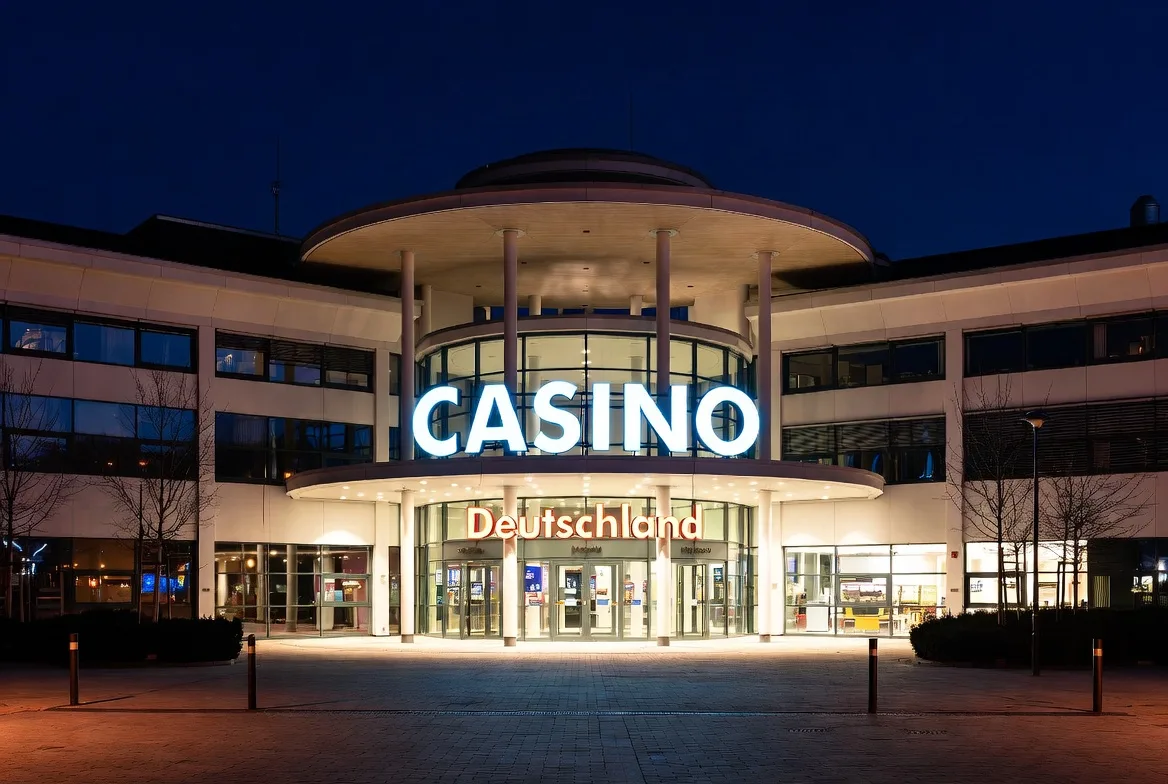
Germany Casino Market 2026: Growth, Laws & Forecast
Sologe March 27, 2026
Share:


Market Size and Revenue Projections
Germany’s casino market encompasses both land-based venues and online platforms, each following distinct growth trajectories. Recent data shows the online gambling market specifically reached USD 5,211.2 million in 2024.
Online gambling is expected to climb to USD 10,085.8 million by 2030, representing a CAGR of 11.7%. That’s significantly faster growth than the broader market average.
Casino tourism adds another dimension. The Germany casino tourism market was valued at USD 8.3 billion in 2025 and is forecast to reach USD 11.5 billion by 2035, growing at a 3.3% CAGR. This segment includes both domestic gambling enthusiasts and international visitors drawn to Germany’s casino destinations.
Here’s the breakdown across segments:
Market Segment | 2024 Value | 2030/2035 Projection | CAGR |
|---|---|---|---|
Total Casino Market | USD 12.38 billion | USD 28.67 billion (2035) | 7.93% |
Online Gambling | USD 5,211.2 million | USD 10,085.8 million (2030) | 11.7% |
Casino Tourism | USD 8.3 billion (2025) | USD 11.5 billion (2035) | 3.3% |
The online segment’s faster growth reflects changing consumer preferences and increased digital adoption. Sports betting currently represents the largest segment within online gambling, though casino games and poker continue expanding their share.
Reach Gaming Buyers in Germany Through a Dedicated Marketplace

In a market with many suppliers and service providers, visibility can be hard to maintain through general channels alone. Sologe is an iGaming marketplace where operators and gaming businesses search for suppliers, software, platforms, and service partners. Vendors use it to present products, services, and company profiles in one place and stay visible throughout the year.
Want to Be Found by More Industry Buyers?
Use Sologe to:
- show your offering to companies actively looking for vendors
- present your company and products in one place
- maintain visibility inside a dedicated iGaming marketplace
👉 Get in touch with Sologe to discuss listing your company as a vendor.
The Regulatory Framework: Glücksspielstaatsvertrag Explained
Germany’s Interstate Treaty on Gambling (Glücksspielstaatsvertrag or GlüStV) fundamentally reshaped the market when it took effect in July 2021. This wasn’t just regulatory tweaking—it represented a complete overhaul of how Germany approaches gambling.
Prior to 2021, online casino gaming existed in a legal gray zone. Individual states maintained their own rules for land-based venues, creating a patchwork of contradictory regulations. The new treaty established uniform rules across all 16 federal states.
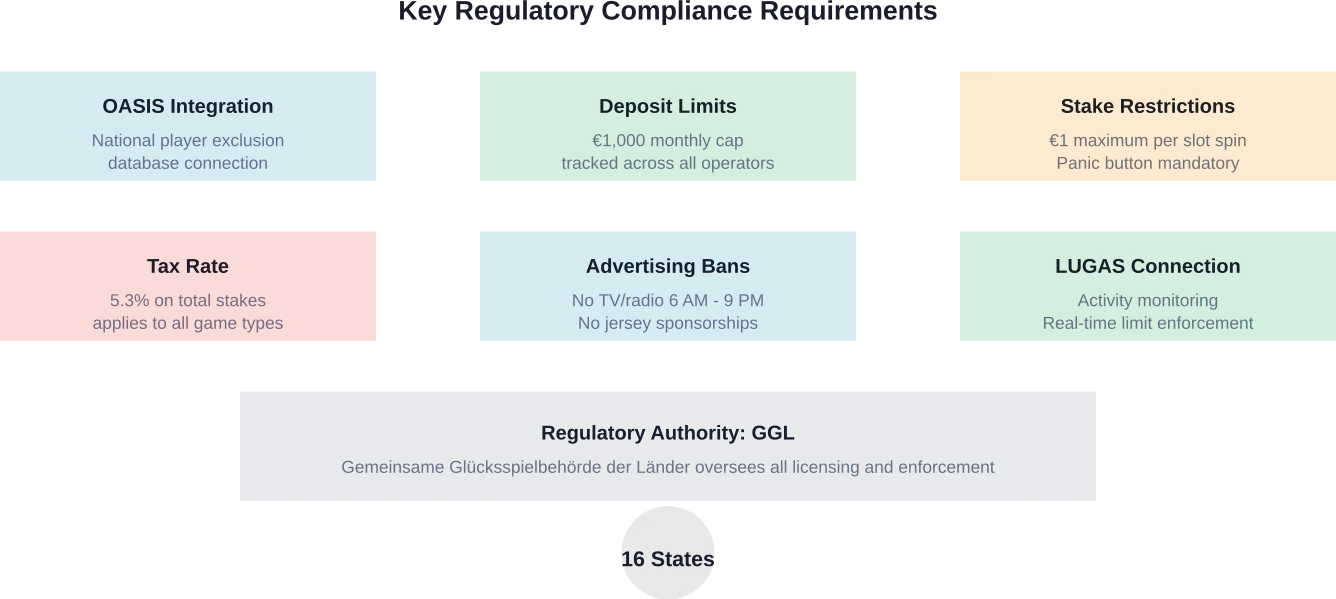
Key Regulatory Requirements
The Gemeinsame Glücksspielbehörde der Länder (GGL) serves as the central regulatory authority overseeing license issuance and compliance enforcement. Operators seeking to offer casino games, sports betting, or poker in Germany must navigate stringent requirements.
According to official regulatory guidance, licensed operators must implement full integration with national databases including OASIS (player exclusion system) and LUGAS (activity monitoring and deposit limits). These aren’t optional add-ons—they’re fundamental licensing prerequisites.
The €1,000 monthly deposit limit applies across all licensed platforms. This cap is player-specific, not operator-specific. So a player can’t circumvent it by spreading deposits across multiple sites. The limit tracks total deposits across the entire regulated market.
Stake limits vary by game type. Online slots face a €1 maximum stake per spin. The so-called “panic button” allows players to immediately self-exclude for 24 hours—no questions asked, no cooling-off negotiation.
Advertising restrictions are equally comprehensive. Operators can’t advertise between 6 AM and 9 PM on television or radio.
Tax Structure and Compliance Costs
Germany levies a 5.3% tax on all stakes—not on gross gaming revenue, but on total amount wagered. This applies to sports betting, virtual slots, and online poker equally.
That distinction matters significantly. A 5.3% tax on stakes translates to a much higher effective tax rate on operator revenue. For games with typical hold percentages, the actual tax burden on gross gaming revenue can exceed 20-25%.
License costs vary by activity type and aren’t publicly standardized in a simple fee schedule. The application process itself requires substantial legal and technical documentation demonstrating compliance capability.
Market Segmentation and Competitive Landscape
The German casino market divides into several distinct segments, each with unique characteristics and growth dynamics.
Land-Based vs. Online Operations
Traditional land-based casinos maintain significant market presence, particularly in established gaming destinations. Germany’s land-based venues range from large casino resorts in spa towns to smaller gaming halls in urban centers.
Casino tourism represents a substantial portion of land-based revenue. According to Eurostat data, a majority of EU residents took at least one personal tourism trip in 2023, with cross-border travel facilitating regional casino visits, especially in areas like the Rhine Valley where regulatory differences create destination appeal.
Online platforms are capturing market share rapidly. The 11.7% CAGR for online gambling through 2030 far outpaces land-based growth rates. Convenience, game variety, and 24/7 accessibility drive this shift.
But wait—there’s a complication. The strict regulatory environment creates barriers to entry that favor larger, well-capitalized operators who can absorb compliance costs. Smaller operators struggle with the technical integration requirements and ongoing compliance burden.
Player Demographics and Behavior
The market segments players into several categories: gambling enthusiasts, social players, dabblers, lottery loyalists, and the unengaged audience. Each group exhibits distinct playing patterns and preferences.
Gambling enthusiasts represent the highest-value segment but also require the most sophisticated responsible gaming interventions. Dabblers—occasional players without strong loyalty—are heavily influenced by promotions and user experience quality.
Game preferences vary significantly. Blackjack maintains strong popularity in both online and land-based settings. Sports betting dominates the online segment. Slot machines generate substantial revenue across both channels.
The Black Market Challenge
Despite comprehensive regulation, Germany’s black market remains substantial. A GGL-commissioned report utilizing various methodologies determined that spending on Germany’s black market hit €547 million in 2024.
That figure represents channelization—the percentage of total gambling activity occurring through licensed operators—at 77% in 2024. So roughly 23% of gambling activity still occurs outside the regulated framework.
Why do players choose unlicensed operators despite the availability of legal alternatives? Several factors drive this behavior.
The €1,000 deposit limit excludes high-rollers who prefer higher betting limits. The €1 slot stake maximum similarly pushes some players toward unlicensed sites offering higher stakes. More diverse game libraries on international sites attract players seeking variety unavailable on German-licensed platforms.
Bonus restrictions under German law limit promotional offerings, making unlicensed operators’ generous welcome bonuses more appealing. Payment method restrictions on licensed sites create friction that unlicensed competitors avoid.
The black market’s persistence presents ongoing challenges for both regulators and licensed operators. Enforcement actions against unlicensed operators continue, but the borderless nature of online gambling complicates enforcement.
European Context and Cross-Border Dynamics
Germany’s casino market doesn’t exist in isolation. According to the European Gaming and Betting Association, the European gambling market continues its growth trajectory, with total gross gaming revenue expected to reach €123.4 billion in 2024, a 5% increase from 2023.
Land-based gambling remains dominant in Europe with revenue of €75.5 billion in 2024, but online gambling shows stronger momentum, expected to reach €47.9 billion. This trend is projected to continue, with online gambling accounting for 45% of Europe’s market by 2029.
Germany represents a significant portion of this European market. The country’s substantial player base and high disposable income make it attractive despite higher taxation and stricter regulations compared to some other EU markets.
Cross-border gambling complicates the regulatory picture. EU freedom of services principles create tension with national gambling restrictions. Players can technically access operators licensed in other EU jurisdictions, though Germany’s regulations require operators serving German customers to hold German licenses.
Technology and Innovation Trends
Technological advancements are reshaping Germany’s casino market in several ways. Mobile gambling continues expanding rapidly, with smartphones becoming the primary access point for many players.
Live dealer games bridge the gap between land-based and online experiences, offering real-time interaction with human dealers via video stream. These games combine online convenience with the social elements and authenticity players associate with physical casinos.
Payment innovations are evolving despite regulatory constraints. E-wallets, prepaid cards, and cryptocurrency integration (where regulations permit) diversify payment options. The requirement for transparent transaction tracking to support deposit limits drives innovation in payment processing systems.
Responsible gaming technology represents perhaps the most significant innovation area. AI-powered systems analyze player behavior patterns to identify potential problem gambling indicators. Early intervention systems can trigger responsible gaming messages or suggest limits before problematic behavior escalates.
The mandatory integration with OASIS and LUGAS databases required technical infrastructure development across the industry. Operators invested heavily in systems capable of real-time communication with these national databases.
Investment and Market Entry Considerations
For operators considering entry into Germany’s casino market, the opportunity is substantial but so are the barriers. The market’s size and growth trajectory attract international operators, but regulatory compliance requirements filter out undercapitalized or less committed entrants.
Initial license acquisition requires significant legal and technical investment. Ongoing compliance costs include database integration fees, regulatory reporting obligations, and the technical infrastructure to enforce player protection measures.
The 5.3% stake tax significantly impacts profitability margins. Operators must achieve sufficient scale to absorb this tax burden while maintaining competitive offerings. Marketing restrictions limit customer acquisition channels, increasing the cost per acquired customer.
Succeeding in Germany’s market requires long-term commitment and substantial resources. Quick-return operators seeking minimal compliance investment won’t find Germany hospitable.
But for operators willing to invest in compliance and player protection, Germany offers access to one of Europe’s largest gambling markets with a regulatory framework that, while strict, provides legal certainty absent during the previous gray-market period.
Future Outlook and Growth Drivers
Several factors will shape Germany’s casino market evolution through 2035. Digital adoption continues accelerating, particularly among younger demographics more comfortable with online gambling than land-based alternatives.
Regulatory evolution remains possible. Industry stakeholders continue advocating for adjustments to deposit limits and stake restrictions. Whether regulators will modify these rules depends largely on data demonstrating whether current measures effectively prevent problem gambling without unnecessarily restricting recreational players.
The black market’s trajectory will significantly impact the regulated market’s growth. Successful channelization—bringing more activity into the licensed framework—would boost regulated revenue substantially. Conversely, persistent black market appeal could limit licensed operators’ growth potential.
Economic factors influence gambling spend. Germany’s economic performance, employment rates, and disposable income levels all correlate with gambling market revenue. Economic headwinds could moderate growth projections, while strong economic performance could accelerate expansion.
Technological innovation will continue enabling new gaming experiences. Virtual reality casinos, enhanced live dealer offerings, and gamification elements could attract new player segments and increase engagement among existing players.
Growth Driver | Impact Level | Timeline |
|---|---|---|
Online platform expansion | High | Ongoing through 2030 |
Mobile gambling adoption | High | Accelerating 2026-2028 |
Black market channelization | Medium-High | Gradual improvement expected |
Regulatory adjustments | Medium | Potential post-2027 review |
Casino tourism recovery | Medium | Steady growth 2026-2035 |
Technology innovation | Medium | Continuous evolution |
Frequently Asked Questions
Is online gambling legal in Germany in 2026?
Yes, online gambling is legal in Germany under the Interstate Treaty on Gambling (Glücksspielstaatsvertrag) implemented in July 2021. Online casino games, sports betting, and poker are permitted for operators holding valid licenses from the Gemeinsame Glücksspielbehörde der Länder (GGL). Players must use licensed platforms that comply with regulatory requirements including deposit limits and player protection measures.
What is the monthly deposit limit for German online casinos?
Germany enforces a €1,000 monthly deposit limit across all licensed gambling platforms. This limit is player-specific and tracked across the entire regulated market through the LUGAS database system, meaning players cannot circumvent it by depositing at multiple licensed operators. The limit applies to all forms of online gambling including casino games, sports betting, and poker.
How large is Germany’s casino market?
Germany’s casino market was valued at USD 12.38 billion in 2024 and is projected to reach USD 28.67 billion by 2035, representing a compound annual growth rate of 7.93%. The online gambling segment specifically reached USD 5,211.2 million in 2024 and is expected to grow to USD 10,085.8 million by 2030, with a faster CAGR of 11.7%.
What taxes do casino operators pay in Germany?
Germany levies a 5.3% tax on all stakes wagered across sports betting, virtual slots, and online poker. This tax applies to the total amount staked, not gross gaming revenue, making the effective tax burden on operator revenue significantly higher. Additional licensing fees and compliance costs also apply depending on the specific gambling activities offered.
Can international operators offer gambling services in Germany?
International operators can offer gambling services in Germany only if they obtain proper licensing from the GGL. The licensing process requires full integration with national databases including OASIS (player exclusion) and LUGAS (deposit limits and activity monitoring), adherence to strict advertising restrictions, implementation of player protection measures, and compliance with all regulatory requirements. Operating without a German license while serving German customers violates regulations.
What is the black market size in Germany’s gambling sector?
According to a GGL-commissioned report, spending on Germany’s black market reached €547 million in 2024, with overall channelization at 77%. This means approximately 23% of gambling activity occurs through unlicensed operators, driven by factors including higher deposit limits, more generous bonuses, and fewer stake restrictions on unlicensed platforms.
What are the main player protection requirements in Germany?
German gambling regulations mandate several player protection measures including the €1,000 monthly deposit limit, a €1 maximum stake per online slot spin, mandatory 24-hour “panic button” self-exclusion functionality, integration with the OASIS national exclusion database, real-time activity monitoring through LUGAS, and strict limits on advertising including time-based TV/radio restrictions and prohibitions on sports jersey sponsorships and celebrity endorsements.
Conclusion
Germany’s casino market represents one of Europe’s most dynamic gambling sectors, balancing substantial growth potential against comprehensive regulatory requirements. The projected expansion from USD 12.38 billion in 2024 to USD 28.67 billion by 2035 demonstrates significant opportunity for operators willing to navigate the compliance landscape.
The 2021 Interstate Treaty on Gambling transformed a fragmented regulatory environment into a unified framework, providing legal certainty while prioritizing player protection. Strict requirements including deposit limits, stake restrictions, and mandatory database integration create barriers to entry that favor well-capitalized, compliance-focused operators.
Online gambling’s faster growth trajectory—11.7% CAGR through 2030—reflects broader digital adoption trends and changing consumer preferences. Yet land-based casinos and casino tourism maintain substantial market presence, particularly in established gaming destinations.
The persistent black market, representing roughly 23% of activity, highlights ongoing challenges. Success in Germany’s regulated market requires balancing compliance costs, taxation, and marketing restrictions while delivering competitive player experiences that channel activity away from unlicensed alternatives.
For operators, investors, and stakeholders evaluating Germany’s casino market, the fundamentals remain compelling: a large, affluent player base, clear regulatory framework, and sustained growth projections. Success requires understanding that Germany prioritizes responsible gambling and player protection, with regulations enforced through sophisticated technical infrastructure and active regulatory oversight.
The market’s evolution through 2035 will depend on regulatory adjustments, black market channelization effectiveness, technological innovation, and broader economic conditions. But the trajectory is clear—Germany’s casino market will continue expanding as both a significant European gambling hub and a model for balancing commercial opportunity with player protection priorities.
Explore opportunities in Germany’s growing casino market by staying informed about regulatory developments, market trends, and compliance requirements to position an organization for success in this dynamic sector.
Related Articles

September 29, 2026Is the Casino Legal in Japan? The Real Answer...

September 29, 2026Is the Casino Legal in Gambia? What the Law...