 Nothing found for the request
Is the Casino Legal in Bangladesh? 2026 Laws Explained
Sologe July 10, 2026
Share:


The Legal Foundation: Bangladesh's Anti-Gambling Framework
Bangladesh’s prohibition on gambling dates back to British colonial rule. The legal framework rests primarily on one piece of legislation that’s been in effect for over a century and a half.
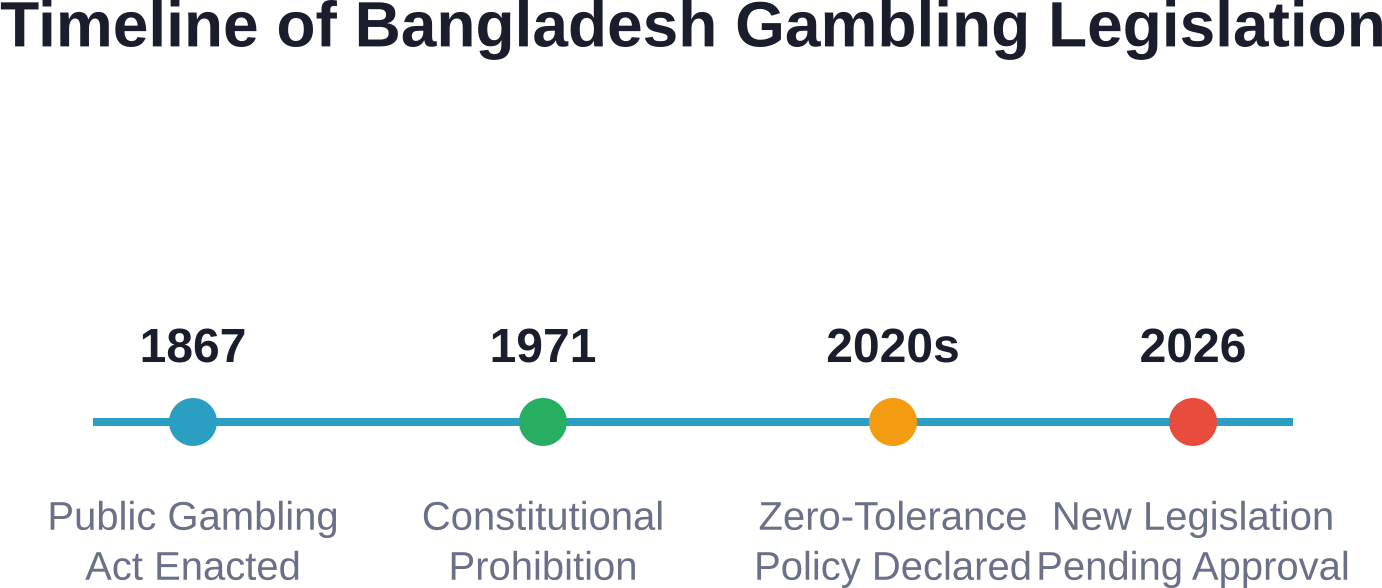
The Public Gambling Act of 1867
The Public Gambling Act of 1867 serves as the cornerstone of Bangladesh’s anti-gambling legislation. This colonial-era law prohibits public gambling and the operation of common gaming houses across the country.
Here’s what the Act specifically bans:
- Operating or managing a common gaming house
- Visiting a common gaming house
- Being found in a gaming house (with presumption of gambling)
- Facilitating public gambling activities
- Maintaining premises for gambling purposes
The penalties under this Act include fines and imprisonment, though by modern standards the punishments seem modest. That’s precisely why Bangladesh has been working to update its gambling legislation.
Constitutional Restrictions
The Constitution of the People’s Republic of Bangladesh (adopted in 1972) does not strictly criminalize or legally prohibit gambling by itself, but rather establishes under Article 18(2) that the State shall adopt effective measures to prevent prostitution and gambling as a fundamental principle of state policy.
This constitutional prohibition gives anti-gambling laws additional weight. It’s not just a matter of criminal statute—gambling prohibition is woven into the foundational legal principles of the nation.
The Digital Dilemma: Online Gambling’s Legal Gray Area
For decades, the Public Gambling Act served its purpose. But then came the internet.
Online gambling created what many legal experts described as a “legal gray area” in Bangladesh. The 1867 legislation explicitly addressed physical gaming houses and public gambling—but said nothing about websites, mobile apps, or digital transactions.
This gap allowed online gambling to flourish in Bangladesh for years. International betting sites accepted Bangladeshi players. Mobile payment systems processed gambling transactions. Sports betting syndicates operated with relative impunity.
According to academic research, online gambling became “a major crux spanning from metro areas to distant rural areas, with multiple syndicates comprised of local and foreign individuals.”
The government recognized this loophole needed closing.
Recent Legislative Updates: Closing the Online Loophole
Bangladesh hasn’t been sitting idle while online gambling proliferated. The government has taken concrete steps to modernize its anti-gambling framework.
The New Gambling Legislation
Bangladesh is currently preparing to replace the colonial-era Public Gambling Act with comprehensive new legislation. Home Minister Salahuddin Ahmed confirmed the draft legislation is in its final stages and will be presented to parliament during its next session for approval.
What makes this new law different?
The updated legislation specifically targets online gambling, betting, and digital wagering—areas the 1867 Act couldn’t address. The new law makes creating, operating, or using any portal, app, or device in cyberspace with the intent to facilitate gambling a punishable offense.
This isn’t just about updating old language. It’s about creating a legal framework that can actually be enforced in the digital age.
Zero-Tolerance Policy Declaration
In recent years, Bangladesh has declared a zero-tolerance policy on online gambling. This policy reflects the government’s recognition that online gambling had become a significant social and economic issue.
Online gambling reportedly became widespread before enforcement intensified, according to community discussions. International casino sites were accessible to Bangladeshi players despite the country’s prohibitions.
The zero-tolerance approach means authorities are actively pursuing enforcement, not just maintaining laws on the books.
What Forms of Gambling Are Prohibited?
When Bangladesh says gambling is illegal, it means virtually all forms of gambling. The prohibition is comprehensive.
Physical Gambling Activities
Traditional gambling activities that are explicitly prohibited include:
- Casino gambling: Slot machines, table games, poker rooms—all illegal
- Sports betting: Wagering on cricket, football, or any sporting events
- Lotteries: Private lotteries and unauthorized lottery operations
- Card games for money: Poker, rummy, and other card games played for stakes
- Dice games: Craps and other games of chance involving dice
- Betting shops: Physical locations accepting bets on races or sports
The only narrow exception historically recognized in some interpretations involved certain forms of horse racing, though even this remains legally ambiguous and largely unenforced.
Online and Digital Gambling
The new legislation specifically targets digital gambling platforms:
- Online casino sites and apps
- Sports betting websites and mobile applications
- Poker platforms and virtual card rooms
- Fantasy sports platforms involving entry fees
- Cryptocurrency gambling sites
- Social casino apps with real-money elements
- Esports betting platforms
According to LinkedIn reporting on regional gambling crackdowns, Bangladesh has launched comprehensive efforts to block access to illegal online gambling platforms and prosecute operators.
The Reality of Enforcement
Here’s where things get complicated. While gambling is comprehensively illegal, enforcement has been challenging—particularly for online gambling.
International gambling sites don’t need physical presence in Bangladesh to accept Bangladeshi players. VPNs allow users to bypass geographical restrictions. Cryptocurrency transactions can obscure money flows.
Research published by IJBSSR examining the “Loopholes of Legal Frameworks to Prevent Gambling (Casino) in Bangladesh” highlights these enforcement challenges. The study notes significant gaps between legal prohibition and practical enforcement capabilities.
That said, authorities have become more aggressive about enforcement in recent years. High-profile raids on gambling operations make regular headlines. Banks have been directed to identify and block transactions to known gambling sites.
Explore Gaming Technology Options with Sologe
Companies researching the gaming industry often need to understand the technology ecosystem that supports gaming operations. Sologe helps businesses explore software, platform, and technology categories across the iGaming market.
Through Sologe, companies can:
- Explore gaming software
- Compare online gaming platforms
- Review mobile application tools
- Find analytics software
- Assess marketing technology
Contact Sologe to learn more about software, platforms, analytics tools, and other gaming technology categories.
Penalties for Gambling Violations
What happens if someone gets caught gambling in Bangladesh? The penalties depend on the specific violation and which laws apply.
Penalties Under Existing Laws
The Public Gambling Act of 1867 establishes penalties for various gambling-related offenses. While specific fine amounts and imprisonment terms are established in the legislation, they’re widely considered outdated given they were set over 150 years ago.
Violations can include:
- Operating a gaming house
- Being found in a gaming house
- Facilitating gambling activities
- Participating in prohibited gambling
The relatively modest penalties under the 1867 Act are precisely why Bangladesh is updating its legislation—modern enforcement needs modern penalties.
Enhanced Penalties in New Legislation
The forthcoming gambling law is expected to include significantly enhanced penalties that reflect the seriousness with which Bangladesh views gambling violations.
While the specific penalty amounts haven’t been publicly released as of the legislation’s drafting stage, legal observers expect substantial fines and imprisonment terms for operators and facilitators of gambling activities.
The new law will likely distinguish between:
- Individual gamblers (participants)
- Gambling facilitators (middlemen, payment processors)
- Gambling operators (those running the platforms)
- International operators targeting Bangladeshi customers
Operators face the most severe penalties, while individual players may face lesser consequences—though still significant.
Violation Type | Target Group | Expected Severity |
|---|---|---|
Operating gambling platform | Operators, owners | High (substantial fines, long imprisonment) |
Facilitating gambling | Payment processors, agents | Medium-High (significant fines, imprisonment) |
Promoting gambling | Advertisers, affiliates | Medium (fines, possible imprisonment) |
Participating in gambling | Individual players | Low-Medium (fines, warnings, short imprisonment) |
Regional Context: How Bangladesh Compares
Bangladesh isn’t alone in prohibiting gambling. Many countries across Asia maintain strict anti-gambling laws, though approaches vary considerably.
Similar Prohibitions in the Region
Several neighboring countries maintain comprehensive gambling bans similar to Bangladesh:
- Pakistan: Prohibits gambling on religious grounds
- Afghanistan: Comprehensive ban on all gambling forms
- Brunei: Strict Islamic law prohibits gambling
- UAE: Complete prohibition with severe penalties
These prohibitions often stem from religious and cultural values that view gambling as harmful to individuals and society.
Countries With Regulated Gambling
Other Asian countries have taken a different approach, creating legal frameworks for regulated gambling:
- India: State-level regulation with some forms legal in certain states
- Philippines: Licensed casino industry with regulatory oversight
- Singapore: Limited casino licenses with strict controls
- Macau: Highly developed casino industry as special administrative region
According to LinkedIn reporting comparing gambling regulations across the region, some countries are exploring new legal gambling ventures. For instance, one jurisdiction reportedly considered casino licenses costing approximately $200,000 annually, with operations restricted to individuals over 21 years old.
However, Bangladesh shows no signs of following this regulated approach. The country’s trajectory points toward stricter prohibition, not liberalization.
The Asia-Wide Crackdown
LinkedIn reporting notes that “Asia is increasingly cracking down on illegal gambling to protect social stability and youth, reflecting a strong regulatory push across the region.”
Countries like Laos have launched operations targeting illegal online gambling. Bangladesh’s legislative updates fit within this broader regional pattern of enhanced enforcement and modernized anti-gambling laws.
Why Does Bangladesh Prohibit Gambling?
Understanding Bangladesh’s strict anti-gambling stance requires looking at cultural, religious, and social factors that shape policy.
Religious and Cultural Values
Bangladesh is a Muslim-majority country where Islamic principles heavily influence social policy. Islam explicitly prohibits gambling, considering it haram (forbidden).
The Quran addresses gambling directly, calling it an abomination and a tool of Satan designed to create enmity and prevent remembrance of God. These religious prohibitions carry significant weight in Bangladeshi society.
But it’s not only about religion. Cultural values emphasizing family responsibility, financial prudence, and social stability also support anti-gambling policies.
Social Harm Concerns
Beyond religious considerations, policymakers cite numerous social harms associated with gambling:
- Financial devastation: Families losing savings and falling into debt
- Addiction: Compulsive gambling destroying lives and relationships
- Crime: Theft and illegal activity to fund gambling habits
- Youth vulnerability: Young people particularly susceptible to gambling problems
- Economic drain: Money leaving local communities and the national economy
Academic research on the scope and challenges of anti-gambling laws in Bangladesh emphasizes these social harm concerns as primary justifications for the prohibitions.
Protection of Youth
LinkedIn reporting on regional gambling crackdowns specifically mentions that countries are targeting illegal gambling “to protect social stability and youth.”
Young people represent a particular concern. Online gambling platforms often use gamification, social media integration, and other techniques that appeal to younger demographics. Mobile accessibility makes gambling available to teenagers who wouldn’t be able to access physical casinos.
Bangladesh’s updated legislation aims to address these youth protection concerns more effectively than the 1867 Act could.
Practical Realities: Can You Gamble in Bangladesh?
The legal answer is clear: no. But what about the practical reality?
Accessing International Gambling Sites
Despite Bangladesh’s prohibitions, international online gambling sites technically remain accessible. These offshore platforms operate from jurisdictions where online gambling is legal and accept players from countries where it isn’t.
Some reports suggest that certain Bangladeshi residents have accessed online casinos despite the legal prohibition. VPN services can bypass geographical restrictions. Cryptocurrency payments can obscure transaction origins.
But here’s the thing—just because something is technically possible doesn’t make it legal or safe.
The Risks of Illegal Gambling
Bangladeshi residents who gamble online face multiple risks:
- Legal penalties: If caught, violators face fines and potential imprisonment
- Financial fraud: Unregulated sites may refuse to pay winnings or steal payment information
- No legal recourse: Can’t pursue legal action against fraudulent sites
- Banking complications: Banks may freeze accounts with gambling transactions
- Data security: Personal and financial information at risk on unregulated platforms
The zero-tolerance policy means authorities are actively pursuing enforcement. High-profile arrests and prosecutions have increased in recent years.
Government Blocking Efforts
Bangladesh Telecommunication Regulatory Commission (BTRC) has been directed to block access to known gambling websites. Internet service providers receive lists of prohibited sites and implement blocks.
While tech-savvy users can potentially circumvent these blocks, doing so requires deliberate effort and still carries legal risks.
The government has also pressured payment processors and banks to identify and block transactions to gambling sites. This financial chokepoint makes it harder to deposit money or withdraw winnings even if site access is achieved.
The Future of Gambling Law in Bangladesh
Where is Bangladesh headed on gambling policy? All signs point toward stricter enforcement and modernized prohibition—not liberalization.
Parliamentary Approval Timeline
The new gambling legislation is currently in final drafting stages. Home Minister Salahuddin Ahmed has indicated it will be presented to parliament during the next session for approval.
Once passed, the law will provide authorities with updated tools for combating online gambling specifically. Penalties will be significantly enhanced compared to the 1867 Act.
Legal experts expect the legislation to pass with strong support given the broad consensus on gambling prohibition across Bangladesh’s political spectrum.
Enhanced Enforcement Capabilities
The new law will likely include provisions for:
- Blocking online gambling platforms systematically
- Prosecuting international operators targeting Bangladeshi customers
- Monitoring financial transactions for gambling activity
- Coordinating with international law enforcement
- Public awareness campaigns about gambling harms
Bangladesh is also expected to participate in regional cooperation on gambling enforcement. As neighboring countries crack down on illegal gambling, cross-border coordination improves enforcement effectiveness.
No Movement Toward Legalization
Some observers have speculated whether Bangladesh might eventually follow countries like Singapore in creating a limited, highly regulated casino industry.
There’s no evidence this is under consideration. The trajectory is unambiguously toward stronger prohibition, not regulated legalization.
Religious values, social concerns, and political consensus all support maintaining and strengthening the ban. The focus is entirely on closing loopholes and improving enforcement—not creating legal gambling pathways.
What About Gaming vs. Gambling?
An important distinction exists between gambling and gaming—particularly skill-based competitions versus games of chance.
Games of Skill vs. Games of Chance
Some legal frameworks distinguish between:
- Games of chance: Outcomes primarily determined by random factors (slots, roulette, lotteries)
- Games of skill: Outcomes primarily determined by player ability (chess, certain card games, sports competitions)
In some jurisdictions, this distinction matters legally. Games of skill may be exempt from gambling prohibitions even when money is wagered.
Bangladesh’s framework doesn’t clearly establish this distinction. The prohibition is broadly worded to cover gambling activities generally, regardless of skill involvement.
Fantasy Sports and Esports
Fantasy sports platforms and esports betting represent newer areas where the games-of-skill argument sometimes applies.
However, Bangladesh’s forthcoming legislation specifically targets online platforms facilitating any form of wagering. Fantasy sports platforms that charge entry fees and award prizes would likely fall under the prohibition.
Real talk: if money is changing hands based on uncertain outcomes—even if skill is involved—it’s risky territory under Bangladesh law.
Social Gaming Without Real Money
What about playing poker with friends for fun, or social casino apps without real-money elements?
The Public Gambling Act primarily targets public gambling and common gaming houses. Private social games among friends typically fall outside this scope, provided no one is operating a business or venue.
Social casino apps that use virtual currency with no cash value similarly fall outside gambling prohibitions—they’re entertainment products, not gambling platforms.
The line gets crossed when real money enters the equation, even if initially disguised as virtual currency that can later be converted.
Frequently Asked Questions
Can I legally play casino games online from Bangladesh?
No. Online gambling, including online casino games, is illegal in Bangladesh. Although some international gambling websites may be accessible, using them violates Bangladeshi law and may result in legal penalties.
Are there any exceptions to Bangladesh’s gambling ban?
No significant exceptions exist. Bangladesh maintains a broad prohibition on gambling, covering both land-based and online activities. While horse racing has occasionally been discussed in legal interpretations, no widely recognized exemption currently applies.
What are the penalties for gambling in Bangladesh?
Gambling offenses may result in fines and imprisonment under Bangladeshi law. Authorities have also proposed stronger legislation with increased penalties, particularly for gambling operators, organizers, and those who promote illegal gambling activities.
Is Bangladesh planning to legalize casinos in the future?
There are no official plans to legalize casinos in Bangladesh. Current legislative efforts focus on strengthening enforcement against illegal gambling rather than creating a regulated gambling market.
Why is gambling illegal in Bangladesh when it’s legal in other countries?
Bangladesh’s gambling laws are influenced by religious, cultural, and social considerations. Policymakers have consistently cited concerns about gambling addiction, financial harm, crime, and public welfare as reasons for maintaining a comprehensive ban.
Can the government block all online gambling sites?
Completely blocking every gambling website is technically difficult, but Bangladeshi authorities actively block known gambling platforms, monitor financial transactions, and cooperate with payment providers to limit access to illegal gambling services.
What happens if an international gambling site accepts Bangladeshi players?
International gambling operators that accept players from Bangladesh are not authorized under Bangladeshi law. Players using these websites may face legal risks and have no regulatory protection if disputes, payment problems, or fraud occur.
Conclusion
So, is the casino legal in Bangladesh? Absolutely not. Casinos have been illegal since 1867, and Bangladesh is moving toward stricter prohibition—not liberalization.
The Public Gambling Act of 1867 established the foundation, the Constitution reinforced the prohibition, and upcoming legislation will close the online loopholes that emerged with digital technology. The government has declared a zero-tolerance policy and is implementing multi-layered enforcement.
While some international gambling sites remain technically accessible, using them is illegal and risky. Violators face legal penalties, financial fraud risks, and no legitimate recourse.
Bangladesh’s approach reflects deeply held religious and cultural values, social harm concerns, and strong political consensus. The trajectory is clear: enhanced enforcement and modernized prohibition—not regulated legalization.
For anyone considering gambling in Bangladesh, the message is unambiguous: don’t. The legal framework prohibits it, enforcement is increasing, and the risks far outweigh any potential rewards.
Stay informed about legal developments as the new gambling legislation moves through parliament. Understanding the law is the first step toward compliance—and avoiding serious legal consequences.
Related Articles

September 3, 2026Is the Casino Legal in Denmark? 2026 Guide

September 3, 2026Is the Casino Legal in Angola? What the 2026...