 Nothing found for the request
Is the Casino Legal in Canada? 2026 Guide
Sologe July 10, 2026
Share:


Federal Law: The Foundation of Casino Legality
Canada’s Criminal Code forms the foundation of all gambling regulation. Part VII of the Criminal Code addresses “Disorderly Houses, Gaming and Betting,” establishing what’s prohibited and what exceptions exist.
According to the Criminal Code, operating a common gaming house is illegal. Section 201 states that anyone who keeps a common gaming house is guilty of an indictable offence and liable to imprisonment for up to two years.
But wait. That sounds like all casinos are illegal, right?
Not quite. The Criminal Code contains crucial exemptions that make provincial casinos legal.
Provincial Authority Over Gambling
The Criminal Code grants provinces the authority to license and regulate gambling within their territories. This means each province can legally operate or license casinos, lotteries, and other gaming activities.
Section 207 of the Criminal Code is the key provision. It exempts provincial governments from gambling prohibitions when they conduct and manage lottery schemes—a term broad enough to encompass casinos, slot machines, and other gaming activities.
This federal framework creates a patchwork of gambling regulations across Canada. What’s legal in Ontario might differ from what’s legal in Alberta or Quebec.
The Sports Betting Solutions
In 2020, Bill C-13 was introduced proposing changes to expand legal gambling in Canada, though the legislation was terminated when Parliament dissolved on August 15, 2021. Previously, Canadians could only bet on parlay bets involving multiple sporting events. The law prohibited single-event sports betting.
Bill C-13 proposed changes to decriminalize single-event sports betting, though the bill was terminated when the 43rd Parliament was dissolved on August 15, 2021.
While the government-sponsored Bill C-13 died on the order paper, legal sports gambling in Canada was ultimately expanded through the passage of a private member’s bill, Bill C-218 (the Safe and Regulated Sports Betting Act). Bill C-218 successfully passed and received Royal Assent in June 2021, legalizing single-event sports betting nationwide.
Provincial Casino Regulations Across Canada
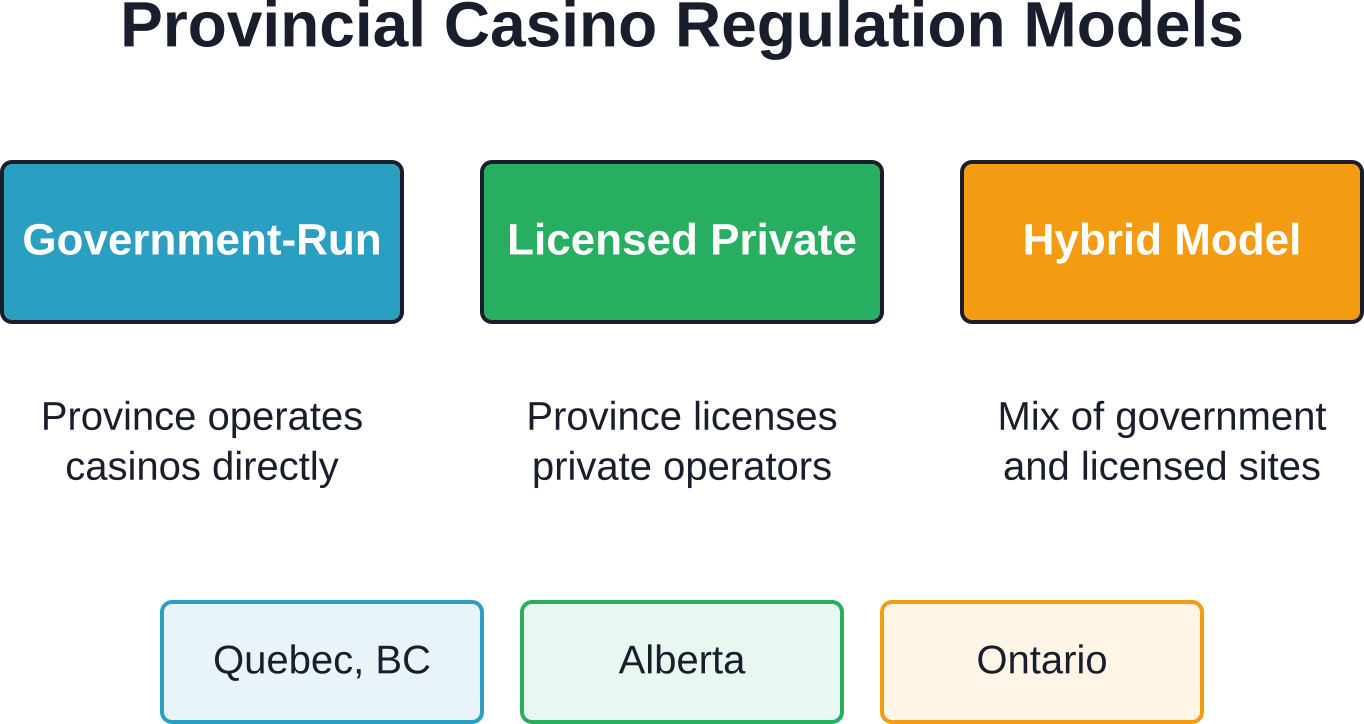
Each Canadian province has developed its own approach to casino regulation. Some operate government-run casinos, others license private operators, and several have embraced online gambling platforms.
Real talk: understanding what’s legal requires knowing your specific province’s rules.
Ontario: The Open Market Approach
Ontario has taken the most progressive approach to gambling regulation in Canada. In 2022, the province launched a competitive online gambling market through the Alcohol and Gaming Commission of Ontario (AGCO) and iGaming Ontario.
Licensed operators can now offer online casino games, sports betting, and poker to Ontario residents. This represented a fundamental shift from the previous government monopoly model.
Ontario gambling provides residents with extensive choice. Over 90% of residents in Southern Ontario live within a one-hour drive from a legal land-based betting establishment.
The province also operates several brick-and-mortar casinos and allows charitable gaming under specific conditions.
Quebec: Government Monopoly Model
Quebec maintains tighter control over gambling through Loto-Québec, the provincial Crown corporation responsible for gaming operations.
The province operates land-based casinos and the Espacejeux online gambling platform. Private operators cannot legally offer online gambling to Quebec residents.
Quebec’s approach prioritizes government revenue and social responsibility measures over market competition.
British Columbia: BCLC Framework
British Columbia manages gambling through the British Columbia Lottery Corporation (BCLC). The province operates casinos, community gaming centers, and the PlayNow online platform.
Land-based casinos operate under service provider agreements with BCLC, creating a hybrid model where private companies run facilities under government oversight.
Alberta: Regulated Gaming with Recent Changes
Alberta Gaming, Liquor & Cannabis (AGLC) regulates gambling in the province. Alberta has historically allowed charitable casinos and licensed gaming facilities.
In 2026, Alberta is launching its iGaming market. Beginning July 13, 2026, operators can conduct and manage legally registered iGaming platforms in Alberta under AGLC oversight.
Sport Select is available for sports betting, though with limitations including a $250 daily wager limit for parlays.
Other Provinces and Territories
Manitoba, Saskatchewan, Nova Scotia, New Brunswick, Newfoundland and Labrador, and Prince Edward Island each operate their own regulatory frameworks, typically through provincial gaming corporations.
The territories—Northwest Territories, Yukon, and Nunavut—have more limited gambling offerings, primarily focused on lottery products.
Video lottery terminals operate across various provinces, providing another form of legal gambling outside traditional casinos.
Online Casino Legality in Canada
Online gambling represents the fastest-growing segment of Canada’s gaming industry. The legal status depends heavily on where operators are based and which province residents live in.
Provincial online platforms operate legally within their respective jurisdictions. Ontario’s open licensing system, Quebec’s Espacejeux, and British Columbia’s PlayNow are all legal options for residents of those provinces.
But what about offshore casino sites?
Licensed vs. Offshore Online Casinos
The distinction between licensed and offshore online casinos matters for legal compliance and consumer protection.
Licensed online casinos hold provincial approval and operate within Canadian regulatory frameworks. They must follow strict rules around responsible gambling, anti-money laundering, and player protection.
Offshore casinos operate from international jurisdictions like Malta, Curaçao, or Gibraltar. These sites aren’t licensed by Canadian provinces.
Here’s where it gets interesting. While operating an unlicensed casino targeting Canadians violates federal law, the Criminal Code doesn’t explicitly criminalize individual Canadians for placing bets on offshore sites.
That said, offshore sites lack the consumer protections of licensed operators. Banking can be problematic, dispute resolution is limited, and responsible gambling tools may be inadequate.
Feature | Licensed Provincial Sites | Offshore Sites
|
|---|---|---|
Legal Status | Fully legal and regulated | Legally gray area |
Consumer Protection | Strong provincial oversight | Varies by jurisdiction |
Dispute Resolution | Provincial regulator support | Limited recourse |
Banking Options | Canadian banks supported | Often restricted |
Responsible Gambling | Mandatory tools and limits | Inconsistent standards |
Tax Treatment | Winnings tax-free | Winnings tax-free |
Safety and Verification for Online Gambling
Ensuring an online casino is safe and legitimate requires checking several factors.
Licensed sites display their provincial gaming license prominently. Ontario sites show AGCO registration, Quebec sites link to Loto-Québec, and British Columbia sites connect to BCLC.
Independent verification that games are fair and player data remains protected assures players that the gaming experience meets international safety standards.
Many licensed sites implement two-factor authentication, providing an additional layer of protection for player accounts.
Look for responsible gambling tools including deposit limits, session time limits, self-exclusion options, and reality checks.
Find Gaming Industry Suppliers with Sologe
Canada has one of the most established gaming markets in the world, and businesses researching the sector often need more than legal information. Sologe helps companies review suppliers from multiple areas of the iGaming industry through a centralized marketplace.
Sologe can help businesses:
- Compare gaming platforms
- Explore software categories
- Review payment solutions
- Assess traffic and affiliate options
- Find mobile application tools
👉Contact Sologe to review platform options, software categories, payment solutions, and other iGaming business resources.
Casino Licensing and Compliance Requirements
Operating a legal casino in Canada involves extensive licensing requirements and ongoing compliance obligations.
Provincial gaming regulators establish detailed criteria that operators must meet before receiving approval.
Anti-Money Laundering Obligations
Casinos must fulfill specific obligations under the Proceeds of Crime (Money Laundering) and Terrorist Financing Act (PCMLTFA) and associated Regulations.
For the purpose of the PCMLTFA, a casino is a government, organization, board or operator in Canada that is authorized to do business and that conducts and manages lottery schemes at a fixed place of business.
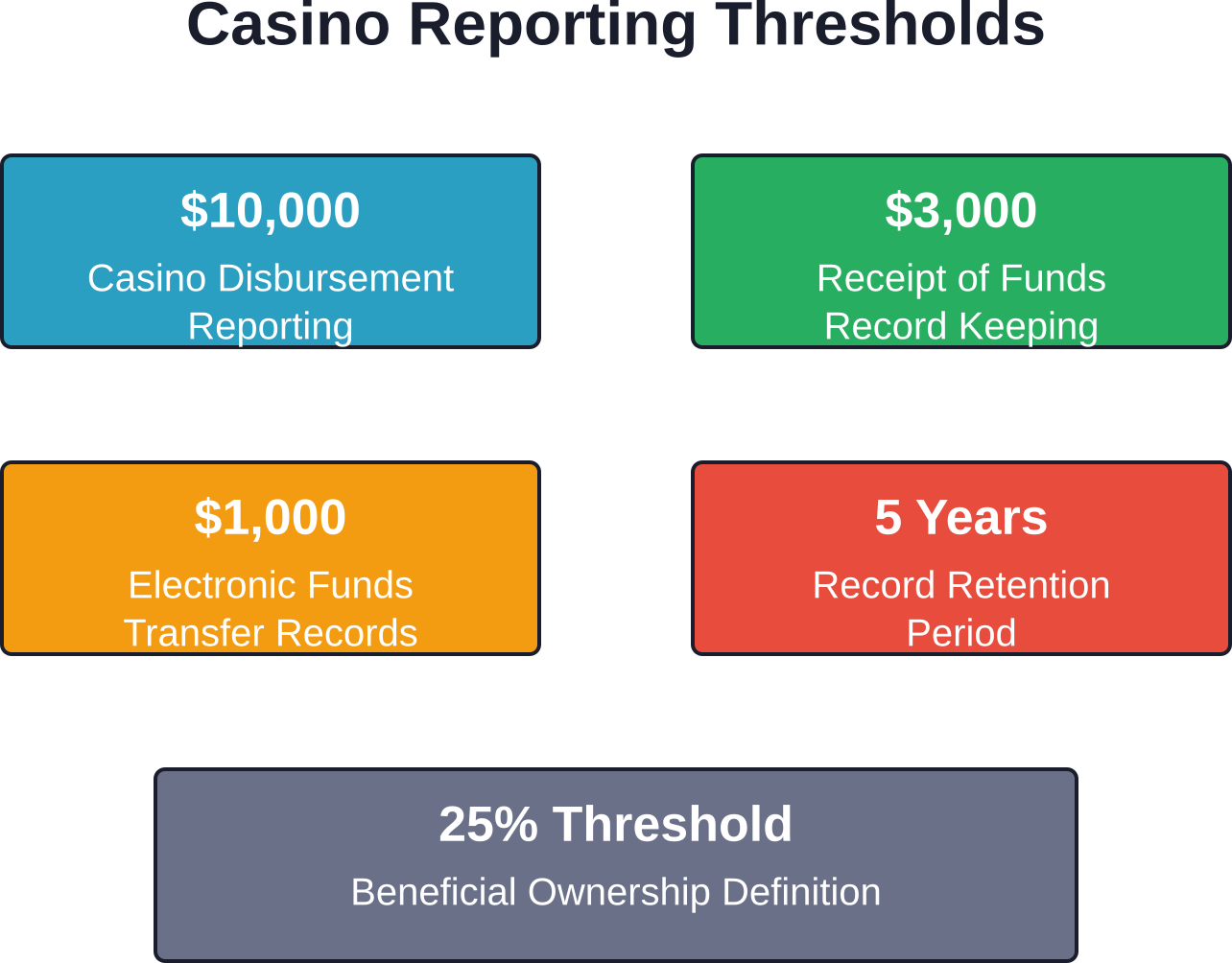
Casinos must report certain transactions to the Financial Transactions and Reports Analysis Centre of Canada (FINTRAC). This includes casino disbursements of $10,000 or more, according to the Proceeds of Crime (Money Laundering) and Terrorist Financing Regulations, SOR/2002-184, section 75.
Record keeping requirements are extensive. Casinos must maintain copies of every report sent to FINTRAC, including Suspicious Transaction Reports, Large Cash Transaction Reports, and Casino Disbursement Reports.
Records must be kept for five years after the Suspicious Transaction Report is submitted. For receipt of funds and credit extension records, the threshold is $3,000. Electronic funds transfer records must be kept for amounts of $1,000 or more.
Beneficial Ownership Requirements
Casinos must identify beneficial owners of entities conducting significant transactions. The threshold defining beneficial owners is 25% ownership or control of an entity.
Property valued at $100,000 or more triggers beneficial ownership requirements under PCMLTFA.
These requirements help combat money laundering and terrorist financing in Canada by ensuring transparency in significant casino transactions.
Provincial Licensing Criteria
Beyond federal anti-money laundering requirements, provinces impose their own licensing standards.
Alberta’s Casino Terms & Conditions and Operating Guidelines provides detailed information regarding AGLC’s policies and requirements for casino facility and charity licenses. The document runs 312 pages and covers general information, charity requirements, facility licensee requirements, operating procedures, rules of play, electronic gaming, and anti-money laundering measures.
Ontario’s AGCO evaluates operators on financial stability, technical systems, responsible gambling measures, and corporate governance.
The licensing process typically takes several months and requires extensive documentation, background checks, and financial audits.
What’s Actually Illegal in Canadian Gambling?
Understanding what’s legal requires understanding what’s prohibited. The Criminal Code clearly outlines illegal gambling activities.
Operating an unlicensed common gaming house remains illegal. Section 201 makes keeping a common gaming house punishable by up to two years imprisonment.
Being found in a common gaming house without lawful excuse is also an offence, though enforcement of this provision is rare.
Section 202 prohibits various betting and bookmaking activities including using a place under your control for recording or registering bets, importing or keeping devices for betting purposes, and selling pools or making books on sporting events—unless authorized by provincial license.
Operating online gambling sites without provincial authorization violates federal law. Provinces actively work to block unlicensed operators and payment processors serving offshore sites.
However, enforcement focuses on operators rather than individual bettors. No Canadian has been prosecuted for placing bets on offshore gambling sites.
Penalties for Non-Compliance
Operating illegal gambling operations carries serious penalties. Criminal Code violations can result in imprisonment, substantial fines, and asset seizure.
Licensed operators face provincial regulatory penalties for compliance failures. These can include license suspension, financial penalties, mandatory audits, and license revocation.
FINTRAC violations carry separate penalties. Casinos that fail to meet anti-money laundering obligations face administrative monetary penalties, compliance orders, and potential criminal charges in egregious cases.
Minimum Age Requirements by Province
The minimum age for legal gambling varies by province. Generally speaking, provinces set gambling age limits at either 18 or 19 years.
Province/Territory | Minimum Gambling Age
|
|---|---|
Alberta | 18 |
Quebec | 18 |
Manitoba | 18 |
Ontario | 19 |
British Columbia | 19 |
Saskatchewan | 19 |
Nova Scotia | 19 |
New Brunswick | 19 |
Newfoundland and Labrador | 19 |
Prince Edward Island | 19 |
Licensed casinos verify age through government-issued identification. Online platforms use identity verification systems to confirm players meet age requirements.
Allowing underage gambling can result in significant penalties for operators including fines and license suspension.
Responsible Gambling Framework
Canadian gambling regulation emphasizes responsible gambling and player protection. Provincial regulators require licensed operators to implement comprehensive responsible gambling programs.
These programs typically include deposit limits, loss limits, session time limits, reality checks, self-exclusion programs, and access to problem gambling resources.
Responsible gambling organizations provide support across Canada. Provincial gaming corporations fund problem gambling treatment and prevention programs.
Research indicates that legalized gambling can increase irresponsible betting behavior, especially among low-income populations. Research from UC San Diego’s Rady School of Management defines gambling irresponsibly as spending a high proportion of income—for example, 10%—on gambling.
Canadian regulatory frameworks attempt to mitigate these risks through mandatory player protection measures.
Self-Exclusion Programs
All provincial gambling regulators operate self-exclusion programs allowing individuals to voluntarily ban themselves from gambling venues or online platforms.
These programs vary by province but generally allow exclusions ranging from six months to lifetime bans. Casinos must remove self-excluded individuals from marketing lists and refuse them entry to gaming facilities.
Ontario’s self-exclusion program covers land-based casinos and online gambling sites. British Columbia operates a similar integrated program through GameSense.
Tax Treatment of Casino Winnings
Canadian tax law treats gambling winnings favorably compared to many jurisdictions. Casino winnings are generally not taxable in Canada.
The Canada Revenue Agency does not consider casual gambling winnings as income. This applies whether winnings come from land-based casinos, provincial online platforms, or offshore sites.
Professional gamblers represent an exception. Individuals who gamble as their primary source of income may be required to report winnings as business income.
The distinction hinges on whether gambling constitutes a hobby or a commercial enterprise. Factors include frequency of gambling, systematic approach, and reliance on gambling income.
The Future of Casino Legality in Canada
Canada’s gambling landscape continues evolving. Several trends will shape casino legality in coming years.
More provinces are expected to follow Ontario’s lead in opening competitive online gambling markets. Alberta’s launch of iGaming in 2026 signals this trend.
Provincial governments see regulated online gambling as a revenue source while providing consumer protections absent from offshore markets.
Technological advancement will drive regulatory adaptation. Cryptocurrency gambling, virtual reality casinos, and esports betting present new regulatory challenges.
Federal-provincial coordination may improve as provinces share best practices and harmonize some regulations. However, Canada’s constitutional division of powers ensures provincial variation will continue.
Social responsibility measures will likely strengthen. Public health concerns about problem gambling, particularly among youth and vulnerable populations, will push regulators toward stricter player protection requirements.
How to Verify Casino Legality
Canadians seeking to gamble legally should verify casino credentials before depositing money or providing personal information.
For land-based casinos, check with the provincial gaming regulator. Each province maintains lists of licensed facilities on their gaming authority websites.
For online casinos, look for clear licensing information. Licensed sites display their provincial authorization prominently, typically in the footer with a link to the regulator’s verification page.
Ontario sites should show AGCO registration and iGaming Ontario approval. Quebec sites should link to Loto-Québec. British Columbia sites should reference BCLC.
Offshore sites claiming to be “legal in Canada” without provincial licensing should raise red flags. While playing on such sites isn’t explicitly criminal for individuals, they lack regulatory oversight and consumer protections.
Check for secure connections (HTTPS), published terms and conditions, clear privacy policies, and accessible customer support.
Independent testing agency certifications from organizations like eCOGRA provide additional assurance that games are fair and random number generators function properly.
Common Misconceptions About Casino Legality
Several misconceptions persist about gambling legality in Canada:
- The first: That all online gambling is illegal. This was true historically, but provincial online platforms and licensed operators now provide legal online gambling in several provinces.
- The second: That Canadians can be arrested for using offshore gambling sites. While operating unlicensed sites targeting Canadians is illegal, individual players face no criminal liability for placing bets.
- The third: That gambling winnings are taxable. Casual gambling winnings are not taxed in Canada, unlike in the United States and some other countries.
- The fourth: That all provinces have the same gambling laws. Provincial variation is significant, with different age limits, licensing models, and permitted gambling types.
- The fifth: That charitable casinos operate without regulation. Charitable gaming faces strict provincial oversight with detailed requirements around how proceeds are used.
Charitable Gaming and Casino Nights
Charitable organizations can legally conduct casino nights and gambling events under provincial licenses. These events raise funds for approved charitable purposes.
Alberta’s Charitable Gaming Policies Handbook outlines detailed requirements for organizations conducting casino gaming. Charities must apply for licenses, follow strict financial reporting, and ensure proceeds benefit approved charitable purposes.
Ontario, British Columbia, and other provinces maintain similar frameworks allowing licensed charitable gaming.
These events differ from commercial casinos in several ways. They’re typically time-limited, conducted by volunteers, and all net proceeds must support charitable activities.
Regulations govern game types, betting limits, staffing requirements, and financial controls to ensure integrity and proper use of funds.
First Nations Gaming
First Nations gaming represents a unique segment of Canada’s gambling landscape. While provinces hold primary jurisdiction over gaming, First Nations have negotiated agreements allowing on-reserve casinos and gaming facilities.
These facilities operate under provincial-First Nations agreements outlining licensing, regulation, and revenue sharing.
Alberta’s Host First Nation Charitable Casino Policies Handbook addresses casino operations on First Nations land.
First Nations gaming facilities must still comply with federal anti-money laundering requirements and provincial gaming regulations, while also incorporating First Nations governance structures.
Revenue from First Nations casinos often supports community development, education, healthcare, and cultural programs.
Frequently Asked Questions
Are casinos legal everywhere in Canada?
Yes. Casinos are legal throughout Canada, but each province and territory sets its own gambling rules. Some jurisdictions operate government-owned casinos, others license private operators, and the availability of land-based and online gambling varies across the country.
Can I legally gamble online in Canada?
Yes. Canadians can legally use provincially regulated online gambling platforms, and some provinces, such as Ontario, license multiple private operators. Offshore gambling websites are also accessible, but they are not licensed by Canadian provinces and do not provide the same regulatory protections.
What is the minimum age to gamble at Canadian casinos?
The legal gambling age depends on the province. Alberta, Manitoba, and Quebec require players to be at least 18 years old, while most other provinces and territories set the minimum age at 19. Licensed operators verify age using government-issued identification.
Are casino winnings taxable in Canada?
In most cases, no. Casual gambling winnings are generally not taxable for Canadian residents. However, individuals who gamble professionally and earn their primary income through gambling may be required to report those earnings as business income.
What makes an online casino legal in Canada?
A legal online casino operates under authorization from a Canadian provincial regulator. Licensed operators must meet requirements for responsible gambling, player protection, anti-money laundering compliance, fair gaming, and secure handling of customer information.
Can First Nations operate casinos in Canada?
Yes. First Nations can operate casinos through agreements with provincial governments. These gaming facilities are regulated under provincial frameworks while supporting First Nations communities through revenue used for public services, economic development, and community programs.
What happens if I operate an unlicensed casino?
Operating an unlicensed casino is a criminal offence under Canada’s Criminal Code. Penalties may include fines, imprisonment, confiscation of assets, and other regulatory actions. Licensed operators that fail to comply with provincial rules may also face financial penalties, suspension, or revocation of their licenses.
Conclusion
Casinos are legal in Canada through a complex framework of federal and provincial regulations. The Criminal Code establishes baseline prohibitions while granting provinces authority to license and regulate gambling within their territories.
Each province has developed its own approach, from Ontario’s competitive online market to Quebec’s government monopoly model. Land-based casinos operate across the country under provincial oversight, and online gambling is expanding rapidly through regulated provincial platforms.
Legal casinos must comply with extensive requirements including anti-money laundering obligations, responsible gambling measures, and consumer protection standards. Transaction reporting thresholds at $10,000 for casino disbursements, record-keeping requirements, and beneficial ownership identification at the 25% threshold help combat financial crimes.
The landscape continues evolving. Alberta’s 2026 iGaming launch signals growing provincial interest in regulated online markets. Technological innovation, social responsibility concerns, and revenue considerations will shape future developments.
For Canadians, gambling legally means using provincial casinos or licensed online platforms. Verification of casino credentials through provincial gaming regulators ensures legal compliance and access to consumer protections.
The future of casino legality in Canada points toward expanded regulated markets, stronger responsible gambling measures, and continued provincial variation within the federal framework. Understanding one’s province-specific regulations remains essential for legal gambling participation.
Check your provincial gaming regulator’s website for the most current information on licensed casinos, legal gambling options, and regulatory requirements in your jurisdiction.
Related Articles

September 3, 2026Is the Casino Legal in Denmark? 2026 Guide

September 3, 2026Is the Casino Legal in Angola? What the 2026...