 Nothing found for the request
Is the Casino Legal in the Dominican Republic? 2026 Guide
Sologe July 11, 2026
Share:


Land-Based Casino Regulation: The Foundation
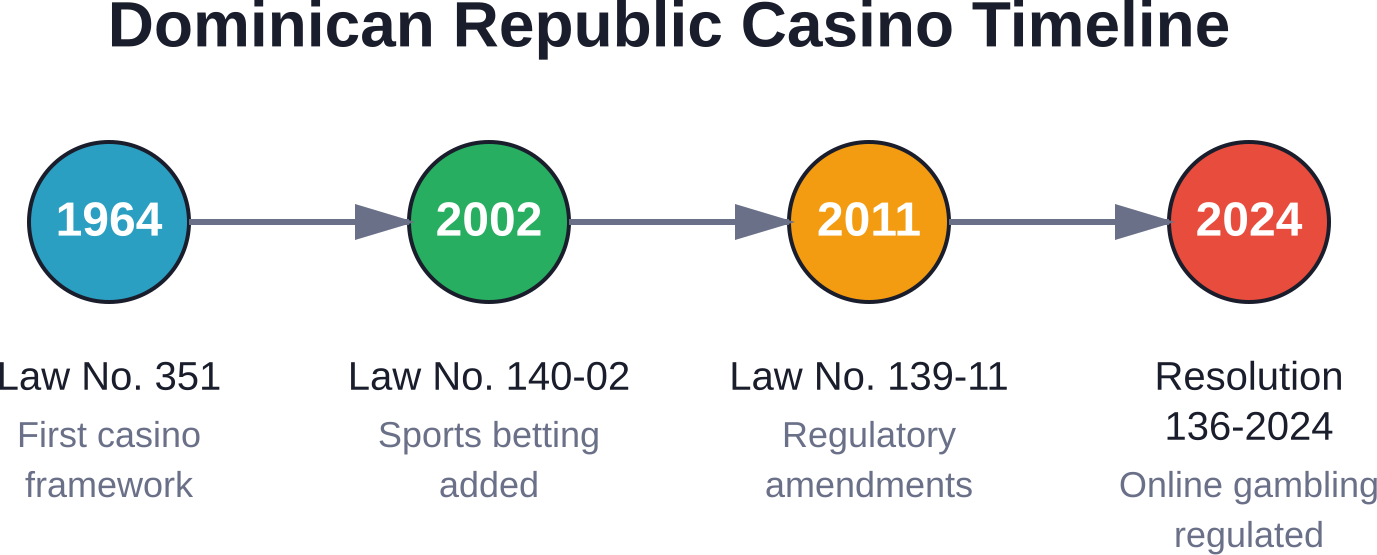
Land-based casinos in the Dominican Republic have operated under legal protection since 1964, when Law No. 351 established the original framework for casino operations. This was later strengthened by Law No. 140-02 and its amendment, Law No. 139-11, which created clearer rules for both casinos and sports betting venues.
Many of these casino establishments are directly tied to the country’s robust tourism sector. Walk into any major resort area like Punta Cana or Santo Domingo, and you’ll find casinos operating inside hotels and entertainment complexes—all fully licensed and regulated.
The regulatory authority overseeing these operations is the Dirección de Casinos y Juegos de Azar, which falls under the Ministry of Finance. Land-based casinos are subject to a 29% tax on Gross Gaming Revenue under the regulatory framework.
The 2024 Online Gambling Revolution
Here’s where things get interesting. On March 26, 2024, the Dominican Republic issued Resolution No. 136-2024, formally bringing online gambling under regulatory control. Before this, online casinos and sports betting sites operated in a legal gray zone.
Now, both online casinos and sports betting platforms need official licenses to operate legally in Dominican territory. The resolution was signed into law by the Ministry of Finance, marking a significant modernization of the country’s gambling sector.
And this isn’t just paperwork. The government under President Luis Abinader—who won his second term in May 2024—has made strengthening the regulatory framework a priority. The goal? Transparency, consumer protection, and formalization of an industry that was already thriving but lacked clear oversight.
What Online Operators Need to Know
If you’re an operator looking to launch in the Dominican Republic, the requirements are specific and non-negotiable. Online casino licenses cost approximately $346,000 USD and are valid for five years. Sports betting licenses have different fee structures than casino licenses and follow different validity periods.
Licenses are non-transferable for the first three years—a provision designed to prevent shell companies from flipping permits. Operators must also meet hosting and technical standards outlined in the resolution, though the specific server location requirements vary.
The tax structure for online operations mirrors retail in some ways but differs in others. Retail sports betting outlets pay EUR 7,520 as a registration fee, plus annual taxes of EUR 3,384 in large cities or EUR 2,256 in smaller towns. On top of that, there’s a 1% monthly tax on gross revenue.
License Type | Cost | Validity | Tax Rate |
|---|---|---|---|
Online Casino | USD $346,000 | 5 years | Variable (check official sources) |
Land-Based Casino | Varies by venue | Ongoing | 29% on GGR |
Retail Sports Betting (Large City) | EUR 7,520 registration | Annual renewal | EUR 3,384/year + 1% monthly GGR |
Retail Sports Betting (Small City) | EUR 7,520 registration | Annual renewal | EUR 2,256/year + 1% monthly GGR |
Explore Gaming Business Networks with Sologe
When researching the Dominican Republic, businesses may need to understand not only the legal environment but also the network of suppliers that support gaming operations. Sologe connects companies with providers across software, payments, platforms, and business categories, helping streamline supplier discovery.
Companies can use Sologe to:
- Review payment solution options
- Compare traffic and affiliate channels
- Explore marketing technology tools
- Assess mobile application categories
- Research company registration options
Contact Sologe to compare payments, traffic channels, marketing tools, registration options, and other gaming industry resources.
Sports Betting: A Cultural Staple
Retail sports betting has been legal and widespread in the Dominican Republic for years. Baseball—the national passion—drives much of the betting activity, especially during the local winter league season and Major League Baseball’s summer schedule.
Betting shops dot the landscape in both urban centers like Santo Domingo and tourist zones like Punta Cana. These outlets operate under Law No. 140-02 and must comply with the fee and tax structure outlined above.
The cultural acceptance of sports betting makes the Dominican Republic different from many Caribbean neighbors. It’s not hidden or stigmatized—it’s part of the social fabric.
Cruise Ships and Offshore Gaming
In April 2026, the government issued Resolution No. 164-2026 requiring cruise ships operating casinos or gaming rooms in Dominican waters to obtain official licenses. This move closed a regulatory loophole where floating casinos could operate without oversight while docked or in territorial waters.
The Ministry of Finance and Economy now supervises these licenses, ensuring that even temporary gaming operations meet the same standards as land-based venues.
Where to Find Legal Casinos
Tourist hubs offer the highest concentration of legal casino operations. Punta Cana features several major venues, including the Hard Rock Casino Punta Cana, which is part of the massive Hard Rock Hotel complex. These venues are licensed, professionally operated establishments subject to government oversight and strict regulatory compliance.
Santo Domingo, the capital, hosts historic casino properties like the Jaragua Hotel & Casino and the Atlantis World at the Crown Plaza. These establishments have operated for decades and remain popular with both locals and tourists.
All legal casinos enforce a minimum age requirement of 18 years. Responsible gaming programs are standard, with staff trained to recognize problem gambling behaviors and provide resources for those who need help.
Frequently Asked Questions
Are online casinos legal in the Dominican Republic?
Yes. Online casinos have been legal in the Dominican Republic since 2024 under Resolution No. 136-2024. Operators must obtain a five-year license from the Ministry of Finance, meet technical and hosting requirements, and pay the applicable licensing fees.
What is the legal gambling age in the Dominican Republic?
The minimum legal gambling age is 18. This requirement applies to land-based casinos, online gambling, sports betting, and other regulated gambling activities. Licensed operators must verify the age of their customers before allowing them to gamble.
How much do land-based casinos pay in taxes?
Licensed land-based casinos are subject to a 29% tax on Gross Gaming Revenue (GGR) under the Dominican Republic’s gambling legislation, including Law No. 351 and its subsequent amendments.
Can tourists gamble legally in Dominican casinos?
Yes. Tourists may legally gamble at licensed casinos throughout the Dominican Republic provided they are at least 18 years old. Popular tourist destinations, including Punta Cana, feature numerous licensed casino venues.
What’s the difference between online and land-based casino regulation?
Land-based casinos have operated under Dominican gambling laws for decades, while online casinos received a dedicated regulatory framework in 2024 through Resolution No. 136-2024. Online operators must meet separate licensing, technical, and hosting requirements in addition to general gambling regulations.
Do cruise ships need gambling licenses in Dominican waters?
Yes. Since April 2026, cruise ships operating casinos or gaming rooms while in Dominican waters must obtain a license from the Ministry of Finance and Economy before offering gambling activities.
Are sports betting shops legal throughout the country?
Yes. Retail sports betting is legal nationwide under Law No. 140-02. Licensed betting shops must register with the authorities, pay the required registration and annual fees, and comply with the country’s tax and regulatory obligations.
The Bottom Line
The casino and gambling industry in the Dominican Republic operates under clear, enforceable legal frameworks. Land-based casinos have thrived for six decades, sports betting is woven into the culture, and online gambling finally has the regulatory structure it needed.
For operators, the licensing requirements are transparent but demanding. For visitors, the peace of mind is worth it—every licensed casino operates under government oversight, ensuring fair play and consumer protection.
Whether you’re a tourist planning a trip to Punta Cana or an operator evaluating the Caribbean market, the Dominican Republic stands out as a jurisdiction that takes gambling regulation seriously. Check official government sources for the latest licensing requirements and always verify that any venue or platform holds a valid license before playing.
Related Articles

September 3, 2026Is the Casino Legal in Denmark? 2026 Guide

September 3, 2026Is the Casino Legal in Angola? What the 2026...