 Nothing found for the request
Is the Casino Legal in Tajikistan? 2026 Status & Laws
Sologe July 9, 2026
Share:


The Current Legal Status: Complete Gambling Ban
Today, Tajikistan maintains strict controls on gambling. Land-based casinos and slot machines are banned, but sports betting through licensed bookmakers and state-regulated lotteries are permitted.
This is not a total prohibition on all gambling. The legal framework distinguishes between prohibited casino-style games and allowed betting/lottery activities.
What the Law Actually Says
Tajikistan’s gambling regulations stem from laws and presidential decrees, particularly the 2009 ban on casinos and gaming machines. However, the Ministry of Finance issues licenses for bookmakers, totalizators, and lotteries.
No licensing framework exists for casinos, but a clear regulatory pathway is available for sports betting and lotteries.
How Tajikistan Got Here: From Tolerance to Total Casino Ban
According to reports from Tajikistan Patents, the country didn’t always maintain such strict prohibitions. In earlier years, some gambling activities operated with varying degrees of official acceptance.
But that changed as national priorities shifted. The government moved decisively to eliminate gambling from the country’s landscape, reflecting broader concerns about social impact and moral considerations.
The transition happened relatively quickly. Once the decision was made at the presidential level, implementation followed without the prolonged debate you might see in countries with more distributed governance structures.
Why the Ban Happened
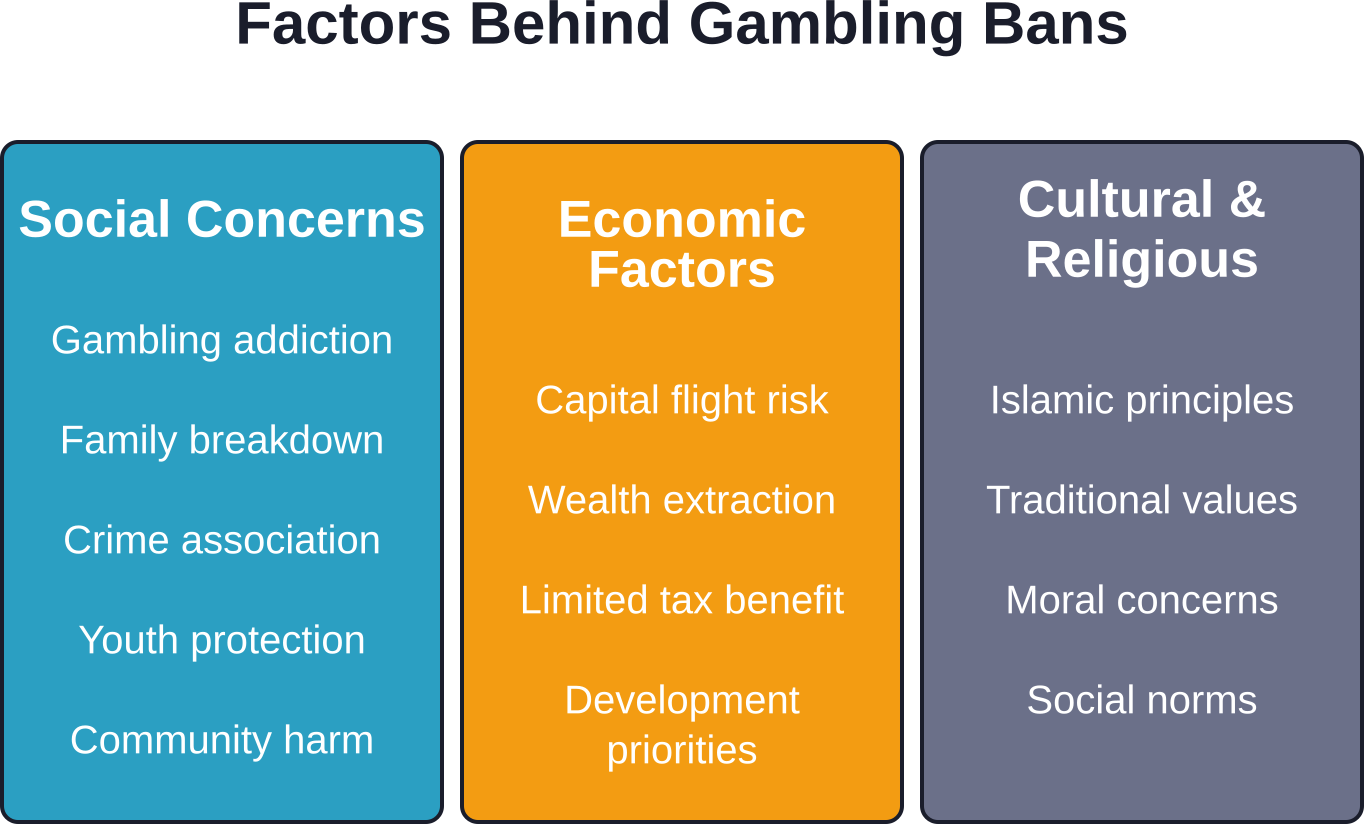
Several factors contributed to Tajikistan’s decision to ban casinos entirely. Social concerns topped the list—leadership viewed gambling as potentially harmful to families and communities.
Economic arguments also played a role. Rather than seeing casinos as revenue generators, policymakers focused on potential negative externalities: addiction, crime, and capital flight.
Cultural and religious values influenced the decision as well. In a predominantly Muslim country, gambling faces inherent skepticism based on traditional interpretations of acceptable economic activity.
The combination created an environment where prohibition seemed like the logical choice to national leadership.
What About Online Gambling?
Online casinos and casino-style games are illegal in Tajikistan. However, licensed local bookmakers are permitted to offer online sports betting.
Enforcement focuses primarily on blocking offshore casino sites. Practical barriers such as limited internet penetration further reduce online gambling participation.
Internet Penetration Remains Limited
Here’s where infrastructure becomes the real limiting factor. According to reports from Tajikistan Patents, in 2010 only 9.3% of Tajik citizens had access to the web.
The country has a largely undeveloped telecommunications network. While technology has helped improve this situation and more people now acquire mobile devices, internet penetration still lags far behind developed nations.
When most of your population doesn’t have reliable internet access, online gambling becomes a non-issue for the vast majority of citizens. The infrastructure barrier accomplishes what enforcement alone might struggle to achieve.
Enforcement Challenges for Online Operations
Even with laws on the books, enforcing online gambling bans presents technical difficulties. Offshore operators can’t be directly prosecuted under Tajik law.
Payment processing creates another enforcement avenue. Blocking financial transactions to gambling sites can reduce participation more effectively than trying to block websites themselves.
But given the limited internet infrastructure, authorities haven’t needed to invest heavily in sophisticated blocking mechanisms. The problem largely solves itself through lack of access.
Explore the iGaming Marketplace with Sologe
Legal research is only one part of understanding a gaming market. Companies may also need to map the business categories behind iGaming operations, from platforms and software to payments and support services. Sologe is a B2B iGaming marketplace where businesses can review providers across key industry categories in one place.
Sologe’s marketplace includes:
- Online casino platforms
- Gaming software providers
- Payment solution providers
- Analytics software
- Marketing software
- Mobile application solutions
- Certification services
- Company registration services
👉Contact Sologe to discuss platform providers, software vendors, payment solutions, certification services, company registration, and other B2B iGaming categories relevant to your business research.
Potential Risks for Tajik Citizens
What happens if a Tajik citizen tries to gamble online despite the ban? The legal risks are real, though prosecution patterns remain unclear due to limited public reporting.
Citizens caught gambling could face fines or other penalties under national law. The severity depends on the circumstances—small-scale personal gambling versus organized operations that facilitate others’ access.
The Gray Zone Problem
Some Tajik citizens with internet access might wonder whether using a VPN to access offshore sites creates legal exposure. The answer isn’t entirely clear from publicly available information.
What we do know: the law prohibits gambling. Whether authorities actively pursue individual online gamblers using offshore sites remains a different question from whether they legally could.
For risk-averse individuals, the safest approach is simple compliance with the prohibition. For those considering testing boundaries, the legal uncertainty itself constitutes a risk factor.
Regional Context: How Tajikistan Compares
Tajikistan isn’t alone in Central Asia when it comes to strict gambling regulations. Several neighboring countries maintain similar prohibitions or heavy restrictions.
But the region shows diversity in approaches. While some countries ban gambling entirely, others have carved out exceptions for state-run operations or specific tourist zones.
Understanding this regional context helps explain why Tajikistan chose its particular path. The country made a choice that aligned with certain regional trends while diverging from the more permissive approaches seen in other parts of Asia.
The Wider Asian Gambling Landscape
Asia presents a patchwork of gambling regulations. Some countries like Singapore and Macau have built thriving casino industries. Others, particularly those with majority Muslim populations, maintain strict prohibitions.
According to the online gambling legal guide from RichAds, the 2026 landscape shows continued division. Countries that allow gambling often do so through tightly controlled licensing regimes. Countries that ban it tend to do so comprehensively.
Tajikistan falls firmly in the prohibition camp, with no signs of policy reversal on the horizon.
Country | Land-Based Status | Online Status | Regulatory Approach
|
|---|---|---|---|
Tajikistan | Banned (Casinos) / Legal (Sports Betting & Lotteries) | Illegal (offshore casinos) / Regulated (local bookmakers) | Partial restriction with licensing for betting |
Singapore | Legal (licensed) | Restricted | Controlled licensing |
China (mainland) | Banned (except Macau) | Illegal | Geographic exception |
Philippines | Legal (licensed) | Legal (licensed) | Full regulation |
Pakistan | Banned | Illegal | Religious prohibition |
Why Countries Ban Gambling: The Underlying Logic
Tajikistan’s approach reflects broader patterns in how countries think about gambling policy. Understanding these patterns illuminates why the ban exists and whether it might ever change.
Countries typically ban gambling for a mix of social, economic, and cultural reasons. The weight given to each factor varies by national context.
Social Concerns Drive Policy
Problem gambling creates genuine social costs. Families can be devastated by gambling addiction. Communities can suffer from increased crime associated with gambling operations.
For policymakers in developing countries like Tajikistan, these risks may seem to outweigh potential economic benefits. Why import a social problem for uncertain revenue gains?
The precautionary principle applies: when uncertain about long-term impacts, choose the conservative path that avoids creating new problems.
Economic Calculations Vary
Some countries view casinos as economic engines—tourist destinations that create jobs and generate tax revenue. Singapore and Las Vegas demonstrate this model.
But other countries worry that casinos extract wealth from locals without creating corresponding value. Money spent gambling is money not spent on productive economic activity.
Tajikistan appears to have landed on the skeptical side of this economic debate. The potential for domestic wealth extraction likely seemed more salient than hypothetical tourism benefits.
Cultural and Religious Factors
Cultural norms shape gambling policy significantly. In countries where gambling faces moral or religious opposition, prohibition becomes politically easier and socially more acceptable.
Tajikistan’s predominantly Muslim population creates a cultural context where gambling skepticism has deep roots. Islamic finance principles generally prohibit games of chance involving money.
While the government’s decision ultimately rested on policy grounds rather than religious mandate, cultural values certainly reinforced the prohibition’s legitimacy.
Could Tajikistan Ever Legalize Gambling?
Predicting policy reversals is always speculative. But examining the factors that would need to change helps assess likelihood.
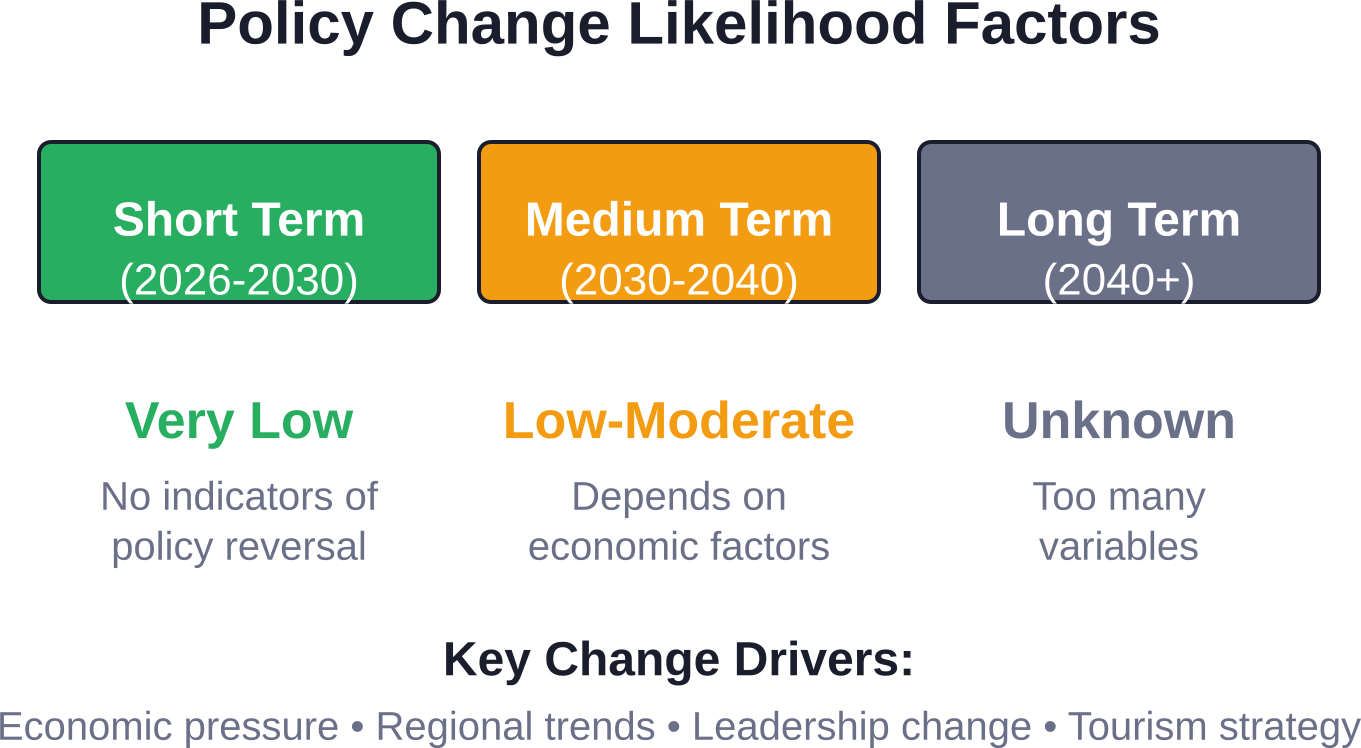
For Tajikistan to reverse its gambling ban, several things would need to happen simultaneously. Economic pressures would need to intensify significantly. Cultural attitudes would need to shift. Political leadership would need to see gambling differently.
That’s a tall order. Nothing in the current landscape suggests these changes are imminent.
Economic Pressure Points
Severe fiscal pressure could theoretically make gambling taxation attractive. If the government desperately needed revenue sources and had exhausted other options, reconsidering gambling might enter the conversation.
But this scenario remains hypothetical. Many revenue-generation options exist before reaching for gambling legalization as a solution.
Tourism development represents another angle. If Tajikistan decided to position itself as a tourist destination and saw casinos as amenities that attract visitors, policy could shift.
Again though, this would require a fundamental rethinking of national development strategy—not impossible, but certainly not on the immediate horizon.
Regional Trends Matter
If multiple Central Asian neighbors moved toward gambling legalization, Tajikistan might face pressure to reconsider. Regional competition for tourist dollars can drive policy changes.
But currently, the regional trend doesn’t point toward widespread liberalization. Most of Tajikistan’s neighbors maintain restrictive approaches.
Without regional momentum toward legalization, Tajikistan faces no competitive pressure to change course.
What This Means for Different Stakeholders
The gambling ban impacts various groups differently. Understanding these distinct impacts clarifies who benefits from the current policy and who might prefer change.
Tajik Citizens
For residents, the ban means no legal gambling options domestically. Those who want to gamble must either break the law or travel abroad to jurisdictions where it’s permitted.
Some citizens undoubtedly support the prohibition based on moral or practical grounds. Others may view it as paternalistic overreach that limits personal freedom.
The limited internet infrastructure means most citizens wouldn’t access online gambling even if it were legal. For the majority, the ban remains largely theoretical rather than personally limiting.
Foreign Investors
Casino operators have zero opportunities in Tajikistan. No licensing pathway exists. No legal framework supports their operations.
This creates certainty, at least—investors know not to waste resources exploring this market. The closed door is definitively closed.
For companies that map global gambling markets, Tajikistan sits in the “not viable” category and likely will for the foreseeable future.
Tourists and Visitors
Travelers to Tajikistan shouldn’t expect casino amenities. Business travelers accustomed to casino entertainment in hotels won’t find it here.
This might disappoint some visitors but likely doesn’t significantly impact tourism decisions. People typically visit Tajikistan for natural beauty, mountain trekking, and cultural experiences—not nightlife and casinos.
The absence of gambling probably doesn’t hurt Tajikistan’s tourism sector in any measurable way.
Comparing Regulatory Models Globally
Tajikistan’s total prohibition represents one end of a spectrum. Looking at how other countries regulate gambling reveals the range of possible approaches.
According to the RichAds guide on where online gambling is legal in 2026, countries basically fall into four categories.
Regulatory Model | Characteristics | Example Countries
|
|---|---|---|
Total Prohibition | All gambling illegal; no licensing available | Pakistan, Cambodia, Saudi Arabia |
Selective Prohibition | Casinos banned, but sports betting & lotteries regulated | Tajikistan, some other Central Asian countries |
State Monopoly | Only government-run operations permitted | Norway, Finland (historically) |
Licensed Private Operators | Private companies can obtain licenses under regulation | United Kingdom, Malta, New Jersey |
Unregulated/Gray Market | Laws unclear or unenforced; de facto tolerance | Various jurisdictions with ambiguous status |
Why Different Countries Choose Different Models
The model a country adopts depends on its history, values, economic situation, and political structure. No single “correct” approach exists—each comes with tradeoffs.
Total prohibition avoids social costs but foregoes potential revenue and drives activity underground. Licensed private markets generate taxes but require sophisticated regulatory capacity.
State monopolies keep profits in government hands but may lack competitive efficiency. Unregulated markets avoid enforcement costs but provide no consumer protection.
Tajikistan chose prohibition because it aligned best with the country’s priorities and capabilities at the time. Whether this remains optimal long-term is a different question.
Enforcement Mechanisms and Effectiveness
How does Tajikistan actually enforce its gambling ban? What mechanisms exist to prevent illegal operations from emerging?
Enforcement likely operates on multiple levels. Police can raid physical locations suspected of hosting illegal gambling. Financial authorities can monitor suspicious transactions.
But the most effective enforcement may simply be the absence of infrastructure. You can’t operate a large-scale casino without attracting attention. The physical footprint required makes concealment difficult.
The Underground Economy Question
Whenever you ban something people want, underground markets tend to emerge. Does illegal gambling exist in Tajikistan despite the prohibition?
Community discussions suggest some small-scale illegal activity likely occurs. Enforcement resources are finite, and authorities must prioritize.
But large-scale organized gambling operations face significant obstacles. The risk-reward calculation doesn’t favor entrepreneurs in this space given enforcement capabilities and market size.
The International Law Dimension
Does Tajikistan’s gambling ban create any international legal issues? Not really—countries have sovereign authority to prohibit gambling within their borders.
International trade agreements generally don’t force countries to permit gambling. While some WTO disputes have touched on online gambling market access, countries retain substantial policy autonomy.
Tajikistan’s approach doesn’t violate any international obligations or create diplomatic friction with other nations.
Cross-Border Gambling Issues
What happens when Tajik citizens travel to countries where gambling is legal? They can gamble legally while abroad—national prohibitions don’t follow citizens beyond borders.
This creates a pressure valve of sorts. Wealthier citizens who want to gamble can travel to neighboring countries or further afield to do so legally.
For the government, this outcome likely seems acceptable. Those with means to travel abroad represent a small fraction of the population. The ban still applies to the vast majority who can’t or won’t travel for gambling.
Technology and Future Challenges
As internet penetration increases in Tajikistan, will the online gambling prohibition become harder to enforce? Almost certainly.
Technology creates enforcement challenges for prohibition regimes. VPNs, cryptocurrency, and offshore operators make blocking access technically difficult.
But technology also provides new enforcement tools. Payment processing controls, IP blocking, and financial surveillance capabilities continue improving.
The Mobile Internet Wild Card
Mobile internet adoption could change the landscape faster than fixed broadband deployment. More Tajik citizens now acquire mobile devices, as noted in the Tajikistan Patents report.
If mobile internet becomes widespread before enforcement mechanisms adapt, a window could open for increased offshore online gambling participation.
Whether authorities would invest in sophisticated blocking infrastructure remains to be seen. The cost-benefit calculation depends on how serious the problem becomes.
Practical Guidance for Various Audiences
Different people need different information about Tajikistan’s gambling laws. Here’s what matters most for each group.
For Tourists
Don’t expect to find casinos or betting shops in Tajikistan. Even hotels catering to international business travelers won’t have casino floors or poker rooms.
If gambling entertainment is important to your travel plans, choose a different destination. The ban is comprehensive and strictly enforced.
Focus instead on what Tajikistan does offer: stunning mountain landscapes, ancient Silk Road history, and warm hospitality.
For Business Investors
Gambling ventures in Tajikistan are non-starters. No legal pathway exists. No licensing regime operates. No gray areas provide entry points.
Resource allocation should focus elsewhere. Dozens of countries offer legal gambling markets—Tajikistan isn’t one of them and won’t be anytime soon.
If you’re mapping global gambling opportunities, mark Tajikistan as “closed” and move on.
For Residents
The law is clear: gambling is illegal in Tajikistan. Participating in illegal gambling carries legal risks.
Online gambling through offshore sites may seem like a workaround, but it remains technically illegal and creates potential legal exposure.
If you choose to gamble while traveling abroad, that’s legal. But within Tajikistan’s borders, prohibition is the reality.
The Bigger Picture: Gambling Policy as Development Choice
Stepping back, Tajikistan’s gambling ban reflects broader questions about development strategy. How should developing countries balance revenue generation, social protection, and cultural values?
There’s no universal right answer. Singapore built integrated resorts that generate billions while implementing strict social safeguards. Other countries banned gambling entirely and focused development efforts elsewhere.
Tajikistan chose prohibition. Whether this maximizes citizen welfare over the long term depends on factors we can’t fully assess: counterfactuals remain unknown.
What Other Countries Can Learn
Tajikistan’s experience offers lessons for other countries considering their gambling policies. Prohibition is politically feasible if you move decisively and maintain enforcement.
Limited infrastructure can actually support prohibition—lack of internet access accomplishes what sophisticated blocking might struggle to achieve.
Cultural consensus matters. When broad social agreement exists that gambling is harmful or undesirable, prohibition faces less resistance.
But prohibition also limits government revenue options and may drive activity underground. These tradeoffs deserve careful consideration before committing to total bans.
Recent Developments and 2026 Outlook
Has anything changed in Tajikistan’s gambling landscape as of 2026? The short answer: no significant shifts.
The prohibition remains firmly in place. No policy debates about legalization have reached public discourse. Leadership shows no inclination toward reversal.
Market research reports project growth in offshore targeting toward Tajik citizens from 2025-2031, but this likely refers to offshore operator targeting rather than domestic legalization.
What to Watch Going Forward
Several indicators could signal potential policy shifts, though none seem imminent. Watch for changes in leadership rhetoric about gambling. Monitor regional trends among Central Asian neighbors.
Track internet penetration rates—if they rise dramatically, online gambling enforcement challenges could force policy reconsideration.
Pay attention to fiscal pressures. If the government faces severe budget constraints, gambling taxation could enter the conversation as a revenue option.
But absent these catalysts, expect continuity. The prohibition has staying power.
Frequently Asked Questions
Are there any legal casinos in Tajikistan in 2026?
No. Land-based casinos and slot machines are banned in Tajikistan. However, sports betting through licensed bookmakers and regulated lotteries remain legal under the supervision of the Ministry of Finance.
Can I gamble online from Tajikistan?
Online casinos are illegal in Tajikistan. Online sports betting is allowed only through licensed local bookmakers. Accessing unlicensed offshore casino websites is prohibited.
When did Tajikistan ban gambling?
Tajikistan banned casinos and slot machines around 2009-2011. Sports betting and lotteries were not included in the full casino-style gambling ban and continue to be regulated separately.
Why did Tajikistan ban all gambling?
Tajikistan did not ban all gambling. The ban mainly applies to casinos and slot machines. The decision was linked to social, moral, and economic concerns around casino-style gambling.
Can tourists gamble in Tajikistan?
Tourists cannot visit legal casinos in Tajikistan because casinos are banned. They may place sports bets only through licensed bookmakers operating under local regulations.
Conclusion
Casinos are not legal in Tajikistan. The country maintains a strict ban on casino-style gambling and slot machines, while allowing regulated sports betting through licensed bookmakers and lotteries under the oversight of the Ministry of Finance.
Tajikistan has chosen a selective prohibition model: banning casinos due to their perceived social harm, while permitting licensed sports betting. This approach reflects a balance between cultural values, social protection, and practical regulation.
For residents, tourists, and investors, the rules are clear: no casinos, but licensed sports betting options exist. As of 2026, there are no signs of major policy change regarding casino gambling.
Related Articles

September 3, 2026Is the Casino Legal in Denmark? 2026 Guide

September 3, 2026Is the Casino Legal in Angola? What the 2026...