 Nothing found for the request
Is the Casino Legal in Tunisia? 2026 Laws Explained
Sologe July 10, 2026
Share:


The Legal Framework: A Dual-Layer System
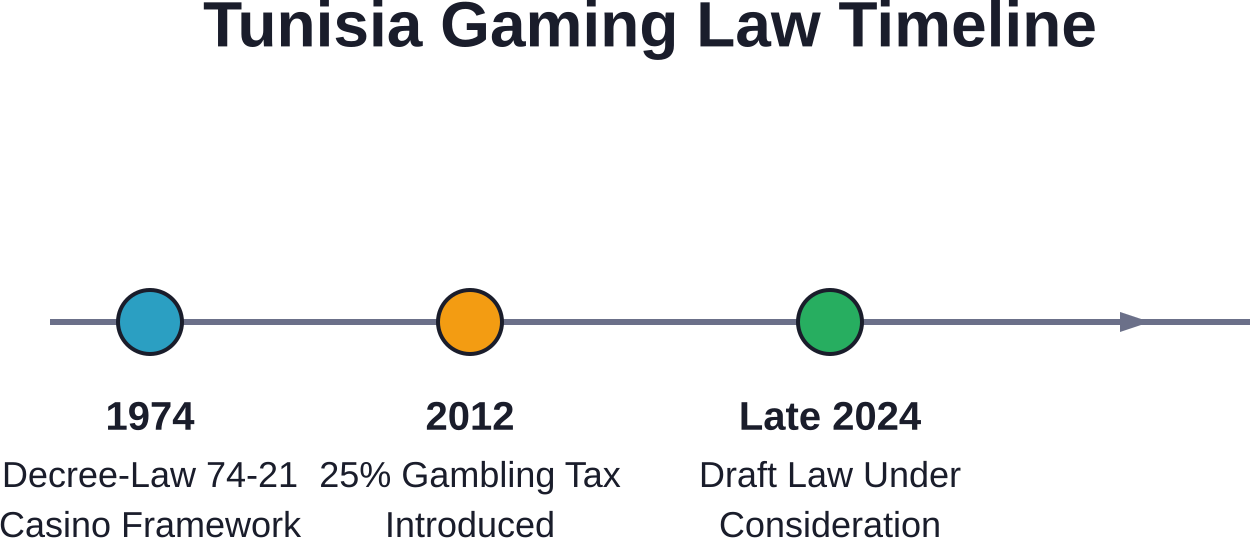
Tunisia’s gambling regulation rests on legislation dating back to 1974. Decree-Law No. 74-21 of October 24, 1974, established the foundation for casino games, while Decree-Law No. 74-20 addressed fairgrounds and lotteries.
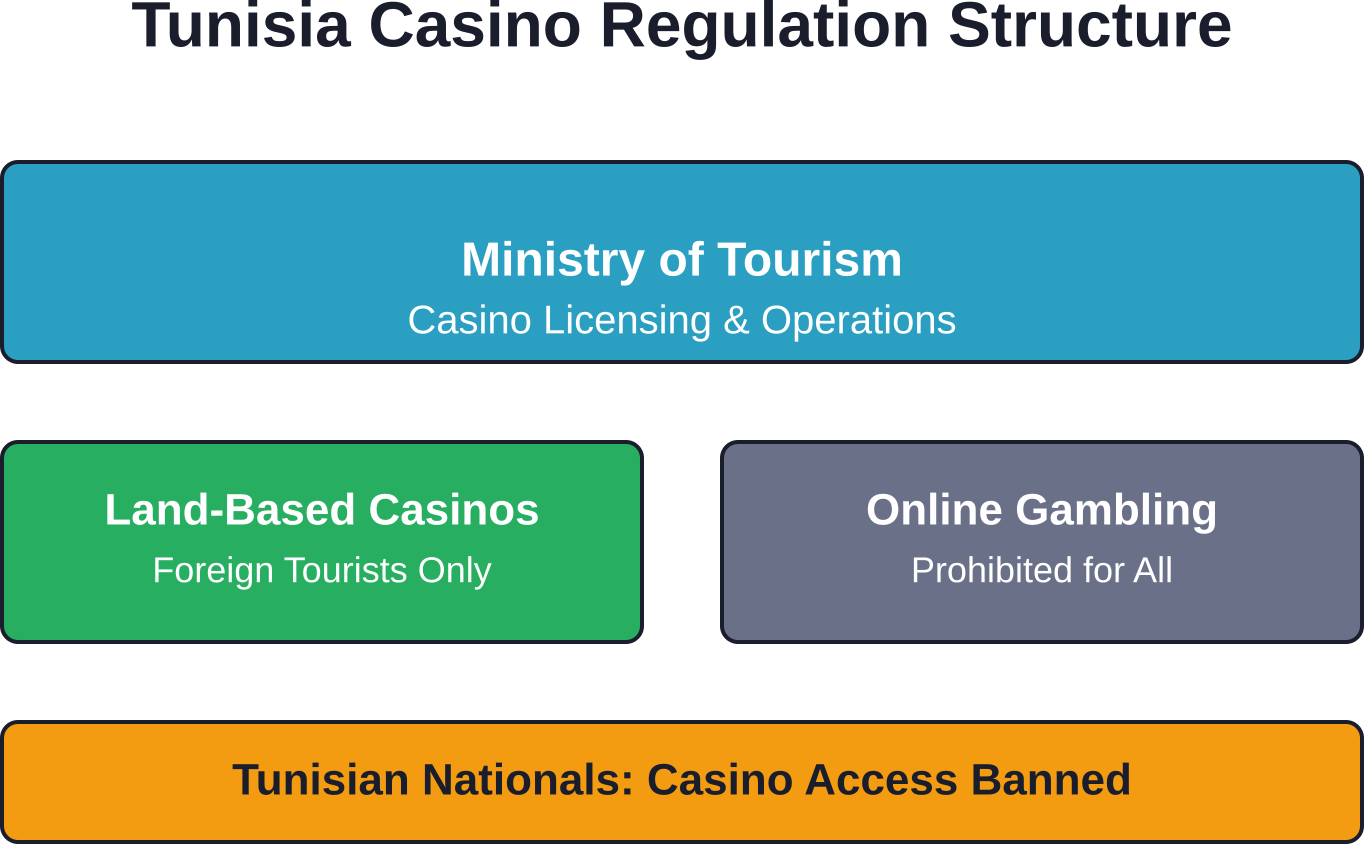
The regulatory authority is split between two ministries. The Ministry of Tourism oversees casino operations, while the Ministry of Youth, Sports, and Physical Education handles sports betting and lottery activities.
But here’s where it gets interesting. The legal framework explicitly prohibits Tunisian citizens from gambling in casinos, even though those same venues operate legally within the country’s borders. This creates a tourism-focused gaming economy that serves international visitors while maintaining Islamic values for local populations.
Who Can Legally Gamble in Tunisia?
Foreign tourists holding valid passports can access licensed casinos throughout Tunisia. These venues operate in popular tourist destinations like Tunis, Sousse, and Hammamet.
Tunisian nationals are categorically banned from participating in casino games, regardless of venue. Enforcement varies, but casinos require passport verification at entry points.
Expatriates residing in Tunisia typically fall into a gray area, though most casinos accept foreign residents with proper documentation.
Land-Based Casinos: Where Tourism Meets Gaming
Tunisia maintains several licensed casinos that cater exclusively to the tourism sector. These venues offer poker, table games, and slot machines in upscale environments designed to attract international visitors.
The casinos operate under strict licensing requirements from the Ministry of Tourism. Compliance monitoring includes regular inspections and adherence to operational standards that align with Mediterranean gaming markets.
Popular venues include the Grand Casino in Tunis and Grand Casino Kantaoui in Sousse. The latter runs regular poker tournaments on Tuesdays, Thursdays, and Sundays, with buy-ins ranging from 100 TND (approximately $32) to 200 TND (approximately $65), attracting international players and expatriates.
Casino Tax Framework
Tunisia imposes a 25% withholding tax on players’ gambling winnings (including lottery and casino gains). This tax is deducted at source from the player’s payout, not from the operator’s revenue. The 25% withholding tax applies to the player’s net winnings, not to the operator’s Gross Gambling Revenue (GGR). Operators are required to withhold this tax when paying out winnings and remit it to the Tunisian tax authorities.
Online Gambling: The Undefined Legal Territory
Online gambling occupies a peculiar space in Tunisian law. While technically illegal for all residents—including foreigners—enforcement remains inconsistent and the legal status undefined.
The government has not licensed any online gambling operators. International platforms accept Tunisian players, creating a thriving underground market that operates beyond regulatory control.
Community discussions reveal widespread use of offshore casino sites and sports betting platforms. Players access these services through VPNs and cryptocurrency payments to circumvent banking restrictions.
But the government hasn’t remained passive. Recent finance laws aim to address taxation on online gaming activities, signaling intent to capture revenue even from technically prohibited operations.
The Technology Challenge
Advancements in technology and cryptocurrency adoption have made online gambling regulation nearly impossible under the current framework. Players use Bitcoin, Litecoin, and other cryptocurrencies to deposit and withdraw funds without traditional banking oversight.
The use of VPNs masks player locations, making enforcement actions difficult. Authorities can block specific domains, but mirror sites and alternate URLs appear within hours.
This cat-and-mouse game has pushed legislators toward regulatory reform rather than continued prohibition.
The 2024 Draft Law: A Regulatory Turning Point
A new draft law to regulate sports betting and gambling has been under consideration since late 2024. While details remain under discussion, the proposal signals potential shifts in licensing frameworks and operational requirements.
The draft law’s consideration comes amid intense legislative friction. Conservative factions push for stricter prohibitions, particularly on electronic gambling forms that reach Tunisian youth.
Meanwhile, economic pragmatists argue that regulated gambling could generate substantial tax revenue and formalize an already-thriving underground market.
What the Reform Might Change
The proposed legislation could introduce standardized licensing for sports betting operators. This would create legal pathways for both land-based and potentially online betting platforms.
Regulatory frameworks might expand beyond the current Ministry of Tourism oversight to include dedicated gambling commissions with enforcement powers.
Tax structures could evolve beyond the flat 25% rate to tiered systems that incentivize compliance while maximizing state revenue.
That said, any reform faces significant cultural and political hurdles. Tunisia’s Muslim-majority population holds conservative views on gambling, and legislative changes must balance economic interests with social values.
Review iGaming Providers with Sologe
Businesses studying a gaming market often examine both the regulatory landscape and the companies that provide technology, software, and operational support to the industry. Sologe serves as a B2B iGaming marketplace where businesses can explore suppliers across multiple areas of the gaming ecosystem.
Sologe helps businesses review:
- Online casino platforms
- Gaming software providers
- Payment solution providers
- Traffic and affiliate services
- Analytics software
- Marketing software
- Certification services
- Additional gaming software
Contact Sologe to explore software providers, payment solutions, traffic services, and other supplier categories within the iGaming industry.
Penalties and Enforcement for Illegal Gambling
Tunisian law imposes penalties on both operators and players who violate gambling prohibitions. Enforcement varies by activity type and visibility.
Illegal gambling operations face administrative fines and potential criminal prosecution. The severity depends on operation scale, involvement of organized crime, and repeat offenses.
Tunisian nationals caught gambling in casinos risk fines and potential administrative penalties. Casinos that allow Tunisian participation face licensing revocations and substantial financial penalties.
Online gambling enforcement focuses primarily on payment processing. Banks monitor transactions to offshore gambling sites and may freeze accounts associated with repeated gambling activity.
The Reality of Enforcement
Real talk: enforcement remains inconsistent. While high-profile raids occasionally target illegal betting operations, individual online gamblers rarely face prosecution.
The government lacks resources for comprehensive internet monitoring. Cryptocurrency transactions slip through traditional enforcement mechanisms entirely.
This enforcement gap contributes to the push for regulatory reform—capturing revenue through legal frameworks rather than chasing underground operators.
Advertising Restrictions
Tunisian law regulates advertising in Tunisia, including gambling advertising. The legislation restricts promotional materials that encourage gambling participation.
Casinos cannot advertise directly to Tunisian nationals. Marketing materials must target foreign tourists and explicitly state the “foreigners only” restriction.
Media outlets face penalties for broadcasting gambling advertisements outside permitted frameworks. This includes television, radio, print, and increasingly digital platforms.
The law creates compliance challenges for international operators whose marketing reaches Tunisian internet users incidentally through social media and search engines.
Islamic Law’s Influence on Gambling Policy
Tunisia’s gambling restrictions reflect broader Islamic prohibitions on games of chance. While Tunisia maintains a secular government, cultural values deeply rooted in Islam shape policy decisions.
The “foreigners only” model represents a compromise between economic pragmatism and religious principles. Casinos generate tourism revenue without requiring Tunisian participation in activities many view as haram (forbidden).
This approach mirrors strategies in other Muslim-majority countries that maintain casino sectors exclusively for non-Muslim visitors.
But generational shifts complicate this balance. Younger Tunisians increasingly question gambling prohibitions, particularly regarding skill-based games like poker and sports betting that blur lines between chance and strategy.
Payment Methods and Banking Restrictions
Tunisian banks restrict transactions with known gambling operators. Credit card processors block payments to offshore casino sites and sports betting platforms.
This creates significant barriers for residents attempting to access international gambling platforms. Payment method restrictions have proven more effective than legal prohibitions in limiting online gambling participation.
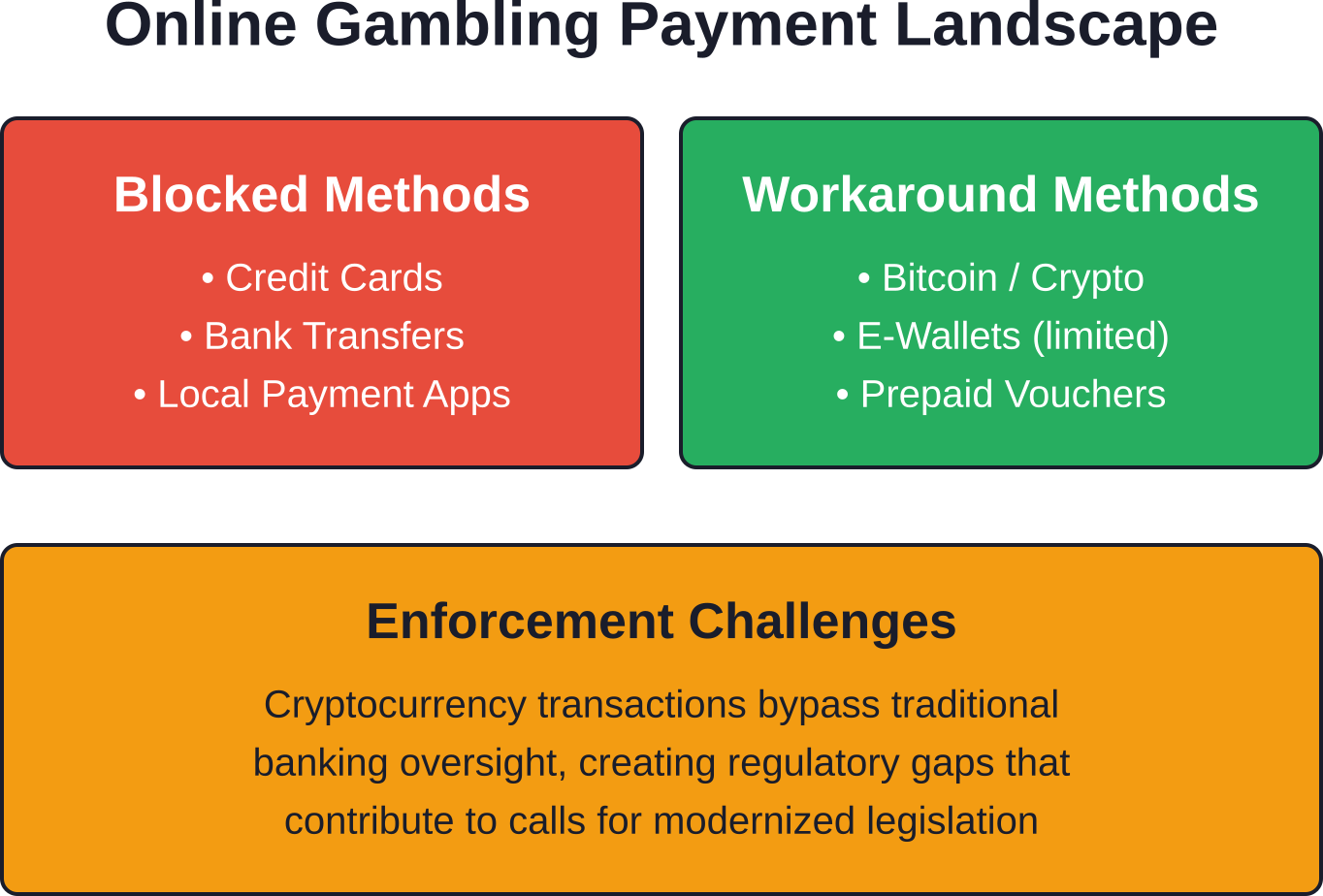
However, cryptocurrency adoption has undermined these restrictions. Players use Bitcoin, Litecoin, and other digital currencies to fund gambling accounts without bank involvement.
Some international platforms accept prepaid vouchers and e-wallet services that operate in legal gray zones. These payment channels remain accessible despite regulatory efforts.
The Tourism Casino Economy
Land-based casinos contribute meaningfully to Tunisia’s tourism sector. High-end venues integrate with resort complexes in Hammamet, Sousse, and coastal zones.
Casinos provide employment for dealers, security personnel, hospitality staff, and support services. Tax revenue from casino operations flows to national and local governments.
The “foreigners only” restriction arguably protects this economic model. By limiting access to tourists, casinos avoid social costs associated with problem gambling among residents.
International visitors appreciate the casino amenities as part of comprehensive resort experiences. Poker tournaments and gaming events attract specific tourist segments who might otherwise choose competing Mediterranean destinations.
Comparison with Regional Markets
Tunisia’s model contrasts sharply with neighbors like Morocco, where land-based casinos are fully legal and regulated under legislation dating back to 1966.
The Tunisian approach generates more gambling revenue than fully prohibited systems while maintaining stricter controls than liberal European markets.
Country | Casino Legal Status | Who Can Play | Online Gambling |
|---|---|---|---|
Tunisia | Legal (licensed) | Foreign tourists only | Prohibited |
Morocco | Fully legal land-based casinos | Non-Muslim foreigners | Not regulated |
Egypt | Limited (resort zones) | Foreign tourists only | Prohibited |
Responsible Gambling Considerations
Despite the “foreigners only” restriction, Tunisia’s casinos implement responsible gambling measures aligned with international standards.
Venues display problem gambling resources and contact information for addiction support services. Staff receive training to identify problem gambling behaviors and intervene appropriately.
Self-exclusion programs allow players to voluntarily ban themselves from casino entry. These systems share data across venues to ensure comprehensive coverage.
But here’s where Tunisia faces challenges. Online gambling platforms accessible to Tunisian players through VPNs typically lack robust responsible gambling frameworks. Offshore sites operate beyond regulatory reach, leaving vulnerable players without protections.
What Tourists Need to Know
Foreign visitors can legally gamble in Tunisia’s licensed casinos with proper identification. Passport verification occurs at casino entry—bring your passport, not just a photocopy.
Currency exchange services operate within casino complexes. Most venues accept major currencies including euros, U.S. dollars, and British pounds, though local dinar (TND) is standard for gaming.
Poker tournaments typically require advance registration. Popular venues in Sousse and Tunis run regular schedules—check with specific casinos for current offerings.
Dress codes vary by venue. Upscale casinos enforce smart-casual standards, while resort casinos maintain more relaxed policies.
Common Tourist Questions
Can dual nationals with Tunisian citizenship gamble? No—Tunisian citizenship bars casino access regardless of other nationalities held.
Are casino winnings taxable? Foreign tourists generally don’t face Tunisian tax obligations on casino winnings, though home country tax laws may apply.
Do casinos accept cryptocurrency? Land-based casinos operate traditional cashier systems and don’t accept cryptocurrency payments.
The Poker Scene in 2026
Tunisia’s poker environment centers on casino tournament offerings rather than cash games. The “foreigners only” rule creates unique player dynamics dominated by expatriates and tourists.
Grand Casino Kantaoui maintains the country’s most active poker schedule. Tuesday, Thursday, and Sunday tournaments attract regular crowds with accessible buy-ins ranging from 100 TND to 200 TND.
The international mix creates diverse playing styles. European tourists bring continental strategies while North African expatriates contribute regional approaches.
Cash games exist but operate informally with limited availability. Most poker activity concentrates in scheduled tournaments with guaranteed structures.
Looking Ahead: 2026 and Beyond
The gambling landscape in Tunisia stands at a crossroads. The draft law under consideration since late 2024 could fundamentally reshape regulatory frameworks that have remained largely unchanged since 1974.
Several scenarios could emerge. A progressive reform might legalize and regulate online gambling, creating licensed platforms that pay taxes and implement player protections.
Alternatively, conservative backlash could strengthen prohibitions and expand enforcement mechanisms, particularly targeting cryptocurrency-based gambling.
The most likely outcome? A measured expansion that legalizes sports betting while maintaining online casino prohibitions. This middle path would capture revenue from popular betting activities while avoiding full-scale gambling liberalization.
Economic pressures favor reform. Tunisia’s government faces budget constraints that make gambling tax revenue increasingly attractive. Regulated sports betting alone could generate substantial income currently lost to offshore operators.
But cultural resistance remains significant. Any legislative changes must navigate complex political dynamics that balance fiscal needs against traditional values.
Frequently Asked Questions
Can Tunisian citizens gamble in casinos within Tunisia?
No. Tunisian citizens are not allowed to gamble in casinos anywhere in Tunisia. This restriction applies to all casino games, including poker, slot machines, and table games. Licensed casinos verify visitors’ identities and deny entry to Tunisian nationals.
Is online gambling legal for tourists visiting Tunisia?
No. Online gambling is not legally authorized in Tunisia for either residents or tourists. Although enforcement generally focuses on domestic regulation rather than foreign visitors, offshore gambling websites are not licensed, and banking restrictions may prevent gambling-related transactions.
Will the 2024 draft law legalize online gambling?
As of 2026, no final legislation has fully legalized online gambling. The draft law introduced in late 2024 mainly addresses broader gambling regulation and sports betting, but the scope of any future online casino legalization remains uncertain.
What are the penalties for illegal gambling in Tunisia?
Penalties depend on the nature of the violation. Illegal gambling operators may face fines, license revocation, and criminal prosecution. Tunisian citizens who violate casino restrictions may also face administrative penalties. Authorities commonly target illegal operators and payment processing rather than individual online players.
Which casinos in Tunisia offer poker tournaments?
Grand Casino Kantaoui in Sousse regularly hosts poker tournaments, while the Grand Casino in Tunis also organizes poker events from time to time. These tournaments are intended for eligible foreign visitors, as Tunisian citizens are not permitted to participate.
Can dual citizens with Tunisian nationality access casinos?
No. Anyone who holds Tunisian citizenship, including dual nationals, is prohibited from entering and gambling in Tunisian casinos. The restriction is based on nationality rather than the passport presented at entry.
Conclusion: A Complex Gambling Landscape in Transition
Tunisia’s casino legality presents a nuanced picture shaped by decades-old legislation, cultural values, and emerging economic pressures. Land-based casinos operate legally but exclusively for foreign tourists, creating a tourism-focused gaming economy that balances revenue generation with Islamic principles.
Online gambling remains in legal limbo—technically prohibited but widely accessed through offshore platforms and cryptocurrency workarounds. The government’s inability to enforce online restrictions effectively has contributed to the 2024 reform push.
The draft law under consideration represents the most significant potential shift in Tunisian gambling policy in over 50 years. Whether it leads to comprehensive reform or modest adjustments to sports betting frameworks will shape the country’s gaming landscape for years to come.
For tourists planning to visit Tunisia’s casinos, the current system remains straightforward: bring your passport, choose from licensed venues in major tourist zones, and enjoy gaming amenities designed for international visitors. Just remember—these privileges don’t extend to Tunisian nationals, and online gambling carries risks regardless of citizenship.
Stay informed about regulatory developments by checking official Ministry of Tourism announcements and monitoring legislative updates as the 2024 draft law progresses through consideration.
Related Articles

September 3, 2026Is the Casino Legal in Denmark? 2026 Guide

September 3, 2026Is the Casino Legal in Angola? What the 2026...