 Nothing found for the request
Is Casino Legal in West Africa? 2026 Gambling Laws Guide
Sologe July 10, 2026
Share:


The Legal Status of Casinos in West Africa
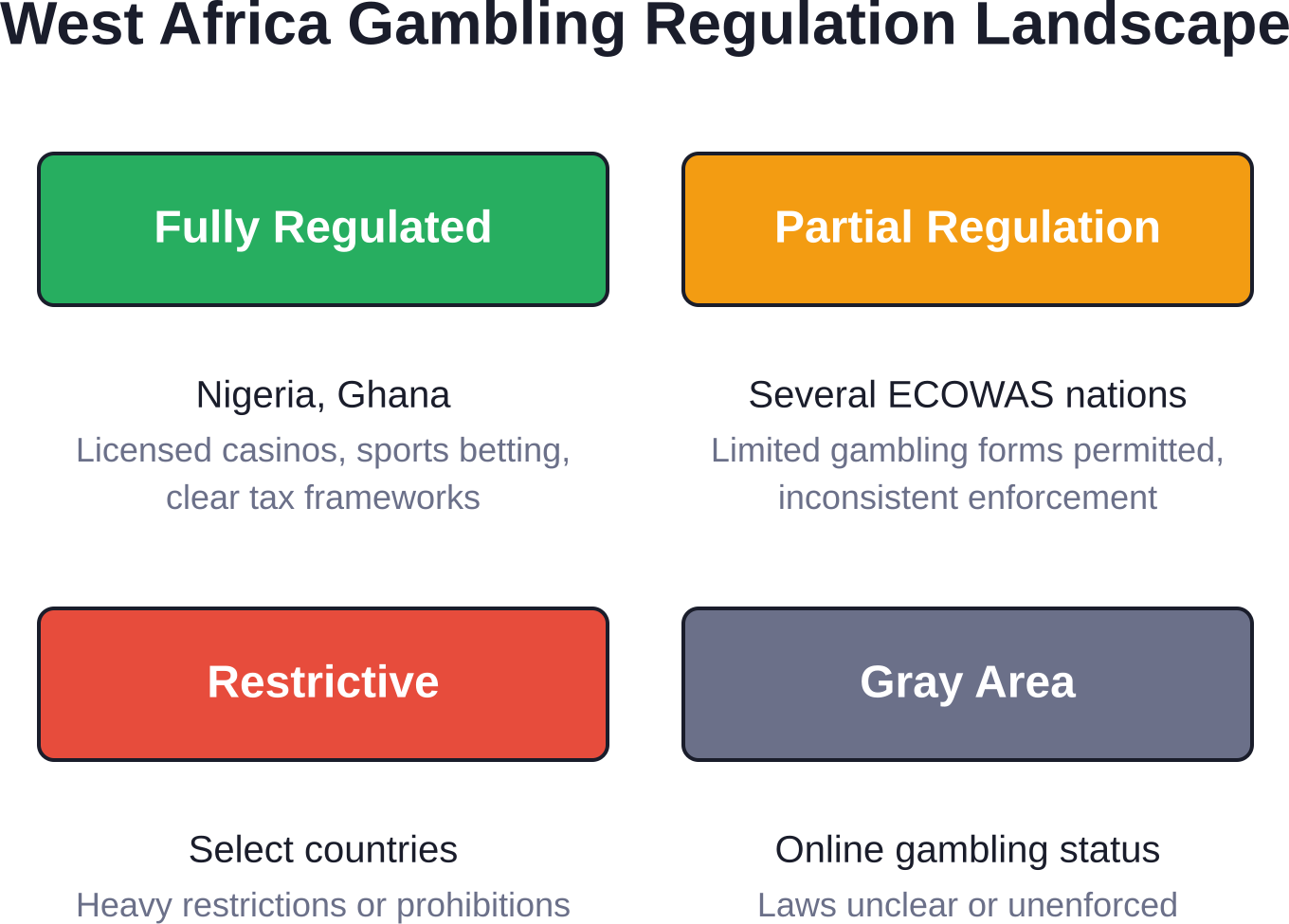
Casino operations across West Africa exist in varied legal environments. Unlike regions with unified gambling frameworks, West African countries maintain sovereign control over their gaming industries.
The two largest economies in the region—Nigeria and Ghana—have established regulatory structures that explicitly permit casino gambling under specific conditions. Both countries require operators to obtain licenses from designated regulatory bodies before offering gambling services.
Here’s the thing though—legal doesn’t always mean accessible or well-regulated. Many West African nations have laws on the books that technically permit casinos but lack the infrastructure or political will to properly oversee operations.
Country-by-Country Breakdown
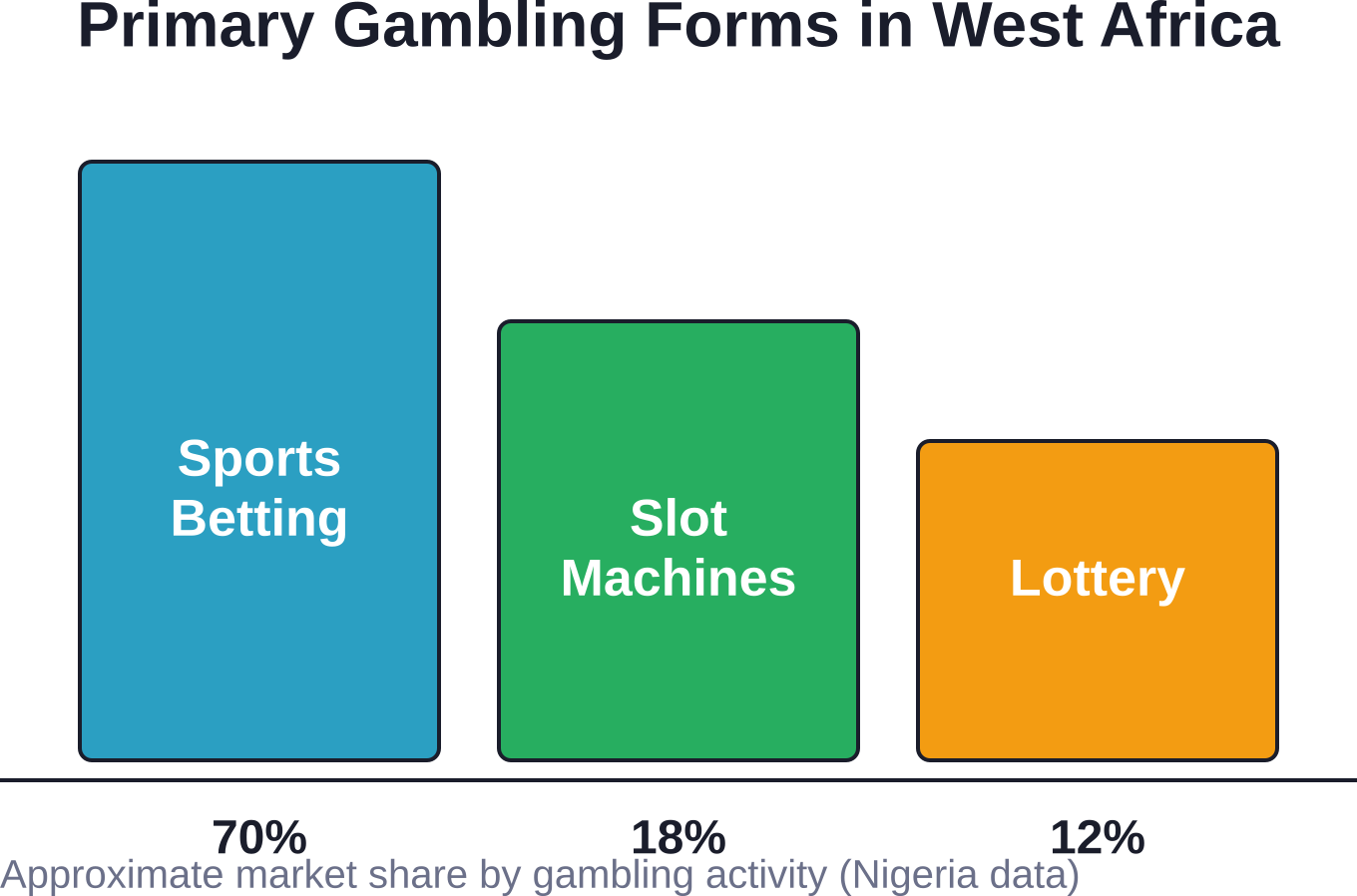
Nigeria stands as West Africa’s largest gambling market. Sports betting dominates the landscape, consuming up to 70% of all sportsbook bets, with football being the overwhelming favorite. The country permits casino gambling, sports betting, and lottery operations under federal and state oversight.
Ghana has developed a more structured approach to gaming taxation. According to EY Global Tax News, Ghana taxes gaming operations based on Gross Gaming Revenue (GGR), calculated as total staked minus winnings paid. The country applies a 20% rate on GGR, with Value Added Tax exemptions for gaming activities.
Other ECOWAS member states maintain varying positions. Some countries permit only specific forms of gambling like lotteries or horse racing, while others have more permissive frameworks allowing full casino operations.
Nigerian Gambling Laws and Regulations
Nigeria operates under a dual regulatory system where both federal and state authorities maintain oversight responsibilities. The Nigerian criminal code contains provisions addressing gambling, though notably, none explicitly mention online gambling—creating legal ambiguity for digital platforms.
Two regulatory agencies mentioned in relation to Nigerian gaming operations are the Lagos State Lottery Board (LSLB) and related regulatory bodies, though sources note the regulatory structure involves both federal and state authorities. These bodies issue licenses, enforce compliance, and collect gaming-related revenues.
Legal forms of gambling in Nigeria include casino gambling, sports betting, and lottery operations. Sports betting has exploded in popularity, with bet shops appearing across all 36 states. The sector has become a significant revenue generator, particularly among younger demographics.
What Makes Gambling Legal in Nigeria?
For casino operations to be legal in Nigeria, operators must obtain proper licensing from the relevant regulatory authority. The LSLB oversees operations in Lagos State, while other states maintain their own oversight mechanisms or fall under federal jurisdiction.
Illegal gambling activities—those conducted without proper licensing or in violation of existing laws—face penalties under the Nigerian criminal code. Enforcement varies by state, with Lagos maintaining stricter oversight than many other regions.
Ghana’s Gaming Taxation Framework
Ghana has developed a sophisticated approach to gaming industry taxation. The country views the sector as a significant revenue source, particularly given the region’s young population and growing digital adoption.
The Ghanaian gaming sector operates under a clear taxation structure based on Gross Gaming Revenue. According to EY’s analysis of West African taxation, Ghana’s framework includes specific provisions that distinguish it from other regional approaches.
Tax Component | Ghana Framework | Key Details |
|---|---|---|
Basis of Taxation | Gross Gaming Revenue (GGR) | Total staked minus winnings paid/payable |
Tax Rate | 20% on GGR | Applied to net gaming revenue |
Value Added Tax | Exempt | Gaming activities receive VAT exemption |
Deductibility | Prizes/winnings only | Limited expense deductions |
This taxation approach recognizes gambling as a distinct economic activity requiring specialized tax treatment. The GGR-based system ensures that tax liability aligns with actual gaming profits rather than gross turnover.
Online Gambling: The Legal Gray Zone
Real talk: online gambling represents the most ambiguous area of West African gaming law. Most gambling legislation in the region predates the internet era, leaving digital platforms in regulatory limbo.
Nigeria’s criminal code makes no mention of online gambling. This omission doesn’t make internet-based gambling explicitly legal, but it also doesn’t provide clear prohibition. Many international online casinos accept Nigerian players, operating in this undefined space.
Ghana has taken steps toward addressing online gambling, but comprehensive digital gaming regulations remain under development across most of West Africa. The ECOWAS region lacks unified standards for cross-border online gambling operations.
The Enforcement Challenge
Even where online gambling technically violates local laws, enforcement proves difficult. International operators host servers outside West African jurisdiction, making regulatory action challenging. Payment processing through international channels further complicates oversight.
Some countries have attempted to block access to unlicensed gambling websites, but technical workarounds remain readily available. The practical reality is that online gambling exists throughout West Africa regardless of legal status.
Discover iGaming Business Solutions with Sologe
West Africa includes multiple gaming markets, each with its own regulatory environment and business landscape. Companies researching the region often need to compare suppliers that can support different operational and technology requirements. Sologe is a B2B iGaming marketplace where businesses can explore providers across software, payments, platforms, traffic, and professional services.
Sologe supports supplier research for:
- Casino and gaming platforms
- Sports betting solutions
- Payment solution providers
- Traffic and affiliate services
- Marketing software
- Operations management services
- Certification services
- Additional gaming software
👉Contact Sologe to review platform providers, sports betting suppliers, payment solutions, traffic services, certification providers, and other B2B iGaming solutions.
Economic Impact and Revenue Generation
The gaming and betting industry has emerged as a meaningful tax revenue source for West African governments. Young demographics and increasing smartphone penetration drive continued market growth.
Ghana’s government recognizes this potential, structuring its taxation system to capture revenue while allowing the industry to develop. Nigeria’s less formalized approach still generates substantial income through licensing fees and state-level taxation.
The InterGovernmental Action Group against Money Laundering in West Africa (GIABA), a specialized ECOWAS institution and FATF Style Regional Body, has examined money laundering risks in the gambling sector across West Africa member states.
Proper regulation serves dual purposes: generating government revenue while protecting against illicit financial flows. Countries with clear regulatory frameworks tend to capture more tax revenue and maintain better oversight.
Cultural and Religious Considerations
West Africa’s diverse cultural and religious landscape influences gambling attitudes. Predominantly Muslim regions often maintain more restrictive approaches based on Islamic prohibitions against gambling.
Christian-majority and mixed-religion areas typically show greater tolerance for gaming activities. But even within individual countries, attitudes vary significantly between regions and communities.
These cultural factors shape both formal legislation and practical enforcement. Some countries maintain restrictive laws that reflect religious values while tolerating limited gambling in practice.
The Future of West African Gaming Regulation
Several trends suggest gaming regulation will continue evolving across West Africa. Digital transformation pushes regulators to address online gambling more explicitly. The economic benefits of regulated gaming industries encourage governments to develop clearer frameworks.
ECOWAS coordination could eventually lead to more harmonized regional standards, though significant progress remains distant. For now, country-specific approaches will likely persist.
Younger populations and technological adoption guarantee continued demand for gambling services. The question isn’t whether gambling will exist in West Africa—it’s whether countries will regulate it effectively to capture tax revenue and protect consumers.
Frequently Asked Questions
Is casino gambling legal in Nigeria?
Yes. Casino gambling is legal in Nigeria when operators hold the required licenses from the appropriate regulatory authorities. Licensed casinos, sports betting operators, and lotteries are permitted, while the legal framework for online gambling remains less clearly defined.
How does Ghana tax casino operations?
Ghana applies a 20% tax on Gross Gaming Revenue (GGR), calculated as total stakes minus player winnings. Gaming activities are generally exempt from Value Added Tax, and only certain expenses, including player payouts, are deductible under the country’s gaming tax rules.
Can international online casinos legally operate in West Africa?
The legal position varies by country. Many West African gambling laws were introduced before online gambling became widespread, leaving regulatory gaps in several jurisdictions. As a result, the legality of international online casinos differs depending on national legislation and local enforcement.
Which West African country has the most developed gambling industry?
Nigeria has the largest gambling market in West Africa, particularly for sports betting. Ghana is widely recognized for having one of the region’s more structured gambling regulatory systems, with established licensing and taxation frameworks for licensed operators.
Are there regional gambling regulations across ECOWAS countries?
No. ECOWAS does not have a unified gambling regulatory framework. Each member state establishes and enforces its own gambling laws, licensing rules, tax policies, and permitted gambling activities.
What gambling activities are most popular in West Africa?
Sports betting is the most popular form of gambling across much of West Africa, with football attracting the highest betting activity. Lottery games, slot machines, and traditional casino games are also widely available in jurisdictions where they are legally permitted.
Do religious laws impact gambling legality in West Africa?
Yes. Religious and cultural values influence gambling policies throughout West Africa. While some predominantly Muslim regions impose stricter restrictions, several countries with large Muslim populations still regulate and license gambling activities under national law.
Conclusion: Navigating West Africa’s Gambling Landscape
Casino and gambling legality across West Africa reflects the region’s diversity. Nigeria and Ghana lead with established regulatory frameworks, while other nations maintain varying degrees of restriction or ambiguity.
For operators, understanding country-specific regulations remains essential. The legal environment continues evolving as governments balance revenue opportunities against cultural considerations and regulatory challenges.
Anyone considering gambling operations in West Africa should consult local legal experts and obtain proper licensing. The economic potential is significant, but so are the compliance requirements and cultural complexities that define this dynamic market.
Related Articles

September 3, 2026Is the Casino Legal in Denmark? 2026 Guide

September 3, 2026Is the Casino Legal in Angola? What the 2026...