 Nothing found for the request
Is the Casino Legal in Zambia? What the Law Actually Says
Sologe September 3, 2026
Share:


Quick Summary
Yes, casinos are legal in Zambia. Land-based casinos, sports betting, and lotteries operate under a licensing framework built on the Betting Control Act (Chapter 166) and the Betting, Lotteries and Gaming Act (Chapter 169), overseen by the Lotteries and Betting Control Board. Online gambling sits in a greyer zone, since no dedicated online-specific licence currently exists, though reform efforts are underway to modernize the framework.
Ask around Lusaka or Livingstone and you’ll get a fairly confident answer: yes, casinos are legal in Zambia. But the follow-up question — how legal, and under what rules — is where things get complicated fast. Zambia’s gambling laws were largely drafted decades before online betting apps existed, which means the country now runs a patchwork of older statutes stretched to cover a modern industry.
This guide breaks down exactly what’s permitted, who regulates it, what licensing actually involves, and where online casinos fit into a legal picture that’s still catching up with technology.
The Short Answer: Casinos Are Legal, But Regulated
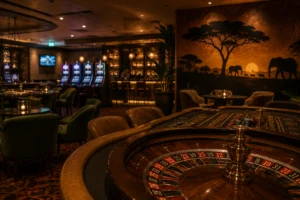
Zambia permits licensed casino gambling. Physical casinos operate legally in major cities and tourist hubs like Livingstone, often attached to hotels near Victoria Falls. Sports betting shops are common on street corners in almost every town. Lotteries run with government backing. None of that is underground activity — it’s licensed commerce, taxed and monitored by a regulator.
What’s murkier is anything happening purely online. Zambia hasn’t passed a law that speaks directly to internet-based casino platforms, so operators and players both work within rules written for physical premises, bookmakers, and betting shops rather than servers hosted abroad.
The Legal Framework Behind Zambian Gambling
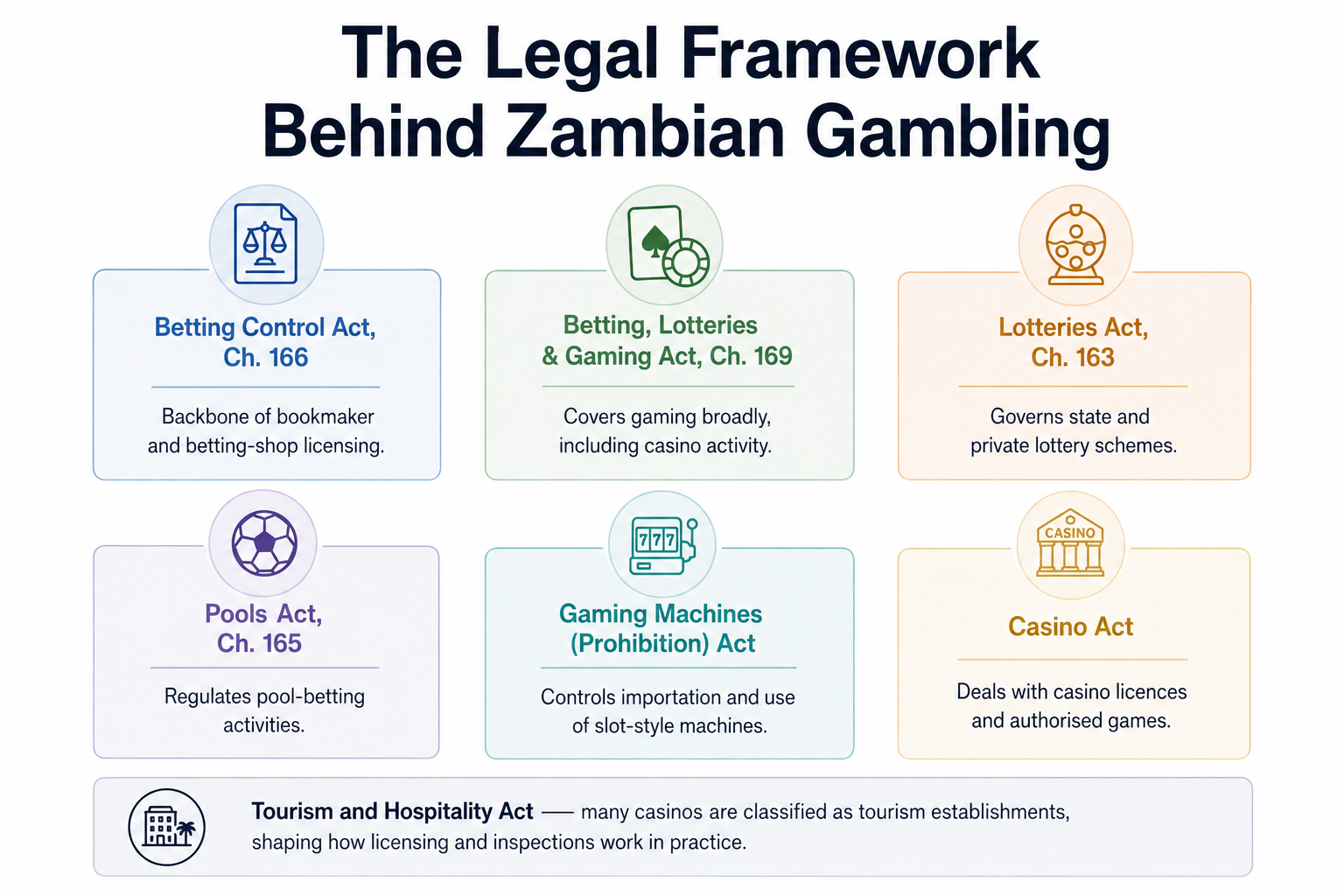
Several overlapping statutes make up Zambia’s gambling law. None of them was written as a single, unified gambling code — they were added piecemeal over roughly sixty years.
- The Betting Control Act, Chapter 166 — the backbone of bookmaker and betting-shop licensing, amended as recently as 2021 to update fees and licence terms.
- The Betting, Lotteries and Gaming Act, Chapter 169 — covers gaming more broadly, including casino-style activity and enforcement powers.
- The Lotteries Act, Chapter 163 — governs state and private lottery schemes.
- The Pools Act, Chapter 165 — regulates pool-betting activities, a once-popular football pools format.
- The Gaming Machines (Prohibition) Act — controls the importation and use of slot-style gaming machines outside licensed premises.
- The Casino Act — specifically deals with granting and revoking casino licences and authorising the games that may legally be played inside a licensed casino.
Layered on top of these is the Tourism and Hospitality Act, since many casinos in Zambia are classified as tourism establishments rather than standalone gambling venues — a quirk that shapes how licensing and inspections actually work in practice.
Who Regulates Gambling in Zambia?
Licensing and oversight fall under the Lotteries and Betting Control Board, working alongside local authorities and, for casinos tied to hotels, tourism regulators. The board issues licences to bookmakers, betting-shop operators, casino proprietors, and lottery organisers, and it has authority to suspend or revoke a licence when an operator breaches its terms.
There’s been public discussion in recent years about consolidating this scattered system into a single, modern gaming regulator — similar to reforms other African markets have already made. Nothing sweeping had been finalized as of writing, so anyone relying on the exact current status should check Zambia’s National Assembly website or the relevant ministry for the latest legislative updates before assuming a new framework is already in force.
Land-Based Casinos: How the Licence Process Works
Opening a physical casino in Zambia isn’t a quick paperwork exercise. Operators typically go through several stages before a single card table can legally open its doors.
- Company registration with the Patents and Companies Registration Agency.
- Application to the Lotteries and Betting Control Board, including background checks on directors and shareholders.
- Premises inspection to confirm the venue meets security, fire safety, and gaming-equipment standards.
- Payment of licensing and annual renewal fees, which vary depending on venue size and game types offered.
- Ongoing compliance reporting, including anti-money-laundering obligations tied to Zambia’s financial intelligence framework.
Renewal isn’t automatic. Licences typically run for a fixed period and must be reapplied for, giving regulators a recurring opportunity to review an operator’s conduct.
What About Online Casinos?
Here’s where the legal picture gets fuzzier. Zambia doesn’t currently issue a dedicated online-gambling licence the way jurisdictions like Malta or Gibraltar do. Existing law was drafted for physical premises — betting shops, casino floors, lottery kiosks — not remote servers and mobile apps.
In practice, that gap plays out in a few ways:
- Locally licensed operators sometimes extend their brand online, operating under the logic that their existing betting or casino licence covers digital channels too, even though the law doesn’t explicitly say so.
- Offshore online casinos, licensed in places like Curaçao or Malta, remain accessible to Zambian players since there’s no domestic law specifically blocking access to foreign gambling sites.
- Payment processing is the real practical constraint — banks and mobile-money providers set their own policies on gambling-related transactions, which can matter more day-to-day than the underlying legal ambiguity.
So is playing at an online casino illegal for a Zambian resident? There’s no specific statute criminalising the player for accessing a foreign gambling site. That’s different from saying it’s clearly, affirmatively legal — it’s more accurate to call it unregulated territory rather than either fully sanctioned or banned.

Bring Your iGaming Product to the Zambian Market
If you provide gaming software, payment tools, betting products, platforms, equipment, or industry services, Sologe gives you a focused place to show what you offer. If Zambia is a market you want to reach, it can help get your product in front of people already looking for gaming-related solutions.
Want to Make Your Product Easier to Find?
You can use Sologe to:
- publish your product in the right iGaming category
- keep your offer visible in an industry-focused marketplace
- help potential buyers quickly understand what you provide
👉 Get in touch with Sologe to start your listing.
Land-Based vs. Online: A Quick Comparison
Aspect | Land-Based Casinos | Online Casinos |
|---|---|---|
Legal status | Explicitly legal and licensed | Not explicitly addressed by law |
Regulator | Lotteries and Betting Control Board | No dedicated regulator |
Licensing route | Casino Act / Betting, Lotteries and Gaming Act | None specific; relies on general betting licences or offshore licences |
Age requirement | 18+, enforced at entry | 18+ typically self-declared |
Taxation | Licence fees, gaming tax, betting levy | Inconsistent, largely unregulated |
Consumer protection | Inspections, complaint channels via the Board | Depends entirely on the offshore operator’s own licence |
Taxes, Levies, and the Money Side of Gambling
Gambling in Zambia isn’t just regulated for conduct — it’s a revenue stream for government too. Licensed operators pay licensing fees, annual renewal charges, and gaming taxes tied to turnover or gross gaming revenue. A betting levy has also been part of the legislative conversation, aimed at capturing revenue from the sports-betting boom that’s visible on almost every high street.
For anyone evaluating whether to open a betting shop or casino-style venue, the tax obligations are just as important as the licensing steps — regulators have shown they’re willing to suspend operators who fall behind on payments or reporting.
Age Limits, Locations, and Practical Rules
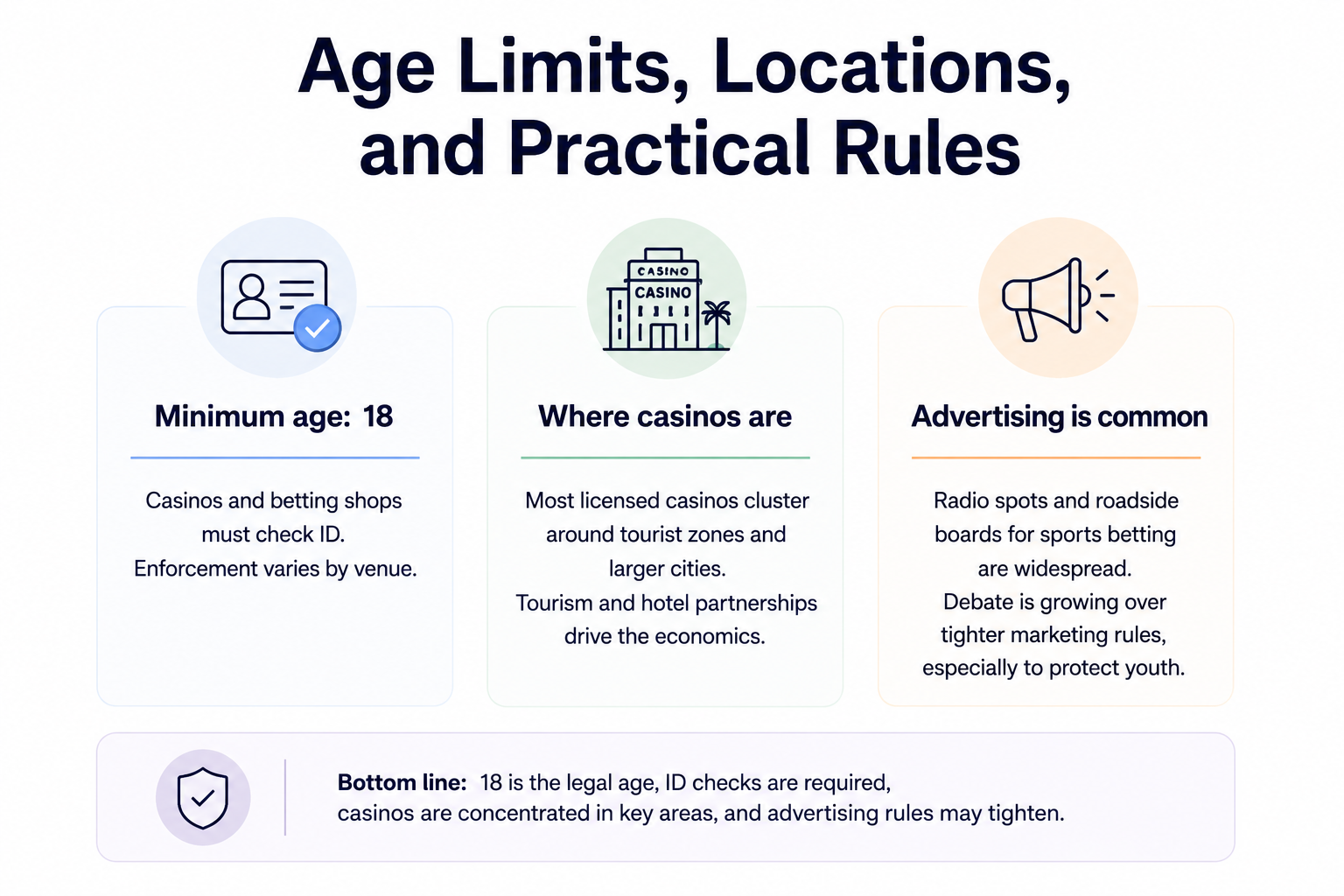
The minimum legal gambling age in Zambia is 18. Casinos and betting shops are required to check identification, though enforcement consistency varies by venue. Most licensed casinos cluster around tourist zones and larger cities, largely because tourism traffic and hotel partnerships make the economics work better than a standalone gambling hall in a smaller town.
Advertising for gambling products is common — radio spots and roadside boards for sports betting are hard to miss — though there’s growing public debate about whether marketing rules need tightening, particularly around reaching younger audiences.
Where the Law Might Be Headed
Zambia’s gambling framework shows its age. Six-plus decades of amendments have produced a system that technically covers casinos, lotteries, and betting shops but says almost nothing about mobile apps, cryptocurrency payments, or cross-border online platforms. Regional peers have already moved toward single, modern gambling authorities with explicit online licensing categories.
Public statements from government officials have floated the idea of harmonizing Zambia’s scattered acts into one regulator with clearer digital-era rules. Nothing should be assumed as settled law, though — anyone making business decisions around online gambling in Zambia should verify the current legal status directly with the Ministry of Finance or the National Assembly rather than relying on older articles that may already be outdated.
FAQ: Casino Legality in Zambia
Is it legal to gamble in a casino in Zambia?
Yes. Licensed land-based casinos operate legally under the Casino Act and related statutes, mainly in tourist and urban centres.
Do I need to be a Zambian citizen to play at a casino there?
No. Casinos generally welcome tourists and foreign visitors alongside residents, provided they meet the minimum age requirement of 18 and any venue-specific entry rules.
Are online casinos illegal in Zambia?
Not explicitly illegal, but not explicitly regulated either. No law currently criminalises a resident for accessing an offshore online casino, though there’s no dedicated online gambling licence issued domestically.
Which law governs sports betting in Zambia?
Primarily the Betting Control Act, Chapter 166, alongside the Betting, Lotteries and Gaming Act, Chapter 169, both enforced by the Lotteries and Betting Control Board.
Who issues casino licences in Zambia?
The Lotteries and Betting Control Board handles licensing, inspections, and enforcement for casinos, betting shops, and lottery operators.
Is there a minimum age to gamble in Zambia?
Yes, the minimum legal gambling age is 18, applicable to casinos, betting shops, and lottery participation.
Is Zambia planning new gambling laws for online betting?
There’s ongoing discussion about modernizing and consolidating Zambia’s gambling regulations to address online platforms more directly, but no finalized, comprehensive online-specific law was confirmed at the time of writing. Check official government sources for the latest status.
The Bottom Line
Casinos are legal in Zambia — that part isn’t in dispute. What deserves more caution is assuming the same clarity applies to online gambling, where the law simply hasn’t caught up yet. Land-based venues operate under a defined, if fragmented, licensing system overseen by an established regulator. Online platforms, by contrast, sit in a space the law describes only indirectly, leaving players and operators to navigate ambiguity rather than clear statute.
Anyone planning to gamble, invest in, or operate a gaming business in Zambia should treat this article as a starting point, not a final legal opinion — verify current licensing requirements and any legislative changes directly with the Lotteries and Betting Control Board or a local legal practitioner before making decisions.
Related Articles

September 3, 2026Is the Casino Legal in Denmark? 2026 Guide

September 3, 2026Is the Casino Legal in Angola? What the 2026...