 Nothing found for the request
Japan Online Casino Market 2026: Size, Trends & Forecast
Sologe April 21, 2026
Share:


Quick Summary
Quick Summary: Japan’s online gambling market is projected to reach USD 9.4 billion by 2030 with a 13.5% CAGR, despite gambling being largely illegal under Japanese law. Over 1.9 million current users wager approximately ¥1.24 trillion annually through offshore platforms, with sports betting and mobile casino games dominating the market. The Kanto region leads with 30% market share, driven by high smartphone penetration and evolving regulatory discussions around integrated resorts.
Japan presents one of the most intriguing paradoxes in global gambling. While the country’s penal code formally prohibits most forms of gambling, the reality on the ground tells a dramatically different story.
Millions of Japanese citizens engage with offshore online casino platforms. Pachinko parlors dot nearly every neighborhood. And the government itself operates lucrative lotteries and sports betting options.
The contradiction has created a thriving underground market that rivals established gambling destinations. But things are changing fast.
Market Size and Revenue Projections
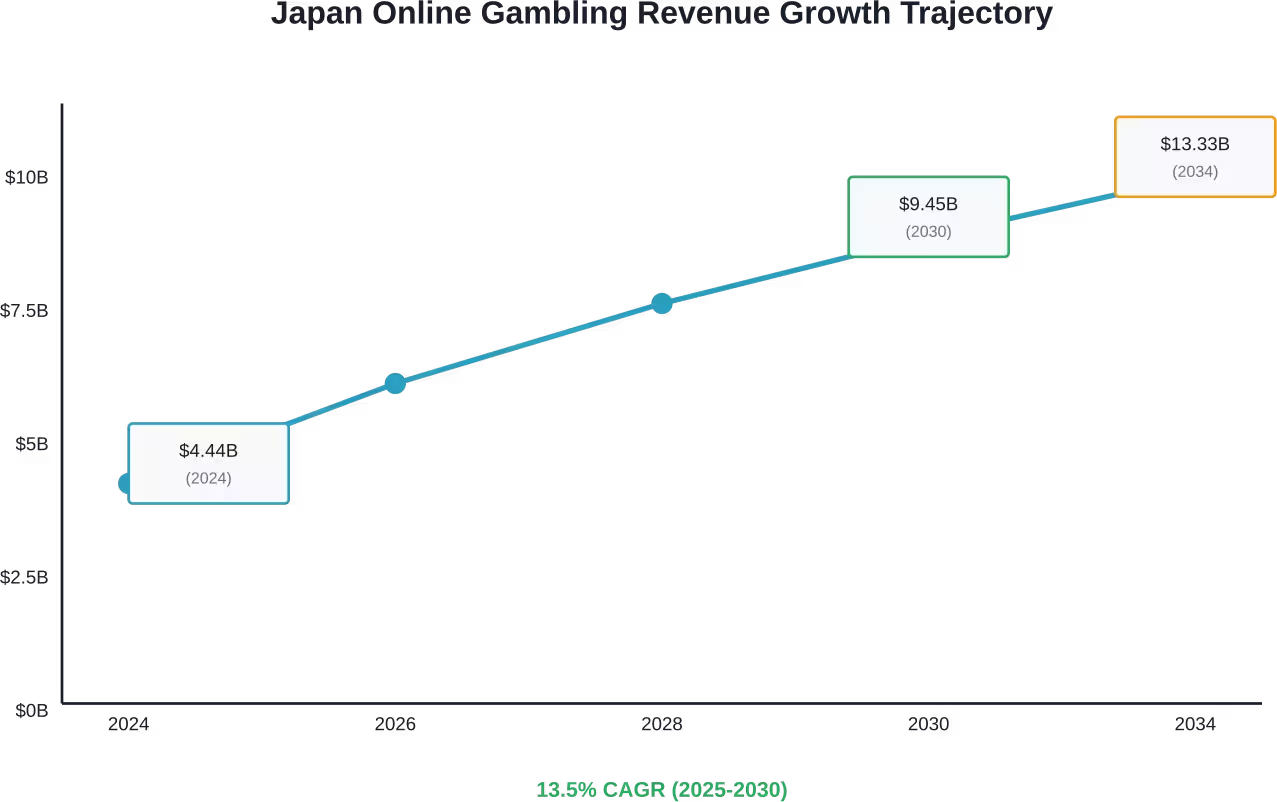
The numbers paint a picture of explosive growth. According to recent market research, Japan’s online gambling market was valued at USD 4,443.8 million in 2024.
Here’s where it gets interesting. By 2030, projections show the market reaching USD 9,447.6 million. That represents a compound annual growth rate of 13.5% from 2025 to 2030.
Another analysis valued the market at USD 8.53 billion in 2025, with expectations to hit USD 13.33 billion by 2034. That’s a 5.1% CAGR over the longer forecast period.
The variance between projections reflects different methodologies. But both agree on one thing: substantial growth ahead.
Metric | 2024 Value | 2030 Projection | Growth Rate |
|---|---|---|---|
Market Revenue (USD) | $4,443.8M | $9,447.6M | 13.5% CAGR |
Active Users | 1,967,000 | Projected growth | Steady increase |
Annual Wagering | ¥1.24 trillion | Rising significantly | Double-digit growth |
Real talk: these figures only capture what researchers can measure. The actual market likely runs larger when you account for cash transactions and peer-to-peer betting that flies under the radar.
Who's Actually Gambling Online in Japan?
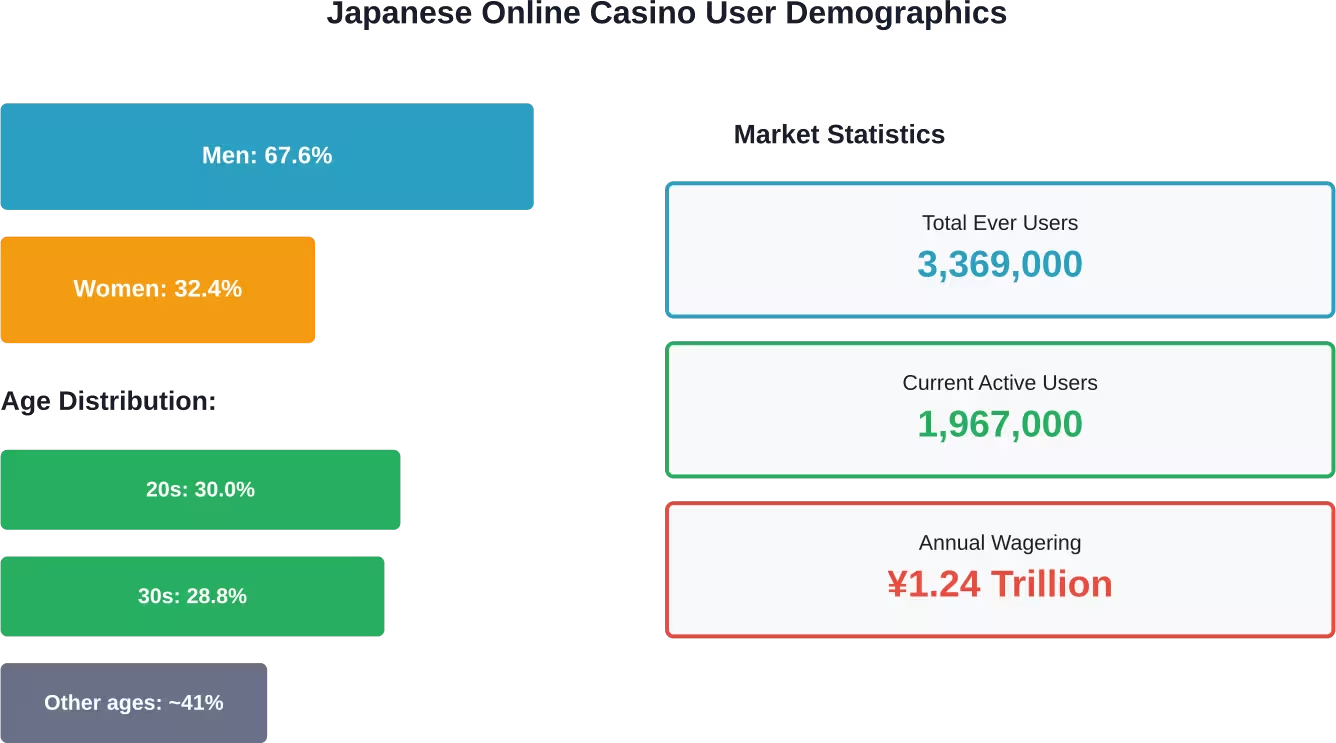
A study conducted by Japan’s National Police Agency provides granular insights into user demographics. Among a sample of 500 online casino users, men significantly outnumbered women at 67.6% (338 users) compared to 32.4% (162 users).
Age distribution reveals that younger demographics dominate. Nearly 60% of users fall into their twenties (30.0%) and thirties (28.8%). This skews younger than traditional pachinko players, suggesting online platforms attract a different demographic profile.
The research identified approximately 3,369,000 people who have used an online casino. Of those, 1,967,000 qualify as current users. That’s a substantial portion of Japan’s 125 million population engaging with platforms that technically operate outside legal frameworks.
Daily wagering amounts tell another story. The most common bet size ranges from ¥5,000 to ¥10,000 per session. But the aggregate annual amount wagered across Japan totals approximately ¥1.24 trillion.
That’s a trillion with a T.
Market Segmentation: What Games Dominate
Sports betting claims the throne as the largest segment in Japan’s online gambling market. It’s also the fastest-growing category, driven by increasing international sports viewership and mobile betting convenience.
Casino games represent another substantial segment at 52% market share. Within casino offerings, specific games show clear preferences. Research on Japanese gamblers in Macao casinos reveals behavioral patterns likely mirrored online.
Among 1,352 respondents who gambled in casinos at least once in the past 12 months, over 90% (1,228) of the respondents reported that they gambled in Macao’s casinos and slot lounges. The most popular casino games among Japanese players are Baccarat, Pachislot-style slots, and Roulette.
These preferences translate directly to online platform offerings. Most sites targeting Japanese users prominently feature theseexact games.
Game Category | Market Share | Key Characteristics |
|---|---|---|
Casino Games | 52% | Baccarat, Pachislot-style slots, and Roulette |
Sports Betting | Largest segment | Fastest growth, mobile-first |
Lottery | Legal domestic | Government-operated, 50% payout cap |
Pachinko | Traditional | Physical locations, gray area legality |
Device Preferences: Mobile Dominates
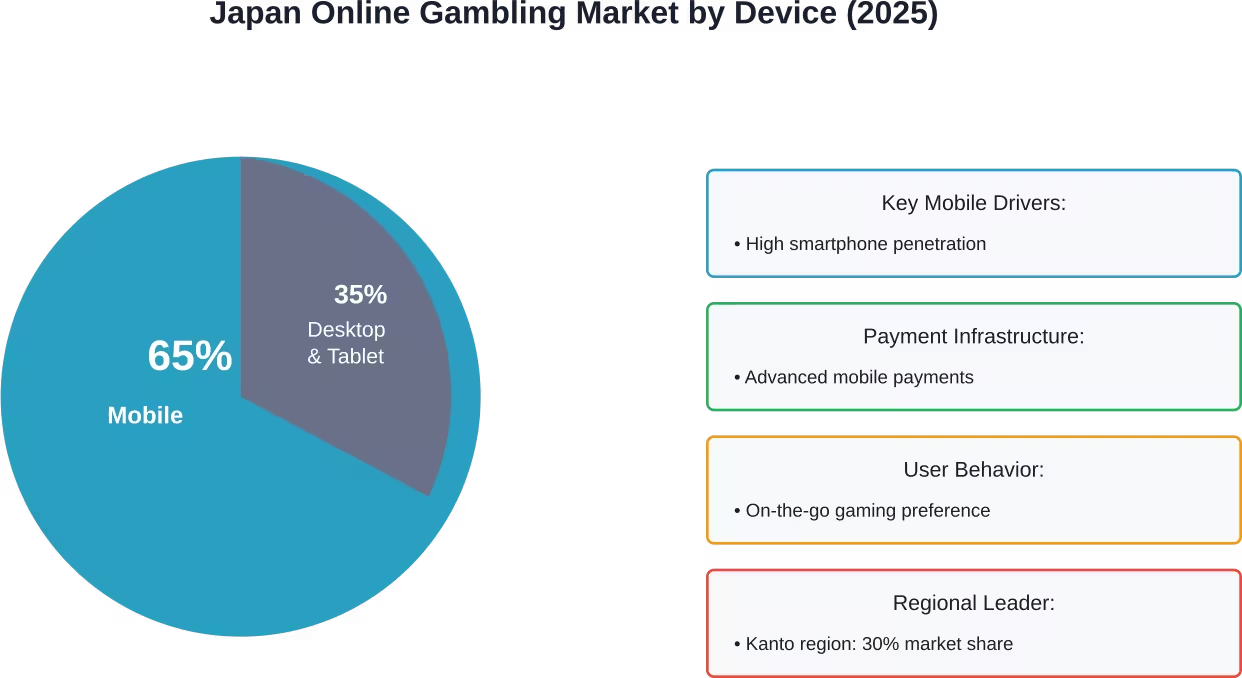
Mobile devices command 65% of the Japan online gambling market in 2025. That shouldn’t surprise anyone familiar with Japanese tech culture.
Japan boasts one of the world’s highest smartphone penetration rates. Advanced mobile payment infrastructure makes deposits and withdrawals seamless. And the convenience of on-the-go gaming access fits perfectly with commute-heavy Japanese lifestyles.
Desktop and tablet devices split the remaining 35%. But the trend clearly points toward further mobile consolidation.
According to a survey conducted in August 2024, online gaming participation correlates strongly with household income. Users with annual household incomes between specific ranges showed penetration rates exceeding certain thresholds, though exact figures require specialized access to view.
The mobile-first approach has driven platform development. Most operators now design for mobile as the primary experience, with desktop versions functioning as secondary options.
Regional Distribution Across Japan
The Kanto region represents the largest market segment at 30% share in 2025. This makes intuitive sense given the region includes Tokyo and surrounding prefectures.
Population density, higher average incomes, and tech-savvy demographics all contribute to Kanto’s dominance. The region serves as both an early adopter and trendsetter for broader Japanese gambling behaviors.
Other major metropolitan areas including Kansai (Osaka, Kyoto, Kobe) and Chubu (Nagoya) contribute substantial portions. But rural prefectures increasingly participate as mobile connectivity improves nationwide.
The geographic distribution mirrors broader economic patterns. Wealthier, more urbanized regions show higher participation rates and larger average wagers.
The Legal Paradox: Banned But Thriving
Japan’s Criminal Code Chapter 23 generally prohibits gambling. That’s the official position.
Yet exceptions exist everywhere you look. Horse racing? Legal. Certain motor sports betting? Permitted. Public sports lotteries? Government-operated. Pachinko? Exists in a carefully maintained gray area.
The lottery system operates under special laws (takarakuji law) designed to increase income for national and local governments. Each lottery ticket is sold at 100 to 500 yen, and the top cash prizes are usually 100 million yen or more. The takarakuji law stipulates that the entire prize pool for any given lottery is to be less than 50% of total sales. The rest flows to local government organizations and charities. That’s a significantly worse payout ratio than most international lottery systems.
Online casinos occupy murky territory. Operating an online casino from within Japan clearly violates the law. But accessing offshore platforms? The legal status remains ambiguous.
This ambiguity creates space for millions of users to access international platforms without serious enforcement risk. Police awareness campaigns in recent years suggest some users genuinely don’t realize the legal gray area they’re navigating.
Integrated Resorts: The Game Changer
Japan legalized integrated resorts in 2018. These complexes combine casinos with hotels, conference facilities, shopping, and entertainment venues.
The legislation represents a seismic shift in Japanese gambling policy. After decades of prohibition, the government recognized the economic potential of destination casino resorts.
Three licenses were initially authorized. Development progresses slowly due to regulatory complexity, local opposition in some areas, and the economic disruption caused by the global pandemic.
But wait. The integrated resort framework only covers physical casino locations. Online gambling from domestic operators remains prohibited.
That said, the cultural and regulatory shift around integrated resorts signals evolving attitudes. Many experts suggest eventual online gambling legalization becomes more plausible once physical casinos establish themselves without major social disruption.
Pachinko: The Elephant in the Room
No discussion of Japanese gambling makes sense without addressing pachinko. These vertical pinball-style gaming machines occupy a unique space in Japanese culture and law.
Pachinko parlors operate throughout Japan despite gambling prohibitions. The legal workaround? Players exchange balls won for prizes, then sell those prizes at separate (but conveniently nearby) locations for cash.
It’s a transparent fiction that everyone acknowledges but the law technically permits. The pachinko industry generates enormous revenue, though precise figures prove difficult to verify given the informal cash-exchange system.
Research on electronic gambling in Japan shows that reward characteristics and betting options significantly influence player behavior. Studies indicate that the number of bets correlates positively with payback percentage, hit frequency, being female, and age, while showing negative correlation with size of wins and range of available betting options.
These behavioral insights increasingly inform both pachinko machine design and online casino game development targeting Japanese players.
Competitive Landscape and Market Players
Japan’s online gambling market operates almost entirely through offshore platforms. These sites base their operations in jurisdictions with permissive gambling laws while specifically targeting Japanese customers.
Popular locations for operators include Malta, Gibraltar, Curacao, and the Isle of Man. These jurisdictions offer gambling licenses that provide legal cover for operations while allowing service to international markets.
The platforms offer Japanese-language interfaces, customer support, and payment methods suited to Japanese users. Many accept yen directly, eliminating currency conversion friction.
Competition remains fierce. Operators compete on game selection, user experience, payment speed, and promotional offers. The lack of domestic regulatory oversight means player protection depends entirely on the licensing jurisdiction and operator reputation.
Payment Methods and Financial Infrastructure
Japanese online gamblers typically use several payment methods to fund accounts. Credit cards remain common despite some banks blocking gambling-related transactions.
E-wallet services gained significant traction. These intermediaries provide a buffer between gambling sites and traditional banking infrastructure, reducing friction and rejection rates.
Cryptocurrency adoption grows steadily. Bitcoin and other digital currencies offer advantages for Japanese users: pseudonymity, faster transactions, and bypass of banking restrictions.
Withdrawal speed varies dramatically by operator and method. E-wallets typically process fastest, often within 24-48 hours. Bank transfers may take 3-5 business days. Cryptocurrency withdrawals depend on blockchain confirmation times but generally complete within hours.
Social and Economic Impacts
The underground nature of Japan’s online gambling market creates challenges for understanding and addressing problem gambling.
Research indicates that electronic gambling formats show particular potential for addictive behavior. The combination of rapid play cycles, variable reward schedules, and immersive experiences creates powerful psychological hooks.
Community discussions reveal that some Japanese users accumulated significant debts through online gambling. The ease of mobile access and 24/7 availability removes natural stopping points that physical gambling locations provide.
On the economic side, the outflow of ¥1.24 trillion annually to offshore operators represents substantial capital leaving Japan’s economy. Legalization and domestic regulation could redirect significant portions of this revenue to Japanese businesses and tax authorities.
Future Outlook: What's Coming Next
Several trends will shape Japan’s online gambling market through 2030 and beyond.
First, integrated resort development continues regardless of temporary setbacks. Once operational, these facilities will normalize casino gambling in Japanese society. That cultural shift makes online gambling legalization more politically feasible.
Second, mobile dominance will intensify. Expect the 65% mobile share to approach 75-80% by 2030 as desktop usage fades across all digital activities, not just gambling.
Third, cryptocurrency integration will deepen. As Japan’s regulatory framework for digital assets matures, expect more seamless integration between crypto wallets and gambling platforms.
Fourth, enforcement may tighten. The National Police Agency’s awareness that millions of citizens regularly violate gambling laws creates pressure for either legalization or crackdown. The former seems more likely given revenue potential and enforcement difficulty.
The 13.5% CAGR projection through 2030 assumes regulatory status remains largely unchanged. Legalization could accelerate growth significantly. Conversely, serious enforcement efforts could temporarily suppress the market, though history suggests underground gambling proves remarkably resilient.
Get the Right Casino Setup From the Start

Japan isn’t a plug-and-play market, and the way your setup comes together will define how far you can go. Sologe helps operators and developers approach that with more structure. Instead of piecing things together from different sources, you can see how platforms, providers, and services fit into a working setup and make decisions with fewer unknowns.
Pick Partners That Fit Your Plan
With Sologe, you can:
- Focus on companies that align with your setup from the start
- See how different providers fit together before making decisions
- Avoid delays caused by poor partner choices
Contact Sologe to get started with the right partners from day one.
Frequently Asked Questions
Is online gambling legal in Japan?
Online gambling is generally illegal under Japan’s Criminal Code, which prohibits most forms of gambling. However, enforcement primarily targets operators rather than individual users. As a result, many Japanese players access offshore casino platforms, creating a large gray market estimated at ¥1.24 trillion in annual wagers.
How big is Japan’s online casino market?
Japan’s online gambling market was valued at approximately USD 4.44 billion in 2024 and is projected to reach USD 9.45 billion by 2030, growing at a 13.5% CAGR. Around 1.97 million active users currently access offshore gambling platforms, making Japan one of the largest markets in Asia despite legal restrictions.
What games are most popular with Japanese online gamblers?
Sports betting is the fastest-growing segment. Among casino games, Baccarat, Pachislot-style slots, and Roulette are the most popular, accounting for a large share of activity. These preferences are similar to patterns seen in regional markets like Macao.
Will Japan legalize online casinos?
While Japan legalized integrated resorts with land-based casinos in 2018, online gambling by domestic operators remains prohibited. There are no immediate plans for legalization, but growing demand and offshore market size suggest potential regulatory changes in the future.
How do Japanese users access online casinos?
Players typically use offshore platforms licensed in jurisdictions such as Malta, Curacao, Gibraltar, and the Isle of Man. These platforms often support Japanese language, yen-based accounts, and local payment methods. Mobile devices account for around 65% of access, with smartphones being the primary channel.
What are the main risks of online gambling in Japan?
Risks include limited consumer protection, potential gambling addiction due to 24/7 access, legal uncertainty, payment restrictions from banks, and difficulty resolving disputes with offshore operators. These risks are higher compared to regulated domestic markets.
Which Japanese regions have the highest online gambling participation?
The Kanto region, including Tokyo, leads with around 30% market share due to high population density and income levels. Kansai (Osaka, Kyoto, Kobe) and Chubu (Nagoya) also show strong participation, while rural regions are growing as mobile connectivity improves.
Conclusion: A Market in Transition
Japan’s online gambling market exists in a fascinating state of contradiction. Officially prohibited yet practically ubiquitous. Generating over a trillion yen in annual activity while operating entirely offshore.
The trajectory points clearly upward. Whether projections show $9.4 billion or $13.3 billion by decade’s end, the direction remains consistent: substantial growth.
But the real question isn’t about market size. It’s about how long Japan can maintain the current system where millions of citizens engage with offshore platforms in legal gray areas while the government forgoes billions in potential tax revenue.
The integrated resort legislation cracked open a door that decades of prohibition kept firmly shut. Once physical casinos demonstrate they can operate without destroying Japanese society, the argument for continued online gambling prohibition weakens considerably.
For operators, investors, and users, the Japanese market represents enormous opportunity wrapped in regulatory uncertainty. That tension will define the next phase of Japan’s gambling evolution.
The next few years will prove decisive. Keep watching this space.
Related Articles

September 29, 2026Is the Casino Legal in Japan? The Real Answer...

September 29, 2026Is the Casino Legal in Gambia? What the Law...