 Nothing found for the request

Live Casino Asian Market Growth 2026: $185B Industry
Sologe March 31, 2026
Share:


Asian Casino Market Reaches Record Heights
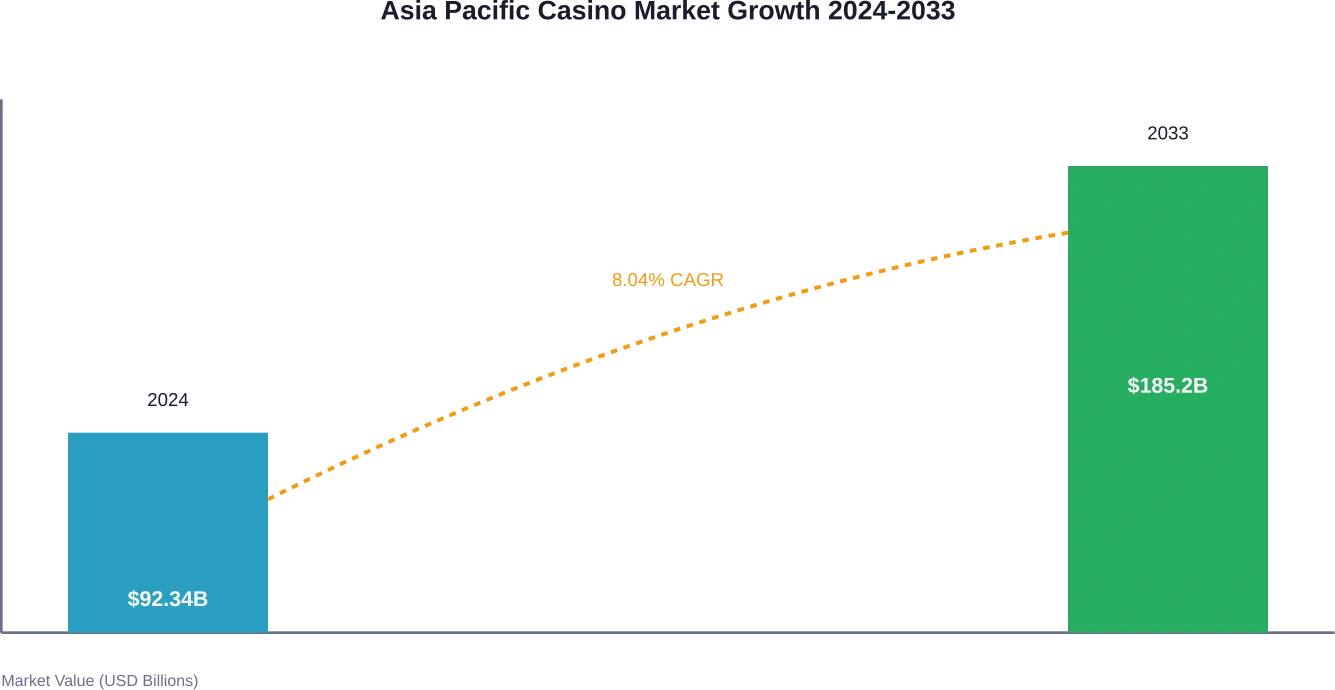
The Asia Pacific casino gambling market hit $92.34 billion in 2024 and won’t slow down anytime soon. According to industry forecasts, this figure will more than double to $185.2 billion by 2033, representing a compound annual growth rate of 8.04%.
But here’s the thing—this growth isn’t evenly distributed. Macau and Singapore continue their dominance as established gaming hubs, while emerging markets in the Philippines, Vietnam, and South Korea rapidly gain ground. The online casino segment in Asia Pacific is projected to reach US$8,313.8 million by 2030, with a CAGR of 13.5%.
Reach Buyers in the Asian Live Casino Space

For suppliers and service providers, the challenge is often being visible in the right place. Sologe is built for that. It is a dedicated iGaming marketplace where operators and gaming businesses search for suppliers, software, platforms, and service providers, while vendors use the platform to present their offering in one place.
Want Better Visibility in the Gaming Industry?
Use Sologe to:
- reach buyers already searching for gaming solutions
- present your offering and company profile in one place
- stay visible beyond short-term campaigns or events
👉 Get in touch with Sologe to discuss becoming a vendor on the platform.
Live Casino Studios Target Asian Players
Gaming operators recognize cultural preferences matter. Companies like Vivo Gaming are launching dedicated live casino studios exclusively for the Asian market, broadcasting from Southeast Asia with native Thai and Vietnamese dealers.
These studios feature culturally tailored games—Baccarat, Dragon Tiger, Sic Bo, and Roulette—delivered with local language support and Asian-centric aesthetics. The strategy works because players engage more authentically when dealers speak their language and understand regional gaming preferences.
Key Growth Drivers Reshaping the Industry
Several factors fuel this remarkable expansion:
- Rising disposable incomes across Asian economies enable more entertainment spending
- Expanding tourism infrastructure in integrated resort destinations
- Digitalization acceleration making online platforms more accessible
- Regulatory evolution in markets like the Philippines through PAGCOR licensing
The Philippines gaming industry, regulated by PAGCOR, offers licensing for eBingo, eCasino, sports betting, and online poker. This regulatory framework provides legitimacy while ensuring player protection and fair gaming standards.
Market Leaders and Regional Dynamics
Macau remains the undisputed heavyweight, but Singapore’s integrated resorts model proves increasingly influential. The Philippines has emerged as a regulatory pioneer with comprehensive licensing frameworks covering electronic gaming operations.
Market | Primary Strength | Growth Status |
|---|---|---|
Macau | Established gaming hub | Mature, steady |
Singapore | Integrated resorts | Premium segment |
Philippines | Regulatory framework | Rapid expansion |
Vietnam | Emerging market | High growth |
South Korea | Mixed regulations | Selective growth |
China’s gaming industry generated $32 billion from mobile games in 2020, with esports generating $20.8 billion that year. While China maintains strict regulations on domestic gambling, its gaming culture influences regional preferences and player expectations throughout Asia.
Regulatory Landscape and Player Protection
Sound familiar? Gambling regulation varies dramatically across Asia. The Philippines leads with PAGCOR’s comprehensive oversight ensuring licensed casinos maintain fairness, prevent minor access, and promote responsible gambling practices.
PAGCOR’s Electronic Gaming Licensing Department regulates all games of chance, issuing licenses for traditional bingo, eBingo, eCasino games, sports betting, specialty games, online poker, and numeric games. This creates a predictable regulatory environment attracting international operators.
Research from China shows regulatory interventions can work—a 2021 online gaming policy for adolescents achieved high compliance (93.6%) and reduced gaming time across adolescent participants (N=2,715), demonstrating effective policy implementation when properly enforced.
The Digital Transformation Wave
Online platforms reshape how Asian players access casino games. The online casino market in Asia Pacific targets $8,313.8 million by 2030, growing at 13.5% annually—significantly faster than land-based venues.
This digital shift enables operators to reach previously underserved markets, offer 24/7 accessibility, and reduce infrastructure costs compared to physical casinos. Mobile optimization proves particularly crucial given Asia’s mobile-first internet usage patterns.
Future Outlook and Opportunities
What’s next for Asian live casinos? The convergence of technology, tourism, and regulatory maturity creates unprecedented opportunities. Integrated resort models combining gaming, entertainment, shopping, and dining will likely expand beyond Singapore and Macau.
Vietnam and South Korea represent significant growth frontiers as regulations evolve. The demand for localized experiences—native dealers, culturally relevant games, regional payment methods—will intensify as competition increases.
Fantasy sports and skill-based gaming also show potential as regulatory frameworks adapt to distinguish them from traditional gambling, particularly as the global legal gambling market continues expanding.
FAQs
How large is the Asian casino market in 2026?
The Asia Pacific casino gambling market reached $92.34 billion in 2024 and continues growing at an annual rate of 8.04%. The online casino segment in Asia Pacific is projected to reach $8,313.8 million by 2030, reflecting strong digital expansion across the region.
Which countries lead the Asian casino market?
Macau and Singapore dominate as established gaming hubs. Meanwhile, the Philippines, Vietnam, and South Korea represent rapidly growing emerging markets with expanding regulatory frameworks and tourism infrastructure.
What are live casino studios in Asia?
Live casino studios broadcast real-time dealer games from Southeast Asian locations, often featuring native-speaking dealers. Companies like Vivo Gaming operate dedicated studios offering games such as Baccarat, Dragon Tiger, Sic Bo, and Roulette tailored specifically for Asian players.
How is online casino gambling regulated in Asia?
Regulation varies significantly by country. The Philippines uses PAGCOR to provide comprehensive licensing for eBingo, eCasino, sports betting, and online poker. Other markets range from strict prohibition to regulated integrated resort models.
What drives growth in the Asian casino market?
Key growth drivers include rising disposable incomes, expanding tourism, digitalization of gaming platforms, development of integrated resorts, and evolving regulatory frameworks that enable legal operations for casino providers.
How fast is the online casino market growing in Asia?
The Asia Pacific online casino market is growing at a compound annual growth rate of 13.5%, significantly outpacing traditional land-based venues. This growth is driven by increasing mobile penetration and widespread adoption of digital payment systems.
What games are most popular in Asian live casinos?
Baccarat dominates both physical casino floors and live dealer studios in Asia. Other popular games include Dragon Tiger, Sic Bo, and specialized Roulette variants, reflecting regional gaming preferences that differ from Western markets.
Conclusion
The Asian live casino market stands at a pivotal moment. With projections showing the market doubling to $185.2 billion by 2033, operators who understand regional preferences, navigate complex regulations, and invest in localized experiences will capture this extraordinary growth.
From Macau’s established dominance to the Philippines’ regulatory innovation and Southeast Asia’s studio expansion, the landscape offers diverse opportunities. The fusion of traditional gaming culture with digital transformation creates a uniquely Asian market trajectory.
For operators, investors, and industry observers, the message is clear: Asia represents the casino industry’s most dynamic growth frontier. The question isn’t whether to engage—it’s how quickly you can adapt to serve this massive, evolving market.
Related Articles

September 29, 2026Is the Casino Legal in Japan? The Real Answer...

September 29, 2026Is the Casino Legal in Gambia? What the Law...