 Nothing found for the request

Mexico Online Casino Market Size 2026: $970M Report
Sologe March 30, 2026
Share:


Current Market Size and Growth Projections
Multiple research firms track Mexico’s online gambling market, and their numbers tell a compelling story about explosive growth.
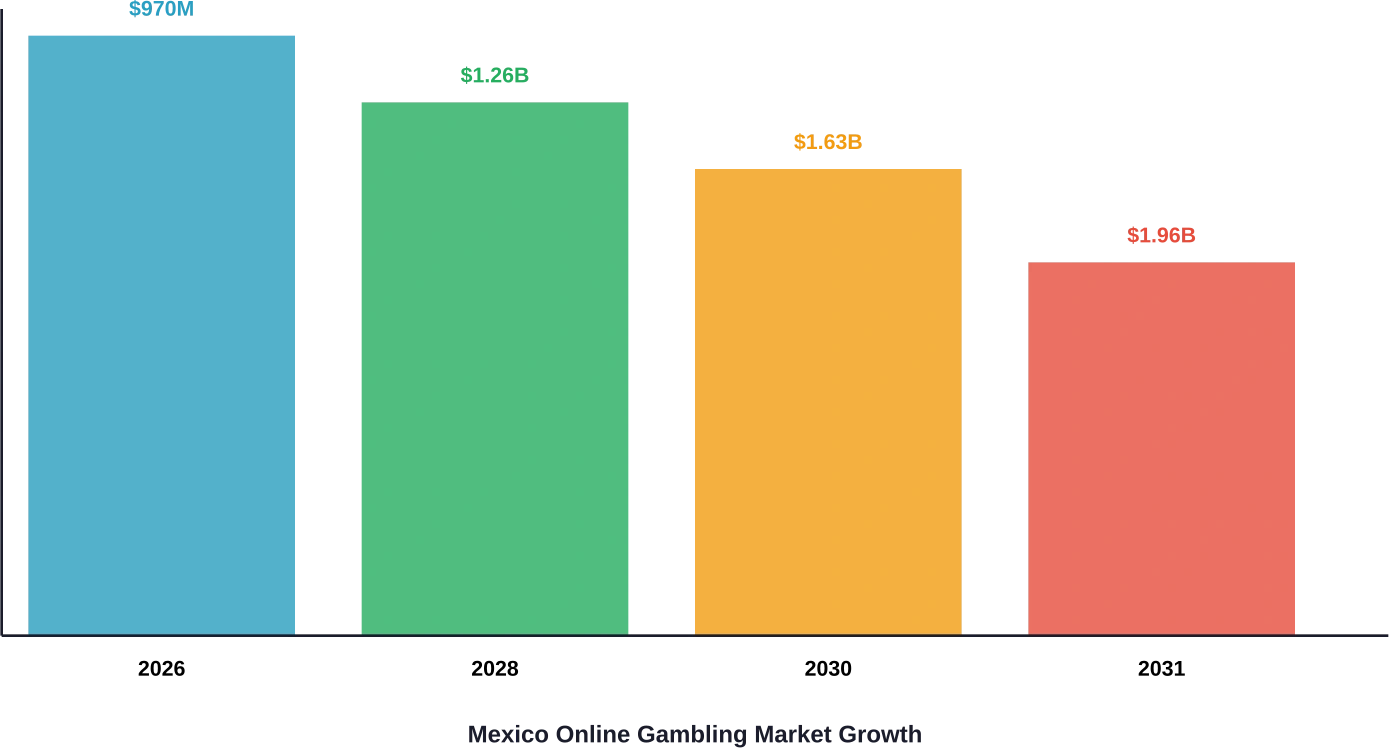
Mordor Intelligence values the market at $840 million in 2025, climbing to $970 million in 2026. That’s a 15.11% CAGR that would push the market to $1.96 billion by 2031.
Grand View Research offers a different perspective. Their data shows the market at $1.6169 billion in 2024, growing at 11.9% CAGR to reach $3.1565 billion by 2030.
Why the discrepancy? Methodology differences, particularly around what counts as “online gambling” versus physical casino operations that have digital components.
Data Insights Market takes an even more aggressive stance, projecting a 15.36% CAGR through 2034.
Real talk: these variations matter less than the consensus. Every major research firm agrees Mexico’s online gambling market will double within five years.
Research Firm | 2026 Market Size | CAGR | Target Year | Projected Size |
|---|---|---|---|---|
Mordor Intelligence | $970 million | 15.11% | 2031 | $1.96 billion |
Grand View Research | ~$1.8 billion | 11.9% | 2030 | $3.1565 billion |
Data Insights Market | ~$1.1 billion | 15.36% | 2034 | $2.56 billion |
Put Your Offering Where Online Casino Buyers Search

For suppliers and service providers, the challenge is often being visible in the right place. Sologe is built for that. It is a dedicated iGaming marketplace where operators and gaming businesses search for suppliers, software, platforms, and service providers, while vendors use the platform to present their offering in one place.
Want Better Visibility in the Gaming Industry?
Use Sologe to:
- reach buyers already searching for gaming solutions
- present your offering and company profile in one place
- stay visible beyond short-term campaigns or events
👉 Get in touch with Sologe to discuss becoming a vendor on the platform.
Market Segmentation: Where the Money Flows
Sports betting dominates Mexico’s online gambling landscape with 56.41% of market share in 2025, according to Mordor Intelligence. That’s no surprise—soccer fanaticism runs deep in Mexico, and the legalization of sports betting in several states has unleashed pent-up demand.
But wait. Online casinos are growing faster on a percentage basis, driven by smartphone penetration and improved mobile gaming experiences.
Here’s how the segments break down:
Sports Betting
The largest segment by far. Mexican bettors favor soccer, with Liga MX and international competitions driving the bulk of wagers. American football has gained traction, particularly NFL games.
The sports betting segment benefits from clearer regulatory pathways in certain states. Mexico City, for instance, has licensed operators that can legally offer sports wagering both online and in physical locations.
Casino Games
Slots, table games, and live dealer experiences comprise the casino segment. While technically restricted under federal law, enforcement remains inconsistent and many international operators serve Mexican players.
Poker and Other Games
Poker rooms, bingo, and lottery products round out the market. These represent smaller shares but maintain dedicated player bases.
Key Players Shaping the Market
Mexico’s online gambling sector features a mix of domestic operators and international giants navigating the regulatory complexity.
Mordor Intelligence identifies the major players as:
- Grupo Caliente – Mexico’s largest domestic operator with both retail and online presence
- Codere Online Luxembourg S.A. – Reported €26.6 million in Mexico net gaming revenue for Q1 2024, up 51% year-over-year according to SEC filings
- Bet365 Group Ltd – International powerhouse serving Mexican customers despite grey-market status
- Novibet USA Inc. – Expanding Latin American footprint with Mexico focus
- Super Group Ltd. – Operating multiple brands targeting Mexican bettors
The competitive landscape reveals an interesting dynamic. Domestic operators like Grupo Caliente benefit from established retail networks and clearer licensing. International operators bring superior technology and customer acquisition expertise but face regulatory risk.
Codere’s Mexico net gaming revenue grew 51% year-over-year in Q1 2024 compared to Q1 2023, while their Spain revenue grew 21% in the same period.
Rush Street Interactive reported record quarterly revenue of $324.9 million in Q4 2025, up 28% year-over-year across their Americas operations, which include Mexico. The company achieved full-year 2025 revenue of $1,134 million ($1.134 billion).
Regulatory Landscape: Opportunity Meets Uncertainty
law technically prohibits most forms of gambling, with limited exceptions for government-run lotteries and land-based casinos that obtained grandfather permits.
But the internet didn’t exist in 1947.
So why is the market growing at 15% CAGR? Enforcement gaps, state-level variations, and international operators serving Mexican customers from offshore licenses.
According to iGaming Business, Mexico stands “on the verge of a new era” with regulatory reforms expected. Whether these reforms create a fully licensed framework or tighten enforcement against grey-market operators remains unclear as of early 2026.
The fragmented regime creates real challenges. Compliant operators face higher tax outlays compared to unlicensed operators. Meanwhile, unlicensed platforms pay nothing and reinvest those savings into customer acquisition.
State-Level Variations
Some Mexican states have moved ahead of federal reform. Mexico City, for instance, permits licensed sports betting operations. Other states maintain stricter enforcement.
This patchwork approach complicates operations for businesses trying to maintain compliance while maximizing market access.
Growth Drivers Fueling Expansion
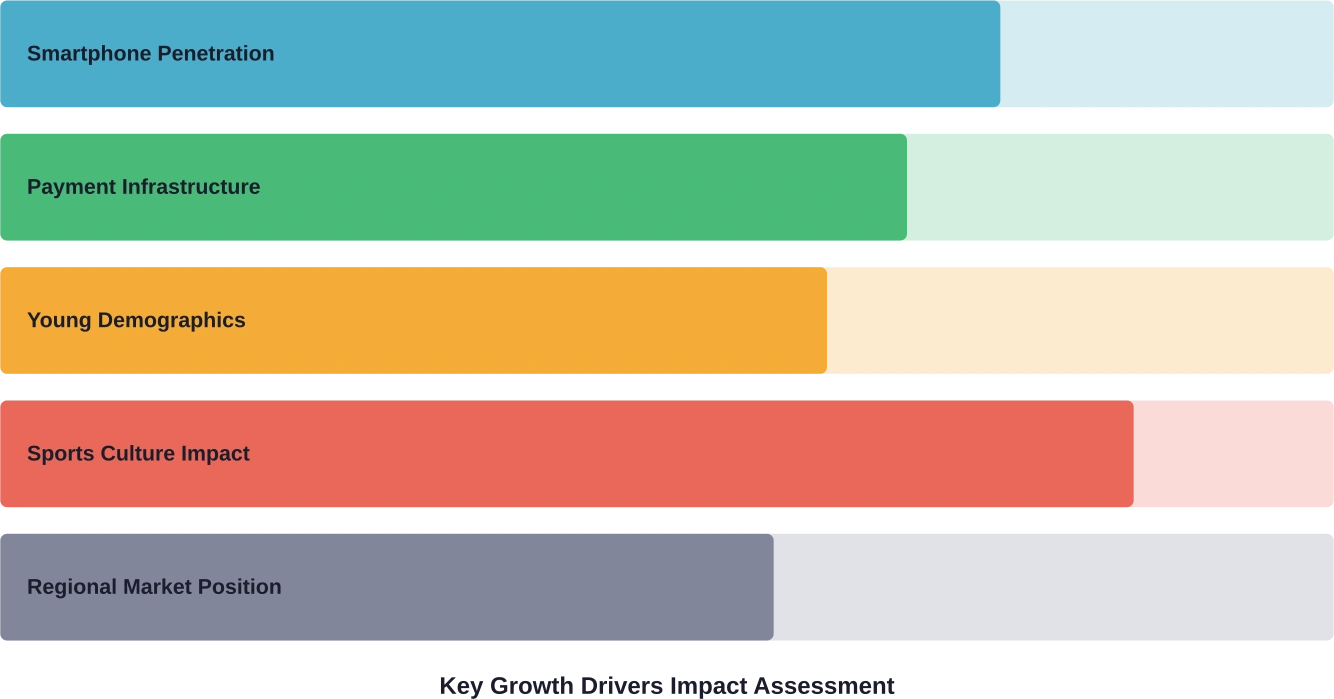
Several factors converge to drive Mexico’s online gambling growth despite regulatory uncertainty:
Smartphone Penetration
Mobile devices now serve as the primary internet access point for most Mexicans. Data Insights Market specifically cites rising smartphone usage as a key growth driver. Mobile-optimized gambling platforms remove barriers that previously limited market expansion.
Payment Infrastructure Improvements
Digital payment adoption accelerated during the pandemic and hasn’t reversed. More Mexicans now have access to digital wallets, prepaid cards, and online banking—all essential for online gambling participation.
Demographic Shifts
Mexico’s population skews younger than many developed markets, and younger cohorts show higher comfort with digital entertainment and online transactions.
Sports Culture
Soccer fandom creates natural demand for sports betting. The legalization of sports wagering in select jurisdictions tapped massive latent demand.
Regional Market Position
As noted by Grand View Research, Latin America’s online gambling market will reach $10.407 billion by 2030. Mexico represents a significant share of that regional total, positioning it as a key market in the region.
Challenges and Risks
The market’s growth trajectory isn’t guaranteed. Several risks could derail projections:
- Regulatory crackdown: Federal authorities could move aggressively against unlicensed operators, disrupting market access for international platforms that currently serve Mexican customers.
- Payment processing restrictions: Banks and payment processors might face pressure to block transactions with unlicensed gambling sites, as has occurred in other markets.
- Competition from licensed markets: If regulatory reform creates a clear licensing framework, the resulting tax burden could make Mexico less attractive compared to other Latin American jurisdictions.
- Economic volatility: Gambling spending correlates with discretionary income. Economic downturns or currency instability could constrain market growth.
What This Means for Stakeholders
The Mexico online gambling market presents different opportunities and risks depending on perspective:
- For operators: High growth potential exists, but regulatory risk remains significant. Strategies that balance market access with compliance preparation make sense given the likelihood of eventual federal reform.
- For investors: The 15% CAGR looks attractive, but understand that this depends on regulatory clarity emerging within the forecast period. Platform providers and payment processors face less direct regulatory risk than operators.
- For policymakers: Mexico can look to Colombia, Argentina, and other Latin American markets that have implemented licensing frameworks. Tax revenue potential is substantial, but setting rates too high drives customers to unlicensed alternatives.
Frequently Asked Questions
What is the size of Mexico’s online gambling market in 2026?
The market reached approximately $970 million in 2026, with some estimates placing it closer to $1.8 billion depending on methodology.
Is online gambling legal in Mexico?
The legal framework is unclear, with outdated federal laws and inconsistent enforcement allowing offshore operators to serve players.
What is the projected growth rate for Mexico’s online gambling market?
The market is expected to grow at around 11.9% to 15.36% annually, with strong long-term expansion potential.
Which segment is largest in Mexico’s online gambling market?
Sports betting leads the market, driven primarily by soccer betting activity.
Who are the major players in Mexico’s online gambling market?
Key operators include Caliente, Codere, Bet365, Novibet, and Super Group.
What are the main growth drivers for online gambling in Mexico?
Mobile adoption, digital payments, young demographics, and strong sports culture all contribute to market growth.
Will Mexico regulate online gambling in the near future?
Regulatory reforms are expected, but details and timelines remain uncertain as of 2026.
Looking Ahead: Mexico's Market Trajectory
Mexico’s online gambling market sits at an inflection point. The fundamentals—demographics, technology adoption, cultural fit—all support continued rapid growth.
But regulatory uncertainty clouds the picture. Will federal authorities create a comprehensive licensing framework that brings the grey market into compliance? Or will enforcement tighten against unlicensed operators, potentially disrupting market access?
The smart money says regulatory clarity emerges within 2-3 years. The tax revenue potential is simply too large for federal and state governments to ignore, particularly as post-pandemic budget pressures persist.
When that framework arrives, expect consolidation. Operators with established Mexican presence and compliance expertise will have advantages. Pure-play offshore operators may face difficult decisions about whether market access justifies the cost of licensing.
For now, though, Mexico’s online gambling market continues its remarkable growth trajectory—$970 million in 2026, doubling within five years, and establishing itself as a cornerstone of Latin America’s digital gaming economy.
Related Articles

September 29, 2026Is the Casino Legal in Japan? The Real Answer...

September 29, 2026Is the Casino Legal in Gambia? What the Law...