 Nothing found for the request

Mexico Online Casino Operators Market Share 2026
Sologe March 30, 2026
Share:


Current Market Size and Growth Trajectory
The Mexican online casino market isn’t just growing—it’s accelerating. Multiple research organizations have tracked this expansion, and the numbers tell a compelling story.
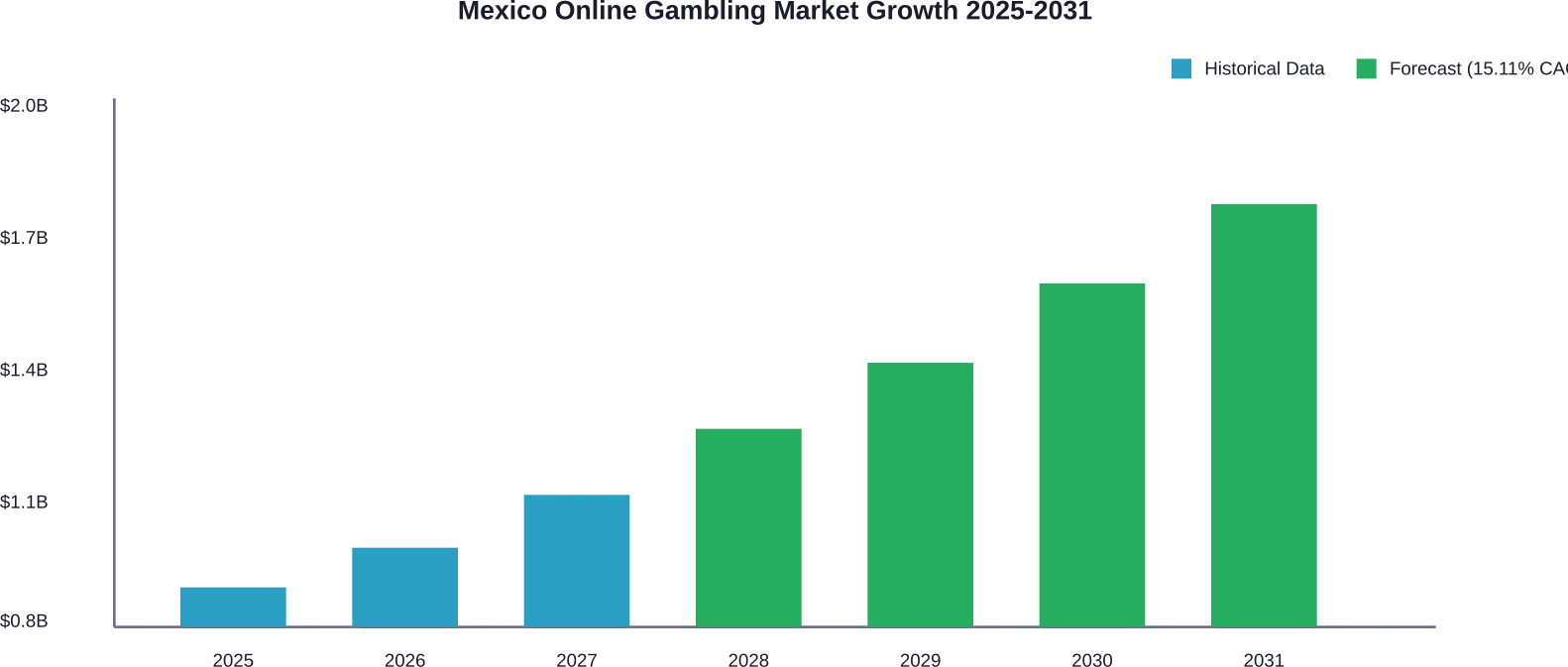
Based on data from Mordor Intelligence published in February 2026, the market valuation stands at USD 0.97 billion for the current year. The projected trajectory shows growth to USD 1.96 billion by 2031, representing a compound annual growth rate of 15.11% over the five-year forecast period.
Grand View Research offers a slightly different perspective, estimating the Mexico online gambling market will reach USD 3,156.5 million by 2030, with an 11.9% CAGR from 2025 to 2030. While these figures differ slightly—likely due to varying methodologies and segment definitions—both sources confirm robust double-digit growth.
What’s driving this expansion? Several converging factors make Mexico particularly attractive for online casino operators right now.
Key Growth Drivers
Smartphone adoption continues climbing, with affordable devices reaching previously underserved demographics. This technological accessibility has fundamentally changed how Mexicans engage with entertainment and gaming platforms.
The country’s purchasing power has improved significantly over recent years, creating a larger addressable market for operators. Changing lifestyle patterns—particularly among urban populations—have normalized online gaming as a mainstream leisure activity rather than a niche pursuit.
And here’s something that doesn’t get discussed enough: government attitudes toward online gambling have shifted. While regulation remains fragmented, tax revenue potential has prompted more pragmatic approaches at various governmental levels.
Market Share Distribution Among Leading Operators
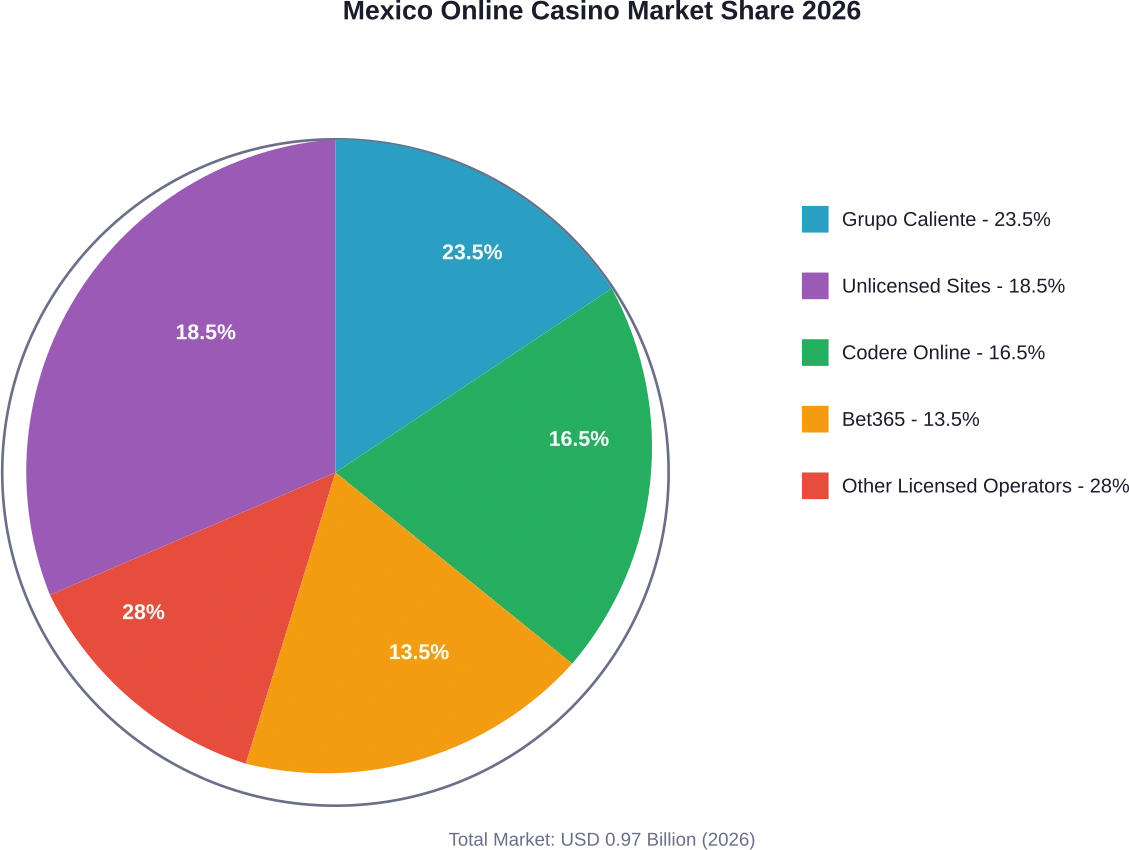
Market concentration in Mexico’s online casino sector sits at medium levels, according to Mordor Intelligence. This means no single operator dominates completely, but a handful of major players control significant portions of the market.
The top operators operating in the Mexico online gambling market as of 2026 include Grupo Caliente, Codere Online Luxembourg S.A., Bet365 Group Ltd, Novibet USA Inc., and Super Group Ltd (which operates Betway). These companies have established themselves through various competitive advantages—brand recognition, regulatory positioning, sports sponsorships, and localized offerings.
Grupo Caliente: Market Leader
Grupo Caliente is listed as a major operator in the Mexico online gambling market according to Mordor Intelligence, though specific market share percentages are not disclosed in available sources. The company’s advantage stems from its dual presence in both land-based and online gambling, giving it brand familiarity that pure-play digital operators struggle to match.
Their physical casino network across Mexico has created decades of customer trust and brand equity that translates effectively to digital channels. When customers transition from physical to online gaming, they often gravitate toward familiar brands—and Grupo Caliente benefits enormously from this dynamic.
The operator has invested heavily in mobile optimization, recognizing that Mexican players increasingly access gaming platforms through smartphones rather than desktop computers. Their sportsbook offering is particularly strong, capitalizing on football’s overwhelming popularity in the country.
Codere Online: Strong Regional Player
Codere Online Luxembourg S.A. is identified as a major operator in Mexico’s online gambling market, though specific market share percentages are not quantified in available research. The Spanish-based operator has deep roots in Latin American markets, with Mexico representing one of its core strategic territories.
What sets Codere apart is its omnichannel approach. Like Grupo Caliente, Codere operates physical betting shops and casinos alongside its digital platform, allowing for integrated loyalty programs and seamless customer experiences across channels.
The company went public through a SPAC merger in 2021, providing capital for expansion precisely as Mexico’s online market accelerated. This timing advantage enabled aggressive marketing campaigns and product development when competitors faced capital constraints.
Bet365: International Powerhouse
Bet365 Group Ltd is identified as a major operator in Mexico’s online gambling market, though specific market share percentages are not disclosed in available sources. The British operator brings global scale advantages—sophisticated technology platforms, extensive sports coverage, and operational expertise refined across dozens of international markets.
Real talk: Bet365’s regulatory status in Mexico exists in a gray area. The company operates without a specific Mexican license, instead relying on international gaming licenses. This creates cost advantages (lower tax burden) but also regulatory uncertainty that could impact future operations.
Mexican players appreciate Bet365’s comprehensive sports betting options, which extend far beyond football to include international markets and niche sports. The platform’s live betting interface is considered industry-leading, particularly for in-play wagering during matches.
Emerging Competitors
Caliente.mx, Betway (operated by Super Group), and Novibet USA Inc. are identified as significant market participants, though specific aggregate market share is not disclosed in available sources. These operators pursue different strategic positioning—Caliente.mx emphasizes local Mexican identity, Betway leverages international sports sponsorships, and Novibet focuses on casino game variety and promotions.
The remaining market share is distributed across smaller licensed operators and unlicensed international sites, with Mordor Intelligence noting medium market concentration. This distribution creates both opportunity and challenges for growth-focused operators.
Segment Analysis: Sports Betting vs Casino Games
Not all online gambling revenue comes from the same source. Understanding segment breakdown reveals important competitive dynamics and growth opportunities.
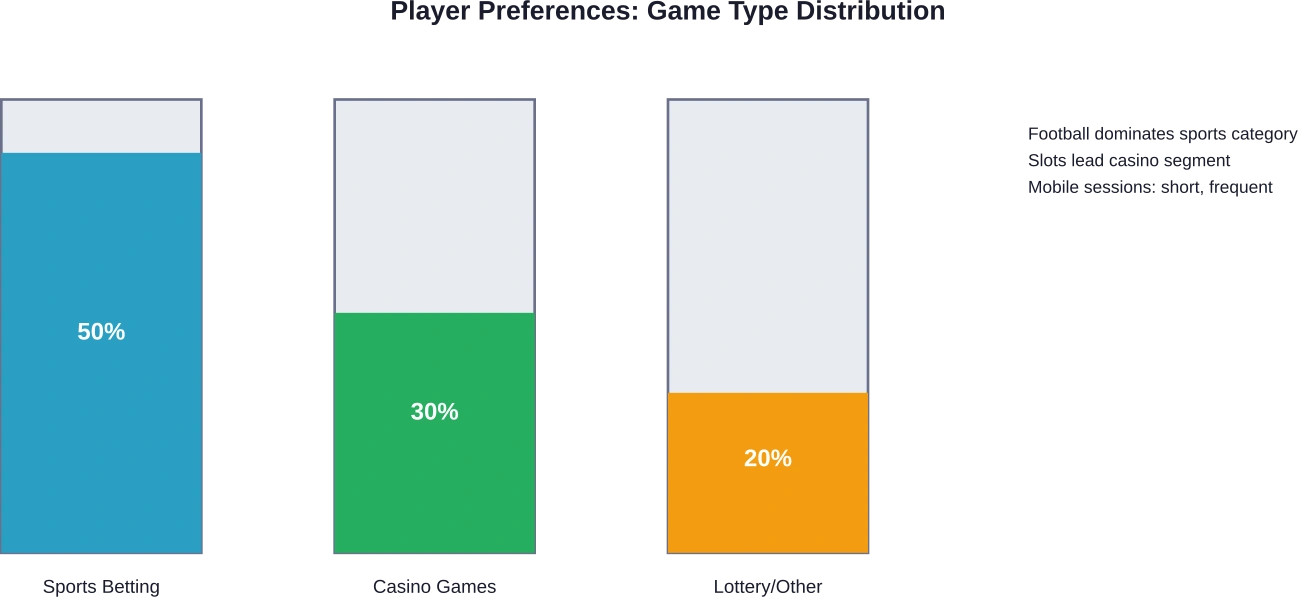
According to Mordor Intelligence, sports betting led Mexico’s online gambling market in 2025 with 56.41% of total revenue. This dominance reflects Mexico’s passionate sports culture, particularly around football (soccer), which far exceeds any other sport in popularity and betting volume.
Casino games—including slots, table games like blackjack and roulette, and live dealer experiences—comprise most of the remaining market share. While sports betting generates higher overall revenue, casino games show strong engagement metrics and often deliver better profit margins for operators due to lower operational complexity.
Segment | Revenue Share | Key Characteristics | Growth Outlook |
|---|---|---|---|
Sports Betting | ~56% | Football-dominated, live betting popular, event-driven peaks | Steady growth aligned with sports calendar expansion |
Online Casino | ~30% | Slots most popular, table games growing, 24/7 availability | Faster growth than sports betting due to lower baseline |
Lottery & Other | ~14% | Traditional lottery transition, bingo, specialty games | Modest growth, digitization of traditional formats |
Sports Betting Dominance
Football drives the overwhelming majority of sports betting volume in Mexico. Liga MX (the top professional Mexican football league) generates massive betting interest, as do international competitions like the UEFA Champions League, English Premier League, and major tournaments.
Live betting has transformed the sports wagering experience. Players increasingly place bets during matches rather than before kickoff, creating higher engagement and more betting opportunities per event. Operators with superior live betting technology—like Bet365—gain competitive advantages that translate directly to market share.
But here’s what’s interesting: while football dominates now, operators are working to diversify into other sports. Basketball (particularly NBA), baseball, boxing, and even eSports are growing betting categories. This diversification reduces seasonal volatility and expands the addressable market beyond football enthusiasts.
Casino Games Growth
Online slots represent the largest casino game category by revenue. These games require minimal skill, offer entertaining themes, and provide quick gameplay loops that suit mobile sessions. Mexican players show particular affinity for slots with Latin American themes, local cultural references, or Spanish-language interfaces.
Table games—blackjack, roulette, baccarat—attract a more strategic player demographic. Live dealer versions of these games have grown significantly, with real dealers streaming from studios creating experiences closer to physical casinos than random number generator (RNG) versions.
Poker occupies a smaller but dedicated niche. While not as dominant as in some markets, online poker rooms attract serious players who value skill-based gameplay over pure chance.
Regulatory Landscape and Its Impact on Market Share
Here’s where things get complicated. Mexico’s gambling regulation is fragmented across federal and state jurisdictions, creating a patchwork legal environment that directly impacts which operators can compete and how.
The Federal Law of Games and Draws (Ley Federal de Juegos y Sorteos), dating back to 1947 with subsequent amendments, provides the federal regulatory framework. However, interpretation and enforcement have struggled to keep pace with online gambling’s rapid evolution.
Land-based casinos operate under permits issued by the Interior Ministry (Secretaría de Gobernación). Some of these permit holders have extended their operations to online channels, creating a regulatory gray area where online gambling exists without explicit comprehensive regulation.
Licensed vs Unlicensed Operators
This regulatory ambiguity creates a split market. Compliant operators with Mexican permits face higher tax obligations and regulatory overhead. According to Mordor Intelligence, these compliant operators face higher tax outlays while unlicensed sites retain cost advantages.
Unlicensed international operators—those accepting Mexican players without local permits—operate with lower costs but face potential regulatory crackdowns. These sites often hold licenses from jurisdictions like Curaçao, Malta, or the United Kingdom, arguing these international licenses permit them to serve Mexican customers.
The regulatory uncertainty cuts both ways. For established operators, it creates barriers to entry that protect market position. For new entrants and international operators, it offers opportunities to capture market share before comprehensive regulation potentially closes loopholes.
Pending Regulatory Changes
Regulatory reform discussions have intensified in 2026. Government officials increasingly recognize online gambling’s tax revenue potential, particularly as post-pandemic fiscal pressures continue.
Proposed reforms would likely establish clearer licensing frameworks, define tax structures for online operations, and potentially restrict unlicensed operators’ access to the Mexican market. While these changes could benefit established licensed operators like Grupo Caliente and Codere, implementation timelines remain uncertain.
Competitive Strategies Defining Market Position
Operators don’t capture market share through luck. Strategic decisions around marketing, product offerings, payment methods, and customer experience separate market leaders from also-rans.
Marketing and Brand Building
Sports sponsorships drive significant brand visibility in Mexico’s online gambling market. Operators sponsor football teams, leagues, and individual athletes to build brand recognition and associate their platforms with beloved sports properties.
Codere, for instance, has maintained high-profile sponsorships with Mexican football clubs, creating brand touchpoints during matches when potential customers are most engaged with sports content. These sponsorships aren’t cheap, but they deliver targeted reach to precisely the demographic most likely to engage with sports betting.
Affiliate marketing represents another crucial acquisition channel. Operators partner with content creators, review sites, and influencers who drive traffic in exchange for revenue-sharing agreements. This performance-based marketing allows operators to scale customer acquisition while managing cost-per-acquisition metrics.
Payment Method Innovation
Payment friction kills conversions. Operators that support the payment methods Mexican players actually use gain immediate advantages over those offering limited options.
Credit and debit cards remain important, but cash-based payment methods continue playing significant roles in a market where banking penetration doesn’t reach 100% of the population. E-wallets and prepaid solutions bridge this gap, allowing unbanked or underbanked players to participate.
Some operators have begun accepting cryptocurrency payments—Bitcoin, Ethereum, and stablecoins. While still representing a small percentage of total transactions, crypto payments appeal to privacy-conscious players and those seeking faster withdrawal processing.
Mobile-First Product Strategy
Mobile devices generate the majority of online gambling traffic in Mexico. Operators that prioritized mobile-first design rather than adapting desktop experiences for smaller screens have captured disproportionate market share.
Mobile apps offer performance and convenience advantages over browser-based access. Leading operators maintain dedicated iOS and Android applications optimized for Mexican network conditions—important given that connection quality varies significantly across regions.
Progressive web apps (PWAs) provide another mobile solution, combining app-like experiences with browser accessibility. This approach avoids Apple and Google’s app store restrictions on real-money gambling applications in certain jurisdictions.
Avoid Costly Vendor Mistakes When Scaling in Mexico

Looking at market share numbers only tells part of the story. Behind most operators in Mexico is a mix of suppliers handling platforms, content, and ongoing technical work. Finding the right combination is usually slower and messier than expected, especially when entering or scaling in a regulated market. Sologe is built around that gap, helping casino businesses and developers navigate the vendor side without starting from scratch each time.
Instead of chasing introductions or relying on limited networks, teams use Sologe as a more direct way to identify and evaluate partners that fit their setup. It gives a clearer view of who does what and where they fit in the stack. If you are planning to grow in Mexico and want fewer missteps on the supplier side, reach out to Sologe and get a conversation going.
User Demographics and Behavior Patterns
Understanding who plays and how they engage reveals why certain operators capture market share while others struggle.
The typical Mexican online casino player skews male, aged 25-45, urban, and middle-income or higher. This demographic has grown as purchasing power increased and smartphones became ubiquitous.
But the market is diversifying. Female participation has grown steadily, particularly in casino games versus sports betting. Younger players (18-24) engage differently than older cohorts, favoring mobile-native experiences and showing higher tolerance for in-game advertising and social features.
Player Preferences
Football betting dominates player interest far ahead of any other sport. During major tournaments—World Cup, Copa América, Champions League—betting volumes spike dramatically as casual players join regular bettors.
In casino games, slots with recognizable themes perform best. Games featuring popular culture references, Mexican cultural elements, or branded content from movies and television shows generate higher engagement than generic titles.
Live dealer games appeal to players seeking social experiences and the authenticity of human dealers versus computer-generated outcomes. These games typically attract higher-value players with larger session budgets.
Session Behavior
Mobile sessions tend toward shorter duration but higher frequency compared to desktop. Players might place quick bets during work breaks, commutes, or while watching matches, rather than dedicating extended evening sessions to gambling.
This behavioral pattern favors operators with fast-loading platforms, streamlined bet placement interfaces, and quick payment processing. Friction at any stage—slow loading times, complicated registration, delayed withdrawals—drives players to competitors.
Challenges Facing Operators in Mexico's Market
Market opportunity doesn’t equal easy profits. Operators face significant challenges that impact profitability and market share stability.
Regulatory Uncertainty
The fragmented regulatory environment creates ongoing operational risk. Operators must navigate federal regulations, state-level rules, and the possibility of sudden policy changes that could fundamentally alter market access or economics.
Compliance costs burden licensed operators while unlicensed competitors avoid these expenses. This creates a competitive imbalance that distorts market dynamics and complicates strategic planning.
Payment Processing Complications
Financial institutions in Mexico sometimes restrict transactions with gambling operators, particularly unlicensed international sites. This forces operators to maintain relationships with multiple payment processors and offer diverse payment methods—increasing operational complexity and costs.
Withdrawal processing speed directly impacts customer satisfaction. Players expect fast payouts, but banking infrastructure and regulatory requirements can create delays that hurt retention and generate negative reviews.
Customer Acquisition Costs
Competition for players has intensified marketing expenses. Customer acquisition costs have climbed as operators bid up advertising rates, offer more generous bonuses, and invest in sponsorships.
Rising acquisition costs pressure profitability, particularly for smaller operators without economies of scale. This dynamic favors established market leaders who can afford sustained marketing investments and potentially triggers market consolidation.
Responsible Gambling Pressures
Social responsibility expectations have increased globally, and Mexico is no exception. Operators face growing pressure to implement responsible gambling tools—deposit limits, self-exclusion options, reality checks, and problem gambling resources.
While these measures protect players and society, they can reduce revenue from problem gamblers who might otherwise generate disproportionate profits. Progressive operators view responsible gambling as both ethical imperative and long-term business sustainability, but short-term financial impacts remain real.
Future Outlook: Market Evolution Through 2031
Where does Mexico’s online casino market go from here? Several trends will shape competitive dynamics and market share distribution over the next five years.
Regulatory Clarity
Most industry observers expect Mexico to implement more comprehensive online gambling regulation by 2028-2029. This would likely establish clear licensing frameworks, define tax structures, and potentially restrict unlicensed operators.
Regulatory clarity benefits established operators with resources to obtain licenses and comply with requirements. It hurts unlicensed operators who currently enjoy cost advantages, potentially triggering market share shifts toward compliant players like Grupo Caliente and Codere.
Continued Mobile Growth
Mobile will cement its dominance over desktop access. Operators that haven’t prioritized mobile experiences will find themselves increasingly marginalized as player expectations rise and younger demographics enter the market.
5G network expansion across Mexico will enable richer mobile experiences—higher quality live streaming, more sophisticated graphics, and faster load times. These technological improvements favor operators investing in cutting-edge mobile product development.
Market Consolidation
The medium market concentration observed today may shift toward higher concentration as larger operators acquire smaller competitors or force them from the market through competitive pressure.
Rising customer acquisition costs, regulatory compliance expenses, and technology investment requirements create economies of scale that favor major players. Smaller operators without differentiated offerings or niche positioning will struggle to maintain profitability.
Product Innovation
Operators will differentiate through product innovation—new game formats, social features, gamification elements, and experiences that blend gambling with entertainment.
Social casino features that allow friends to compete, share achievements, or engage in challenges may attract players seeking community experiences beyond pure gambling. Skill-based gaming elements could appeal to younger demographics who grew up with video games rather than traditional casino games.
Comparison with Broader Latin American Market
Mexico’s position within Latin America provides important context for market share dynamics and competitive strategies.
According to Grand View Research, the Latin America online gambling market is expected to reach USD 10,407.1 million by 2030, growing at 11.9% CAGR from 2025 to 2030. Mexico represents a significant portion of this regional market, competing with Brazil, Argentina, and Colombia for operator attention and investment.
Brazil’s market potential exceeds Mexico’s due to population size (over 215 million versus Mexico’s 130 million), but regulatory progress in Brazil has been slower. Argentina offers provincial-level regulation that creates fragmentation similar to Mexico’s challenges. Colombia has implemented clearer federal regulation, providing a potentially more stable—if smaller—market.
Operators successful in Mexico often leverage their learnings across other Latin American markets, creating regional strategies rather than country-specific approaches. Codere exemplifies this model, operating across multiple Latin American countries with localized variations on core products and marketing.
Market | Population | 2026 Market Size | Regulatory Status | Key Operators |
|---|---|---|---|---|
Mexico | ~130M | USD 0.97B | Fragmented, evolving | Grupo Caliente, Codere, Bet365 |
Brazil | ~215M | ~USD 1.2B (est.) | Recent regulation passed | Betfair, Betano, Bet365 |
Argentina | ~46M | ~USD 0.4B (est.) | Provincial regulation | Codere, Bet365, local operators |
Colombia | ~51M | ~USD 0.6B (est.) | Federal regulation established | Codere, RushBet, Wplay |
Technology Infrastructure and Competitive Advantage
Behind every successful online casino operator lies sophisticated technology infrastructure that most players never see but directly impacts competitive position.
Platform Architecture
Operators must decide between building proprietary platforms or licensing white-label solutions from technology providers. Larger operators like Bet365 maintain proprietary platforms that provide maximum control and differentiation. Smaller operators typically license platforms to reduce development costs and time-to-market.
Platform quality affects everything—game loading speeds, bet placement latency, crash frequency, and scalability during high-traffic events. When Liga MX finals or World Cup matches generate massive concurrent user spikes, platform stability separates professional operators from amateur operations.
Data Analytics and Personalization
Leading operators leverage player data to personalize experiences, optimize marketing, and improve retention. Recommendation engines suggest games based on past behavior. Bonus offers target players at churn risk. Dynamic content adapts to individual preferences.
This data-driven approach requires analytics infrastructure, data science talent, and integration across systems. Operators with mature analytics capabilities convert players at higher rates and retain them longer than competitors relying on generic, one-size-fits-all experiences.
Security and Fraud Prevention
Online gambling attracts fraudsters—bonus abusers, payment fraud, account takeovers, and collusion rings. Operators must implement sophisticated security measures without creating friction that hurts legitimate players.
Multi-factor authentication, device fingerprinting, behavioral analysis, and transaction monitoring systems work behind the scenes to protect both operators and players. Security failures damage reputation and trigger regulatory scrutiny, making robust fraud prevention essential for maintaining market position.
Frequently Asked Questions
Who is the largest online casino operator in Mexico in 2026?
Grupo Caliente is considered the leading operator, supported by strong brand recognition and omnichannel strategy.
What is Mexico’s online casino market worth in 2026?
The market is valued at around USD 0.97 billion and is expected to nearly double by 2031.
Is online gambling legal in Mexico?
The legal framework remains unclear, with partial regulation and ongoing discussions about reform.
What percentage of online gambling revenue comes from sports betting versus casino games?
Sports betting leads with about 56.41% share, while casino games account for roughly 30%.
Which payment methods do Mexican online casino players prefer?
Players use cards, e-wallets, bank transfers, and cash solutions, with e-wallets growing rapidly.
How does Mexico’s market compare to other Latin American countries?
Mexico is one of the region’s largest and fastest-growing markets, though regulatory uncertainty persists.
What factors will determine market share shifts between now and 2031?
Regulation, technology investment, competition, and innovation will shape the future competitive landscape.
Conclusion
Mexico’s online casino market has reached USD 0.97 billion in 2026, with Grupo Caliente and other major operators including Codere Online, Bet365, and other licensed and unlicensed operators competing across the market.
The 15.11% projected CAGR through 2031 signals enormous opportunity, but success requires navigating fragmented regulation, investing in mobile-first experiences, and building sustainable competitive advantages beyond promotional spending.
Sports betting—particularly football—dominates revenue today, but casino games show strong growth potential. Regulatory evolution will likely favor established licensed operators while potentially restricting unlicensed international competitors’ market access.
For operators, investors, and industry observers, Mexico represents a critical Latin American market where strategic positioning today will determine market share tomorrow. Those who adapt to mobile-first consumer behavior, prepare for regulatory change, and invest in differentiated products stand to capture disproportionate value as this market nearly doubles over the next five years.
The competitive landscape will evolve—some current leaders may lose ground while emerging challengers capture share. But one thing’s certain: Mexico’s online casino market is far from mature, and the battle for market dominance is just getting started.
Related Articles

September 29, 2026Is the Casino Legal in Japan? The Real Answer...

September 29, 2026Is the Casino Legal in Gambia? What the Law...