 Nothing found for the request

Social Casino Games Market 2026: Growth & Trends
Sologe March 30, 2026
Share:


Understanding the Social Casino Market
Social casino games simulate the casino experience—slots, poker, blackjack, bingo—but players wager virtual currency, not cash. There’s no monetary payout for wins, which places these games in a different regulatory category than real-money gambling.
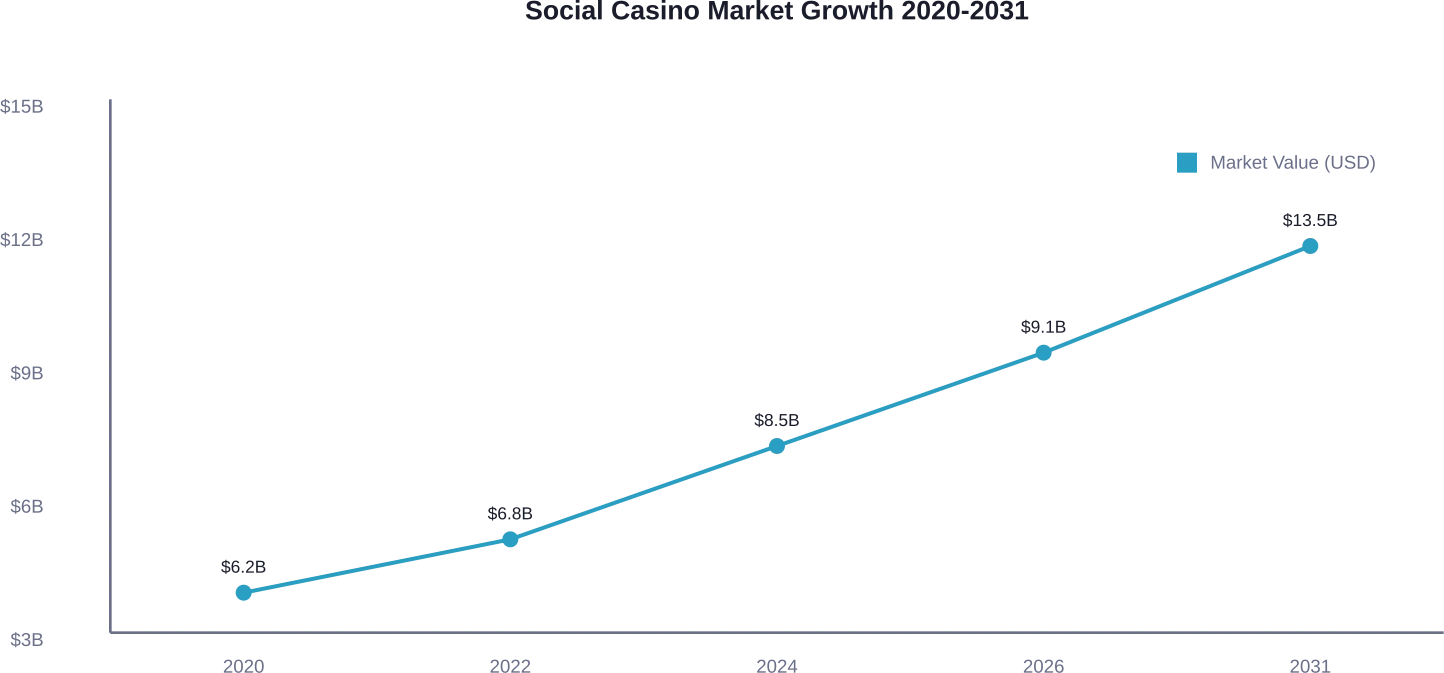
According to Grand View Research, the global social casino market size was estimated at USD 8.51 billion in 2024 and is projected to reach USD 14.31 billion by 2030, growing at a CAGR of 8.9% from 2025 to 2030. Meanwhile, Mordor Intelligence reports the market valued at USD 8.36 billion in 2025 and estimated at USD 9.06 billion in 2026, expected to reach USD 13.49 billion by 2031 at a CAGR of 8.32%.
The slight variations reflect different methodologies, but the trend is clear: strong, consistent growth.
Why Players Choose Social Casinos
Several factors explain the appeal. First, there’s no financial risk. Players can enjoy the thrill of casino games without the anxiety of losing money.
Second, accessibility. These games run on mobile devices, tablets, and desktops. No need to visit a physical casino or even create an account with complex verification processes.
Third, social features. Many platforms integrate leaderboards, multiplayer tournaments, and friend challenges that tap into social gaming dynamics popularized by platforms like Facebook.
Market Size and Growth Projections
The numbers paint a picture of sustained expansion across multiple forecasts.
Source | 2024/2025 Value | 2030/2031 Projection | CAGR |
|---|---|---|---|
Grand View Research | $8.51B (2024) | $14.31B (2030) | 8.9% |
Mordor Intelligence | $8.36B (2025) | $13.49B (2031) | 8.32% |
Research and Markets | $9.24B (2025) | $14.42B (2030) | 9.4% |
OMR Global | Varies | 2030 forecast | 8.2% |
Earlier data shows the market reached approximately $6.2 billion in gross gaming revenue in 2020, with the US market contributing about $1.8 billion in 2022. That represents significant year-over-year growth even during economic uncertainty.
What’s Fueling This Expansion?
Smartphone proliferation is perhaps the biggest driver. According to data from the International Telecommunication Union cited by Research and Markets, increasing global internet penetration has made social casino gaming accessible via smartphones, tablets, and computers without requiring physical casino visits.
The mobile gaming boom has transformed how people consume entertainment. Commuters, students on breaks, and people unwinding at home can launch a slot game in seconds.
Additionally, casual gaming adoption is expanding the addressable audience beyond traditional gambling demographics. Social casino developer Playtika saw its casual gaming segment grow from 48.9% of Q3 2021 revenue to 54.9% in Q3 2022, according to OMR Global data.
Market Segmentation: Game Types
Not all social casino games perform equally. Slots clearly dominate.
Slots Segment Leadership
According to Grand View Research, the slots segment captured the largest market share of over 56% in 2024. Mordor Intelligence similarly reports that slots held 55.62% of the social casino market share in 2025.
Why do slots perform so well? The format translates perfectly to mobile screens. Gameplay is intuitive—tap to spin—and the visual engagement keeps players coming back. Developers can rapidly iterate themes, from ancient Egypt to popular TV shows, keeping content fresh.
The increasing demand for visually engaging and easy-to-play content propels growth in this segment.
Poker and Card Games
Poker represents the second-largest category, though considerably behind slots. Texas Hold’em variants, blackjack, and baccarat attract players who prefer skill-based gameplay over pure chance.
Multiplayer poker rooms add competitive depth and social interaction that slots can’t replicate. Tournaments with large virtual prize pools create engagement spikes.
Bingo and Other Games
Bingo occupies a smaller but growing niche. According to Mordor Intelligence, bingo is forecast to post the fastest growth rate among game types, though specific percentage data wasn’t disclosed in available reports.
The demographic for bingo skews slightly older and more female compared to poker or slots. Community-focused gameplay and simpler mechanics appeal to casual players.
Game Type | Market Share (2024-2025) | Growth Characteristics |
|---|---|---|
Slots | 55-56% | Dominant, visually driven, mobile-optimized |
Poker/Cards | ~25-30% | Skill-based, social, tournament-focused |
Bingo | ~10-15% | Fastest projected growth, community-oriented |
Table Games | ~5-10% | Niche appeal, realism-focused |
Platform Distribution: Mobile vs Desktop
Platform choice fundamentally shapes the user experience and monetization strategy.
Mobile Gaming Dominance
Mobile platforms drive the bulk of engagement and revenue. Smartphones offer portability, push notifications for re-engagement, and seamless in-app purchase flows.
Most major social casino operators report 70-80% of their revenue comes from mobile devices. The shift accelerated during 2020-2021 when pandemic lockdowns pushed digital entertainment consumption higher.
iOS and Android both support the market, though monetization patterns differ. iOS users historically show higher average revenue per user (ARPU), while Android provides broader market reach, especially in emerging markets.
Desktop’s Continuing Role
Desktop platforms haven’t disappeared. Some games—particularly multiplayer poker—benefit from larger screens and keyboard/mouse input. Power users often prefer the desktop for extended sessions.
Facebook remains a significant desktop distribution channel, though its importance has waned as mobile-first strategies have taken over.
Regional Market Analysis
Geography matters significantly in social casino performance.
North America: The Largest Market
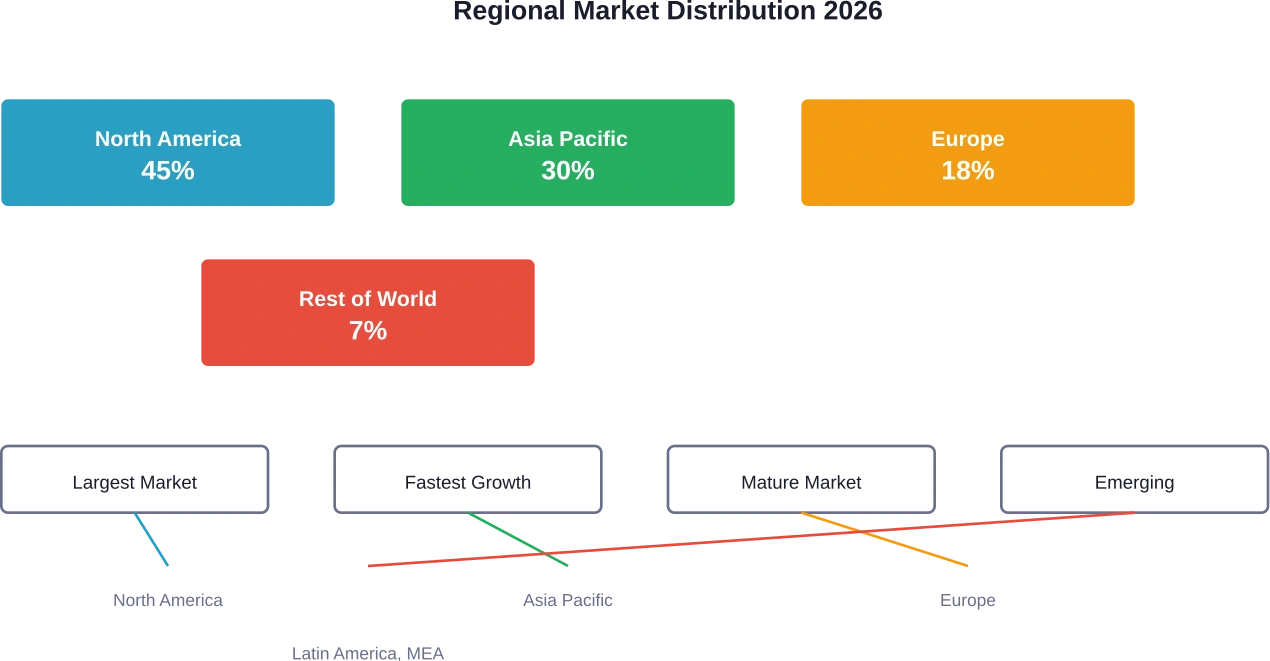
North America holds the largest market share. According to Grand View Research, the North America social casino market is expected to reach a projected revenue of US$ 5,151.3 million by 2030, growing at a compound annual growth rate of 6.9% from 2025 to 2030.
The United States dominates within the region. High smartphone penetration, established gaming culture, and strong consumer spending power all contribute.
Regulatory clarity also helps. Since social casinos don’t involve real-money gambling, they face fewer legal hurdles than actual online casinos, which remain restricted in most US states.
Asia Pacific: Fastest Growth Rate
While North America leads in absolute size, Asia Pacific shows the fastest growth rate. Both Grand View Research and Mordor Intelligence identify Asia Pacific as the fastest-growing market.
China, Japan, South Korea, and Southeast Asian nations are key growth engines. Rising middle-class populations, increasing smartphone adoption, and cultural affinity for gaming create favorable conditions.
That said, regulatory environments vary dramatically. Some countries impose strict limits on gaming mechanics that resemble gambling, even without real-money stakes.
Europe: Mature but Constrained
Europe represents a mature market with moderate growth. Stricter regulations around loot boxes and gambling-adjacent mechanics create headwinds.
According to Mordor Intelligence, stricter loot-box oversight in Europe and Australia is pressing margins and accelerating consolidation among operators.
Countries like Belgium and the Netherlands have banned loot boxes entirely in some contexts, forcing developers to modify monetization models.
Other Regions
Latin America, the Middle East, and Africa represent smaller markets today but show potential. Infrastructure challenges and lower consumer spending limit near-term growth, but long-term demographics are favorable.
Competitive Landscape: Key Players
The social casino market shows medium concentration with several dominant players and numerous smaller operators.
Major Market Participants
According to Mordor Intelligence, the major companies operating in the social casino market include:
- Playtika Holding Corp.
- Aristocrat Leisure Ltd. (including SciPlay and Big Fish)
- Zynga Inc.
- Caesars Entertainment Inc.
- Light & Wonder (formerly Scientific Games’ gaming division)
Playtika stands out as the market leader. The company operates multiple successful titles including Slotomania, House of Fun, and Caesars Slots. Playtika went public in 2021 and has since made strategic acquisitions to expand its portfolio.
Aristocrat Leisure, an Australian company primarily known for land-based slot machines, entered social casino gaming through acquisitions. Its SciPlay subsidiary operates titles like Jackpot Party and Gold Fish Casino, while Big Fish Games adds casual gaming depth.
Zynga, now owned by Take-Two Interactive, brought social gaming expertise from titles like FarmVille into the casino space with Zynga Poker and other offerings.
Consolidation Trends
The market is experiencing consolidation pressure. Mordor Intelligence notes that higher user-acquisition costs after Apple’s IDFA changes and stricter loot-box oversight in Europe and Australia are pressing margins and accelerating consolidation.
Apple’s App Tracking Transparency (ATT) framework, introduced in iOS 14.5, fundamentally changed mobile advertising. User acquisition costs increased by 30-50% for many operators as targeting became less precise.
Smaller operators struggle to compete on marketing spend, pushing them toward acquisition or shutdown.
Monetization Models and User Acquisition
Social casinos don’t generate revenue from gambling winnings—players never cash out. So how do they make money?
In-App Purchases
The primary revenue driver is in-app purchases of virtual currency. Players buy coins or chips to continue playing after exhausting their free balance.
Typical pricing structures offer packages from $0.99 for small amounts to $99.99 or more for large bundles. Larger packages offer better value per coin to encourage higher spending.
Advertising Revenue
Some platforms incorporate advertising, particularly for free-to-play segments. Players might watch a video ad to receive bonus coins.
Ad revenue typically represents 10-20% of total revenue for hybrid models, though some platforms rely more heavily on ads to keep purchase requirements lower.
Subscription Models
A growing trend is subscription offerings. Players pay a monthly fee (typically $9.99-$19.99) for daily coin bonuses, VIP status, and other perks.
Subscriptions create predictable recurring revenue and higher customer lifetime value.
User Acquisition Challenges
Customer acquisition cost (CAC) has risen substantially. Before IDFA changes, typical CAC for quality users was $5-15. Post-IDFA, many operators report CAC of $30-50 or higher.
This pressures return on ad spend (ROAS) metrics and makes retention even more critical. Only players who convert to paying customers and stick around justify these acquisition costs.
Regulatory and Social Considerations
Social casinos operate in a gray zone between gaming and gambling.
No Real-Money Gambling—But Is That Enough?
Because players can’t win real money, social casinos typically avoid gambling regulations. They’re classified as games rather than gambling services.
But questions persist. Research published in BMC Public Health examined factors associated with social casino gaming among adolescents. The study, which used data from the Youth Gambling Survey, found that 12.4% of respondents reported playing social casino games.
Critics argue that social casino games normalize gambling behaviors and may serve as a gateway to real-money gambling, particularly among younger users.
Loot Box Regulations
European regulators increasingly scrutinize loot box mechanics—randomized rewards that players purchase without knowing what they’ll receive.
Belgium and the Netherlands have classified some loot box systems as gambling, requiring licenses or forcing removal from games. Other jurisdictions are considering similar measures.
While social casino games don’t always use loot boxes, many incorporate similar mechanics in bonus features and progression systems.
Addiction and Harm Concerns
Research published in the Journal of Addiction examined associations between problematic gambling, gaming, and internet use in a cross-sectional population survey. The study suggests links between different behavioral patterns.
Another study in the Journal of Public Health Research found that among online gamblers, both the level of distress and problem gambling increased as the severity of gaming increased. The co-occurrence of problems with alcohol, illicit drugs, and gambling was roughly 50% among addictive gamers.
These findings raise questions about whether social casinos contribute to problematic behaviors, even without monetary risk.
Technology Trends Shaping the Market
Several technological developments are influencing social casino evolution.
Live Dealer and Social Features
Incorporating live dealer experiences—where real dealers operate games via video stream—adds authenticity. While more common in real-money online casinos, some social platforms are experimenting with this format.
Social features continue to expand. Clubs, guilds, and team-based competitions create community bonds that improve retention.
Blockchain and NFTs
Some operators are exploring blockchain integration and NFT rewards. The value proposition remains unclear, but the technology allows verifiable ownership of digital assets.
Regulatory uncertainty and player skepticism have limited adoption so far.
Artificial Intelligence
AI enables personalized experiences—adjusting difficulty, recommending games, and optimizing reward timing based on individual player behavior.
Machine learning models predict churn risk, allowing targeted retention campaigns before players disengage.
Cross-Platform Play
Seamless progress across mobile, desktop, and even smart TV platforms improves user experience. Cloud save systems ensure players never lose progress when switching devices.
Future Outlook and Opportunities
Where is the market headed over the next five years?
Continued Growth with Headwinds
The consensus forecasts show sustained growth at 8-9% CAGR through 2030-2031. That’s healthy but not explosive.
User acquisition costs will remain a challenge. Operators need to improve retention and lifetime value to maintain profitability.
Regulatory pressure may increase, particularly around youth access and behavioral addiction concerns.
Geographic Expansion
Asia Pacific’s growth trajectory offers the biggest opportunity. Expanding globally while remaining culturally agile is a key growth driver, according to Grand View Research.
Localization matters—not just language translation, but culturally relevant themes, payment methods, and social features that resonate with local preferences.
Casual Gaming Convergence
The line between social casino games and broader casual gaming continues to blur. Playtika’s shift toward casual games (from 48.9% to 54.9% of revenue) illustrates this trend.
Casual games offer broader appeal and face less regulatory scrutiny than casino-themed content.
Real-Money Gaming Bridges
Some platforms are experimenting with hybrid models that offer both social casino play and pathways to real-money gambling in regulated jurisdictions.
This approach lets operators monetize both audiences but requires careful regulatory compliance and age verification.
Build Smarter Social Casino Products with the Right Partners

Growth in the social casino segment is less about launching quickly and more about building the right setup from the start. Behind most successful products is a mix of studios, platform providers, and technical partners working together. Managing that ecosystem is where many teams slow down, especially when trying to scale or enter new markets. Sologe focuses on that layer, helping casino developers and operators connect with the companies that handle development, infrastructure, and ongoing support.
Instead of piecing things together through scattered contacts, teams use Sologe to get a clearer view of available partners across the iGaming stack. It simplifies how vendors are discovered and compared, which matters when timelines are tight and mistakes are expensive.
If you are building or expanding a social casino product and want a more structured way to move forward, contact Sologe and start the conversation.
Comparison: Social Casino vs Real-Money Online Casino
Understanding the distinction helps clarify market positioning.
Aspect | Social Casino | Real-Money Online Casino |
|---|---|---|
Monetary Risk | None—virtual currency only | Real money wagered and won/lost |
Regulation | Minimal—treated as games | Heavily regulated, licensing required |
Market Size (2024) | ~$9 billion | ~$19 billion (per Grand View Research) |
Age Restrictions | Varies, often 13+ or 17+ | 18+ or 21+ depending on jurisdiction |
Monetization | In-app purchases, ads, subscriptions | House edge on wagers |
Geographic Availability | Global (few restrictions) | Limited by jurisdiction |
Growth Rate | 8-9% CAGR | 12.2% CAGR (per Grand View Research) |
The real-money online casino market is larger and growing faster, but faces significant regulatory barriers. Social casinos trade lower revenue potential for broader accessibility and fewer legal constraints.
Challenges Facing the Industry
Despite strong growth projections, the market faces several obstacles.
User Acquisition Economics
Rising CAC combined with potential regulation of monetization mechanics creates a profit squeeze. Only operators with strong brands, extensive portfolios, and sophisticated retention strategies can thrive.
Market Saturation
The number of social casino titles available has exploded. Standing out in crowded app stores requires significant marketing spend or unique IP/licensing arrangements.
Platform Policy Changes
Apple and Google control mobile distribution. Changes to their policies—on privacy, monetization, or content—can fundamentally alter the business model overnight.
Behavioral Concerns
Growing research into gaming addiction and gambling-related harm may prompt regulatory intervention even for social casinos.
The study published in BMC Public Health showing 12.4% of adolescents engage with social casino games raises questions about appropriate age restrictions and parental controls.
Investment and M&A Activity
The market’s growth has attracted considerable investment and consolidation activity.
Major gaming companies continue to acquire social casino operators to expand their portfolios. Take-Two’s acquisition of Zynga (specific acquisition price not verified in source material) represented a major deal in the space.
Private equity firms also see opportunity. The recurring revenue model and strong retention metrics of successful titles make them attractive acquisition targets.
SEC filings from companies like AP Gaming Holdco, Rush Street Interactive, and Double Down Interactive reflect the financial complexity and scale of operations in this market.
Frequently Asked Questions
What is a social casino game?
Social casino games simulate real casino games but use virtual currency that cannot be exchanged for real money.
How do social casino games make money if players don’t gamble real money?
They generate revenue through in-app purchases, ads, and subscriptions, with only a small percentage of users paying.
Are social casino games legal?
Yes, in most regions, because they do not involve real-money gambling, though some features may be regulated.
How big is the social casino market?
The market is valued at around $9 billion and is expected to exceed $13 billion by 2030.
What’s the difference between social casino and online gambling?
Social casinos use virtual currency only, while online gambling involves real-money betting and payouts.
Do social casino games lead to real gambling problems?
There are correlations between social casino play and gambling behavior, but causation remains unclear.
Who are the major companies in the social casino market?
Leading companies include Playtika, Aristocrat, Zynga, Caesars, and Light and Wonder.
Conclusion
The social casino games market has established itself as a substantial segment of the digital entertainment industry. With valuations approaching $9-10 billion and consistent growth projections pointing toward $13-14 billion by 2030-2031, the sector demonstrates resilience and opportunity.
Slots dominate gameplay preferences, mobile platforms drive engagement, and North America leads regionally while Asia Pacific accelerates fastest. Major operators like Playtika, Aristocrat, and Zynga continue consolidating market share as acquisition costs rise and margins tighten.
But challenges loom. User acquisition economics have worsened post-IDFA. Regulatory scrutiny is increasing, particularly around youth access and behavioral concerns. The line between gaming and gambling continues to blur, inviting policy questions.
For investors, developers, and platform operators, understanding these dynamics is essential. The market offers growth, but success requires sophisticated retention strategies, cultural localization, and adaptive monetization models.
The social casino space sits at the intersection of entertainment, technology, and behavioral psychology. As it evolves, balancing business growth with responsible gaming practices will determine long-term sustainability.
Ready to explore opportunities in the social casino market? Stay informed on regulatory developments, monitor user acquisition trends, and watch how major operators adapt their strategies in this dynamic landscape.
Related Articles

September 29, 2026Is the Casino Legal in Japan? The Real Answer...

September 29, 2026Is the Casino Legal in Gambia? What the Law...