 Nothing found for the request

Social Casino Market Size 2026: $9B Industry Growth
Sologe March 30, 2026
Share:


Current Market Valuation and Growth Trajectory
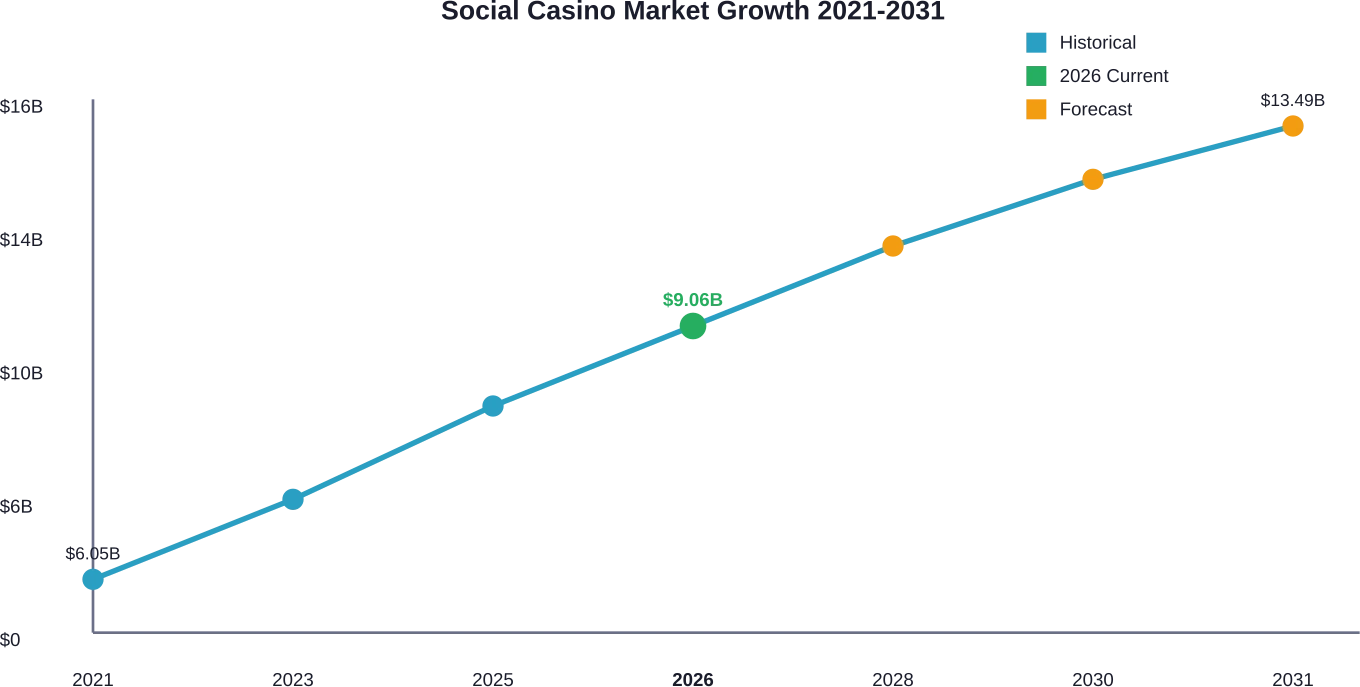
Multiple research firms have published 2026 market valuations, and while estimates vary slightly based on methodology, they all point to substantial growth.
According to Research and Markets (published via GlobeNewswire), the online social casino market was estimated at $10.11 billion in 2026, with forecasts reaching $14.23 billion by 2030—an 8.9% CAGR. Meanwhile, according to one market research analysis, global social casino market size was recorded at $6,050.31 million in 2021 and projected to reach $8,354 million by the end of 2025, projecting $15,926.8 million by 2033 at an 8.4% CAGR.
The variation in these numbers comes down to different segmentation approaches. Some reports focus exclusively on online platforms, while others include all social casino formats. Some separate mobile from desktop, while others lump them together.
What’s consistent? The growth trend. Every major analysis shows sustained expansion through the end of the decade.
Market Segmentation by Game Type
Slots absolutely dominate the social casino landscape. According to Mordor Intelligence data, slots held 55.62% of the social casino market share in 2025. That’s more than half the entire industry.
Why? Slots require minimal skill, offer instant gratification, and translate perfectly to mobile interfaces. You don’t need to learn complex rules or strategies—just tap and watch the reels spin.
But bingo is the dark horse. While it holds a smaller current share, it is forecast to post the fastest growth rate at 9.79% CAGR. Community discussions suggest this comes from bingo’s strong social features—chat rooms, team challenges, and community events that keep players engaged longer than solitary slot sessions.
Game Type | Market Share (2025) | Growth Characteristics |
|---|---|---|
Slots | 55.62% | Largest segment, steady growth |
Poker | ~15% | Skill-based, competitive community |
Bingo | ~10% | Fastest growth rate (9.79% CAGR) |
Blackjack | ~8% | Strategy appeal, moderate growth |
Roulette | ~6% | Classic appeal, stable segment |
Other | ~5% | Baccarat, scratchcards, specialty games |
Poker occupies an interesting middle ground. It attracts players who want strategy and competition, creating dedicated communities around tournaments and ranked play. While its market share is smaller than slots, poker players tend to have higher engagement metrics and longer session times.
Platform Distribution and Mobile Dominance
Mobile apps generate the strongest revenue in the social casino segment. This isn’t surprising—smartphones are everywhere, and casual gaming sessions fit perfectly into commutes, waiting rooms, and lazy evenings on the couch.
Desktop platforms still matter, particularly for poker and other strategy games where players prefer larger screens and more complex interfaces. But the growth is definitely mobile-first.
Cross-platform functionality has become table stakes. Players expect to start a session on their phone during lunch, then continue on their tablet or computer at home without losing progress. Cloud saves and synchronized virtual currencies are standard features now.
Geographic Market Leaders and Regional Trends
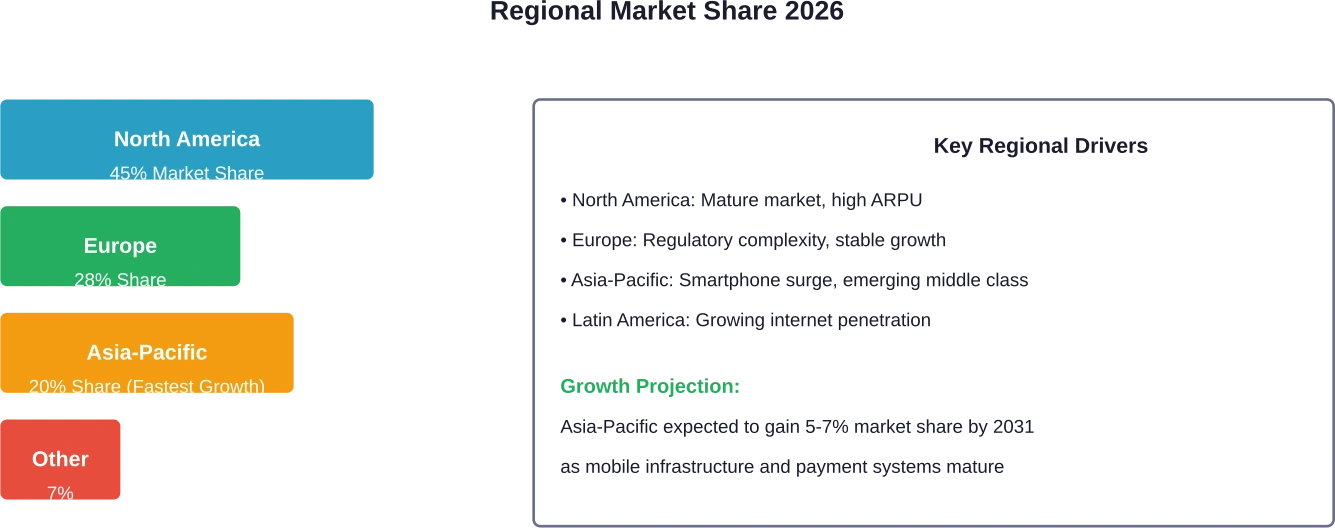
North America is identified as the largest market by current revenue share, driven primarily by the United States. The region has a mature gaming culture, high smartphone penetration, and established social media ecosystems that social casinos leverage for user acquisition.
But Asia-Pacific is expanding as smartphone adoption accelerates and mobile payment infrastructure matures across emerging markets. According to Mordor Intelligence, this expansion creates significant opportunities for continued regional growth.
Europe represents a significant middle ground—substantial current revenue with steady growth. Regulatory environments vary dramatically across European countries, creating a patchwork landscape where operators must navigate different rules for different markets.
Major Market Players and Competitive Landscape
Market analysis indicates that Zynga holds a leading market position in the social casino sector. The company’s portfolio includes hits like Zynga Poker and Slots, leveraging its social gaming expertise to dominate user acquisition.
Playtika Holding Corp. represents another major player, operating multiple social casino brands with strong monetization strategies. Aristocrat Leisure Ltd., through its SciPlay and Big Fish subsidiaries, captures significant market share with diversified game offerings.
Light and Wonder Inc. (formerly Scientific Games) and Caesars Entertainment Inc. bring land-based casino credibility to the social space, creating branded experiences that resonate with traditional casino players.
The market concentration is moderate—no single player holds overwhelming dominance, but the top five companies control a substantial combined share. This creates opportunities for smaller developers to capture niche audiences or specific game types.
Revenue Models and Monetization Strategies
Social casinos operate on free-to-play models with in-app purchases driving revenue. Players download games for free, receive starter virtual currency, then purchase additional coins when they run out.
The psychology is clever: games provide enough free currency to keep casual players engaged indefinitely, but enthusiastic players who want extended sessions or faster progression pay for coin packages.
Ad-based revenue provides a secondary stream. Players can watch video ads to earn bonus coins, creating a win-win where advertisers reach engaged audiences and players get free currency without spending money.
Subscription models are emerging as a third monetization layer. Some platforms offer VIP programs with daily coin bonuses, exclusive games, and faster progression for monthly fees.
Technology Trends Reshaping the Industry
AI-driven personalization has become a key differentiator. Platforms analyze playing patterns to recommend games, customize bonus offers, and optimize difficulty curves that keep players in the “flow state” between boredom and frustration.
Virtual economies within social casinos have grown more sophisticated. Players don’t just buy coins—they collect special items, unlock achievements, and participate in seasonal events with unique rewards. These mechanics mirror traditional video games more than classic gambling.
Cloud infrastructure enables seamless cross-platform experiences. Players expect their progress, purchases, and virtual currencies to sync instantly across devices. This requires robust backend systems that can handle millions of concurrent users.
Live dealer integrations represent an interesting frontier. While social casinos don’t involve real money, some platforms experiment with live-streamed dealers and communal game sessions that blend social casino mechanics with the atmosphere of land-based casinos.
Regulatory Landscape and Market Challenges
Social casinos exist in a regulatory gray zone. Because players can’t win real money, they typically avoid gambling regulations. But that distinction gets murky.
Some jurisdictions scrutinize virtual currency systems, particularly around loot boxes and gacha mechanics that resemble gambling. European markets especially have tightened oversight, creating compliance costs that press margins.
User acquisition costs have surged. Apple’s IDFA changes reduced targeting precision for mobile advertising, forcing social casino operators to spend more to acquire each new player. This impacts profitability and accelerates industry consolidation.
The line between social casinos and real-money gambling continues blurring. Some platforms offer hybrid models or partnerships that let players convert virtual achievements into real-world benefits, creating regulatory questions that lawmakers are still figuring out.
User Demographics and Engagement Patterns
The social casino audience includes a significant older demographic compared to some traditional mobile gaming titles. This reflects the appeal of familiar casino-style games and more accessible gameplay mechanics.
Slots and bingo categories attract a diverse player base that differs from traditional casino demographics.
Session frequency matters more than session length for many social casino games. Players check in multiple times daily for bonus collections, daily challenges, and time-limited events, creating habit loops that drive retention.
Average revenue per user (ARPU) varies dramatically by region and game type. Poker players in North America generate higher ARPU than casual slot players in emerging markets, creating segmentation challenges for operators targeting global audiences.
Future Outlook Through 2031
Every major forecast shows continued growth, but at varying rates. The conservative estimates project 5-6% CAGR, while optimistic scenarios reach 9-10% depending on regulatory developments and technology adoption.
Mobile will continue dominating platform distribution. As 5G networks expand and smartphone capabilities increase, expect more graphically intensive games with richer social features.
Consolidation appears inevitable. Rising user acquisition costs and regulatory compliance burdens favor larger operators with diversified portfolios and established user bases. Smaller developers will either find profitable niches or get acquired.
The relationship between social casinos and real-money gambling will likely evolve. Some markets may create regulatory frameworks that allow controlled integration, while others may impose stricter separations. This regulatory patchwork will shape geographic market growth.
Find the Right Partners Behind Social Casino Growth

As the social casino market moves toward a multi-billion scale, growth is less about launching quickly and more about how well everything is connected behind the scenes. Platforms, game providers, analytics tools, and monetization systems all need to work together without slowing each other down. In iGaming, this is exactly where aggregation and partner ecosystems come in, helping operators avoid managing dozens of separate integrations and relationships. Sologe operates in that space as a B2B marketplace, giving operators and developers a way to discover and connect with the providers they actually need across the full setup.
If you’re building or scaling a social casino product, this is usually the point where fragmentation starts to hold things back. A more structured approach saves time and avoids constant rework later. Reach out, explore the available partners, and connect with the Sologe team to align the right setup for your project.
Frequently Asked Questions
What is the social casino market size in 2026?
The market is valued at around $9 billion globally, with steady growth expected.
How fast is the social casino market growing?
It is growing at roughly 8% annually, depending on the analysis.
Which game type dominates the market?
Slots lead with over 55% share, while bingo is the fastest-growing segment.
What region leads the social casino market?
North America dominates, while Asia-Pacific is growing the fastest.
Who are the major players?
Leading companies include Zynga, Playtika, Aristocrat, and Caesars.
How do social casinos make money?
They earn through in-app purchases, ads, and premium subscriptions.
What challenges does the market face?
Key challenges include regulation, competition, and rising marketing costs.
The Bottom Line on Social Casino Market Growth
The social casino market has established itself as a legitimate, multi-billion dollar industry with sustained growth momentum. The $9.06 billion valuation in 2026 represents substantial expansion from just a few years ago, and projections through 2031 show no signs of slowdown.
Mobile platforms drive this growth, with slots leading current revenue while bingo emerges as the fastest-growing segment. North America is identified as the largest market by current revenue share, but Asia-Pacific’s rapid expansion will reshape geographic distributions over the next five years.
Technology innovations—particularly AI-driven personalization and sophisticated virtual economies—create differentiation in an increasingly competitive landscape. But rising user acquisition costs and regulatory uncertainty present real challenges that will likely accelerate consolidation.
The social casino market represents a fascinating intersection of gaming, technology, and social interaction. It’s not traditional gambling, but it’s not exactly typical mobile gaming either. That unique positioning creates both opportunities and complications as the industry matures.
Want to stay updated on social casino market trends? Bookmark this analysis and check back for updates as new data emerges throughout 2026 and beyond.
Related Articles

September 29, 2026Is the Casino Legal in Japan? The Real Answer...

September 29, 2026Is the Casino Legal in Gambia? What the Law...