 Nothing found for the request

Spain Casino Market 2026: Growth Data & Trends
Sologe March 27, 2026
Share:


The Regulatory Foundation: DGOJ's Role
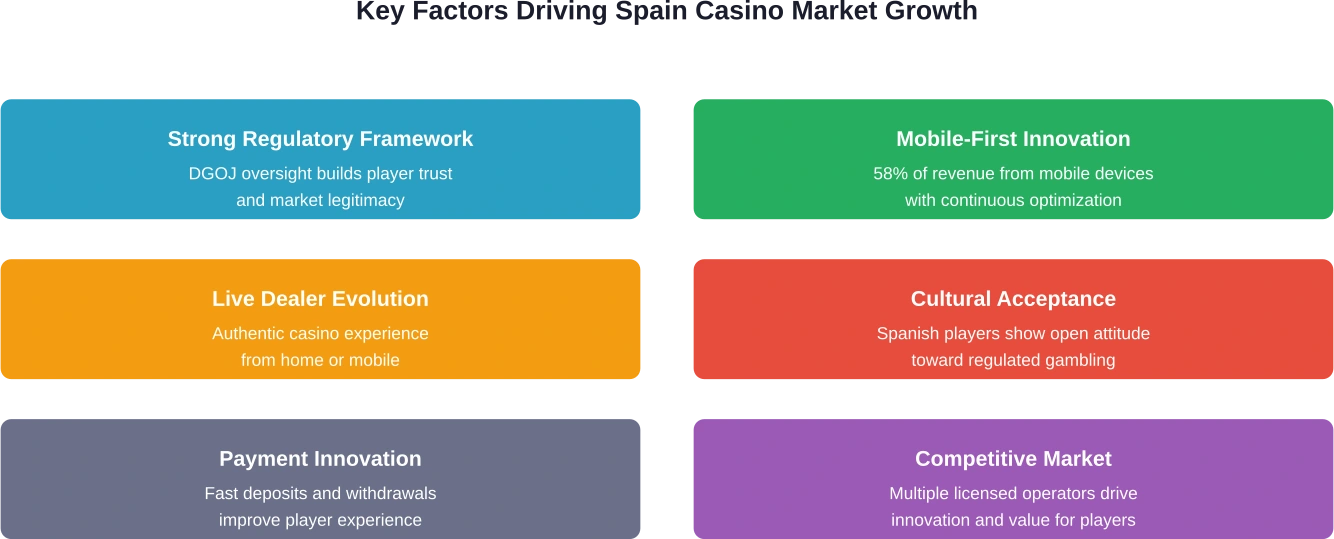
Spain’s gambling market operates under the oversight of the Dirección General de Ordenación del Juego (DGOJ), the national regulatory body that’s earned respect both within Spain and across Europe.
When Spain regulated online gambling in 2011, it created a licensing framework that prioritized fairness, transparency, and player protection. The DGOJ doesn’t just issue licenses—it actively monitors operators, enforces consumer protection standards, and maintains a public registry of approved casinos.
This matters because unlicensed gambling remains a massive problem across Europe. Spain has managed to create one of the continent’s most competitive regulated markets, which keeps players within the legal framework rather than pushing them toward gray-market operators.
Every DGOJ-licensed casino must display a clickable regulator logo in the footer, which opens the official DGOJ website where players can verify the license number. This simple transparency measure has helped build trust in Spain’s regulated market.
Market Performance: Breaking Down the Numbers
The Spanish gambling market’s growth trajectory reflects both digital adoption and changing consumer preferences across Europe.
According to EGBA, Europe’s gambling market reached €123.4 billion in gross gaming revenue in 2024, a 5% increase from 2023. While land-based gambling grew to €75.5 billion, online gambling revenue increased to €47.9 billion in 2024, accounting for 39% of Europe’s total gambling revenue.
Spain’s performance within this context is particularly impressive. The regulated Spanish market saw consistent growth throughout 2024, with momentum continuing into 2025.
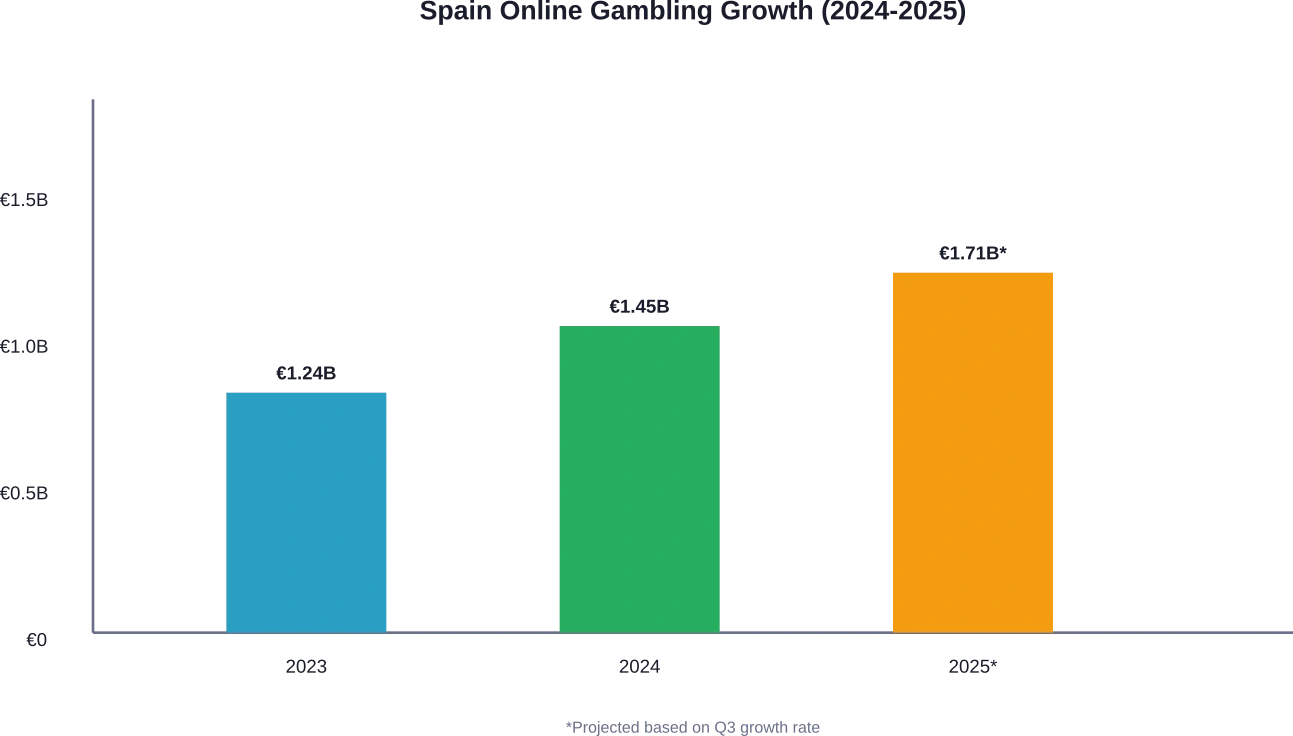
The third quarter of 2025 showed particularly strong performance. Online casino revenue jumped 22.93% compared to the same period in 2024, becoming the primary driver of Spain’s gambling market growth.
Real talk: these aren’t just vanity metrics. The ratio between deposits, withdrawals, and GGR indicates a healthy market where players can actually win, which builds trust and sustains long-term engagement.
Show Your Offering to Gaming Buyers in Spain

For companies targeting the Spain casino market, a dedicated industry platform can be more useful than scattered outreach. Sologe is an iGaming marketplace designed for vendor discovery, product presentation, and business connections. It gives suppliers and service providers a place to present their company and offering to gaming businesses actively looking for partners.
Want to Present Your Company to the Right Audience?
Use Sologe to:
- show your offering to gaming operators and buyers
- present products, services, and company details in one place
- stay visible inside a marketplace focused on the gaming industry
👉 Get in touch with Sologe to discuss how your company can be listed on the platform.
Online Casino Dominance
While sports betting initially led Spain’s regulated gambling expansion, online casino has become the market’s growth engine.
According to Delasport’s 2022 Spanish iGaming market report, online casino revenue showed significant growth in Q2 2022, even as fixed-odds sports betting experienced a margin-led decline of 38.7%. This trend has only accelerated through 2024 and into 2025.
Several factors explain casino’s surge. Mobile devices dominated the online gambling landscape across Europe, generating 58% of online revenue in 2024 according to EGBA data. Casino games—particularly slots and live dealer games—translate exceptionally well to mobile interfaces.
The growth of live dealer games deserves special attention. These games combine the convenience of online play with the authenticity of real dealers streaming from studios. For Spanish players who value the social experience of land-based casinos, live dealer games bridge that gap effectively.
Product Category | Growth Rate (2024) | Revenue Contribution |
|---|---|---|
Online Casino | 22.93% | Highest |
Sports Betting | 8-12% (estimated) | Moderate |
Poker | Stable | Small |
Bingo | Declining | Small |
Mobile Gaming Revolution
Mobile isn’t just a channel in Spain’s casino market—it’s the primary platform driving growth.
Across Europe, mobile devices dominated the online gambling landscape, generating 58% of online revenue in 2024, up from 56% in 2023. Spain follows this pattern, with mobile penetration likely even higher given the country’s strong smartphone adoption rates.
Casino operators have invested heavily in mobile-optimized games, progressive web apps, and native applications. The result? Players can access hundreds of slots, live dealer tables, and instant-win games from anywhere with cellular connectivity.
This shift has changed player behavior fundamentally. Desktop gambling tends toward longer sessions with deeper game exploration. Mobile gambling features shorter sessions, more frequent play, and higher preference for quick-play games like slots and instant-win titles.
Regulatory Challenges and Advertising Restrictions
Spain’s market hasn’t grown without friction. In 2020, the Spanish government implemented strict advertising restrictions affecting how gambling operators could market their products.
The regulations banned gambling advertising during certain hours, prohibited celebrity endorsements, and restricted bonuses and promotions. Many industry observers predicted these measures would stall market growth.
But here’s what actually happened: the market adapted and continued growing. According to Delasport’s analysis, despite advertising restrictions and the global pandemic, Spain remained one of Europe’s largest iGaming markets with continued growth year over year.
Marketing expenditure still surged alongside revenue growth through 2025, suggesting operators found compliant ways to reach players effectively. The restrictions may have actually helped legitimize the regulated market by reducing complaints about gambling advertising saturation.
Player Demographics and Behavior
Understanding who plays and how they engage reveals why Spain’s market continues expanding.
According to data from Altenar’s analysis of Spain’s regulated betting market, player acquisition and retention remained strong throughout 2024. The regulated market retained existing players while continuing to attract new ones, suggesting both product quality and trust in the DGOJ framework.
Spanish players demonstrate a relatively open mindset toward betting compared to some European counterparts. Cultural acceptance of gambling—particularly sports betting and casino games—creates a larger addressable market than in countries where gambling faces stronger social stigma.
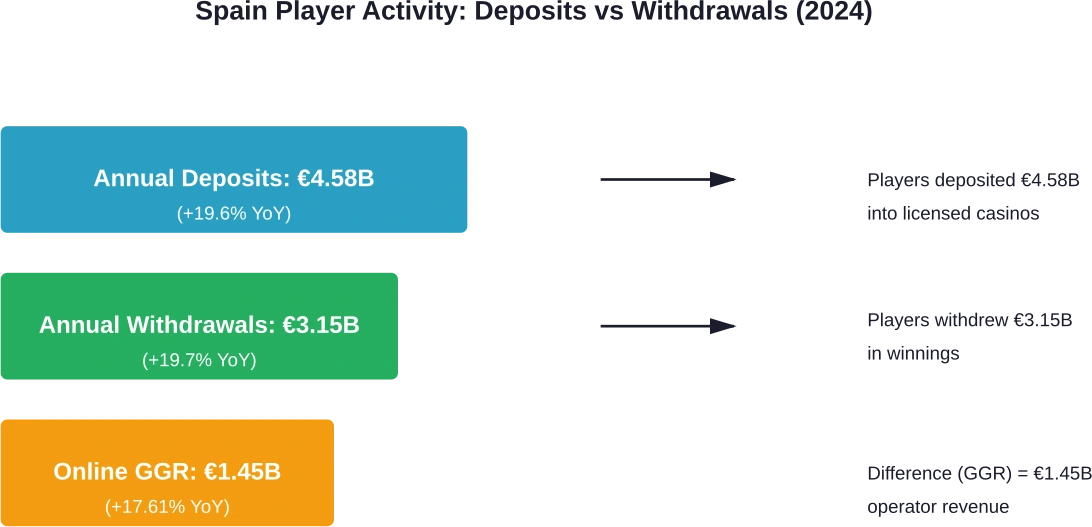
The deposit-to-withdrawal ratio also indicates responsible gambling patterns. When withdrawals track closely with deposits (as they do in Spain), it suggests players are cashing out winnings rather than continuously redepositing losses.
Competitive Landscape and Market Structure
Spain’s casino market features a mix of international operators and local brands, all competing under DGOJ oversight.
Major international operators like bet365, 888, and Betsson maintain strong presence in Spain’s regulated market. These companies brought technical expertise, game portfolios, and brand recognition to Spanish players.
But local operators haven’t been pushed aside. Spanish brands that understand local preferences, cultural nuances, and player behavior compete effectively. Some Spanish players prefer domestic operators, viewing them as more attuned to local needs.
The DGOJ maintains a public list of all licensed casinos. This transparency helps players make informed choices and avoid unlicensed sites.
European Context: How Spain Compares
Spain’s performance looks even more impressive when placed in European context.
According to EGBA data, Europe’s gambling market grew 5% in 2024 to reach €123.4 billion total revenue. While land-based gambling grew to €75.5 billion, online gambling revenue increased to €47.9 billion in 2024, accounting for 39% of Europe’s total gambling revenue.
Spain contributes significantly to these totals while demonstrating faster growth than many European markets. The country’s balanced regulatory approach—strict enough to protect players but flexible enough to allow innovation—has become a model other jurisdictions study.
Looking ahead, with online gambling projected to account for 45% of Europe’s market by 2029, though land-based gambling will remain significant at 55% of total revenue. Spain’s trajectory suggests it might reach this online penetration even sooner.
Market Metric | Europe (2024) | Spain (2024) |
|---|---|---|
Total Gambling Revenue | €123.4 billion | €1.45B+ (online only) |
Online Share | 39% | Growing rapidly |
Mobile Share of Online | 58% | ~60% (estimated) |
Year-over-Year Growth | 5% | 17.61% (online) |
Technology and Innovation Drivers
Spain’s casino market benefits from continuous technological advancement.
Payment processing has evolved significantly. Spanish players now access instant deposits through multiple methods, while withdrawal times have decreased as operators optimize banking relationships and verification processes.
Game variety has exploded. Where early online casinos offered dozens of games, today’s DGOJ-licensed operators provide hundreds or thousands of slots, table games, live dealer options, and instant-win titles. Game studios continuously release new content, keeping the experience fresh for returning players.
Live dealer technology deserves particular mention. These games stream real dealers from professional studios, allowing players to watch cards being dealt or roulette wheels spinning in real-time. The social interaction—players can chat with dealers and each other—recreates much of the land-based casino atmosphere.
Responsible gambling tools have also improved. Modern platforms include deposit limits, session timers, self-exclusion options, and reality checks that interrupt play to display time and money spent. DGOJ regulations require these features, and operators continue enhancing them.
Challenges Facing the Market
Despite strong growth, Spain’s casino market faces ongoing challenges.
Competition for players remains intense. With dozens of licensed operators, acquiring and retaining customers requires significant marketing spend. The 2020 advertising restrictions increased the cost and complexity of player acquisition.
Taxation represents another consideration. Spain’s gambling tax structure affects operator margins, which can limit how aggressively companies compete on bonuses and promotions. Finding the balance between generating tax revenue and maintaining operator profitability remains an ongoing conversation.
The illegal market persists. While Spain has built one of Europe’s most successful regulated frameworks, unlicensed operators still target Spanish players. These sites don’t pay Spanish taxes, don’t provide DGOJ-mandated player protections, and operate without oversight.
Social responsibility concerns continue. Problem gambling affects a minority of players but creates real harm. Balancing market growth with effective problem gambling prevention requires constant attention from regulators, operators, and public health officials.
Future Outlook and Projections
Spain’s casino market shows no signs of slowing through 2026 and beyond.
The third quarter 2025 data—with online casino growing 22.93% year-on-year—suggests momentum remains strong. If this trajectory continues, Spain’s online gambling market could exceed €1.7 billion in annual GGR by the end of 2025.
Several trends will likely shape the market’s evolution. Mobile will continue dominating, potentially reaching 65-70% of online revenue. Live dealer games will expand their share as studios add new game variants and production quality improves.
Cryptocurrency adoption represents a potential wildcard. While Spain hasn’t broadly embraced crypto gambling, changing regulations or player preferences could shift this. Any movement toward crypto would need DGOJ guidance to ensure it fits within the regulated framework.
Artificial intelligence will increasingly influence personalization, fraud detection, and responsible gambling interventions. Operators are already using AI to identify problem gambling patterns and trigger intervention protocols.
What Operators Need to Know
For gambling operators considering the Spanish market, several factors merit attention.
According to sources, obtaining a DGOJ license involves a provisional licence phase followed by full review. The application process requires demonstrating technical capability, financial stability, and commitment to player protection. Operators must maintain servers within Spanish jurisdiction and comply with detailed reporting requirements.
Localization matters tremendously. Spanish players expect customer support in Spanish, payment methods popular in Spain, and content that reflects local preferences. International operators that treat Spain as just another market typically underperform compared to those that invest in proper localization.
Responsible gambling isn’t optional—it’s a competitive differentiator. Operators that implement robust player protection measures not only comply with DGOJ requirements but also build trust that translates to better retention and lifetime value.
Marketing within the advertising restrictions requires creativity. Operators can’t rely on television spots during football matches or celebrity endorsements. Success requires content marketing, affiliate partnerships, search engine optimization, and building brands that players actively seek out.
Frequently Asked Questions
What is the DGOJ and why does it matter?
The Dirección General de Ordenación del Juego (DGOJ) is Spain’s national gambling regulator. It licenses and monitors all legal online casinos operating in Spain. Playing at DGOJ-licensed casinos ensures legal protection, fair games, secure transactions, and access to complaint resolution mechanisms.
How large is Spain’s online casino market?
Spain’s online gambling market generated €1.454 billion in gross gaming revenue during 2024, representing 17.61% growth year-over-year. Online casino is the fastest-growing segment, with strong continued expansion expected.
Can international operators serve Spanish players?
International operators must obtain DGOJ licensing to legally serve Spanish players. Without it, platforms operate illegally and provide no legal protections for users.
What games are most popular in Spain’s online casinos?
Slot games dominate revenue, followed by live dealer games such as roulette and blackjack. Mobile gaming accounts for a majority of activity.
How does Spain’s market compare to other European countries?
Spain’s gambling market is growing significantly faster than the European average, supported by effective regulation and strong online adoption.
What advertising restrictions affect Spanish casino operators?
Strict advertising rules limit broadcast timing, prohibit celebrity endorsements, and restrict promotional bonuses, while still allowing continued market growth.
What’s the future outlook for Spain’s casino market?
The market is expected to continue growing, driven by mobile adoption and expansion of live dealer games, despite regulatory pressures.
Conclusion: A Market Worth Watching
Spain’s casino market represents one of Europe’s most compelling gambling success stories. The €1.454 billion in online GGR generated during 2024, combined with 17.61% year-over-year growth, demonstrates a market hitting its stride.
What makes Spain particularly noteworthy isn’t just the numbers—it’s the sustainability of the model. The DGOJ’s regulatory framework protects players without stifling innovation. Operators compete vigorously within clear rules. Players engage with confidence, knowing their deposits are protected and games are fair.
The 22.93% online casino growth in Q3 2025 signals this momentum continues. Mobile dominance, live dealer expansion, and technological innovation will keep pushing the market forward through 2026 and beyond.
For operators, Spain offers a mature regulated market with room for growth. For players, it provides legal protection and competitive choice. For regulators elsewhere in Europe, it demonstrates that thoughtful gambling regulation can achieve policy objectives while allowing commercial success.
Spain’s casino market isn’t perfect—no market is. But it’s balanced, growing, and increasingly sophisticated. That combination makes it one of the most important gambling markets in Europe and a model worth studying for anyone interested in how regulated online gambling can work effectively.
Related Articles

September 29, 2026Is the Casino Legal in Japan? The Real Answer...

September 29, 2026Is the Casino Legal in Gambia? What the Law...