 Nothing found for the request

UK Online Casino Market Size 2026: Statistics & Growth
Sologe April 22, 2026
Share:


Quick Summary
Quick Summary: The UK online casino market is projected to reach approximately US$2.69 billion in 2026, part of a broader online gambling sector expected to reach approximately US$9.32 billion in 2026. With a compound annual growth rate of 12.6-12.8% expected through 2030, the market is driven by mobile adoption, live dealer innovations, and regulatory compliance under the UK Gambling Commission.
The UK online casino market continues its aggressive expansion trajectory as we move through 2026. This growth isn’t happening in isolation. It’s part of a broader digital transformation reshaping how people engage with gambling entertainment across the United Kingdom.
But what’s actually driving these numbers? And more importantly, what do they mean for operators, investors, and regulators monitoring this space?
This comprehensive analysis breaks down the hard data behind the UK online casino market in 2026, examining revenue projections, growth patterns, and the competitive dynamics defining this sector.
UK Online Casino Market Size: The Core Numbers
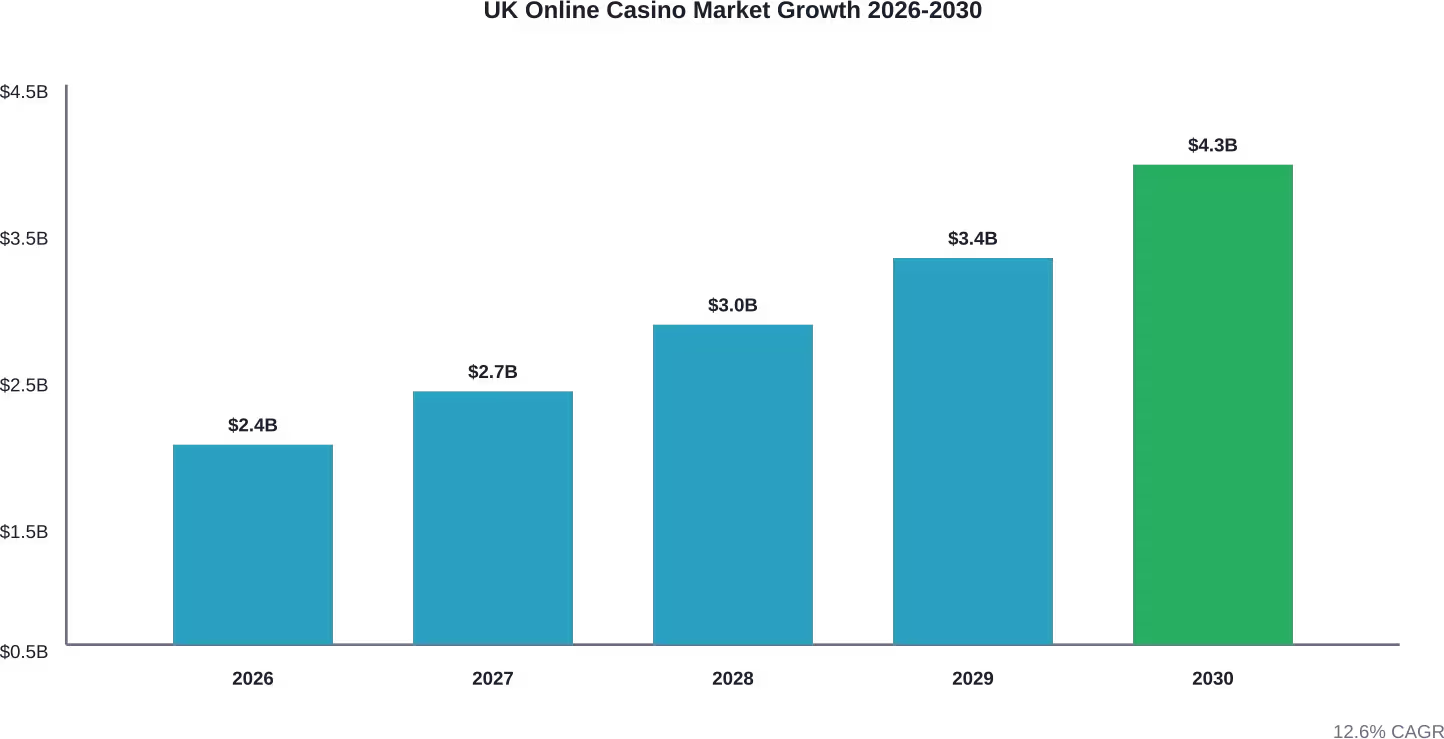
According to Grand View Research, the UK online casino market is expected to reach a projected revenue of US$4,322.3 million by 2030. Working backward from the 2030 projection of US$4,322.3 million with the stated 12.6% CAGR from 2025 to 2030, the market sits at approximately US$2.69 billion in 2026.
This figure represents just one segment of the broader UK online gambling ecosystem, which Grand View Research projects will hit US$15,093.8 million by 2030, expanding at a 12.8% compound annual growth rate.
Here’s the thing though—these projections show the casino segment capturing roughly 28-30% of total online gambling revenue. Sports betting remains the dominant force, but casino games maintain a substantial and growing share.
Breaking Down the Broader Gambling Market
The total UK gambling market, encompassing both online and land-based operations, tells a different story. According to research cited in competitor materials, the overall UK gambling market is set to grow by USD 4.24 billion from 2026-2030, accelerating at a CAGR of 6.2%.
That’s notably slower than the online-specific growth rates. The divergence highlights a critical trend: digital channels are capturing an increasing proportion of gambling activity.
Market Segment | 2026 Value (Est.) | 2030 Projection | CAGR |
|---|---|---|---|
UK Online Casino | ~US$2.69 billion | US$4.32 billion | 12.6% |
UK Online Gambling (Total) | ~US$9.32 billion | US$15.09 billion | 12.8% |
UK Total Gambling | Data unavailable | Growth of $4.24B | 6.2% |
Europe Online Gambling | ~US$37 billion | US$63.55 billion | 12.0% |
List Gaming Products in a Dedicated Marketplace

Sologe is a marketplace for iGaming and gaming-related products. Vendors can publish offers across categories such as gaming software, platforms, sports betting, equipment, services, traffic, and payment solutions. It gives companies a more targeted place to present their products than a general business listing site.
Want to Add Your Product to a Gaming Marketplace?
Talk to Sologe to:
- publish your offer in an iGaming-focused platform
- choose the category that fits your product
- show your listing where gaming buyers already browse
👉 Get in touch with Sologe to list your product.
Global Context: Where UK Stands
Statista’s Market Insights report that global gambling revenue reached over $643 billion in 2025, with projections pointing to $655.31 billion in 2026. The United Kingdom remains one of Europe’s dominant gambling markets alongside Italy.
Within this global landscape, online gambling accounted for approximately $121 billion in 2025, representing roughly 18-19% of total gambling revenue worldwide. That proportion continues climbing as mobile penetration increases and regulatory frameworks mature in various jurisdictions.
The UK’s online gambling sector, valued at approximately US$9.32 billion in 2026, represents about 7% of the global online gambling market. That’s a significant concentration for a single national market.
Revenue Per User Trends
User penetration and average revenue per user (ARPU) metrics provide insight into market maturity. While specific 2026 ARPU figures aren’t fully disclosed in available data, historical trends show the UK maintaining relatively high ARPU compared to emerging markets.
This reflects several factors: higher disposable incomes, established gambling culture, sophisticated product offerings, and mature customer acquisition strategies. Operators compete intensely for wallet share rather than just user acquisition.
Market Segmentation and Structure
The UK online casino market doesn’t operate as a monolithic entity. It breaks down into distinct segments with varying performance characteristics.
Game Type Categories
Slots dominate online casino revenue across most markets, and the UK is no exception. These games require minimal learning curve and offer diverse themes, making them accessible to broad demographics.
Table games—blackjeet, roulette, baccarat—represent the second major category. Live dealer versions have experienced particularly strong growth, bridging the gap between online convenience and land-based atmosphere.
Video poker and specialty games round out the portfolio, typically accounting for smaller revenue shares but serving niche player preferences.
Platform Distribution
Mobile gaming continues gaining share against desktop. Community discussions highlight that many operators now see 60-70% of revenue coming through mobile devices.
This shift has profound implications for product development, user interface design, and marketing strategies. Operators must optimize for smaller screens, touch interfaces, and on-the-go usage patterns.
Competitive Landscape and Market Share
The UK online casino market features intense competition among established operators and emerging challengers. Recent analysis of PPC market share from Adthena shows the competitive dynamics in paid search.
According to March 2026 data from Adthena, 32red.com leads with 13.82% click share in gambling PPC, followed by jackpotjoy.com at 11%. Betway.com captures 10.52%, while a long tail of “others” collectively holds 34.85%.
These figures reflect paid search specifically, not overall market share. But they indicate the fragmented nature of player acquisition—no single operator dominates entirely.
Operator | PPC Click Share (March 2026) | Notes |
|---|---|---|
32red.com | 13.82% | Leads paid search |
jackpotjoy.com | 11.00% | Strong brand presence |
Betway.com | 10.52% | Multi-vertical operator |
Others | 34.85% | Highly fragmented |
Key Market Players
William Hill, Betfair, 888 Holdings, and Entain (formerly GVC Holdings) represent some of the major established players. These operators often run multiple brands targeting different customer segments.
International operators like Bet365 maintain strong positions through comprehensive product offerings spanning sports betting and casino games.
Regulatory Environment and Its Impact
The UK Gambling Commission maintains one of the world’s most rigorous regulatory frameworks. This creates both challenges and advantages for the market.
Licensing requirements, responsible gambling mandates, and advertising restrictions shape how operators compete. The regulatory burden favors larger, well-capitalized companies that can absorb compliance costs.
Recent Regulatory Developments
Ongoing scrutiny around affordability checks, stake limits, and marketing practices continues influencing market dynamics. Operators must balance growth ambitions against regulatory compliance.
The Office for National Statistics tracks developments in public sector finances and economic classifications.
Generally speaking, UK regulators maintain focus on consumer protection while preserving a competitive, licensed market. This approach distinguishes the UK from more restrictive or more laissez-faire jurisdictions.
Growth Drivers Shaping the Market
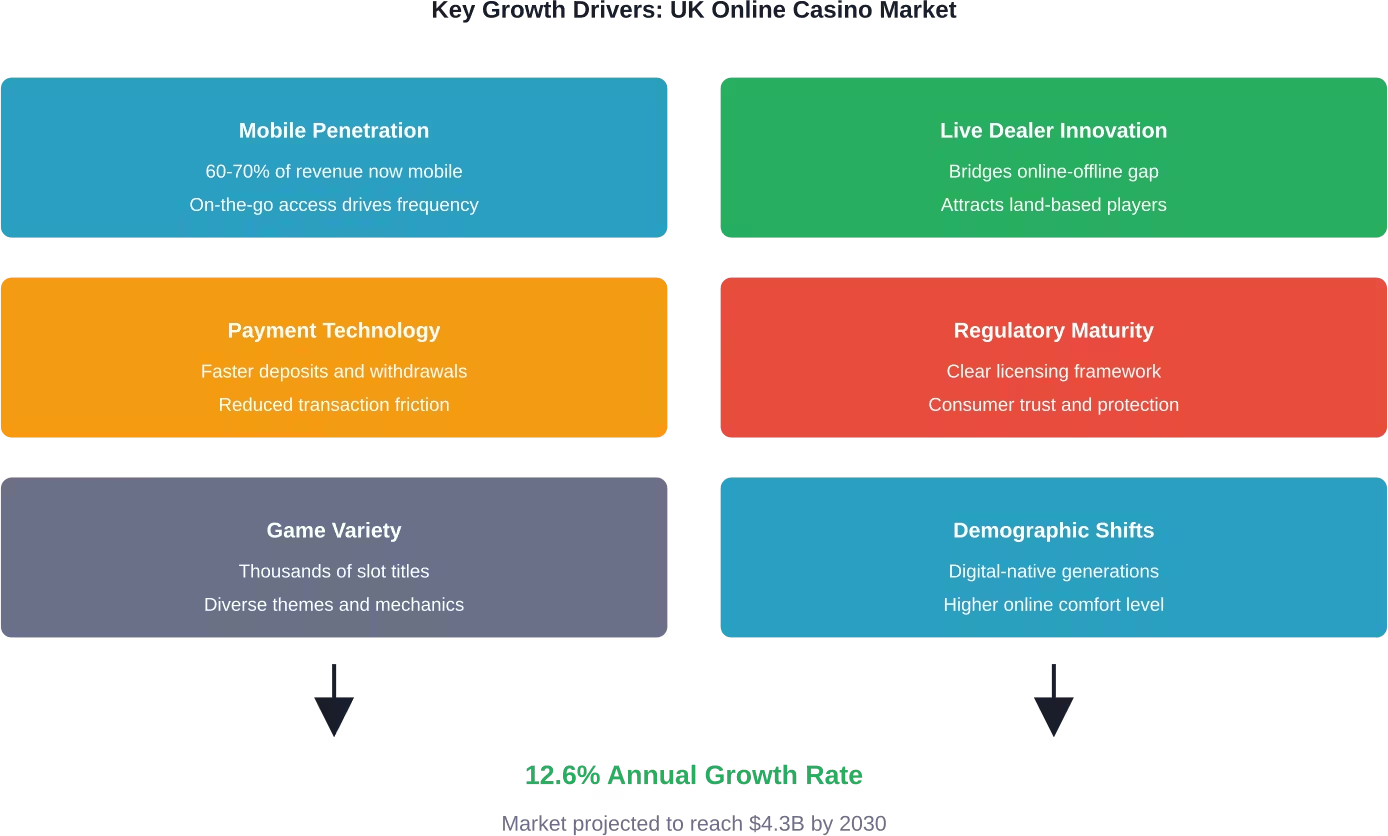
Several factors power the UK online casino market’s double-digit growth trajectory through 2030.
Technological Innovation
Live dealer technology has transformed online casino offerings. Real-time streaming of professional dealers running games from studios creates an experience distinct from both traditional online RNG games and land-based casinos.
This innovation attracts players who previously preferred physical casinos, expanding the addressable market rather than just shifting existing online players between operators.
Mobile Penetration
Smartphone ubiquity removes friction from gambling access. Players can engage during commutes, lunch breaks, or while watching television at home.
This convenience factor drives increased session frequency even if individual session lengths shorten. The net effect is higher overall engagement and revenue.
Payment Innovation
Faster deposit and withdrawal methods improve user experience. E-wallets, instant banking, and emerging payment technologies reduce transaction friction.
Cryptocurrency adoption remains limited in the mainstream UK market compared to some jurisdictions, but payment innovation continues across traditional methods.
Demographic Shifts
Younger demographics with digital-native behaviors increasingly reach legal gambling age. These cohorts show higher comfort with online transactions and digital entertainment.
That said, regulatory concerns about underage gambling and social responsibility remain paramount. Operators must demonstrate robust age verification and player protection measures.
Challenges and Market Headwinds
Not everything points toward uninterrupted expansion. Several factors could moderate growth or create volatility.
Regulatory Tightening
Continued regulatory evolution could impose new operating constraints. Affordability checks, stake limits, or advertising restrictions might impact revenue generation.
The balance between consumer protection and market growth remains politically contentious. Different stakeholder groups advocate for stricter or more liberal approaches.
Economic Conditions
Discretionary spending on gambling correlates with broader economic health. Recessions or cost-of-living pressures can reduce player budgets.
That said, gambling has historically shown some recession resilience compared to other entertainment categories. The “escapism” factor may partially offset economic sensitivity.
Competition Intensity
High customer acquisition costs reflect intense competition for player attention. Marketing spend as a percentage of revenue remains elevated across the industry.
Operators face challenges differentiating products when many offer similar game portfolios from the same suppliers. Brand building and loyalty programs become critical competitive tools.
Responsible Gambling Concerns
Problem gambling receives increasing public and political attention. Operators face pressure to demonstrate effective harm minimization.
This isn’t just a regulatory compliance issue—it’s fundamental to long-term market sustainability. Industry credibility depends on maintaining the distinction between gambling as entertainment versus compulsive behavior.
Market Forecast Through 2030
Looking beyond 2026, multiple research sources converge on expectations for continued strong growth through the end of the decade.
Grand View Research projects the UK online casino market reaching US$4,322.3 million by 2030, representing that 12.6% CAGR from current levels. The broader UK online gambling market should hit US$15,093.8 million by 2030 at 12.8% annual growth.
For context, European online gambling overall is projected to reach US$63,552.8 million by 2030, growing at 12% CAGR. The UK maintains its position as one of Europe’s two dominant markets alongside Italy.
What Could Change These Projections?
Forecasts depend on assumptions about regulatory stability, technological adoption rates, and economic conditions. Significant departures from these assumptions would alter outcomes.
Major regulatory changes—either liberalization or restriction—represent the most significant variable. Technology disruption could also accelerate or decelerate current trends.
Generally speaking, established markets like the UK show more predictable growth patterns than emerging markets. But meaningful variance around central projections remains possible.
Comparison: Online vs. Land-Based Casino Revenue
The UK maintains a substantial land-based casino sector alongside its online market. Understanding the relationship between these channels provides market context.
Land-based casinos face inherent capacity constraints—physical locations, opening hours, geographic accessibility. Online casinos face none of these limitations.
This structural advantage drives online’s faster growth rate. But land-based casinos aren’t disappearing—they offer social experiences and atmospheres that purely digital platforms can’t fully replicate.
Many operators now employ omnichannel strategies, operating both online and land-based properties. This hedges against channel-specific risks while capturing customers across different contexts.
Factor | Online Casino | Land-Based Casino |
|---|---|---|
Accessibility | 24/7, any location | Physical location required |
Game Variety | Hundreds to thousands | Limited by floor space |
Overhead Costs | Lower operational costs | High real estate and staff costs |
Social Experience | Limited (chat functions) | In-person social interaction |
Growth Rate | 12.6% CAGR | Slower, mature market |
Regulation | UKGC remote license | UKGC and local authority licensing |
Investment and M&A Activity
Market growth attracts capital. The UK online gambling sector sees ongoing investment, consolidation, and market entry attempts.
Established operators acquire smaller competitors to gain market share, technology, or specific customer segments. Technology providers serving operators also attract investment as enablers of market growth.
Private equity shows sustained interest in gambling assets, viewing the sector as offering stable cash flows and growth potential. Public market valuations of major operators reflect expectations for continued expansion.
Cross-border M&A activity remains common as international operators seek UK market access while UK-based companies expand into other jurisdictions.
Data Limitations and Research Gaps
While substantial market research exists, certain data points remain unavailable or inconsistent across sources.
Real talk: exact 2026 revenue figures won’t be known until operators report results. Current numbers represent projections based on historical trends and stated growth assumptions.
Segmentation data—breakdowns by specific game types, customer demographics, or device categories—isn’t consistently published across the market. Individual operators guard competitive intelligence carefully.
Problem gambling prevalence data exists from surveys like the Gambling Commission’s Gambling Survey for Great Britain, but linking this precisely to market sizing involves assumptions and methodological challenges.
Frequently Asked Questions
What is the UK online casino market size in 2026?
The UK online casino market is estimated at approximately US$2.69 billion in 2026. This represents around 28–30% of the broader UK online gambling market, which is valued at approximately US$9.32 billion.
How fast is the UK online casino market growing?
The market is growing at a compound annual growth rate (CAGR) of around 12.6% through 2030. This significantly outpaces the overall UK gambling market, which grows at approximately 6.2% annually.
Who are the largest operators in the UK online casino market?
Major operators include William Hill, Betfair, 888 Holdings, Entain, and Bet365. The market remains highly competitive and fragmented, with multiple platforms sharing market presence rather than a single dominant leader.
What’s driving growth in UK online casinos?
Growth is driven by increasing mobile usage (accounting for 60–70% of revenue), advancements in live dealer technology, improved payment systems, expanding game libraries, and a shift toward digital-first consumers.
How does the UK online casino market compare to Europe overall?
The UK is one of the largest gambling markets in Europe alongside Italy. It is growing slightly faster than the European average, maintaining a leading position in the region’s online gambling sector.
What are the biggest challenges facing UK online casinos?
Key challenges include stricter regulatory requirements, increasing customer acquisition costs due to competition, economic pressures on consumer spending, and growing focus on responsible gambling practices.
Will land-based casinos decline as online grows?
Land-based casinos are expected to continue operating but at slower growth rates. Many operators are adopting omnichannel strategies that combine online and physical experiences rather than replacing one with the other.
Conclusion: A Market in Sustained Expansion
The UK online casino market stands at approximately US$2.69 billion in 2026, positioned for continued robust growth through the end of the decade. With a projected 12.6% compound annual growth rate, the market should reach US$4.3 billion by 2030.
This expansion reflects fundamental shifts in how people engage with gambling entertainment—mobile-first experiences, live dealer innovations, and seamless payment technologies creating unprecedented accessibility and variety.
But growth doesn’t happen in a vacuum. Regulatory oversight, responsible gambling concerns, and competitive intensity shape market dynamics just as profoundly as technological innovation.
For operators, investors, and regulators, understanding these statistics provides essential context for strategic decisions. The market offers genuine opportunities alongside real challenges that demand sophisticated approaches balancing growth, compliance, and sustainability.
What happens next depends on how stakeholders navigate the tension between commercial ambitions and social responsibility—a balance that will define the UK online casino market for years to come.
Related Articles

September 3, 2026Is the Casino Legal in Denmark? 2026 Guide

September 3, 2026Is the Casino Legal in Angola? What the 2026...