 Nothing found for the request
US Casino Market 2026: Size, Growth & Revenue Analysis
Sologe March 27, 2026
Share:


Market Size and Projected Growth
The North America casino gambling market was valued at USD 96.85 billion in 2025, according to recent industry analysis. That baseline sets the stage for substantial expansion over the next decade.
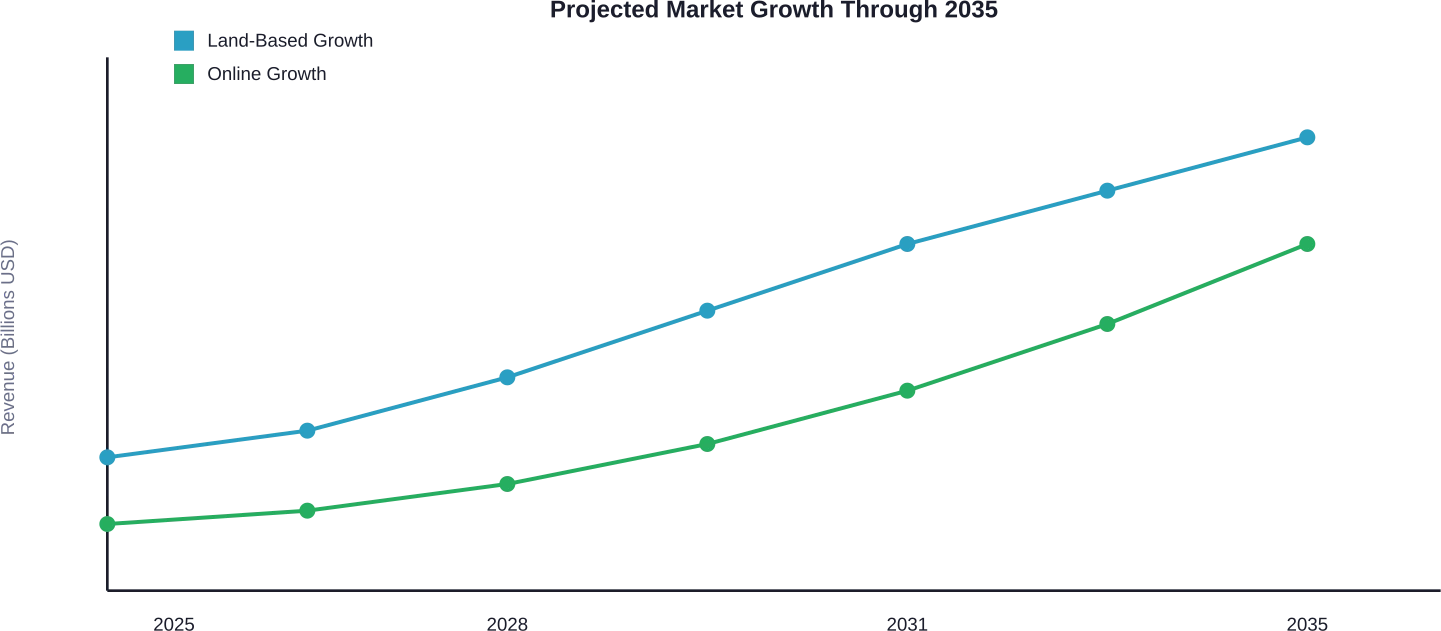
Projections indicate growth to USD 103.23 billion in 2026, climbing to USD 142.03 billion by 2031. That represents a compound annual growth rate of 6.59% during this forecast period.
Looking further ahead, market research forecasts the US casino market will expand from USD 86.53 billion in 2025 to USD 162.5 billion by 2035. This projection assumes a 6.5% CAGR across the decade.
But wait. These figures encompass different methodologies and geographic scopes, which explains the variation. Some analyses focus exclusively on the United States, while others incorporate Canadian operations under the North America umbrella.
The online gambling segment tells an even more aggressive growth story. The U.S. online gambling market stood at USD 12.68 billion in 2024 and projects expansion to USD 22.19 billion by 2030. That translates to a 9.8% CAGR—significantly outpacing traditional casino growth.
Real talk: these projections depend heavily on continued state-level legalization and regulatory clarity. Each new state that authorizes online gambling adds substantial market capacity.
Revenue Breakdown by Gaming Type
Slot machines remain the undisputed revenue champion in land-based operations. These machines secured 43.68% of the North America casino gambling market share in 2025.
The dominance of slots makes sense from an operational perspective. They require minimal staffing, offer higher profit margins than table games, and appeal to a broad demographic range. Casinos can adjust hold percentages and themes to optimize revenue per square foot.
Sports betting has emerged as a significant growth driver, particularly following the Supreme Court’s 2018 decision striking down the federal sports betting ban. The sports betting segment accounted for over 24% of the online market share in 2024.
Table games like blackjack, poker, craps, and roulette contribute the remaining revenue mix. While these games generate lower margins than slots, they attract high-value customers and create the social atmosphere that differentiates integrated resorts from pure gaming facilities.
Gaming Type | Market Share | Growth Trajectory | Key Drivers |
|---|---|---|---|
Slot Machines | 43.68% | Stable | High margins, low labor costs |
Sports Betting | 24%+ online | Rapid expansion | Legalization, mobile access |
Table Games | ~30% | Moderate | High-value players, social appeal |
Poker Rooms | Minor | Declining | Online competition |
Online platforms have disrupted traditional revenue distributions. Live dealer games—which stream real dealers via video to create an immersive experience—have grown rapidly as technology improved. These games bridge the gap between traditional casino atmosphere and digital convenience.
Make Your Gaming Business Easier to Find in the US Market

The US casino market includes a broad mix of operators, suppliers, and supporting service companies. Sologe gives those vendors a more focused place to be discovered. The platform works as an iGaming marketplace where buyers search for products, services, and partners, while vendors use it to present their offering and start business conversations.
Want to Reach Buyers Looking for Gaming Solutions?
Use Sologe to:
- list your company in a marketplace built for gaming businesses
- connect with buyers already searching for vendors
- support year-round visibility in one platform
👉 Get in touch with Sologe to discuss listing your business as a vendor.
Geographic Distribution and Regional Dynamics
Nevada continues to set the standard for casino operations and regulation. The Nevada Gaming Control Board maintains extensive reporting requirements, publishing monthly revenue data that provides transparency into market performance.
Las Vegas leisure-travel metrics now exceed 2019 benchmarks, demonstrating that consumer appetite for integrated entertainment experiences has fully recovered from pandemic disruptions and continues growing.
But Nevada isn’t the only game in town. Pennsylvania has developed the second-largest commercial casino industry in the United States (after Nevada) in revenue terms according to American Gaming Association research from 2017, which also found the state maintains the highest effective tax rate among commercial casino jurisdictions.
Atlantic City represents the East Coast hub, though it faces more competitive pressure from regional casinos that have proliferated across neighboring states. The market has consolidated considerably from its peak, with several major properties closing or changing hands.
Regional casinos have reshaped gambling accessibility. States like Michigan, Illinois, Indiana, and Ohio have authorized commercial casinos that capture local gambling spend without requiring trips to traditional gambling destinations.
Now, this is where it gets interesting. The location and size factors studied in Pennsylvania revealed counterintuitive results. Research examining casino impacts on county revenues from 1999-2017 found that physically hosting a casino increases county revenues, as do revenue-sharing agreements. However, simply bordering a casino-hosting county showed consistent negative revenue impacts.
Tribal Gaming Operations
According to Brookings Institution analysis, tribal governments have collectively scaled a $44 billion gaming industry when accounting for gaming revenues and related enterprises and amenities. This makes tribal gaming a critical component of the overall US casino market.
Tribal gaming operates under a distinct regulatory framework established by the Indian Gaming Regulatory Act. Tribal-state compacts govern the terms under which tribes can operate casinos on Indian lands, creating a complex patchwork of agreements that vary considerably by state.
Any gaming on Indian lands not authorized by a tribal-state compact violates federal and state criminal laws. This legal structure has profound implications for how tribal gaming adapts to online gambling expansion.
The boom in online sports betting and prediction markets poses what Brookings Institution researcher Patrice H. Kunesh describes as an existential threat to tribal sovereignty and economies. Traditional tribal casinos face competition from digital platforms that don’t require physical presence on tribal lands.
Many tribes have responded by seeking partnerships with online gambling platforms or pushing for regulations that preserve their market position. The outcome of these regulatory battles will significantly impact future revenue distributions between tribal and commercial operations.
Online Gambling Market Expansion
The online segment has exploded as states authorize digital gambling platforms. Sports betting led the initial wave, but online casino games now represent substantial growth opportunities in states with comprehensive legalization.
Mobile devices dominate access patterns. The shift toward mobile-first experiences reflects broader consumer behavior trends and enables gambling anywhere within authorized state boundaries.
Social features have become essential for differentiating offerings in a highly competitive market. As the line between gaming and gambling blurs, platforms incorporate leaderboards, chat functions, and community challenges that create stickiness beyond pure gambling mechanics.
That said, recent research indicates that online casino activity in the U.S. shows signs of shrinking in certain mature markets, raising questions about long-term growth assumptions.
Regulatory fragmentation remains a significant challenge. Each state maintains its own licensing requirements, tax structures, and operational rules. This creates compliance complexity for operators seeking national scale while limiting consumer access to platforms based on geographic location.
Major Market Players and Competitive Landscape
Several dominant companies control substantial market share across the casino industry. MGM Resorts International, Caesars Entertainment Inc., Las Vegas Sands Corp., Wynn Resorts Ltd., and Penn Entertainment Inc. represent the major operators in North American markets.
These integrated resort operators have evolved beyond pure gambling operations. Modern casino resorts generate significant revenue from hotel accommodations, restaurants, entertainment venues, convention facilities, and retail operations. Gambling often accounts for less than half of total revenue at premier properties.
The shift toward integrated experiences reflects changing consumer expectations and demographic trends. Younger demographics show less interest in traditional gambling activities but respond to experiential entertainment offerings.
Market concentration varies by segment. The land-based casino market shows medium concentration, with major players controlling prime locations but numerous regional operators serving local markets. The online gambling space demonstrates more fragmentation as new entrants rapidly scale digital-first operations.
Strategic partnerships have become common as traditional casino operators seek online capabilities and digital platforms pursue brand credibility. These alliances blend established customer bases with technological agility.
Consumer Segmentation and Behavior Patterns
Market research identifies several distinct customer segments within the casino market. Gambling enthusiasts represent the core customer base—frequent visitors who derive primary entertainment value from gambling activities.
Dabblers engage occasionally, treating casino visits as social outings rather than serious gambling sessions. This segment has grown as casinos positioned themselves as entertainment destinations rather than pure gambling venues.
Lottery loyalists focus primarily on lottery products but occasionally visit casinos. This segment responds differently to marketing and promotions compared to gambling enthusiasts.
The unengaged audience represents non-customers who might visit casino properties for non-gambling amenities like restaurants, shows, or conventions. Integrated resorts specifically design experiences to capture spending from this segment.
Demographic shifts continue reshaping the customer base. Millennials and Gen Z consumers show different preferences than Baby Boomers, favoring skill-based games, social experiences, and shorter gambling sessions.
Regulatory Environment and Legal Framework
Casino regulation in the United States operates through a complex multi-jurisdictional framework. Federal law establishes baseline restrictions, while state governments determine whether to authorize gambling within their borders.
Nevada pioneered modern casino regulation with the establishment of the Nevada Gaming Commission and Nevada Gaming Control Board. This two-tiered system separates investigative and enforcement functions from licensing decisions, creating checks and balances.
The Nevada Gaming Control Board publishes extensive statistics and revenue data, including monthly gaming revenue reports that provide transparency into market performance. These abbreviated revenue releases reflect total gaming revenues and percentage fee collections generated by nonrestricted licensees.
Other states have developed their own regulatory bodies modeled partially on Nevada’s approach but with variations reflecting local priorities. Pennsylvania, for example, implements significantly higher tax rates than Nevada.
Online gambling regulation remains state-specific following the 2018 Supreme Court decision on sports betting. States decide independently whether to authorize online sports betting, online casino games, or both. This creates a fragmented national market.
Tribal gaming operates under federal oversight through the National Indian Gaming Commission, with tribal-state compacts providing additional state-level regulation. This dual system creates unique compliance requirements.
Economic Impact and Tax Revenue
Casino operations generate substantial tax revenue for state and local governments. Pennsylvania exemplifies high-tax jurisdictions, maintaining the highest effective tax rate among commercial casino states.
Research examining Pennsylvania casinos from 1999-2017 found that casino born factors—including revenue agreements, hosting or bordering proximity, size, and physical location demographics—significantly impact county revenue when combined with traditional economic factors.
Revenue sharing agreements increase county revenues, as does physically hosting a casino facility. The study generally indicates positive fiscal impacts for jurisdictions that secure favorable terms.
However, the same research revealed that bordering a casino-hosting county produces negative and consistent revenue impacts. This suggests that proximity without direct revenue capture creates competitive disadvantages.
Beyond direct tax payments, casinos generate economic activity through employment, vendor purchases, and induced spending by employees. Integrated resorts create construction jobs during development and ongoing employment across multiple departments.
Technology Trends Reshaping the Industry
Digital transformation extends well beyond online gambling platforms. Land-based casinos increasingly deploy technology to enhance operations and customer experiences.
Cashless gaming systems allow players to fund slot machines and table games through mobile apps or RFID cards rather than physical currency. This improves operational efficiency and provides better data on player behavior.
Data analytics and customer relationship management systems enable personalized marketing and loyalty programs. Casinos track player preferences, betting patterns, and visit frequency to optimize promotional offers.
Security technology has advanced considerably, with sophisticated surveillance systems using artificial intelligence to identify cheating, track chip movements, and monitor employee behavior.
Virtual reality and augmented reality experiments continue, though widespread adoption remains limited. The technology shows promise for creating immersive experiences but faces challenges around cost, user comfort, and regulatory approval.
Challenges Facing the Casino Industry
Market saturation poses risks in certain regions as casino supply expands faster than demand growth. Regional casinos compete aggressively for the same customer base, pressuring profit margins.
Online gambling cannibalization concerns traditional casino operators. Research suggests that convenient digital access may reduce visits to physical properties, particularly among younger demographics comfortable with mobile platforms.
Responsible gambling advocacy has intensified as access expands. Regulators increasingly require operators to implement tools for identifying problem gambling behavior and providing intervention resources.
Labor challenges have intensified post-pandemic, with casinos competing for workers across tight labor markets. Wage pressures and staffing shortages affect service quality and operational capacity.
Social perception remains mixed, with ongoing debates about gambling’s societal costs versus economic benefits. This complicates expansion efforts in jurisdictions considering legalization.
Future Outlook and Growth Opportunities
The trajectory through 2035 projects sustained growth driven by several factors. Continued state-level legalization of online gambling will expand addressable markets significantly.
Integrated resort development continues in new markets, with major projects announced in states recently authorizing casino gambling. These destinations position gambling as one component of broader entertainment complexes.
Sports betting growth shows no signs of slowing as more states authorize mobile wagering and operators refine user experiences. Live in-game betting creates engagement opportunities that traditional pre-game wagers cannot match.
International tourism recovery supports Las Vegas and other major destinations. As travel patterns normalize globally, properties positioned for international visitors benefit from pent-up demand.
Technology integration will accelerate, with cashless systems becoming standard and personalization improving through better data utilization. The challenge lies in deploying technology that enhances experiences without creating friction.
Demographic shifts will force adaptation. As older, gambling-focused customers age out, casinos must appeal to younger audiences seeking different experiences. Skill-based gaming, esports integration, and social elements address these preferences.
Frequently Asked Questions
What is the current size of the US casino market?
The North America casino gambling market was valued at USD 96.85 billion in 2025. Focusing specifically on the United States, market analysis estimates the value at approximately USD 86.53 billion in 2025. The variance reflects different methodological approaches and geographic scope in market research.
How fast is the online gambling market growing compared to land-based casinos?
Online gambling grows significantly faster than traditional casinos. The U.S. online gambling market projects a 9.8% CAGR from 2025 to 2030, while the overall casino market shows a 6.5% CAGR through 2035. This gap reflects rapid state-level legalization and consumer preference for mobile access.
Which states generate the most casino revenue?
Nevada remains the largest market, anchored by Las Vegas and Reno operations. Pennsylvania has developed the largest sole commercial casino industry based on 2017 American Gaming Association data. Other major markets include New Jersey, Michigan, Illinois, and Indiana. Exact rankings fluctuate based on whether analysis includes tribal gaming operations.
How much revenue do tribal casinos generate?
According to Brookings Institution research, tribal governments have collectively scaled a $44 billion gaming industry when accounting for gaming revenues and related enterprises and amenities. This represents a substantial portion of total US casino market activity and serves as an economic foundation for many tribal communities.
What percentage of casino revenue comes from slot machines?
Slot machines secured 43.68% of the North America casino gambling market share in 2025. This dominance reflects the operational efficiency, high profit margins, and broad demographic appeal of electronic gaming machines compared to table games and other gambling formats.
Are online casinos taking customers away from physical casinos?
Evidence suggests some cannibalization occurs, though the relationship remains complex. Recent research indicates that online casino activity has begun shrinking in certain mature markets, while leisure-travel metrics for Las Vegas and Atlantic City exceed pre-pandemic levels. This suggests complementary rather than purely substitutional dynamics in many markets.
What are the highest-taxed casino markets in the United States?
Pennsylvania maintains the highest effective tax rate among commercial casino jurisdictions in the United States, according to American Gaming Association research. Tax rates vary considerably by state, with some jurisdictions prioritizing revenue maximization while others set lower rates to encourage industry development and competitiveness.
Conclusion
The US casino market stands at an inflection point. Traditional strengths in land-based entertainment persist, with integrated resorts continuing to attract millions seeking comprehensive experiences beyond pure gambling.
Meanwhile, digital platforms expand rapidly as regulatory barriers fall and mobile technology improves. The next decade will determine how these channels coexist—whether online gambling fundamentally disrupts brick-and-mortar operations or settles into a complementary role.
For investors, operators, and policymakers, understanding these dynamics matters enormously. The projected growth to $162.5 billion by 2035 represents substantial economic opportunity, but realizing that potential depends on navigating regulatory complexity, technological change, and shifting consumer preferences.
Tribal gaming faces particular challenges as digital platforms threaten the geographic advantages that reservation casinos historically enjoyed. How states structure online gambling regulations will significantly impact tribal economic sovereignty.
The data paints a picture of sustained growth with meaningful structural changes ahead. Success in this evolving landscape requires adaptation, strategic investment in technology, and keen attention to regulatory developments across dozens of state jurisdictions.
Related Articles

September 29, 2026Is the Casino Legal in Japan? The Real Answer...

September 29, 2026Is the Casino Legal in Gambia? What the Law...