 Nothing found for the request
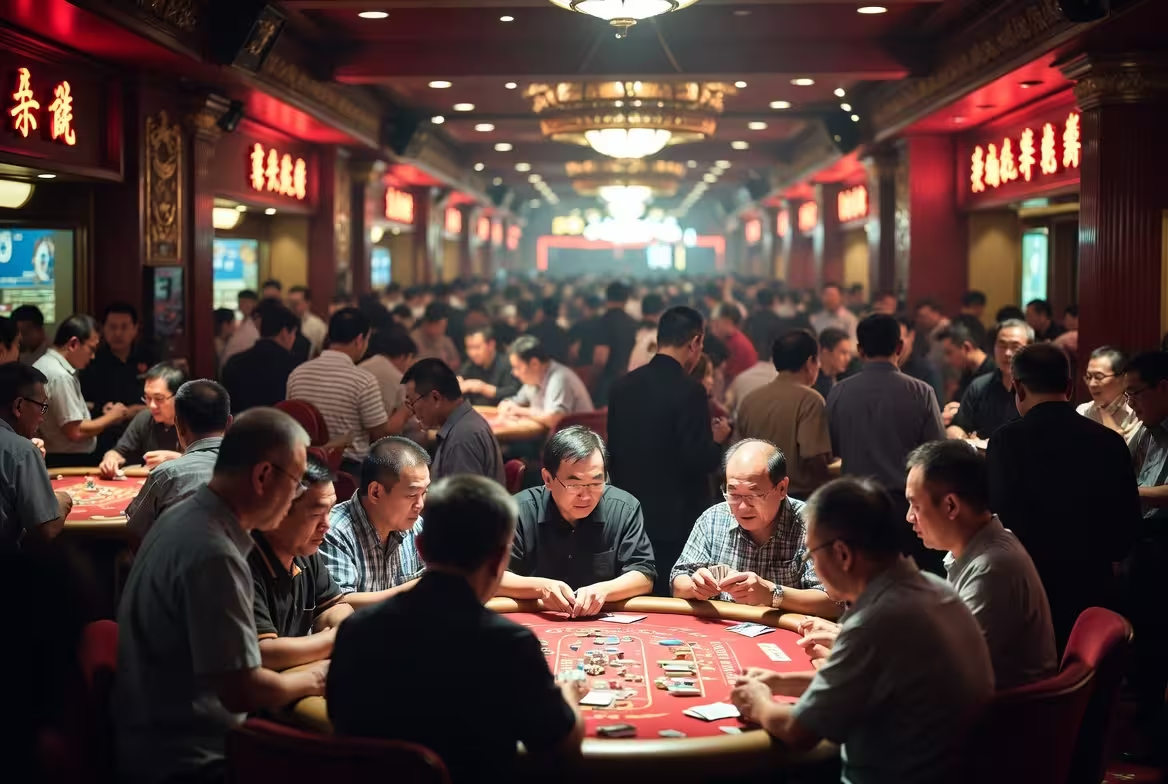
Why Chinese Are Into Casino Market: Facts & Insights 2026
Sologe April 21, 2026
Share:


Quick Summary
Quick Summary: Chinese interest in casino markets stems from deep cultural factors, including social traditions around games like mahjong, entertainment preferences, and economic motivations. Research shows that while 4.4% of the US population is Asian, they represent 7.2% of pathological gamblers surveyed, indicating heightened engagement. This participation is driven by a complex mix of cultural heritage, social connectivity, accessibility through targeted marketing, and socioeconomic factors—not simply an inherent “gambling culture.”
Walk into any major casino in Las Vegas, Sydney, or Singapore, and you’ll notice something striking: a substantial Chinese presence at the gaming tables. This isn’t coincidence or stereotype—it’s a pattern backed by data and rooted in complex cultural, economic, and social factors.
The global casino industry has recognized this trend for decades. Macau, the only Chinese territory where gambling is legal, surpassed Las Vegas in gaming revenue back in 2007. According to available data, Macau’s gambling industry generated significant revenue throughout 2024, continuing its recovery from pandemic-era slumps.
But here’s the thing: understanding why Chinese individuals engage with casino markets requires looking beyond surface-level assumptions about “gambling culture.” The reality involves intricate threads of tradition, social connection, entertainment preferences, economic aspirations, and deliberate industry targeting.
The Cultural Context Behind Chinese Gaming Participation
Chinese engagement with games of chance has historical roots that stretch back centuries. Traditional games like mahjong, pai gow, and fan-tan have been social fixtures in Chinese communities for generations.
Before 2020, mahjong generated over 100 million Macau patacas annually in gross gambling revenue at Macau’s casinos, according to statistical data. That’s one traditional game maintaining significant commercial relevance in modern casino environments.
Social Gaming as Community Bonding
Real talk: gaming in Chinese culture often functions as social glue rather than solitary vice. Community research conducted in the Greater Boston area found that over 80% of interviewees were aware of buses within their communities that would take individuals to casinos.
These aren’t random bus routes. They represent organized social outings where gambling serves as the anchor activity for community interaction.
Traditional Chinese games involve skill, strategy, and social interaction. When these games transition into casino settings—or when casino games get adopted—they carry that social dimension with them.
Contesting the Myth of Inherent Gambling Culture
Here’s where things get important. Research published in the academic literature specifically challenges the notion of an inherent “Asian gambling culture.”
According to a comprehensive study published by PMC, while only 4.4% of the sample population were Asian in a US national survey from 2001-2002, 7.2% of the pathological gamblers surveyed were Asian. This disproportionate representation suggests elevated risk—but the causes aren’t genetic or purely cultural.
The same research emphasizes that problem gambling in Asian communities stems from systemic issues including accessibility, targeted marketing, economic stressors, and immigration-related challenges. Not from some innate cultural predisposition.
Think about it: if culture alone explained gambling participation, we’d see uniform rates across all Asian ethnic groups. We don’t. Participation and problem rates vary significantly between Chinese, Korean, Filipino, Vietnamese, and other Asian communities.
Use a Dedicated Marketplace to List Gaming Products

Sologe provides vendors with a place to list products and services connected to gaming and iGaming. The marketplace covers several categories and gives companies a structured way to show what they offer. For vendors, it is a more targeted option than listing on a general business platform.
Looking for a More Relevant Place to List Your Offer?
Talk to Sologe to:
- publish products in a marketplace focused on gaming
- categorize your offer for industry discovery
- show your listing where gaming buyers already browse
👉 Get in touch with Sologe to list your product.
Macau's Unique Position as Asia's Gaming Capital
You can’t discuss Chinese casino market participation without examining Macau. This former Portuguese colony is the only place in China where gambling is legal—and it’s become a global powerhouse.
By 2007, Macau’s gambling revenue had exceeded that of Las Vegas. As of 2026, 41 casinos operate in Macau, and the annual gross gaming revenue (GGR) for 2025 reached approximately US$31.5 billion, continuing the growth trend
Proximity and Accessibility
Macau’s geographic position matters tremendously. It’s directly accessible to mainland Chinese gamblers through simplified travel procedures. For Chinese citizens who can’t legally gamble on the mainland, Macau offers the nearest legitimate option.
The territory functions as both casino destination and tourism hub, combining gambling with entertainment, dining, shopping, and hospitality. This integrated resort model attracts diverse visitor segments, not just hardcore gamblers.
Mainland Chinese Gamblers as Primary Market
Academic research notes that mainland Chinese gamblers represent a major source of customers for many Macau casinos. The market has been described as “novel and underresearched,” creating challenges for casino and destination marketers trying to understand and segment this audience.
Studies have explored perceptions of Macau among mainland Chinese travelers, attempting to understand motivations and preferences. The findings suggest heterogeneous categories of visitors requiring differentiated marketing approaches.
Economic Motivations and Aspirations
Casino participation isn’t just about entertainment. For many Chinese gamblers, economic factors play crucial roles in both initial engagement and continued participation.
Entertainment Versus Financial Gain
Research from the Greater Boston Asian community found that 65% of interviewees discussed the motivation to gamble for entertainment purposes. But that same research revealed complex underlying economic pressures.
Immigration-related economic stressors, employment instability, and aspirations for rapid wealth accumulation all factor into gambling behavior. The casino becomes not just an entertainment venue but a space where economic transformation feels possible.
Sound familiar? It’s the same psychology that drives lottery participation across demographics—the hope that one big win can fundamentally change financial circumstances.
The Business and Professional Gambling Segment
High-roller Chinese gamblers represent a distinct segment that casinos actively court. These individuals often view gambling as part of business entertainment, relationship building, or calculated risk-taking that aligns with entrepreneurial mindsets.
Macau’s VIP gaming rooms cater specifically to this segment, offering privacy, high table limits, and luxury amenities that transform gambling into an exclusive experience.
Casino Industry Targeting and Marketing Strategies
Here’s something most people miss: Chinese casino market participation doesn’t happen organically. The global casino industry has developed sophisticated strategies specifically designed to attract and retain Chinese customers.
Cultural Adaptation in Casino Design
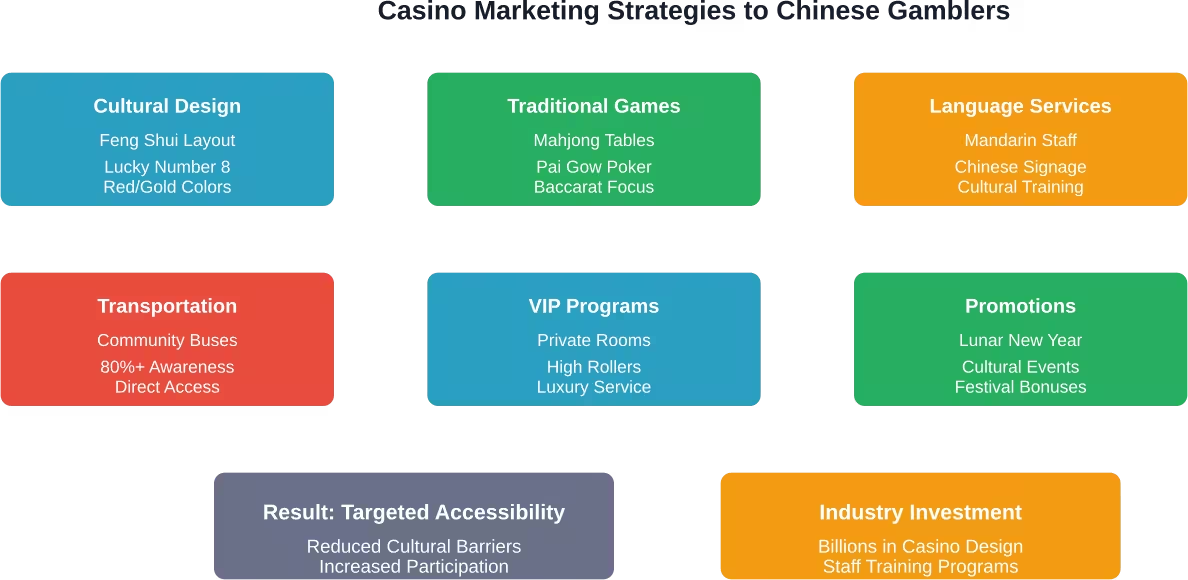
Modern casinos targeting Chinese gamblers incorporate specific cultural elements. Lucky numbers (8 is auspicious, 4 is avoided), feng shui principles in layout design, traditional game offerings, and culturally appropriate color schemes all reflect deliberate targeting.
Macau casinos particularly embrace this approach, blending Western casino formats with Chinese cultural preferences to create hybrid environments.
Language and Service Considerations
Casinos in multiple countries now employ Mandarin and Cantonese-speaking staff, offer simplified Chinese signage, provide Chinese-language gaming instructions, and adapt customer service protocols to cultural communication preferences.
These aren’t minor accommodations—they represent major operational investments designed to make Chinese gamblers feel welcome and understood.
Transportation and Accessibility Programs
Remember those buses mentioned earlier? They’re not coincidental. Casino operators and third-party services organize transportation from Chinese community centers directly to casino properties.
According to community research, over 80% of Asian community members interviewed were aware of these bus services. This infrastructure actively reduces barriers to casino access.
The Problem Gambling Dimension
Any honest discussion about Chinese casino market participation must address problem gambling. The elevated rates aren’t about inherent cultural weakness—they reflect complex systemic factors.
Disproportionate Risk Factors
Research data shows concerning patterns. In the US national survey mentioned earlier, Asians represented 7.2% of pathological gamblers despite comprising only 4.4% of the sample population.
Community research from the Greater Boston area revealed that 65% of respondents believed gambling had negative impacts on families. More troubling, 55% of interviewees listed domestic violence—whether physical, verbal, or emotional—as a side effect of gambling.
And 33% of interviewees spoke about gambling causing mental health issues for the gambler, the family, or both.
Immigration and Acculturation Stressors
Academic research specifically identifies immigration-related factors as contributing to problem gambling risk. Language barriers, employment challenges, social isolation, and cultural adjustment stressors all create vulnerabilities.
Casinos can become spaces where linguistic and cultural barriers feel reduced—where Chinese language is spoken, cultural norms are understood, and social connection with community members happens naturally. That accessibility, while seemingly positive, can enable problematic engagement.
Economic Precarity and Gambling
For immigrant communities facing economic instability, gambling’s promise of rapid financial transformation holds particular appeal. When conventional paths to prosperity feel blocked, casinos offer hope—however mathematically unfounded—of sudden wealth.
This creates a tragic feedback loop: economic stress drives gambling participation, gambling losses worsen economic stress, increasing desperation drives continued gambling.
Regulatory Environment and Legal Constraints
The regulatory context shapes Chinese casino market participation in fundamental ways.
Mainland China’s Gambling Ban
Gambling has been officially outlawed in mainland China since the Chinese Communist Party took power in 1949. Any form of gambling by Chinese citizens on the mainland remains illegal under national law.
This prohibition creates several effects. First, it channels demand toward legal jurisdictions like Macau. Second, it creates underground gambling markets. Third, it makes offshore and online gambling attractive despite legal risks.
Macau and Hong Kong as Special Administrative Regions
Macau and Hong Kong operate under different legal frameworks as Special Administrative Regions. Macau’s legal gambling industry exists because of this special status, not because China has softened its gambling stance.
The arrangement lets China maintain its mainland prohibition while benefiting economically from Macau’s gaming revenues through taxation and corporate relationships.
International Jurisdictions Competing for Chinese Gamblers
Singapore, Australia, the Philippines, South Korea, and other countries have developed casino industries partly to capture Chinese gambling demand. Australia has the highest gambling losses per capita globally, with residents spending 2.023% of their household disposable income on gambling.
This international competition drives the targeted marketing and cultural adaptation strategies discussed earlier. Each jurisdiction seeks to position itself as the preferred destination for Chinese gamblers.
Game Preferences and Playing Patterns
Chinese casino customers show distinctive game preferences that differ from typical Western gambling patterns.
Baccarat Dominance
Baccarat has become synonymous with Chinese gambling preference. The game’s simplicity, fast pace, and perceived opportunities for pattern recognition align with preferences observed in Chinese gambling populations.
Macau casinos derive the majority of their revenue from baccarat tables, reflecting this strong preference. The game’s prominence in Asian casinos contrasts sharply with Western markets where slot machines typically dominate revenue.
Traditional Game Adaptations
Casino versions of traditional Chinese games maintain popularity. Pai gow poker (adapted from pai gow tiles), mahjong tables, and variations on traditional Chinese betting games appear in casinos targeting Chinese customers.
These games offer familiar mechanics and cultural resonance while existing within the casino’s standardized betting and payout structures.
Social Gaming Dynamics
Chinese gamblers often prefer table games over solitary slot machine play. This reflects the social dimension of gaming in Chinese culture—gambling as group activity rather than isolated individual pursuit.
Casinos accommodate this by designing table game areas that facilitate social interaction, group betting, and collective gaming experiences.
Game Type | Chinese Player Preference | Cultural Connection | Casino Revenue Impact |
|---|---|---|---|
Baccarat | Extremely High | Fast pace, perceived patterns, luck emphasis | Dominant revenue source in Asian casinos |
Mahjong | High | Traditional Chinese tile game, social element | Generated 100M+ Macau patacas annually pre-2020 |
Pai Gow Poker | Moderate-High | Adapted from traditional pai gow tiles | Steady table game performer |
Slot Machines | Lower than Western players | Solitary play conflicts with social gaming preference | Less significant than table games |
Poker (Texas Hold’em) | Growing but moderate | Western game gaining Asian adoption | Niche but expanding |
Roulette | Moderate | Neutral cultural connection | Secondary table game option |
The Socioeconomic Impact on Chinese Communities
Casino market participation creates ripple effects throughout Chinese communities that extend far beyond individual gambling behavior.
Family and Household Consequences
The Boston community research revealed stark impacts. Beyond the 65% who identified negative family impacts, interviewees described specific harms: financial depletion of household resources, domestic violence, relationship deterioration, and mental health crises.
These aren’t abstract statistics—they represent families experiencing concrete harm from problem gambling within their households or extended networks.
Community Resource Allocation
When significant portions of community income flow toward casinos, it represents resources not invested in businesses, education, housing, or community development. The economic extraction from communities to casino operators creates long-term wealth transfer effects.
Stigma and Help-Seeking Barriers
Cultural factors around shame, family honor, and privacy create barriers to seeking help for gambling problems in Chinese communities. Problem gamblers often hide their behavior until financial crises force disclosure.
Limited culturally appropriate treatment resources compound this challenge. Services that don’t account for language, cultural communication styles, and community-specific factors prove less effective.
Comparing Chinese Casino Participation Across Regions
Chinese gambling patterns vary significantly across different geographic contexts.
Macau: The Regional Hub
Macau remains the epicenter for mainland Chinese gamblers. Its proximity, legal status, and casino infrastructure make it the primary destination. The territory’s economy relies overwhelmingly on gambling revenue, creating a specialized ecosystem built around gaming tourism.
Southeast Asian Casino Destinations
Singapore, the Philippines, Cambodia, and Vietnam have all developed casino industries targeting Chinese customers. These destinations compete on accessibility, integrated resort amenities, and regulatory environments.
Each offers different value propositions: Singapore emphasizes luxury and safety, the Philippines offers proximity and volume, Cambodia provides looser regulation.
Western Markets: US, Canada, Australia
Chinese immigrant communities in Western countries show elevated casino participation rates. The Boston research represents one geographic snapshot, but similar patterns appear in California, British Columbia, and Australian cities with significant Chinese populations.
These contexts involve different dynamics: established immigrant communities, different economic circumstances, and integration of casino gambling into multicultural urban environments.
Online and Offshore Gambling
Despite mainland China’s prohibition, offshore online gambling targeting Chinese customers operates extensively. These platforms often locate in jurisdictions with minimal regulation, offering access to Chinese gamblers while technically existing outside Chinese legal reach.
The scale of this market remains difficult to quantify precisely because of its semi-legal or illegal status, but industry observers consider it substantial.
Industry Evolution and Future Trends
The relationship between Chinese gamblers and casino markets continues evolving in response to regulatory changes, economic shifts, and technological developments.
Regulatory Tightening in China
Chinese authorities have periodically cracked down on outbound gambling, targeting both operators facilitating mainland Chinese gambling and individuals engaging in it. Reported policy actions have reflected ongoing regulatory attention to gambling activity.
These interventions create uncertainty for casino operators dependent on Chinese customers and periodically disrupt established patterns.
Macau’s Market Maturation
After years of explosive growth, Macau’s casino market has entered a more mature phase. The COVID-19 pandemic created severe disruption, and recovery has been gradual. Gaming receipts in 2024 showed growth compared to pandemic years but reflect a market adjusting to new realities.
Macau casinos increasingly diversify revenue sources beyond gambling—emphasizing entertainment, dining, shopping, and family attractions to broaden appeal and reduce dependence on gaming revenue.
Technology and Gaming Innovation
Digital integration, mobile betting platforms (where legal), and technological enhancement of traditional table games all represent evolving trends. However, regulatory constraints in China limit some technological gambling innovations that have proliferated elsewhere.
Addressing the Public Health Dimension
Viewing Chinese casino participation solely through cultural or economic lenses misses the public health implications that communities and policymakers must address.
Prevention and Education Needs
Culturally appropriate prevention education remains underdeveloped. Effective programs require bilingual resources, cultural competency in messaging, and community-based delivery that reaches at-risk populations before problems develop.
Current prevention efforts often don’t adequately account for the specific risk factors facing Chinese communities—immigration stress, language barriers, cultural shame around problem gambling, and targeted casino marketing.
Treatment and Support Services
Problem gambling treatment designed for mainstream populations often fails Chinese community members. Effective treatment requires linguistic accessibility, cultural understanding of family dynamics, recognition of immigration-related stressors, and integration with broader mental health and social services.
The research from Boston identified significant treatment gaps. Building appropriate service capacity requires investment, community partnership, and commitment to culturally responsive care models.
Harm Reduction Approaches
Beyond abstinence-focused treatment, harm reduction strategies can help minimize gambling-related damage. These include financial counseling, family support services, self-exclusion programs adapted for Chinese communities, and early intervention before gambling problems become severe.
Debunking Common Misconceptions
Several persistent myths about Chinese casino participation need direct addressing.
Myth: Chinese People Have an Inherent Gambling Gene
No genetic predisposition to gambling exists. The elevated participation rates reflect cultural, social, economic, and systemic factors—not biology. Research explicitly contests this myth, emphasizing that treating gambling patterns as inherent cultural traits ignores the complex root causes actually driving behavior.
Myth: All Chinese Gamblers Are High Rollers
While Chinese high rollers receive significant attention, the community includes diverse gambling behaviors spanning casual entertainment gamblers, regular recreational players, and problem gamblers at various income levels. The high-roller stereotype obscures the broader population’s experiences.
Myth: Chinese Gambling Is Purely Cultural Tradition
While traditional games exist in Chinese culture, modern casino gambling represents something different. The commercial casino environment, aggressive marketing, accessibility infrastructure, and economic motivations create distinct dynamics that extend beyond simple cultural continuity.
Frequently Asked Questions
Why do some Chinese communities show higher gambling participation rates?
Research suggests higher participation in certain contexts is driven by a combination of systemic and social factors rather than inherent traits. These include targeted casino marketing, accessibility (such as organized transportation), economic pressures among immigrant populations, and the popularity of social gaming traditions. Experts emphasize that these patterns reflect environmental influences rather than cultural or genetic predisposition.
Is gambling illegal in mainland China?
Yes. Gambling has been illegal in mainland China since 1949 under national law. This prohibition drives demand toward legal jurisdictions such as Macau and contributes to the existence of offshore and underground gambling markets.
Why is Macau important for Chinese gamblers?
Macau is the only region in China where casino gambling is legal. Its proximity to mainland China and status as a Special Administrative Region make it the primary legal destination for Chinese players. Macau has grown into the largest gambling market globally due to this unique position.
What games are most popular among Chinese casino players?
Table games such as baccarat dominate, along with traditional games like mahjong and pai gow. These games are often preferred due to their social nature and familiarity, compared to more individual activities like slot machines.
How do casinos market to Chinese customers?
Casinos often tailor experiences with culturally relevant design elements, language support, and targeted promotions. This can include Mandarin-speaking staff, culturally themed interiors, holiday-based promotions, and services designed to improve accessibility for specific customer groups.
What are the potential negative impacts of gambling in communities?
Studies indicate potential risks including financial stress, family conflict, and mental health challenges. Communities may also face broader economic impacts, such as resource diversion and limited access to culturally appropriate support services. Early intervention and responsible gaming measures are important to mitigate these risks.
Are problem gambling rates higher in some communities?
Some research shows elevated risk levels in certain populations, but experts attribute this to external factors such as economic stress, access to gambling, targeted marketing, and limited support systems. These patterns are not considered inherent but reflect broader social and environmental conditions.
Conclusion
Chinese participation in casino markets reflects a complex intersection of cultural heritage, economic aspirations, legal constraints, industry targeting, and social dynamics. It’s not reducible to simple cultural stereotypes about inherent gambling tendencies.
The data tells a nuanced story: traditional games like mahjong have cultural roots, but modern casino gambling involves deliberate industry strategies to attract Chinese customers through cultural adaptation, language services, and transportation infrastructure. Economic factors—from entertainment preferences to hopes for rapid wealth—motivate participation across socioeconomic levels.
At the same time, the public health dimension can’t be ignored. Elevated problem gambling rates in Chinese communities create real harm to individuals and families, reflected in the 65% who identify negative family impacts and 55% who cite domestic violence as consequences.
Understanding why Chinese individuals engage with casino markets requires looking honestly at all these factors—the cultural, economic, systemic, and harmful dimensions simultaneously. Only then can policymakers, public health professionals, and communities develop effective responses that respect cultural context while addressing genuine problems.
For those concerned about gambling impacts in Chinese communities, support culturally appropriate prevention and treatment programs. For casino operators, recognize the ethical implications of targeted marketing to vulnerable populations. And for anyone seeking to understand this phenomenon, move beyond stereotypes to engage the complex realities that research reveals.
Related Articles

September 3, 2026Is the Casino Legal in Denmark? 2026 Guide

September 3, 2026Is the Casino Legal in Angola? What the 2026...