 Nothing found for the request

Is Day Trading Gambling? The Truth in 2026
Sologe April 28, 2026
Share:


Quick Summary
Quick Summary: Day trading isn’t inherently gambling, but when practiced without strategy, risk management, or education, it shares alarming similarities with gambling addiction. The key difference lies in approach: informed traders analyze data and manage risk, while gambling-like traders chase losses and rely on luck. According to research and regulatory warnings, the majority of day traders lose money, and gamified trading apps can trigger addictive behaviors that mirror problem gambling.
The question keeps popping up in trading forums, regulatory warnings, and financial advice columns: is day trading just gambling with extra steps?
It’s not a ridiculous question. Both activities involve risk, both can lead to significant financial losses, and both can trigger addictive behaviors. But the answer isn’t simple.
The distinction between day trading and gambling depends entirely on how someone approaches the activity. A trader who researches market trends, manages risk carefully, and follows a disciplined strategy operates differently than someone making impulsive trades based on gut feelings or chasing yesterday’s losses.
Here’s the thing though—regulatory bodies have noticed the overlap. The Federal Trade Commission has cracked down on day trading schemes that make misleading promises. In 2022, the FTC took action against Warrior Trading for making unrealistic claims about investment gains. Recent studies from 2024-2025 and updated reports from the North American Securities Administrators Association (NASAA) indicate that approximately 95% to 97% of day traders lose money over a one-year period.
Understanding Day Trading: What It Actually Involves
Day trading means buying and selling financial instruments within the same trading day. Positions are closed before the market closes to avoid overnight risk.
Traders focus on short-term price movements—sometimes holding positions for minutes or even seconds. The goal? Capitalize on small price fluctuations, often using leverage to amplify potential gains (and losses).
Financial investments generally involve acquiring assets with the aim of generating income from appreciation over time. Day trading compresses this timeframe radically. Instead of waiting months or years for value to grow, day traders attempt to profit from minute-to-minute volatility.
The SEC warns that in fast-moving markets, when many investors want to trade simultaneously and prices change quickly, delays can develop. When placing a market order, traders can’t control the exact price at which orders fill. That lack of control introduces risk even for experienced participants.
And the platforms themselves? Many modern trading apps use gamification features designed to encourage more frequent trading.
Research by the Ontario Securities Commission found that groups using gamified apps made approximately 40% more trades than control groups. Since companies charge fees per trade, it’s in their financial interest for customers to trade as often as possible—whether those trades are profitable or not.
Gambling Defined: Where the Line Gets Blurry
Gambling typically involves wagering money on an event with an uncertain outcome, where chance plays a significant role.
The house always has an edge. Casino games, lotteries, and sports betting are structured so that over time, the operator profits and most participants lose money.
But what about skill-based gambling like poker? Professional poker players study odds, read opponents, and make calculated decisions. Sound familiar?
That’s where the comparison to day trading gets uncomfortable. Both activities exist on a spectrum between pure chance and pure skill.
Research from the University of Colorado Boulder highlights that gambling addiction often has genetic components, and availability plays into potential problem gambling. Gambling activities are more readily available than ever—and so is day trading through smartphone apps.
The psychological mechanisms can be strikingly similar. Both activities can trigger dopamine responses in the brain. Wins feel exhilarating. Losses create urgency to “win it back.” The intermittent reinforcement schedule—sometimes winning, often losing—is precisely what makes gambling so addictive.
Add Your Product to a Gaming Platform

Sologe works as a listing platform for gaming-related products and services. Vendors can place their offers in relevant categories and present them to users browsing the marketplace.
Looking for a Place to List?
List with Sologe to:
- add your product to an iGaming marketplace
- organize listings by category
- show your offer to interested buyers
👉 Get in touch with Sologe to get listed
Key Differences Between Trading and Gambling
Real talk: there are legitimate differences, but they depend on execution.
Strategic traders analyze financial statements, economic indicators, technical chart patterns, and market sentiment. They set stop-loss orders to limit downside risk. They diversify positions. They have exit strategies before entering trades.
Gamblers—or gambling-like traders—rely on hunches, tips from strangers online, or patterns they think they’ve spotted without statistical validation.
Aspect | Strategic Trading | Gambling-Like Trading |
|---|---|---|
Decision Basis | Data analysis, research, tested strategies | Gut feelings, tips, excitement |
Risk Management | Stop-losses, position sizing, diversification | All-in bets, doubling down on losses |
Timeframe | Planned holding periods aligned with strategy | Impulsive entry and exit |
Emotional Control | Disciplined, follows plan regardless of emotions | Driven by fear and greed |
Learning Approach | Studies losses, adjusts strategy, continuous education | Blames bad luck, repeats mistakes |
The problem? Many people think they’re in the first column when their behavior clearly falls in the second.
A trader following a backtested strategy with proper risk controls operates fundamentally differently than someone making impulsive trades during lunch breaks.
The Gambling-Like Behavior Problem in Modern Trading
Research published in Trends in Psychiatry and Psychotherapy examined problematic trading as gambling-like behavior in day trading and cryptocurrency investing. The study highlights clinical implications worth taking seriously.
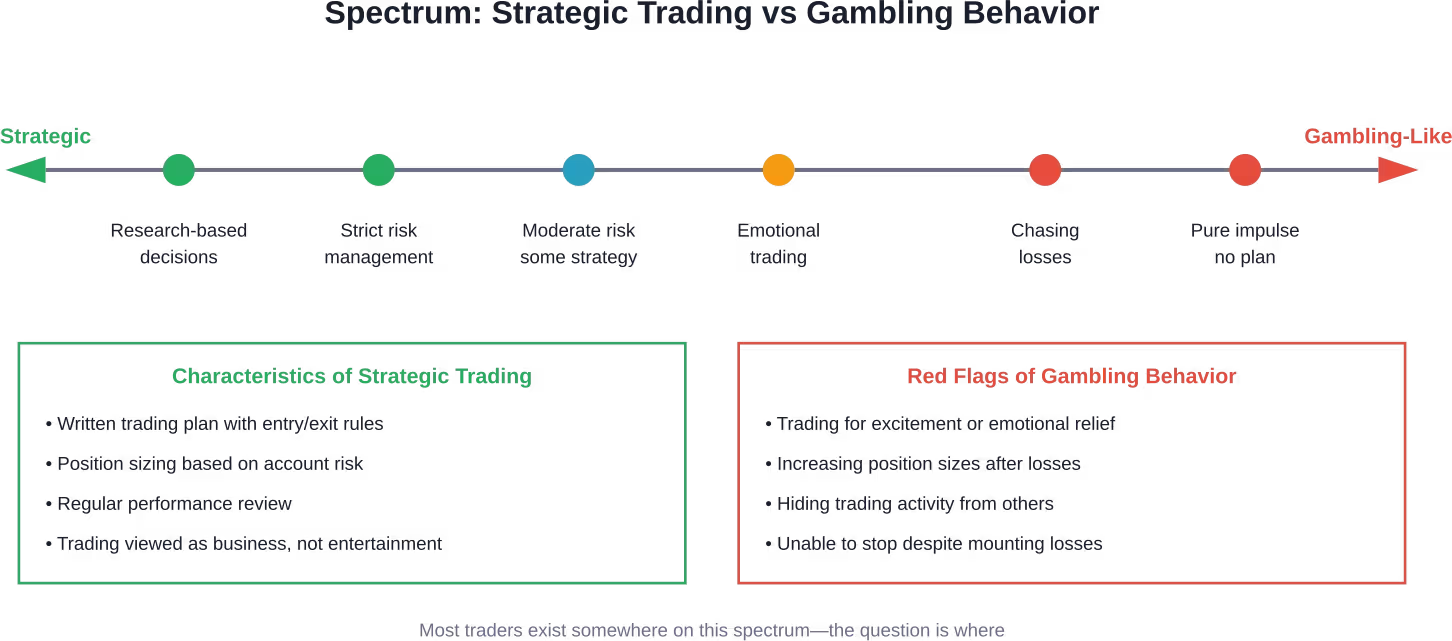
The overlap between problem gambling and problematic trading includes several behavioral markers:
- Preoccupation with trading that interferes with daily responsibilities
- Increasing amounts of money needed to achieve desired excitement
- Repeated unsuccessful efforts to control, cut back, or stop trading
- Restlessness or irritability when attempting to reduce trading
- Trading as a way to escape problems or relieve negative moods
- Chasing losses—immediately trying to recover money lost through more trading
- Lying to family members or therapists about extent of trading involvement
- Jeopardizing significant relationships, jobs, or opportunities because of trading
Community discussions on platforms like Reddit reveal traders who recognize these patterns in themselves. Some describe staying up all night watching international markets, neglecting work, or hiding trading losses from spouses.
But wait. Not everyone who day trades develops problematic behavior. So what separates recreational participation from addiction?
Warning Signs: When Trading Becomes Problematic
Recognizing problematic trading patterns early can prevent serious financial and psychological harm.
These behavioral red flags deserve attention:
Financial Warning Signs
Trading with money needed for essential expenses like rent, utilities, or food crosses a dangerous line. Borrowing money to trade—whether from credit cards, loans, or family members—compounds risk exponentially.
Consistently losing more than planned but continuing to trade anyway indicates lack of control. Hiding losses from partners or family members suggests awareness that the behavior has become problematic.
Psychological and Behavioral Markers
Constantly thinking about trading during work, social events, or family time shows preoccupation. Feeling anxious, irritable, or depressed when unable to trade mirrors withdrawal symptoms.
Trading to escape negative emotions—stress, loneliness, anxiety—rather than for rational investment purposes suggests the activity has become an unhealthy coping mechanism.
The “just one more trade” mentality, especially after losses, mimics the gambler’s fallacy that a win is “due” after a string of losses.
Social Impact
Neglecting relationships, work responsibilities, or personal health to focus on trading represents a significant warning sign. When trading takes priority over previously important activities and relationships, intervention may be necessary.
Community discussions reveal traders who’ve damaged marriages, lost jobs, or destroyed savings through uncontrolled trading activity. These aren’t rare edge cases—they’re predictable outcomes of gambling-like trading behavior.
The Role of Trading Apps and Gamification
Modern trading platforms have lowered barriers to entry. That’s democratized access, but it’s also created new risks.
Gamification features include:
- Confetti animations when trades execute
- Push notifications about market movements designed to trigger urgency
- Leaderboards comparing your activity to other users
- Streak rewards for daily trading
- Simplified interfaces that minimize perceived risk
These design choices aren’t accidental. As noted earlier, research shows gamified apps lead to approximately 40% more trades compared to traditional platforms.
More trades mean more fees for platforms—but not necessarily better outcomes for traders. Frequent trading typically reduces returns due to transaction costs and increased likelihood of emotional decision-making.
The SEC has expressed concern about trading in fast-moving markets, noting that rapid price changes and execution delays create additional risk. When platforms encourage rapid-fire trading through gamification, they may be amplifying exactly the conditions that lead to poor outcomes.
What Regulators and Researchers Say
Federal authorities have taken notice of problematic day trading promotions for decades.
The FTC, SEC, and Commodity Futures Trading Commission coordinated efforts in 2000 to halt deceptive day trading claims. These enforcement actions targeted “how-to” products promising extravagant profits with few risks.
More recently in 2022, the FTC cracked down on Warrior Trading, requiring the company and its owner to pay $3 million for making misleading and unrealistic claims about investment gains.
The pattern is clear: regulators see day trading education and platforms making promises that don’t align with reality. When 70% of day traders lose money according to securities administrators, claims of easy profits are demonstrably false.
Academic research has also explored the behavioral overlap. Studies examining gambling-like behavior in financial markets identify similar psychological mechanisms and risk factors between problem gambling and problematic trading.
The clinical implications matter. Treatment approaches for gambling addiction—cognitive behavioral therapy, support groups, financial counseling—can also help individuals with problematic trading behaviors.
Can Day Trading Be Done Responsibly?
Yes, but it requires discipline that most participants don’t maintain.
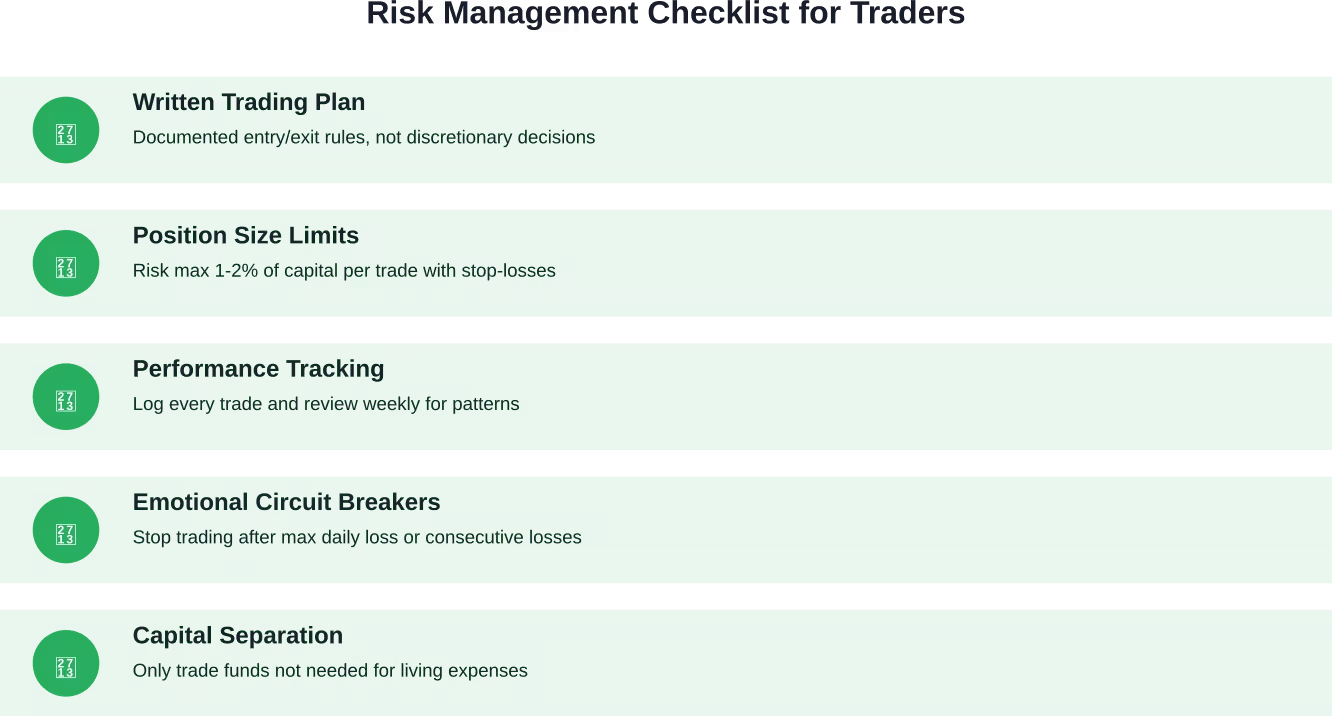
Responsible day trading looks like:
- Education first: Understanding technical analysis, market mechanics, and risk management before risking real money. Paper trading (simulated trading) to test strategies without financial exposure.
- Clear rules: Written trading plans specifying entry criteria, exit criteria, position sizing, and maximum daily loss limits. Following these rules even when emotions suggest otherwise.
- Risk management: Never risking more than 1-2% of total capital on any single trade. Using stop-loss orders to automatically limit downside. Diversifying across uncorrelated positions.
- Realistic expectations: Understanding that consistent profitability takes years to develop and many never achieve it. Accepting that losses are inevitable and part of the process.
- Psychological boundaries: Only trading with money truly available for investment, never with funds needed for living expenses. Taking breaks after losing days rather than trying to immediately recover losses.
- Regular assessment: Tracking all trades, reviewing performance objectively, and being honest about whether the activity remains rational or has become compulsive.
The reality? Most people who start day trading don’t follow these principles consistently. The allure of quick profits, the sting of losses triggering revenge trading, and the dopamine hits from wins create a psychological environment hostile to rational decision-making.
Getting Help for Problematic Trading Behavior
Recognizing a problem is the first step. Admitting that trading has become compulsive or harmful takes courage.
Resources exist for those struggling with gambling-like trading behaviors:
- Problem gambling hotlines: Problem gambling hotlines have reported increased calls related to day trading. Organizations like the National Council on Problem Gambling (1-800-522-4700) provide confidential support. While focused on gambling, counselors understand the behavioral parallels with problematic trading.
- Financial counseling: Professional financial advisors can help assess damage, create recovery plans, and establish healthier relationships with money and investing.
- Therapy: Cognitive behavioral therapy has proven effective for gambling addiction and can address the thought patterns that drive problematic trading. Therapists can help identify underlying issues—anxiety, depression, trauma—that trading may be masking.
- Support groups: Gamblers Anonymous and similar programs offer peer support from others who understand addictive behaviors around risk and money.
- Account restrictions: Some traders benefit from self-imposed limitations like closing day trading accounts, using only retirement accounts with withdrawal penalties, or asking brokers to restrict trading frequency.
The shame and secrecy surrounding financial losses often prevent people from seeking help until situations become dire. But treatment works—behavioral addictions are treatable, and financial situations can recover with appropriate intervention.
Frequently Asked Questions
Is day trading considered gambling by law?
No, day trading is not legally classified as gambling. It’s regulated as securities trading by financial authorities like the SEC. However, regulators have taken enforcement action against day trading schemes making unrealistic promises, and research shows behavioral overlaps between problematic trading and gambling addiction.
What percentage of day traders actually make money?
According to data cited by the North American Securities Administrators Association in coordination with federal enforcement efforts, approximately 70% of day traders lose money. This statistic has remained consistent across studies and regulatory assessments over time.
Can you become addicted to day trading like gambling?
Yes. Research published in psychiatric journals identifies gambling-like behavior in day trading, with similar psychological mechanisms and addiction markers. Warning signs include preoccupation with trading, inability to stop despite losses, chasing losses, and trading to escape negative emotions.
What makes day trading different from long-term investing?
Long-term investing focuses on gradual appreciation over months or years, typically in diversified portfolios aligned with financial goals. Day trading involves frequent buying and selling within single days, attempting to profit from short-term price movements. The timeframe, risk profile, and skill requirements differ substantially.
Are trading apps with gamification features dangerous?
Research shows gamified trading apps lead to approximately 40% more trades compared to traditional platforms. Since platforms profit from trading fees, these features serve business interests rather than trader success. The psychological effects—dopamine triggers, urgency notifications, streak rewards—can encourage excessive trading and emotional decision-making.
How can I tell if my trading has become problematic?
Warning signs include trading with money needed for bills, borrowing to trade, hiding losses from family, constant preoccupation with markets, inability to stop after losses, neglecting work or relationships, and trading to escape negative emotions. If trading causes financial harm or psychological distress but continues anyway, professional help may be needed.
Where can I get help for trading addiction?
Resources include problem gambling hotlines (like 1-800-522-4700), therapy focused on behavioral addictions, financial counseling, and support groups like Gamblers Anonymous. Treatment approaches for gambling addiction—cognitive behavioral therapy, support groups, and financial recovery planning—effectively address problematic trading behaviors.
The Bottom Line: Context Determines Everything
So is day trading gambling?
The question itself misses the point. Day trading can be conducted as a disciplined, research-based activity with proper risk management. It can also deteriorate into pure gambling-like behavior indistinguishable from spinning a roulette wheel.
The difference lies entirely in approach, psychology, and discipline.
What’s undeniable: the majority of day traders lose money, regulatory bodies continue warning against unrealistic promises, gamified apps encourage excessive trading, and problematic trading behaviors mirror gambling addiction in concerning ways.
For anyone considering day trading: approach it with extreme caution. Educate yourself thoroughly. Start with paper trading. Never risk money needed for living expenses. Set strict limits and follow them. Be brutally honest about whether you’re following a strategy or chasing excitement.
And if trading starts feeling like gambling—if you’re chasing losses, hiding activity from loved ones, or feeling unable to stop—recognize those warning signs for what they are. Seeking help isn’t weakness; it’s wisdom.
The markets will always be there. Protecting your financial and mental health matters more than any individual trade.
Related Articles

September 30, 2026Is Sports Betting Legal in Brazil? The Full...

September 30, 2026Is Sports Betting Legal in Iran? The Real...