 Nothing found for the request

How to Manage Gambling Money: Bankroll Strategy 2026
Sologe April 28, 2026
Share:


Quick Summary
Quick Summary: Managing gambling money requires setting a strict bankroll, allocating only 2-5% of monthly income after essentials, defining unit sizes (1-2% per bet), using deposit and loss limits, and dividing funds across games based on odds and play speed. Bankroll management doesn’t guarantee wins but protects against devastating losses and keeps gambling sustainable.
Money flows through casinos, sportsbooks, and online gambling platforms at staggering rates. In 2025, the U.S. gambling industry generated over $78.72 billion in revenue, with in-person gambling accounting for less than 65% of earnings due to the rapid expansion of legal online markets. Meanwhile, Australia holds the unfortunate distinction of highest gambling loss per capita globally—approximately A$1,527 per adult as of 2025, with the country spending roughly A$32 billion annually on gambling activities.
But here’s the thing: those losses weren’t inevitable for everyone involved.
The difference between gamblers who destroy their finances and those who enjoy the activity sustainably often comes down to one critical skill—bankroll management. This isn’t about winning systems or beating the house. It’s about controlling the one variable every gambler actually controls: how much money gets risked and when to walk away.
What Is Bankroll Management in Gambling?
Bankroll management means setting and controlling how much money gets allocated to gambling activities. The concept involves planning casino funds or betting money to ensure risk never exceeds what someone can afford to lose.
Think of it as financial self-defense. The cards, dice, and algorithms don’t care about bills or savings accounts. Bankroll strategy creates a firewall between entertainment spending and essential finances.
According to research published by the NIH, financial literacy plays a protective role against problem gambling. Studies consistently show that attitudes toward money and basic budgeting skills correlate with healthier gambling behavior.
So bankroll management isn’t just responsible gambling talk. It’s a measurable factor that separates recreational players from those at risk.
Setting Up a Gambling Bankroll: The Foundation
Before placing a single bet, establish where gambling money comes from. This step matters more than any strategy that follows.
Calculate Disposable Income First
A gambling bankroll should only include true disposable income—money left after taxes, rent, utilities, groceries, debt payments, and savings contributions. Never pull from emergency funds or money earmarked for necessities.
A standard guideline suggests setting aside 2–5% of monthly income for gambling activities. For someone earning $4,000 monthly after taxes, that translates to $80–$200 maximum. Not $500. Not “whatever’s in the account.”
Real talk: if setting aside even 2% feels uncomfortable, gambling probably isn’t affordable right now.
Define Your Unit Size
Once the total bankroll is established, determine unit size—the standard amount for a single bet. Conservative bankroll management typically sets this at 1–2% of the total bankroll per bet.
With a $200 bankroll, that means $2–$4 per wager. It sounds small because it is. The goal isn’t massive wins on every bet. It’s survival through inevitable losing streaks.
Use a Marketplace Built for Gaming Vendors

Sologe helps companies list and organize gaming products in one place. It’s designed for vendors who want a simple way to present their services within a dedicated industry platform.
Want to Publish Your Offer?
List with Sologe to:
- create listings for gaming products
- group them by type and category
- make them visible to marketplace users
👉 Get in touch with Sologe to get listed
Golden Rules of Gambling Money Management
These rules aren’t negotiable. Break them, and even the healthiest bankroll eventually crumbles.
Never Chase Losses
Loss-chasing—increasing bet sizes to recover previous losses—is the fastest path to bankruptcy. Casinos and sportsbooks count on this emotional response. When Taiwan first introduced their national lottery, trading volume on the Taiwanese Stock Exchange dropped by 25%, with research finding this impact to be fairly specific to lottery-style stocks having low prices, high volatility, and highly skewed returns.
That pattern repeats everywhere. Losses trigger desperation. Desperation triggers larger bets. Larger bets trigger larger losses.
Set Loss Limits and Stick to Them
Decide before gambling begins: what’s the maximum loss acceptable for this session or this day? Many online platforms now offer automated loss limits that stop play when the threshold hits. Use them.
A common approach sets daily loss limits at 20–30% of the total bankroll. Hit that limit? Stop. Walk away. Come back another day when emotions cool.
Separate Bankroll from Personal Accounts
Keep gambling money physically separate. Open a dedicated bank account, use a specific payment card, or employ cash envelopes. This separation creates psychological distance and makes tracking easier.
When gambling funds mix with grocery money, it becomes impossible to maintain control.
Bankroll Strategy by Game Type
Not all gambling activities consume bankrolls at the same rate. Adjusting strategy based on game characteristics improves sustainability.
Game Type | Speed of Play | House Edge | Recommended Bankroll Allocation |
|---|---|---|---|
Slot Machines | Very Fast | 2-15% | 20-30% (burns quickly) |
Roulette | Medium | 2.7-5.26% | 15-25% |
Blackjack | Medium | 0.5-2% | 30-40% (better odds) |
Craps | Medium | 1.4-5% | 20-30% |
Sports Betting | Slow | 4-10% | 30-50% |
Poker (vs players) | Slow | Varies (skill-based) | Separate strategy needed |
Consider dividing the bankroll across game types: perhaps 50% for table games with better odds, 30% for slots, and 20% for novelty games or side bets. Slot machines eat through funds rapidly due to fast play and higher house edges. Games like blackjack or craps offer slower consumption and occasionally better odds.
Sports Betting Requires Different Thinking
Sports betting bankroll management functions differently because wagers don’t resolve instantly. Bets might sit for days or weeks. This requires tracking open bets separately and never committing the entire bankroll simultaneously.
Most sharp sports bettors never risk more than 1-3% of their bankroll on a single game. Even when confident.
Tools and Techniques for Managing Casino Funds
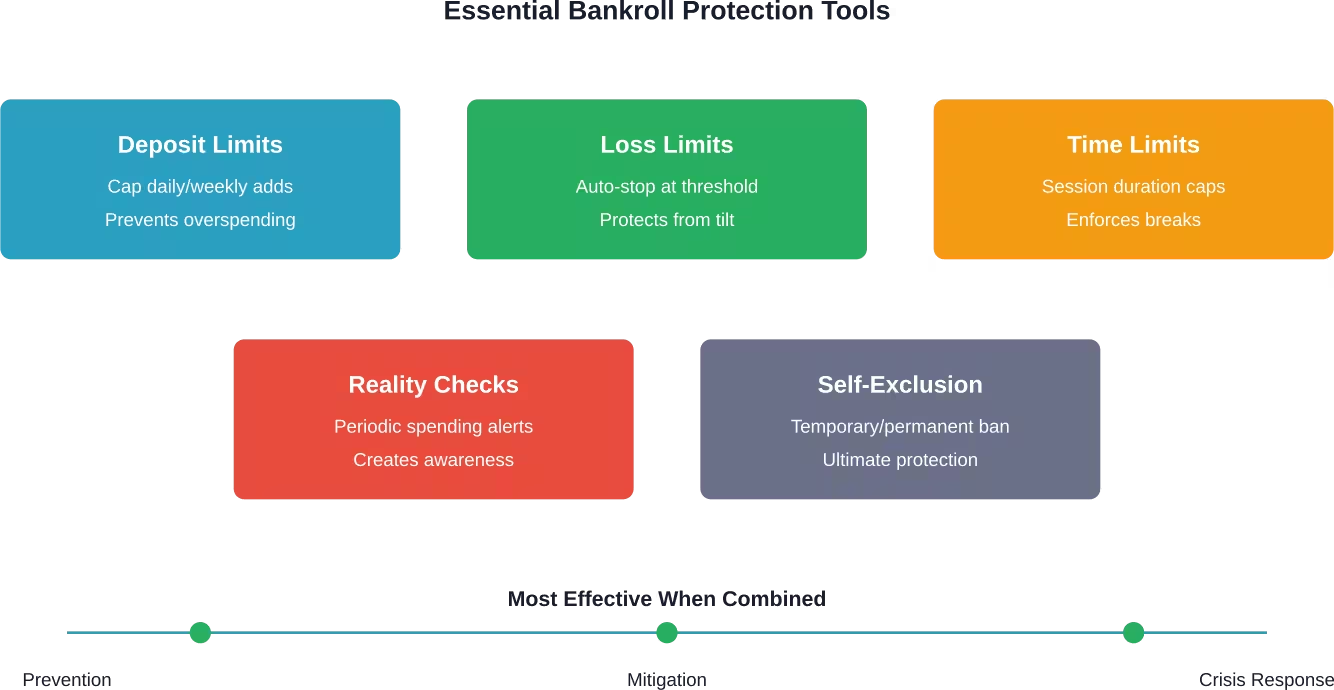
Modern gambling platforms offer built-in tools that actually help. Use them.
Deposit Limits
Set maximum amounts that can be deposited daily, weekly, or monthly. This caps how much money flows into gambling accounts regardless of emotional state or tilt.
Session Time Limits
Many platforms allow setting maximum session durations. When time expires, access locks temporarily. This combats the casino tendency to eliminate clocks and windows—environmental design meant to extend play.
Reality Check Reminders
Periodic pop-up notifications showing time elapsed and money spent create moments of reflection. These brief interruptions can prevent autopilot gambling that drains bankrolls without conscious awareness.
Common Bankroll Mistakes That Destroy Finances
Even gamblers who understand bankroll theory make predictable errors.
Using Credit Cards or Loans
Borrowing money to gamble—whether credit cards, personal loans, or cash advances—transforms entertainment into financial catastrophe. Interest compounds losses. Debt collectors don’t accept explanations about bad beats.
If the bankroll depletes, stop gambling. Period. Replenish only when disposable income allows.
Celebrating Wins by Increasing Bets
Winning feels great. That rush often leads to larger bets, reasoning that “it’s the house’s money anyway.” But wins are now part of the bankroll. Treating them differently than the original stake creates inconsistent money management that eventually fails.
Ignoring Variance and Tilt
All gambling involves variance—short-term fluctuations that don’t reflect long-term probabilities. A good blackjack player can lose ten hands straight. A sharp sports bettor can endure weeks of losses.
Tilt occurs when emotional responses override rational bankroll management. Anger, frustration, or desperation lead to oversized bets and abandoned strategy. Research on gamblers’ attitudes toward money shows that viewing money as a tool for control rather than emotional satisfaction correlates with healthier gambling patterns.
When Bankroll Management Isn't Enough
Bankroll management helps recreational gamblers stay safe. But it doesn’t fix gambling addiction.
Warning signs that gambling has moved beyond entertainment include: lying about gambling activities, gambling with money needed for bills, chasing losses compulsively, gambling to escape problems, or feeling unable to stop despite wanting to.
Problem gambling affects roughly 3.6% of adults in some populations, representing millions of people. Financial literacy and money management skills offer some protective effect, but they’re not cures for addiction.
Organizations like the National Council on Problem Gambling provide confidential help. Self-exclusion programs allow individuals to ban themselves from casinos and online platforms. These resources exist because bankroll management alone can’t address compulsive behavior.
Making Bankroll Management Actually Work
Theory means nothing without implementation. Here’s how to translate concepts into practice:
Start by calculating true disposable income after every essential expense. Be honest. If gambling money comes from anywhere else, the system already failed.
Open a separate account or use dedicated payment methods exclusively for gambling. Transfer the monthly bankroll allocation once, never more.
Set up every available platform limit: deposits, losses, session time. Make these limits meaningful, not token gestures.
Track every gambling session in a simple spreadsheet: date, game type, starting amount, ending amount, duration. This creates accountability and reveals patterns.
Review the bankroll monthly. If consistent losses occur, reduce the allocation or take a break. If consistent wins accumulate, consider withdrawing profits to prevent them from bleeding back into future sessions.
But most important: decide in advance what “too much” looks like and establish an exit strategy. Maybe that’s losing 30% of the bankroll. Maybe it’s three consecutive losing sessions. Define the trigger, then honor it when emotions run high.
Frequently Asked Questions
How much of my income should go to gambling?
Financial experts generally recommend allocating no more than 2–5% of monthly income to gambling after all essential expenses are covered. For someone earning $4,000 monthly, that’s $80–$200 maximum. This percentage ensures gambling remains entertainment rather than a financial risk.
What’s the best unit size for sports betting?
Conservative sports betting bankroll management suggests 1–2% of total bankroll per wager. More aggressive bettors occasionally use 2–3%, but exceeding 5% on any single bet dramatically increases risk of bankroll depletion during inevitable losing streaks.
Should I use a separate bank account for gambling?
Yes. Keeping gambling funds separate from personal accounts creates psychological boundaries and simplifies tracking. Use a dedicated checking account, prepaid card, or e-wallet exclusively for gambling transactions to prevent mixing entertainment spending with essential finances.
How do I stop chasing losses?
Set predetermined loss limits before gambling begins and use platform tools that automatically stop play when limits are reached. Walk away when limits hit regardless of emotional state. Chasing losses by increasing bet sizes is the primary cause of catastrophic bankroll failures.
What if I run out of bankroll before the month ends?
Stop gambling until the next month’s allocation becomes available. Never replenish a depleted bankroll using credit, loans, or money allocated for bills. If bankrolls consistently deplete early, either reduce the gambling frequency or reassess whether gambling is affordable given current finances.
Do professional gamblers use different bankroll management?
Professional gamblers typically use more sophisticated systems like the Kelly Criterion, which adjusts bet sizing based on perceived edge. However, they still maintain strict bankroll discipline, often more conservative than recreational players since gambling is their income source rather than entertainment.
What’s the difference between bankroll management and responsible gambling?
Bankroll management is a specific financial strategy focusing on money allocation and bet sizing. Responsible gambling is broader, encompassing bankroll management plus emotional control, time limits, self-awareness about problem gambling signs, and using available support resources when needed.
The Bottom Line on Managing Gambling Money
Gambling will always carry risk. The house edge ensures that, over time, casinos and sportsbooks profit. Individual sessions vary wildly due to variance, but mathematical certainty eventually asserts itself.
Bankroll management doesn’t change those fundamentals. It won’t turn losing games into winning ones or guarantee profits. What it does is create a sustainable framework where gambling remains entertainment rather than financial disaster.
Set strict limits. Use only true disposable income. Define unit sizes and stick to them. Employ platform tools that enforce discipline when emotions override judgment. Separate gambling money from essential finances. Track spending. Recognize warning signs.
These practices don’t make gambling safe—nothing does. But they make it safer. And for those who choose to gamble, that difference matters enormously.
Implement these strategies before placing the next bet. Future financial stability depends on decisions made right now, before losses mount and desperation sets in. Start with honest calculation of disposable income, establish clear limits, and build systems that protect against predictable human weaknesses.
The bankroll management that works isn’t the most sophisticated system. It’s the one actually followed when everything’s on the line.
Related Articles

September 30, 2026Is Sports Betting Legal in Brazil? The Full...

September 30, 2026Is Sports Betting Legal in Iran? The Real...