 Nothing found for the request
What Are the Types of Gambling? Complete Guide 2026
Sologe April 28, 2026
Share:


Quick Summary
Quick Summary: Gambling comes in many forms, from chance-based activities like lotteries and slots to skill-influenced games like poker and sports betting. The main types include casino gambling (table games, slot machines), lottery and raffle games, sports and race betting, bingo, card games, and increasingly, online gambling platforms. Understanding these different types helps people recognize gambling activities and their associated risks.
Gambling has been part of human culture for centuries, and it’s evolved into countless forms. From traditional lottery tickets to sophisticated online platforms, the variety can seem overwhelming.
But here’s the thing—not all gambling is the same. Some types rely purely on chance, while others involve an element of skill. Some happen in casinos, others from your phone. Understanding these differences matters, whether you’re gambling recreationally or trying to recognize when it’s becoming a problem.
This guide breaks down the major categories of gambling, how they work, and what makes each type unique.
Understanding What Gambling Actually Means
At its core, gambling is wagering something of value on an event where the outcome is uncertain, with the hope of winning something of material value. That’s the technical definition, anyway.
In practice, gambling happens whenever you risk money or valuables on a chance-determined outcome. The key elements are always present: stakes, risk, and an uncertain result.
The term “gaming” has sometimes been used interchangeably with gambling, though it’s often used to make gambling sound more socially acceptable or to circumvent legal restrictions. The media has alternated between these terms, subtly shifting public perception over time.
Two Main Categories: Chance vs. Skill
Before diving into specific types, it helps to understand the fundamental split in gambling activities.
Chance-Based Gambling
These games offer no real control over outcomes. Every player has the same odds, and no amount of strategy changes those odds.
Examples include lottery tickets, slot machines, roulette, bingo, and most casino games. The house always has a mathematical edge, and outcomes are purely random.
Skill-Influenced Gambling
These activities involve some degree of knowledge, strategy, or skill that can influence results—though luck still plays a significant role.
Sports betting, poker, horse racing, and blackjack fall into this category. Experienced players may have better outcomes than novices, but randomness remains a factor.
That said, the line between chance and skill can blur. Many gamblers overestimate their skill level or control over outcomes, which can contribute to problem gambling.
Publish Your Product in an iGaming Platform

Sologe provides a platform where vendors can upload and manage product listings across multiple categories. It’s built for companies that want a simple way to present their offers in the gaming industry.
Need a Listing Platform?
List with Sologe to:
- publish offers in one place
- organize products by type
- reach users searching for gaming solutions
👉 Get in touch with Sologe to list your product
The Major Types of Gambling
Now let’s look at the specific forms gambling takes. These are the most common types you’ll encounter.
1. Casino Gambling
Casinos offer the widest variety of gambling under one roof. The commercial casino industry has grown significantly.
Table games include blackjack, roulette, craps, and baccarat. These involve a dealer and multiple players around a physical table. Some involve minimal strategy (roulette), while others reward skilled play (blackjack with card counting).
Slot machines dominate casino floors. They’re entirely chance-based, with outcomes determined by random number generators. No strategy exists to improve your odds—each spin is independent.
Video poker combines elements of slots and poker, offering players some decision-making that affects outcomes.
In 2025, commercial casino gaming revenue in the United States reached a record $78.72 billion.
2. Lottery and Raffle Games
Lotteries are among the most popular forms of gambling. Players purchase tickets with number combinations, hoping to match numbers drawn randomly.
As of early 2026, the lottery remains the most common and popular form of gambling in the United States. It’s widely accessible, socially acceptable, and involves small stakes for most participants.
Scratch cards offer instant results rather than waiting for a draw. Raffles work similarly, with tickets entered for a chance to win prizes.
The appeal? Low cost, wide availability, and the fantasy of life-changing jackpots. The reality? Astronomical odds against winning significant prizes.
3. Sports Betting
Wagering on sporting events has exploded since legal restrictions were lifted in many jurisdictions. Bettors place money on outcomes of professional and amateur sports.
Common bet types include point spreads, money lines, over/under totals, parlays, and prop bets. Some bettors study statistics and trends extensively, believing they can gain an edge.
Sports betting appeals to those who already follow sports closely. The skill element makes it feel different from pure chance gambling, though bookmakers structure odds to ensure their profit regardless of outcomes.
4. Horse and Dog Racing
Betting on horse racing has deep historical roots. Bettors wager on which horses will finish first, second, or third in various combinations (win, place, show, exacta, trifecta).
Knowledge of horses, jockeys, track conditions, and form can influence betting decisions. But unpredictability remains high—favorites lose regularly.
Dog racing follows similar patterns, though it’s less common and has faced ethical scrutiny in recent years.
5. Poker
Poker stands apart because players compete against each other, not the house. The casino or platform takes a small percentage (rake), but skilled players can consistently profit from less skilled opponents.
Variants include Texas Hold’em, Omaha, Seven-Card Stud, and many others. Tournament poker and cash games offer different dynamics.
Poker involves significant skill in reading opponents, calculating odds, and managing bankrolls. However, short-term variance means luck heavily influences individual sessions.
6. Bingo
Bingo is a social gambling activity where players mark numbers on cards as they’re randomly called. The first to complete a specified pattern wins.
It’s entirely chance-based with no decisions affecting outcomes. Bingo appeals to those seeking social interaction alongside gambling, often in community settings or online chat rooms.
7. Online Gambling
The internet has transformed gambling accessibility. Online platforms offer virtually all gambling types: casino games, poker, sports betting, bingo, and more.
Online gambling is seen as a key driver in the industry’s growth, with forecasts projecting $700 billion in annual profits. Research suggests online casino products are associated with increasing harms to help-seekers.
The convenience of gambling from home or mobile devices, combined with 24/7 availability, creates unique risks. Payment solutions including cryptocurrencies can facilitate access even in jurisdictions without legal markets.
Gambling Type | Chance vs. Skill | Typical Location | Social Element |
|---|---|---|---|
Lottery | Pure Chance | Retail outlets | Low |
Slot Machines | Pure Chance | Casinos | Low |
Roulette | Pure Chance | Casinos | Medium |
Bingo | Pure Chance | Bingo halls/Online | High |
Sports Betting | Skill-Influenced | Sportsbooks/Online | Medium |
Poker | Skill-Influenced | Casinos/Online | High |
Horse Racing | Skill-Influenced | Tracks/OTB/Online | Medium |
Blackjack | Skill-Influenced | Casinos | Medium |
Legal Classifications of Gambling
In the United States, the Indian Gaming Regulatory Act established three classes of gaming in 1988, creating a regulatory framework particularly relevant to tribal lands.
- Class I gaming includes traditional tribal ceremonies and social games with minimal prizes. Tribes have exclusive regulatory authority.
- Class II gaming covers bingo and similar games, plus non-banked card games (where players compete against each other, not the house). Tribes can conduct Class II gaming if located in states permitting such gaming and if not prohibited by federal law.
- Class III gaming encompasses everything else: slot machines, banked card games, and casino-style gambling. This requires tribal-state compacts and is more heavily regulated.
These classifications matter because they determine what gambling activities can operate in different jurisdictions and under what regulatory oversight.
Gambling Participation and Trends
Gambling participation rates vary significantly by jurisdiction. In Ontario, Canada, 82.9% of the general population reported past-year gambling participation, while neighboring Quebec reported 66.6%.
The type of gambling people engage in has shifted over time. Research on harmful types of gambling shows that online environments, particularly online casino products, are associated with increasing harms to help-seekers. The harmfulness of different gambling products may not be stable but changes over time.
According to recent studies, for every person with a gambling problem, approximately six others are affected. International estimates suggest between 2% and 19% of individuals may be impacted by someone’s gambling problem.
Understanding Problem Gambling Risks
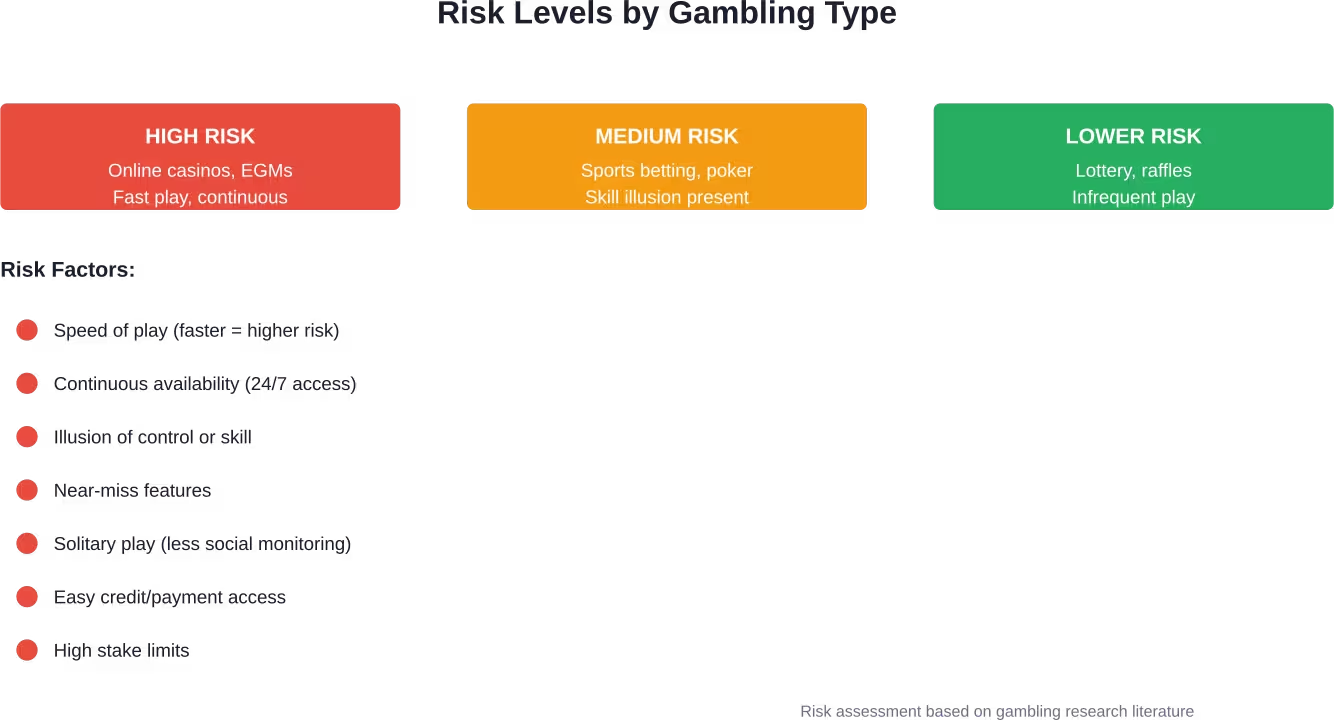
Not all gambling types carry equal risk for developing problems. Research has identified several factors that increase harmfulness.
Speed matters. Games with rapid play cycles (like slot machines completing spins every few seconds) create more opportunities for losses and can facilitate chasing behavior.
Continuous availability increases risk. When gambling is accessible 24/7 from home, it’s harder to maintain boundaries.
The illusion of control is powerful. Games that seem skill-based but aren’t (or where skill matters far less than people believe) can lead to persistent gambling despite losses.
Environmental factors play a role too. Research shows casino density is positively associated with suicide mortality. A county-level study of 50 US states from 2000 to 2016 examined the relationship between casino accessibility and suicide mortality.
Frequently Asked Questions
What is the most common type of gambling?
Lottery gambling is the most common type in the United States. Its widespread legal availability, low cost of entry, and social acceptability make it the most accessible form for most people.
Which gambling types are purely based on chance?
Lottery, scratch cards, slot machines, roulette, bingo, and keno are entirely chance-based. No strategy or skill can improve your odds—each outcome is random and independent.
Can skill really help you win at gambling?
In certain games, yes. Poker involves competing against other players, so skill can influence long-term results. Knowledge in sports betting or horse racing can improve decision-making, and techniques like card counting in blackjack can slightly shift odds. However, luck still plays a significant role, especially in the short term.
Is online gambling more dangerous than traditional gambling?
Online gambling can pose higher risks due to 24/7 accessibility, fast-paced play, solitary environments, and easy payment methods. These factors can increase the likelihood of problematic behavior compared to traditional gambling settings.
What are Class II and Class III gaming?
Under the Indian Gaming Regulatory Act, Class II includes bingo and non-banked card games where players compete against each other. Class III includes slot machines, banked card games, and most casino-style gambling, requiring more extensive regulation and approval.
Which type of gambling has the worst odds?
Lottery games generally have the worst odds, especially large jackpots where chances of winning can be extremely low. Slot machines also have a significant house edge (typically 2–15%), while some table games like blackjack can have lower edges with optimal strategy.
How many people are affected by someone else’s gambling?
Research suggests that approximately six people are affected by each individual with a gambling problem. These impacts can include financial stress, emotional strain, and relationship difficulties, highlighting the broader social effects of gambling.
Conclusion
Gambling encompasses a wide spectrum of activities, from buying an occasional lottery ticket to daily online casino play. Understanding the different types helps recognize what qualifies as gambling and the varying risk levels involved.
The distinction between chance-based and skill-influenced gambling matters, though it’s often overstated. Even games requiring knowledge involve substantial luck, while purely random games can create powerful illusions of control.
As gambling becomes more accessible through online platforms and expanded legalization, awareness of these different types and their associated risks becomes increasingly important. Whether gambling recreationally or concerned about your own or someone else’s gambling, recognizing the form it takes is the first step toward making informed decisions.
If gambling is causing problems in your life or someone you know, professional help is available through problem gambling helplines and treatment services.
Related Articles

September 30, 2026Is Sports Betting Legal in Brazil? The Full...

September 30, 2026Is Sports Betting Legal in Iran? The Real...