 Nothing found for the request

What Does God Say About Gambling? Biblical Truth Explained
Sologe April 28, 2026
Share:


Quick Summary
Quick Summary: The Bible doesn’t explicitly mention gambling, but it addresses principles that condemn the practice: greed, covetousness, love of money, and get-rich-quick schemes. Christian teaching views gambling as incompatible with biblical stewardship, trust in God’s provision, and love for neighbors.
Look, you won’t find a verse that says “Thou shalt not gamble.” The Bible doesn’t mention casinos, lottery tickets, or sports betting by name. But here’s the thing—God’s Word addresses the heart issues behind gambling in ways that make the biblical position pretty clear.
Let’s explore what Scripture actually says about the principles that apply to gambling and why most Christian traditions view it as problematic.
Why the Bible Doesn't Mention Gambling Directly
Games of chance existed in biblical times. Roman soldiers cast lots for Jesus’s clothing at the crucifixion. Ancient civilizations used dice and other gambling methods.
So why the silence on gambling specifically?
Scripture focuses on heart attitudes and principles rather than creating exhaustive lists of prohibited activities. The Bible gives us a framework for decision-making that applies across cultures and centuries. Gambling falls under several biblical principles that address the motivations and consequences behind the practice.
Biblical Principles That Condemn Gambling
The Love of Money
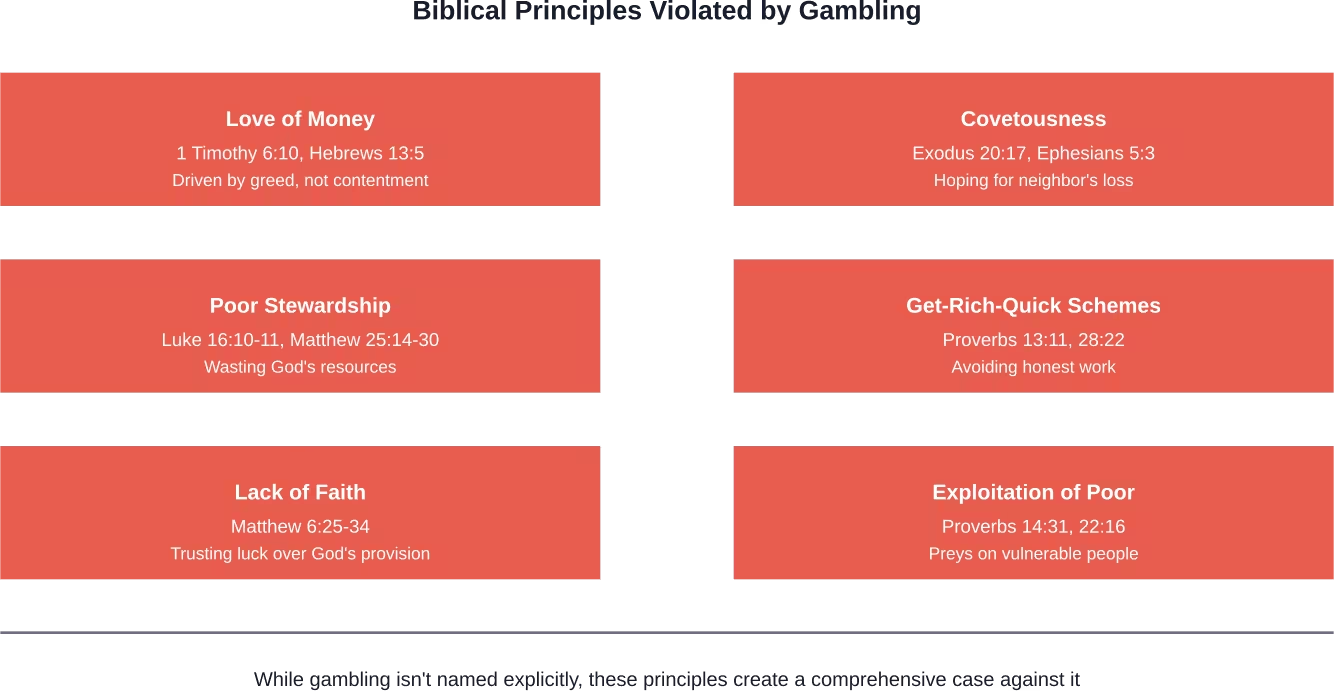
First Timothy 6:10 states clearly: “For the love of money is the root of all kinds of evils.” Hebrews 13:5 instructs believers to keep their lives “free from love of money” and be content with what they have.
Gambling is fundamentally driven by desire for wealth without work. According to Got Questions, a Christian apologetics organization, this violates the biblical principle of finding contentment in God’s provision rather than chasing financial gain.
The motivation matters. Are people gambling for innocent entertainment, or are they genuinely hoping to win money they didn’t earn? Real talk: most gambling is motivated by the latter.
Greed and Covetousness
Exodus 20:17 prohibits coveting what belongs to your neighbor. Ephesians 5:3 warns that “there must not be even a hint” of greed among believers.
Here’s where gambling gets problematic: it’s a zero-sum game. Your winnings come from someone else’s losses. You’re hoping to profit from others’ financial harm. The Vatican’s Catechism emphasizes that economic matters require temperance and justice that preserves neighbors’ rights and renders what is due to them.
Gambling inverts this principle. Instead of loving your neighbor, you’re hoping they lose so you can win.
Avoiding Honest Work
Proverbs 13:11 warns that “wealth from get-rich-quick schemes quickly disappears; wealth from hard work grows over time” (NLT). Second Thessalonians 3:10 states bluntly: “If anyone is not willing to work, let him not eat.”
Gambling represents an attempt to gain wealth without contributing productive labor. It’s the opposite of biblical stewardship and the work ethic Scripture commends throughout both testaments.
Poor Stewardship
Jesus taught extensively about faithful stewardship of resources. The parable of the talents (Matthew 25:14-30) emphasizes wise management of what God has entrusted to us.
Gambling squanders resources. According to a Bankrate survey from October 2019 cited by Got Questions, households in the lowest income bracket spend 13 percent of their annual income on lottery tickets, while the highest earners spend just 1 percent. Those who can least afford to lose are gambling the most.
That’s terrible stewardship that harms vulnerable people.
Trusting Chance Over God
Matthew 6:33 instructs believers to “seek first the kingdom of God and his righteousness, and all these things will be added to you.” According to the Billy Graham Evangelistic Association, a Christian lifestyle expresses faith in God’s loving care and provision, not in chance or luck.
Gambling shifts trust from divine providence to random outcomes. It’s incompatible with the faith Scripture calls believers to exercise.
What Christian Denominations Say About Gambling
Major Christian traditions have taken clear positions against gambling based on these biblical principles.
Denomination | Official Position | Key Reasoning |
|---|---|---|
Roman Catholic | Not intrinsically evil, but requires temperance and justice | Must not create addiction or deprive family of necessities; requires temperance and justice |
United Methodist | Opposes all forms | “Menace to society, deadly to moral, social, economic, and spiritual life” |
Southern Baptist | Strongly opposes | Violates stewardship, work ethic, and love of neighbor |
Jehovah’s Witnesses | Views as sin | Driven by greed, which God hates (1 Corinthians 6:9-10) |
Presbyterian (PCUSA) | Generally opposes | Exploits human weakness and harms the poor |
The Catholic position is somewhat more nuanced. According to the Catholic Virginian (January 24, 2022), a recently retired pastor stated he would “gladly and gleefully accept” a donation from lottery winnings. In 2016, someone in Massachusetts donated $100,000 in lottery winnings to St. Anthony’s Shrine, run by the Franciscans.
But even the more permissive Catholic view requires that gambling not become addictive, not deprive families of necessities, and be practiced with temperance. The Vatican’s teaching on human dignity and economic ethics emphasizes respect for persons and their goods.
Common Objections Addressed
“What About Small Amounts for Entertainment?”
Some argue there’s no difference between spending ten dollars on lottery tickets versus ten dollars on a movie. Got Questions Blog acknowledges this comparison has some merit.
But here’s where motivation matters. Entertainment spending doesn’t depend on others losing money. It’s not driven by greed or desire for unearned wealth. And it doesn’t typically prey on the poor the way state lotteries demonstrably do.
Scripture emphasizes that giving one’s best and striving for achievement brings satisfaction—the opposite of gambling’s hope for unearned reward.
“Isn’t Investing Just Gambling?”
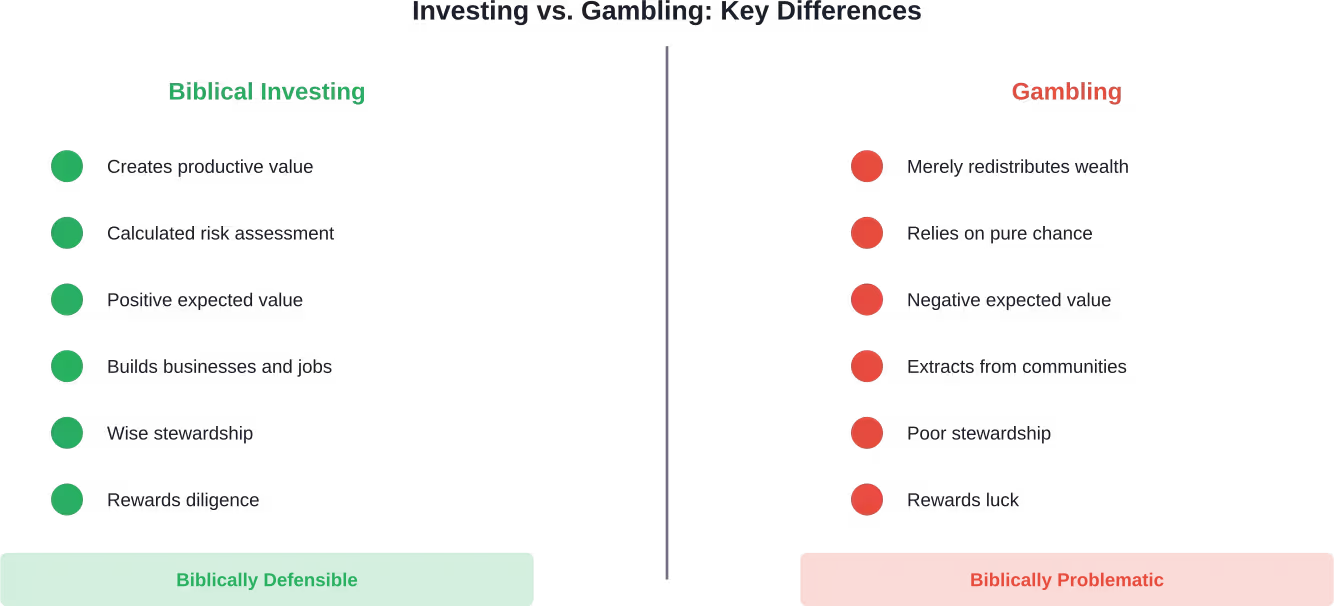
Crown Financial Ministries addresses this question directly. Investing differs fundamentally from gambling in several ways:
- Investment contributes to productive economic activity; gambling merely redistributes existing wealth
- Investment involves calculated risk assessment; gambling relies on chance
- Investment grows wealth over time through compound returns; gambling typically destroys wealth through negative expected value
- Investment builds businesses and jobs; gambling extracts money from communities
The biblical wisdom literature commends prudent business decisions while warning against get-rich-quick schemes. That’s the key distinction.
The Broader Social Impact
Beyond individual spiritual concerns, gambling creates measurable social harm that conflicts with Christian ethics of loving your neighbor.
Research cited by the Gospel Broadcasting Network found that poor communities bet approximately three times the amount wagered by middle- and upper-income areas. Studies of lotteries in Connecticut and Massachusetts concluded they function as an effective 60 percent sales tax on lower-income groups.
The United Methodist Church calls gambling “destructive of good government and good stewardship.” That’s because state-sponsored gambling creates perverse incentives where governments profit from citizens’ losses, particularly the most vulnerable.
According to Biola University’s April 2026 Cultural Update, a Gallup survey shows men under 30 who say religion is “very important” to them increased from 28% in 2023 to 42% in 2025. As more young people take faith seriously, questions about ethical behavior like gambling become increasingly relevant.
Connect With iGaming Companies Meeting Your Standards

Discussions about gambling from a biblical perspective often focus on responsibility and intent. For businesses, these ideas show up in how products are built and which partners are involved. Sologe is a dedicated B2B marketplace where iGaming companies present their products, evaluate suppliers, and start direct business conversations in one environment. It is designed specifically for industry participants, not players, and helps companies work with more clarity.
Build Partnerships That Fit Your Business Approach
Sologe gives companies a more structured way to connect and move forward:
- Find suppliers across platforms, payments, and services
- Present products to operators already working in the market
- Keep business visibility active without short-term campaigns
- Start direct discussions with relevant companies
If you want to work with companies that match your approach or make your solution visible to the right businesses, contact Sologe and start the conversation.
Frequently Asked Questions
Does the Bible explicitly say gambling is a sin?
No, the Bible does not use the word “gambling” or explicitly forbid it by name. However, it addresses attitudes such as greed, covetousness, and love of money, which many interpret as conflicting with the principles behind gambling.
What Bible verses relate to gambling?
Commonly referenced passages include 1 Timothy 6:10 (love of money), Hebrews 13:5 (contentment), Proverbs 13:11 (wealth gained quickly), Exodus 20:17 (covetousness), and Matthew 6:33 (trust in God’s provision). These verses address underlying motivations rather than gambling directly.
Is buying a lottery ticket always wrong?
Views differ among Christians. Some believe it conflicts with stewardship and reliance on chance, while others consider small participation for entertainment acceptable. Motivation and personal conviction are key considerations.
Can Christians work in the gambling industry?
This is debated. Some believe it conflicts with ethical principles such as avoiding harm to others, while others see it as a matter of personal conviction. Individuals often weigh their role, responsibilities, and impact carefully.
What about games like poker with friends for small stakes?
This is often considered a gray area. Some view low-stakes games as social entertainment, while others avoid them entirely. The key factors include intent, the role of money, and whether it promotes harmful behaviors.
How is investing different from gambling biblically?
Investing is generally seen as using resources to create value over time through productive means, while gambling relies on chance for financial gain. Many interpret biblical teachings as supporting wise stewardship rather than risk-based gain.
What should Christians do if they struggle with gambling addiction?
Seek support through pastoral counseling, support groups, and professional help. Addressing both spiritual and practical aspects of the issue is important. Community, accountability, and structured guidance can support recovery.
The Bottom Line on God and Gambling
While you won’t find a verse that says “Thou shalt not gamble,” Scripture’s teaching on the matter is clear when you examine the principles involved.
Gambling violates biblical commands against greed, covetousness, and love of money. It conflicts with proper stewardship of God’s resources. It abandons the work ethic Scripture commends. It trusts chance rather than divine providence. And it profits from neighbors’ losses rather than loving them.
For believers seeking to honor God with their resources and lives, the biblical case against gambling is compelling. It’s not about legalistic rule-following—it’s about heart attitudes that either trust God’s provision or chase after wealth through means Scripture consistently condemns.
If you’re wrestling with gambling habits or questions about specific situations, seek wisdom from Scripture, pastoral counsel, and the conviction of the Holy Spirit. God’s Word provides sufficient guidance to make wise decisions that honor Him.
Related Articles

September 30, 2026Is Sports Betting Legal in Brazil? The Full...

September 30, 2026Is Sports Betting Legal in Iran? The Real...