 Nothing found for the request

Is Sports Betting Gambling? The Truth About Risk
Sologe April 28, 2026
Share:


Quick Summary
Quick Summary: Sports betting is definitively a form of gambling—it involves wagering money on uncertain outcomes with the risk of financial loss. While some bettors believe skill influences their chances, research shows nearly all lose money long-term, and sports betting carries similar addiction risks to casino gambling, affecting 30-40% of participants according to studies.
The question seems straightforward, but there’s genuine confusion out there. As sports betting has exploded across the United States since 2018, millions of people have started placing wagers through apps like FanDuel and DraftKings. Many don’t think they’re gambling in the traditional sense.
But here’s the reality: sports betting is absolutely a form of gambling. It meets every clinical definition.
This isn’t just semantics. Understanding sports betting as genuine gambling matters for recognizing risks, setting appropriate limits, and identifying when recreational play crosses into problem territory. Medical research from institutions like the NIH shows that sports wagering carries the same addictive potential as casino games, with specific risk factors that make it particularly concerning.
What Actually Defines Gambling?
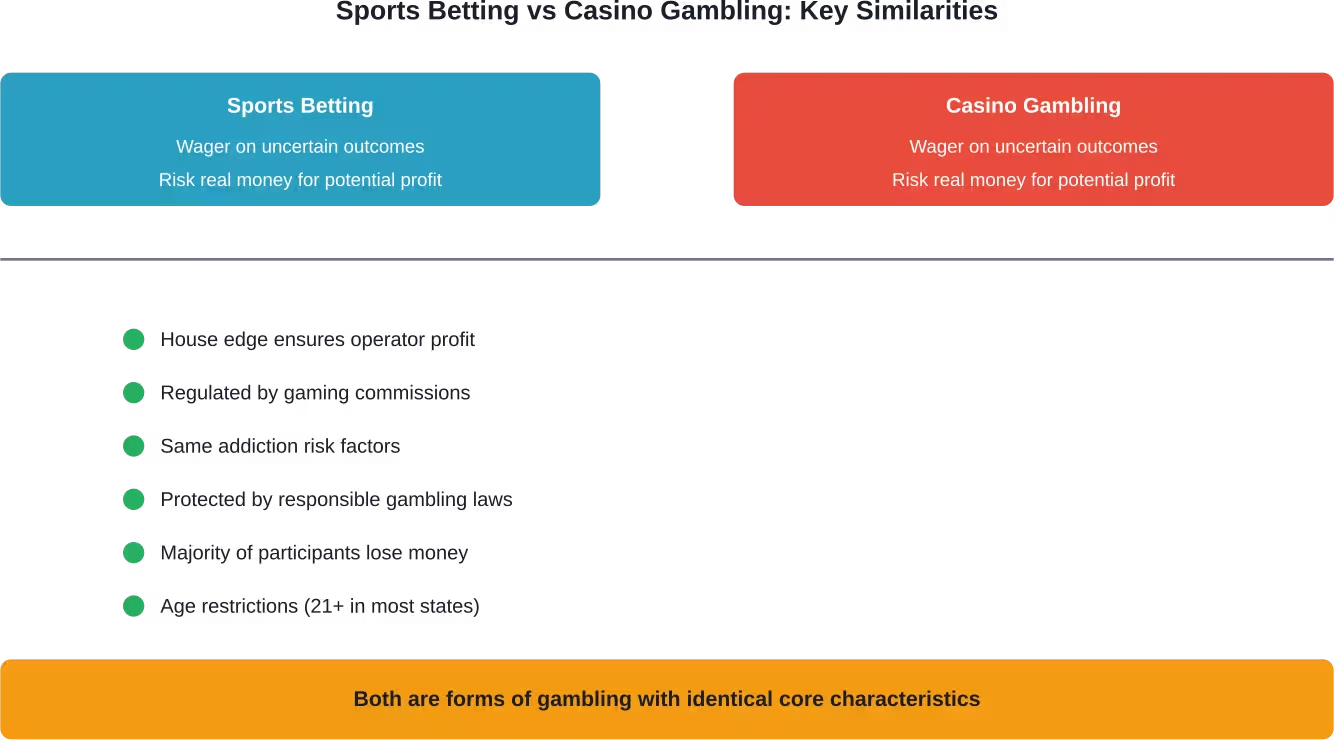
Gambling involves three core elements: consideration (something of value, usually money), risk (uncertain outcomes), and prize (potential winnings). Sports betting checks all three boxes without exception.
When someone places a wager on whether their team will cover the spread or hit the over/under, they’re risking real money on an outcome they can’t control or predict with certainty. The fact that sports involve human performance rather than spinning reels doesn’t change the fundamental nature of the activity.
According to research published in the Journal of Gambling Studies, sports betting has been classified alongside other forms of gambling in medical literature for decades. The American Psychiatric Association recognizes gambling disorder as a distinct psychiatric illness, and sports wagering falls squarely within that diagnostic framework.
The Legal Classification
From a regulatory standpoint, there’s no ambiguity. Sports betting is legally classified as gambling in every state that has legalized it. The same gaming commissions that oversee casinos regulate sportsbooks.
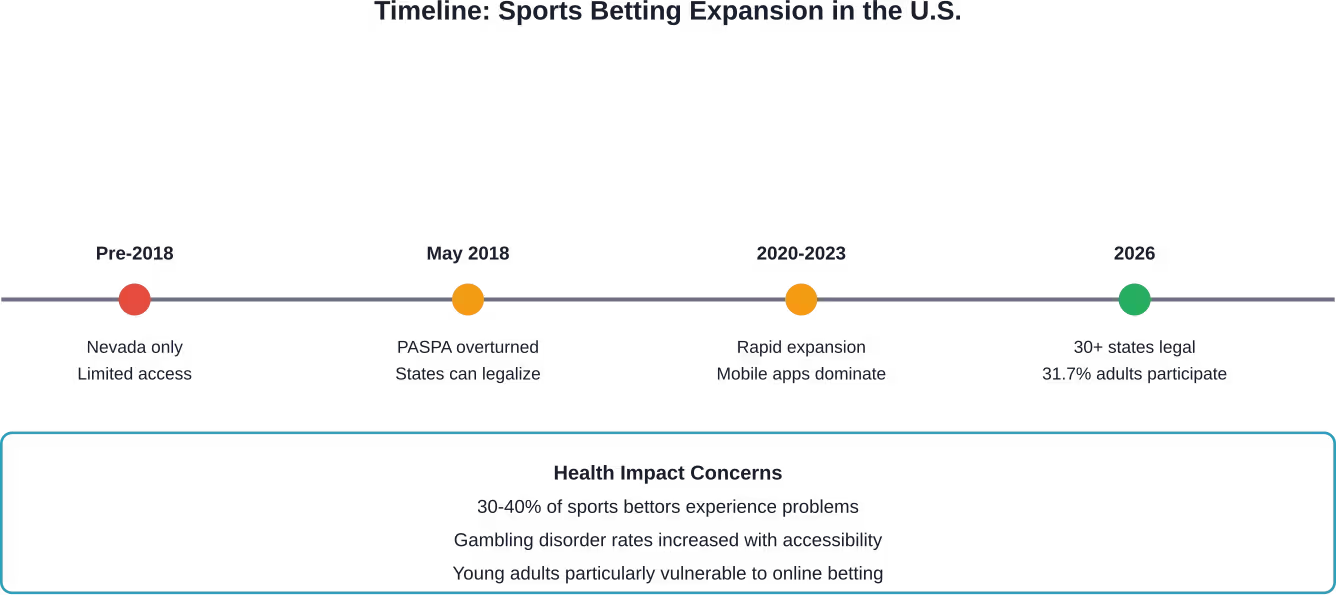
Following the Supreme Court’s decision to overturn PASPA in 2018, states that legalized sports betting did so explicitly as a form of gambling, subject to the same regulatory frameworks, age restrictions, and problem gambling resources as traditional casino gaming.
Why Do People Think It's Different?
The confusion isn’t random. Several factors make sports betting feel distinct from casino gambling, even though the underlying mechanics are identical.
First, sports betting taps into existing fandom. People already watch games, follow teams, and debate outcomes with friends. Placing a wager feels like an extension of that engagement rather than a separate gambling activity. This emotional connection creates what researchers call “illusion of control”—the mistaken belief that knowledge about sports translates to predictive ability.
Second, the marketing is different. Sportsbooks position themselves as entertainment platforms integrated with sports media. Ads run during games on broadcast networks, celebrity athletes endorse betting apps, and odds are discussed on sports talk shows as casually as statistics.
According to the 2023 Prosper Media Behavior and Influence (MBI) study from Northwestern University’s Medill Spiegel Research Center, encompassing 17,159 adults aged 18+, 31.7% of respondents engage in sports gambling (regularly or occasionally). That mainstream acceptance makes it feel less like traditional gambling.
The Skill Myth
Here’s where things get really misleading. Many sports bettors genuinely believe they’re exercising skill rather than gambling on luck.
The reality? A 2024 study from the University of California found that nearly all gamblers lose money in the long run. Professional oddsmakers have access to sophisticated data, algorithms, and years of experience. The house edge ensures sportsbooks profit regardless of individual game outcomes.
Around 30-40% of sports bettors experience gambling-related problems, according to research compiled by GamblingHarm.org. That’s not the profile of a skill-based activity where knowledgeable participants consistently win.
What Medical Research Actually Shows
The medical community doesn’t debate whether sports betting is gambling. The research focuses on understanding its specific risk profile and health impacts.
A study published in Cogent Mental Health (2023 Jul 11;2(1):2231497) by Joshua B Grubbs and Shane W Kraus examined sports wagering in the context of addictive disorders using a census-matched U.S. sample. The researchers found that gambling disorder and problem gambling are recognized public health concerns, with excessive, compulsive, or addictive gambling behaviors classified as distinct psychiatric illnesses.
Sports betting triggers the same neurological reward pathways as other forms of gambling. The anticipation, the emotional highs of winning, and the chase to recover losses activate dopamine systems in ways that can lead to compulsive behavior.
Risk Factors Specific to Sports Betting
A longitudinal study published in Frontiers in Psychiatry (2024 Feb 27;15:1320592) titled “Individual risk factors and prediction of gambling disorder in online sports bettors – the longitudinal RIGAB study” identified individual risk factors that predict gambling disorder. The study tracked participants longitudinally, finding that certain personality traits and behavioral patterns significantly increased problem gambling risk.
Online sports betting presents unique challenges. The convenience of mobile apps, the ability to place bets instantly during live games, and the constant availability create what researchers call “continuous gambling opportunities.” These factors raise concerns that sports betting could contribute to gambling disorder development at higher rates than traditional forms.
According to a systematic review in the Journal of Behavioral Addictions (2017 Oct 23;6(4):639–647), research comparing online and land-based sports gambling disorder patients found distinct patterns between these groups. The ease of access and integration with entertainment technology means individuals who might not visit physical casinos can develop problematic gambling behaviors through sports betting apps.
Risk Factor | Impact on Sports Bettors | Research Source |
|---|---|---|
Mobile accessibility | 24/7 betting availability increases compulsive use | Frontiers in Psychiatry, 2024 |
Emotional investment | Fandom creates illusion of control and knowledge | Journal of Gambling Studies, 2023 |
Live in-game betting | Continuous action mimics slot machine engagement | Journal of Behavioral Addictions, 2017 |
Social normalization | Marketing integration reduces perceived risk | Cogent Mental Health, 2023 |
How Sports Betting Actually Works
Understanding the mechanics helps clarify why this is unquestionably gambling. Sportsbooks don’t simply facilitate peer-to-peer wagering—they operate as profit-making businesses with built-in mathematical advantages.
The most common bet types include point spreads, moneylines, totals (over/under), and parlays. Each carries odds calculated to ensure the sportsbook profits regardless of outcomes. This is called the “vig” or “juice”—typically around 10% on standard bets.
The Math That Guarantees Losses
Here’s why skill matters far less than bettors think. On a standard point spread bet, the odds are typically -110. That means risking $110 to win $100. To break even, a bettor must win 52.4% of bets—not 50%.
Achieving sustained accuracy above 52.4% is extraordinarily difficult. Professional oddsmakers adjust lines based on betting action, injuries, weather, and countless variables. The line itself represents the market’s collective prediction, constantly refined by professionals with superior information.
Occasional wins create what psychologists call “intermittent reinforcement”—the same mechanism that makes slot machines addictive. Those wins feel earned, reinforcing the belief that skill played a role, even as the overall trend moves toward net losses.
The Explosion of Legal Sports Betting
Sports betting’s rapid normalization in American culture happened remarkably fast. Before 2018, only Nevada offered legal single-game sports wagering. Now it’s legal in over 30 states.
This expansion has generated billions in revenue. According to CDC data on gaming facilities, during the past 25 years the commercial casino industry grew to 465 casinos in 30 states, with casinos earning $30 billion in gross revenue in 2020. Sports betting now represents a substantial and growing portion of that total.
The speed of this expansion raises public health concerns. Unlike gradual regulatory changes that allow communities to adapt, sports betting became ubiquitous almost overnight. Television broadcasts integrate betting odds, apps offer sign-up bonuses, and the activity is marketed as mainstream entertainment.
Marketing’s Role in Normalization
Sportsbook advertising doesn’t look like traditional gambling marketing. Instead of Las Vegas glitz, it features regular fans, watch parties, and casual social settings. The messaging emphasizes entertainment and engagement rather than winning money.
This reframing is intentional. By positioning sports betting as a way to enhance game-watching rather than a gambling activity, marketing reduces perceived risk and attracts participants who might avoid casinos.
The integration with sports media creates constant exposure. Odds are displayed on broadcasts, analysts discuss betting lines, and apps sponsor teams and leagues. This normalization particularly impacts younger adults who’ve never known sports media without betting content.
Sports Betting and Problem Gambling
The clinical evidence is clear: sports betting carries substantial addiction risk. Research consistently shows that a significant minority of participants develop problematic gambling behaviors.
The Journal of Gambling Studies published a systematic review (2023 Apr 1;39(2):579–624) examining clinical correlates of sports betting. The findings indicated that sports bettors show similar patterns of gambling disorder as other forms of gambling, with some unique risk factors.
Young men represent a particularly vulnerable demographic. The combination of sports fandom, male-dominated sports culture, and targeted marketing creates higher engagement rates among this group. Studies show they’re more likely to develop problem gambling behaviors related to sports betting than other demographics.
Warning Signs of Problem Gambling
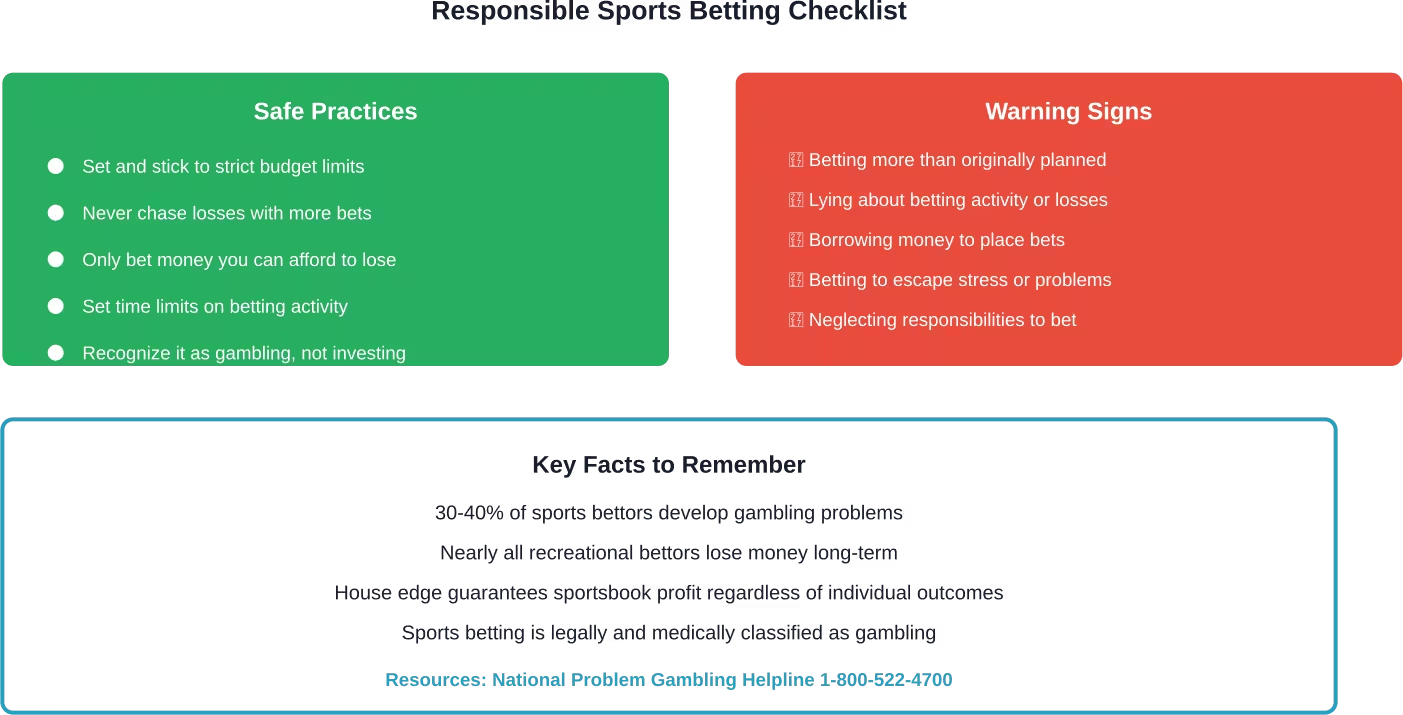
Recognizing when sports betting crosses from recreation to problem is crucial. Medical professionals identify several key indicators:
- Betting more money than originally intended or can afford to lose
- Chasing losses by placing additional bets to recover money
- Lying to family or friends about betting activity or losses
- Feeling restless or irritable when trying to cut back on betting
- Betting as an escape from stress, anxiety, or depression
- Neglecting work, relationships, or responsibilities due to betting
- Borrowing money or selling possessions to fund betting
The CDC has documented connections between gambling accessibility and serious health outcomes. Research on casino accessibility found positive associations with suicide mortality, highlighting the severe consequences problem gambling can have on mental health.
Sports Betting vs Other Forms of Gambling
While sports betting is definitively gambling, it does have distinct characteristics compared to casino games or lottery play. Understanding these differences matters for recognizing specific risks.
Casino games like slots or roulette offer immediate resolution. Spin, win or lose, done. Sports betting extends that timeline—sometimes over hours for a game, days for futures bets. This creates prolonged anticipation and emotional investment.
Poker involves direct competition with other players rather than the house. Sports betting occupies a middle ground: outcomes depend on athlete performance (which feels external and analyzable), but bettors wager against the sportsbook, not each other.
The perceived skill element distinguishes sports betting psychologically, even though the math doesn’t support consistent profitability for recreational bettors. This perception may actually increase risk—players who believe they’re exercising skill are less likely to recognize problematic patterns.
Gambling Type | Resolution Time | Perceived Skill Factor | Primary Risk |
|---|---|---|---|
Slot Machines | Immediate (seconds) | None—pure chance | Rapid continuous play |
Sports Betting | Extended (hours/days) | High perception, low reality | Illusion of control |
Poker | Varied (minutes to hours) | Actual skill component exists | Overestimating ability |
Lottery | Days to weeks | None—pure chance | Low-cost repeated play |
The Regulatory Framework
Sports betting operates under the same regulatory structures as other forms of gambling. State gaming commissions oversee licensing, monitor operations, and enforce responsible gambling requirements.
Most states require sportsbooks to provide resources for problem gambling, including self-exclusion programs, deposit limits, and links to treatment services. These requirements acknowledge the addictive potential and classify sports betting as a regulated gambling activity requiring consumer protections.
Age restrictions mirror casino gambling—typically 21 years old, though some states allow 18+. The legal framework treats sports betting identically to other gambling forms in terms of who can participate and under what conditions.
Tax Treatment
The IRS classifies sports betting winnings as gambling income, subject to the same reporting requirements and tax obligations as casino winnings. Losses can be deducted only to the extent of winnings, and only for those who itemize deductions.
This tax treatment provides another definitive answer to whether sports betting is gambling—federal and state governments explicitly classify it as such for revenue and regulatory purposes.
Industry Perspectives
Sports leagues initially opposed betting on their games, viewing it as a threat to competitive integrity. That position has shifted dramatically as leagues recognized the revenue potential and fan engagement benefits.
Major professional leagues now have official sportsbook partners and allow betting advertising during broadcasts. However, they maintain strict policies prohibiting athletes, coaches, and officials from betting on their own sports—an acknowledgment of both the activity’s gambling nature and its integrity risks.
The NCAA maintains stronger opposition to sports betting, particularly concerning college athletes. Recent cases documented by the Department of Justice have involved both NBA players and college athletes in betting-related violations, highlighting ongoing integrity concerns.
Reach Operators and Find Betting Solutions That Work

Sports betting always comes down to risk – for players and for businesses. Operators are constantly looking for better feeds, platforms, and tools that actually work in real conditions, while vendors need a way to stay visible without chasing attention. Sologe is built as a permanent industry hub where those searches happen directly, without exhibitions, cold outreach, or scattered contacts. Vendors stay visible while buyers actively look.
Compare, Choose, or Get Chosen in One Place
Instead of short campaigns or one-off deals, Sologe gives you:
- A dedicated space for sports betting software, feeds, and related services
- Visibility that stays active 24/7, not limited to events
- Buyers who come in with intent to compare and choose
- One place to present your product, not ten disconnected channels
If you want to find betting solutions faster or be found by operators without chasing them, talk to Sologe and get listed where the search already happens.
Making Informed Decisions
Understanding that sports betting is gambling doesn’t mean it’s necessarily harmful for everyone. Many people gamble recreationally without developing problems. But informed decision-making requires acknowledging what the activity actually is.
Setting strict budgets matters. Treat betting money as entertainment spending, not investment or income opportunity. If the amount risked would be problematic to lose, it’s too much.
Recognizing mathematical reality helps maintain realistic expectations. Sportsbooks are profitable businesses because most bettors lose money. Occasional wins don’t indicate skill or system success—they’re expected variance in probabilistic outcomes.
Time limits provide important boundaries. The convenience of mobile betting makes it easy to spend hours engaging with betting content, checking lines, and watching games specifically because money is at stake. That time investment itself can signal problematic engagement.
Resources for Problem Gambling
If sports betting has become problematic, help is available. The National Council on Problem Gambling operates a confidential helpline (1-800-522-4700) providing support and treatment referrals.
Most states with legal sports betting fund problem gambling services through licensing fees and taxes on sportsbook revenue. These programs offer counseling, support groups, and treatment options specifically addressing gambling disorder.
Self-exclusion programs allow individuals to voluntarily ban themselves from betting platforms. Once enrolled, legal and technical barriers prevent placing bets, providing an important tool for those struggling with compulsive gambling.
Frequently Asked Questions
Is sports betting legally considered gambling?
Yes. Sports betting is classified as gambling in all regulated jurisdictions. It is overseen by gaming authorities, and the same rules—age limits, taxation, and consumer protections—apply as with other forms of gambling.
Can you make money sports betting if you’re knowledgeable about sports?
Knowledge can improve decision-making, but most recreational bettors lose money over time. Sportsbooks build in a margin, meaning bettors must win more than half of their bets consistently just to break even—a very difficult task.
What percentage of sports bettors develop gambling problems?
Research suggests a significant portion of sports bettors experience gambling-related issues. Estimates vary, but the risk is comparable to other forms of gambling despite the perception that sports knowledge reduces risk.
How is sports betting different from casino gambling?
Sports betting involves longer timelines and appears to involve skill, while casino games often resolve instantly and rely purely on chance. However, both share similar long-term risks and mathematical disadvantages for players.
Are sports betting apps designed to be addictive?
Some research indicates that features like live betting, constant accessibility, and frequent notifications can encourage repeated engagement. These elements may increase the risk of compulsive behavior for some users.
What should I do if I think I have a sports betting problem?
Seek support from confidential helplines or professional services. Many regions offer self-exclusion programs and treatment resources designed to help individuals regain control over their gambling behavior.
Why do so many people not realize sports betting is gambling?
Sports betting is often integrated into sports culture and marketed as entertainment. The involvement of sports knowledge can create a sense of control, making it feel different from traditional gambling even though the underlying risks are similar.
The Bottom Line
So, is sports betting gambling? Unequivocally, yes.
This isn’t a matter of interpretation or personal opinion. Sports betting meets every clinical, legal, and practical definition of gambling. It involves risking money on uncertain outcomes, operates under gambling regulations, carries documented addiction risks, and results in financial losses for the vast majority of participants.
The perception that sports knowledge translates to predictive ability doesn’t change these fundamental realities. Medical research from institutions like the NIH shows that 30-40% of sports bettors develop problems, and studies consistently find that nearly all recreational bettors lose money long-term.
Understanding sports betting as genuine gambling matters. It allows for realistic expectations, appropriate risk management, and recognition of warning signs that recreational play is becoming problematic. The marketing may frame it as entertainment, but the activity is gambling—with all the risks that entails.
If engaging with sports betting, treat it as what it is: a form of gambling that should involve strict budgets, time limits, and honest acknowledgment of the mathematical disadvantage every bettor faces. And if betting has become problematic, recognize that help is available through the same problem gambling resources that support those struggling with other forms of gambling addiction.
The evidence is clear. Sports betting is gambling. Period.
Related Articles

September 30, 2026Is Sports Betting Legal in Brazil? The Full...

September 30, 2026Is Sports Betting Legal in Iran? The Real...