 Nothing found for the request
Is Gambling a Sport? The Definitive Answer in 2026
Sologe April 28, 2026
Share:


Quick Summary
Quick Summary: Gambling is not considered a sport. While sports betting involves strategy and knowledge of athletic competitions, gambling itself lacks the physical exertion and formal competitive structure that define sports. The key difference lies in that sports are physical activities governed by rules and skill, whereas gambling is the act of wagering money on uncertain outcomes.
The question comes up constantly in online forums and discussions: is gambling actually a sport? Following rapid expansion after the 2018 Supreme Court decision, sports betting has become legal in most US states, with lines between athletics and wagering becoming increasingly blurred. It’s worth examining what separates these activities.
The short answer? No, gambling isn’t a sport.
But here’s the thing—the relationship between gambling and sports has never been more intertwined. Sports betting has exploded into a multi-billion dollar industry that’s reshaped how fans engage with athletics. That doesn’t make the act of gambling itself a sport, though.
What Actually Defines a Sport?
Before diving into why gambling doesn’t qualify, we need to establish what makes something a sport in the first place.
The Cambridge Dictionary describes a sport as an activity requiring physical exertion and skill. That physical component is crucial. Sports involve coordinated bodily movements, athletic ability, and competition based on physical or mental prowess within established rules.
Think about traditional sports: football, basketball, tennis, swimming. All require athletes to train their bodies, develop specific physical skills, and compete directly against opponents. The outcome depends primarily on the participants’ abilities.
Even activities like chess or esports—which some debate as “real” sports—involve direct competition where participants control outcomes through skill and strategy. The competitors aren’t wagering on external events they can’t influence.
Why Gambling Doesn't Meet the Sport Definition
Gambling involves wagering something of value on a random event or uncertain outcome. That’s the fundamental characteristic that separates it from sports.
When someone places a bet, they’re not competing athletically. They’re staking money on an event where chance plays a significant role. Even sports betting—where knowledge and analysis matter—ultimately depends on the athletic performance of others, not the bettor’s physical abilities.
According to research published in the Journal of Gambling Studies, sports betting has become increasingly widespread among both adolescents and adults. However, the clinical literature consistently categorizes it as a gambling activity, not a sporting one.
The Physical Exertion Gap
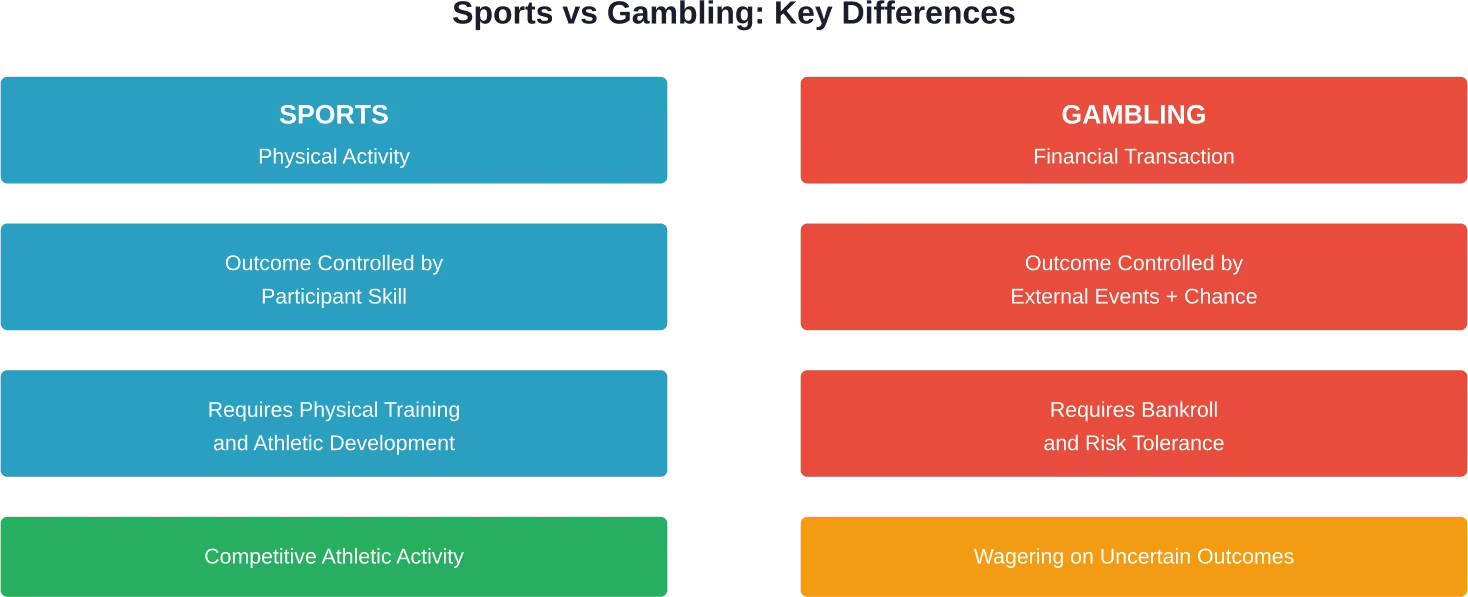
Sports require physical activity. Gambling requires a financial transaction.
Placing a bet—whether at a casino, through an online platform, or with a bookmaker—involves no athletic exertion whatsoever. The gambler sits, clicks, or hands over money. Compare that to a basketball player running plays for 48 minutes or a tennis player enduring a five-set match.
The lack of physical component alone disqualifies gambling from sport status.
Control vs. Chance
In sports, athletes directly influence outcomes through skill, training, and performance. In gambling, bettors have no control over the actual result.
A poker player might argue their game requires skill—and they’d be right that poker involves strategy. But poker is still classified as gambling because money is wagered on uncertain outcomes, and chance remains a factor regardless of skill level.
The Confusion Between Sports Betting and Sports
Much of the confusion stems from the phrase “sports betting” itself. The term creates a linguistic association that makes people wonder if betting might be a sporting activity.
It’s not. Sports betting is simply gambling that uses sports as the subject of wagers.
Sports and gambling have been intertwined since ancient civilizations. Historical records show betting on athletic competitions dates back to 800-700 BC during the ancient Olympic Games. Romans wagered on chariot races and gladiatorial contests.
But the fact that people have always gambled on sports doesn’t transform the act of betting into a sport itself.
How Sports Betting Actually Works
Sports betting involves analyzing teams, players, statistics, and other factors to make informed wagers on athletic events. Successful sports bettors use data analysis and strategic thinking.
Sound familiar? It requires mental effort and knowledge—but so does stock trading, weather forecasting, and political analysis. None of those are sports either.
Aspect | Sports Betting | Playing Sports |
|---|---|---|
Primary Activity | Analyzing and wagering money | Physical competition and exertion |
Skill Type | Analytical and statistical knowledge | Athletic ability and coordination |
Risk Involved | Financial loss | Physical injury, competition loss |
Outcome Control | No control over event results | Direct control through performance |
Physical Requirement | None | Essential component |
What Gambling Actually Is
Gambling is the wagering of something of value on a random event with the intent of winning money or material goods. That definition comes from established medical and scientific literature.
The National Institutes of Health classifies gambling as a behavior that, when problematic, becomes a recognized disorder. The NIH has raised concerns about gambling disorders in the age of mobile sports betting, noting that online gambling is a rapidly growing industry affecting both adults and youth.
According to research from the National Council on Problem Gambling (2023), over 70% of U.S. adults reported gambling at least once in the past year. The number of people displaying risky gambling behavior increased from 7% in 2018 to 11% in 2021.
Forms of Gambling
Gambling takes many forms beyond sports betting:
- Casino games (slots, roulette, blackjack)
- Lottery tickets
- Poker and card games
- Bingo
- Horse and dog racing
- Sports betting
- Online gambling platforms
None of these qualify as sports. They’re all forms of wagering on uncertain outcomes.
The Mental Health Perspective
Research published in the Journal of Gambling Studies has examined sports betting specifically as a clinical concern. The systematic review of clinical correlates found that sports betting, while requiring strategy and knowledge, functions as a gambling activity with associated mental health risks.
Problem gambling is recognized in diagnostic manuals as a behavioral disorder. The American Psychiatric Association and World Health Organization classify it as an addictive disorder requiring treatment.
Athletes themselves face gambling risks. Research on problem gambling in elite athletes shows that sports professionals can develop gambling issues despite—or perhaps because of—their intimate knowledge of sports.
The medical community treats gambling as a behavior separate from sports participation. That clinical distinction matters.
When Skill Enters the Gambling Equation
Here’s where things get nuanced. Some gambling activities involve more skill than others.
Poker requires reading opponents, calculating odds, and strategic decision-making. Sports betting benefits from deep knowledge of teams, players, and statistical analysis. Daily fantasy sports involve research and lineup construction skills.
Does skill make these activities sports? No.
The presence of wagering on uncertain outcomes keeps these firmly in gambling territory. Even the most skilled poker player can lose to unfavorable cards. The best sports bettor can’t control if a key player gets injured mid-game.
The Legal and Regulatory Perspective
Legal frameworks treat gambling and sports as distinct categories with different regulations.
Sports are governed by athletic commissions, leagues, and international bodies like the International Olympic Committee. The IOC has developed sustainability strategies and governance frameworks specific to athletic competition.
Gambling falls under entirely different regulatory systems. Gaming commissions, lottery boards, and gambling control authorities oversee wagering activities. Laws distinguish between legal gambling, illegal gambling, and sports themselves.
That legal separation exists precisely because gambling and sports are fundamentally different activities.
The Expansion of Legal Sports Betting
Following the 2018 Supreme Court decision that overturned the federal ban on sports betting, states rapidly legalized the activity. As of 2026, Utah and Hawaii remain the only two states with a total ban on all forms of gambling, while other states have varying degrees of legalization. Following the 2018 Supreme Court decision, sports betting expanded rapidly across states.
This expansion has blurred lines in public perception. Sports broadcasts now include betting odds. Stadiums feature sportsbook lounges. Athletes appear in gambling advertisements.
But the integration of gambling into sports culture doesn’t make gambling itself a sport. It makes gambling a commercial partner of sports.
Common Arguments (And Why They Don't Hold Up)
Let’s address some arguments people make for gambling being a sport.
“Professional poker players are called athletes”
Some poker organizations market their players as athletes. That’s branding, not reality.
Professional poker players develop impressive skills in probability, psychology, and strategy. They deserve respect for their abilities. But calling them athletes doesn’t transform a card game with wagering into a sport.
“Esports is considered a sport, and it has no physical activity”
Esports remains controversial in the “is it really a sport?” debate precisely because it lacks traditional physical exertion. However, esports involves direct competition where players control outcomes through skill and quick reflexes.
Gambling involves no such direct competitive control. Bettors watch others compete.
“Successful gambling requires discipline like sports training”
Discipline and training don’t automatically make something a sport. Successful stock trading requires discipline. Software development requires training. Neither is a sport.
Sports require physical athletic training specifically.
The Public Health Concern
The distinction between sports and gambling matters for public health reasons.
Research published by the National Institute on Drug Abuse highlights gambling disorder as a growing concern in the age of mobile sports betting. According to NIDA analysis, online gambling reaches both adults and youth through the same devices used for communication and entertainment.
College students face particular vulnerability. Research examining links between gambling and academic performance found gambling becoming increasingly prevalent among undergraduate populations. Over 70% of U.S. adults reported gambling at least once in the past year.
Treating gambling as entertainment or recreation is one thing. Conflating it with sports—which promote physical health and wellness—creates dangerous misconceptions.
Activity | Health Impact | Risk Type |
|---|---|---|
Playing Sports | Cardiovascular fitness, strength, coordination | Physical injury, overtraining |
Watching Sports | Entertainment, social connection | Sedentary behavior if excessive |
Sports Betting | None (sedentary activity) | Financial loss, addiction potential |
Problem Gambling | Negative (stress, mental health decline) | Financial ruin, relationship damage |
Where Strategy and Analysis Fit In
Successful sports betting does require analytical skills. Bettors who consistently profit study statistics, track performance trends, understand odds calculation, and manage bankrolls strategically.
That analytical component makes sports betting more complex than pure chance games like slot machines or lotteries. Research has systematically assessed different gambling types, finding that participation and diversity in gambling activities varies significantly based on the skill components involved.
But analysis and strategy alone don’t define sports. Chess involves pure strategy with zero luck—and it’s still debated whether chess qualifies as a sport despite being recognized by the Olympic movement. Chess at least involves direct competition between participants.
Sports betting involves analyzing the competition of others, then wagering on outcomes beyond the bettor’s control.
The Entertainment Factor
Both sports and gambling provide entertainment. That’s perhaps their strongest commonality.
Sports entertain through athletic competition, dramatic moments, and displays of human physical achievement. Gambling entertains through risk-taking, the possibility of winning, and the excitement of uncertain outcomes.
Entertainment value doesn’t determine whether something is a sport. Movies entertain. Video games entertain. Reading entertains. None are sports.
What About Daily Fantasy Sports?
Daily fantasy sports (DFS) occupy an interesting middle ground in public perception and legal classification.
DFS platforms argue their contests are games of skill, not gambling. Participants research players, analyze matchups, and construct lineups based on salary caps and scoring systems. Success requires sports knowledge and strategic thinking.
Many states classify DFS as skill gaming rather than gambling. But it’s still not a sport.
DFS participants aren’t physically competing. They’re selecting virtual lineups of real athletes, then wagering entry fees on how those selections perform. The analytical component doesn’t create athletic competition.
Turn Your Gambling Idea Into a Real Product

When people argue whether gambling is a sport, the real shift is happening elsewhere – in how gambling products are built and launched. Sologe focuses on that side, connecting businesses that create and run gaming platforms with the partners they actually need.
Instead of scattered sourcing and guesswork, it works as a single place where operators, providers, and service companies can find each other, compare options, and start working together.
Find the Right Partners to Launch Faster
If you’re building or scaling in this space, Sologe helps cut through the noise:
- Access providers, platforms, and services in one place
- Compare options without relying on sales pitches
- Connect directly with companies ready to work
- Move from idea to execution without fragmented sourcing
If you’re serious about building or improving a gambling product, talk to Sologe and see who you can work with.
The Bottom Line
Gambling is not a sport, regardless of how much skill, strategy, or sports knowledge it involves.
Sports are physical competitive activities where participants directly influence outcomes through athletic ability. Gambling is wagering money on uncertain events, often involving games of chance or competitions performed by others.
Sports betting sits at the intersection of these two worlds—using sports as the subject of wagers while remaining fundamentally a gambling activity. The relationship between sports and gambling has ancient roots and modern commercial connections, but those connections don’t merge the categories into one.
Understanding this distinction matters for regulatory clarity, public health approaches, and honest conversations about both activities. Sports promote physical fitness and healthy competition. Gambling carries financial risks and addiction potential.
Both can coexist in society. Both can be enjoyed responsibly. But they’re not the same thing.
Frequently Asked Questions
Can professional gambling be considered a career like professional sports?
Yes, professional gambling can be a career for some individuals who consistently earn income through activities like poker or sports betting. However, this does not make it a sport—it’s an income source within the gaming industry rather than athletic competition.
Does poker count as a sport since it’s competitive and requires skill?
Poker involves competition and significant skill, including strategy and probability. However, it is still classified as gambling because it includes wagering and elements of chance, and it lacks physical athletic exertion typically required for sports classification.
Why do some people call esports a sport but not gambling?
Esports players directly control outcomes through skill, reflexes, and decision-making, similar to traditional sports. In gambling, participants wager on outcomes they do not control. The key difference is direct influence over results.
Is sports betting safer than casino gambling?
Not necessarily. While sports betting may feel more skill-based, research shows it carries similar financial and addiction risks as other forms of gambling. The perception of control does not eliminate these risks.
Could gambling ever be recognized as an official sport?
Unlikely. Sports typically require physical activity and direct competition where participants control outcomes. Gambling relies on chance or external events, making it fundamentally different from recognized sports.
What’s the difference between sports betting and playing sports?
Playing sports involves direct physical participation and performance affecting outcomes. Sports betting involves wagering on the performances of others. One is active competition; the other is financial speculation.
Does skill-based gambling make it more like a sport?
Skill-based gambling involves strategy and knowledge, but skill alone doesn’t define a sport. The presence of wagering and chance, along with the absence of physical competition, keeps it separate from sports.
Moving Forward
As sports betting continues expanding across the United States and globally, maintaining clear distinctions between gambling and sports becomes increasingly important.
The commercial integration of betting into sports broadcasts, stadiums, and team partnerships creates marketing that intentionally blurs these lines. That’s profitable for gambling operators and sports leagues. But it creates confusion about the nature of these distinct activities.
Sports offer physical health benefits, teach teamwork and discipline, and provide competitive outlets for athletic development. Gambling offers entertainment through risk-taking with real financial stakes and potential consequences.
Both have roles in society. Neither needs to be demonized. But conflating them serves no one’s interests except perhaps marketing departments.
Understanding that gambling is not a sport—and that sports betting is a form of gambling, not athletics—creates clearer frameworks for regulation, public health interventions, and personal decision-making.
Whether someone chooses to bet on sports, play sports, both, or neither should be an informed decision based on accurate understanding of what each activity actually involves.
Related Articles

September 30, 2026Is Sports Betting Legal in Brazil? The Full...

September 30, 2026Is Sports Betting Legal in Iran? The Real...