 Nothing found for the request
When Was Gambling Invented? Ancient Origins Revealed
Sologe April 28, 2026
Share:


Quick Summary
Quick Summary: Gambling dates back to ancient civilizations around 3000 BC, with archaeological evidence showing dice games, betting on sports, and games of chance in China, Egypt, and Mesopotamia. The practice evolved from divinatory rituals where people cast marked objects to divine the future, eventually becoming wagering for entertainment and profit across all major ancient cultures.
The question of when gambling was invented doesn’t have a simple answer. Gambling is one of humanity’s oldest activities, stretching back thousands of years before written currency even existed. Archaeological evidence and historical records paint a fascinating picture of how our ancestors turned risk-taking into entertainment.
According to Britannica, gambling is considered one of mankind’s oldest activities, evidenced by writings and equipment found in tombs and other places. But it wasn’t always about winning money or goods—the origins are actually much more spiritual.
The Divinatory Origins of Gambling
Here’s something most people don’t realize: gambling likely began as a religious practice, not entertainment.
The origin of gambling is considered to be divinatory, according to Britannica. Ancient peoples would cast marked sticks, bones, and other objects, then interpret the outcome to seek knowledge of the future and understand the intentions of the gods. These weren’t bets in the modern sense—they were sacred rituals.
From this spiritual foundation, it was a short leap to wagering on outcomes. Once people recognized that certain objects fell in predictable patterns, they started betting on those results. The transition from divination to gambling happened organically across multiple ancient cultures.
Ancient Gambling: The Earliest Evidence
So when exactly did gambling begin? The timeline stretches back further than most people imagine.
Mesopotamia and Egypt (3000 BC)
As far back as 4000 to 3000 BC, ancient Egyptians bet on dice, board games, and feats of skill such as chariot racing and fencing. This makes gambling at least 5,000 years old—predating most major civilizations we study today.
The earliest dice were likely made from the ankle bones of sheep or other animals. These astragali, as they were called, had four flat sides that could land face-up, making them perfect for games of chance. Eventually, people carved markings into these bones, creating the first true dice.
Ancient China
Gambling was regulated—which as a rule meant severely curtailed—in the laws of ancient China, according to Britannica. The fact that laws existed against it tells us gambling was already widespread and problematic enough to require government intervention.
The Chinese game of fan-tan is a bank gambling game of Chinese origin, according to Britannica. This game was eventually introduced to the western United States in the second half of the 19th century by Chinese immigrant workers.
Ancient Rome and Greece
Betting on sports took place during the ancient Olympic Games, around 800 to 700 BC. Athletes and spectators alike wagered on competition outcomes, creating an early form of sports betting that would evolve over millennia.
In ancient Rome, betting on games and races was commonplace. Though gambling was periodically outlawed in ancient Rome, exceptions were made for holidays, on which gambling was embraced. Romans bet heavily on chariot races and gladiatorial contests.
But there were consequences for excessive gambling. In ancient Egypt, inveterate gamblers could be sentenced to forced labour in the quarries—a harsh deterrent that shows how seriously authorities took gambling addiction even in ancient times.
Religious and Legal Regulation
Religious authorities recognized gambling’s addictive potential early on. Gambling was regulated in the Jewish Talmud and by Islam and Buddhism, according to Britannica. These weren’t just casual discouragements—they were formal prohibitions embedded in religious law.
The fact that so many ancient civilizations and religions felt compelled to regulate gambling tells us something important: people have always been drawn to games of chance, regardless of consequences or prohibitions.
What Did Ancient People Gamble With?
Before minted currency existed, people still found ways to bet.
Gambling was around before man invented minted currency. Before people would bet money, they would gamble on their belongings like food, land, or livestock. The stakes were often quite high—losing a bet could mean losing your means of survival.
After the first currencies emerged, gambling evolved rapidly. Now people could bet standardized amounts, making games more organized and accessible to broader populations.
Evolution Into Modern Gambling
According to research from UNLV’s Center for Gaming Research, gambling’s timeline extends from the earliest origins of using bones for dice up to the development of the high-tech resort casinos of today. That’s a journey spanning over 5,000 years of human history.
The invention of the steamboat led to the emergence of riverboat gamblers in America. Casino-style gambling became popular during westward expansion. Horse racing maintained a constant presence in the territory of the modern United States since at least 1665, when the first racetrack was established on Long Island in New York.
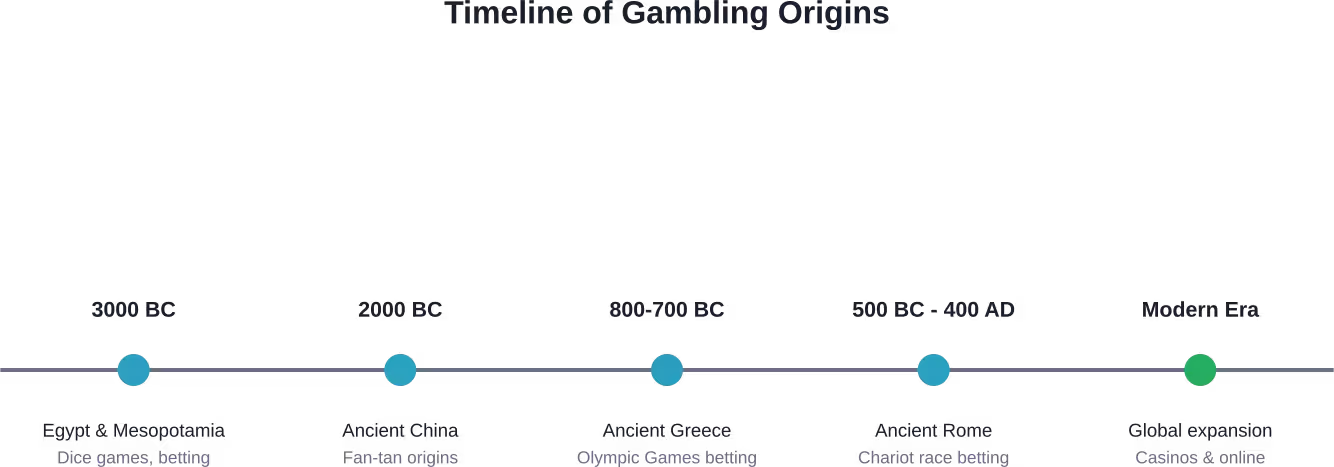
Era | Location | Primary Gambling Forms |
|---|---|---|
3000 BC | Egypt, Mesopotamia | Dice games, betting on physical contests |
2000 BC | Ancient China | Fan-tan, early board games |
800-700 BC | Ancient Greece | Olympic Games betting, dice |
500 BC – 400 AD | Ancient Rome | Chariot racing, gladiatorial contests |
1600s-1800s | Colonial America | Lotteries, horse racing, card games |
1900s-Present | Global | Casinos, sports betting, online gambling |
Build a Modern Gambling Business Beyond Its Origins

Gambling began as simple games, but what exists now is an industry built on systems, providers, and business relationships. Sologe focuses on that layer, helping companies involved in building and operating gambling products find each other. It gives visibility into who is actually working in the space and lets businesses connect without relying on scattered contacts or closed networks.
Pick Partners and Start Working Now
Sologe makes it easier to move from idea to setup:
- Discover companies across platforms, services, and support
- Reach companies directly and start conversations
- Keep partner search in one place instead of spreading it out
If you’re working on a gambling product, contact Sologe and discuss who you can work with.
Why Gambling Persisted Across Millennia
Look, there’s a reason gambling survived 5,000 years of prohibition, punishment, and social stigma.
The fundamental human attraction to risk and reward hasn’t changed. Whether casting bones to divine the future or placing bets on sports, people are drawn to the uncertainty and potential payoff that gambling provides.
According to Britannica, a rough estimate of the amount of money legally wagered annually in the world is approximately $10 trillion. That staggering figure demonstrates gambling’s enduring appeal in modern society.
Frequently Asked Questions
When was gambling first invented?
Gambling dates back to around 3000 BC in ancient civilizations such as Egypt, Mesopotamia, and China. It likely developed from early rituals used to predict the future, eventually evolving into wagering activities for entertainment and gain.
What was the first form of gambling?
The earliest forms involved casting bones or marked objects, which later evolved into dice games using animal bones (astragali). Over time, betting expanded to board games and physical competitions.
Did ancient civilizations try to ban gambling?
Yes. Many ancient societies imposed restrictions or bans on gambling, including China, Rome, and Egypt. Religious laws and cultural norms often discouraged or prohibited gambling, although it persisted despite these efforts.
What did people gamble with before money existed?
Before currency, people wagered valuable items such as food, livestock, land, and personal possessions. These bets could have serious consequences for survival and livelihood.
When did sports betting begin?
Sports betting dates back to ancient times, including early Olympic Games in Greece and Roman events like chariot races and gladiator contests. Betting on physical competitions has been part of gambling history for thousands of years.
How did gambling spread globally?
Gambling spread through trade, migration, and cultural exchange. Different regions adapted games and betting practices to their own traditions, leading to the wide variety of gambling forms seen today.
Why has gambling survived for thousands of years?
Gambling persists because it taps into fundamental human traits—risk-taking, competition, and the desire for reward. Despite legal and cultural restrictions, these motivations have kept gambling present across societies and history.
Conclusion: Humanity's Oldest Pastime
So when was gambling invented? The evidence points to at least 3000 BC, though the true origins likely stretch back even further into prehistory. What started as divination evolved into one of the most enduring human activities, surviving millennia of prohibition and punishment.
The original idea of gambling has mostly remained the same over millennia—wagering something of value on an uncertain outcome. Whether ancient Egyptians betting on chariot races or modern sports fans placing online wagers, the fundamental appeal hasn’t changed.
Understanding gambling’s deep historical roots helps explain why it remains so prevalent today. It’s not a modern vice or recent invention—it’s woven into the fabric of human civilization itself.
Related Articles

September 30, 2026Is Sports Betting Legal in Brazil? The Full...

September 30, 2026Is Sports Betting Legal in Iran? The Real...