 Nothing found for the request

How to Open a Casino in Kenya (2026 Guide)
Sologe April 28, 2026
Share:


Quick Summary
Quick Summary: Opening a casino in Kenya requires obtaining a gambling license from the Gambling Regulatory Authority of Kenya (GRA) under the Gambling Control Act, 2025. Applicants must register a Kenyan company with at least 30% local shareholding, meet minimum capital requirements of approximately 52,000 USD, and comply with strict regulatory and taxation frameworks including a 15% GGR tax.
Kenya’s gambling market has become one of Africa’s most attractive destinations for casino operators.
But here’s the thing—opening a casino in Kenya isn’t just about capital and ambition. The regulatory landscape underwent massive transformation with the Gambling Control Act, 2025, which officially took effect on August 26, 2025.
This comprehensive framework replaced decades-old legislation and introduced stricter compliance requirements, enhanced consumer protection measures, and new oversight structures. Understanding these requirements is crucial for anyone looking to enter the Kenyan casino market.
Understanding Kenya's Gambling Regulatory Framework
The Gambling Control Act, 2025 (Act No. 14 of 2025) repealed the outdated Betting, Lotteries and Gaming Act (Cap. 131) and established modern governance for the sector. This landmark law introduced sweeping reforms designed to modernize the industry while protecting consumers.
The Gambling Regulatory Authority of Kenya (GRA) is the current operational regulator. The transition from BCLB was completed by the end of February 2026, and all new applications were handled exclusively by the GRA.
According to parliament.go.ke, lawmakers debated the mediated version of the Gambling Control Bill through July 2025, addressing key concerns about taxation, local participation, and responsible gaming measures.
Types of Gambling Licenses Available
Kenya offers several license categories for different gambling operations:
- Casino and gaming hall licenses for land-based operations
- Online casino licenses for iGaming platforms
- Betting licenses for sports and event wagering
- Lottery and prize competition licenses
- Gaming equipment and software provider licenses
Each license type has specific requirements, capital thresholds, and compliance obligations. Casino operators typically need the most comprehensive documentation and highest capital reserves.
Mandatory Requirements for Casino Operators
According to data from gofaizen-sherle.com, the law explicitly requires several non-negotiable elements for license applicants.
Company Registration and Structure
The applicant entity must be registered in Kenya with a registered physical address. This isn’t just a mailbox—operators need legitimate commercial premises.
A minimum of 30% of shares must be held by Kenyan citizens. This requirement supports domestic participation in the regulated market and ensures local stakeholders benefit from the industry’s growth.
The organization must have at least one director who is an individual, plus a designated local representative for regulatory communications.
Capital Requirements
Minimum capital starts from 6,750,000 KES, which converts to approximately 52,000 USD. This threshold varies based on the specific license type and scope of operations planned.
Land-based casinos with multiple gaming tables and slot machines typically face higher capital requirements than smaller gaming halls or online-only operations.
The operator must maintain a dedicated bank account with an authorized Kenyan financial institution. All gambling-related transactions must flow through this monitored account.
Requirement Category | Specific Details | Compliance Notes |
|---|---|---|
Company Structure | Kenyan-registered entity | Physical office address mandatory |
Local Shareholding | Minimum 30% Kenyan citizens | Must be documented and verifiable |
Minimum Capital | 6,750,000 KES (~52,000 USD) | Higher for larger operations |
Banking | Dedicated Kenyan bank account | Authorized institution required |
Personnel | Individual director + local rep | Background checks conducted |
Find the Companies You Need to Launch a Casino

Opening a casino in Kenya is not just about licensing – it’s about putting together the right tech stack, payments, and operational setup. Sologe is an iGaming marketplace where operators and businesses can search for suppliers, review solutions, and connect with companies already working in the industry. It gives you a single place to move from planning to real partnerships without relying on scattered контакти or short-term visibility.
Build Your Casino Setup With the Right Suppliers
Sologe helps you move from idea to actual launch:
- Find providers across platforms, payments, and support services
- Review solutions used by other operators in similar markets
- Present your project and attract partnership interest
- Start direct communication with companies without intermediaries
If you’re preparing to open a casino in Kenya, contact Sologe and discuss your project with companies that can support your launch.
The GRA License Application Process
Once the foundational requirements are met, the formal application process begins. The GRA reviews applications thoroughly, examining financial stability, technical capability, and regulatory compliance.
Required Documentation
Applicants must submit comprehensive documentation packages including:
- Certificate of company incorporation
- Shareholder registry proving 30% local ownership
- Bank statements demonstrating capital reserves
- Business plan outlining operations, target market, and revenue projections
- Proof of premises (lease agreement or property ownership)
- Background checks for directors and key personnel
- Technical specifications for gaming equipment and software
- Anti-money laundering and responsible gaming policies
The documentation must be current, certified, and presented in formats specified by GRA guidelines.
Timeline and Approval
Processing times vary based on application completeness and GRA workload. Generally speaking, straightforward applications with all documentation in order can be processed within several months.
Complex applications or those requiring additional scrutiny may take longer. The GRA may request supplementary information or clarifications during the review process.
Taxation and Financial Obligations
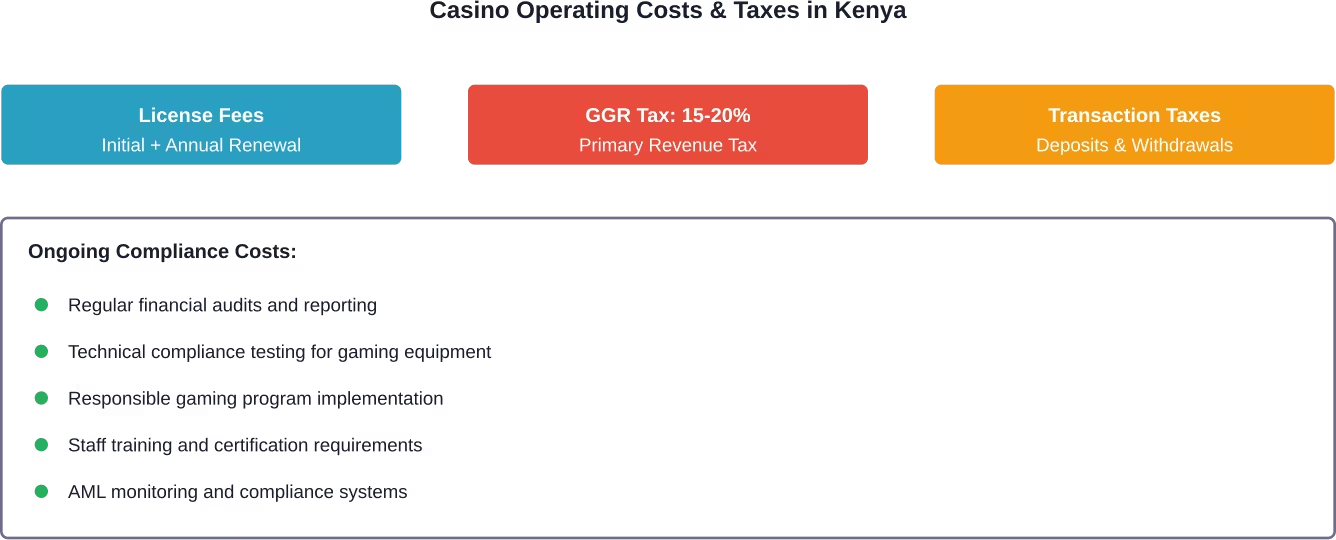
Kenya’s gambling taxation framework underwent significant changes with recent legislative updates. According to altenar.com, taxation is a moving target, with the Finance Act 2025 highlighting shifts toward taxing betting-related deposits and withdrawals.
According to available sources, gaming tax on Gross Gaming Revenue typically ranges from 15% to 20%, with a 15% benchmark being standard for most operators.
The taxation landscape reflects government efforts to balance revenue generation with industry growth. Operators must maintain detailed financial records and submit regular tax filings.
Market Opportunities and Growth Potential
The Kenyan gambling market presents compelling opportunities. Online segments accounted for 60% of revenue by the end of 2024, driven primarily by mobile adoption.
According to casino-market.com, 80% of traffic and turnover comes from mobile devices thanks to widespread smartphone usage and M-Pesa wallet integration. This mobile-first market creates unique opportunities for operators who understand local payment preferences.
The population’s affinity for gambling as part of local culture supports sustained market growth. Such entertainment is extremely popular among the population and represents an integral part of social dynamics.
Compliance and Responsible Gaming
The Gambling Control Act, 2025 introduced enhanced responsible gaming measures. According to igamingafrika.com, the BCLB issued mandatory directives in March 2025 concerning aviator and crash games, addressing public concerns about these game types.
Operators must implement:
- Age verification systems preventing underage gambling
- Self-exclusion mechanisms for problem gamblers
- Deposit limits and spending controls
- Educational resources about gambling risks
- Staff training on identifying problem gambling behaviors
Compliance isn’t optional—it’s fundamental to maintaining license validity and avoiding penalties.
Working with Legal and Regulatory Consultants
Given the complexity of Kenya’s gambling regulatory framework, many operators engage specialized legal consultants. Professional advisors provide comprehensive support throughout the licensing process.
Services typically include regulatory assessment, application preparation, compliance structuring, and ongoing advisory support. Firms like Gofaizen & Sherle and Law & Trust International specialize in Kenyan gambling licensing.
Attempting to navigate the licensing process without expert guidance often leads to delays, incomplete applications, and unnecessary complications.
Phase | Typical Duration | Key Activities |
|---|---|---|
Pre-Application | 1-2 months | Company formation, capital assembly, documentation |
Application Submission | 2-4 weeks | GRA filing, initial review, clarification requests |
GRA Review | 2-4 months | Due diligence, background checks, technical assessment |
License Issuance | 2-4 weeks | Final approval, fee payment, license documentation |
Operational Setup | 1-3 months | Premises preparation, equipment installation, staff hiring |
Frequently Asked Questions
What is the minimum capital required to open a casino in Kenya?
The minimum capital requirement starts at approximately 6,750,000 KES (around $50,000+ USD). Larger operations may require significantly higher capital reserves depending on scale and facilities.
Do foreign investors need Kenyan partners to open a casino?
Yes. Regulations require at least 30% ownership by Kenyan citizens, meaning foreign investors must partner with local stakeholders.
Which authority issues casino licenses in Kenya?
The Gambling Regulatory Authority (GRA) is responsible for issuing casino and other gambling licenses under Kenyan law.
What are the main taxes casino operators pay in Kenya?
Operators typically pay tax on Gross Gaming Revenue (GGR), generally ranging between 15% and 20%. Additional taxes may apply to transactions depending on current legislation.
How long does the casino licensing process take?
The process usually takes between 4 and 8 months, depending on documentation completeness and regulatory review timelines.
Can I operate an online casino with a Kenyan license?
Yes. Kenya allows licensing for both land-based and online casino operations, subject to regulatory approval and compliance requirements.
What happens if I operate without a proper license?
Operating without a license is illegal and can result in fines, criminal charges, and permanent exclusion from the industry.
Conclusion
Opening a casino in Kenya offers substantial opportunities in one of Africa’s fastest-growing gambling markets. The regulatory framework under the Gambling Control Act, 2025 provides clear pathways for legitimate operators willing to meet compliance requirements.
Success requires understanding the mandatory 30% local shareholding requirement, meeting capital thresholds of at least 52,000 USD, navigating the GRA licensing process, and implementing robust responsible gaming measures.
The market’s mobile-first nature, with 80% of activity coming from smartphones, creates unique opportunities for operators who adapt to local payment preferences and gaming habits.
Ready to enter the Kenyan casino market? Consult with specialized legal advisors who understand the regulatory landscape, prepare comprehensive documentation, and ensure full compliance from day one. The investment in proper licensing and compliance pays dividends through legitimate operations and long-term market access.
Related Articles

September 30, 2026Is Sports Betting Legal in Brazil? The Full...

September 30, 2026Is Sports Betting Legal in Iran? The Real...