 Nothing found for the request
Are Casinos Legal in Nigeria? 2026 State-by-State Guide
Sologe April 28, 2026
Share:


Quick Summary
Quick Summary: Yes, casinos are legal in Nigeria as of 2026, but regulation has shifted dramatically from federal to state-level control following a landmark Supreme Court ruling in November 2024. Each state now issues its own licenses for both land-based and online casino operations, with varying requirements, costs, and restrictions—though some states under Sharia law prohibit gambling entirely.
Nigeria’s gambling landscape underwent a complete transformation between late 2024 and 2025. What was once a federally regulated industry is now a patchwork of state-level laws, each with distinct licensing requirements and costs.
For operators, investors, and players, the question isn’t just whether casinos are legal anymore. It’s about understanding which state allows what, how much it costs, and what the enforcement landscape looks like.
Here’s everything that’s changed.
The Supreme Court Ruling That Changed Everything
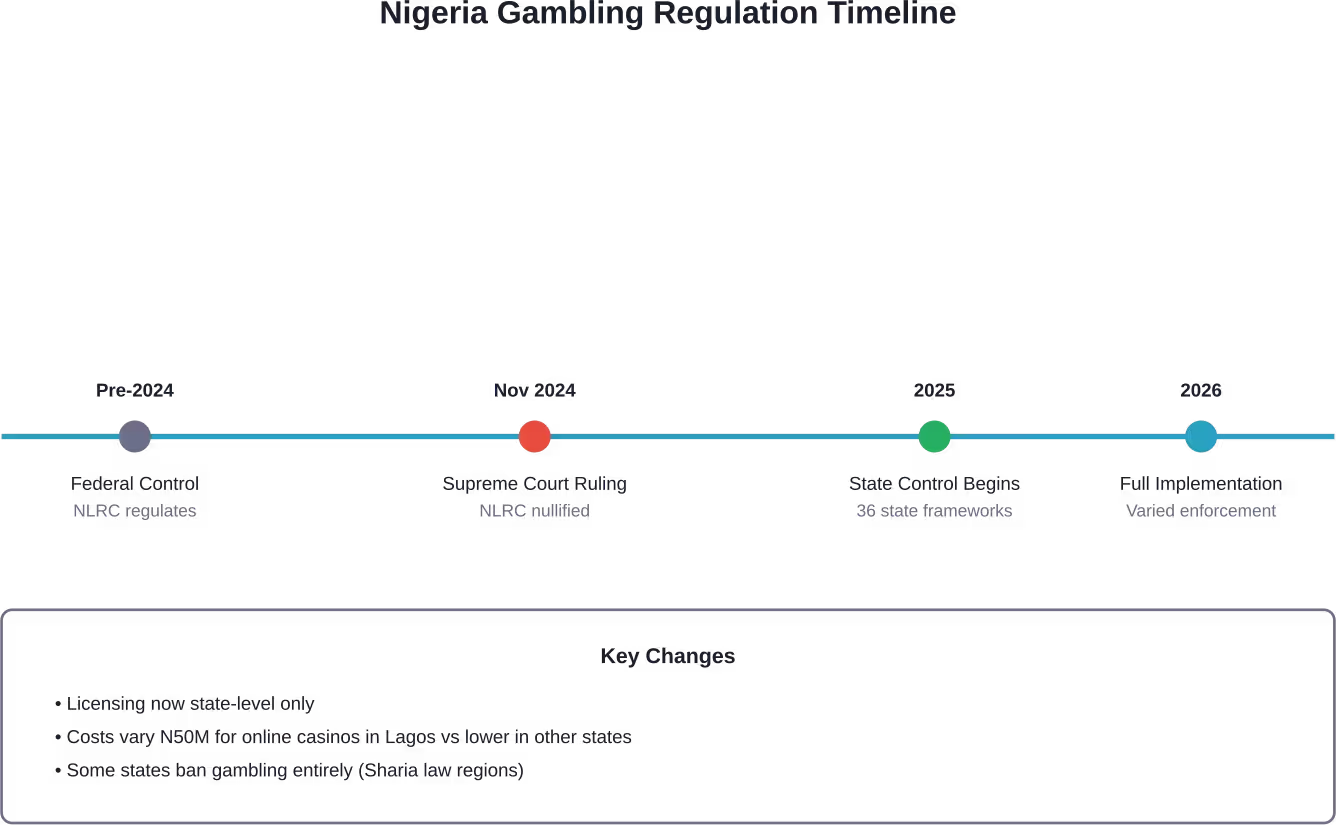
On November 22, 2024, Nigeria’s Supreme Court delivered what many industry insiders call an “earthquake decision.” The Supreme Court declared the National Lottery Act 2005 invalid and unenforceable across the 36 states; however, it explicitly affirmed the jurisdiction of the National Assembly to legislate on lottery and gaming matters for the Federal Capital Territory (FCT), where the National Lottery Regulatory Commission (NLRC) retains its authority. By 2025, the complicated and dynamic landscape of state-level regulation had come into full force.
The practical impact? The NLRC no longer issues licenses or enforces gambling regulations. That responsibility now falls to individual state gaming boards.
Each of Nigeria’s 36 states can create its own gambling framework—or ban it completely.
What Forms of Casino Gambling Are Legal in Nigeria?
As of 2026, Nigerian law recognizes several primary forms of legal gambling, provided operators hold valid state-level licenses:
- Land-based casinos: Physical casino establishments located primarily in Lagos and Abuja
- Online casinos: Digital platforms offering slots, roulette, poker, blackjack, and other table games
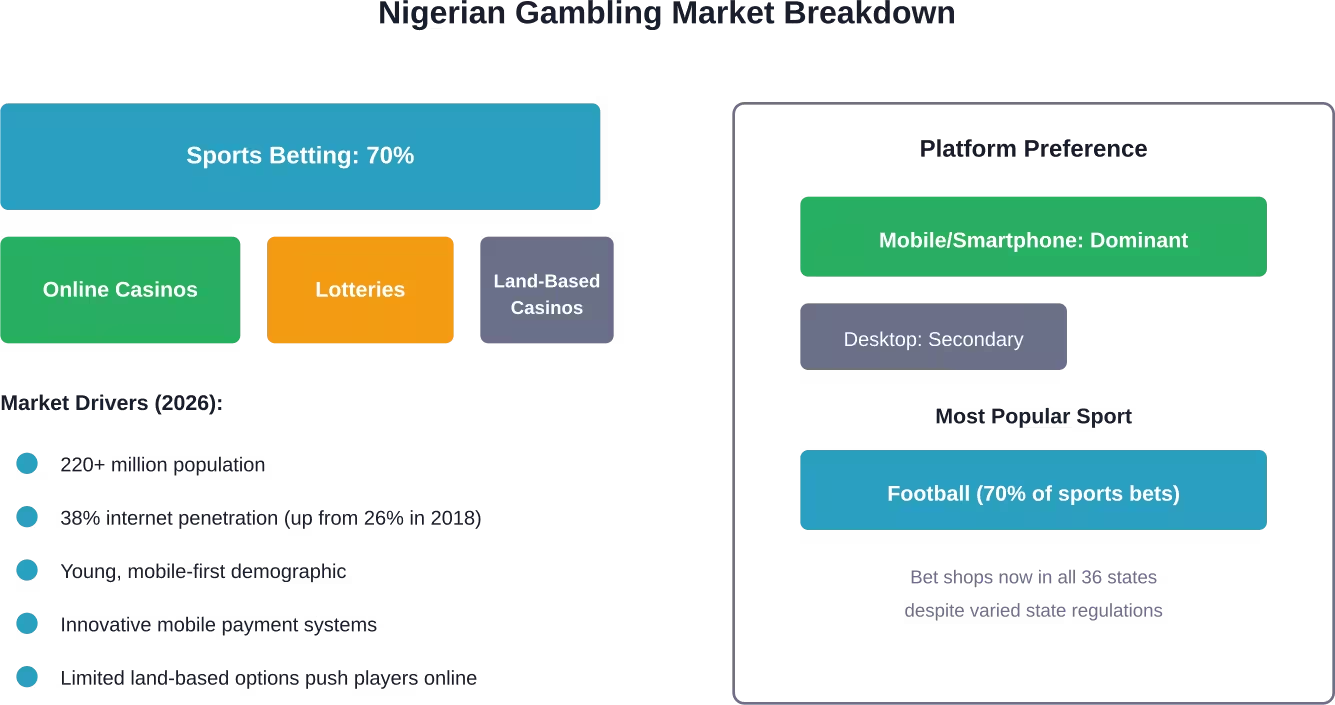
- Sports betting: The most popular form of wagering, with football consuming up to 70% of all sportsbook bets
- Lotteries: Both traditional and digital lottery games
- Gaming machines: Slot machines and other electronic gaming devices
But here’s the catch. Operating without a valid state license is illegal. And what’s legal in Lagos might be prohibited in Kano.
The Land-Based Casino Reality
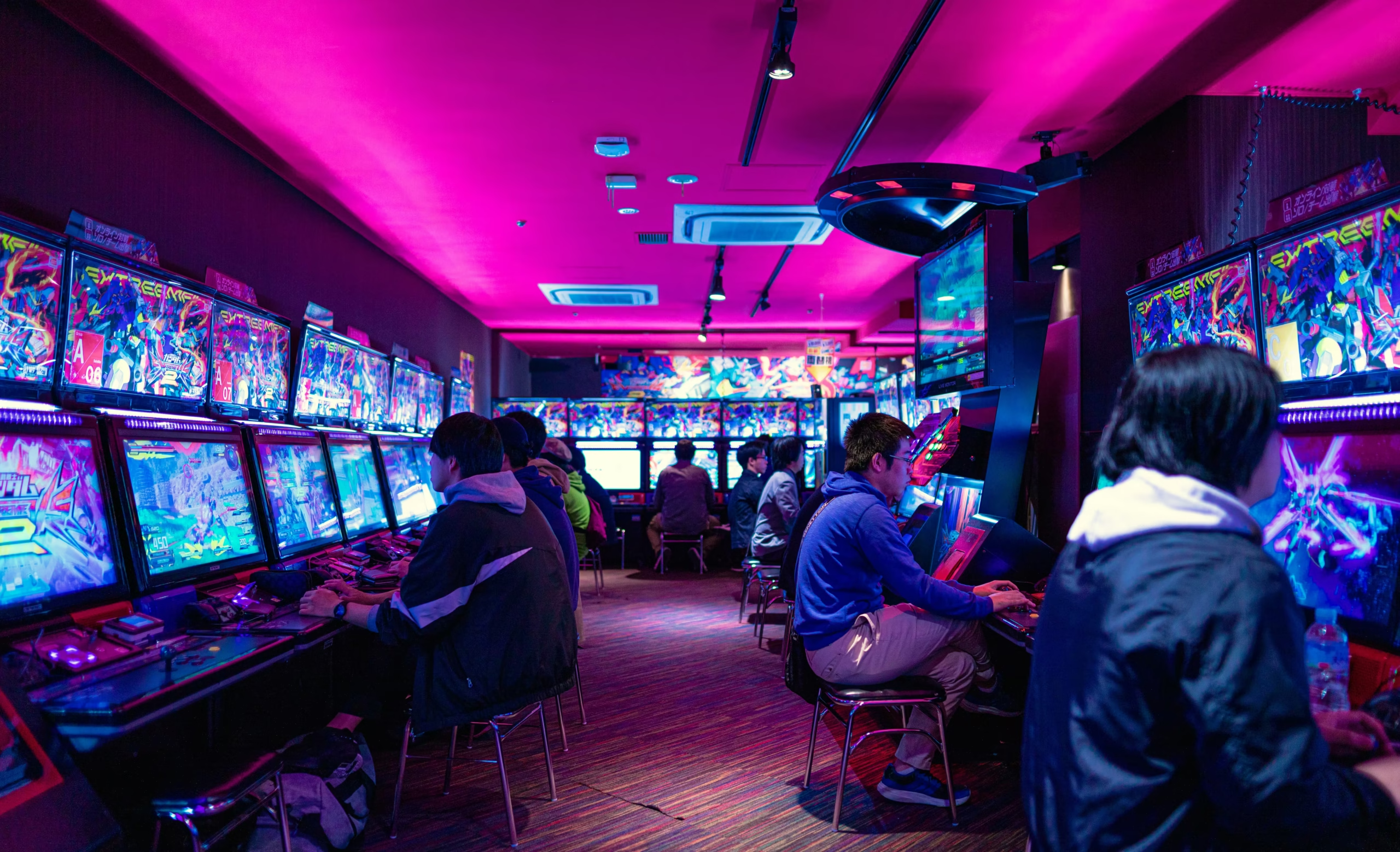
Despite a population exceeding 220 million, land-based casinos remain limited in Nigeria. According to Wikipedia, legal land-based casinos are concentrated in the two largest cities. The biggest is The Federal Palace Hotel in Lagos.
This scarcity has pushed players online. SOFTSWISS reports that smartphones are the main entry point, with most users preferring mobile betting and casino games. Internet penetration increased from around 26% in 2018 to 38% in 2022, creating fertile ground for online gambling growth.
State-Level Regulation: The New Reality for 2026
The shift to state control created significant variance in requirements and costs. Let’s break down what operators face in key states.
Lagos State: The Commercial Powerhouse
Lagos State Lotteries and Gaming Authority (LSLGA) oversees all gambling within Lagos. Established under the Lagos State Lotteries and Gaming Authority Law of 2021, LSLGA succeeded the former Lagos State Lotteries Board.
Lagos has the most advanced—and most expensive—licensing structure in Nigeria. Effective January 1, 2026, the Federation of State Gaming Regulators of Nigeria (FSGRN) introduced a uniform licensing fee of N100 million per annum for each category of operator, including Lottery, Sports Betting, and Casino. Additionally, a flat 11% tax on Gross Gaming Revenue (GGR) for ‘Good Causes’ applies across all these categories nationwide in participating states.
The LSLGA mandate covers both land-based and online gaming operations, including lotteries, betting, casinos, gaming machines, and promotional competitions.
One critical requirement: foreign-owned companies must appoint a Nigerian partner as either a shareholder, director, or both. This provision aims to foster local investment and prevent 100% foreign-owned control of gambling operations within the state.
Other State Frameworks
While Lagos sets the commercial benchmark, other states have developed their own approaches. The Oyo State Gaming Board, for instance, regulates gambling activities within Oyo State with different fee structures and requirements.
Some states have embraced gambling as a revenue source. Others have imposed restrictions or outright bans.
The Sharia Law Exception
Operating in states under Sharia law is prohibited. Northern states with Islamic legal frameworks typically ban gambling activities entirely, creating geographic restrictions for operators.
This religious and cultural divide means national operators must navigate a complex compliance landscape.
Licensing Requirements and Costs in 2026
Getting licensed to operate a casino in Nigeria now means dealing with individual state authorities. The variance in costs and requirements is significant.
State Authority | Online Betting License | Online Casino License | Key Requirements |
|---|---|---|---|
Lagos State (LSLGA) | N100 million | N100 million | Nigerian partner required, extensive compliance |
Oyo State Gaming Board | Varies | Varies | State-specific application process |
Other States | Lower fees | Lower fees | Individual state frameworks apply |
Sharia Law States | Prohibited | Prohibited | No gambling licenses issued |
Lagos, being the commercial center of Nigeria, has costly structure but also offers access to the country’s wealthiest and most concentrated market.
For smaller operators or those testing the market, states with lower barriers to entry might make more sense—though they offer smaller player pools.
What's Prohibited Under Nigerian Gambling Laws
Even in states where gambling is legal, certain activities remain prohibited:
- Operating without a valid state license
- Offering gambling services in states where it’s banned
- Money laundering through gambling operations
- Allowing minors to gamble (age restrictions vary by state)
- Running unlicensed or “illegal” casinos
According to Wikipedia, many illegal casinos still operate in the country despite existing gambling laws. Nigerian law focuses heavily on activities to reduce money laundering and illegal gambling, but enforcement remains inconsistent.
The Online Gambling Boom
Nigeria is one of Africa’s fastest-growing iGaming markets. SOFTSWISS attributes this growth to a young population, rapid mobile adoption, and innovative payment systems.
Sports betting is the most popular form of wagering, with bet shops appearing across all 36 states. Football dominates the market, consuming up to 70% of all sportsbook bets according to industry data.
With increased internet penetration and accessibility to affordable smartphones, sports betting in Nigeria is undoubtedly growing. The shift to state regulation hasn’t slowed this momentum—if anything, it’s created more opportunities for localized operators.
Regulatory Challenges and Enforcement
The transition to state-level control hasn’t been seamless. Operators now face compliance challenges across multiple jurisdictions, each with different:
- Application procedures
- Licensing fees and renewal requirements
- Tax structures
- Reporting obligations
- Technical standards
- Responsible gambling requirements
For national operators serving customers across multiple states, this creates administrative complexity. A single company might need licenses from Lagos, Oyo, Rivers, and other states—each requiring separate applications, fees, and compliance frameworks.
Enforcement also varies. Some states have robust regulatory bodies with active oversight. Others lack the resources or infrastructure to effectively monitor gambling activities.
What Players Need to Know
For Nigerian players, the state-level system means several things:
First, confirm that gambling is legal in your state. Not all states permit casino gaming, and using unlicensed offshore platforms carries legal risks.
Second, verify that operators hold valid state licenses. Licensed operators display their licensing information prominently. If an online casino or betting site can’t prove its license, that’s a red flag.
Third, understand age restrictions. While gambling laws focus primarily on licensing and operations, minors are universally prohibited from gambling activities.
Payment gateways and banking also matter. Nigerian banks have varying policies on gambling transactions, and some international payment processors restrict gambling-related transfers.
The Future of Casino Regulation in Nigeria
What happens next? State frameworks are still evolving. Some states are refining their regulations based on early implementation experiences. Others are just beginning to develop comprehensive gambling laws.
The federal government’s role remains unclear. While the Supreme Court eliminated the NLRC’s regulatory authority, federal involvement in anti-money laundering and criminal enforcement continues.
Industry observers expect continued growth in online gambling, particularly mobile betting and casino games. The young demographic, increasing smartphone penetration, and improved payment infrastructure all support expansion.
But regulatory fragmentation poses challenges. Without federal coordination, interstate issues—like players crossing state borders, advertising regulations, and tax harmonization—become complicated.
Some states may form regulatory coalitions to share best practices and coordinate enforcement. Others might compete by offering lower fees or looser regulations to attract operators.
Connect With Reliable Casino Suppliers for Nigeria Now

State-by-state rules in Nigeria shape how you launch, but the bigger question is who you work with. Sologe is an iGaming marketplace where operators and businesses can browse suppliers, review products, and reach out to companies already active in different markets. It gives you a direct way to move from legal research to building an actual setup without relying on scattered contacts.
Get the Suppliers You Need and Start Discussions Today
Sologe helps you move forward without delays:
- Find providers across platforms, payments, and operational services
- Compare solutions based on your market approach
- Present your project and get interest from potential partners
- Contact companies directly without intermediaries
If you’re planning to enter Nigeria, contact Sologe and start discussing your setup with companies ready to work with you.
Frequently Asked Questions
Are online casinos legal in Nigeria in 2026?
Yes, online casinos are legal in Nigeria, but only if operators are licensed by the specific state where they operate. Since regulation is handled at the state level, legality can vary across different regions.
How much does a casino license cost in Nigeria?
As of 2026, licensing fees are set at approximately N100 million per year per category (casino, sports betting, lottery). Operators are also subject to taxes on gross gaming revenue.
Which Nigerian state has the strictest gambling regulations?
Lagos State is known for having the most structured and stringent regulatory framework. Some regions, particularly those governed by Sharia law, prohibit gambling entirely.
Can foreign companies operate casinos in Nigeria?
Yes, but they must comply with local regulations, which often include partnering with Nigerian stakeholders or appointing local representatives within the company structure.
What happened to the National Lottery Regulatory Commission?
Following a court ruling, gambling regulation is primarily handled at the state level. The national authority retains limited jurisdiction, particularly within federal territories.
Is sports betting legal in Nigeria?
Yes. Sports betting is widely legal and popular across Nigeria, provided operators hold valid state licenses.
What are the penalties for operating an unlicensed casino in Nigeria?
Operating without proper licensing is illegal and can lead to fines, legal action, and business closure. Enforcement and penalties vary depending on the state.
Conclusion
So, are casinos legal in Nigeria? Absolutely—but the regulatory landscape has fundamentally changed.
The 2024 Supreme Court decision ended federal control and ushered in a state-by-state system. Each of Nigeria’s 36 states now determines its own gambling policies, creating opportunities and challenges for operators and players alike.
For operators, success means navigating multiple regulatory frameworks, meeting varied licensing requirements, and understanding local market dynamics. The costs are highest in Lagos but so is the market potential.
For players, it means confirming that gambling is legal in your state and that operators hold valid licenses before placing bets or playing casino games.
The market is growing rapidly. Nigeria’s young population, mobile-first approach, and expanding internet access all point to continued expansion of online casinos and sports betting.
Ready to enter the Nigerian gambling market or just want to play legally? Start by checking your state’s specific regulations and licensed operators. The landscape is complex, but understanding these fundamentals puts you ahead of the game.
Related Articles

September 30, 2026Is Sports Betting Legal in Brazil? The Full...

September 30, 2026Is Sports Betting Legal in Iran? The Real...