 Nothing found for the request

How to Open a Casino in South Africa (2026 Guide)
Sologe April 28, 2026
Share:


Quick Summary
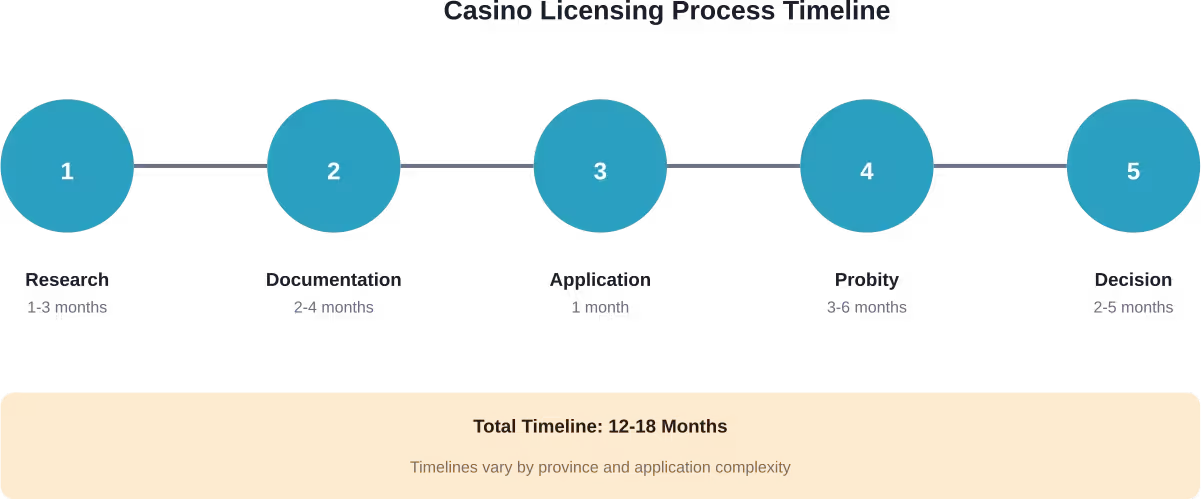
Quick Summary: Opening a casino in South Africa requires navigating a complex provincial licensing system overseen by the National Gambling Board. Operators must apply through provincial gambling boards, meet strict compliance requirements, demonstrate financial capability, and pay substantial fees. The process typically takes 12-18 months and involves background checks, public participation processes, and detailed business plans.
The South African gambling industry has exploded since legalization in 1995, with gambling turnover soaring from R8 billion to R815 billion. That’s a jump of more than 10,000%, and it signals massive opportunity for operators who know how to navigate the regulatory landscape.
But here’s the thing: opening a casino in South Africa isn’t straightforward. The licensing framework operates at a provincial level, each with its own requirements, fees, and processes. And with the National Gambling Board providing oversight, compliance is non-negotiable.
This guide breaks down everything operators need to know about opening a casino in South Africa in 2026, from understanding the regulatory framework to submitting a successful application.
Understanding the South African Gambling Regulatory Framework
South Africa’s gambling regulation operates on a two-tier system. The National Gambling Act provides broad parameters, while provincial governments handle licensing and day-to-day regulation.
The National Gambling Board, as confirmed by their official website updated in April 2026, is responsible for oversight of gambling regulation throughout the country and preserving South Africa’s integrity as a responsible global citizen. Their strategic intent focuses on positioning South Africa as a jurisdiction with an exemplary and effectively regulated gambling industry.
Each of South Africa’s nine provinces has its own gambling board with authority to issue casino licenses. This means operators must navigate provincial-specific regulations, application processes, and compliance requirements.
Provincial Authority and Concurrent Competence
According to research from the University of Stellenbosch, gambling became a concurrent competence under South Africa’s Constitution. This gave provinces the opportunity to develop gambling policy beneficial to their region, while the National Gambling Act provided the framework.
Most provinces moved quickly after legalization to ensure casinos were developed, primarily to create a larger revenue base through gambling tax. Provincial governments were cash-strapped, and gambling tax became an attractive option to supplement national budget contributions.
The Western Cape Province took a different approach. Recognizing gambling’s potential social impact, the province developed clear objectives to offset negative impacts by requiring casino operators to include tourism infrastructure that added value to their regions.
The South African Gambling Market in 2026
South Africa’s gambling industry continues its rapid growth trajectory. According to available data, the country realized a Gross Gambling Revenue of €2.920 billion in the financial year, driven by widespread mobile accessibility, a strong sports betting culture, and growing interest in casino-style experiences.
The market is dominated by both land-based casinos and a growing online segment. Land-based establishments remain significant revenue generators, while online platforms are capturing younger demographics and mobile-first users.
Tax Revenue Distribution
Gambling taxes in South Africa are collected by provincial authorities at rates determined by provincial legislation, and these revenues accrue to the Provincial Revenue Funds.
This revenue structure explains why provinces remain engaged in casino licensing despite social concerns. The funds support provincial development priorities that might otherwise go unfunded due to budget constraints.
Provincial Licensing Requirements and Costs
Casino licence costs in South Africa vary significantly by province. Application fees for a full casino licence typically range from R500,000 to over R1.2 million (approximately €25,000 to €60,000+), while annual licence fees usually start from R300,000 upwards, depending on the province and scale of operations.
Here is the licensing landscape across key provinces (approximate figures):
- Western Cape: Application fee ≈ €30,000; Annual fee ≈ €15,000
- Gauteng: Application fee ≈ €60,000+; Annual fee varies
- North West: Application fee ≈ €10,000–12,000; Annual fee ≈ €5,000–6,000
- KwaZulu-Natal: Varies by region
These fees cover only licensing costs. Operators must also budget for substantial infrastructure development, compliance systems, staff, marketing, and ongoing operational expenses.
The Western Cape’s Infrastructure Requirement
The Western Cape developed unique policy determinations requiring casino operators to include tourism infrastructure that adds value to the region. This infrastructure doesn’t necessarily need to be linked with the casino and can be off-site.
The policy made clear that stand-alone casinos wouldn’t be entertained in the adjudication process. This approach led to the development of the Cape Town International Convention Centre, which was included in a casino bid application and fundamentally changed Cape Town’s tourism landscape.
Though convention centers are rarely profitable on their own, they’re known to change cities and regions through their economic impact. The direct, indirect, and induced economic impact of delegate expenditure, hotel bookings, food and beverage spending, and transport creates benefits that offset the negative social impacts of gambling.
Step-by-Step Casino Licensing Process
Opening a casino in South Africa follows a structured but lengthy process. Operators should expect 12 to 18 months from initial application to license approval, though timelines vary by province.
Step 1: Market Research and Feasibility Study
Before applying, operators need comprehensive market research. Which province offers the best opportunity? What’s the competitive landscape? Are there underserved markets or regions with limited casino access?
A feasibility study should assess demographic trends, disposable income levels, tourism patterns, and existing gambling facilities. This research forms the foundation of the business plan that provincial boards will scrutinize.
Step 2: Identify the Target Province
Not all provinces have available casino licenses. The National Gambling Act limited the total number of casino licenses nationally, and provinces allocated these licenses based on their regional planning.
The Western Cape, for example, divided the province into five regions and allocated one casino license to each region. Other provinces took different approaches based on population density, tourism potential, and economic development priorities.
Operators must confirm license availability with the relevant provincial gambling board before investing significant resources in application preparation.
Step 3: Assemble the Required Documentation
Provincial gambling boards require extensive documentation as part of the application process. While specific requirements vary, common elements include:
- Detailed business plan with financial projections
- Proof of financial capability and funding sources
- Background checks and probity investigations for all directors and key shareholders
- Proposed site plans and infrastructure development details
- Employment creation and skills development commitments
- Social responsibility and problem gambling mitigation plans
- Security protocols and surveillance systems
- Compliance management frameworks
The documentation requirements are substantial. Many operators engage specialized consultants who understand provincial requirements and can navigate the application process efficiently.
Step 4: Submit the Application and Pay Fees
Applications are submitted to the relevant provincial gambling board along with the application fee. These fees are non-refundable, regardless of the application outcome.
The provincial board conducts a preliminary review to ensure all required documentation is included and the application meets minimum threshold requirements. Incomplete applications may be rejected without detailed evaluation.
Step 5: Public Participation Process
Most provinces require a public participation process where community members can provide input on the proposed casino. This process acknowledges that casinos have social impacts beyond their economic benefits.
Operators may need to conduct community consultations, respond to public concerns, and demonstrate how they’ll address potential negative impacts. Strong community opposition can influence licensing decisions, so proactive engagement is essential.
Step 6: Probity and Background Investigations
Provincial gambling boards conduct thorough probity investigations on all individuals and entities associated with the application. This includes directors, major shareholders, key employees, suppliers, and financial backers.
The investigations examine criminal history, financial integrity, business reputation, and associations with questionable individuals or organizations. Any red flags can result in application denial.
Operators should ensure all parties involved have clean backgrounds and can withstand scrutiny. Attempting to hide problematic associations or past issues will almost certainly result in rejection.
Step 7: Board Evaluation and Decision
The provincial gambling board evaluates applications based on multiple criteria, typically including:
- Economic impact and job creation potential
- Financial viability and sustainability
- Quality of proposed infrastructure and amenities
- Social responsibility commitments
- Compliance capability and management quality
- Contribution to provincial tourism and development goals
Boards may request additional information, conduct site visits, or interview key personnel before making a final decision. The evaluation process is rigorous and can take several months.
Step 8: License Issuance and Conditions
Successful applicants receive a casino license subject to conditions. These conditions typically include:
- Infrastructure development milestones and timelines
- Employment targets and skills development commitments
- Ongoing compliance reporting requirements
- Social responsibility program implementation
- Annual license fee payment obligations
Failure to meet license conditions can result in penalties, suspension, or revocation. Operators must establish robust compliance management systems from day one.
Launch Your Casino Faster With Verified Partners

Opening a casino in South Africa is not just about licensing – you still need the right platform, payments, software, and traffic sources to actually operate. Sologe is a marketplace built for iGaming businesses, where operators and providers connect without long outreach cycles or guesswork. Instead of searching across dozens of sites, you can browse categories, compare options, and go directly to vendors that fit your setup. It is a more structured way to build your stack when timing and reliability matter.
Find What You Need And Move Forward Without Delays
Here is what Sologe helps you do when launching or scaling a casino:
- Access multiple iGaming solution providers in one place
- Compare platforms, services, and tools side by side
- Connect directly with vendors without intermediaries
- Reduce time spent on sourcing and validation
If you want to move faster without random trial and error – reach out to Sologe and start conversations with the right partners.
Compliance and Ongoing Regulatory Obligations
Receiving a casino license is just the beginning. Operators face extensive ongoing compliance obligations overseen by both provincial gambling boards and the National Gambling Board.
Anti-Money Laundering Requirements
The Financial Intelligence Centre (FIC) is the primary body responsible for oversight of Anti-Money Laundering (AML) and Combating the Financing of Terrorism (CFT) compliance in South Africa. Casinos are classified as ‘Accountable Institutions’ under the FIC Act. Casinos must implement comprehensive anti-money laundering programs that include:
- Customer due diligence and know-your-customer procedures
- Transaction monitoring and suspicious activity reporting
- Staff training on money laundering indicators
- Record-keeping systems meeting regulatory standards
Operators who fail to meet AML obligations face serious consequences, including license revocation and criminal prosecution.
Problem Gambling Mitigation
Recent research from Wits University published in April 2026 highlighted growing concerns about gambling addiction. The research noted that when studies show children’s repeated exposure to gaming is associated with higher odds of gambling addiction in early adulthood, the system itself needs to change.
Provincial gambling boards require casinos to implement problem gambling programs that include:
- Self-exclusion mechanisms allowing individuals to ban themselves
- Staff training to identify problem gambling behaviors
- Advertising restrictions and responsible gambling messaging
- Support for counseling services and treatment programs
These requirements reflect growing awareness that the harm from gambling isn’t accidental but built into certain operational models. Casinos that prioritize profit over player protection risk regulatory action and reputational damage.
Technical Standards and Gaming Equipment
All gaming equipment must meet technical standards approved by the provincial gambling board. This includes:
- Random number generator certification for electronic games
- Regular testing and verification of gaming equipment
- Surveillance systems meeting security specifications
- Data recording and reporting systems for regulatory oversight
Operators cannot make changes to gaming equipment or introduce new games without prior approval. Unauthorized modifications constitute serious violations that can trigger license suspension.
Financial Planning and Budget Considerations
Opening a casino requires substantial capital investment beyond licensing fees. Operators should budget across several categories based on industry benchmarks.
Budget Allocation Framework
According to operator guidance, typical budget allocation for casino development includes:
- 30-40% for infrastructure and facility development
- 30-40% for marketing and customer acquisition
- 10-20% for licensing, legal, and compliance costs
- Remaining allocation for salaries, technology, and working capital
For a mid-sized casino operation, total investment requirements vary substantially by province and scale. The Western Cape’s requirement for additional tourism infrastructure significantly increases capital requirements. The Cape Town International Convention Centre, developed as part of a casino license allocation, represented a major infrastructure investment that extended beyond the casino itself.
Revenue Projections and Profitability Timeline
Casinos typically require 24 to 36 months to reach operational profitability. Initial years focus on building customer base, establishing brand recognition, and optimizing operations.
Revenue streams include gaming revenue from slots and table games, hospitality revenue from restaurants and bars, accommodation revenue if hotels are included, and entertainment revenue from shows and events.
Operators must maintain sufficient working capital to sustain operations through the initial loss-making period. Undercapitalized ventures often fail not because of market conditions but because of insufficient runway to reach profitability.
Location Strategy and Market Selection
Location determines casino success more than almost any other factor. The right location provides customer access, tourism appeal, and infrastructure support.
Urban vs. Tourist Destinations
South Africa’s casino market includes both urban casinos serving local populations and destination casinos targeting tourists. Each model has different success factors.
Urban casinos benefit from high population density and regular patronage from local residents. These facilities often emphasize convenience, accessibility, and frequent player programs that build loyalty.
Destination casinos rely on tourism flows and position themselves as entertainment complexes with hotels, restaurants, entertainment venues, and attractions beyond gambling. These facilities require significant infrastructure investment but can command premium pricing.
Competitive Analysis
Before selecting a location, operators must analyze existing competition. How many casinos currently operate in the region? What’s their market positioning? Are there underserved customer segments or geographic gaps?
Provinces that already have multiple established casinos present challenges for new entrants. Customer loyalty, established brands, and economies of scale create barriers that require substantial marketing investment to overcome.
Conversely, regions with limited casino access may offer opportunities, but operators must assess whether insufficient competition reflects limited market potential rather than opportunity.
Technology and Gaming Software Selection
Modern casinos require sophisticated technology platforms covering gaming, security, customer management, and compliance reporting.
Gaming Management Systems
A casino management system integrates all gaming operations, including slot machine monitoring, table game tracking, player loyalty programs, and financial reporting. The system must meet provincial technical standards and provide the data feeds required for regulatory compliance.
Leading international suppliers dominate the South African market, but operators should evaluate systems based on local support capability, integration with provincial reporting requirements, and scalability as operations grow.
Security and Surveillance Infrastructure
Provincial gambling boards mandate comprehensive surveillance systems covering all gaming areas, cash handling zones, and key operational spaces. The systems must provide high-quality recording, adequate retention periods, and quick retrieval capability for investigations.
Security extends beyond cameras to include access control systems, cash management technology, and cybersecurity protecting customer data and financial systems.
Employment and Skills Development
Casino license conditions typically include employment creation targets and skills development commitments. These requirements reflect government priorities around job creation and economic empowerment.
Recruitment and Training Programs
Casinos employ diverse roles including gaming staff, hospitality personnel, security teams, management, and support functions. A mid-sized casino might employ 500 to 1,000 people directly, with additional indirect employment through suppliers and contractors.
Provincial boards expect operators to prioritize local hiring and implement training programs that develop skills in gaming operations, hospitality management, and technical roles. These commitments often form part of the license evaluation criteria.
Broad-Based Black Economic Empowerment
South Africa’s economic empowerment legislation affects casino licensing. Operators must demonstrate BBBEE compliance through ownership structures, management diversity, preferential procurement, and enterprise development.
Scoring well on BBBEE criteria can strengthen license applications and provide competitive advantages in evaluation processes where multiple applicants compete for limited licenses.
Marketing Strategies for South African Casino Operations
Marketing a casino in South Africa requires understanding local player preferences, cultural nuances, and effective channels for reaching target demographics.
Understanding South African Players
South African players show strong preferences for specific game types, social gambling experiences, and entertainment-focused venues. The market has a robust sports betting culture that casinos can leverage through sportsbook offerings and sports-themed promotions.
Mobile accessibility is increasingly important. Over 90% of online gambling users access gaming platforms through smartphones according to market research. While land-based casinos operate differently, mobile-first thinking should influence loyalty programs, promotion communication, and customer engagement strategies.
Channel Strategy and Customer Acquisition
Effective marketing channels in South Africa include digital advertising targeting urban populations, partnerships with hospitality and tourism operators, loyalty programs rewarding frequent visitors, event marketing and entertainment programming, and strategic sponsorships building brand awareness.
Advertising must comply with provincial restrictions on gambling promotion. Most provinces prohibit advertising targeting minors, require responsible gambling messaging, and restrict claims about winning probabilities.
Alternative Models: Internet Cafes and Limited Gambling Venues
Beyond full casino licenses, South Africa’s regulatory framework allows limited gambling operations through different licensing categories.
Internet cafes offering limited gaming terminals operate under less stringent licensing requirements than full casinos. These venues provide gaming entertainment in smaller formats with lower capital requirements.
Provincial boards issue licenses for limited gambling machines that can be placed in retail locations, restaurants, and entertainment venues. These licenses have different fee structures and compliance requirements than casino licenses.
Operators considering the South African market should evaluate whether these alternative models better match their capital availability and risk tolerance. While full casinos offer higher revenue potential, they require substantially more investment and face more complex regulatory obligations.
Common Challenges and Risk Mitigation
Opening a casino in South Africa presents predictable challenges that operators should anticipate and plan for.
Regulatory Complexity and Compliance Costs
The dual regulatory structure creates complexity as operators must navigate both national framework requirements and provincial-specific regulations. Compliance costs are substantial and ongoing, requiring dedicated staff and systems.
Operators should budget for legal and compliance expertise throughout the licensing process and operational phase. Attempting to minimize compliance investment creates risks that far exceed any short-term savings.
Social Opposition and Reputational Risk
Despite legalization, gambling remains controversial in South Africa. Community opposition can emerge during the public participation process or after operations commence.
Proactive community engagement, visible social responsibility programs, and transparent communication help manage social concerns. Operators who ignore community sentiment face ongoing reputational challenges that affect customer acquisition and regulatory relationships.
Capital Requirements and Funding
The substantial capital required for casino development can be difficult to secure. Traditional lenders may be hesitant given gambling industry risks, requiring operators to seek specialized financing or equity partnerships.
Operators should secure funding commitments before beginning the licensing process. Provincial boards will scrutinize financial capability closely, and insufficient funding is a common reason for application rejection.
Future Outlook for South African Casino Market
The South African casino market continues evolving in 2026, shaped by technology changes, regulatory developments, and shifting consumer preferences.
Online gambling has grown rapidly alongside land-based operations. While this guide focuses on physical casino licensing, operators should consider integrated strategies that combine land-based and online offerings where provincial regulations permit.
The National Gambling Board’s strategic intent to position South Africa as a jurisdiction with exemplary regulation suggests continued emphasis on compliance, player protection, and responsible gambling. Operators should expect regulatory scrutiny to intensify rather than relax.
Economic conditions will influence market growth. South Africa’s economic challenges affect disposable income available for gambling, but the industry has shown resilience through previous economic cycles.
Frequently Asked Questions
How long does it take to get a casino license in South Africa?
The licensing process typically takes 12 to 18 months. This includes application preparation, submission, public consultation, background investigations, and final approval by provincial authorities.
How much does a casino license cost in South Africa?
Costs vary by province. Application fees generally range from about R500,000 to over R1.2 million, while annual license fees start around R300,000 and increase based on the size and scope of operations.
Which South African province is easiest for casino licensing?
No province is considered easier than others. Each has unique requirements and priorities. Applicants should choose based on market potential and alignment with provincial development goals rather than perceived ease.
Can foreign companies open casinos in South Africa?
Yes. Foreign companies can participate, but they must undergo strict background checks and often partner with local entities. Compliance with local ownership and economic participation requirements is important.
What happens if a casino license application is rejected?
Application fees are usually non-refundable. Applicants may be able to reapply after addressing issues, but opportunities can be limited depending on license availability in the province.
Do casinos in South Africa need to build additional infrastructure?
In some provinces, yes. Requirements may include contributing to tourism or regional development, which can involve building additional facilities beyond the casino itself.
What are the main ongoing compliance requirements for casinos?
Casinos must comply with financial reporting, anti-money laundering measures, responsible gambling programs, technical standards for gaming equipment, and regulatory oversight. Failure to comply can result in penalties or license suspension.
Conclusion
Opening a casino in South Africa offers significant opportunity in a growing market, but success requires navigating complex provincial licensing systems, meeting substantial capital requirements, and maintaining rigorous compliance standards.
The regulatory framework reflects South Africa’s approach to balancing economic opportunity with social responsibility. Provincial gambling boards maintain high standards for license applicants, looking beyond financial capability to assess broader economic contributions, social responsibility commitments, and operational integrity.
Operators who invest time in thorough market research, assemble complete documentation, demonstrate genuine commitment to responsible gambling, and engage proactively with regulators and communities position themselves for success.
The South African casino market will continue evolving as technology advances, regulations adapt, and consumer preferences shift. Operators who build strong compliance foundations, prioritize player protection, and contribute to broader economic and social development will thrive in this dynamic environment.
Ready to explore casino licensing in South Africa? Start by contacting the relevant provincial gambling board to confirm license availability and obtain current application requirements. The National Gambling Board website provides provincial board contact information and helpful resources for prospective operators.
Related Articles

September 30, 2026Is Sports Betting Legal in Brazil? The Full...

September 30, 2026Is Sports Betting Legal in Iran? The Real...