 Nothing found for the request

Are Casinos Legal in Kenya? 2026 Gambling Laws Explained
Sologe April 28, 2026
Share:


Quick Summary
Quick Summary: Yes, casinos are legal in Kenya under the Gambling Control Act, 2025, which replaced the outdated Betting, Lotteries, and Gaming Act. Both land-based and online gambling operations can operate legally, provided they obtain proper licensing from the Betting Control and Licensing Board (BCLB) and meet strict requirements including 30% Kenyan ownership and a KSh 100 million financial guarantee.
Kenya has emerged as East Africa’s gambling hub, with a regulatory framework that explicitly permits casino operations, sports betting, lotteries, and online gaming. But the landscape changed dramatically in August 2025.
On August 7, 2025, President Ruto signed the Gambling Control Act, 2025 into law. This marked the most comprehensive regulatory overhaul the country has seen in decades, replacing legislation that hadn’t kept pace with digital innovation and market growth.
So what does this mean for casino legality? Let’s break down everything operators and players need to know about gambling laws in Kenya as of 2026.
The Legal Status of Casinos in Kenya
Casinos are completely legal in Kenya. The country maintains a well-established gambling culture with a regulatory system that actively supports the industry through proper licensing and oversight.
Both land-based casinos and online gambling platforms can operate legally, provided they meet licensing requirements set by the The Gambling Regulatory Authority of Kenya (GRA). According to Casino Market, the gambling industry’s capitalization reached $1.6 billion by the end of 2024, with online operations accounting for 60% of total revenue.
Here’s the thing though—legality comes with strict conditions. The new Gambling Control Act established significantly tougher standards than what existed before.
Land-Based Casino Operations
Physical casinos operate in select counties across Kenya. According to available data, only seven counties currently hold licenses to operate casino facilities, creating a concentrated market in specific regions.
These establishments must maintain proper licensing, comply with taxation requirements, and adhere to responsible gambling standards. Gaming halls, slot parlors, and traditional casino venues all fall under the same regulatory framework.
Online Gambling Platforms
Online casinos, sports betting sites, and poker rooms constitute the fastest-growing segment of Kenya’s gambling market. Mobile adoption drives this growth—approximately 80% of traffic and turnover comes from mobile devices, largely thanks to M-Pesa wallet integration.
Locally licensed platforms connect directly with Kenyan bank accounts and mobile wallets, providing security and convenience that foreign operators often can’t match. Players should stick with licensed local operators to ensure legal protection.
Kenya's Gambling Control Act, 2025: What Changed
The Gambling Control Act, 2025 replaced the Betting, Lotteries, and Gaming Act (Chapter 131 of 1966), a framework that simply couldn’t keep up with how the industry evolved. The old law dated back decades and didn’t address digital platforms, youth participation concerns, or cross-border operations.
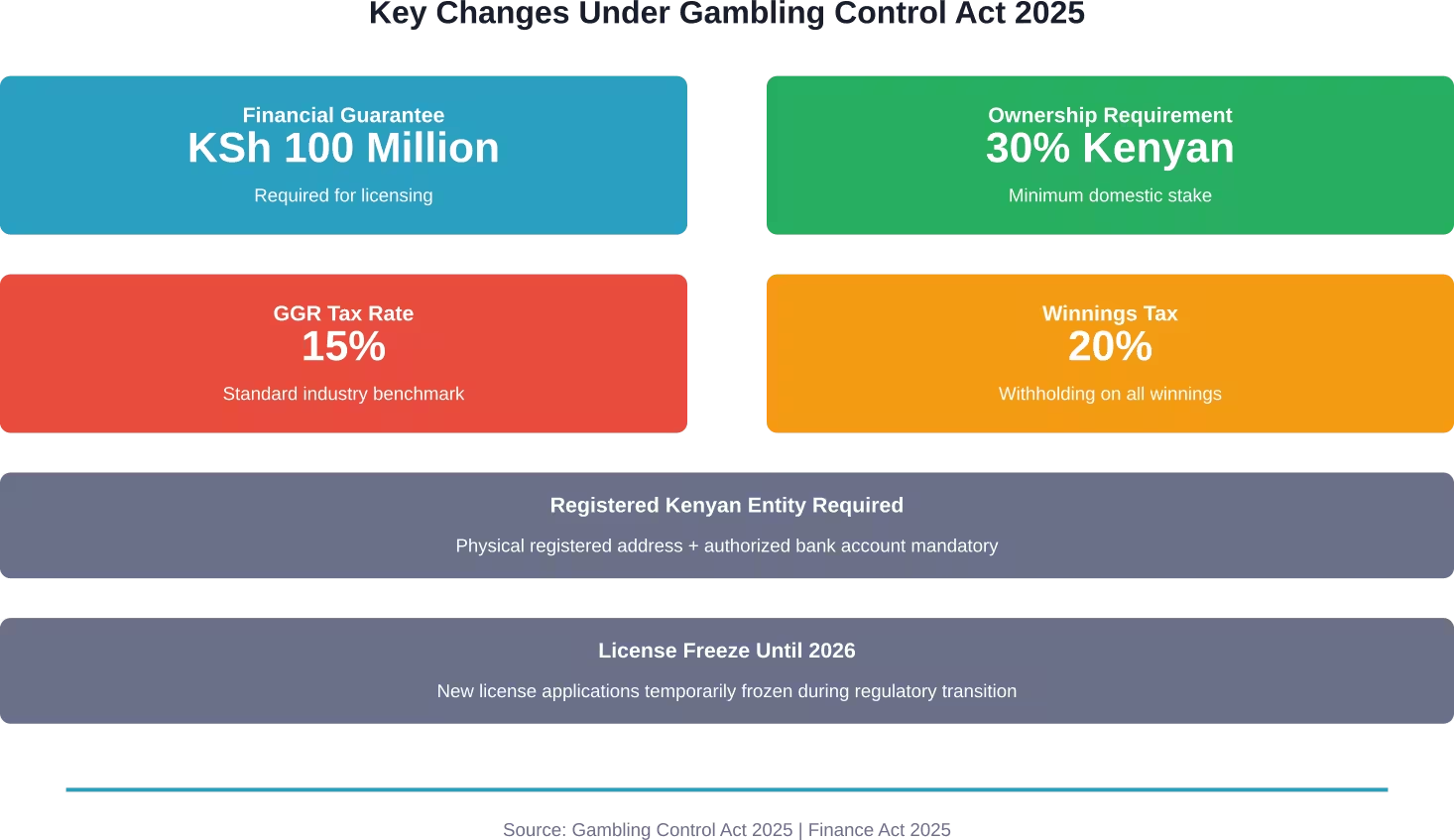
The new legislation introduced several major shifts:
Ownership and Incorporation Requirements
According to Gofaizen & Sherle, the law explicitly requires that applicant entities must be registered in Kenya with a registered physical address. A minimum of 30% of shares must be held by Kenyan citizens, supporting domestic participation in the regulated market.
This requirement represents a significant barrier to entry for foreign operators. Companies without local partnerships simply can’t obtain licensing anymore.
Financial Security Standards
Online gambling companies now need to post a KSh 100 million financial guarantee. This ensures operators have sufficient capital to cover player winnings, operational stability, and regulatory compliance costs.
The security requirement weeds out undercapitalized operators and provides consumer protection. But it also significantly raises the stakes for market entry.
Who Regulates Gambling in Kenya?
The Gambling Regulatory Authority of Kenya (GRA) serves as the primary regulator under the Gambling Control Act, 2025. The Gambling Regulatory Authority of Kenya (GRA) is the established authority as of December 1, 2025.
Types of Legal Gambling in Kenya
Kenya’s regulatory framework covers multiple gambling verticals:
Gambling Type | Legal Status | Primary Regulator | Key Requirements |
|---|---|---|---|
Land-Based Casinos | Legal | GRA | County-specific licensing, physical premises verification |
Online Casinos | Legal | GRA | 30% Kenyan ownership, KSh 100M guarantee, local registration |
Sports Betting | Legal | GRA | Same as online casinos, most popular segment |
Lotteries | Legal | GRA | Separate licensing category, prize structure approval |
Online Poker | Legal | GRA | Falls under online gambling framework |
Gaming Equipment/Software | Regulated | GRA | Provider licensing required for B2B operators |
Sports Betting Dominance
Sports betting represents the largest segment of Kenya’s gambling market. Football betting particularly drives engagement, with mobile platforms making wagering accessible nationwide.
The convenience of mobile money integration through M-Pesa transformed how Kenyans engage with sports betting. Deposits and withdrawals happen instantly, removing traditional banking friction.
Poker’s Growing Scene
According to competitor sources, Kenya has become the main center of poker in East Africa. The country offers both live card rooms and online poker platforms for local players and international visitors.
Live poker venues operate in major cities, while licensed online poker rooms provide 24/7 access. The combination creates a vibrant poker ecosystem that rivals more established markets.
Taxation and Compliance Costs
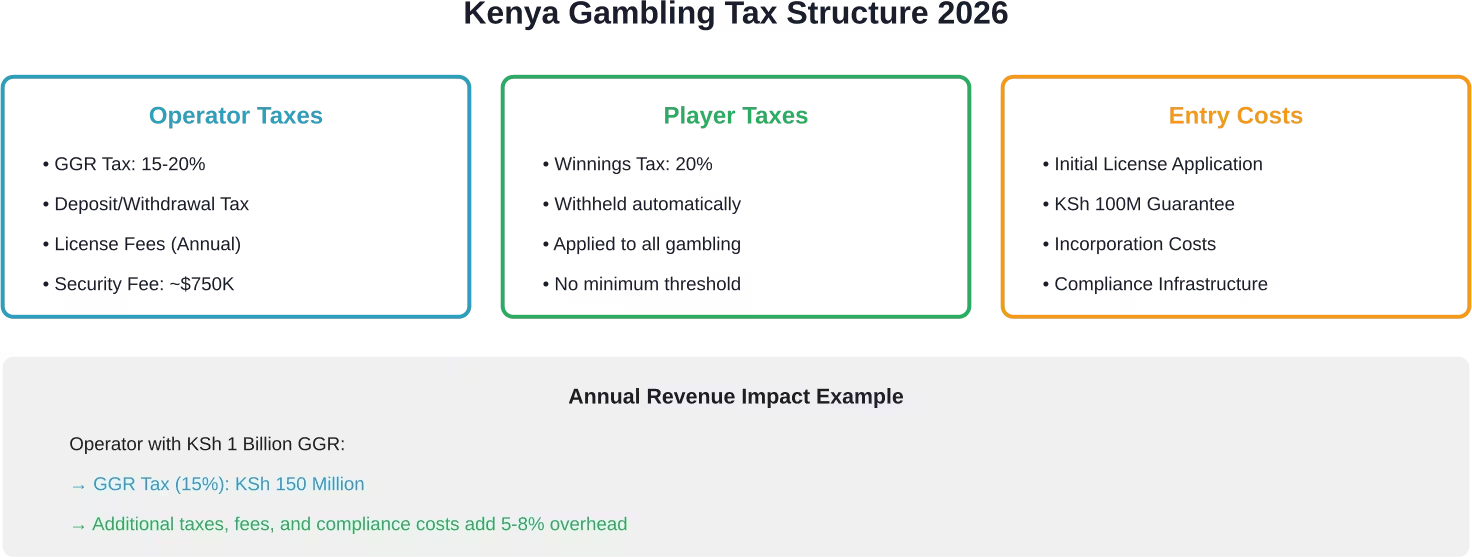
Operating legally in Kenya means dealing with multiple tax obligations. The Finance Act 2025 introduced significant changes to how gambling revenues get taxed.
Gross Gaming Revenue Tax
According to Altenar, a 15% tax on Gross Gaming Revenue remains the standard industry benchmark. Some operators face rates between 15-20% depending on their specific licensing category and revenue levels.
GGR represents total wagers minus winnings paid out. It’s calculated before operational expenses, making it a significant cost of doing business.
Player Winnings Withholding
Players face a 20% withholding tax on all gambling winnings. This gets deducted automatically by licensed operators before payouts are processed.
There’s no minimum threshold—whether someone wins KSh 100 or KSh 1 million, the 20% withholding applies. This represents one of the higher player taxation rates globally.
Deposit and Withdrawal Taxation
The Finance Act 2025 introduced taxation on betting-related deposits and withdrawals. This creates an additional revenue stream for the government but adds friction to the player experience.
Operators must track and remit these taxes separately from GGR obligations, increasing compliance complexity.
How to Obtain a Gambling License in Kenya
Getting licensed in Kenya involves several distinct steps. The process became more rigorous under the Gambling Control Act, 2025.
First, applicants need to establish a Kenyan-registered company with proper shareholding structure. That 30% Kenyan ownership requirement can’t be circumvented—beneficial ownership must genuinely rest with Kenyan citizens.
Next, operators must demonstrate financial stability through the KSh 100 million guarantee. This typically requires posting a bank guarantee or surety bond from an authorized Kenyan financial institution.
The formal application to GRA includes extensive documentation: business plans, technical infrastructure details, responsible gambling policies, anti-money laundering procedures, and background checks on all beneficial owners and key personnel.
According to Gofaizen & Sherle, operators must maintain a dedicated bank account with an authorized institution and provide a registered physical address in Kenya.
Processing times vary depending on completeness of documentation and regulatory complexity. The GRA conducts thorough due diligence before granting authorization.
License Freeze and Market Access Challenges
Here’s where things get complicated. Kenya froze new gambling license applications until 2026 during the regulatory transition to the new Gambling Control Act framework. The transition to the new operational framework for the Gambling Control Act, 2025 in Kenya is set to be completed by the end of February 2026, marking a key shift toward updated licensing and compliance standards.
According to AA Casino Solutions, this freeze created a unique market dynamic. Prospective operators can’t simply apply for new licenses—they need alternative market entry strategies.
Some companies have pursued acquisitions of existing licensed operators. Others formed partnerships with established Kenyan gambling businesses that already hold valid licenses.
The freeze demonstrates the government’s intention to consolidate the market and ensure all operators meet the higher standards before expanding licensing further.
Kenya's Gambling Market Outlook
Kenya remains one of Africa’s most attractive gambling markets despite—or perhaps because of—stricter regulation. The compound annual growth rate stood at 7.5% as of late 2024, with continued expansion expected.
Mobile penetration continues driving growth. Smartphone adoption and mobile money infrastructure position Kenya ahead of regional competitors in digital gambling accessibility.
The regulatory clarity provided by the Gambling Control Act actually strengthens Kenya’s appeal for serious operators. Markets with clear rules and enforced standards tend to mature more sustainably than those with lax oversight.
Generally speaking, markets that implement higher compliance standards initially face consolidation, but emerge with healthier long-term fundamentals. Kenya appears to be following this pattern.
Enter the Kenyan Gambling Market With the Proven Partners

Understanding whether casinos are legal in Kenya is one part of the process, but entering the market comes down to who you work with. Sologe is an iGaming marketplace built for operators and businesses to discover suppliers, compare products, and connect in one place. Instead of relying on scattered contacts or short-term exposure, companies use it as a continuous channel to find partners and launch new projects.
Choose the Right Setup Before You Launch
Sologe helps you move from legal clarity to real execution:
- Access vendors across platforms, payments, and operational services
- Explore solutions already used in different regulatory environments
- Present your offering and attract inbound partnership interest
- Communicate directly with companies without extra layers
If you’re planning to enter the Kenyan market, contact Sologe and discuss your setup with companies that are ready to work with you.
Frequently Asked Questions
Are online casinos legal for Kenyan players?
Yes. Kenyan players can legally use licensed online casinos. It’s important to verify that the operator is properly licensed and compliant with local regulations before depositing funds.
Can foreign companies operate casinos in Kenya?
Yes, but with restrictions. Foreign operators must establish a Kenyan-registered company and meet local ownership requirements, including a minimum shareholding by Kenyan citizens and a physical presence in the country.
What taxes do casino winners pay in Kenya?
Gambling winnings in Kenya are subject to a 20% withholding tax. Licensed operators typically deduct this tax automatically before paying out winnings.
How much does a gambling license cost in Kenya?
Costs include application fees, annual licensing fees, and a substantial financial guarantee. Overall expenses can be significant, often reaching into the millions depending on the operation scale.
Which counties allow casino operations in Kenya?
Casino operations require both national approval and local county authorization. Availability varies by region, as not all counties permit physical casino operations.
Do I need a Kenyan partner to get a gambling license?
Yes. Regulations require a minimum percentage of ownership by Kenyan citizens. Foreign investors must partner with local stakeholders who hold genuine ownership in the business.
Conclusion
Casinos are absolutely legal in Kenya, operating under one of East Africa’s most developed regulatory frameworks. The Gambling Control Act, 2025 established clear rules that protect consumers while creating opportunities for legitimate operators willing to meet higher standards.
The 30% Kenyan ownership requirement and KSh 100 million financial guarantee create substantial barriers to entry. But for operators with proper capitalization and local partnerships, Kenya offers a growing market with strong mobile adoption and regulatory clarity.
Players benefit from legal protections, diverse gambling options, and convenient mobile-first platforms. The 20% winnings tax represents a cost, but operating within the legal framework provides recourse and security that unlicensed alternatives can’t match.
As Kenya’s regulatory framework matures and the license freeze lifts, the market should see continued professionalization. Operators serious about African expansion should keep Kenya at the top of their strategic priorities—provided they’re prepared to meet the compliance requirements that come with legal market access.
Related Articles

September 30, 2026Is Sports Betting Legal in Brazil? The Full...

September 30, 2026Is Sports Betting Legal in Iran? The Real...