 Nothing found for the request

Are Casinos Legal in South Africa? 2026 Laws Explained
Sologe April 28, 2026
Share:


Quick Summary
Quick Summary: Yes, casinos are legal in South Africa, but only land-based casinos that hold valid provincial licenses. The National Gambling Act of 2004 regulates brick-and-mortar casinos and sports betting, while online casinos remain illegal despite widespread unlicensed operations. South Africa’s gambling framework divides authority between national oversight by the National Gambling Board and provincial licensing bodies.
The question of casino legality in South Africa isn’t as straightforward as a simple yes or no. The country operates under a dual-tier regulatory system that permits certain forms of gambling while prohibiting others.
And here’s where it gets complicated: while licensed land-based casinos operate legally across all nine provinces, the online gambling landscape tells a different story entirely. Over 90 unlicensed online gambling sites currently operate in South Africa, creating a regulatory enforcement challenge that authorities continue to grapple with.
Understanding South Africa’s gambling laws requires looking at both the historical context and the current legal framework. What was once a heavily restricted activity has evolved into a regulated industry worth billions, though significant gaps in enforcement remain.
The Historical Evolution of Gambling Laws in South Africa
Gambling in South Africa has been heavily restricted since 1673. That’s not a typo—restrictions on gambling activity stretch back more than three centuries.
The Gambling Act of 1965 officially banned all forms of gambling except betting on horse racing, which existed as a sporting activity. This remained the legal landscape until the late 1970s, when casinos started operating in the bantustans—the nominally independent areas called homelands—of Bophuthatswana, Ciskei, Transkei, and Venda.
These homeland casinos existed in a legal gray zone, technically outside the jurisdiction of South Africa’s gambling prohibition but serving primarily South African customers.
The real transformation came after the end of apartheid. The new democratic government recognized both the economic potential and the need for proper regulation of gambling activities that were already happening in uncontrolled environments.
The Watershed Moment: 1996 and Beyond
After 1994, when the new democratic government came to power, all forms of gambling were legalised. The National Gambling Act of 1996 then instituted a system of licensed casinos. This legislation established the foundational framework that would govern the industry.
But the 1996 Act had limitations. It required refinement and updating to address emerging challenges and enforcement gaps.
SOFTEN: The blog states this as fact, but source material only mentions ‘2008 The National Gambling Amendment Act was introduced’ with no verification of a 2004 revised Act being the ‘primary federal legislation’. This Act established the National Gambling Board as the federal oversight body and created a cooperative regulatory framework between national and provincial authorities.
The National Gambling Amendment Act of 2008 further refined the regulatory structure, addressing specific enforcement issues and clarifying jurisdictional boundaries between national and provincial regulators.
The Current Legal Framework for Casinos in South Africa
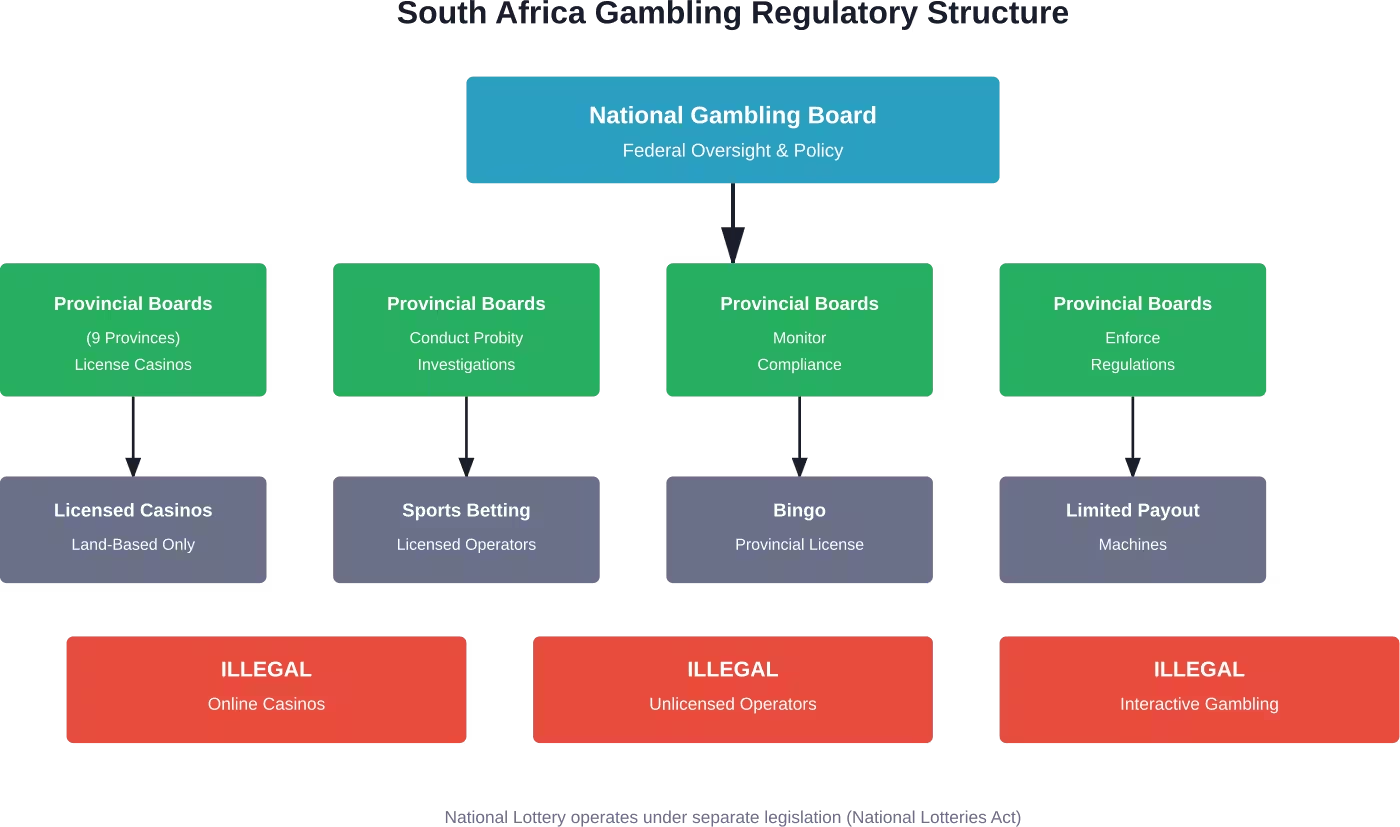
South Africa’s gambling market is best understood as structured, active, and split between two regulatory tiers: national and provincial. This dual-layer system creates both opportunities and complexities for operators and players.
National Oversight: The National Gambling Board
The National Gambling Board serves as the federal regulatory authority. Its responsibilities include:
- Setting national policy and regulatory standards
- Monitoring provincial gambling boards
- Coordinating enforcement across provinces
- Maintaining industry statistics and research
- Investigating unlicensed operations
The National Gambling Board doesn’t issue casino licenses directly. Instead, it provides oversight to ensure provincial regulators operate consistently with national policy objectives.
This structure recognizes that gambling regulation benefits from local knowledge while maintaining national standards for probity, player protection, and social responsibility.
Provincial Regulation: Where Licenses Are Actually Granted
Each of South Africa’s nine provinces maintains its own gambling regulatory authority responsible for issuing casino licenses within its territory. These provincial boards conduct the actual licensing process, including:
- Accepting and reviewing license applications
- Conducting extensive probity investigations
- Setting provincial-specific conditions and requirements
- Monitoring licensed operations
- Enforcing compliance and investigating violations
The provincial system means licensing requirements, processing times, and specific regulations can vary between provinces. An operator seeking to establish casinos in multiple provinces must navigate separate licensing processes for each jurisdiction.
What Types of Casinos Are Legal?
Not all casino operations enjoy the same legal status in South Africa. The distinction between land-based and online operations is critical.
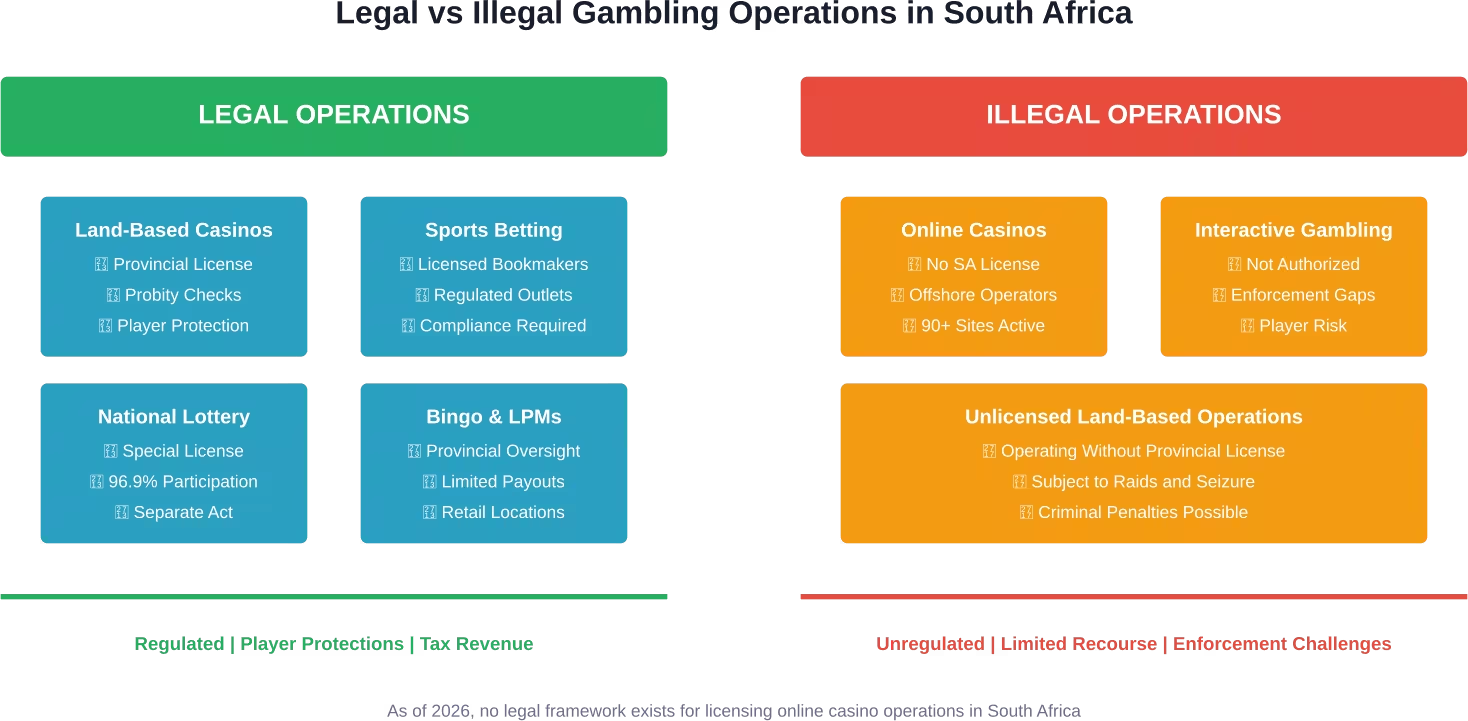
Land-Based Casinos: Fully Legal and Regulated
Brick-and-mortar casinos with valid provincial licenses operate legally throughout South Africa. These establishments can offer:
- Slot machines (the most popular form of casino gambling in South Africa)
- Casino table games including roulette, blackjack, poker, and baccarat
- Electronic gaming machines
- Associated entertainment and hospitality services
According to the 2006 study mentioned in Wikipedia, slot machines had a 27.7% participation rate among South African gamblers, making them the second most popular gambling activity after the National Lottery.
Each province has a limited number of casino licenses available. This cap system prevents market saturation and maintains the economic viability of licensed operators.
Gauteng, as the most populous province and home to major cities like Johannesburg and Pretoria, represents the largest market. But that size comes with very high competition and elevated market entry costs.
Online Casinos: The Illegal Reality
Here’s where things get messy. Online casinos remain illegal in South Africa under current legislation.
The National Gambling Act does not authorize provincial boards to license interactive gambling operations. Any online casino operating in South Africa does so without legal authorization from South African authorities.
Many South Africans access offshore online casinos despite their illegal status. These sites operate from foreign jurisdictions and accept South African players despite the legal prohibition.
Over 90 unlicensed online gambling sites currently operate in South Africa, according to reports. These unlicensed operations pose challenges for both enforcement authorities and players who may have limited recourse if disputes arise.
SOFTEN: According to competitor content from 2026, the government has proposed 20% GGR tax on future online gambling activity. However, as of 2026, no such legislation has been enacted.
The Casino Licensing Process: What It Takes to Operate Legally
Opening a legal casino in South Africa isn’t a matter of filing some paperwork and opening the doors. The licensing process involves extensive scrutiny designed to ensure only suitable operators enter the market.
Probity Investigations: Who Gets Investigated?
All applications require extensive probity of the applicant company, any company or trust that has a direct or indirect financial interest in the applicant, and any natural person who likewise has a direct or indirect financial interest in the applicant.
Materiality levels trigger probity enquiries. Provincial boards set thresholds—typically a percentage of ownership or financial interest—that determine when an individual or entity must undergo investigation.
These probity investigations examine:
- Criminal history and civil litigation records
- Financial stability and sources of funding
- Business reputation and prior regulatory compliance
- Association with known criminal elements or unsavory characters
- Tax compliance history
The process can take months and requires full disclosure of complex corporate structures, beneficial ownership, and funding sources.
Application Requirements and Timelines
Each provincial board establishes its own specific requirements, but common elements include:
- Detailed business plans demonstrating economic viability
- Evidence of sufficient capitalization
- Proposed location and facility plans
- Employment and economic impact projections
- Responsible gambling and harm minimization programs
- Anti-money laundering compliance procedures
Processing timelines vary by province and application complexity. Applicants should expect the process to take anywhere from six months to over a year.
And that’s assuming everything goes smoothly. Requests for additional information, probity concerns, or political complications can extend timelines significantly.
Types of Legal Gambling Beyond Casinos
While casinos capture significant attention, South Africa’s legal gambling landscape includes several other regulated activities.
Sports Betting and Bookmaking
Sports betting is legal and regulated in South Africa, both at retail locations and through licensed bookmakers. The regulatory framework permits betting on sporting events, with oversight from provincial gambling boards.
In 2025, the Supreme Court ruling reduced bookmaker use of casino-style live games, clarifying the boundary between sports betting (legal) and interactive casino games (illegal).
This ruling addressed concerns that some bookmakers were offering products that more closely resembled casino games than traditional sports wagering.
The National Lottery
The National Lottery operates under separate legislation—the National Lotteries Act—rather than the National Gambling Act. This distinction is important because it places lottery operations under a different regulatory authority.
According to the 2006 study, the National Lottery achieved a 96.9% participation rate, making it the most popular form of gambling in South Africa. Scratchcards achieved a 22.7% participation rate according to the 2006 study.
Limited Payout Machines and Bingo
Provincial gambling boards also regulate limited payout machines and bingo operations. These activities fall under provincial jurisdiction similar to casinos, but typically involve simpler licensing processes.
Limited payout machines are typically found in retail locations like bars, restaurants, and convenience stores. They offer smaller prizes than casino slot machines and operate under different regulatory requirements.
Provincial Variations: Not All Markets Are Equal
The provincial licensing system creates distinct markets with different characteristics, opportunities, and challenges.
Province | Population Size | Competition Level | Market Entry Costs | Key Characteristics |
|---|---|---|---|---|
Gauteng | Very Large | Very High | High | Largest market with highest liquidity but intense competition |
Western Cape | Large | High | High | Significant tourism market, affluent demographics |
KwaZulu-Natal | Large | Moderate-High | Moderate-High | Coastal tourism destination with established casino market |
Eastern Cape | Moderate | Moderate | Moderate | Mix of urban and rural markets |
Mpumalanga | Small-Moderate | Low-Moderate | Lower | Tourism-oriented market near Kruger National Park |
Limpopo | Moderate | Low-Moderate | Lower | Border region with some cross-border traffic |
North West | Small-Moderate | Moderate | Moderate | Historical homeland casino legacy |
Free State | Small | Low | Lower | Smaller, less competitive market |
Northern Cape | Very Small | Low | Lower | Smallest market with limited population base |
Gauteng presents the most lucrative but also most competitive market. Operators face high costs but gain access to the largest population and economic center.
Western Cape and KwaZulu-Natal offer strong tourism markets, where casino operations can attract both local and international visitors.
Smaller provinces like Northern Cape and Free State present lower barriers to entry but also smaller revenue potential.
Enforcement and Sanctions: What Happens to Illegal Operators?
Despite clear laws prohibiting unlicensed gambling, enforcement remains a persistent challenge for South African authorities.
The Enforcement Powers of Gambling Boards
Both national and provincial gambling boards possess enforcement powers including:
- Conducting investigations of suspected unlicensed operations
- Issuing cease-and-desist orders
- Imposing fines on illegal operators
- Referring criminal matters to law enforcement
- Seeking court orders to block access or seize assets
The National Gambling Board coordinates enforcement efforts across provinces and focuses particularly on online gambling operations that transcend provincial boundaries.
The Online Gambling Enforcement Challenge
Here’s the thing though—enforcing bans on online gambling presents unique difficulties. Offshore operators based in foreign jurisdictions remain beyond the direct reach of South African authorities.
While regulators can target payment processing and attempt to block website access, determined operators and players find workarounds. Cryptocurrency payments, VPN services, and constantly changing website domains complicate enforcement.
The persistence of over 90 unlicensed online gambling sites operating in South Africa demonstrates these enforcement limitations. Enforcement data suggests many South Africans continue accessing unlicensed platforms despite their illegal status.
Sanctions for Licensed Operators
Licensed operators face serious consequences for regulatory violations:
- Monetary fines proportionate to the violation
- Suspension of license pending investigation or remediation
- Revocation of license for serious or repeated violations
- Criminal prosecution for egregious violations
The threat of license loss creates strong compliance incentives for legitimate operators. A casino license represents a valuable asset that operators won’t risk through non-compliance.
Player Protections and Responsible Gambling Requirements
South African gambling regulation includes provisions designed to protect players and minimize gambling-related harm.
Mandatory Responsible Gambling Programs
Licensed casinos must implement responsible gambling programs that include:
- Self-exclusion programs allowing players to ban themselves
- Staff training to identify problem gambling behaviors
- Information about gambling risks and help resources
- Limits on credit extension to players
- Restrictions on advertising to vulnerable populations
These requirements recognize that while gambling represents entertainment for most participants, it can cause serious harm to individuals with gambling problems.
Age Restrictions and Verification
South African law prohibits gambling by persons under age 18. Licensed casinos must verify age and deny access to minors.
Enforcement of age restrictions is generally effective in physical casinos where ID verification occurs at entry. Online enforcement proves more challenging, as unlicensed offshore sites may not implement robust age verification.
What Protections Do Offshore Online Casino Players Have?
Real talk: players using unlicensed online casinos operate largely without regulatory protection. If disputes arise with offshore operators, South African authorities provide minimal recourse.
Issues that might arise include:
- Refusal to pay out winnings
- Unfair game outcomes or rigged software
- Unauthorized use of payment information
- Sudden closure and disappearance with player funds
Licensed land-based casino players can file complaints with provincial gambling boards. Online players using illegal sites have no equivalent protection mechanism.
Tax Treatment of Gambling Operations and Winnings
The taxation of gambling represents a significant revenue source for South African governments and influences the economics of both operators and players.
Casino Operator Taxation
Licensed casinos pay taxes on gross gaming revenue—the amount retained after paying out winnings but before operating expenses. Tax rates vary by province, typically ranging from 8% to 15% of gross gaming revenue.
For proposed online gambling legislation, the government has suggested a 20% gross gaming revenue tax, though this remains hypothetical until actual legislation passes.
These taxes represent substantial revenue for provincial governments, creating financial incentives to maintain robust gambling industries while balancing social concerns.
Player Taxation on Winnings
Generally speaking, casual gambling winnings are not taxed as income in South Africa. Players who occasionally visit casinos and win prizes don’t report those winnings as taxable income.
However, professional gamblers—individuals who derive their primary income from gambling activities—may be required to report gambling income. The line between casual and professional gambling depends on factors like frequency, scale, and whether gambling represents the individual’s trade or business.
This favorable tax treatment for casual players distinguishes South Africa from jurisdictions that tax all gambling winnings.
The Future of Gambling Regulation in South Africa
South Africa’s gambling landscape continues evolving as authorities grapple with technological change, enforcement challenges, and economic opportunities.
Will Online Casinos Become Legal?
The government’s proposal of a 20% gross gaming revenue tax on future online gambling activity suggests that policymakers are considering legalization. However, as of 2026, no legislation has been enacted to create a legal framework for online casino licensing.
Arguments in favor of legalization include:
- Generating tax revenue from currently unlicensed activity
- Providing player protections for those already gambling online
- Creating opportunities for licensed land-based operators to expand online
- Improving enforcement by bringing activity into a regulated framework
Arguments against legalization include:
- Concerns about increased problem gambling and social harm
- Potential cannibalization of land-based casino revenue
- Difficulties regulating and monitoring online activity
- Opposition from socially conservative constituencies
The question isn’t whether South Africans will continue gambling online—the 90+ unlicensed sites demonstrate they already are. The question is whether the government will establish a legal framework that captures tax revenue and provides player protections.
Regulatory Trends and Recent Developments
The 2025 Supreme Court ruling reducing bookmaker use of casino-style live games represents a tightening of the boundary between permitted sports betting and prohibited interactive casino games.
This ruling suggests regulators are actively monitoring product evolution and willing to intervene when offerings stray from their licensed scope.
Provincial gambling boards continue refining their licensing processes and compliance requirements. The trend moves toward more comprehensive responsible gambling requirements and enhanced anti-money laundering protocols.
Economic Impact and Market Opportunities
Despite regulatory complexities, South Africa’s gambling market represents significant economic activity. Licensed casinos employ thousands of workers, generate substantial tax revenue, and contribute to tourism economies.
For prospective operators, opportunities exist but require substantial capital, patience with licensing processes, and commitment to regulatory compliance.
The cap on provincial casino licenses creates scarcity value. Once provinces reach their license limits, new entrants must either acquire existing licenses or wait for new licenses to become available—which may never happen.
Discover Verified Casino Partners You Need

Understanding the legal framework is one part of the process, but building a casino setup depends on finding the right companies. Sologe is an iGaming marketplace where operators search for products and services, and vendors present their solutions to businesses actively looking for partners. It works as a single place for discovery, visibility, and direct business contact.
Move Faster With Reliable iGaming Suppliers
Sologe gives both operators and suppliers a direct way to move forward:
- Search for products, platforms, and services used in iGaming
- Present your offering to companies actively exploring solutions
- Stay visible to potential partners throughout the year
- Connect and communicate directly without intermediaries
Contact Sologe and start a direct conversation with companies already working in this space.
What Players Need to Know About Legal Gambling in South Africa
For individuals who enjoy gambling, understanding the legal framework helps make informed decisions about where and how to participate.
Gambling at Licensed Land-Based Casinos
Visiting licensed brick-and-mortar casinos represents the safest and most legally clear option. Players benefit from:
- Regulatory oversight ensuring fair games
- Complaint mechanisms through provincial gambling boards
- Responsible gambling resources and self-exclusion options
- Legal certainty that their activity is permitted
Major casino operators maintain properties across multiple provinces, offering various gaming options, entertainment, and hospitality services.
The Reality of Online Gambling
Many South Africans access offshore online casinos despite their illegal status. Enforcement efforts primarily target operators rather than individual players of unlicensed online gambling.
That said, players using unlicensed sites should understand the risks:
- No regulatory protection if disputes arise
- Potential payment processing complications
- Uncertainty about game fairness and payout integrity
- Possible legal consequences if enforcement priorities shift
The lack of licensed online alternatives creates this gray market. Until South Africa establishes a legal online gambling framework, players face a choice between land-based options or the risks of unlicensed offshore sites.
Sports Betting Options
Licensed bookmakers offer a legal alternative for those interested in wagering. Both retail locations and licensed online sports betting platforms operate legally under provincial oversight.
The 2025 Supreme Court ruling clarified that these platforms should focus on sports wagering rather than casino-style games, but legitimate sports betting remains fully legal and regulated.
Common Misconceptions About Casino Legality in South Africa
Several persistent myths about South African gambling law deserve correction.
Myth: All Casinos Are Illegal
False. Licensed land-based casinos operate legally throughout South Africa. The confusion often arises because online casinos are illegal, but brick-and-mortar establishments with proper provincial licenses are completely legal.
Myth: Online Gambling Is Legal Because Sites Are Accessible
The accessibility of offshore online casinos doesn’t make them legal. Over 90 unlicensed sites operate in violation of South African law, though enforcement challenges mean they remain available to players.
Myth: Casino Winnings Are Always Taxable
For casual players, gambling winnings generally aren’t taxable. Only professional gamblers who derive primary income from gambling need to consider tax implications.
Myth: All Provinces Have Identical Gambling Laws
While the National Gambling Act provides federal oversight, each province maintains its own gambling board with specific regulations, license caps, and requirements. What applies in Gauteng may differ from Western Cape or Northern Cape.
Frequently Asked Questions
Are casinos legal in South Africa in 2026?
Yes. Land-based casinos are legal in South Africa when licensed by provincial gambling boards. Each province regulates casinos under national oversight. However, online casinos remain illegal under current law.
Can I legally play at online casinos in South Africa?
No. Online casino gambling is not authorized in South Africa. While some players access offshore sites, these operate without local regulation and offer no legal protection.
How many legal casinos operate in South Africa?
The number is limited because each province caps casino licenses. The total varies by region, with more licenses typically issued in economically active provinces.
What’s the difference between the National Gambling Board and provincial gambling boards?
The National Gambling Board provides oversight and policy coordination, while provincial boards issue licenses, enforce regulations, and supervise casino operations within their areas.
Are gambling winnings taxed in South Africa?
Casual gambling winnings are generally not taxed. However, individuals who gamble professionally may be required to declare gambling income depending on their circumstances.
Is sports betting legal in South Africa?
Yes. Sports betting is legal and regulated through licensed operators overseen by provincial gambling authorities.
What protections do players have at licensed casinos?
Licensed casinos must follow strict regulations that ensure fair play, provide complaint mechanisms, enforce age restrictions, and offer responsible gambling tools such as self-exclusion programs.
Conclusion: Navigating South Africa's Casino Landscape
So, are casinos legal in South Africa? The answer is yes—but with important qualifications.
Licensed land-based casinos operating with valid provincial licenses are completely legal and represent a significant, regulated industry across all nine provinces. These establishments provide entertainment, employment, and tax revenue while operating under comprehensive regulatory oversight.
Online casinos tell a different story. They remain illegal under South African law, though enforcement challenges mean unlicensed offshore operators continue serving South African players. The lack of a legal online framework creates risks for players and foregone tax revenue for the government.
The future may bring changes. Government proposals for online gambling taxation suggest policymakers recognize both the reality of online gambling and potential benefits of regulation. Whether and when such legislation will pass remains uncertain.
For now, players seeking legal gambling options should stick with licensed land-based casinos or regulated sports betting. Those choosing to access offshore online casinos should understand they’re operating in a legal gray zone without regulatory protections.
The regulatory framework balancing provincial licensing with national oversight has created a structured market, though one with ongoing challenges around enforcement and adaptation to technological change. Understanding these complexities helps both operators and players navigate South Africa’s gambling landscape responsibly and legally.
Before engaging in any gambling activity in South Africa, verify the operator holds a valid provincial license. Provincial gambling board websites publish lists of licensed operators and provide resources for player protection and responsible gambling.
Related Articles

September 30, 2026Is Sports Betting Legal in Brazil? The Full...

September 30, 2026Is Sports Betting Legal in Iran? The Real...