 Nothing found for the request

Can I Deduct Gambling Losses? 2026 Tax Rules Explained
Sologe April 28, 2026
Share:


Quick Summary
Quick Summary: Taxpayers can deduct gambling losses on their federal tax return, but only up to the amount of gambling winnings reported as income. Starting with the 2026 tax year under the One Big Beautiful Bill Act, the deduction is further limited to just 90% of qualified losses. Deductions must be claimed as itemized deductions on Schedule A, and detailed records are required.
Gambling has become increasingly accessible across the United States. Since the Supreme Court struck down PASPA in 2018 with the Murphy v. NCAA decision, at least thirty-eight states have legalized some form of sports gambling. With millions of Americans now placing bets on everything from the Super Bowl to daily fantasy sports, understanding the tax implications has never been more critical.
Here’s the thing though—winning feels great until tax season arrives. And if you’ve had gambling losses throughout the year, you’re probably wondering whether those losses can offset your tax burden.
The short answer? Yes, but with significant restrictions that just got tighter.
How Gambling Income Works for Tax Purposes
According to the IRS, gambling winnings are fully taxable income. This isn’t negotiable. Whether winnings come from lotteries, raffles, sports betting, horse races, or casinos, they must be reported on a tax return.
Gambling income includes cash winnings and the fair market value of prizes like cars, trips, or other non-cash rewards. The IRS treats all of these as taxable income in the year received.
For casual gamblers—those who aren’t in the trade or business of gambling—winnings get reported as “Other Income” on Form 1040. Professional gamblers follow different rules entirely, reporting income and expenses on Schedule C.
When You’ll Receive Form W-2G
Payers are required to issue Form W-2G, Certain Gambling Winnings, when winnings meet specific thresholds. These thresholds vary by gambling type, but receiving this form doesn’t change the fundamental rule: all gambling winnings are taxable, regardless of whether a W-2G was issued.
But what about losses? That’s where things get complicated.
The Basic Rule for Deducting Gambling Losses
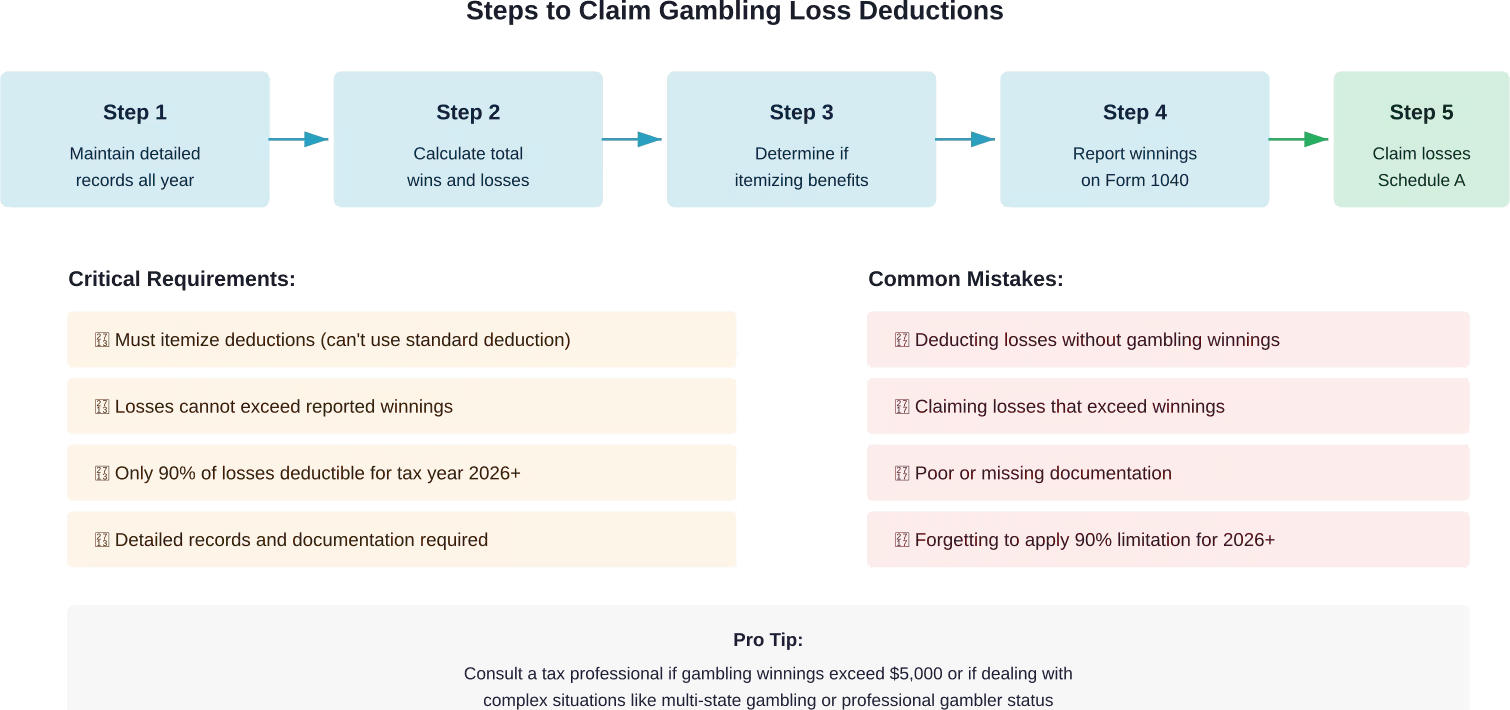
Gambling losses are deductible, but only as an itemized deduction on Schedule A. This creates the first major hurdle: taxpayers must itemize deductions rather than taking the standard deduction.
For tax year 2026, the standard deduction amounts have increased. Most taxpayers find that itemizing doesn’t make financial sense unless they have significant deductible expenses beyond gambling losses.
The second restriction is even more important: the amount of gambling losses deducted can never exceed the winnings reported as income. This means gambling losses can reduce gambling winnings to zero, but cannot create a net loss that offsets other income sources like wages or investment earnings.
The 2026 Game-Changer: One Big Beautiful Bill Act
On July 4, 2025, significant tax legislation was signed into law: the One Big Beautiful Bill Act (OBBBA). While this legislation aimed to reduce the tax burden on working-class Americans through various measures, it introduced a substantial restriction on gambling loss deductions.
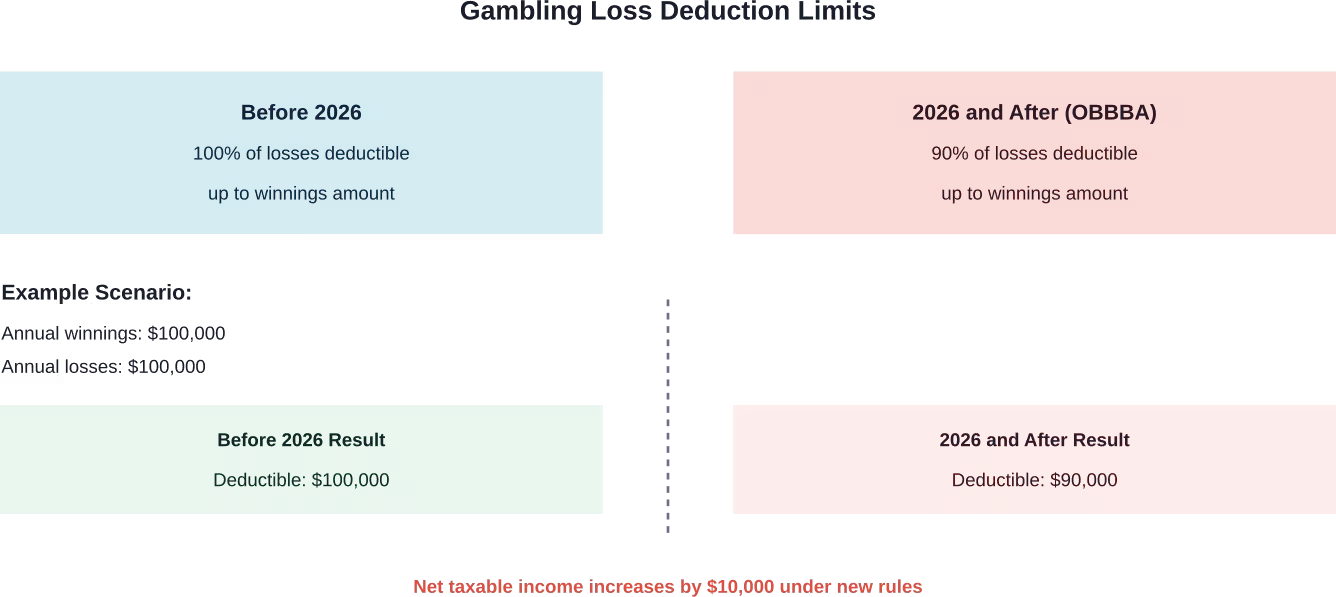
Starting with the 2026 tax year, gambling loss deductions are limited to 90% of qualified losses, which themselves are already capped at the amount of winnings. This creates a double restriction that significantly impacts frequent gamblers.
Here’s what this means in practice. If someone wins $100,000 and loses $100,000 gambling during the year, under previous rules they could deduct the full $100,000 in losses (assuming they itemize). Under OBBBA, they can only deduct $90,000 of those losses, leaving $10,000 in net taxable gambling income despite breaking even.
According to academic analysis from Rutgers Business School, this change disproportionately affects regular gamblers who experience high volume activity with relatively balanced wins and losses over time.
Who Can Actually Benefit from Deducting Gambling Losses
The reality is that gambling loss deductions only benefit a narrow segment of taxpayers. Three conditions must all be met:
- First, total itemized deductions must exceed the standard deduction. For many taxpayers, this alone eliminates the benefit.
- Second, there must be gambling winnings to offset. Losses without corresponding winnings provide zero tax benefit.
- Third, detailed records must be maintained throughout the year. The IRS requires specific documentation that many casual gamblers don’t keep.
Real talk: most recreational gamblers who hit a jackpot once or twice won’t benefit from deducting their losses. The taxpayers who benefit most are those with substantial gambling activity and winnings, who already itemize deductions for other reasons like mortgage interest or charitable contributions.
Required Documentation and Recordkeeping
The IRS doesn’t take gambling loss deductions lightly. Claiming these deductions without proper documentation invites scrutiny and potential audits.
Taxpayers claiming gambling loss deductions must maintain detailed records including:
- Date and type of specific wager or gambling activity
- Name and address or location of the gambling establishment
- Names of other persons present during gambling activities
- Amount won or lost on each session or activity
Supporting documents strengthen these records. Acceptable documentation includes wagering tickets, canceled checks, credit records, bank withdrawals, and statements of actual winnings or payment slips provided by the gambling establishment.
For casino gambling, maintaining a diary or log supplemented by supporting documents creates the strongest record. Electronic records from online gambling platforms can serve as documentation, but maintaining personal records alongside platform statements is advisable.
But here’s the catch—many casual gamblers don’t maintain these records until after they’ve had a winning year. By then, reconstructing accurate loss records becomes difficult or impossible.
How to Report Gambling Winnings and Losses
The reporting process involves multiple tax forms. Understanding which forms to use and where specific amounts get reported is essential for compliance.
Item | Form | Location | Notes |
|---|---|---|---|
Gambling Winnings | Form 1040 | Schedule 1, Line 8b (Other Income) | Report full amount of winnings |
Gambling Losses | Schedule A | Line 16 (Other Itemized Deductions) | Limited to winnings amount and 90% for 2026+ |
W-2G Withholding | Form 1040 | Line 25b (Federal Income Tax Withheld) | Credit against tax liability |
Winnings get reported as income regardless of whether losses occurred. The losses then appear separately as an itemized deduction, creating two distinct line items on the tax return.
This separate reporting means that even when losses equal or exceed winnings, adjusted gross income (AGI) still increases by the full amount of winnings. Higher AGI can trigger phase-outs of other tax benefits, create Medicare premium surcharges, or affect financial aid calculations—all negative consequences even when gambling activity resulted in no net gain.
Special Considerations and Exceptions
Nonresident Aliens
Different rules apply to nonresident aliens. Generally, nonresident aliens cannot deduct gambling losses at all. There’s an exception for losses incurred in connection with gambling activities in the United States, but strict limitations apply.
Professional Gamblers
Individuals in the trade or business of gambling—professional gamblers—follow entirely different rules. They report gambling income and expenses on Schedule C as business income and expenses. This classification allows deductions that reduce adjusted gross income rather than requiring itemization.
But qualifying as a professional gambler requires meeting substantial criteria demonstrating that gambling is a business, not a hobby. The bar is high, and most taxpayers won’t qualify.
State Tax Implications
Federal rules represent only part of the picture. State tax treatment of gambling winnings and losses varies significantly. Some states don’t allow gambling loss deductions at all. Some follow federal rules. Others have unique provisions.
Taxpayers must research their specific state’s rules or consult with a tax professional familiar with state gambling tax provisions.
Common Mistakes to Avoid
Several common errors can lead to IRS scrutiny or denied deductions:
- Deducting more losses than winnings: This violates the fundamental rule and will be disallowed upon examination.
- Failing to apply the 90% limitation for 2026 and later: Tax software should incorporate this change, but manual filers must remember to apply it.
- Taking the standard deduction while trying to deduct gambling losses: These are mutually exclusive choices. Gambling losses are only deductible when itemizing.
- Inadequate documentation: Vague records or estimates won’t withstand IRS scrutiny. Contemporary records made at or near the time of gambling activities carry far more weight than reconstructed estimates.
- Netting wins against losses: Some taxpayers mistakenly report only net gambling income. The IRS requires reporting gross winnings as income and separately claiming losses as an itemized deduction.
Tax Planning Strategies for Gamblers
While the rules are restrictive, some planning strategies can help minimize the tax impact of gambling activities.
Maintaining meticulous contemporaneous records throughout the year is foundational. Once the year ends, reconstructing accurate records becomes nearly impossible. Setting up a system at the start of the year—whether a dedicated notebook, spreadsheet, or app—makes compliance much easier.
Understanding the itemization decision matters significantly. Taxpayers close to the itemization threshold might benefit from bunching other deductible expenses into years with gambling winnings, making itemization worthwhile.
For those with substantial gambling activity, consulting with a tax professional before year-end allows for planning opportunities. Timing of certain wagers or activities might be adjustable to optimize tax outcomes.
And here’s something many overlook: the AGI impact. Because gambling winnings increase AGI even when fully offset by losses, other tax provisions tied to AGI thresholds can be affected. Planning around these thresholds requires holistic tax planning, not just focusing on the gambling deduction in isolation.
The Broader Impact of OBBBA Changes
The 10% non-deductible portion created by OBBBA has generated significant criticism from tax policy experts. According to academic analysis from Ave Maria Law, this change undermines one of the stated goals of the legislation: reducing the tax burden on working-class Americans.
Regular gamblers who experience balanced wins and losses now face increased tax liability despite no economic gain from their gambling activities. For someone with $100,000 in both wins and losses, the new rules create $10,000 in net taxable income that didn’t exist under prior law.
This change particularly impacts the commercial gaming industry, which has expanded since Murphy v. NCAA. With at least thirty-eight states now offering legalized sports gambling, millions of Americans engage in gambling activities that generate tax complications under the new framework.
Now, this is where it gets interesting. Some tax policy advocates argue Congress should restore the full gambling loss deduction, eliminating the 90% cap. Whether legislative changes occur remains uncertain, but taxpayers should stay informed about potential modifications to these rules.
Build a Gambling Business That Holds Up Under Tax Rules

Deducting gambling losses is tied to how clearly activity is tracked and structured, and that comes from the way gambling products and operations are set up. Sologe works on that side of the industry, bringing together companies that build platforms, provide services, and support operators. It shows who is already working in the space and lets you reach them directly, without piecing contacts together from different places.
Compare and Contact Partners Now
Sologe helps structure how you build and run a gambling product:
- Platforms, providers, and services in one place
- Clear comparison of available options
- Direct contact with companies
- More organized partner sourcing
If you are building or running a gambling product, contact Sologe and discuss your setup.
Frequently Asked Questions
Can I deduct gambling losses if I don’t itemize deductions?
No. Gambling losses are only deductible if you itemize deductions on Schedule A. If you take the standard deduction, you cannot deduct gambling losses.
What happens if my gambling losses exceed my winnings?
Losses that exceed winnings cannot be deducted or carried forward. You can only deduct losses up to the amount of reported gambling winnings. Any excess losses provide no tax benefit.
Do I need to report gambling winnings if I didn’t receive a W-2G?
Yes. All gambling winnings must be reported as taxable income, even if you did not receive a W-2G form. Reporting thresholds only determine when the payer must issue a form, not when income is taxable.
How does the 90% limitation work for the 2026 tax year?
Beginning in 2026, only 90% of gambling losses can be deducted, up to the amount of winnings. For example, if you have $50,000 in winnings and $50,000 in losses, you can deduct only $45,000, leaving $5,000 as taxable income.
What records do I need to keep to deduct gambling losses?
You should maintain detailed records including dates, types of gambling activities, locations, amounts won or lost, and any supporting documents like tickets, receipts, or bank statements. A consistent gambling log or diary is highly recommended.
Are professional gamblers subject to the same rules?
No. Professional gamblers report income and expenses on Schedule C as a business, which allows different deductions and does not require itemizing. However, strict criteria must be met to qualify as a professional gambler.
Can I deduct the cost of travel to casinos as a gambling loss?
Generally, no. Casual gamblers can only deduct actual wagering losses. Travel, meals, and lodging are not deductible unless the individual qualifies as a professional gambler and treats gambling as a business.
Conclusion
Deducting gambling losses remains possible under current tax law, but the rules create significant restrictions that limit the benefit for most taxpayers. The requirement to itemize deductions, the cap limiting losses to winnings, and the new 90% limitation for tax year 2026 and beyond all reduce the practical value of these deductions.
For casual gamblers who occasionally hit a jackpot, the complexity and restrictions often mean gambling loss deductions provide little or no benefit. The taxpayers who benefit most are those with substantial gambling activity, significant winnings, and other reasons to itemize deductions.
The key to maximizing any potential benefit lies in maintaining detailed, contemporaneous records throughout the year. Without proper documentation, even legitimate losses cannot be claimed. And with the IRS increasingly focused on compliance in the expanding gambling industry, solid recordkeeping is more important than ever.
If gambling winnings and losses represent a significant part of your financial picture, consulting with a qualified tax professional is advisable. The rules are complex, the consequences of errors can be costly, and professional guidance often pays for itself through proper tax planning and compliance.
Don’t leave money on the table or risk penalties from improper reporting. Understanding these rules and planning accordingly makes all the difference.
Related Articles

September 30, 2026Is Sports Betting Legal in Brazil? The Full...

September 30, 2026Is Sports Betting Legal in Iran? The Real...