 Nothing found for the request

Do You Have to Pay Taxes on Gambling Winnings in 2026?
Sologe April 28, 2026
Share:


Quick Summary
Quick Summary: Yes, gambling winnings are fully taxable at the federal level and must be reported on your tax return, regardless of the amount. According to the IRS, all gambling income—from lotteries, casinos, sports betting, horse races, and more—counts as taxable income. You’ll receive Form W-2G for certain winnings above specific thresholds, and as of 2026, the reporting threshold for some categories has increased to $2,000.
Hit a jackpot at the slots? Cash out big on a sports bet? Won a poker tournament? That rush of winning feels great—until tax season rolls around and reality sets in.
Here’s the thing: the IRS doesn’t care if you got lucky once or you’re a regular at the casino. Gambling winnings are income, and income gets taxed. But how much you owe, what gets reported automatically, and whether you can offset those winnings with losses depends on several factors that aren’t always obvious.
Understanding the tax rules around gambling can save you from nasty surprises when you file your return. And with recent changes to reporting thresholds in 2026, staying informed matters more than ever.
Are Gambling Winnings Actually Taxable?
The short answer: yes, absolutely.
According to IRS Topic 419, gambling winnings are fully taxable and must be reported on your tax return. This applies to casual gamblers who aren’t in the business of gambling professionally.
The IRS casts a wide net here. Taxable gambling income includes winnings from lotteries, raffles, sports betting, horse races, casinos, poker tournaments, bingo, keno, and slot machines. It doesn’t matter if you won cash or non-cash prizes like cars, trips, or electronics—the fair market value of those prizes counts as taxable income.
So if you win a $30,000 car in a casino promotion, you owe taxes on that $30,000 value even though you didn’t receive cash.
Understanding Form W-2G and Reporting Thresholds
Not every winning spin or bet triggers automatic reporting to the IRS. Certain thresholds determine when the payer must issue Form W-2G, Certain Gambling Winnings.
According to IRS instructions for Form W-2G, the requirements depend on the type of gambling, the amount won, and generally the ratio of winnings to the wager.
Standard W-2G Thresholds
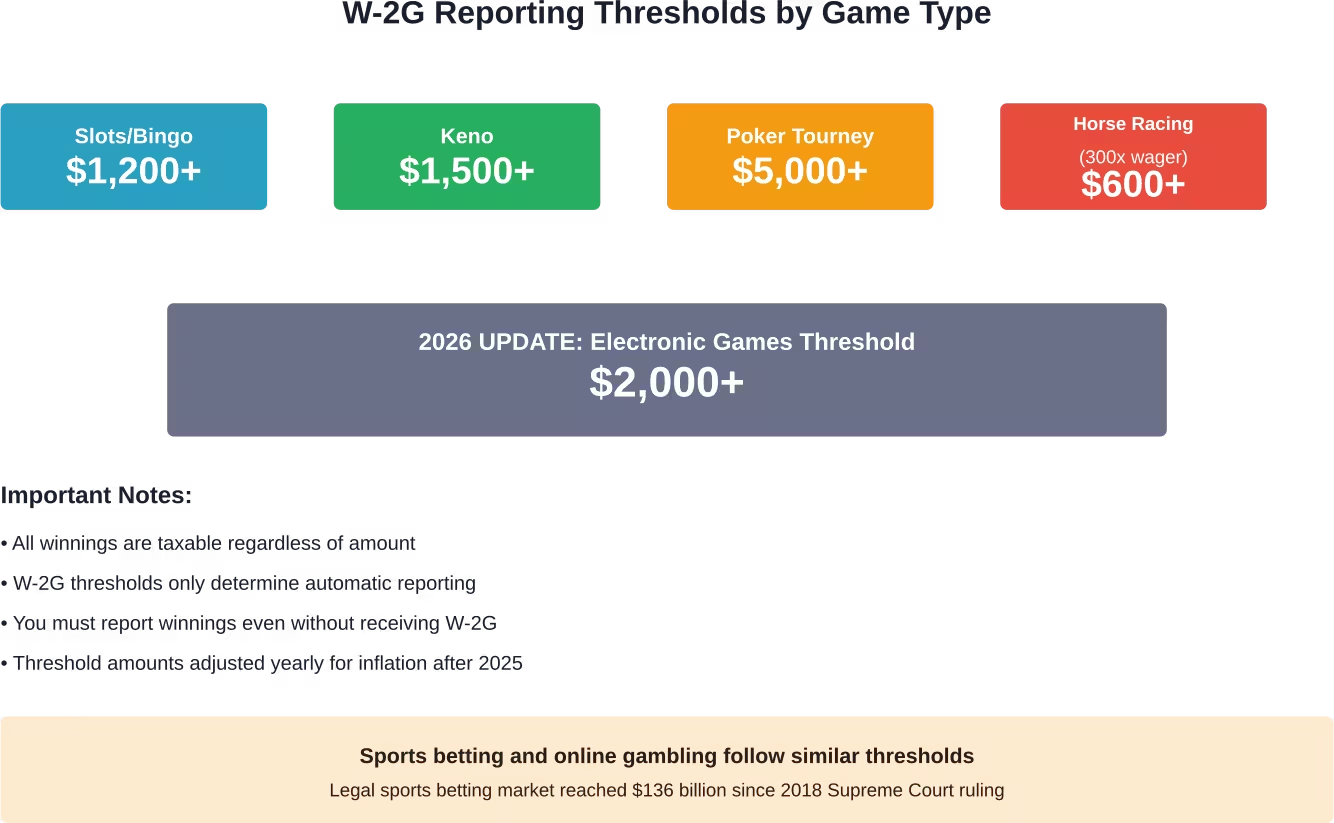
Common reporting thresholds include:
- $1,200 or more from slot machines or bingo
- $1,500 or more from keno
- $5,000 or more from poker tournaments
- $600 or more from horse racing (if the win pays at least 300 times the wager amount)
But here’s what changed recently.
The 2026 Threshold Increase
For calendar years after 2025, the minimum threshold for reporting certain payments and backup withholding on Form W-2G has been adjusted for inflation. According to IRS instructions published in January 2026, the minimum threshold amount for payments made in calendar year 2026 is $2,000.
This increase affects certain types of gambling, particularly electronic games and slot machine jackpots. The threshold will continue adjusting yearly for inflation going forward.
That said, receiving a W-2G isn’t the magic line for taxability. You still must report all gambling winnings on your tax return, even if they fall below these thresholds and you never receive the form.
How Much Tax Do You Actually Pay?
Gambling winnings get added to your other income and taxed at your regular federal income tax rate. There’s no special gambling tax rate—it’s just ordinary income.
If you win $10,000 at a casino and you’re in the 22% tax bracket, you’ll owe $2,200 in federal taxes on those winnings (before considering any deductions for losses).
Federal Withholding on Large Wins
For certain large winnings, the payer may withhold federal income tax before paying you. The current regular withholding rate is 24% for most gambling winnings that exceed the reporting thresholds.
If you don’t provide your taxpayer identification number to the payer, or if the IRS notifies the payer that you’re subject to backup withholding, the backup withholding rate applies instead.
That withheld amount appears on your W-2G and counts as a credit toward your total tax liability when you file your return.
Can You Deduct Gambling Losses?
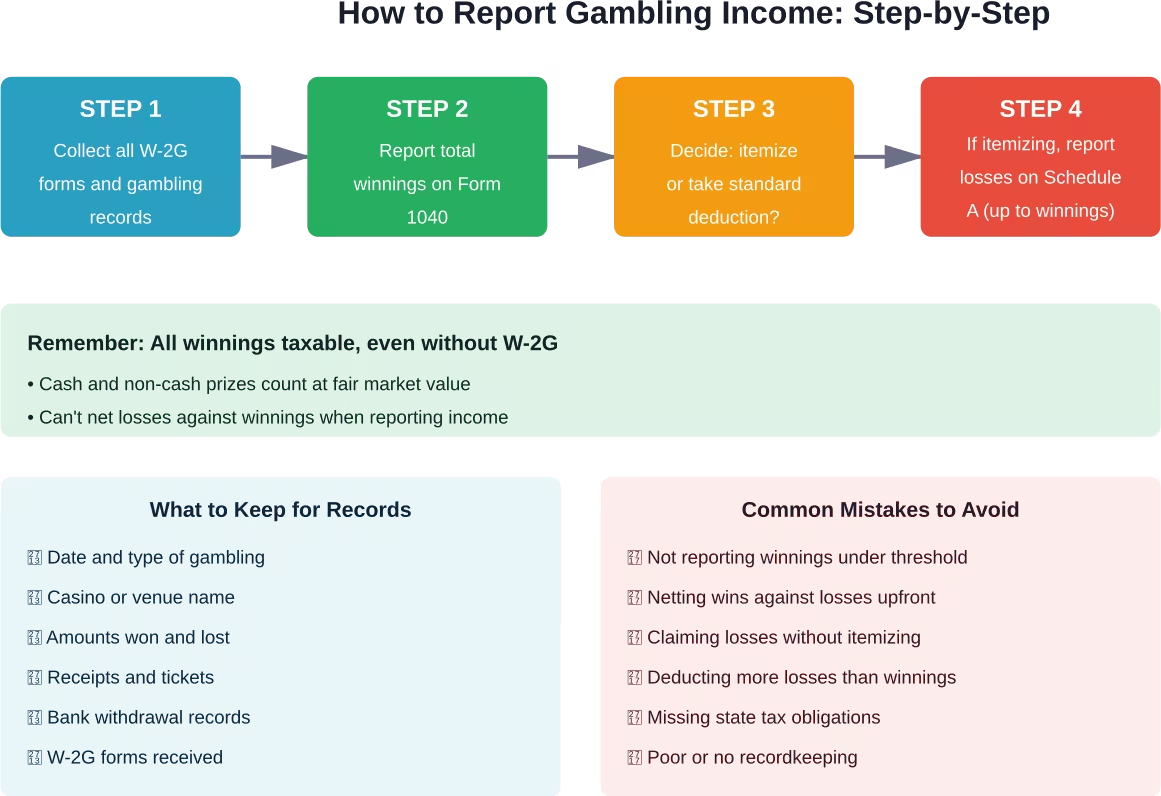
Here’s where it gets tricky. You can deduct gambling losses, but only if you itemize deductions on Schedule A—and only up to the amount of gambling winnings you report.
According to IRS guidance, casual gamblers cannot deduct more in losses than they won. You can’t use gambling losses to offset other income or create a net loss.
The No-Netting Rule
You’re not permitted to “net” your winnings and losses before reporting them. If you win $620 from a horse race but it costs you $20 to bet, your taxable winnings are $620, not $600 after subtracting your wager. The cost of the wager doesn’t reduce the reported winning amount.
Your losses get claimed separately as an itemized deduction, limited to your total winnings for the year.
When Loss Deductions Don’t Help
Most taxpayers take the standard deduction rather than itemizing.
If your total itemized deductions (including gambling losses, mortgage interest, charitable contributions, etc.) don’t exceed the standard deduction, you’re better off taking the standard deduction—and your gambling losses provide zero tax benefit.
Scenario | Winnings | Losses | Taxable Amount | Deductible Losses |
|---|---|---|---|---|
Win more than lost | $8,000 | $3,000 | $8,000 | $3,000 (if itemizing) |
Lose more than won | $4,000 | $7,000 | $4,000 | $4,000 max (if itemizing) |
Break even | $5,000 | $5,000 | $5,000 | $5,000 (if itemizing) |
Taking standard deduction | $6,000 | $6,000 | $6,000 | $0 (can’t claim) |
State Taxes on Gambling Winnings
Federal taxes are just one piece of the puzzle. Most states also tax gambling winnings, though the rules vary widely.
Some states have no income tax at all (like Florida, Texas, and Nevada), so residents pay only federal taxes on winnings. Other states tax gambling income at the same rate as regular income. A few states offer partial exemptions or special treatment for certain types of gambling.
And if you win in a state where you don’t live? You might owe taxes to both your home state and the state where you won. Many states have reciprocal agreements or credits to prevent true double taxation, but you’ll likely need to file returns in multiple states.
Professional vs. Casual Gamblers
The IRS distinguishes between casual gamblers and professional gamblers, and the tax treatment differs significantly.
Casual gamblers report winnings as “other income” on Form 1040 and deduct losses as itemized deductions (subject to the limitations discussed earlier).
Professional gamblers, however, are considered to be in the trade or business of gambling. They report winnings and losses on Schedule C as business income and expenses. This allows them to deduct losses beyond the itemized deduction limitations and claim business-related expenses like travel to casinos, gambling publications, and entry fees.
But the IRS scrutinizes professional gambler status carefully. Factors include whether gambling is your primary income source, whether you approach it in a businesslike manner with records and systems, and whether you depend on it for your livelihood.
Recordkeeping Requirements
Proper documentation is critical, especially if you plan to deduct losses.
The IRS recommends keeping a gambling diary or log showing your wins and losses. For each gambling session, record the date, type of gambling, name and location of the establishment, amounts won or lost, and names of people with you.
Supporting documents help too: receipts, tickets, payment slips, statements from the gambling establishment, credit card records, bank withdrawals, and Form W-2G when you receive one.
Without proper records, the IRS can disallow your claimed losses even if they’re legitimate.
Bring Clarity To Your iGaming Partnerships

Taxes on gambling winnings highlight how structured and regulated this industry really is. For companies, that same level of clarity matters when choosing platforms, payment systems, and service providers. Sologe is a B2B marketplace where operators and vendors connect around real business needs, making it easier to understand who you work with and what each partner brings to the table.
Manage iGaming Relationships With Control
With Sologe, companies can:
- See how different solutions fit into real iGaming operations
- Evaluate partners in a more transparent environment
- Present services to businesses already active in regulated markets
- Start direct discussions without relying on fragmented channels
If you want clearer partnerships and better control over who you work with, contact Sologe and start the conversation.
What Happens If You Don't Report Winnings?
Failing to report gambling income is a bad idea. The IRS receives copies of all W-2G forms issued, so they know about those winnings even if you conveniently forget to mention them.
Unreported income can trigger an IRS notice, penalties, interest on unpaid taxes, and potential audit. In serious cases involving intentional tax evasion, criminal charges are possible.
Even for winnings below the W-2G thresholds, gambling establishments often track player activity through loyalty cards and accounts. This creates a paper trail that could surface during an audit.
Online Gambling and Sports Betting Considerations
Sports betting has exploded since the Supreme Court legalized it in 2018. Research published in the Journal of Gambling Studies notes that $136 billion has been placed in legal sports betting markets since that ruling, with the market expected to grow substantially.
Online gambling platforms and sports betting apps must follow the same reporting requirements as physical casinos. When winnings exceed the thresholds, you’ll receive a W-2G—though it might be electronic rather than mailed.
Many bettors maintain accounts with multiple platforms, making recordkeeping more complex. Download transaction histories regularly and track your net position across all platforms for accurate reporting.
Some platforms provide year-end tax summaries, but you’re ultimately responsible for reporting all taxable winnings whether the platform issues documentation or not.
Special Rules for Nonresident Aliens
Foreign visitors who gamble in the U.S. face different rules. Nonresident aliens must pay 30% tax on gambling winnings, with no deduction allowed for losses.
This tax is usually withheld at the time of winning. Some tax treaties between the U.S. and other countries may reduce this rate or provide exemptions, but the default rate is 30%.
Nonresidents should consult IRS Publication 515 for specific guidance on withholding requirements.
Planning After a Big Win
Large gambling winnings can push you into a higher tax bracket for the year, creating a substantial tax bill.
If you hit a major jackpot or tournament score, consider setting aside at least 30-40% for federal and state taxes immediately. Don’t spend it all assuming the withheld amount covers everything—you might owe more when you file, especially if the win bumps you into a higher bracket.
For truly life-changing wins (lottery jackpots, major tournament prizes), consult a tax professional before making any major financial decisions. They can help with estimated tax payments, planning for state taxes, and structuring any large purchases or investments tax-efficiently.
Frequently Asked Questions
Do I have to report gambling winnings under $600?
Yes. All gambling winnings are taxable and must be reported regardless of amount. The $600 threshold only determines when a payer issues Form W-2G—it does not determine taxability. Even small winnings must be reported as income.
Can I just subtract my losses from my winnings and report the difference?
No. You must report the full amount of winnings as income. Losses can only be deducted separately as an itemized deduction on Schedule A, and only up to the amount of winnings.
What if I’m just breaking even on gambling overall?
Even if you break even or lose money overall, you must still report all winnings as income. Losses can only offset winnings if you itemize deductions. Without itemizing, winnings remain fully taxable.
Do states tax gambling winnings differently than the federal government?
Yes. State tax rules vary widely. Some states do not tax income at all, while others tax gambling winnings like regular income. If you win in a different state, you may need to file taxes in both that state and your home state.
How do I prove gambling losses if I didn’t keep records?
Without documentation, proving losses is difficult. The IRS may disallow deductions entirely. Keep a detailed gambling log including dates, locations, amounts, and supporting evidence like receipts or bank records to substantiate losses.
Are poker tournament winnings taxed differently than casino games?
No. Poker tournament winnings are taxed the same as other gambling income. Larger winnings may trigger Form W-2G issuance, but all winnings must be reported regardless of whether a form is received.
What happens if I receive a W-2G but the amount seems wrong?
Contact the issuer immediately to request a corrected form. Since the IRS also receives the reported amount, discrepancies can trigger issues. Do not report a different figure without proper documentation and correction.
Final Thoughts
Gambling taxes aren’t complicated in principle: all winnings are taxable income, losses are deductible only if you itemize and only up to winnings, and proper records are essential.
But the details matter. Understanding W-2G thresholds, the no-netting rule, state tax obligations, and recordkeeping requirements helps avoid costly mistakes. With the 2026 threshold increases and the explosive growth of sports betting, staying current on the rules matters more than ever.
The key takeaway: if you gamble, plan for taxes from the start. Set aside money for your tax bill, maintain detailed records, and don’t assume that just because you broke even or lost money overall that you won’t owe taxes.
When in doubt, consult a tax professional familiar with gambling income. The cost of professional advice is usually far less than the penalties and interest from getting it wrong.
Related Articles

September 30, 2026Is Sports Betting Legal in Brazil? The Full...

September 30, 2026Is Sports Betting Legal in Iran? The Real...