 Nothing found for the request
How Many Betting Companies Are in Kenya? 2026 Update
Sologe June 8, 2026
Share:


Quick Summary
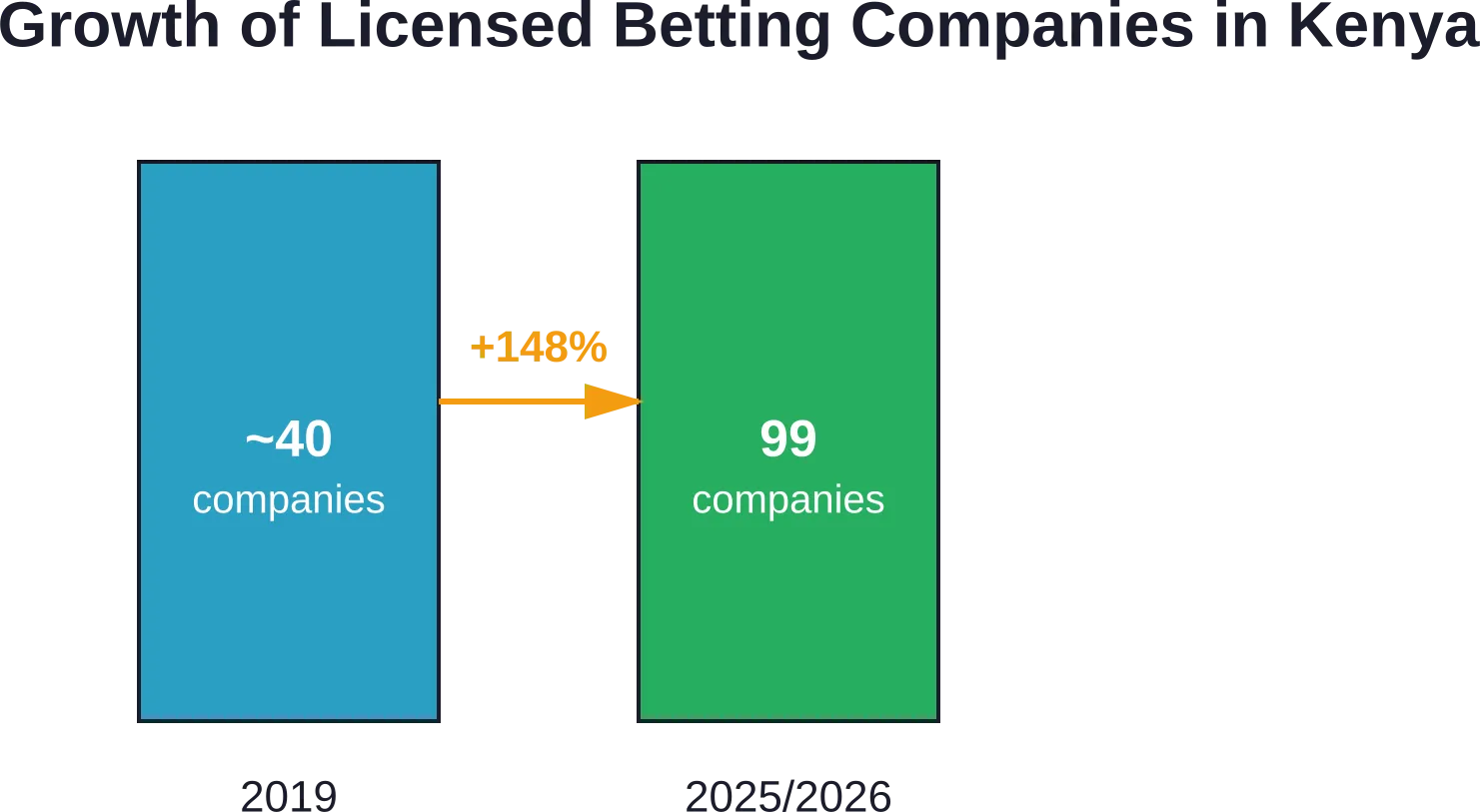
Quick Summary: As of the 2025/2026 fiscal year, Kenya has 99 licensed betting companies approved by the Betting Control and Licensing Board (BCLB). This represents significant growth from around 40 operators in 2019, reflecting the country’s booming gambling industry despite tighter regulations and increased taxation on betting activities.
Kenya’s betting landscape has transformed dramatically over the past decade. What started as a modest gambling market has exploded into one of Africa’s most vibrant betting industries.
The question on everyone’s mind: exactly how many betting companies operate legally in Kenya right now?
The Betting Control and Licensing Board (BCLB) unveiled a list of 99 licensed betting companies approved to operate in Kenya for the 2025/2026 fiscal year. These operators have met all regulatory requirements, allowing them to continue operations beyond the standard 30-day extension period.
The Current State of Kenya's Betting Industry
Kenya’s gambling sector has witnessed explosive growth. The 99 licensed operators for 2025/2026 marks a substantial increase from approximately 40 betting and lottery firms that were operating in 2019, according to leaked figures reported by Finance Uncovered.
This growth hasn’t happened in a vacuum. Kenya has an adult population of around 35 million, based on 2019 population census figures released by the Kenya National Bureau of Statistics. The average amount bet per stake was Sh170 (approximately £1.30) in 2019, indicating widespread participation across income levels.
The licensed companies include well-known international brands like 1xBet, SportPesa, Betika, Melbet, Dafabet, BC.GAME, and BetLion, alongside homegrown operators and smaller niche platforms.
Market Size and Economic Impact
Leaked data from 2019 revealed that betting firms generated estimated annual Gross Gaming Revenue (GGR) of Sh36-54 billion, with monthly GGR ranging between Sh3-4.5 billion as of May 2019.
Real talk: these numbers are staggering for a developing economy. They underscore why the government has taken such an active interest in regulating and taxing the sector.
Understanding the BCLB and Licensing Requirements
The Betting Control and Licensing Board was established in 1966 through an Act of Parliament (Chapter 131 Laws of Kenya). For 60 years, this regulatory body has governed the authorization of lotteries, prize competitions, and the eradication of illegal gambling activities in Kenya.
The BCLB is headquartered at the ACK Garden Annex on 1st Ngong Avenue in Nairobi. Its mandate includes licensing legitimate operators while cracking down on unlicensed gambling activities.
What Does It Take to Get Licensed?
Getting approved as one of Kenya’s 99 licensed betting companies isn’t a walk in the park. Operators must meet stringent regulatory requirements that cover everything from capital reserves to tax compliance and consumer protection measures.
The licensing initiative aims to enhance transparency, accountability, and consumer protection within Kenya’s gaming industry. It aligns with broader efforts to promote responsible gambling practices.
Here’s the thing though—recent proposals seek to make entry even tougher. Authorities have proposed increasing licensing capital requirements and raising the legal betting age from 18 to 21.
Taxation: The Government's Take
According to the Kenya Revenue Authority (KRA), betting companies face multiple tax obligations that significantly impact their operations and profitability.
Key Tax Rates for Betting Operations
Tax Type | Rate | Details |
|---|---|---|
Gross Gaming Revenue (GGR) Tax | 15% | Paid monthly by the 20th of each month |
Withholding Tax on Withdrawals | 5% | Deducted from customer withdrawals before payout |
Late Payment Penalty | 5% | Applied for non-compliance with tax deadlines |
Late Payment Interest | 1% per month | Accrues on overdue tax obligations |
The KRA defines a bookmaker as a person who is in the business of receiving or negotiating bets on his own account or on behalf of others. Betting companies are required to withhold withdrawals at a rate of 5% as provided by Sections 10(g), 34(1)(m), 34(2)(i), 35(1)(i), 35(3)(h) and Paragraphs 3(i) and 5(i) of The Third Schedule, Head B of the Income Tax Act.
The 15% tax on Gross Gaming Revenue must be remitted to KRA by the 20th of each month. Failure to comply results in a 5% late payment penalty plus 1% monthly interest on overdue amounts.
Recent Tax Changes
The Finance Act 2025 highlights a shift toward taxing betting-related deposits and withdrawals, while the 15% tax on Gross Gaming Revenue remains a standard industry benchmark, according to regulatory analysis from Altenar.
But wait. Some competitor betting review sites mention reduced tax rates on stakes and withdrawals. These conflicting figures should be verified directly with KRA.
These figures likely reflect promotional claims by offshore operators rather than current Kenyan law. Always verify with official KRA guidance for accurate tax information.
Major Players in Kenya's Betting Market
The 99 licensed betting companies include a mix of international giants, regional powerhouses, and local operators. Each brings different strengths to the market.
Top International Operators
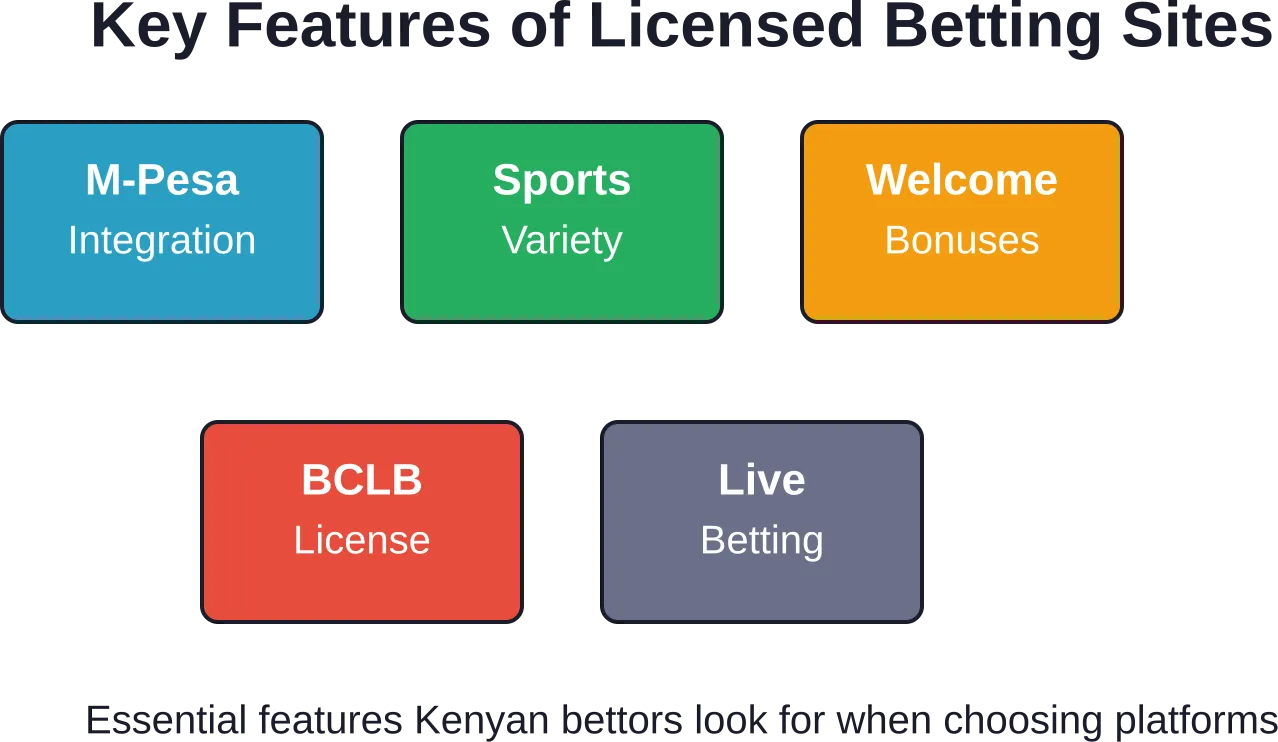
- 1xBet has established a significant presence in Kenya, offering extensive sports coverage and competitive odds. The platform supports M-Pesa and Airtel Money deposits, critical for Kenyan bettors.
- 22Bet regularly appears in reviews of best betting sites in Kenya, known for bonuses up to 100% of initial deposits.
- Melbet and Dafabet round out the international contingent, both maintaining licenses through the 2025/2026 period.
Homegrown Champions
- SportPesa pioneered online betting in Kenya and remains one of the market’s most recognized brands despite regulatory challenges in previous years. Its return to the licensed operators list marks a significant comeback.
- Betika has built a loyal following through aggressive marketing, local sports sponsorships, and user-friendly mobile platforms optimized for Kenyan internet conditions.
- BetLion focuses on competitive football betting odds, capitalizing on Kenyans’ passion for the English Premier League and other major competitions.
Regulatory Crackdown and Consumer Protection
The high number of licensed operators tells only part of the story. Kenya’s government has simultaneously tightened regulations to address rising concerns over problem gambling and intrusive advertising.
New Advertising Restrictions
Authorities have introduced comprehensive reforms including:
- Banning celebrity endorsements for betting companies
- Restricting outdoor and print media advertisements
- Limiting broadcast advertising during prime-time hours
- Requiring prominent responsible gambling messaging
These measures aim to reduce gambling’s visibility, particularly to young people and vulnerable populations.
Proposed Legislative Changes
The proposed bill seeks to increase licensing capital requirements, making it more expensive to enter and remain in the market. It also proposes raising the legal betting age from 18 to 21.
Funding for rehabilitation programs represents another priority. A portion of tax revenue may be earmarked specifically for treating problem gambling and supporting affected families.
Now, this is where it gets interesting. Despite these tighter regulations, the sector’s profitability remains so attractive that 99 operators have willingly adapted and complied to access Kenya’s lucrative gaming market.
Payment Methods: M-Pesa and Airtel Dominate
Mobile money integration separates successful betting companies from struggling ones in Kenya. The country’s high mobile money adoption makes M-Pesa and Airtel Money the preferred deposit and withdrawal methods.
M-Pesa betting sites dominate the market. Bettors can deposit funds instantly using the *234# USSD code or through betting company apps that integrate directly with Safaricom’s payment infrastructure.
Airtel betting sites offer similar functionality through Airtel Money, providing an alternative for Airtel subscribers who often enjoy promotional deposit bonuses.
The average stake of Sh170 reflects the accessibility mobile money provides. Bettors can place small wagers from their phones without needing bank accounts or credit cards.
How to Verify a Licensed Betting Company
With 99 licensed operators and countless unlicensed platforms attempting to attract Kenyan bettors, verification matters.
Check the BCLB Website
The official BCLB website (bclb.go.ke) maintains updated lists of licensed operators. Before depositing money, confirm the company appears on the current licensing roster.
Look for License Numbers
Legitimate betting companies display their BCLB license numbers prominently on their websites, typically in the footer or “About Us” section.
Verify Payment Methods
Licensed operators integrate with official Kenyan payment channels—M-Pesa, Airtel Money, and major banks. Be wary of sites requiring cryptocurrency exclusively or using unfamiliar payment processors.
Check Tax Compliance
According to KRA, betting company withdrawals are subject to 5% withholding tax, as reintroduced by the Tax Laws (Amendment) Act. If a platform advertises “no tax on withdrawals” or rates substantially different from official KRA figures (5% withholding tax on betting withdrawals), it may be operating outside regulatory frameworks.
Compare iGaming Providers With Sologe to Build a Company

Counting how many betting companies operate in Kenya gives only part of the market picture. Businesses also need to understand the vendors, tools, and service providers around those operators.
Sologe is built for iGaming companies, suppliers, and software providers. Its marketplace covers business-focused categories such as sports betting software, gaming platforms, payment solutions, affiliate software, traffic services, analytics, certification-related services, and operational support.
Sologe can help businesses compare:
- iGaming software vendors
- sports betting platform providers
- payment and transaction solution providers
- affiliate software and traffic partners
- analytics and business intelligence tools
- operational and support service providers
- supplier options for online gaming companies
👉Contact Sologe to explore iGaming business vendors, review available provider categories, or add your company to the marketplace.
The Future of Kenya's Betting Industry
So what’s next for Kenya’s 99 licensed betting companies?
The market shows no signs of slowing down. Despite increased taxation and tighter advertising restrictions, profitability remains high enough to attract new entrants and keep existing operators engaged.
Technology and Innovation
Betting companies continue investing heavily in mobile technology. With smartphone penetration increasing and data costs falling, platforms optimize for seamless mobile experiences.
Live betting has emerged as a major growth area. Bettors increasingly favor in-play wagering on football matches, allowing them to react to game developments in real-time.
Responsible Gambling Initiatives
The regulatory emphasis on consumer protection will intensify. Licensed operators are implementing deposit limits, self-exclusion tools, and reality checks to promote responsible gambling.
Gaming Awareness Society of Kenya co-founder Nelson Bwire has advocated for stronger protections, particularly given the scale of betting activity revealed in leaked financial data.
Regional Expansion
Many Kenyan betting companies view the domestic market as a springboard for regional expansion across East Africa. Operators that successfully navigate Kenya’s regulatory environment gain experience applicable to Uganda, Tanzania, and Rwanda.
Challenges Facing Licensed Operators
Operating as one of Kenya’s 99 licensed betting companies isn’t without difficulties.
Tax Burden
The combination of 15% GGR tax, 5% withholding tax, and potential deposit/withdrawal taxes creates significant fiscal pressure. Operators must balance profitability with competitive odds that attract bettors.
Regulatory Uncertainty
Proposed legislative changes create uncertainty. Operators worry about further capital requirement increases or additional advertising restrictions that could impact customer acquisition costs.
Competition Intensity
With 99 licensed operators competing for market share, differentiation becomes challenging. Companies compete aggressively on bonuses, odds, and user experience—often compressing profit margins.
Payment Processing Costs
While M-Pesa and Airtel Money integration is essential, transaction fees add up quickly when processing millions of small deposits and withdrawals monthly.
Frequently Asked Questions
How many betting companies are licensed in Kenya right now?
The Betting Control and Licensing Board (BCLB) has licensed 99 betting companies to operate in Kenya for the 2025/2026 fiscal year. These operators have met all regulatory requirements and hold valid licenses.
Which is the biggest betting company in Kenya?
SportPesa and Betika are generally considered the largest betting operators in Kenya based on market presence and brand recognition, although exact market share figures are not publicly disclosed. International platforms such as 1xBet and 22Bet also maintain significant user bases in the country.
Are all betting sites in Kenya legal?
No. Only the 99 companies licensed by the Betting Control and Licensing Board are authorized to operate legally in Kenya. Many unlicensed platforms target Kenyan users, so bettors should verify that a bookmaker appears on the official licensing list before depositing funds.
What taxes do betting companies pay in Kenya?
Betting companies pay a 15% tax on Gross Gaming Revenue (GGR), which is due monthly by the 20th of the following month. Operators must also withhold a 5% tax from customer withdrawals before payout. Late tax payments are subject to a 5% penalty and an additional 1% monthly interest charge.
Can I bet on M-Pesa in Kenya?
Yes. Most of Kenya’s licensed betting companies support M-Pesa for deposits and withdrawals. M-Pesa remains the preferred payment method among Kenyan bettors because of its convenience, speed, and nationwide accessibility.
What is the legal betting age in Kenya?
The current legal betting age in Kenya is 18 years. Proposed legislation has suggested increasing the minimum age to 21 years, but no confirmed implementation date has been announced as of May 2026.
How do I verify if a betting company is licensed?
You can verify a betting company’s status by checking the official BCLB website for the current list of licensed operators. Legitimate betting companies also display their BCLB license numbers on their websites, usually in the footer or legal information section.
Conclusion
Kenya’s betting industry has evolved from roughly 40 operators in 2019 to 99 licensed companies in 2025/2026—a remarkable expansion that reflects both market opportunity and improved regulatory oversight.
The Betting Control and Licensing Board’s comprehensive licensing process ensures operators meet capital requirements, tax obligations, and consumer protection standards. This benefits bettors by creating a safer, more transparent gambling environment.
But the sector faces ongoing challenges. Increased taxation, tighter advertising restrictions, and proposed regulatory changes test operator resilience. Only companies willing to invest in compliance, technology, and responsible gambling initiatives will thrive long-term.
For Kenyan bettors, the message is clear: stick with licensed operators. The 99 companies approved by BCLB have proven they meet regulatory standards. Unlicensed platforms may offer tempting bonuses, but they lack the accountability and consumer protections that licensed operators provide.
Before placing a bet, always verify the operator holds a current BCLB license. Your deposits, personal information, and withdrawals deserve that protection.
Related Articles

September 30, 2026Is Sports Betting Legal in Brazil? The Full...

September 30, 2026Is Sports Betting Legal in Iran? The Real...