 Nothing found for the request
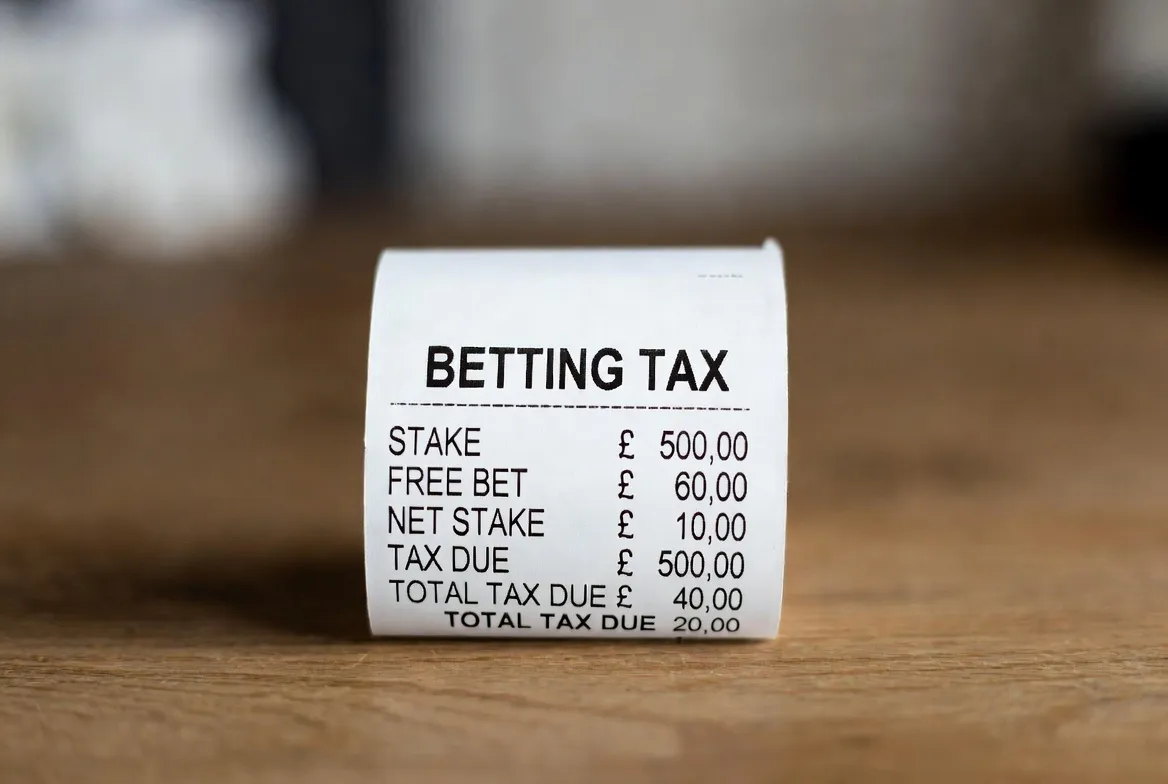
How to Avoid Betting Tax in Kenya: Complete 2026 Guide
Sologe June 8, 2026
Share:


Quick Summary
Quick Summary: Under the Finance Act 2025, Kenya scrapped the 20% withholding tax on betting winnings. It was replaced by a 5% withholding tax on all withdrawals made from a betting wallet, regardless of whether the funds represent winnings or the original stake. Some international betting sites without local licensing may not withhold taxes, but using such platforms carries legal risks. The most practical approach is choosing betting sites that absorb the tax burden themselves or offer tax-inclusive promotions to maximize net winnings within Kenya’s regulatory framework.
Betting taxes in Kenya have become one of the hottest topics among punters since the government introduced stricter taxation measures. The question many ask is straightforward: can you legally avoid paying betting tax in Kenya?
The short answer is complicated. While you cannot entirely escape taxation if you’re betting within the legal framework, understanding how the system works can help you make smarter decisions about where and how to bet.
Let’s break down everything you need to know.
Understanding Kenya's Betting Tax Structure
According to the Kenya Revenue Authority (KRA), betting taxes operate on multiple levels. The tax system affects both bookmakers and individual bettors, creating a complex landscape that many punters find confusing.
Here’s how the system works currently.
Withholding Tax on Withdrawals
Betting companies are required to withhold withdrawals at a rate of 5% as provided by Sections 10(g) and 34(1)(m) of Kenya’s tax laws.
This means if you place a bet and win Ksh 50,000, you will actually receive Ksh 47,500. The balance of Ksh 2,500 is withheld by the betting company and remitted directly to KRA on your behalf.
This withholding happens automatically before you even see your withdrawals. There’s no action required from you as a bettor—the bookmaker handles everything.
Betting Tax on Bookmakers
Beyond what individual bettors pay, bookmakers themselves face substantial taxation. Betting tax is charged at the rate of 15% of the gross gaming revenue (GGR) of a bookmaker, as provided by Section 29A of the Betting, Lotteries and Gaming Act, 1966.
The bookmaker must remit this tax to KRA by the 20th of every month. Late payment attracts a penalty rate of 5% plus interest at 1% per month calculated as simple interest.
Excise Duty on Stakes
The current excise duty on amounts deposited into a betting account is 5%, following the amendments introduced by the Finance Act 2025. These changes mean bookmakers pay tax not just on their profits but on the total money flowing through their platforms.
Can You Legally Avoid Betting Tax in Kenya?
Real talk: there’s no legal loophole that allows Kenyan residents to completely avoid betting tax when using licensed, locally-regulated betting sites. The withholding tax is mandatory and automatic.
But does that mean you’re stuck paying 5% on every withdrawal?
Yes, but several strategies can help you maximize your net winnings, though they come with important caveats.
International Betting Sites Without KRA Registration
Some international betting platforms operate without obtaining licenses from Kenya’s Betting Control and Licensing Board. These sites may not automatically deduct the 5% withholding tax because they’re not registered with KRA.
Technically, you receive the full amount of your winnings when using such platforms. However, there’s a catch—or rather several.
First, using unlicensed betting sites carries inherent risks. You have limited legal recourse if the platform refuses to pay out your winnings or suddenly closes operations. Kenya’s regulatory framework doesn’t protect bettors who use unregistered operators.
Second, even if the platform doesn’t withhold tax, you’re still legally obligated to declare and pay tax on your winnings. The law doesn’t disappear just because the bookmaker isn’t collecting.
Third, payment processing can be problematic. International sites may not support M-Pesa or other local payment methods smoothly, creating friction when depositing or withdrawing funds.
Betting Sites That Absorb Tax Costs
Here’s where it gets interesting. Some betting platforms have adopted a competitive strategy: they pay the tax on your behalf, allowing you to receive your full winnings.
These platforms advertise “tax-free winnings” or “tax-free deposits.” What they’re actually doing is absorbing the 5% withholding tax as a marketing expense, giving you the full payout you’d expect before taxation.
This approach is completely legal. The tax still gets paid—the bookmaker simply covers it instead of deducting it from your withdrawals. For bettors, the experience is indistinguishable from a tax-free environment.
Several international betting sites operating in Kenya have adopted this model to remain competitive against locally-taxed operators. Some international betting platforms have offered arrangements where they absorb tax costs, though it’s essential to verify current policies directly since these can change.
Offshore Accounts and Crypto Betting
Some punters explore offshore betting using cryptocurrency or foreign bank accounts. While technically possible, this path involves significant complexity and legal ambiguity.
Cryptocurrency betting platforms operating outside Kenya’s jurisdiction may not withhold tax. Transactions occur in Bitcoin, Ethereum, or other digital currencies, making enforcement difficult.
That said, Kenya’s tax authorities have increasingly sophisticated tracking capabilities. Moving funds between crypto and local currency creates a paper trail. And again, the legal obligation to declare and pay tax on winnings remains regardless of the currency or platform used.
Betting Option | Tax Deduction | Legal Status | Risk Level |
|---|---|---|---|
Licensed Kenyan Sites | 5% automatically withheld | Fully legal | Low |
Tax-Absorbing Sites | Paid by bookmaker | Legal if site licensed | Low to Medium |
Unregistered International Sites | Often not withheld | Legally questionable | High |
Crypto Betting Platforms | Generally not withheld | Gray area | Very High |
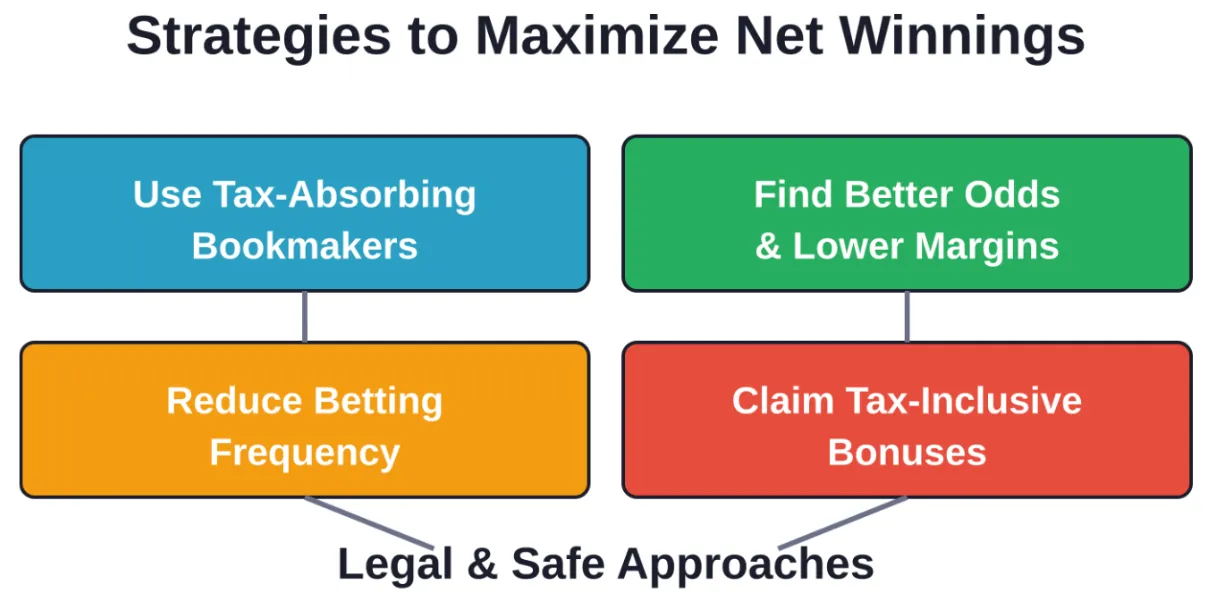
Maximizing Net Winnings Within Legal Boundaries
Rather than trying to avoid tax entirely—which carries legal and practical risks—smart bettors focus on maximizing their net returns within the regulated system.
Choose Bookmakers With Tax-Inclusive Bonuses
Look for betting sites offering bonuses calculated on your post-tax winnings or promotions that explicitly cover tax costs. Some operators advertise bonuses as “tax-free” specifically to address the withholding issue.
These promotions effectively give you additional value that offsets what you’d lose to taxation.
Focus on Better Odds and Lower Margins
The house always wins, as the old casino rule goes. But some houses win by smaller margins than others.
Bookmakers with better odds give you more value per bet. A 5% improvement in average odds can offset a significant portion of what you lose to taxation. Research which platforms consistently offer the best odds in your preferred betting markets.
Reduce Betting Frequency and Stake Amounts
Remember that excise duty on stakes? Every time you deposit or place a bet, a percentage disappears to taxation before you even start.
Betting less frequently with larger, more considered stakes reduces the cumulative impact of these deposit taxes compared to making dozens of small bets daily.
Understand Tax Treatment of Different Gambling Activities
Under the unified wallet tax regime established by the Finance Act 2025, all betting and gaming platforms utilize a standardized 5% withholding tax on withdrawals and 5% excise duty on deposits, eliminating the multi-tier differentiation between sports betting, casinos, and lotteries for individual players
Find Tax-Ready iGaming Vendors With Sologe

Betting tax in Kenya should be handled through proper compliance, reporting, and licensed business processes. Sologe is a B2B marketplace for iGaming companies, suppliers, and software vendors. It helps businesses explore provider categories such as sports betting software, iGaming platforms, payment solutions, affiliate tools, analytics, marketing services, licensing-related support, and operational services.
Sologe can help businesses review:
- iGaming platform providers
- sports betting software vendors
- payment solution providers
- analytics and reporting tools
- licensing-related service providers
- operational support companies
- B2B suppliers for gaming businesses
👉Reach out to Sologe to find relevant iGaming vendors, compare business-side providers, or list your company on the marketplace.
What Happens If You Don't Pay Betting Tax?
Some bettors wonder: what if I just don’t declare my winnings?
For most people using licensed betting sites, this isn’t an option. The tax gets deducted automatically, so there’s nothing to declare or hide. KRA receives their cut before your winnings hit your account.
But for those using international platforms that don’t withhold tax, failing to declare winnings is tax evasion. KRA has the authority to audit individuals, and penalties for tax evasion include significant fines and potential criminal charges.
Recent regulatory developments show Kenya taking gambling taxation increasingly seriously. The Gambling Control Bill 2023, debated by the National Assembly on 30 July 2025, signaled the government’s commitment to tighter oversight of the gambling sector.
The Finance Act 2023 survived legal challenges when the High Court dismissed a petition against several clauses on 14 August 2025, reinforcing the government’s mandate to collect gambling taxes.
The pattern is clear: enforcement is tightening, not loosening.
The Future of Betting Taxes in Kenya
Where is Kenya’s betting tax regime heading? Industry reports suggest taxation remains a moving target. The Finance Act 2025 highlights shifts in excise duty design, including taxation on betting-related transactions, while the 15% tax on gross gaming revenue remains a standard industry benchmark.
Parliamentary discussions in 2025 explored proposals that would require gamblers to contribute to pension schemes and the Social Health Insurance Fund (SHIF). While not yet implemented as of early 2026, these proposals indicate potential future directions for gambling taxation.
According to industry reports cited in parliamentary sources, an estimated two million individuals engage in mobile-based sports betting in Kenya. With such a large market, the government views gambling taxation as a significant revenue stream—one they’re unlikely to ease any time soon.
For bettors, this means the tax environment will likely remain challenging. The focus should be on adaptation rather than avoidance.
Practical Steps for Kenyan Bettors in 2026
So what should you actually do? Here’s a practical roadmap.
First, accept that some level of taxation is unavoidable if you’re betting legally in Kenya. The 5% withholding tax is here to stay for the foreseeable future.
Second, research betting platforms carefully. Compare not just odds and betting markets, but also how each platform handles taxation. Some platforms genuinely offer better net value through tax absorption or superior odds that offset tax burdens.
Third, verify that any betting site you use holds proper licensing from Kenya’s Betting Control and Licensing Board. While unlicensed sites might seem attractive due to absent tax withholding, the risks outweigh the benefits. Your funds are only protected with licensed operators.
Fourth, keep records of your betting activity. Even though licensed platforms handle withholding automatically, maintaining your own records helps you track profitability accurately and provides documentation if questions ever arise.
Frequently Asked Questions
Is there any legal way to avoid the 5% betting tax in Kenya?
There is no legal method to completely avoid the 5% withholding tax when using licensed Kenyan betting platforms. The tax is automatically deducted before withdrawals are paid out. Your best option is choosing bookmakers that absorb the tax cost themselves or offer tax-inclusive promotions, effectively paying you the full withdrawal amount while handling the tax obligation on their end.
What happens if I use an international betting site without KRA registration?
International betting sites without KRA registration may not automatically withhold the 5% tax, meaning you receive full withdrawals upfront. However, you remain legally obligated to declare and pay tax on these withdrawals yourself. Additionally, unlicensed sites offer no legal protection if they refuse payouts or close operations, making this approach risky despite the apparent tax advantage.
Do I need to file tax returns for betting winnings in Kenya?
If you bet with licensed Kenyan operators, you typically don’t need to file separate tax returns for betting winnings because the bookmaker withholds and remits the 5% tax automatically on your behalf. However, if you use platforms that don’t withhold tax, you’re required to declare these winnings and pay the applicable tax when filing your individual income tax returns with KRA.
Which betting sites in Kenya offer tax-free winnings?
Several international betting platforms operating in Kenya have offered arrangements where they absorb the 5% withholding tax, effectively providing tax-free withdrawals to users. However, these policies change frequently based on business decisions and regulatory environment, so verify current tax policies directly with any platform before signing up.
Can I claim betting losses as tax deductions in Kenya?
Kenya’s current tax framework does not allow individual bettors to claim losses as deductions against betting winnings or other income. The 5% withholding tax applies to all withdrawals. This means you pay tax on every withdrawal bet independently, regardless of how much you’ve lost or won on bets throughout the year.
What penalties exist for not paying betting tax in Kenya?
For licensed betting platforms, tax evasion isn’t typically an option since withholding happens automatically. However, if you use platforms without automatic withholding and fail to declare winnings, you’re committing tax evasion. KRA can impose penalties including fines, back taxes with interest, and potentially criminal charges in serious cases. Late payment of taxes owed attracts a 5% penalty plus 1% monthly interest.
Conclusion: Navigate Smartly, Bet Responsibly
The reality of betting in Kenya is that taxation is part of the landscape. While you can’t eliminate it entirely through legal means, understanding how the system works empowers you to make smarter decisions.
Focus on finding licensed bookmakers with the best net value—whether through tax absorption, superior odds, or generous promotions. Avoid the temptation of unlicensed platforms that promise tax-free winnings but offer no protection for your funds.
Remember that responsible betting is about more than just tax optimization. Set limits, never bet more than you can afford to lose, and view gambling as entertainment rather than income.
The Kenyan betting market continues to evolve, with regulations and tax policies shifting regularly. Stay informed about changes from KRA and the Betting Control and Licensing Board. What works today might change tomorrow.
But with the right knowledge and approach, you can maximize your winnings within the legal framework Kenya provides. Bet smart, stay legal, and may the odds be ever in your favor.
Related Articles

September 30, 2026Is Sports Betting Legal in Brazil? The Full...

September 30, 2026Is Sports Betting Legal in Iran? The Real...