 Nothing found for the request
How to Open a Casino in Nigeria: 2026 License Guide
Sologe April 28, 2026
Share:


Quick Summary
Quick Summary: Opening a casino in Nigeria requires obtaining a gambling license from the National Lottery Regulatory Commission (NLRC) or state authorities and meeting strict compliance standards including AML/KYC protocols. Effective January 1, 2026, the Federation of State Gaming Regulators of Nigeria (FSGRN) introduced a uniform licensing fee of NGN 100 million per annum for each category of operator, including Sports Betting and Casino. Application fees are approximately NGN 2 million.
Nigeria’s gambling market has experienced remarkable growth over the past decade. With more than 220 million people and high mobile internet penetration, the country represents one of Africa’s most promising casino markets.
But here’s the thing—opening a casino in Nigeria isn’t as simple as setting up a website and accepting bets. The regulatory framework demands careful navigation, substantial capital investment, and ongoing compliance obligations that many operators underestimate.
This guide covers everything operators need to know about launching a casino business in Nigeria, from licensing pathways to technology requirements and market realities.
Understanding Nigeria's Casino Regulatory Framework
Nigeria operates a dual regulatory system for gambling operations. The National Lottery Regulatory Commission (NLRC) serves as the primary federal regulator, while individual state governments maintain authority to issue additional licenses for their territories.
This creates two distinct licensing pathways for casino operators. Each comes with different requirements, costs, and operational scopes.
Individual State License vs. Universal Reciprocity Certificate
Operators can apply for licenses from specific state regulatory authorities or pursue a Universal Reciprocity Certificate (URC) from the NLRC. The URC provides broader market access but demands higher capital requirements and more rigorous compliance standards.
Characteristic | Individual State License | Universal Reciprocity Certificate (URC) |
|---|---|---|
Issuing Authority | State regulatory authority | National Lottery Regulatory Commission |
Geographic Scope | Single state operation | Multi-state recognition |
Capital Requirements | Lower (varies by state) | Higher |
Processing Time | 3-6 months | 6-12 months |
Compliance Complexity | Moderate | High |
Lagos State remains the most sought-after jurisdiction for casino operators. As Nigeria’s economic hub and most populous city, Lagos offers immediate access to the country’s wealthiest demographic segments.
Market Landscape and Opportunity Assessment
Nigeria’s casino market presents significant opportunities alongside notable challenges. Access to land-based casinos remains extremely limited—the most well-known venue operates in Lagos, Nigeria’s most populous city and economic hub, but with over 70% of Nigerians living outside the city, physical casino access is severely restricted for most residents.
This geographic constraint has fueled explosive growth in online casino platforms. Mobile accessibility, improved payment infrastructure, and a young, tech-savvy population create ideal conditions for digital gambling expansion.
The sports betting segment dominates Nigeria’s gambling landscape, but casino games are gaining traction. Slots, roulette, and blackjack attract growing player interest, particularly among urban populations aged 25-40.
What Types of Gambling Operations Need Licenses?
Nigerian regulations require licensing for virtually all commercial gambling activities:
- Online casino platforms offering slots, table games, or live dealer experiences
- Sports betting operations (fixed-odds and live betting)
- Lottery services and instant-win games
- Land-based casinos and gaming halls
- Betting shops and retail gaming outlets
Operating without proper licensing exposes businesses to severe penalties including fines, asset seizures, and criminal prosecution. There’s no legal gray area here.
Step-by-Step Casino Licensing Process
Obtaining a casino license in Nigeria follows a structured pathway. The process demands patience, capital, and meticulous attention to regulatory requirements.
Phase 1: Business Incorporation and Capitalization
All casino operators must establish a legal entity incorporated in Nigeria. Foreign companies cannot operate directly—they must form a Nigerian subsidiary or partner with local entities.
Minimum share capital requirements vary by license type. The minimum share capital for a company applying for a gaming license in Nigeria is NGN 100 million, as per current CAC and NLRC requirements. This capital must be verifiable through bank statements and audited financial documentation.
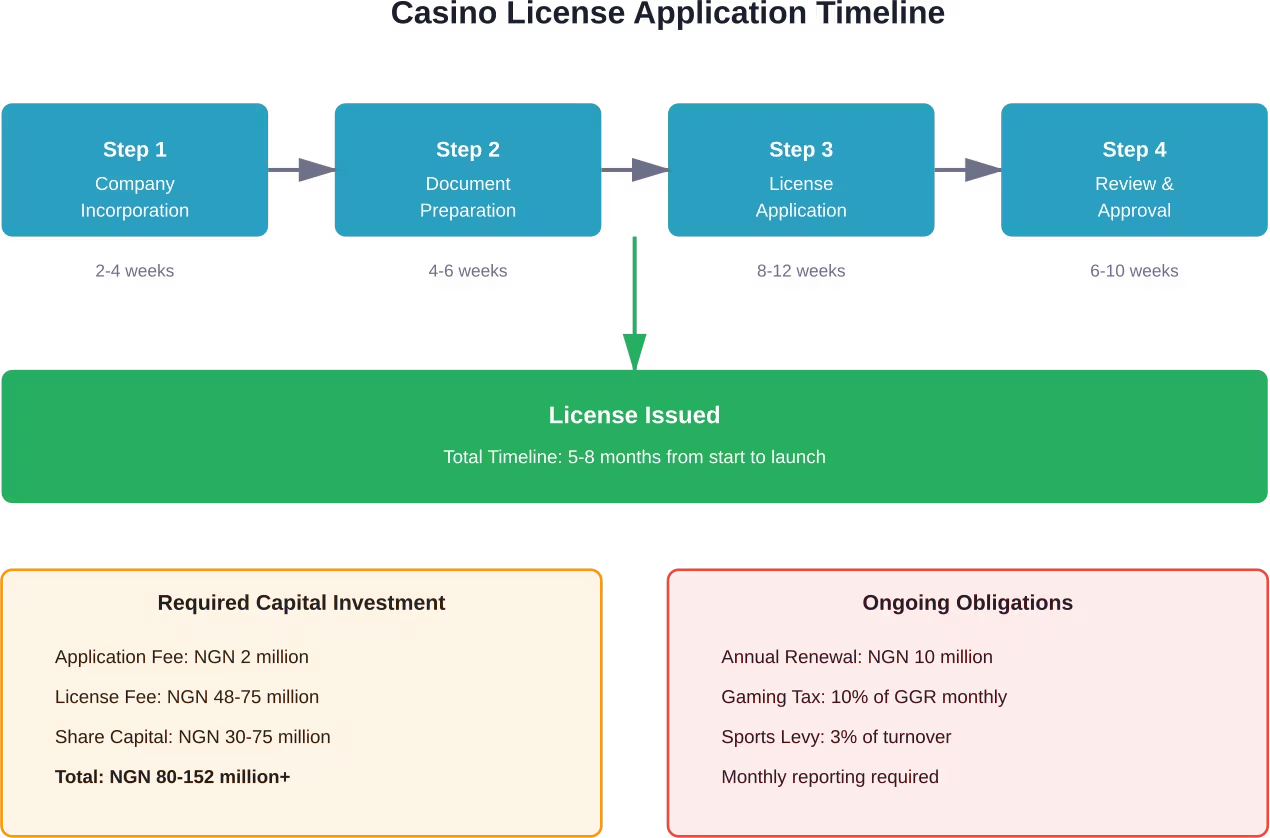
The incorporation process typically takes 2-4 weeks when handled efficiently. Operators need to register with the Corporate Affairs Commission (CAC) and obtain a Tax Identification Number (TIN) before proceeding to license application.
Phase 2: Documentation and Application Submission
Regulatory authorities require extensive documentation demonstrating financial stability, technical capability, and compliance readiness. The required documents include:
- Certificate of incorporation and company bylaws
- Detailed business plan with market analysis and revenue projections
- Proof of minimum share capital (bank statements, audit reports)
- Technical infrastructure documentation (platform specifications, hosting details, security protocols)
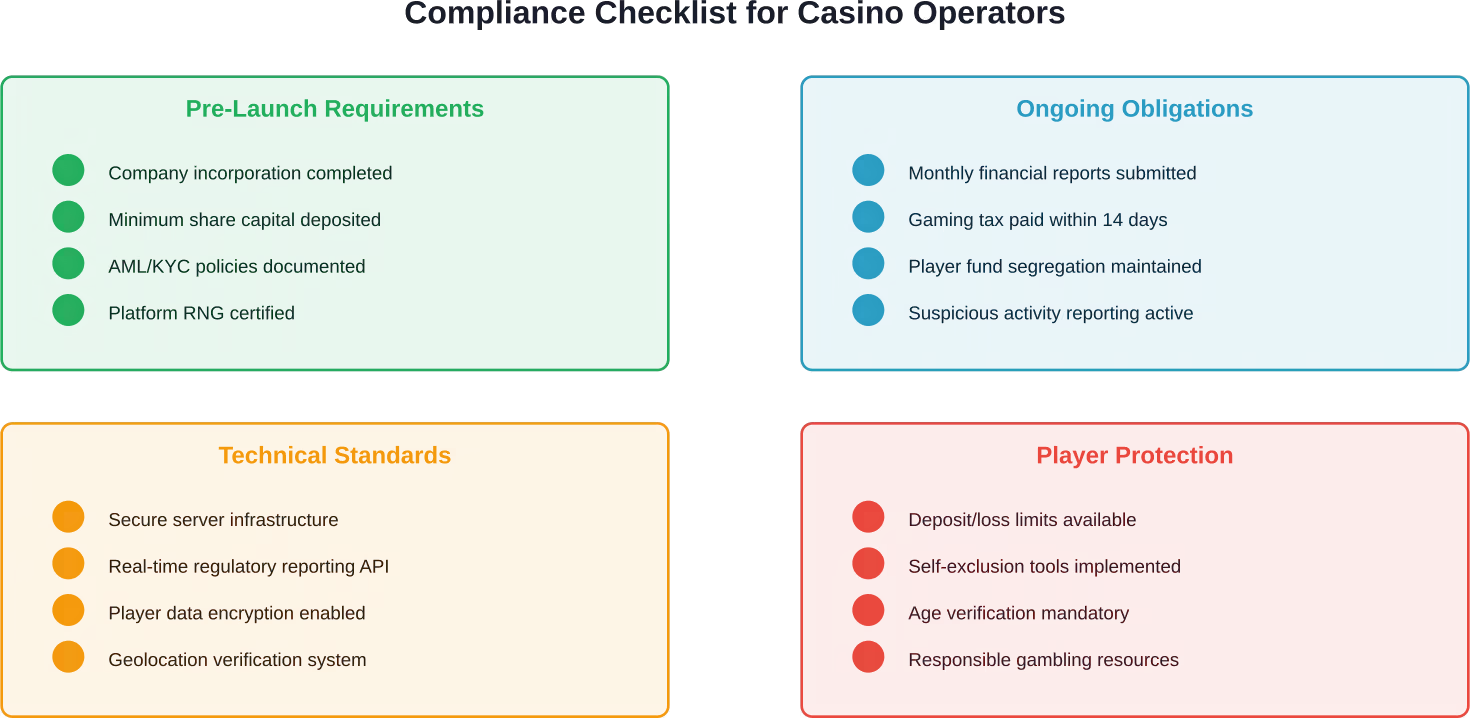
- Anti-Money Laundering (AML) and Know Your Customer (KYC) policies
- Responsible gambling policies and player protection measures
- Background checks and criminal record clearances for all directors and beneficial owners
- Proof of payment for application fees
The gaming and gambling sector faces particular vulnerability to money laundering activities due to large cash transaction volumes and digital payment flows. Operators must demonstrate robust AML compliance frameworks that meet international standards.
Phase 3: Regulatory Review and Compliance Assessment
Once submitted, applications undergo thorough review by regulatory staff. This phase typically spans 8-12 weeks but can extend longer if documentation gaps emerge or additional clarifications are requested.
Regulators assess financial viability, technical soundness, and the operator’s ability to maintain ongoing compliance obligations. Background investigations verify that company principals have no criminal history or previous regulatory violations.
Some states require in-person presentations where operators demonstrate their platform capabilities and answer detailed questions about operational procedures, player fund segregation, and dispute resolution mechanisms.
Phase 4: License Issuance and Launch Preparation
Upon approval, operators receive their license certificate and can begin final launch preparations. But this isn’t the finish line—it’s the starting line for ongoing compliance obligations.
Licensed operators must submit monthly financial reports, maintain adequate player fund segregation, process tax remittances on time, and respond promptly to regulatory inquiries. The annual license renewal fee of NGN10 million comes due each year, accompanied by updated financial statements and compliance certifications.
Find or Present Casino Solutions in Nigeria

Entering the Nigerian market requires both the right setup and the right connections. Sologe is where operators and vendors meet to find solutions, present products, and connect around real business needs.
Start Working With the Right Partners Now
Sologe helps you:
- Find suppliers or present your own services
- Explore solutions used by active market players
- Stay visible to companies entering new regions
- Connect directly and move into discussions
Contact Sologe and discuss your setup with companies ready to collaborate.
License Costs and Financial Requirements
Opening a casino in Nigeria requires substantial capital investment. The cost structure includes upfront fees, minimum capital requirements, and ongoing operational taxes.
Effective January 1, 2026, operators are required to pay a flat 11% tax on Gross Gaming Revenue (GGR) for ‘Good Causes’ across all gaming categories (Sports Betting, Casino, Lottery) under the FSGRN framework. Additional state-level taxes or fees may apply in certain jurisdictions.
Cost Component | Sports Betting License | Full Casino License |
|---|---|---|
Application Fee | NGN 2 million | NGN 2 million |
License Fee | NGN 100 million | NGN 100 million |
Required Share Capital | NGN 100 million | NGN 100 million |
Gaming Tax (monthly) | 11% of GGR | 11% of GGR |
Development Levy | 4% | 4% |
Members of the Nigerian Bookmakers Association may access reduced fees or streamlined processes in certain jurisdictions. Professional service fees for legal practitioners, compliance consultants, and technical auditors add additional costs that vary based on service scope.
Technology and Compliance Infrastructure
Nigerian regulators impose strict technical and compliance standards that operators must maintain continuously. These requirements protect players while ensuring fair gaming operations and tax collection integrity.
Platform Requirements and Gaming Systems
Casino platforms must demonstrate certification from recognized testing laboratories confirming Random Number Generator (RNG) fairness and game integrity. Server infrastructure hosting player data and financial transactions must be adequately secured against cyber threats.
Real-time reporting capabilities are essential. Regulatory systems need access to gaming data for audit purposes, requiring API integrations or standardized reporting formats that deliver accurate transaction records.
Anti-Money Laundering and KYC Protocols
The gaming and gambling industry remains particularly vulnerable to money laundering schemes. Criminals often exploit casino platforms to convert illicit funds into seemingly legitimate gambling winnings.
Operators must implement comprehensive KYC procedures including:
- Identity verification using government-issued documents
- Address confirmation through utility bills or bank statements
- Enhanced due diligence for high-value transactions
- Ongoing transaction monitoring for suspicious patterns
- Mandatory reporting of unusual activities to regulatory authorities
Name matching technology helps reduce false positives in sanctions screening while ensuring genuine matches don’t slip through compliance filters. These systems can integrate directly into platform environments through API connections.
Responsible Gambling Obligations
Nigerian regulations increasingly emphasize player protection and responsible gambling practices. Operators must provide tools enabling players to set deposit limits, loss limits, and session time restrictions.
Self-exclusion mechanisms allow players to voluntarily ban themselves from gambling activities for specified periods. Customer support channels must be accessible for players seeking help with gambling-related problems.
Payment Methods and Financial Operations
Payment infrastructure represents a critical operational component for Nigerian casino operators. The local market has distinct payment preferences shaped by banking penetration, mobile money adoption, and internet connectivity patterns.
Preferred Payment Methods in Nigeria
Mobile money services dominate Nigeria’s digital payment landscape. Platforms offering seamless integration with popular mobile wallets capture significantly higher conversion rates than those relying solely on traditional banking.
Bank transfers remain widely used for deposits and withdrawals, though processing times can vary considerably. Card payments work but face lower adoption rates compared to mobile solutions, particularly outside major urban centers.
Cryptocurrency adoption is growing among tech-savvy Nigerian players, though regulatory guidance on crypto gambling remains unclear. Operators incorporating crypto payment options should consult legal advisors about current compliance requirements.
Player Fund Segregation
Regulations require strict segregation between player funds and operational capital. Casino operators must maintain separate bank accounts exclusively for player deposits and winnings, ensuring these funds remain available for withdrawal regardless of business financial performance.
Regular audits verify compliance with segregation requirements. Commingling player funds with operating expenses represents a serious regulatory violation that can trigger license suspension or revocation.
Marketing and Advertising Regulations
Advertising casino services in Nigeria operate within defined regulatory boundaries. While gambling advertising isn’t prohibited outright, specific content restrictions and placement limitations apply.
Marketing materials cannot target minors or appear in media primarily consumed by underage audiences. Advertisements must include responsible gambling messages and avoid suggesting that gambling offers solutions to financial problems.
Social media marketing has become increasingly important for reaching Nigeria’s young, mobile-first population. Platforms like Instagram, Twitter, and Facebook provide targeted advertising capabilities, though operators must ensure creative content complies with both platform policies and Nigerian advertising regulations.
Affiliate marketing programs are popular but require careful management. Operators remain responsible for ensuring affiliate partners adhere to advertising standards and don’t make misleading claims about odds, bonuses, or winning probabilities.
State-Specific Licensing Considerations
Lagos State maintains the most developed regulatory framework and represents the primary target market for most operators. The Lagos State Lotteries and Gaming Authority (LSLGA) oversees licensing and compliance within the state.
Other states are developing their own regulatory structures, creating opportunities for operators to enter emerging markets with potentially lower competition. But regulatory maturity varies significantly—some states lack clear application procedures or established compliance frameworks.
The FCT (Federal Capital Territory) Lottery Regulatory Office established comprehensive gaming guidelines and policies that strengthen institutional compliance, industry transparency, and consumer protection. These frameworks ensure gaming operations conform to national laws and territorial directives.
Common Challenges and Risk Factors
Operating a casino in Nigeria presents distinct challenges that operators should anticipate and plan for during the setup phase.
Regulatory Uncertainty
Nigeria’s gambling regulations continue evolving. New compliance requirements, tax adjustments, or licensing procedure changes can emerge with limited advance notice. Operators need flexible compliance frameworks capable of adapting to regulatory shifts.
Payment Processing Complexities
Banking relationships can be difficult for gambling operators to establish and maintain. Some Nigerian banks decline to service gaming companies due to internal risk policies, forcing operators to work with smaller financial institutions or offshore payment processors.
Transaction failure rates on mobile money platforms can impact player experience and conversion rates. Redundant payment options help mitigate this risk but add integration complexity.
Infrastructure Reliability
Internet connectivity remains inconsistent in many Nigerian regions. Casino platforms must optimize for low-bandwidth environments and provide graceful degradation when connections are unstable.
Power supply interruptions are common. Server infrastructure should include redundancy and failover capabilities to maintain service continuity during outages.
Market Opportunities and Growth Potential
Despite challenges, Nigeria’s casino market offers substantial growth opportunities for operators who execute well.
The country’s young population (median age under 20) is increasingly comfortable with digital transactions and online entertainment. As mobile internet penetration expands, addressable market size will grow correspondingly.
Sports betting currently dominates player spending, but casino game adoption is accelerating. Operators who successfully introduce popular game formats and localized content can capture market share before competition intensifies further.
Nigeria’s economic position as Africa’s largest economy creates wealth concentration in urban centers. Lagos alone contains millions of potential customers with disposable income for entertainment spending.
Frequently Asked Questions
How long does it take to get a casino license in Nigeria?
The licensing process typically takes 5–8 months from company incorporation to final approval. This includes business registration, document preparation, application processing, and regulatory review. Delays can occur if additional information is required.
Can foreign companies operate casinos in Nigeria?
Foreign companies must establish a local Nigerian entity to operate. This usually involves setting up a subsidiary or forming a partnership with local stakeholders and complying with all domestic regulatory requirements.
What’s the difference between NLRC and state licenses?
NLRC licenses provide broader or federal-level recognition, while state licenses are limited to specific regions. State licenses may have lower requirements and faster processing, whereas broader licenses involve stricter compliance and higher investment.
How much does it cost to open a casino in Nigeria?
Startup costs can exceed NGN 200 million, including application fees, licensing fees, and required share capital. Ongoing expenses include annual license renewals, taxes on gaming revenue, and operational costs.
What are the tax obligations for casino operators?
Operators typically pay taxes on gross gaming revenue, corporate income tax, and additional levies. Regular financial reporting is also required to remain compliant with regulations.
Are online casinos legal in Nigeria?
Yes, online casinos are legal when properly licensed by relevant authorities. Operating without a valid license is illegal and may result in penalties.
What payment methods work best for Nigerian casino players?
Mobile payment solutions and bank transfers are widely used due to accessibility and convenience. Other methods like cards and digital assets are also used but may vary in adoption depending on the user base.
Final Thoughts
Opening a casino in Nigeria requires substantial capital investment, regulatory expertise, and operational discipline. The licensing process is rigorous, compliance obligations are ongoing, and market challenges are real.
But for operators who approach the market strategically, Nigeria offers one of Africa’s most promising gambling opportunities. A population exceeding 220 million, high rates of digitalization and widespread mobile connectivity, and growing middle-class wealth create conditions for sustained market growth.
Success demands more than just obtaining a license. Operators must build robust technical infrastructure, establish reliable payment partnerships, develop localized content that resonates with Nigerian players, and maintain exemplary compliance standards that protect both the business and its customers.
The operators who will thrive in Nigeria’s casino market are those who view regulatory compliance not as a burden but as a competitive advantage—a foundation for building trust, securing sustainable operations, and capturing market share in one of Africa’s most dynamic economies.
Ready to explore licensing opportunities in Nigeria? Start by consulting with legal professionals experienced in Nigerian gambling regulations, connecting with licensed payment service providers, and evaluating technology platforms capable of meeting local compliance requirements. The market opportunity is real, but preparation determines success.
Related Articles

September 30, 2026Is Sports Betting Legal in Brazil? The Full...

September 30, 2026Is Sports Betting Legal in Iran? The Real...