 Nothing found for the request
How to Start a Sports Betting Business in Nigeria 2026
Sologe June 8, 2026
Share:


Quick Summary
Quick Summary: Starting a sports betting business in Nigeria in 2026 requires obtaining a state-issued licence or a Universal Reciprocity Certificate (URC) through the Federation of State Gaming Regulators of Nigeria (FSGRN). Application fees typically start from ₦2–5 million. From 1 January 2026, the standard licence costs ₦100 million per year per category (sports betting is one category). Operators pay 11% tax on Gross Gaming Revenue (GGR) designated for good causes.
Nigeria’s sports betting market has exploded into a multi-billion dollar industry that shows no signs of slowing down. With a betting participation rate exceeding 71% and Africa’s largest population hungry for football wagering opportunities, the country has become the continent’s undisputed betting capital.
But here’s the thing: breaking into this lucrative market isn’t as simple as setting up a website and accepting bets. The regulatory landscape is complex, startup costs are substantial, and competition is fierce.
This guide walks through everything needed to launch a legitimate, profitable sports betting operation in Nigeria in 2026. From navigating the current FSGRN and state regulatory requirements to choosing the right software platform, the roadmap is clear.
Why Nigeria's Sports Betting Market Is Worth the Investment
The numbers tell a compelling story. In 2019, Nigeria’s sports betting industry was valued at nearly $2 billion (approximately ₦871 billion), according to competitor sources, and reports indicate the market has continued growing.
What makes the Nigerian market particularly attractive? Start with the population: over 242 million citizens, making it Africa’s most populous nation. Over 60% of the population is under 30 years old, making it a youthful market with high engagement potential for online platforms.
Football dominates the betting landscape. Nigerians don’t just watch the sport; they live and breathe it. English Premier League matches attract massive betting volumes, but local leagues and international competitions also draw substantial wagers.
The shift to digital has been significant, with online betting increasingly dominating the market. Mobile penetration continues to rise, and payment infrastructure has matured significantly, making it easier than ever for operators to collect stakes and pay out winnings.
Real talk: competition is intense. Established operators like Bet9ja, SportyBet, and 1xBet have built strong brand recognition. Breaking through requires more than just launching another betting site—it demands differentiation, capital, and a solid understanding of local preferences.
Understanding Nigeria's Sports Betting Legal Framework
Sports betting is legal in Nigeria, but the regulatory structure changed significantly after the Supreme Court ruling in November 2024. The Court abolished the National Lottery Act 2005 and limited the NLRC’s authority only to the Federal Capital Territory (Abuja). Regulation of gaming now falls under individual states. Most states (over 22) united under the Federation of State Gaming Regulators of Nigeria (FSGRN), which introduced unified standards effective 1 January 2026.
Federal vs. State Licensing: What’s the Difference?
A state-issued licence permits operation only within that specific state. The Universal Reciprocity Certificate (URC), issued under the FSGRN framework, allows operators to work across all participating member states with a single certificate. It is more scalable for national operations.
The main regulatory body for multi-state operations is now the FSGRN (not NLRC). State gaming boards (e.g. Lagos State Lotteries and Gaming Authority) handle local matters.
Key Regulatory Bodies Operators Must Know
The Federation of State Gaming Regulators of Nigeria (FSGRN) is now the main body coordinating multi-state operations and issuing the Universal Reciprocity Certificate (URC). The National Lottery Regulatory Commission (NLRC) retains authority only in the Federal Capital Territory (Abuja). State gaming boards (e.g. Lagos State Lotteries and Gaming Authority) regulate activities within their jurisdictions.
How to Obtain a Sports Betting Licence in Nigeria
The licensing process is straightforward in theory but demands meticulous attention to detail. Missing a single document or failing to meet a technical requirement can delay approval by months.
Stage 1: Application Requirements and Initial Submission
Applicants must submit a comprehensive proposal to the FSGRN Secretariat (for URC) or to the relevant State Gaming Regulatory Authority (for single-state licence).
A duly completed application form is the foundation. The form requests detailed information about the company structure, ownership, business plan, and technical infrastructure.
An application letter stating the intention to operate a sports betting business must accompany the form. This letter should clearly outline the proposed service, target market, and operational scope.
The non-refundable application fee is typically ₦2–5 million. From 1 January 2026, the licence fee under FSGRN is ₦100 million per year per category. Previous ANB 50% discount applied only to the old NLRC system and no longer applies under the new framework. There were transitional waivers in 2025 for existing operators.
Required Documentation Checklist
Corporate documents form the core of the submission. Applicants need a Certificate of Incorporation from the Corporate Affairs Commission proving the business is a registered Nigerian entity.
Memorandum and Articles of Association must be included. These documents outline the company’s structure, governance, and operational scope.
Tax clearance certificates demonstrate financial compliance. The Commission wants assurance that applicants have a clean tax history.
Proof of financial capability is critical. Operators must demonstrate they have sufficient capital to run a betting business, pay out winnings, and maintain reserves. Bank statements, audited financials, or letters from financial institutions serve this purpose.
Technical documentation describes the betting platform. This includes details about the software provider, server locations, data protection measures, and responsible gambling tools.
Evidence of a physical office location in Nigeria is mandatory. The Commission requires operators to maintain a verifiable business address where customers and regulators can reach them.
Timeline and Approval Process
Processing times vary. Straightforward applications with complete documentation can be approved in 60-90 days. Complex cases or those requiring additional information may take longer.
The Commission conducts thorough due diligence on all applicants. This includes background checks on directors and major shareholders, verification of financial capacity, and technical assessment of the proposed platform.
Once approved, the FSGRN URC is valid for one year and must be renewed annually. Single-state licences may have different validity periods depending on the state.
Cost Component | Amount | Frequency | Notes |
Application Processing Fee | ₦2–5 million | One-time | Non-refundable |
Licence Fee (FSGRN URC) | ₦100 million | Annual per category | From Jan 1, 2026 |
Tax on Revenue | 11% of GGR | Monthly/Ongoing | For good causes |
Ongoing Regulatory Compliance and Fees
Getting the licence is just the beginning. Operating legally means meeting ongoing obligations that the Commission monitors closely.
Revenue Tax
From 1 January 2026 operators pay 11% of Gross Gaming Revenue (GGR = total stakes minus winnings) for good causes. This replaces the old 3% of gross turnover. Payments are distributed primarily to the states where the activity occurs (using geo-fencing). Gross turnover (total stakes) is no longer the basis for the main regulatory fee.
Reporting Requirements
Regular reporting keeps operators in good standing. Monthly financial reports detailing total stakes, payouts, and net revenue (GGR) must be submitted to the FSGRN or the relevant State Gaming Regulatory Authority.
Technical reports must document platform uptime, security incidents, and any system issues that affected betting operations. Regulators require assurance that operators maintain reliable, secure, and fair platforms.
Responsible gambling reports track self-exclusion requests, underage gambling prevention measures, and problem gambling interventions. Operators must demonstrate they are actively protecting vulnerable customers.
Audits and Inspections
FSGRN and state regulators conduct periodic audits. These can be scheduled or unannounced (surprise) inspections designed to verify compliance with licensing conditions.
Financial audits examine whether reported figures match actual platform data. Technical audits assess security measures, random number generators (RNG), data protection protocols, and overall system integrity.
Operators failing audits face penalties ranging from fines and corrective orders to licence suspension. Serious or repeated violations can result in permanent revocation of the licence.
Choosing Your Sportsbook Software Platform
The betting platform is the business’s engine. Get this wrong, and nothing else matters—customers won’t trust a glitchy, slow, or poorly designed site.
Turnkey vs. White Label vs. Custom Development
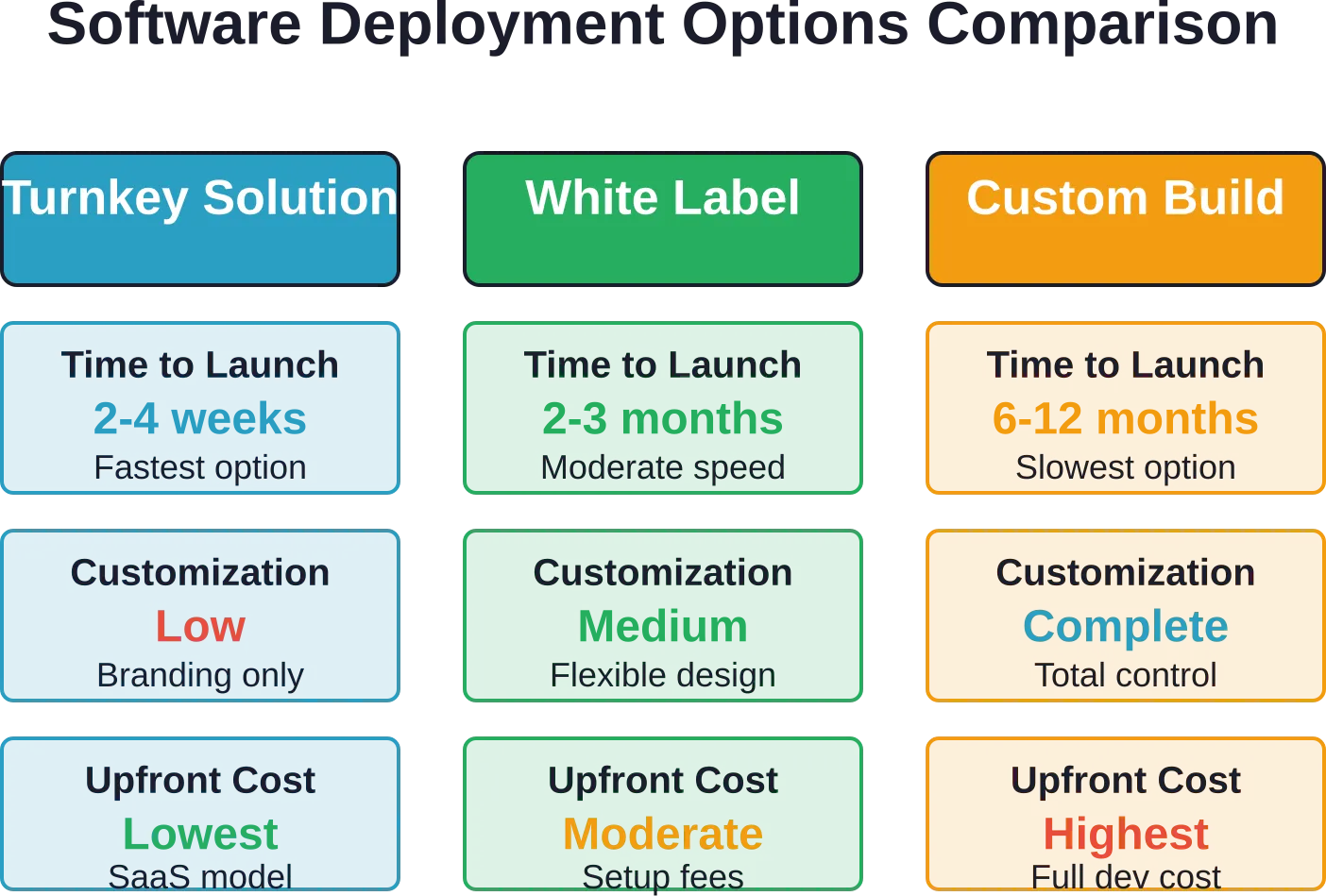
Turnkey solutions are fully built platforms ready to deploy. Operators license the software, add their branding, and launch. Speed to market is the primary advantage—some turnkey solutions can go live in weeks.
White label platforms offer more customization. The core betting engine is provided, but operators have flexibility to modify the interface, add features, and differentiate the user experience. Development time sits between turnkey and custom solutions.
Custom development builds everything from scratch. This approach offers maximum control but requires significant investment and 6-12 months of development time. Unless there’s a compelling reason to build proprietary technology, custom development rarely makes sense for new operators.
Essential Platform Features
Live betting capabilities are non-negotiable. Nigerian bettors expect to place wagers on matches in progress, and operators without this feature start at a massive disadvantage.
Mobile optimization matters more than desktop. With high Nigerian user engagement on mobile platforms, the mobile experience must be flawless. Apps and mobile-responsive websites both work, but performance can’t be compromised.
Odds management tools allow operators to set margins, adjust prices, and manage risk exposure. Automated systems that pull odds from data feeds and apply operator-defined margins save massive amounts of manual work.
Payment integration must support local methods. Bank transfers, USSD codes, mobile money, and card payments are all essential. Platforms that make deposits and withdrawals difficult lose customers fast.
Responsible gambling tools protect both customers and operators. Self-exclusion features, deposit limits, and reality checks demonstrate commitment to player welfare and satisfy regulatory requirements.
Back-office systems handle customer management, reporting, fraud detection, and compliance monitoring. Operators need clear visibility into platform performance, user behavior, and financial metrics.
Evaluating Software Providers
Provider track record in the Nigerian market counts for a lot. Companies with established Nigerian clients understand local preferences, regulatory requirements, and technical challenges specific to the country.
Licensing and certification matter. Reputable providers hold licences in multiple jurisdictions and carry certifications from testing agencies like GLI (Gaming Laboratories International) or eCOGRA.
Scalability determines whether the platform can handle growth. A solution that works fine with 1,000 concurrent users but crashes at 10,000 becomes a liability as the business expands.
Support and maintenance arrangements need careful scrutiny. What happens when something breaks at 2 AM on a Sunday during a major match? Providers should offer 24/7 technical support, especially during high-traffic periods.
Cost structures vary widely. Some providers charge flat monthly fees, others take a percentage of revenue, and many use hybrid models. Understanding total cost of ownership over 12-36 months helps avoid surprises.
Setting Up Payment Processing and Banking
Money movement makes or breaks a betting operation. Customers need seamless deposits, and they expect withdrawals to process quickly. Friction at either point sends them to competitors.
Popular Payment Methods Among Nigerian Bettors
Bank transfers remain the most trusted method. Direct transfers from the bettor’s bank account to the operator’s account feel secure and familiar. The downside? Processing can be slow, especially for withdrawals.
Card payments offer convenience. Verve cards dominate the Nigerian market, though Visa and Mastercard are also common. Operators need payment processors that support all three networks.
USSD banking codes have become incredibly popular. Bettors dial a simple code on any mobile phone—no smartphone or internet required—to fund their accounts instantly. This method reaches users in areas with limited internet connectivity.
Mobile money platforms like Paga and OPay have gained traction. Younger users particularly favor these digital wallets for their speed and ease of use.
Cryptocurrency remains niche but growing. Bitcoin and stablecoin payments appeal to tech-savvy bettors looking for faster withdrawals and lower fees.
Selecting Payment Service Providers
Providers must have a strong presence in Nigeria. International processors that work brilliantly in Europe often stumble on local banking infrastructure nuances.
Transaction success rates matter enormously. A provider with a 95% success rate means 1 in 20 deposits fail—frustrating customers and costing revenue. Premium providers achieve 98%+ success rates.
Settlement speed affects cash flow. Some providers hold funds for days before transferring to the operator’s account. Fast settlement keeps working capital healthy.
Fees vary widely. Expect to pay 2-5% per transaction, though high-volume operators can negotiate better rates. Factor these costs into unit economics—payment processing can consume a significant chunk of margin.
Compliance and KYC Requirements
Know Your Customer regulations require operators to verify user identities. At minimum, this means collecting names, dates of birth, phone numbers, and identity document information.
Document verification typically involves uploading a valid ID (National ID card, driver’s licence, or international passport) and sometimes proof of address.
Anti-money laundering protocols flag suspicious betting patterns. Large deposits followed immediately by withdrawal requests, consistent cash-out with minimal betting activity, or other unusual behaviors trigger review.
Operators must maintain records of all transactions and user verification documents. Regulators can request these records during audits, and missing documentation results in penalties.
Building Your Sports Content and Odds Strategy
Odds determine profitability. Set them too tight, and the business makes nothing. Set them too loose, and competitors steal customers.
What Nigerian Bettors Want to Wager On
Football dominates by a massive margin. English Premier League matches attract the heaviest betting volume, with fixtures involving popular clubs like Manchester United, Chelsea, Liverpool, and Arsenal generating particularly intense activity.
Local leagues matter too. The Nigerian Professional Football League has loyal followers who bet on familiar teams and players.
International tournaments spike activity. World Cup, Africa Cup of Nations, UEFA Champions League—these competitions bring casual bettors into the market alongside regular customers.
Basketball has carved out a solid niche. NBA games appeal to younger, urban bettors, and betting volumes during playoffs can rival all but the biggest football matches.
Tennis, boxing, and mixed martial arts round out the major markets. Niche sports like table tennis and esports attract smaller but growing audiences.
Odds Compilation and Risk Management
Most operators don’t compile odds in-house. Instead, they license odds feeds from specialized providers who employ teams of traders to set and adjust prices.
Margins built into odds determine profitability. A standard margin might be 5-8%, meaning the operator expects to keep that percentage of turnover over time. Tighter margins attract more customers but reduce profit per bet.
Risk management systems monitor exposure. When too much money piles onto one outcome, operators can adjust odds to balance the book or limit further bets on that outcome.
Live betting requires sophisticated systems. Odds must update in real-time as match events unfold, and delays of even a few seconds create arbitrage opportunities for sharp bettors.
Marketing Your Sports Betting Business
Brand awareness is everything in a crowded market. Nigerians have dozens of betting options—why should they choose a new operator?
Digital Marketing Channels That Work
Social media reaches massive audiences. Facebook and Instagram campaigns targeting sports fans can build awareness quickly. User-generated content, memes about popular matches, and interactive polls drive engagement.
Influencer partnerships with sports personalities, comedians, and entertainment figures lend credibility. A well-known figure endorsing the platform can move significant numbers of signups.
Affiliate marketing lets website owners, bloggers, and social media accounts earn commissions for referring new customers. Building a strong affiliate network accelerates customer acquisition.
SMS marketing still works in Nigeria. Short, direct messages about upcoming matches, special odds, or bonus offers cut through digital noise.
Search engine optimization brings organic traffic. Ranking for terms like “best betting site Nigeria” or “football betting today” delivers high-intent visitors.
Promotional Strategies
Welcome bonuses are virtually mandatory. New customers expect matched deposits or free bets as signup incentives. Typical offers range from 50% to 200% of initial deposit value.
Loyalty programs reward regular bettors. Points accumulated through betting activity can be exchanged for free bets, merchandise, or cash bonuses.
Enhanced odds on major matches attract attention. Offering significantly better prices than competitors on high-profile games brings in customers, even if those specific bets operate at thin or negative margins.
Cashback promotions reduce customer risk. Refunding a percentage of losses during a specific period softens the blow for losing bettors and keeps them engaged.
Traditional Marketing Still Matters
Physical branding through betting shops (for operators running hybrid online/retail operations) provides visibility and legitimacy in local communities.
Sponsorships of local football clubs or tournaments build brand association with the sport bettors love. Even modest sponsorship deals can generate significant brand recognition.
Radio advertising reaches beyond internet users. Sports talk shows and match broadcasts offer prime opportunities to reach target audiences.
Operational Considerations and Best Practices
Running a betting operation means managing customer service, handling disputes, preventing fraud, and maintaining platform integrity 24/7.
Customer Support Infrastructure
Multiple support channels are essential. Phone support, email, live chat, and WhatsApp all have their place. Nigerian customers often prefer WhatsApp for its convenience and familiarity.
Response times matter. During major matches when the platform is busy, customers with deposit issues or betting disputes need answers in minutes, not hours.
Language and cultural understanding count. Support staff must speak English fluently and understand Nigerian sports culture, betting terminology, and customer expectations.
Responsible Gambling Measures
Self-exclusion tools allow customers to block themselves from the platform for set periods. This protects problem gamblers and demonstrates regulatory compliance.
Deposit limits let users cap how much they can add to their accounts daily, weekly, or monthly. These controls help customers manage their spending.
Reality checks interrupt betting sessions with reminders of how long users have been active and how much they’ve wagered. These small interventions can prevent loss-chasing behavior.
Links to gambling support organizations like Gamblers Anonymous should be prominently displayed. Operators have both ethical and regulatory obligations to provide help resources.
Fraud Prevention
Multiple account detection prevents bonus abuse. Sophisticated users attempt to claim signup bonuses repeatedly using different identities. Matching phone numbers, device fingerprints, and betting patterns helps identify these schemes.
Arbitrage betting detection flags customers exploiting price differences between bookmakers. While not illegal, arbitrage bettors aren’t profitable customers, and operators typically limit or ban them.
Stolen card monitoring watches for patterns indicating compromised payment credentials. Rapid succession of failed payment attempts or unusual betting behavior following successful deposits can signal fraud.
Technology Infrastructure and Security
Platform reliability isn’t optional. When a major match kicks off and thousands of users try to place bets simultaneously, the system must handle the load.
Hosting and Server Requirements
Cloud hosting offers scalability. Services like AWS, Google Cloud, or Microsoft Azure can automatically allocate more resources during traffic spikes and scale back during quiet periods.
Local hosting in Nigeria can improve latency. Users experience faster page loads and bet placement when servers are geographically close.
Redundancy prevents outages. Multiple servers in different locations ensure that if one fails, others immediately take over with zero downtime.
Data Protection and Privacy
SSL certificates encrypt data transmitted between users and servers. This prevents interception of sensitive information like passwords and payment details.
Database encryption protects stored user information. Even if servers are compromised, encrypted data remains unreadable without decryption keys.
Regular security audits identify vulnerabilities before attackers exploit them. Third-party security firms should test systems quarterly.
Backup systems ensure data isn’t lost. Daily backups stored in separate locations protect against hardware failure, ransomware, or other disasters.
DDoS Protection
Distributed denial of service attacks overwhelm servers with fake traffic, taking platforms offline. Betting sites are frequent targets, especially during major matches.
DDoS mitigation services from companies like Cloudflare or Akamai filter malicious traffic before it reaches servers. This protection is non-negotiable for any serious operator.
Start Business With iGaming Vendors on Sologe

Starting a sports betting business in Nigeria requires careful work around licensing, payments, software, and operations. Sologe gives businesses a place to discover suppliers that serve the iGaming industry. Rather than focusing on players, it connects companies with platform vendors, sportsbook software providers, payment companies, affiliate tools, marketing services, analytics providers, and other B2B suppliers that may support an online gaming project.
Sologe helps teams move from research to vendor discovery:
- find platform and sportsbook software providers
- compare payment, traffic, and affiliate service options
- review supplier profiles before outreach
- connect directly with companies in relevant categories
- create visibility if your company serves iGaming operators
👉Contact Sologe to find iGaming vendors for your business research or list your company for potential partners.
Estimating Startup Costs and Financial Planning
Capital requirements for launching a betting business in Nigeria remain substantial. Undercapitalization is still one of the most common reasons new operators fail. However, the cost structure changed significantly in 2026 due to the new FSGRN licensing regime.
One-Time Costs
Licensing fees are now among the highest upfront and ongoing expenses. The non-refundable application fee typically ranges from ₦2–5 million. From 1 January 2026, the standard FSGRN Universal Reciprocity Certificate (URC) costs ₦100 million per year per category (sports betting is treated as a separate category). Some individual states offer cheaper local licences, but they do not allow nationwide operations.
Platform setup costs depend on the chosen approach. Turnkey solutions might require ₦5–10 million in initial setup and integration. White label solutions can cost ₦15–30 million. Custom development easily exceeds ₦50 million.
Office setup and equipment for physical locations (mandatory registered address) costs ₦2–5 million depending on size and location. Even primarily online operators need a verifiable business address in Nigeria.
Legal and consulting fees for company registration, contract review, and regulatory compliance guidance typically run ₦3–7 million.
Initial marketing budget to build awareness and acquire the first customers requires ₦10–30 million. Launch campaigns are expensive, but customer acquisition costs usually decrease as the brand gains recognition.
Monthly / Recurring Operating Costs
Platform licensing fees vary widely. SaaS/turnkey models might charge ₦1–5 million monthly or take 5–15% of gross gaming revenue, whichever is higher.
Regulatory fees are now 11% of Gross Gaming Revenue (GGR). GGR = total stakes minus winnings paid out. For example, with ₦50 million monthly GGR, the operator pays approximately ₦5.5 million in regulatory tax for good causes.
Payment processing fees consume 2–5% of transaction volume. On ₦50 million in deposits and withdrawals (₦100 million total transaction volume), expect ₦2–5 million in payment fees.
Staff costs depend on team size. A lean operation might run with 10–15 people (customer service, marketing, operations, finance) costing ₦5–10 million monthly in salaries.
Marketing and customer acquisition on an ongoing basis requires ₦5–20 million monthly, scaling with growth ambitions.
Server hosting, security services, and technical infrastructure cost ₦1–3 million monthly.
Working Capital Requirements
Customer balances must be maintained at all times. When users deposit funds, that money belongs to them until they lose bets or withdraw. Operators need sufficient reserves to cover all customer balances.
Winning bets must be paid immediately. A large accumulator win can require paying out tens of millions in minutes. Operators without adequate reserves face serious liquidity crises.
Regulatory best practices recommend maintaining reserves equal to at least 150% of total customer balances. This buffer protects against unexpected payout spikes and demonstrates financial stability to regulators.
Expense Category | Low Range | High Range | Notes |
Licensing (FSGRN URC) | ₦100 million | ₦100+ million | Annual per category from 2026 |
Application Fee | ₦2 million | ₦5 million | One-time, non-refundable |
Platform Setup | ₦5 million | ₦50 million | Turnkey to custom build |
Office & Equipment | ₦2 million | ₦5 million | Mandatory registered address |
Legal & Consulting | ₦3 million | ₦7 million | Registration & compliance |
Initial Marketing | ₦10 million | ₦30 million | Launch campaign |
Total Startup (excl. working capital) | ₦122 million | ₦197+ million | First year |
Working Capital | ₦30 million | ₦100 million | Customer balances & payouts |
Total Capital Needed | ₦152 million | ₦297+ million | Full launch readiness |
Common Challenges and How to Overcome Them
Every operator faces obstacles. Anticipating challenges and having mitigation strategies separates successful businesses from failed ventures.
Intense Competition
Established operators have massive brand recognition and marketing budgets. Competing head-on against Bet9ja or SportyBet is futile for new entrants.
Differentiation is the answer. Some operators focus on specific sports or betting types. Others build superior mobile experiences. Niche positioning—whether that’s better odds, faster payouts, or unique features—creates space in a crowded market.
Customer Trust
Nigerians have been burned by unreliable betting sites that delayed payouts or disappeared with customer funds. New operators start with a trust deficit.
Transparency builds credibility. Publishing payout statistics, showcasing big winners, and maintaining responsive customer service demonstrate reliability. Operating legally with proper licensing provides legitimacy.
Technical Glitches
Platform outages during major matches destroy reputation. One high-profile failure can send customers to competitors permanently.
Robust testing before launch is essential. Load testing should simulate traffic far exceeding expected volumes. Redundant systems ensure failover capability. Having technical support available 24/7 enables rapid response to issues.
Cash Flow Management
Betting businesses can be feast or famine. A weekend with unexpected winning streaks can drain reserves. A major tournament with heavy betting volumes but balanced results can generate massive revenue.
Conservative financial planning helps. Maintaining reserves well above minimum requirements provides a buffer. Credit facilities or arrangements with financial partners can provide emergency liquidity if needed.
Legal Considerations Beyond Licensing
Obtaining the betting permit is necessary but not sufficient for legal operation. Other legal obligations demand attention.
Tax Obligations
Corporate income tax applies to betting businesses like any other Nigerian company. The current corporate tax rate is 30% on profits.
Value Added Tax (VAT) implications need careful consideration. Consult tax professionals familiar with gaming industry specifics to ensure proper handling.
Withholding tax on customer winnings may apply in certain situations. The regulatory and tax treatment of betting winnings continues to evolve.
Advertising Regulations
The Advertising Regulatory Council of Nigeria (ARCON) sets standards for gambling advertising. Ads must not target minors, make misleading claims about winning odds, or encourage irresponsible gambling.
Media outlets have their own restrictions. Some refuse gambling ads during certain hours or on programs with large underage audiences.
Employment Law Compliance
Standard Nigerian employment regulations apply. Proper employment contracts, pension contributions, and compliance with minimum wage requirements are mandatory.
Customer service staff handling financial transactions may need additional background checks or certifications depending on state regulations.
Growing Your Sports Betting Business
Launching is just the beginning. Sustainable growth requires strategy, reinvestment, and constant adaptation.
Expanding Geographic Coverage
Starting with a single-state licence makes sense for testing the market. Once operations are stable and profitable, expanding to additional states or upgrading to a Universal Reciprocity Certificate opens new markets.
Each new state brings marketing costs to build brand awareness in that region. However, many operational costs (platform, customer service, back office) scale efficiently.
Adding Betting Products
Virtual sports offer action 24/7. Simulated matches based on random number generators provide betting opportunities even when no real matches are scheduled.
Casino games diversify revenue. Slots, table games, and live dealer options appeal to different customer segments and generate revenue from non-sports bettors.
Esports betting attracts younger audiences. Games like FIFA, League of Legends, and Dota 2 have competitive scenes that draw wagering activity.
Building Technology In-House
Successful operators often bring platform development internally after reaching scale. This provides maximum control, eliminates ongoing licensing fees, and allows rapid feature deployment.
This approach only makes sense after reaching substantial volumes. Building and maintaining betting technology requires significant investment in engineering talent.
Partnership and Sponsorship Opportunities
Partnering with sports clubs, leagues, or media companies can drive customer acquisition. Official betting partner designations provide marketing assets and brand association.
Media partnerships secure advertising inventory and integration into sports content. In-stream mentions during match broadcasts reach highly engaged audiences.
Frequently Asked Questions
How much does it cost to get a sports betting licence in Nigeria?
From 1 January 2026, the standard licence under the Federation of State Gaming Regulators of Nigeria (FSGRN) costs ₦100 million per year per category (sports betting is one separate category). The non-refundable application fee typically ranges from ₦2–5 million. Note: There was a full waiver of 2025 licence fees for operators transitioning from the old NLRC system. New applicants and renewals from 2026 pay the full annual fee. Some individual states may offer cheaper local licences, but they do not provide nationwide coverage. Total startup costs (including platform, legal, marketing, and working capital) usually range from ₦150 million to ₦300+ million depending on the scale and chosen approach.
What ongoing fees must betting operators pay in Nigeria?
Operators must pay 11% of Gross Gaming Revenue (GGR) designated for good causes. GGR is calculated as total stakes minus winnings paid out to players (not gross turnover). This is the main regulatory payment under the new FSGRN framework. Additional state-level fees or levies may apply depending on where the betting activity occurs (tracked via geo-fencing). Payments are typically made monthly. Unlike the old system, there is no longer a 3% fee on gross turnover paid to NLRC and the Trust Fund.
How long does it take to launch a sports betting business in Nigeria?
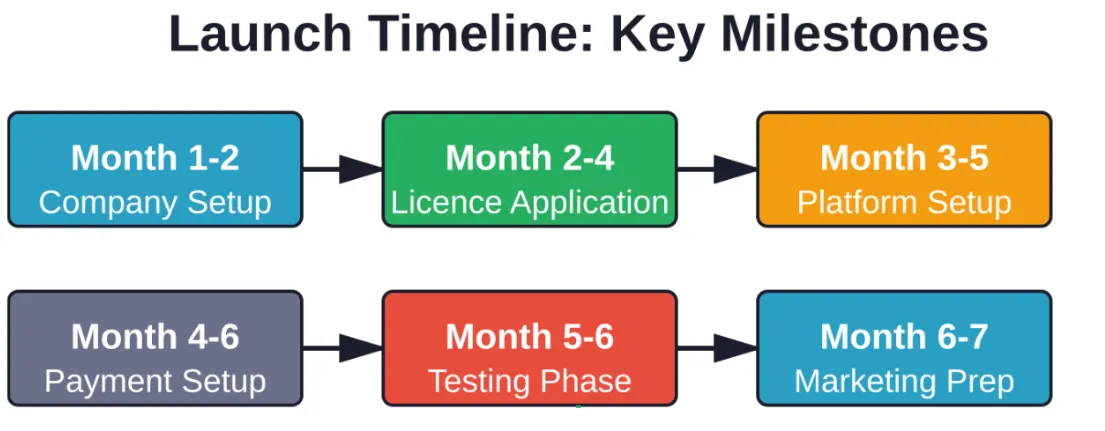
From initial planning to launch typically takes 6–9 months. Company registration requires 1–2 months. Licence application and approval takes 2–4 months for straightforward cases (longer for complex applications). Platform setup, payment integration, and testing take 3–5 months and usually run in parallel with licensing. Marketing preparation begins in months 5–6, with launch occurring once all regulatory, technical, and operational requirements are met.
Can foreign companies operate sports betting businesses in Nigeria?
Foreign ownership is permitted, but the business must be registered as a Nigerian company with a local address and representation. Operators are required to maintain a physical presence (registered office) in Nigeria. Many international betting companies operate successfully through locally registered subsidiaries. Technical infrastructure (servers) can be hosted internationally, but corporate registration and licensing must be domestic.
What’s the difference between a state licence and a Universal Reciprocity Certificate?
A state-issued licence permits operation only within that specific state’s boundaries. A Universal Reciprocity Certificate (URC), issued under the FSGRN framework, allows operators to offer services across all participating member states with a single certificate. The URC is significantly more scalable for operators planning national or multi-state reach. It costs more but avoids the need to obtain separate licences in each state.
What sports betting software providers work best in Nigeria?
The best provider depends on your business requirements, budget, and technical preferences. Operators should evaluate providers with proven track records in the Nigerian market who understand local payment methods (OPay, PalmPay, bank transfers, USSD), popular sports (especially football), and current regulatory requirements. Key criteria include mobile optimization, live betting capabilities, reliable payment integrations, scalability during traffic spikes, and 24/7 technical support. Always check references from existing Nigerian clients.
Is sports betting profitable in Nigeria?
The Nigerian sports betting market generates billions in annual revenue, but profitability varies greatly by operator. Established brands with strong customer bases can be highly profitable. New entrants usually face high customer acquisition costs and intense competition, often operating at a loss for the first 12–24 months. Long-term success depends on achieving scale, maintaining healthy betting margins (typically 5–8%), efficient cost management (especially licensing and payments), and strong customer retention. The opportunity is real, but it requires substantial capital, patience, and professional execution.
Conclusion: Building a Sustainable Sports Betting Business in Nigeria
Nigeria’s sports betting market offers genuine opportunity for well-capitalized, professionally managed operations. With over 242 million potential customers and betting participation rates exceeding 71%, the market fundamentals are compelling.
But success demands more than enthusiasm. The regulatory framework requires significant capital investment, ongoing compliance obligations, and patience through lengthy approval processes. The technical infrastructure must handle massive traffic spikes flawlessly. Payment systems need to work seamlessly with local banking infrastructure. Marketing must break through intense competition from established brands.
Operators who understand these realities, plan accordingly, and execute professionally can build profitable businesses. Those who underestimate the complexity, underfund their ventures, or cut corners on compliance will struggle.
The playbook is clear: register the business properly, secure appropriate licensing under the FSGRN framework or from the relevant State Gaming Authority, select proven technology partners, establish reliable payment processing, invest in marketing with realistic expectations, maintain adequate reserves, and operate with absolute commitment to regulatory compliance and customer protection.
Nigeria’s sports betting industry will continue growing. The question isn’t whether opportunity exists—it’s whether new entrants have what it takes to seize it.
Ready to launch a sports betting business in Nigeria? Start by consulting legal and regulatory experts familiar with NLRC requirements, speaking with multiple technology providers to understand platform options, and developing realistic financial projections that account for the full capital requirements outlined in this guide. The opportunity is significant for those prepared to do it right.
Related Articles
September 30, 2026Is Sports Betting Legal in Brazil? The Full...
September 30, 2026Is Sports Betting Legal in Iran? The Real...