 Nothing found for the request

How to Stay Safe When Gambling Online: 2026 Guide
Sologe April 28, 2026
Share:


Quick Summary
Quick Summary: Online gambling safety requires choosing licensed operators, verifying encryption standards, setting deposit limits, and protecting personal information. Before betting, check for regulatory licenses, read platform reviews, and use secure payment methods. Responsible gambling tools and awareness of fraud indicators help maintain both financial and personal security while wagering online.
Online gambling has exploded globally, with billions wagered through mobile apps and websites every year. The American Gambling Association predicts that more than $3.1 billion will be bet throughout March Madness alone. But this convenience comes with serious risks—from financial fraud to data breaches and gambling-related harm.
The University of Texas Health Science Center notes that online gambling sites have become hot targets for bad actors because of the recent popularity of online betting. Meanwhile, according to Harvard Kennedy School research, gamblers could lose up to $700 billion annually by 2028, creating a serious global public health concern.
Staying safe isn’t just about avoiding scams. It’s about protecting personal information, maintaining financial control, and recognizing when recreational play becomes problematic.
Verify Licensing and Regulatory Compliance
The first line of defense is choosing properly licensed operators. Legitimate gambling sites display licenses from recognized regulatory bodies—typically at the bottom of their homepage.
Sports betting is now legal in 38 US states and the District of Columbia. Each jurisdiction has its own regulatory authority that issues licenses and monitors operator compliance.
Here’s what matters when checking licenses:
Verification Point | What to Look For | Red Flag |
|---|---|---|
License Display | Visible license number and issuing authority | No license information visible |
Regulatory Body | Recognized authority (state gaming commission, Malta Gaming Authority, UK Gambling Commission) | Unknown or unverifiable authority |
License Verification | Clickable link to verify on regulator’s website | Can’t verify through official channels |
Operating History | Established presence with track record | Newly launched with no background |
Unlicensed sites operate without oversight. That means no consumer protections, no dispute resolution, and no guarantee that games are fair.
List Your Product in an iGaming Marketplace

Sologe gives vendors a place to publish gaming products and services in one structured platform. Listings can be organized across categories like software, platforms, equipment, and services, making them easier to find.
Want to Add Your Offer?
List with Sologe to:
- publish your product in a dedicated marketplace
- place it in the right category
- reach users browsing gaming listings
👉 Get in touch with Sologe to list your product
Check Security and Encryption Standards
Data protection is crucial when sharing financial and personal information. Reputable platforms use industry-standard encryption to protect user data during transmission.
Look for these security indicators:
- SSL/TLS encryption (HTTPS in the URL, padlock icon in browser)
- Two-factor authentication options for account access
- Secure payment processors with fraud protection
- Clear privacy policy explaining data handling practices
The Gambling Commission advises that gambling companies should implement robust security measures to keep players safe while betting online. That includes encrypting sensitive data, monitoring for suspicious activity, and protecting against unauthorized access.
Protect Personal and Financial Information
Share only the minimum information required. Legitimate platforms need basic identity verification for regulatory compliance, but excessive data requests are a warning sign.
Best practices for information protection include using unique, strong passwords for gambling accounts and avoiding public Wi-Fi when accessing betting sites. Financial information should only be entered on verified, encrypted pages.
The Federal Trade Commission’s Bureau of Consumer Protection investigates companies that engage in unfair or deceptive practices. According to the FTC, consumers should report suspected fraud at reportfraud.ftc.gov.
Secure Payment Methods
Payment security deserves special attention. Use methods that offer buyer protection and fraud monitoring:
- Credit cards with fraud protection
- Trusted e-wallets (PayPal, Skrill, Neteller)
- Prepaid cards for budget control
- Bank transfers through verified processors
Avoid wire transfers or cryptocurrency payments to unfamiliar platforms. These offer little recourse if problems arise.
Recognize and Avoid Scam Sites
Fraudulent gambling sites mimic legitimate operators but exist solely to steal money and data. Common red flags include unrealistic bonus offers, poor website design with spelling errors, no customer support or unresponsive service, and pressure to deposit quickly.
Research any platform before depositing. Check independent review sites, verify licensing claims through official regulatory databases, and read user experiences on forums and social media.
If something feels off, it probably is. Trust that instinct.
Use Responsible Gambling Tools
Legitimate operators provide tools to help manage gambling behavior. These aren’t just nice-to-have features—they’re often required by regulators.
Tool | Function | Benefit |
|---|---|---|
Deposit Limits | Set maximum deposits per day/week/month | Prevents overspending beyond budget |
Loss Limits | Cap total losses over set timeframe | Protects against chasing losses |
Session Timers | Alerts after specified play duration | Prevents extended, unplanned sessions |
Self-Exclusion | Temporarily or permanently block access | Provides cooling-off period when needed |
Reality Checks | Pop-up reminders showing time and money spent | Maintains awareness during play |
Set these limits before starting to play. In the heat of the moment, rational decision-making becomes harder.
Research on adolescents shows problematic online gambling ranges from 0.77% to 57.5% depending on measurement instruments and populations studied. Between 0.89% and 1% of adolescents exhibited an online gambling disorder.
Recognize Problem Gambling Signs
Research indicates that pathological gambling affects approximately 0.12 to 5.8% of the world population. Warning signs include spending more money or time than intended, chasing losses with increasingly larger bets, neglecting responsibilities or relationships, and feeling anxious or irritable when not gambling.
Help is available. SAMHSA’s FindTreatment.gov provides confidential resources for persons seeking treatment for substance use and mental disorders, including gambling disorder.
Understand Fair Play and Game Integrity
Safe gambling also means fair gambling. Reputable operators use certified Random Number Generators and submit to regular audits by independent testing agencies like eCOGRA, iTech Labs, or Gaming Laboratories International.
Check for these certifications, usually displayed in the site footer. They verify that games operate as advertised and that stated payout percentages are accurate.
What to Do If Something Goes Wrong
Despite precautions, issues can arise. Know the steps to take if problems occur.
For disputes with licensed operators, contact their customer support first with detailed documentation. If unresolved, escalate to the licensing authority. Most regulatory bodies have formal complaint processes.
For suspected fraud or scams, report to the Federal Trade Commission at reportfraud.ftc.gov. Community reports help the FTC identify patterns and take action against fraudulent operators.
For gambling-related concerns, NIDA emphasizes that despite available tools to treat problem gambling, they currently only reach a fraction of those who need help. Physicians and healthcare providers can provide referrals to appropriate treatment specialists.
Frequently Asked Questions
How can I tell if an online casino is legitimate?
Check for a valid license from a recognized regulatory authority, visible on the site’s homepage or footer. Verify the license through the regulator’s official website. Legitimate casinos also display SSL encryption (HTTPS in the URL), provide clear contact information, and have established reputations with verifiable user reviews.
What encryption should safe gambling sites use?
Reputable platforms use SSL/TLS encryption, indicated by HTTPS in the URL and a padlock icon in the browser. This encryption protects data during transmission between the device and the gambling site’s servers. Sites should also use secure payment processors that meet industry standards for financial transactions.
Are deposit limits really necessary?
Yes. Setting deposit limits before playing helps maintain budget control and prevents impulsive overspending during emotional moments. Research shows that pre-set limits are more effective than relying on willpower during active gambling sessions. Most regulated operators are required to offer these tools.
What should I do if a gambling site won’t process my withdrawal?
First, verify that all account requirements are met, including identity verification and wagering requirements. Contact customer support with detailed documentation. If unresolved, escalate the complaint to the site’s licensing authority. For unlicensed sites, report the issue to the FTC and consider the funds potentially unrecoverable.
How do I know if my gambling is becoming problematic?
Warning signs include spending more time or money than intended, chasing losses, neglecting responsibilities, borrowing money to gamble, and feeling anxious when not gambling. If gambling causes distress or harm but continues anyway, it may indicate a problem. Resources like SAMHSA’s FindTreatment.gov provide confidential support.
Can I trust sites that offer huge welcome bonuses?
Exercise caution with offers that seem too good to be true. While legitimate operators offer competitive bonuses, unrealistic promises may indicate scams. Always read the bonus terms carefully—wagering requirements, game restrictions, and withdrawal conditions reveal whether an offer is genuinely valuable.
Is it safe to use cryptocurrency for online gambling?
Cryptocurrency can provide privacy benefits, but it reduces consumer protections. Transactions are usually irreversible, and dispute resolution options are limited. Only use cryptocurrency with well-established, licensed operators. For maximum protection, traditional payment methods with fraud safeguards are generally safer.
Conclusion
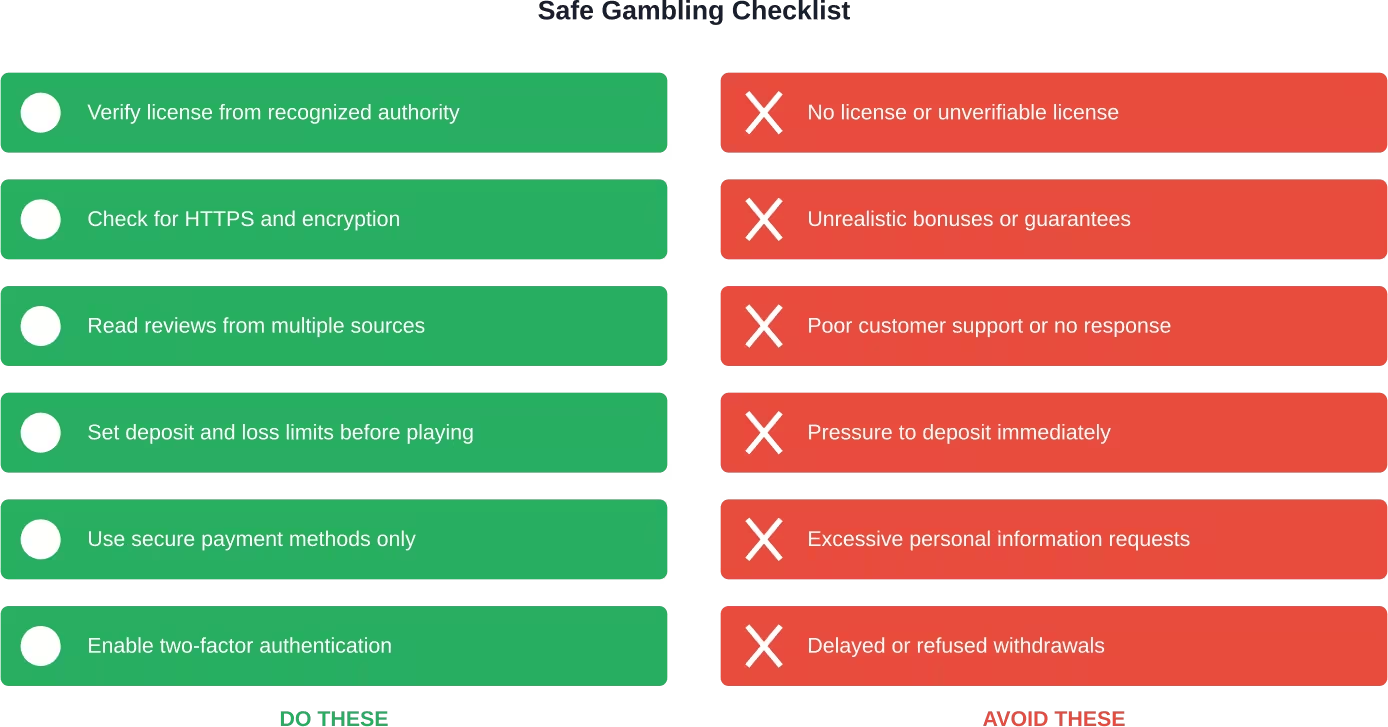
Staying safe when gambling online requires vigilance at every step—from choosing licensed operators to protecting personal information and maintaining control over gambling behavior.
The fundamentals aren’t complicated. Verify licenses. Check encryption. Read reviews. Set limits before playing. Use secure payment methods. And recognize when recreational activity crosses into harmful territory.
With sports betting now legal in 38 states and online gambling continuing to expand, these safety practices aren’t optional—they’re essential. The convenience of mobile betting brings real risks alongside the entertainment value.
Take control of the gambling experience by making informed choices. Research platforms thoroughly, use available protective tools, and stay aware of both cybersecurity threats and personal behavioral patterns. If gambling stops being fun or starts causing problems, help is available through resources like FindTreatment.gov.
Safe gambling starts with knowledge. Now it’s time to put that knowledge into practice.
Related Articles

September 30, 2026Is Sports Betting Legal in Brazil? The Full...

September 30, 2026Is Sports Betting Legal in Iran? The Real...