 Nothing found for the request
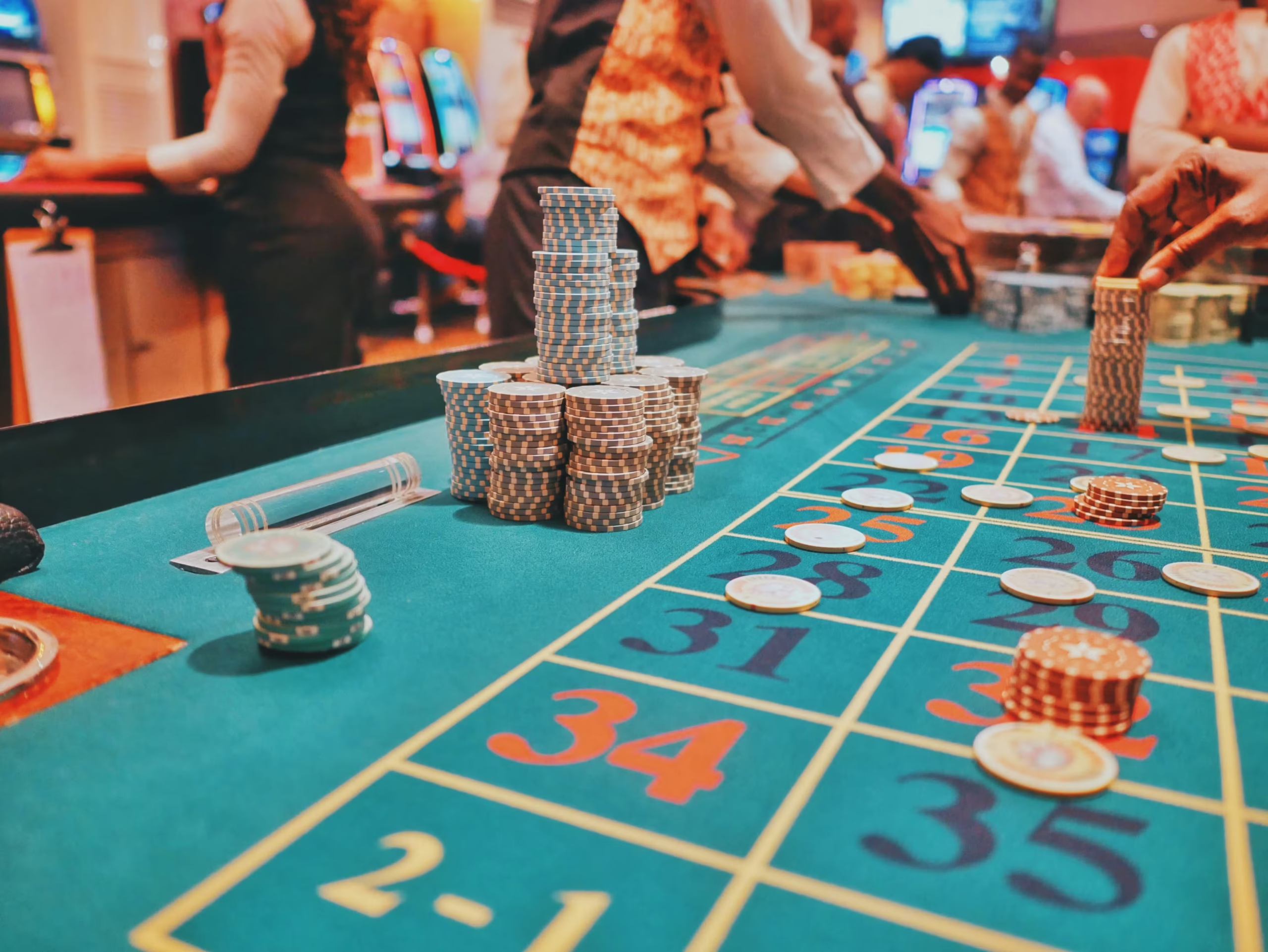
How to Stop Gambling: Evidence-Based Steps That Work
Sologe April 28, 2026
Share:


Quick Summary
Quick Summary: Stopping gambling requires acknowledging the problem, seeking professional support, and implementing practical strategies like self-exclusion programs and cognitive-behavioral therapy. Research shows CBT significantly reduces gambling disorder severity, with effect sizes ranging from -0.91 to -1.14 according to NCBI studies. Support from treatment centers, helplines like SAMHSA’s FindTreatment.gov, and peer groups provides essential accountability during recovery.
Gambling addiction affects approximately 5 million Americans, according to research from Rutgers Addiction Research Center. Yet only approximately 8% of those individuals ever seek help for their problem, according to the National Council on Problem Gambling.
The landscape has changed dramatically. Since the 2018 Supreme Court ruling (Murphy v. NCAA) on sports betting, gambling addiction rates have surged. A survey from the Maryland Center of Excellence on Problem Gambling at the University of Maryland School of Medicine (conducted May-July 2024, published 2025) found that disordered gambling in Maryland increased from 4% to 5.7% of residents since legalization of mobile sports betting nearly three years prior.
But here’s the thing: gambling addiction is highly treatable once identified. Research published by the National Institutes of Health demonstrates that cognitive-behavioral therapy significantly reduces gambling disorder severity. The question isn’t whether recovery is possible. It’s how to start.
Recognize the Signs of Gambling Disorder
According to the American Psychiatric Association, gambling disorder is identified by a pattern of repeated betting that continues despite creating problems across multiple life areas. Most people gamble recreationally without issues. But when does it cross the line?
Common symptoms include needing to gamble with increasing amounts to achieve the same excitement, becoming restless or irritable when attempting to cut back, and repeated unsuccessful efforts to control gambling behavior. Many individuals gamble to escape problems or relieve feelings of helplessness, depression, or anxiety.
The financial toll is often severe. Chasing losses—trying to win back money after losing—becomes a destructive pattern. Lying to family members about the extent of gambling involvement and jeopardizing relationships or job opportunities are red flags.
Problem gambling commonly occurs alongside other substance use disorders involving alcohol, tobacco, and other drugs. Those with depression and anxiety face higher risk, according to the Maryland Center of Excellence on Problem Gambling.
Start With Immediate Action Steps
Real talk: waiting for the “right moment” to quit doesn’t work. The first practical steps create distance between impulse and action.
Block Access to Gambling Platforms
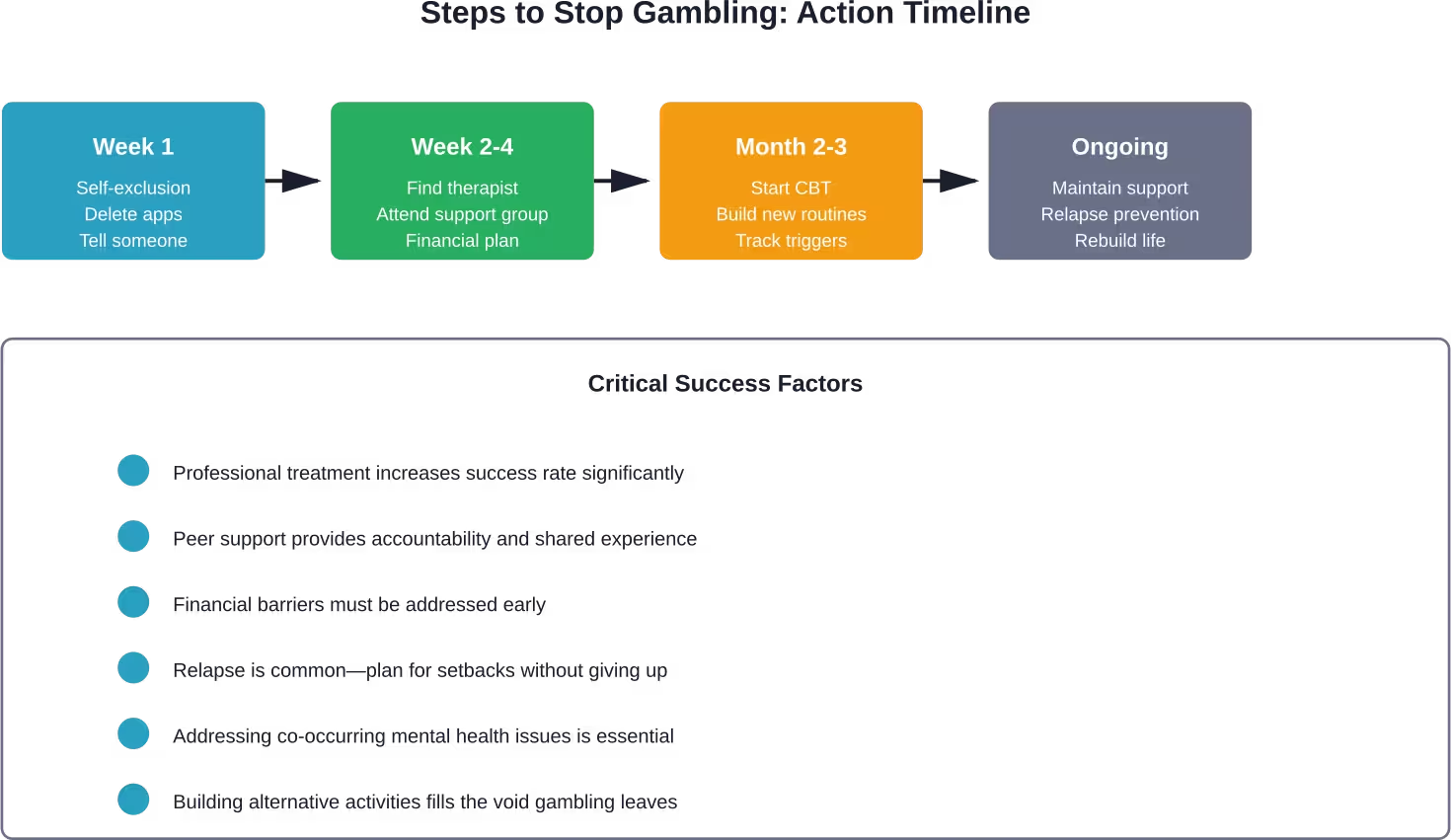
Self-exclusion programs allow individuals to voluntarily ban themselves from casinos and online gambling sites. Most states offer these programs through gaming commissions. Once enrolled, casinos are legally required to refuse entry and withhold winnings if someone on the list attempts to gamble.
For online gambling, install blocking software on phones and computers. Delete gambling apps immediately. Contact banks to block transactions to known gambling sites.
Control Your Finances
Remove direct access to money during vulnerable moments. Hand over credit cards and debit cards to a trusted family member or friend. Set up automatic bill payments so essential expenses get covered first.
Consider asking someone else to manage finances temporarily. This isn’t about losing independence—it’s about removing temptation during early recovery.
Identify and Avoid Triggers
Triggers are situations, emotions, or environments that spark gambling urges. These might include specific locations (passing a casino), emotional states (boredom, stress, loneliness), or social situations (friends who gamble).
Keep a journal tracking when urges hit strongest. Patterns emerge quickly. Once triggers are identified, create specific plans to avoid or manage them.
List Your Offer in an iGaming Marketplace

Sologe gives vendors a place to publish gaming products and services in one structured platform. You can list offers across categories like software, platforms, equipment, traffic, and payment solutions, making them easier to find.
Want to Add Your Product?
List with Sologe to:
- publish your offer in a focused marketplace
- choose the right category for your product
- reach industry buyers in one place
👉 Get in touch with Sologe to list your product
Seek Professional Treatment
Cognitive-behavioral therapy stands as the most effective treatment for gambling disorder. Research published in Clinical Psychology Review found that CBT significantly reduces gambling disorder severity, with effect sizes ranging from -0.91 to -1.14 according to NCBI studies. That’s a substantial impact.
But what does CBT actually involve? It focuses on identifying and changing thought patterns that lead to gambling. Therapists help individuals recognize irrational beliefs—like the gambler’s fallacy (thinking past losses increase the chance of future wins) or illusions of control.
Finding Treatment Resources
SAMHSA’s FindTreatment.gov provides a confidential, anonymous resource for locating mental health and substance use disorder treatment facilities across the United States. The service includes options for gambling disorder specifically.
Internet-delivered CBT has shown promise for those who face barriers accessing in-person treatment. Studies from the National Institutes of Health demonstrate that online therapist-assisted CBT produces significant improvements in gambling disorder symptoms. Remote options help reach individuals who may otherwise not access care, since only approximately 8% of those with problematic gambling seek treatment, according to the National Council on Problem Gambling.
Treatment centers specializing in addiction often include gambling disorder programs. These provide intensive support, particularly helpful when gambling addiction occurs alongside substance use disorders.
Medication Options
While no medications are FDA-approved specifically for gambling disorder, some have shown effectiveness in clinical trials. Mood stabilizers and antidepressants may help when gambling co-occurs with depression or anxiety. Opioid antagonists have demonstrated some benefit in reducing gambling urges.
Medication works best combined with therapy, not as a standalone solution. A psychiatrist with addiction experience can assess whether medication might help.
Build a Support Network
Isolation feeds addiction. Connection fights it.
Peer support groups connect individuals with others facing similar struggles. Gamblers Anonymous follows a 12-step model similar to Alcoholics Anonymous. Meetings are free, widely available, and provide accountability.
Family involvement matters tremendously. Gam-Anon offers support for family members affected by someone else’s gambling. Loved ones learn how to help without enabling, set healthy boundaries, and process their own emotions around the addiction.
Be honest with at least one trusted person about the gambling problem. Secrecy perpetuates the cycle. Accountability reduces it.
Replace Gambling With Healthier Activities
Quitting creates a void. What filled those hours spent gambling? What replaced the emotional escape it provided?
Physical exercise reduces stress more effectively than gambling ever did. Even 15 minutes daily makes a measurable difference. Exercise also combats depression and anxiety that often accompany gambling disorder.
Volunteering shifts focus outward. Helping others improves self-worth and provides purpose beyond the next bet. Choose causes that resonate personally.
Reconnect with hobbies abandoned during active gambling. Learn new skills. Join clubs or groups around interests—anything that builds community and fills time constructively.
Develop Strategies for Urges
Urges to gamble will come. Count on it. The goal isn’t eliminating urges—it’s managing them without acting on them.
Delay and Distract
When an urge hits, delay action for 15 minutes. Urges peak and subside like waves. They don’t grow indefinitely. During that 15 minutes, distract with a specific activity: call someone from the support network, take a walk, or engage in a hobby that requires focus.
The intensity will decrease. Prove to yourself that urges pass without gambling.
Challenge Thoughts
Gambling urges come wrapped in convincing thoughts: “Just this once won’t hurt,” “I can win back what I lost,” “I deserve to relax.” Recognize these as addiction talking, not truth.
Counter each rationalization with reality: “Last time I said ‘just once’ led to three days of gambling,” “The house always has the mathematical edge,” “Gambling creates stress, it doesn’t relieve it.”
Write out common rationalizations and reality-based responses beforehand. When urges strike, thinking clearly becomes harder. Having responses prepared helps.
Handle Relapses Without Giving Up
Relapse doesn’t mean failure. It means the disease is still active and the recovery plan needs adjustment.
If gambling happens again, don’t spiral into shame that triggers more gambling. Stop as quickly as possible. Reach out to therapist, sponsor, or support group immediately. Analyze what triggered the relapse without self-judgment. What warning signs were missed? What coping skills failed? What needs to change?
Each relapse provides information for strengthening recovery. The people who succeed long-term aren’t those who never stumble—they’re the ones who get back up and keep going.
Resource Type | Examples | Best For | Cost |
|---|---|---|---|
Crisis Hotlines | National Problem Gambling Helpline: 1-800-GAMBLER (1-800-426-2537) | Immediate support, crisis situations | Free |
Treatment Locator | SAMHSA FindTreatment.gov | Finding therapists and treatment centers | Free service, treatment costs vary |
Peer Support | Gamblers Anonymous | Ongoing accountability and shared experience | Free |
Professional Therapy | Licensed therapists specializing in CBT | Evidence-based treatment, addressing root causes | Varies, often covered by insurance |
Online Treatment | Internet-delivered CBT programs | Those with access barriers, rural areas | Varies by program |
Self-Exclusion | State gaming commission programs | Blocking casino and online gambling access | Free |
Address Co-Occurring Mental Health Issues
Gambling disorder rarely exists in isolation. Depression, anxiety, PTSD, and substance use disorders frequently co-occur. Treating only the gambling while ignoring underlying mental health issues sets up incomplete recovery.
A comprehensive evaluation identifies all conditions requiring treatment. Integrated treatment addresses everything simultaneously rather than sequentially. Depression won’t magically resolve just because gambling stops. Both need direct attention.
Trauma often underlies addiction. For some, gambling provides emotional escape from painful memories or feelings. Trauma-focused therapy helps process these experiences so gambling no longer serves as the primary coping mechanism.
Frequently Asked Questions
Can someone stop gambling on their own without professional help?
Some individuals successfully quit gambling without formal treatment, particularly those in early stages. However, research consistently shows that professional treatment—especially cognitive-behavioral therapy—significantly improves success rates and reduces relapse. Self-help approaches work best when combined with support groups like Gamblers Anonymous rather than attempting recovery in complete isolation.
How long does it take to overcome gambling addiction?
Recovery timelines vary dramatically between individuals. Early behavioral changes often occur within weeks of starting treatment, but addressing underlying thought patterns and building sustainable coping skills typically requires months. Many experts view gambling disorder as a chronic condition requiring ongoing management rather than something “cured” after a set timeframe. Long-term recovery becomes more stable after the first year, though vigilance remains important.
What’s the success rate for gambling addiction treatment?
Success rates depend heavily on treatment type, individual factors, and how success is measured. Studies on cognitive-behavioral therapy show significant reductions in gambling behavior and disorder severity. However, relapse remains common across all addiction types. Engagement with ongoing support after formal treatment ends substantially improves long-term outcomes. The key factor isn’t avoiding any setback—it’s continued commitment to recovery despite difficulties.
Will gambling urges ever completely go away?
For most people, urges decrease significantly in frequency and intensity over time but may never disappear entirely. Triggers can reactivate urges even years into recovery. This doesn’t indicate treatment failure—it reflects how addiction affects brain reward pathways long-term. Developing strong coping skills for managing urges when they arise matters more than expecting them to vanish permanently. Many in long-term recovery report urges become brief, manageable thoughts rather than overwhelming compulsions.
Should I tell my employer about gambling addiction?
This decision depends on individual circumstances. If gambling has affected work performance, finances at work, or if employment is at risk, disclosing to HR might provide access to Employee Assistance Programs and workplace protections. However, stigma around addiction still exists, and disclosure carries potential risks. Consulting with a therapist or addiction counselor can help weigh the specific situation. Many successfully maintain recovery without workplace disclosure, while others find employer support valuable.
How do I help a family member who won’t admit they have a gambling problem?
Denial is common with addiction. Stop enabling behaviors—don’t lend money, pay debts, or cover consequences of gambling. Set clear boundaries about what support will and won’t be provided. Express concern without judgment, focusing on specific observed behaviors rather than labels. Resources like Gam-Anon help family members navigate these situations. Sometimes the accumulation of natural consequences motivates change more than confrontation. Professional intervention specialists can guide families when someone refuses help despite serious problems.
Is gambling addiction covered by health insurance?
Many insurance plans cover treatment for gambling disorder under mental health and substance use disorder benefits, especially following mental health parity laws. Coverage varies significantly between plans regarding inpatient treatment, outpatient therapy, and medication. Contact the insurance provider directly to verify specific coverage for gambling disorder treatment. SAMHSA resources can help locate providers who accept various insurance types. Some treatment options like Gamblers Anonymous and self-exclusion programs are free regardless of insurance status.
Take the First Step Today
Gambling addiction thrives in secrecy and delay. Recovery begins with a single action—not tomorrow, not after the next loss, but now.
Start by reaching out. Call the National Problem Gambling Helpline at 1-800-GAMBLER (1-800-426-2537) for immediate support. Visit SAMHSA’s FindTreatment.gov to locate professional treatment. Attend a Gamblers Anonymous meeting this week.
The statistics are clear: gambling addiction is highly treatable, but only approximately 8% of those with problematic gambling seek help, according to the National Council on Problem Gambling. Don’t be part of those who suffer in silence. The evidence shows cognitive-behavioral therapy works. Support groups work. Self-exclusion programs work.
Recovery isn’t about perfection. It’s about progress, one day without gambling at a time.
Related Articles

September 30, 2026Is Sports Betting Legal in Brazil? The Full...

September 30, 2026Is Sports Betting Legal in Iran? The Real...