 Nothing found for the request
Is Bingo Considered Gambling? Laws and Facts in 2026
Sologe April 28, 2026
Share:


Quick Summary
Quick Summary: Yes, bingo is legally classified as gambling in most jurisdictions because it involves wagering money on uncertain outcomes determined by chance. However, many regions permit charitable bingo under specific regulations, distinguishing it from commercial gambling activities. The classification depends on factors like whether money is staked, prizes are awarded, and outcomes rely on chance rather than skill.
Walk into any church basement on a Friday night, and you’ll likely find dozens of people dabbing cards with colorful daubers, hoping to be the first to shout “Bingo!” The atmosphere feels innocent, almost wholesome. But here’s the question that sparks endless debate: is this actually gambling?
The answer isn’t as straightforward as you might think. While bingo carries the legal classification of gambling in most jurisdictions, the reality involves layers of regulations, exceptions, and cultural perceptions that separate it from casino gaming. Understanding these distinctions matters whether you’re organizing a community fundraiser or playing online from your living room.
Let’s examine what legally defines bingo as gambling, how regulations treat it differently across jurisdictions, and why this seemingly simple game occupies such a unique space in gambling law.
The Legal Definition of Gambling and Where Bingo Fits
At its core, gambling involves three fundamental elements: consideration (something of value wagered), chance (outcomes not determined by skill), and prize (something of value won). Bingo checks all these boxes when players purchase cards, rely on random number draws, and compete for cash or prizes.
According to the Gambling Commission, bingo qualifies as gambling but stands apart as “the only form of gambling recognised in the Gambling Act 2005 that does not have a specific statutory definition.” Instead, the Act simply defines bingo as “any version of that game, irrespective of by what name it is described.”
This vague definition creates flexibility but also confusion. The Commission addresses this by identifying three fundamental principles that characterize bingo:
- Bingo must be played as an equal chance game where all participants have the same probability of winning
- Bingo must involve a degree of participation from players beyond simply placing a wager
- Bingo must have a clearly defined end point where winners can be determined
These principles distinguish bingo from pure games of chance like slot machines, while acknowledging it lacks the skill elements found in poker or sports betting.
Why Bingo Is Classified as a Game of Chance
The fundamental mechanic of bingo eliminates skill as a determining factor. Numbers are drawn randomly, and whether your card contains the winning combination depends entirely on which card you selected before the game began. You can’t strategize your way to better odds during gameplay.
This contrasts sharply with games like blackjack, where decisions about hitting or standing affect outcomes. In bingo, once you’ve purchased your cards, the result sits entirely in the hands of fate and the random number generator.
That said, some argue that choosing how many cards to play or which session to attend involves decision-making. But these choices affect quantity of chances, not quality of outcomes. Each card maintains identical odds regardless of player behavior.
Publish Gaming Products in One Platform

Sologe provides a platform where vendors can upload and manage product listings across multiple categories, all in one place.
Need a Simple Listing Platform?
List with Sologe to:
- publish offers in one marketplace
- organize products by type
- reach users searching for gaming solutions
👉 Get in touch with Sologe to list your product
How Different Jurisdictions Regulate Bingo
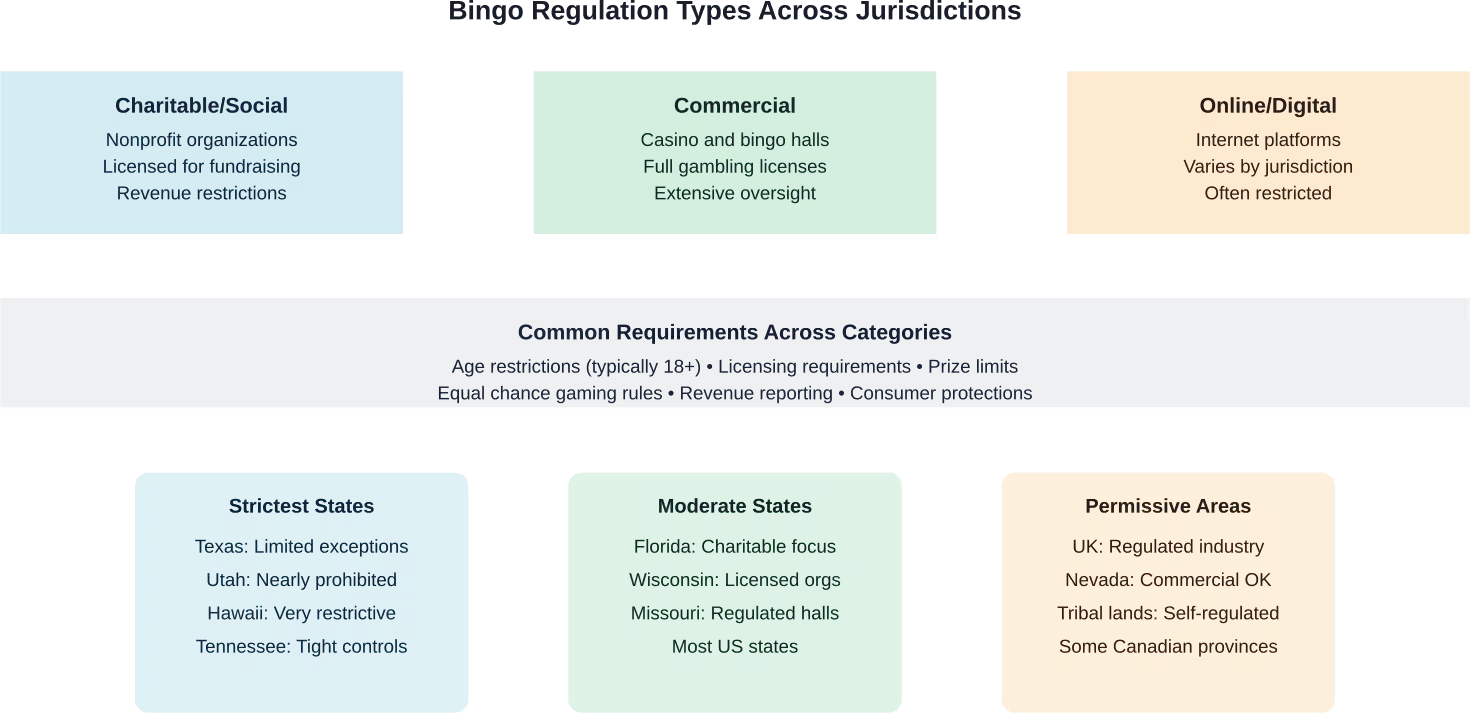
Bingo’s legal status varies dramatically depending on where you play. Most jurisdictions recognize it as gambling but create special carve-outs that commercial casinos don’t receive.
Charitable Bingo: The Most Common Exception
Most U.S. states permit bingo when conducted by qualified charitable organizations. These regulations typically require the organization to be nonprofit, often with 501(c) tax-exempt status, and to have existed for a minimum period—frequently three years or more.
Florida statutes, for example, allow charitable bingo but impose strict requirements. Organizations must demonstrate their charitable purpose, obtain proper licensing, and follow regulations about prize limits and revenue allocation. The funds raised must support the organization’s stated charitable mission rather than private interests.
Wisconsin’s Division of Gaming oversees charitable bingo through detailed licensing requirements outlined in Chapter 563 of the Wisconsin Statutes and Chapters 41-43 of the Administrative Code. These regulations specify who can operate games, how prizes can be awarded, and what financial reporting organizations must maintain.
Missouri’s Gaming Commission similarly regulates charitable gaming separately from casino operations, creating a distinct regulatory framework that acknowledges bingo’s fundraising role while maintaining oversight.
Commercial Bingo Operations
Commercial bingo halls operate differently than charitable games. These for-profit businesses require full gambling licenses and face regulations comparable to casinos in many jurisdictions.
In the UK, commercial bingo enjoys a long-standing tradition with dedicated bingo halls operating under Gambling Commission oversight. The regulations specify machine categories, stake limits, and player protections that apply to commercial operators.
Tribal gaming operations in the United States often include bingo as a Class II gaming activity under the Indian Gaming Regulatory Act. This classification allows tribes to operate bingo with less federal oversight than Class III games like slot machines, though specific rules vary by tribal-state compacts.
The Online Bingo Question
Online bingo occupies the murkiest legal territory. Federal laws like the Wire Act create complications for internet gambling, though interpretations have shifted over the years.
According to information from gambling awareness organizations, online bingo legality varies significantly by state. Some jurisdictions explicitly prohibit online gambling of all forms, making internet bingo illegal regardless of the operator’s charitable status. Others permit licensed online bingo through regulated platforms.
The UK’s approach provides more clarity, with online bingo operators requiring licenses from the Gambling Commission and adhering to the same consumer protection standards as physical venues.
What Makes Bingo Different From Other Gambling
Despite its legal classification as gambling, bingo maintains a distinct cultural and regulatory position. Several factors contribute to this unique status.
The Social Component
A 2022 study published in BMC Public Health examined bingo’s social dimensions, noting that bingo halls traditionally functioned as community gathering spaces. This social aspect differentiates the experience from solitary gambling activities like slot machines.
Community discussions frequently emphasize this distinction. Players often cite friendship, routine social interaction, and community connection as primary motivations—with winning being secondary to the experience.
That said, the same BMC Public Health research warns against romanticizing this view. The study, which gathered data between September 2018 and October 2019 through individual, pair and group interviews with 53 bingo players, individual and pair interviews with 13 stakeholders and 12 participatory observation sessions, found that digitization and commercialization have increased gambling harm among bingo players, challenging the perception of bingo as inherently low-risk.
Lower Stakes and Perceived Harm
Compared to casino table games or sports betting, bingo typically involves lower individual wagers. A bingo session might cost $20-50 for multiple games, whereas a single hand of blackjack at a $25 minimum table costs more per play.
However, medical research on gambling disorder suggests this perception of low harm can be misleading. A systematic review published in the Journal of Gambling Studies found that pathological gambling affects approximately 0.12 to 5.8% of the global population and associates with depression, substance abuse, and other serious consequences.
The National Research Council’s critical review on pathological gambling documented severe family impacts, noting that children of pathological gamblers frequently reported feelings of anger, sadness, and depression. Research estimated that 23 percent of the spouses and 17 percent of the children of pathological gamblers were physically and verbally abused.
While bingo’s lower stakes may reduce financial exposure per session, the accessibility and social normalization can enable problematic patterns in vulnerable individuals.
Pace of Play Considerations
Traditional bingo games progress relatively slowly compared to electronic gambling machines. Players wait for numbers to be called, mark their cards, and experience downtime between games. This pacing provides natural breaks that can reduce the trance-like state associated with rapid-play gambling.
But here’s where digitization changes the equation. Electronic bingo terminals and online platforms dramatically accelerate gameplay. According to Gambling Commission regulations, bingo machines must provide facilities for players to extend playing time by a minimum of 100%, and stake amounts should be limited comparably to Category C machines.
These regulations acknowledge that electronic bingo can approach the addictive potential of slot machines when pacing increases and the social element diminishes.
Bingo Machine Regulations and Categories
The evolution of bingo from paper cards to electronic terminals has created complex regulatory challenges. Different jurisdictions classify bingo machines into categories with varying restrictions.
Regulation Type | Requirement | Purpose |
|---|---|---|
Playing Time Extension | Minimum 100% extension capability | Reduce rapid continuous play |
Auto-Play Prohibition | No automatic gameplay without input | Maintain participation element |
Stake Limits | Comparable to Category C machines | Control financial exposure |
Equal Chance Gaming | All players same win probability | Preserve bingo’s fundamental nature |
Clear End Point | Defined game conclusion | Distinguish from continuous gambling |
These regulations attempt to preserve bingo’s traditional characteristics while accommodating technological evolution. The Gambling Commission specifically states that games “must not have an auto play function,” ensuring player participation remains a requirement.
Problem Gambling and Bingo
The question “is bingo gambling” carries implications beyond legal classification. Understanding bingo’s potential for harm matters for players, operators, and regulators.
Research on risk factors for gambling disorder identifies several elements present in bingo environments. Social influences normalize gambling behavior, particularly in communities where bingo attendance is culturally embedded. A study examining social networks among gamblers in Victoria, Australia, found that social influences become key drivers of continued gambling participation.
The BMC Public Health study on bingo harm documented how digitization and commercialization have intensified risks. Interviews with bingo players revealed increasing financial stakes, more addictive game formats, and inadequate regulatory protections as traditional community bingo evolved into commercialized operations.
Warning Signs of Problematic Bingo Play
While bingo may carry a wholesome image, the potential for gambling problems exists. Warning signs include:
- Spending more than budgeted amounts regularly
- Attending sessions more frequently than initially intended
- Chasing losses by playing additional sessions or cards
- Borrowing money or using funds allocated for other expenses
- Experiencing relationship conflicts related to bingo attendance or spending
- Feeling anxious or irritable when unable to play
- Lying about the amount of time or money spent on bingo
Research comparing loot boxes, gambling, and problem gambling among young people found that gambling-like activities can correlate with problem gambling behaviors. While that study focused on video game mechanics, the principle applies: activities with gambling characteristics can contribute to gambling disorder regardless of their marketing or cultural perception.
How Bingo Fits Into Broader Gambling Law
Understanding where bingo sits in the legal landscape requires examining how gambling laws categorize different activities.
Tribal Gaming and Class II Bingo
Federal Indian gaming law creates a unique category for bingo on tribal lands. The Indian Gaming Regulatory Act classifies bingo as Class II gaming, which tribes can operate with less federal oversight than Class III games (slot machines, table games).
However, legal scholarship examining how Class II bingo-based “slot machines” have evolved shows this classification has created complicated regulatory situations. Some electronic gaming devices marketed as “bingo” barely resemble traditional bingo, functioning more like slot machines while technically meeting Class II definitions.
This legal maneuvering demonstrates how bingo’s unique status creates opportunities for regulatory arbitrage—using favorable classifications to operate gambling activities that might face stricter controls under different categories.
Tax Treatment and Reporting
The IRS provides specific guidance on bingo under Code section 513(f)(2), recognizing it as a distinct category for tax purposes. Charitable organizations conducting bingo may receive different tax treatment than organizations running other gambling activities.
This tax distinction reinforces bingo’s special legal position. The government acknowledges through tax policy that charitable bingo serves different purposes than commercial gambling, even while both involve wagering on chance-based outcomes.
Social vs. Commercial Bingo: Understanding the Divide
The context in which bingo occurs significantly affects its legal treatment and social perception. A church fundraiser and an online bingo platform operate under vastly different frameworks despite offering fundamentally similar games.
Social Bingo Characteristics
Social bingo typically occurs in community settings where fundraising or social interaction takes precedence over profit. Key characteristics include:
- Operated by nonprofit organizations with charitable missions
- Revenue supports community programs rather than private profit
- Lower stakes and prize amounts compared to commercial operations
- In-person attendance at physical venues
- Emphasis on social interaction and community building
- Limited frequency (weekly or monthly events rather than daily operations)
State laws generally permit social bingo with fewer restrictions than commercial gambling. The social context and charitable purpose create legal and moral distinctions that many communities recognize.
Commercial Bingo Operations
Commercial bingo halls operate as for-profit businesses, fundamentally changing the dynamic. These venues:
- Require full gambling licenses comparable to casinos
- Operate as businesses with profit motives
- Often feature electronic terminals alongside traditional games
- May offer daily or continuous sessions
- Advertise and market aggressively to attract players
- Generate tax revenue for governments through gambling taxes
The profit motive and commercial structure place these operations squarely in the gambling industry, with regulations designed to protect consumers and ensure fair play.
The Digital Transformation of Bingo
Technology has fundamentally altered how bingo operates, creating new regulatory challenges and changing the player experience.
Traditional paper-card bingo required physical presence and manual daubing. Now, electronic devices allow players to manage dozens of cards simultaneously, with automatic marking and win detection. Online platforms eliminate physical presence entirely, enabling players to participate from anywhere with internet access.
This transformation raises important questions about bingo’s essential nature. When a player sits alone at home clicking a mouse while software automatically marks cards, does the activity still resemble the social community game that justified special regulatory treatment?
Research on bingo digitization in Australia found that technological changes increased gambling harm. The study documented how electronic terminals, larger prize pools, and more frequent games intensified the addictive potential compared to traditional formats.
Online Bingo and Interstate Commerce
Online bingo creates jurisdictional headaches. When a player in Texas accesses a server in Malta to play bingo with people in five countries, which laws apply?
The Wire Act historically prohibited interstate transmission of gambling information, though interpretations regarding whether it applies to all gambling or only sports betting have shifted. State-by-state approaches vary wildly, with some explicitly permitting licensed online bingo and others prohibiting all internet gambling.
Players must understand that legal online bingo in one jurisdiction may violate laws in their home location. The convenience of internet access doesn’t eliminate legal risks associated with cross-border gambling.
Practical Implications: What This Means for Players
So what does bingo’s classification as gambling mean for the average player? Several practical considerations emerge.
Legal Considerations
Before participating in bingo, verify that the specific game is legal in the jurisdiction. Questions to ask include:
- Is the operator properly licensed?
- Does the organization qualify as a charitable entity if claiming that exemption?
- Are prize amounts within legal limits?
- For online bingo, is internet gambling legal in your state or country?
- Do age restrictions apply, and are they enforced?
Participating in illegal gambling can carry penalties for players, not just operators. While enforcement typically targets organizers rather than participants, ignorance of the law doesn’t provide protection.
Financial Protection
Bingo’s gambling classification means consumer protections vary by jurisdiction. Licensed commercial operations typically must maintain separate accounts for player funds, undergo fairness audits, and provide dispute resolution mechanisms.
Charitable bingo may lack these protections. While fraud is rare in established community organizations, the regulatory oversight is lighter. Understanding what protections exist matters when committing money to any gambling activity.
Responsible Gaming Resources
Recognition that bingo is gambling means responsible gaming resources apply. Organizations like the National Council on Problem Gambling provide support regardless of which gambling activity causes harm.
Many jurisdictions require gambling operators—including bingo halls—to display helpline information and provide self-exclusion options. These protections acknowledge that bingo, despite its wholesome image, can lead to problem gambling for vulnerable individuals.
Common Misconceptions About Bingo and Gambling
Several persistent myths surround bingo’s status as gambling. Clarifying these misconceptions helps players make informed decisions.
Misconception | Reality |
|---|---|
“Bingo isn’t real gambling because it’s for charity” | Charitable purpose doesn’t change the fundamental nature of wagering on chance-based outcomes. It affects legal treatment, not the activity’s classification. |
“Bingo is skill-based, not pure chance” | While some decisions exist (how many cards to play), the outcome depends entirely on random number draws. Regulators classify it as a game of chance. |
“Online bingo is legal everywhere because it’s just bingo” | Internet gambling laws vary dramatically by jurisdiction. Legal physical bingo doesn’t automatically mean legal online bingo. |
“Bingo can’t cause gambling problems because the stakes are low” | Research documents gambling harm among bingo players. Lower stakes per game don’t eliminate addiction potential, especially with frequent play. |
“All bingo games are basically the same legally” | Regulations distinguish between charitable, commercial, electronic, and online bingo with different requirements for each category. |
Frequently Asked Questions
Is playing bingo legally considered gambling?
Yes, bingo is legally classified as gambling in most jurisdictions because it involves consideration (paying for cards), chance (random number draws), and prize (winning money or items). However, many regions provide exceptions for charitable bingo run by nonprofit organizations.
Can you play bingo without it being gambling?
Yes—if no money or valuable consideration is involved and no prizes are awarded, bingo is simply a game. Free social bingo played purely for entertainment does not meet the legal definition of gambling.
Why is church bingo legal when other gambling isn’t?
Church bingo often falls under charitable gaming exemptions. These typically require nonprofit status, transparent operations, limited prize amounts, and use of proceeds for community or charitable purposes, which differentiates it from commercial gambling.
Is online bingo gambling, and is it legal?
Yes, online bingo is considered gambling. Its legality varies widely by location—some jurisdictions allow licensed platforms, while others prohibit all online gambling. Players should verify local laws before participating.
What’s the difference between bingo and slot machines legally?
Both are chance-based, but bingo is communal and has defined game rounds with equal odds for players, while slot machines are individual, continuous-play devices. These differences affect how they are regulated, especially under frameworks like Class II (bingo) and Class III (slots) gaming.
Can bingo cause gambling addiction like other forms of gambling?
Yes. Although traditional bingo may have lower intensity, it still involves chance-based rewards that can lead to addictive behavior. Online bingo increases risk due to faster gameplay and reduced social interaction.
Do you have to pay taxes on bingo winnings?
In most jurisdictions, yes. Bingo winnings are typically considered taxable income. In the United States, larger prizes may be reported to the IRS, and winners are generally required to declare all gambling income on tax returns.
Conclusion: Bingo Is Gambling—With Important Distinctions
The answer to “is bingo gambling” is unequivocally yes from a legal standpoint. Bingo involves wagering consideration on uncertain outcomes determined by chance, meeting the fundamental definition that courts and regulators apply across jurisdictions.
But that legal classification doesn’t tell the complete story. Bingo occupies a unique position in gambling law, benefiting from cultural perceptions as a social activity and receiving special regulatory treatment when conducted for charitable purposes. These distinctions matter for legal compliance, tax treatment, and regulatory oversight.
The transformation of bingo through digitization and commercialization has complicated this picture. As electronic terminals replace paper cards and online platforms eliminate physical venues, the characteristics that justified bingo’s special status—social interaction, slow pacing, community benefit—diminish or disappear entirely.
For players, understanding bingo as gambling means approaching it with appropriate awareness. Whether attending a church fundraiser or playing online, the activity involves financial risk and carries potential for harm in vulnerable individuals. Legal protections, responsible gaming resources, and consumer safeguards apply because of bingo’s gambling classification.
Before participating in any bingo game, verify its legality in the specific jurisdiction, understand what consumer protections exist, and recognize the financial and personal risks inherent in all gambling activities. The cheerful daubers and friendly atmosphere don’t change the fundamental nature of wagering money on chance-based outcomes.
If bingo has become problematic or you recognize warning signs of gambling harm, resources are available. The National Council on Problem Gambling (1-800-GAMBLER) provides confidential support regardless of which gambling activity is involved. Recognizing bingo as gambling means acknowledging when it stops being entertainment and becomes something more harmful.
Related Articles
September 30, 2026Is Sports Betting Legal in Brazil? The Full...

September 30, 2026Is Sports Betting Legal in Iran? The Real...